Why Salamanders Under North Carolina Leaf Litter Are A Good Sign For A Shady Garden
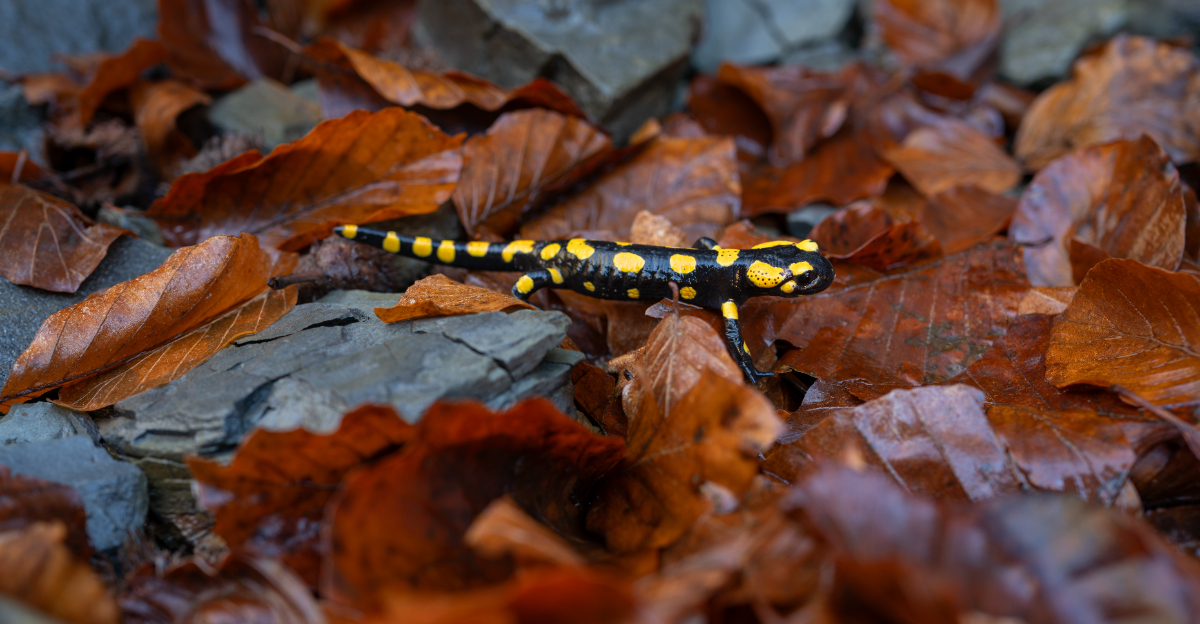
Finding salamanders tucked beneath leaf litter is a strong indicator that a shady North Carolina garden is thriving in all the right ways.
These sensitive amphibians require consistently moist, undisturbed environments, making their presence a reliable sign of healthy soil conditions.
Salamanders also feed on small insects and other pests, quietly helping keep populations in check without any extra effort from gardeners.
Their reliance on leaf litter means reducing excessive raking or cleanup helps maintain the habitat they depend on.
Avoiding pesticide use in shaded areas protects both salamanders and the delicate ecosystem supporting them.
Consistent moisture, often found beneath trees or in low lying garden corners, creates ideal conditions for these creatures to settle in.
Gardeners who spot salamanders regularly can feel confident their shaded beds are functioning as a healthy, balanced habitat. Their quiet presence says more about garden health than almost any other visible sign.
1. Salamanders Can Reflect A Moist And Sheltered Garden
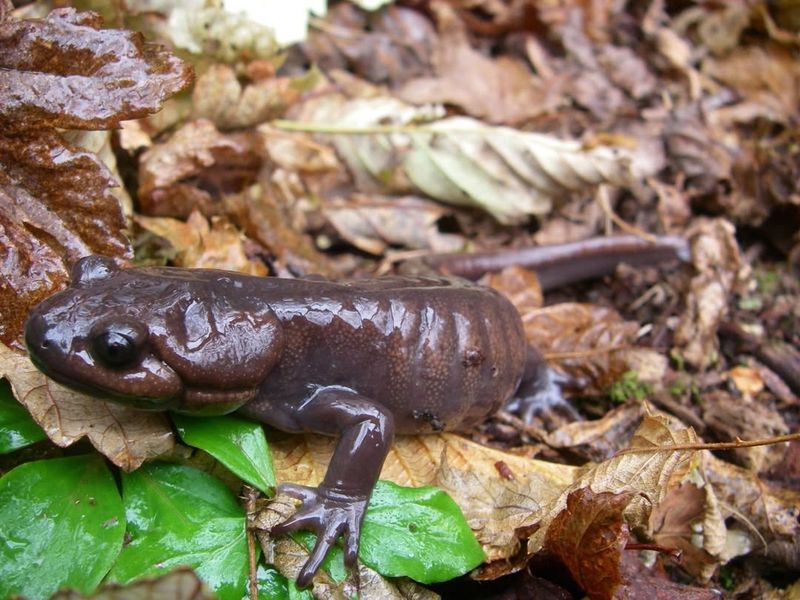
Moisture is everything to a salamander. Unlike most animals, salamanders have permeable skin, which means their bodies absorb water directly from their surroundings rather than relying solely on drinking.
Finding one tucked beneath your leaf litter is a quiet signal that your garden holds onto enough moisture and shade to keep these animals comfortable. Shady gardens naturally stay cooler than open, sun-drenched spaces.
The combination of tree canopy, shrubs, and a blanket of fallen leaves creates a microclimate that stays refreshingly cool and humid even during North Carolina’s warm summers.
Salamanders gravitate toward exactly these kinds of sheltered, stable environments. That said, spotting a salamander is encouraging rather than a guarantee that every corner of your garden is perfectly balanced.
It simply means that at least part of your yard is providing what salamanders need most: reliable moisture, moderate temperatures, and protective ground cover.
Think of it as a small reward for maintaining a garden that works with nature rather than against it.
Dry, compacted, or heavily exposed soil generally discourages salamanders because there is little moisture to absorb and nowhere safe to hide.
If your shady garden supports these animals, you are likely doing several things right without even realizing it.
The presence of leaf litter, layered planting, and consistent shade creates the kind of cool, sheltered floor that woodland creatures genuinely depend on throughout the year.
2. Leaf Litter Creates A Protective Garden Habitat
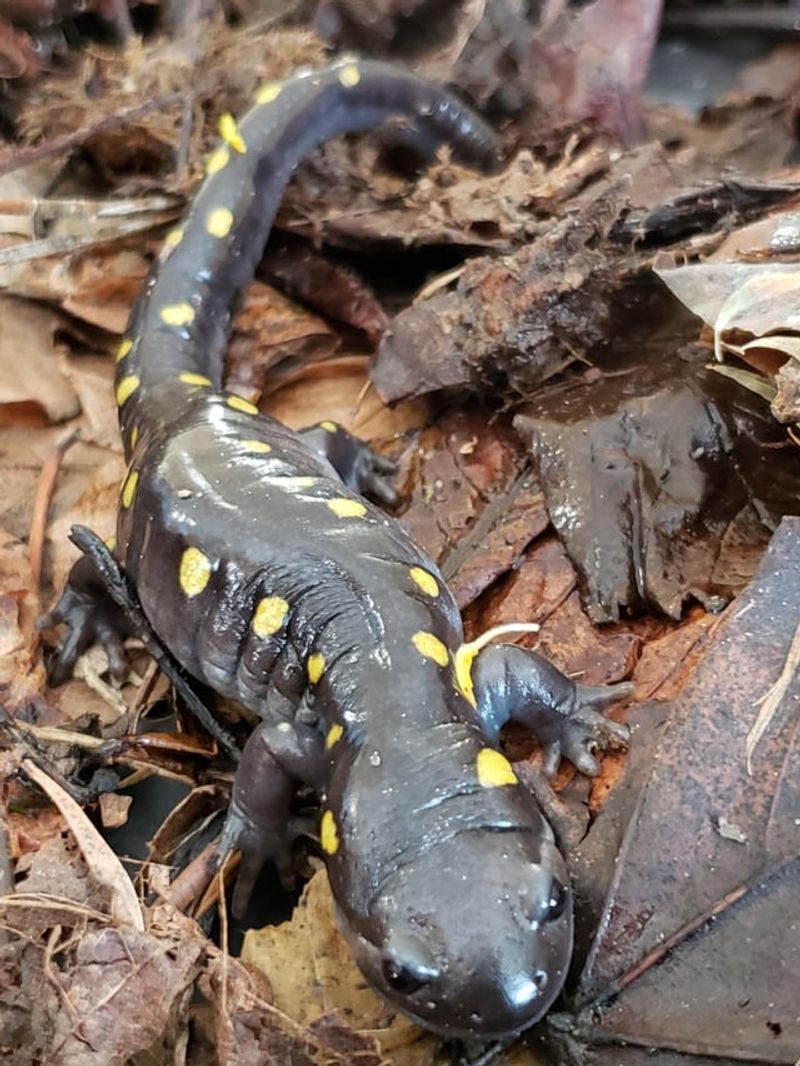
Most gardeners are tempted to rake every fallen leaf into a bag and haul it away. But that pile of leaves doing nothing beneath your trees? It is actually one of the most valuable features your shady garden can have.
Leaf litter acts like a natural blanket, holding moisture in the soil, softening temperature swings, and giving small creatures a safe place to shelter from predators.
For salamanders specifically, a deep layer of leaves offers everything they need in one convenient spot.
They can press against the cool, damp underside of the litter during the day, find small insects and invertebrates to eat nearby, and stay hidden from birds and other animals that would otherwise spot them in an instant.
Your North Carolina Garden Changes Every Week. Your Plan Should Too.
Gardening in North Carolina changes quickly throughout the season. Every Friday you’ll receive a simple weekly plan showing exactly what to plant, prune, fertilize, harvest, and protect so you never miss the right timing.
A cleared, tidy garden floor offers none of these advantages.
Beyond salamanders, that same layer of leaves supports beetles, millipedes, earthworms, and a whole community of decomposers that break organic matter back into nutrients the soil can use.
This cycle quietly feeds your plants from the ground up. Leaving a natural leaf layer beneath your trees and shrubs is one of the simplest and most effective things a North Carolina shade gardener can do.
You do not need to cover every inch of your garden with leaves. Keeping a natural, undisturbed layer in shaded corners and beneath established plantings is enough.
Even a modest patch of leaf litter can make a real difference to the small creatures that call your garden home throughout every season.
3. Their Presence Suggests The Soil Surface Stays Moist
Soil moisture is one of the trickiest things to manage in a garden, and it is often invisible until something goes wrong.
Salamanders offer a surprisingly reliable clue about what is happening just beneath the surface.
Because they seek out moderately moist conditions for shelter and comfort, their presence beneath your leaf litter suggests the soil underneath stays suitably damp rather than dried out and cracked.
During North Carolina’s warmer months, soil can dry out quickly in exposed areas. Shady spots with a good layer of leaf cover hold onto moisture far longer, and that is where salamanders tend to concentrate.
They are not looking for puddles or saturated ground. Instead, they prefer the kind of consistently cool, damp environment that forms naturally under leaves, logs, and rocks in a well-shaded garden.
Worth noting here is that different salamander species have different moisture preferences. Some species stick close to streams and wetland edges where the ground stays very wet.
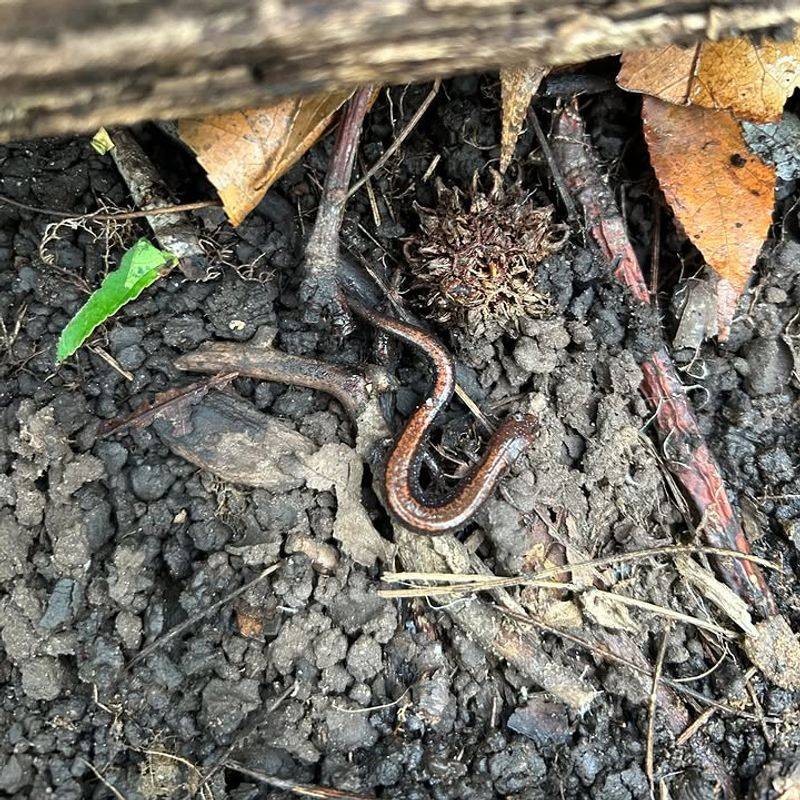
Others, like the familiar red-backed salamander, are more comfortable in moderately moist woodland soil and leaf litter away from standing water.
Knowing which species you have spotted can help you better understand what your garden’s soil conditions are actually like.
Gardeners who want to maintain this kind of moisture-friendly environment can focus on keeping their leaf layer intact, planting shade trees and shrubs that reduce evaporation, and watering deeply but infrequently.
These habits help create the stable, damp ground conditions that encourage salamanders and support the broader garden ecosystem at the same time.
4. Salamanders Point To An Active Garden Food Web
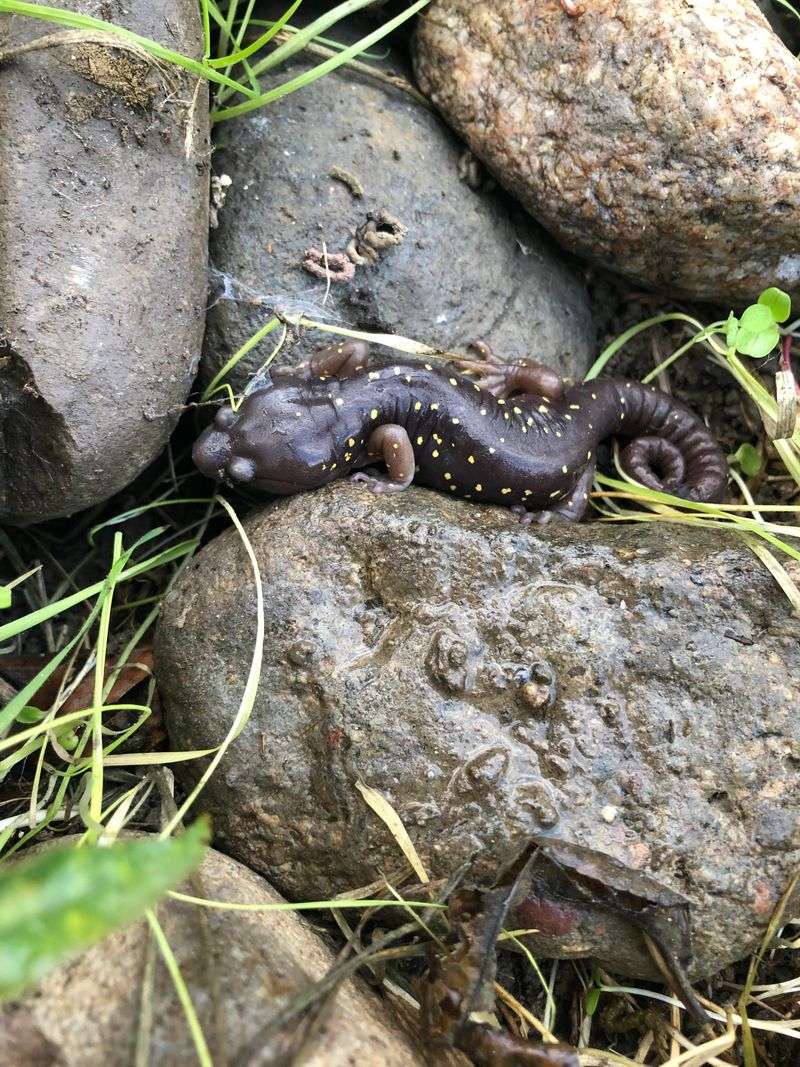
A garden that supports salamanders is rarely doing so by accident. These animals need food, and their food needs food too.
Woodland salamanders feed on small invertebrates like beetles, ants, springtails, small worms, and other tiny creatures that live in soil and beneath fallen leaves.
Finding a salamander in your garden suggests that this whole chain of small life is active and functioning beneath your feet. Think about what that actually means for your garden.
A thriving population of soil invertebrates means organic matter is being broken down efficiently, nutrients are cycling through the soil, and the ground is alive with biological activity.
Salamanders sit right in the middle of this system, eating small prey while also being potential prey for larger animals like snakes and birds that may visit your garden.
It would be an overstatement to say salamanders will clear your garden of every unwanted insect.
They eat what they find beneath the leaf litter, and their diet is largely made up of tiny, often unseen creatures rather than the larger pests that frustrate most gardeners.
Still, their feeding habits contribute to a balanced, naturally regulated garden environment that relies less on chemical intervention.
A garden rich enough in small life to support salamanders is one that has developed real ecological depth.
Layered planting, undisturbed soil, leaf litter, and native plants all contribute to this kind of richness. Salamanders are not the cause of a healthy food web.
They are a visible sign that one already exists and is quietly thriving right beneath the surface of your shady garden.
5. Their Sensitive Skin Makes Them Useful Environmental Clues
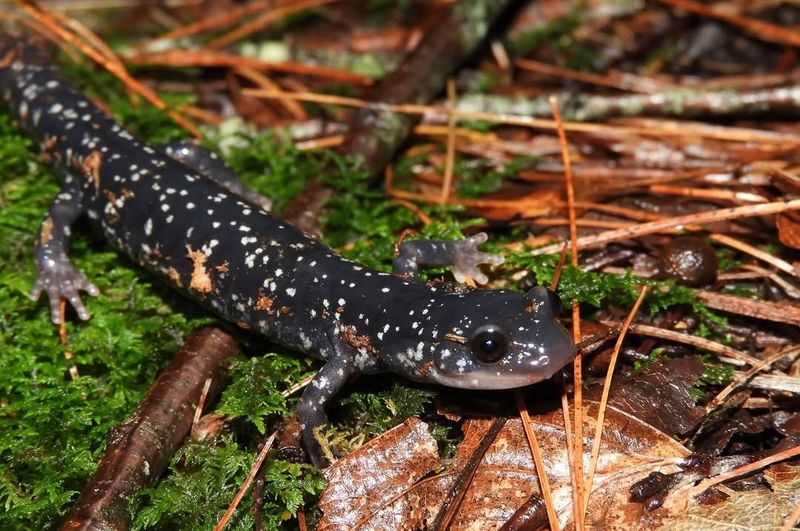
Salamanders are sometimes called living environmental indicators, and there is a genuinely fascinating reason for that.
Their skin is thin, moist, and highly permeable, which means substances from the surrounding environment, including moisture, chemicals, and pollutants, can pass through it with relative ease.
This makes them far more sensitive to environmental changes than most garden visitors. Scientists study salamander populations to get a sense of ecosystem health in forests and natural areas.
A thriving salamander community in a given habitat often suggests that soil conditions, moisture levels, and pollution levels are within a reasonable range for woodland life.
A sudden absence of salamanders in an area where they previously lived can flag something worth investigating. In your own garden, the logic works in a simpler but still meaningful way.
Spotting a salamander beneath your leaf litter is a positive clue that your garden is not heavily contaminated with harsh chemicals and that moisture and habitat conditions are at least partially suitable.
One sighting does not amount to a full scientific survey, but it is a genuinely encouraging signal worth acknowledging.
Gardeners who want to keep that signal positive can focus on reducing or eliminating the use of synthetic pesticides and herbicides in shaded areas where salamanders might shelter.
Even products that seem harmless to larger animals can affect creatures with permeable skin.
Choosing gentler, targeted approaches to pest and weed management helps protect the sensitive soil dwellers that make your garden ecosystem so much more interesting and alive.
6. Shady Gardens Can Resemble Natural Woodland Conditions
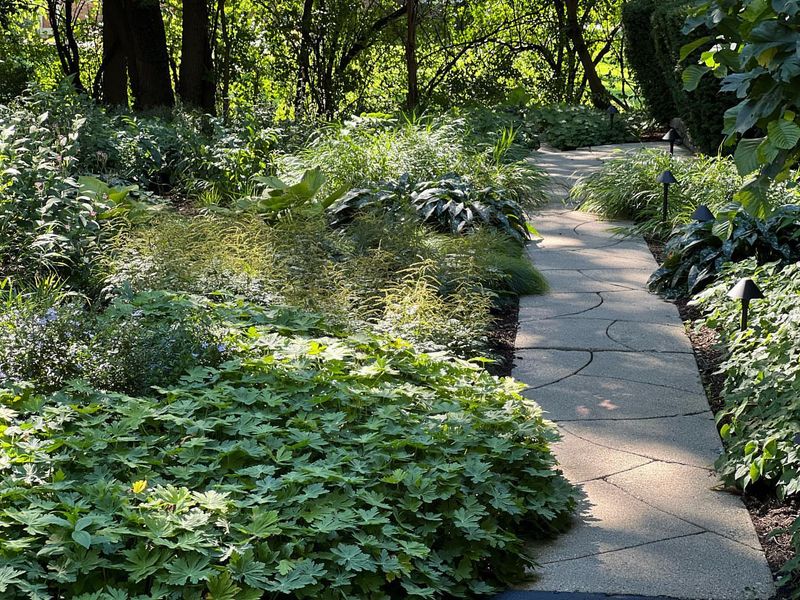
Walk through any mature hardwood forest in North Carolina and you will notice something immediately. The ground is layered, complex, and alive.
There are towering trees overhead, smaller understory trees and shrubs in between, groundcover plants closer to the floor, and a thick blanket of leaf litter covering the soil.
This structure is not accidental. It is what makes a forest function.
A well-designed shade garden can replicate many of these layers, and when it does, it starts to attract the same kinds of creatures that live in those forests. Salamanders are among them.
They use tree canopy for shade, shrubs for cover, leaf litter for shelter and hunting, and loose soil, rocks, and logs for daytime hiding spots.
A garden that provides all of these elements in a connected, layered way is genuinely appealing to woodland wildlife. The key word here is connected.
Isolated plants surrounded by bare soil or mulched areas with no natural debris offer very little to a salamander looking for a safe path through the garden.
Continuous ground cover, overlapping shrubs, and patches of undisturbed leaf litter create the kind of linked habitat that allows small animals to move, feed, and shelter throughout the space. Native plants play a big role in this.
Species that naturally grow in North Carolina woodlands tend to support the insects, fungi, and soil organisms that salamanders rely on indirectly.
Building your shade garden around native trees, shrubs, and groundcovers brings your yard closer to the forest conditions these animals evolved alongside, making it a genuinely welcoming space for them throughout the year.
7. North Carolina Supports Many Woodland Salamander Species
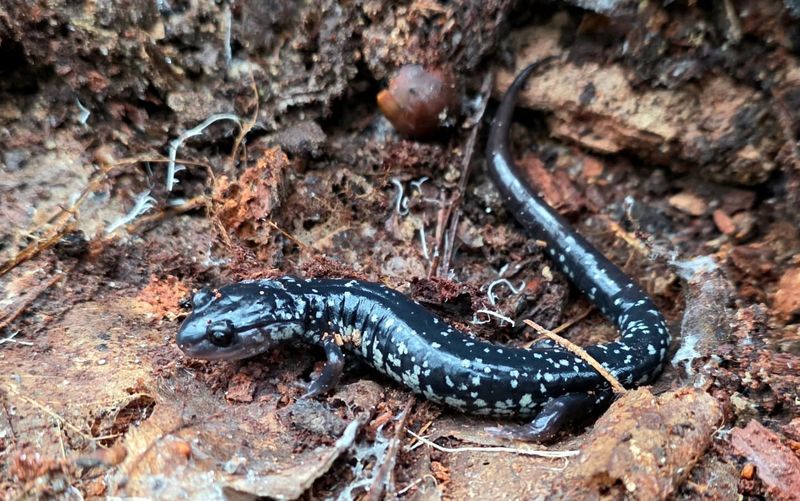
North Carolina is one of the most salamander-rich states in the entire country, and that is something worth celebrating.
The state’s varied geography, from the Appalachian Mountains in the west to the Piedmont plateau and the Coastal Plain in the east, creates a wide range of habitats that support an impressive variety of species.
Some estimates place North Carolina among the top regions in the world for salamander diversity.
The red-backed salamander is one of the most commonly encountered species in forested areas across much of the state, including parts of northwestern North Carolina, the Piedmont, and even portions of the Coastal Plain.
It is a small, slender species that often turns up beneath logs, rocks, and leaf litter in shady gardens.
Other species have much narrower ranges tied to specific stream types, elevations, or soil conditions.
Because so many species exist across the state, it is worth resisting the assumption that every salamander you find is the same animal.
Color, size, and habitat can vary significantly between species, and correctly identifying what you have found adds a whole new layer of interest to your garden observations.
Field guides specific to North Carolina amphibians or resources from the North Carolina Wildlife Resources Commission can help with identification.
Each species you might encounter has its own preferences and behaviors. Some are entirely terrestrial, spending their whole lives in leaf litter and soil. Others depend on seasonal wetlands or streams for part of their life cycle.
Appreciating this variety makes every salamander sighting feel like a small discovery rather than just another garden creature passing through.
8. Natural Cover Helps Salamanders Remain Hidden
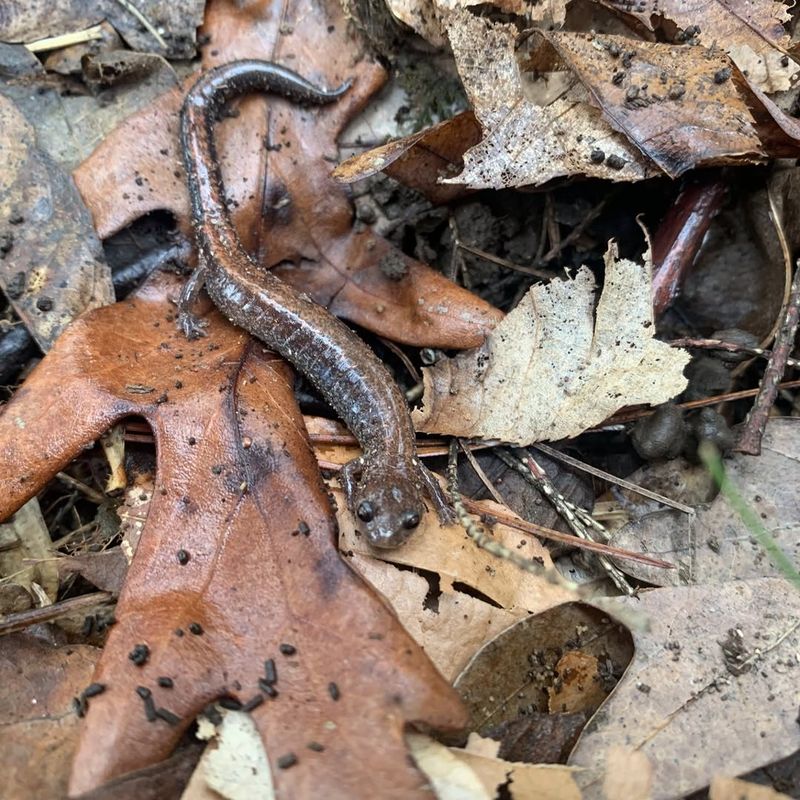
Salamanders are masters of staying out of sight, and that is entirely by design.
During daylight hours, most woodland salamander species press themselves beneath rocks, logs, thick leaf litter, or loose soil where they stay cool, moist, and invisible to the birds, snakes, and mammals that would otherwise find them.
The materials that make a shady garden look naturally untidy are the exact materials that keep these animals safe. Rocks placed in shaded garden corners serve double duty.
They hold moisture beneath them while providing a solid, stable roof over a small sheltered space. A flat rock resting on slightly uneven ground creates a gap just large enough for a salamander to slip under and spend the day in comfortable darkness.
Logs in a similar state of natural decay offer the same benefit with the added bonus of harboring the small invertebrates that salamanders eat.
Leaf litter adds another layer of protection by creating a soft, insulating mat that stays cooler and damper than exposed soil.
Salamanders can move through this material easily, foraging for food while staying mostly concealed from above.
A garden with generous patches of undisturbed leaf cover essentially provides both a pantry and a hiding spot in the same location.
Gardeners can support this by keeping certain areas of the garden deliberately undisturbed. You do not need to let your entire yard go wild.
Keeping paths, seating areas, and high-traffic zones tidy while allowing natural debris to accumulate in shaded corners gives salamanders the cover they need without making the garden feel neglected or unkempt.
9. Gentle Garden Care Can Protect Salamander Habitat
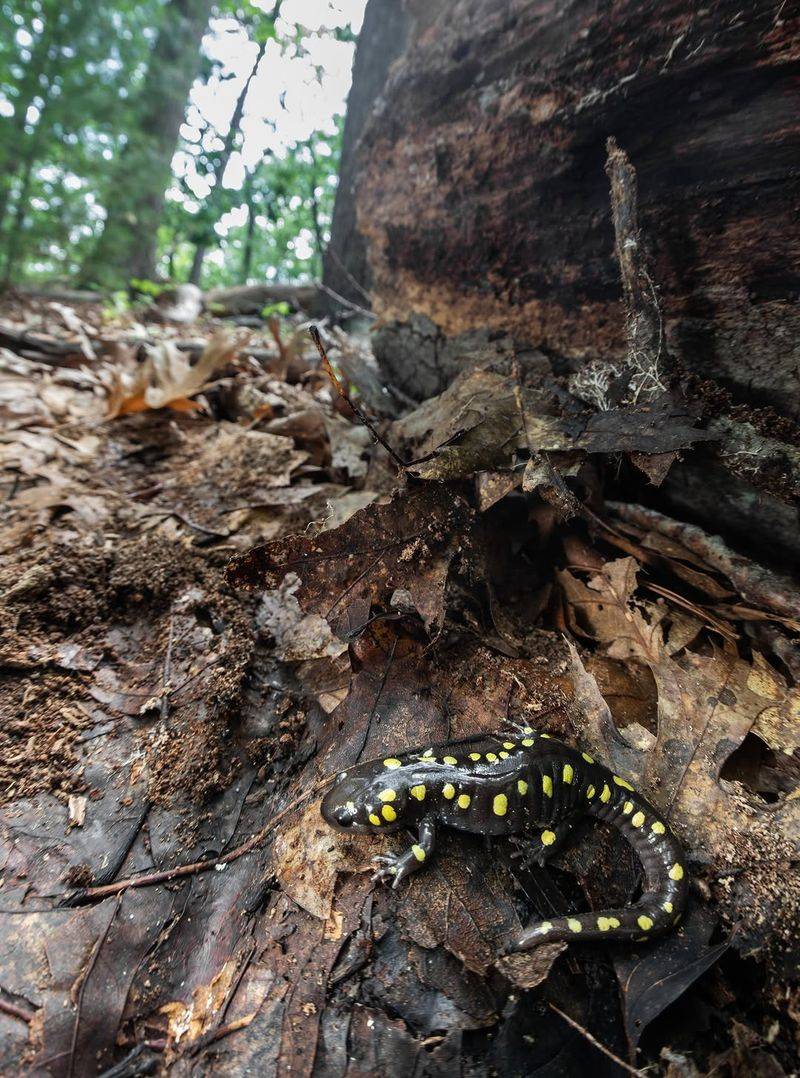
Supporting salamanders in your shade garden does not require a major redesign or a complete shift in how you garden.
Small, thoughtful adjustments to your regular routine can make a meaningful difference to the animals sheltering beneath your leaf litter. The most impactful changes are often the simplest ones.
Retaining fallen leaves in shaded garden areas rather than raking them all away is probably the single most helpful thing you can do.
Even a modest layer of leaves beneath your trees and shrubs provides moisture retention, temperature regulation, and shelter for salamanders and the invertebrates they eat.
You can still keep paths and lawn edges tidy while leaving the shaded corners intentionally undisturbed. Reducing unnecessary soil disturbance is another practical step.
Frequent digging and turning of soil disrupts the structure that salamanders and soil organisms depend on.
When planting or weeding in shaded areas, work carefully and replace any disturbed material as closely as possible to its original position.
Preserving logs and rocks that have settled into the garden also helps, since these features take time to become useful habitat and are easy to overlook as valuable.
Chemical use is worth reconsidering carefully in areas where salamanders might shelter.
Synthetic pesticides, herbicides, and even some fertilizers can affect soil organisms and potentially contact salamanders through their permeable skin.
Choosing targeted, gentler alternatives and keeping applications away from shaded, leaf-covered areas helps protect the habitat you are working to maintain.
Keep drainage pathways clear so moisture stays in the garden rather than pooling near foundations or structures.
10. Salamanders Should Be Observed Without Frequent Handling
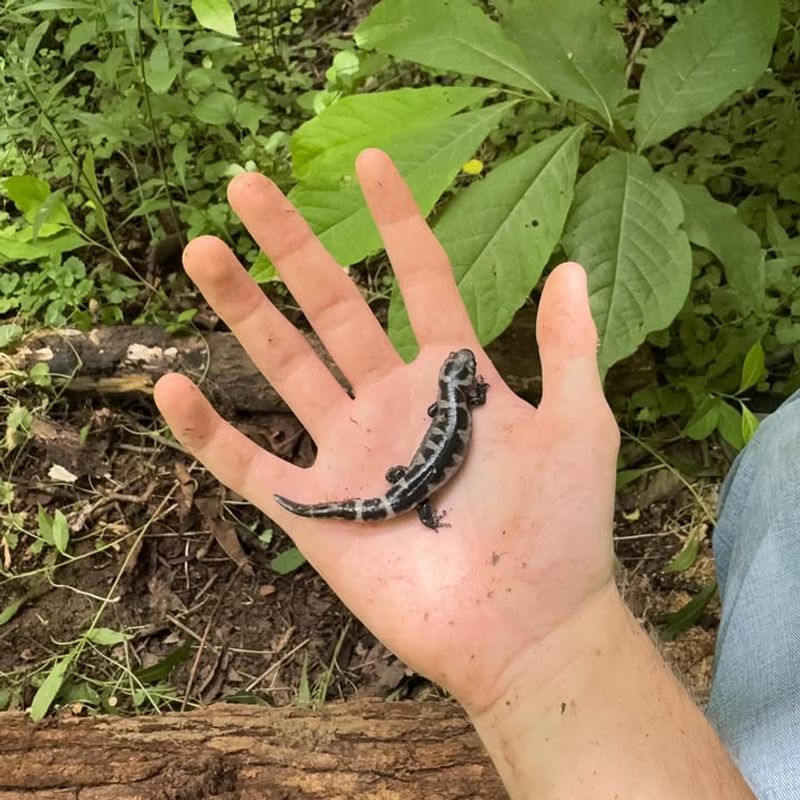
There is something genuinely exciting about lifting a leaf or rock and finding a salamander looking back at you.
The instinct to pick it up is completely understandable, especially for curious kids or first-time garden wildlife spotters.
But salamanders are much better appreciated from a short distance, and here is why that matters more than most people realize.
Human skin carries natural oils, residues from soaps, sunscreens, insect repellents, and other everyday substances that may seem harmless but can transfer easily to a salamander’s permeable skin.
Because salamanders absorb things through their skin rather than filtering everything through a digestive system, even brief contact with human hands can introduce unwanted substances into their bodies.
Frequent handling adds unnecessary stress on top of that physical risk. The good news is that observing salamanders without handling them is actually more rewarding in many ways.
Watching one move naturally through leaf litter, flick its tongue at a passing insect, or press itself flat beneath a stone gives you a much better sense of how these animals actually behave in the wild.
A smartphone camera with a decent zoom or macro setting can capture surprisingly good photos from a respectful distance without disturbing the animal at all.
When you do lift a leaf or rock to look beneath it, replace the cover gently and as close to its original position as possible.
Salamanders rely on that specific spot for shelter, and disrupting it repeatedly can push them to find safer ground elsewhere.
Treat each sighting as a small privilege and leave the habitat better than you found it every single time.
11. Leaf Litter Supports More Than Salamanders

Salamanders get a lot of the credit when gardeners start thinking about leaf litter, but the truth is that fallen leaves support an entire community of living things that most people never think about.
Pull back a handful of leaf litter in a healthy shade garden and you are looking at a miniature world packed with beetles, spiders, millipedes, springtails, earthworms, fungal threads, and bacteria all going about their business at once.
Each of these creatures plays a role. Decomposers break down organic material and return nutrients to the soil.
Predatory insects and spiders regulate populations of smaller invertebrates. Earthworms aerate the soil and improve its structure as they move through it.
Ground-nesting birds sometimes scratch through leaf litter looking for food during cooler months.
Even certain wildflowers and ferns depend on the cool, moist, nutrient-rich conditions that a leaf layer helps create. All of this activity ultimately benefits the salamanders too.
A leaf litter community rich in insects and invertebrates provides salamanders with a reliable, nearby food source without requiring them to venture into open, exposed areas where they are more vulnerable.
The more diverse and active the leaf litter ecosystem, the more comfortable and well-fed the salamanders within it tend to be.
Keeping leaf litter in selected areas of your shade garden is one of the most ecologically generous things you can do with very little effort. You are not just helping one species.
You are maintaining a layered, functioning habitat that supports dozens of creatures, feeds the soil, and makes your garden a genuinely richer and more interesting place to spend time in throughout every season of the year.