How To Stop Azalea Bark Scale From Destroying Your Shrubs In Georgia Safely
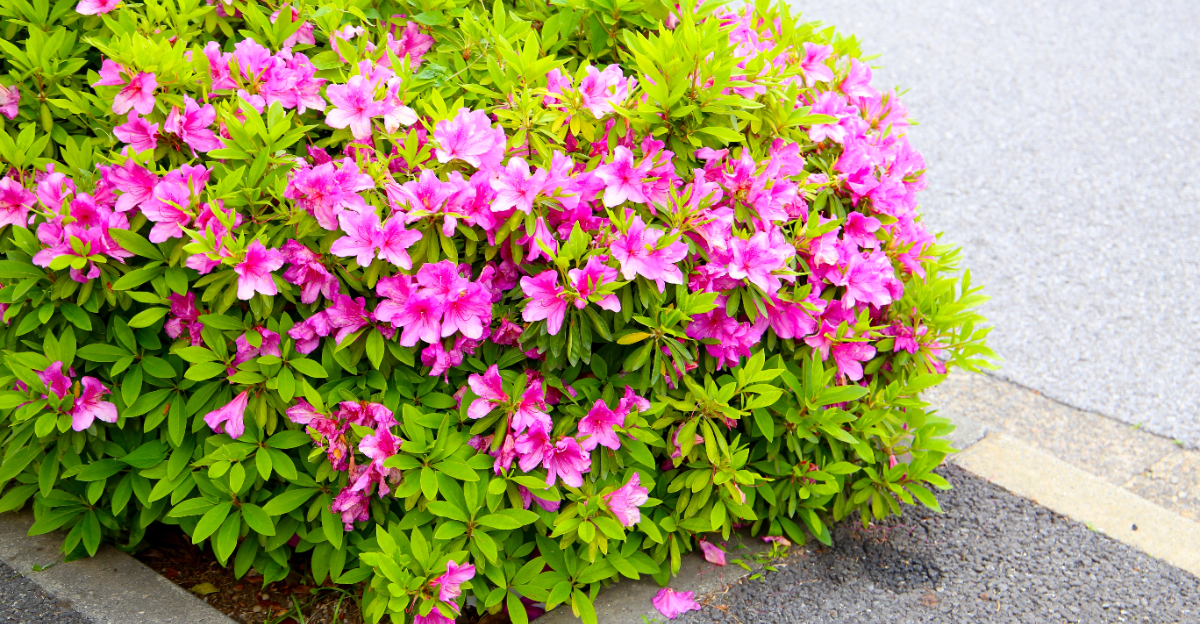
Azaleas can hide trouble surprisingly well.
A shrub may still bloom, hold leaves, and look mostly normal from a distance while tiny pests are tucked into branch forks and rough bark.
Then the white cottony patches appear, sticky residue collects on leaves, and black sooty mold starts making the whole plant look stressed.
That is often the moment Georgia gardeners notice azalea bark scale.
This pest feeds on plant sap and shelters under a waxy covering, which makes it stubborn once populations build. The good news is that safe control starts with careful observation, not panic.
The timing matters.
Young crawlers are much easier to manage than protected adults. Pruning, plant health, careful spray choices, and protection for beneficial insects all work better when you understand the pest’s life stage.
So how can Georgia gardeners stop azalea bark scale without creating more problems?
Start by confirming the pest, checking the right places, reducing crowded growth, timing treatments for crawlers, and using the gentlest effective approach.
1. Confirm The White Cotton First
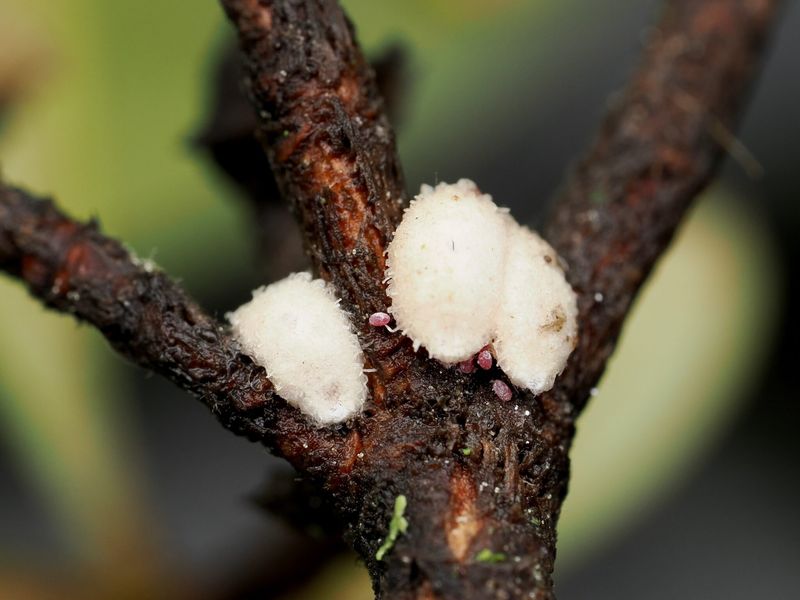
White cottony patches are the first clue, not the final answer.
Azalea bark scale often appears as white or grayish cottony material tucked along stems, branch forks, and bark crevices.
That look is distinctive, but it can still be confused with mealybugs, woolly aphids, fungal growth, or old plant debris caught in rough bark.
Look beneath the covering. Azalea bark scale protects itself under waxy material, so gently lifting a small section with a toothpick or gloved fingertip can reveal the soft-bodied insect underneath.
Cottony egg sacs are a stronger clue. These often appear in late spring or early summer, showing that the population is actively reproducing on the shrub.
Sticky residue matters. Scale insects feed on sap and release honeydew, which can coat leaves, stems, mulch, and nearby surfaces.
Black sooty mold often follows. This dark coating grows on honeydew and makes the plant look worse, though the mold itself is feeding on the sticky residue rather than directly feeding on the shrub.
Use a hand lens. A simple 10x magnifier makes small insects, coverings, eggs, and crawlers much easier to confirm.
Take photos before treating. Clear pictures of the cottony patches, stems, leaves, and whole shrub help with identification and tracking progress later.
Do not rush for a spray. The wrong product at the wrong time can stress the plant and miss the pest.
A confirmed identification is the safest first step.
Once you know it is azalea bark scale, every next move becomes more useful.
2. Check Stems And Branch Crotches
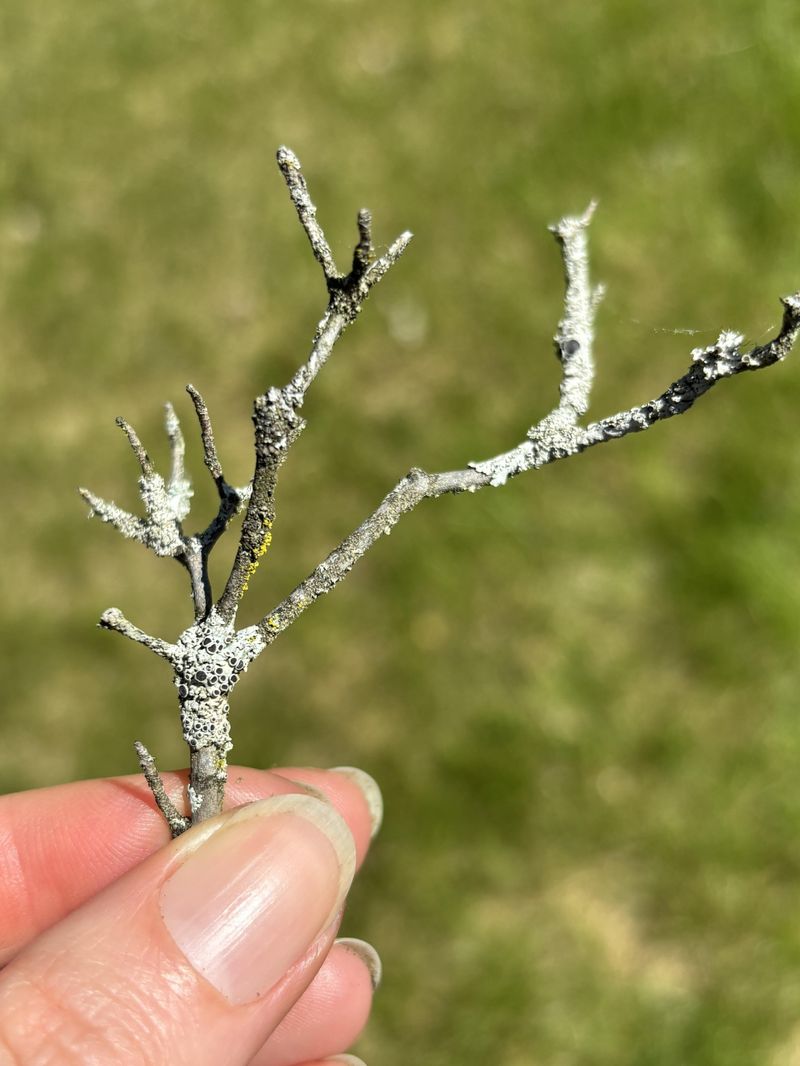
Azalea bark scale likes sheltered places.
A quick glance at the outside of the shrub may miss most of the problem. These insects often settle where branches meet, where bark is rough, and where stems create protected pockets away from rain, wind, and casual inspection.
Start at the branch forks. The tight angles where side branches meet main stems are some of the most common places to find white cottony patches.
Check lower stems too. Scale can build near the base of the plant, especially where dense foliage hides the inner structure.
Your Georgia Garden Changes Every Week. Your Plan Should Too.
Gardening in Georgia changes quickly throughout the season. Every Friday you’ll receive a simple weekly plan showing exactly what to plant, prune, fertilize, harvest, and protect so you never miss the right timing.
Look inside the canopy. Part branches gently and inspect the woody framework, not just the leaves on the outside.
Sticky leaves point upward. Honeydew dripping onto lower foliage often means scales are feeding on stems above that spot.
Watch the mulch and ground below. A sticky shine, blackened leaves, or sooty residue beneath the shrub can show where feeding is happening overhead.
Follow ant trails. Ants are attracted to honeydew and may move up and down azalea stems when scale is active.
Estimate the spread. A few patches on one branch call for a different response than cottony clusters across most of the shrub.
Mark problem branches. A piece of flagging tape or a quick phone photo helps you return to the exact area during follow-up checks.
Inspection should be slow and close.
Azalea bark scale is easiest to manage before it spreads through the hidden inner stems.
3. Prune Crowded Growth Carefully
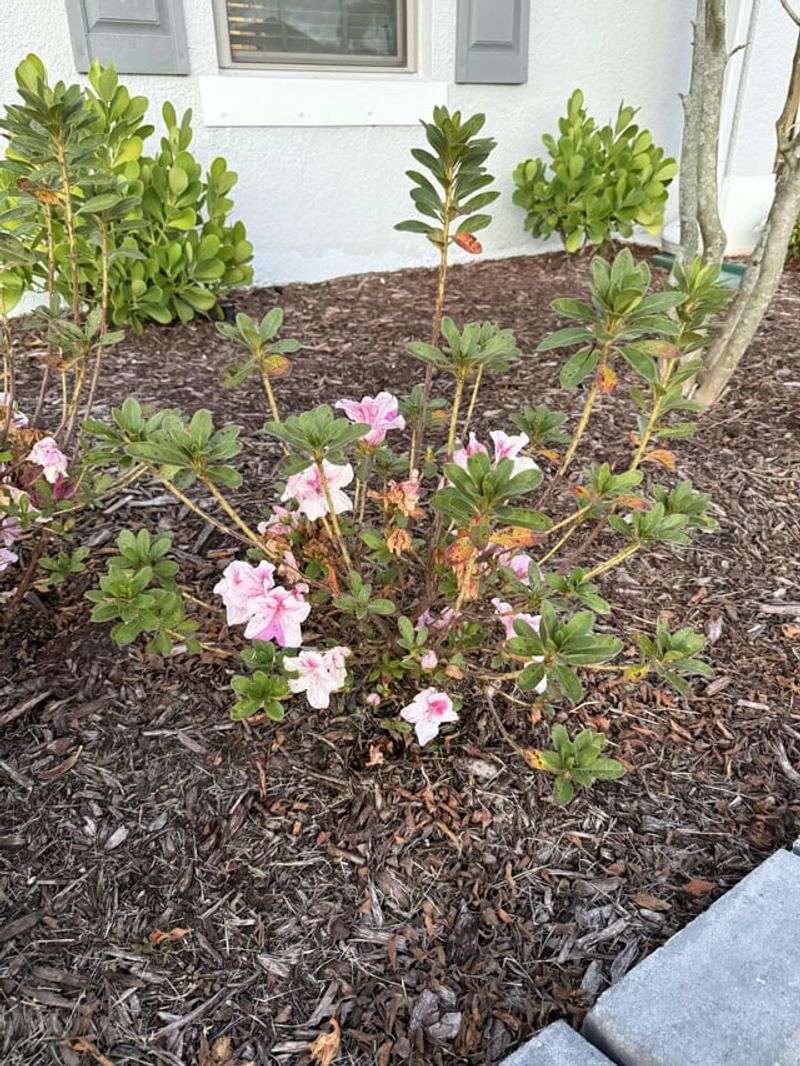
Pruning can reduce the pest load without reaching for chemicals first.
Removing the worst affected branches takes some scale insects, egg sacs, and honeydew-covered growth out of the shrub immediately. It also opens the plant so air and light can move through the canopy.
Start with the heaviest clusters. Branches covered in cottony patches are good candidates for removal when the cut will not ruin the plant’s shape.
Thin crowded interiors. Azaleas with dense, tangled growth hold more humidity and give scale insects protected places to settle.
Remove crossing branches. Stems that rub, crowd, or grow inward make inspection harder and create more sheltered bark surfaces.
Keep pruning moderate. Removing too much growth at once can stress the shrub, especially during Georgia heat.
Work in stages when needed. A badly crowded azalea may need more than one season of careful thinning rather than one aggressive cutting session.
Clean tools often. Wipe pruner blades between cuts, especially after cutting infested branches, so crawlers and sticky residue do not move easily to clean stems.
Bag pruned material right away. Do not leave infested clippings beneath the shrub or toss them into an open compost pile.
Check the shrub again after pruning. Once the canopy opens, hidden patches often become easier to spot.
Good pruning does more than make the shrub look better.
It makes every other azalea bark scale control step safer, cleaner, and more effective.
4. Time Sprays For Crawlers
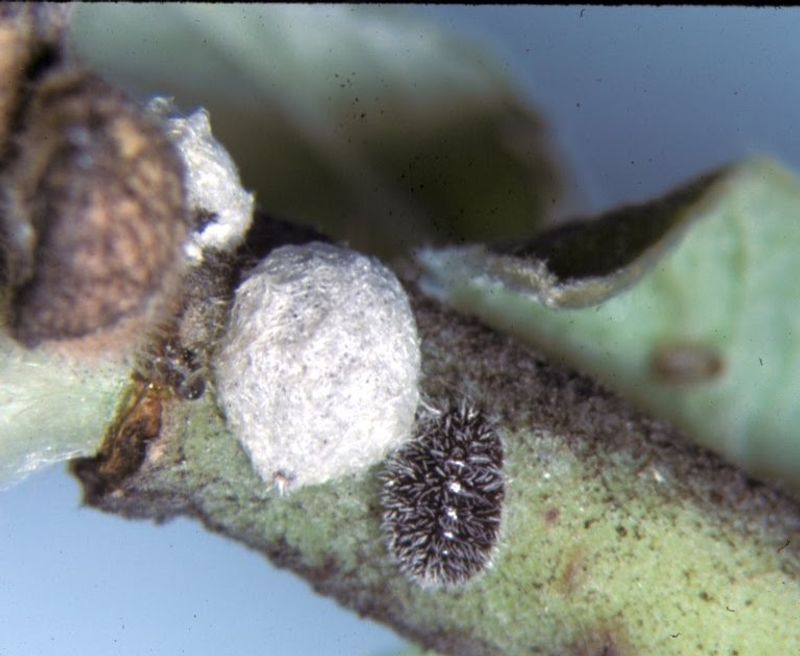
The crawler stage is the best treatment window.
Adult azalea bark scale insects are protected by their waxy covering, which makes contact sprays less effective. Newly hatched crawlers are exposed, mobile, and far more vulnerable.
Crawlers are tiny. They may look like very small pinkish or reddish specks moving along stems before they settle and begin feeding.
Timing varies by season. Georgia weather can shift crawler activity from year to year, so a fixed calendar date is less reliable than checking the plant.
Use tape to monitor. Wrap double-sided tape or sticky tape around a few infested stems, then check it every few days for tiny moving crawlers caught on the surface.
Look near egg sacs. Fresh crawler activity often appears close to cottony patches where eggs have been protected.
Do not spray just because adults are visible. Mature scales under waxy coverings are harder to reach, so spraying at the wrong stage often disappoints.
Plan for follow-up checks. Eggs may hatch in waves, so one inspection rarely tells the whole story.
Record what you see. Notes on crawler activity, treatment dates, and weather help you improve timing the next season.
Local guidance helps. A county extension office can often confirm pest timing for your area and help you decide when treatment makes sense.
The best spray is not just the right product.
It is the right product at the right moment.
5. Use Horticultural Oil Safely
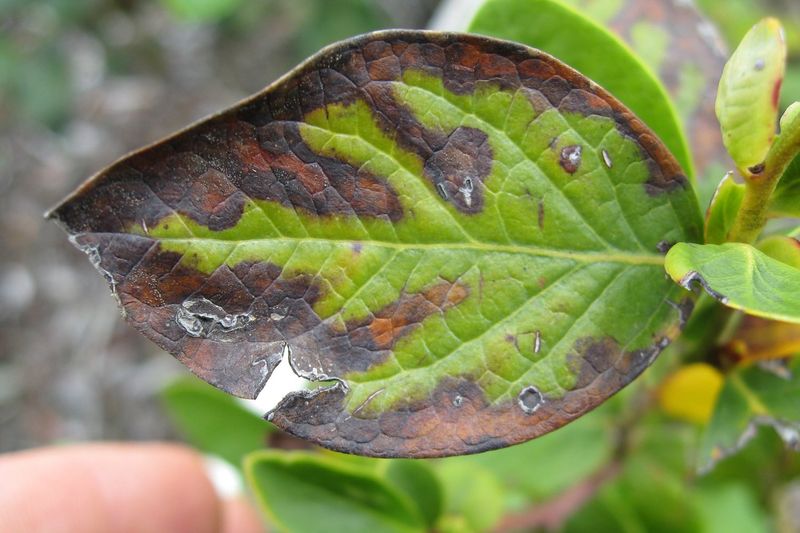
Horticultural oil can help when applied with care.
It works by coating scale insects and interfering with their ability to breathe. That means coverage has to be thorough, especially on stems, branch forks, and rough bark where the pest shelters.
Read the label first. Mixing rates, temperature limits, plant warnings, and reapplication intervals matter for both safety and effectiveness.
Coverage is everything. A light mist over the outer leaves will not reach scale tucked inside the shrub.
Spray stems directly. Aim for the woody areas where the white cottony patches are actually attached.
Watch the weather. Many oil products should not be used during very hot weather, during drought stress, or when freezing temperatures are expected soon.
Avoid stressed plants. An azalea that is wilted, dry, recently transplanted, or already struggling may react poorly to oil.
Water the day before when soil is dry. A well-hydrated shrub handles treatment better than one already under moisture stress.
Test a small section. Spray a limited area first and wait a couple of days before treating the whole plant.
Look for leaf response. Yellowing, spotting, browning, or unusual leaf drop on the test area means the shrub may be sensitive.
Oil is useful, but it is not casual.
Apply it slowly, safely, and only when conditions favor the plant as much as the treatment.
6. Try Insecticidal Soap Carefully
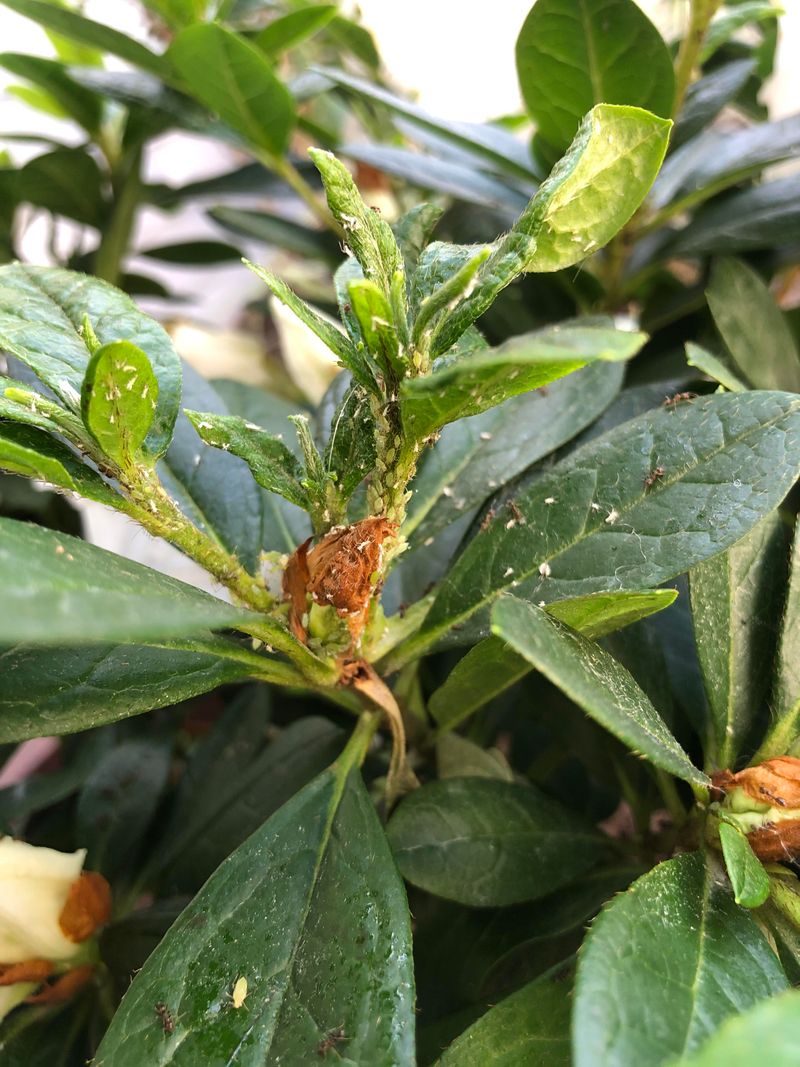
Insecticidal soap works best on exposed young scales.
Like horticultural oil, it needs direct contact to do much good. Crawlers and young stages are the main targets because they have not yet developed the same protective covering as older scales.
Aim for the stems, not just the leaves. Azalea bark scale often lives on woody growth, so the spray must reach branch crotches, rough bark, and hidden inner stems.
Slow application helps. Move branches gently and spray the areas where crawlers are likely to settle.
Label directions matter. Stronger mixtures do not mean better control and can damage azalea foliage.
Heat raises risk. Soap sprays can cause leaf injury when applied during hot weather or to drought-stressed plants.
Morning is usually safer. Cooler temperatures and calmer air give the plant a better treatment window.
Test before full coverage. Treat a small section, wait 48 to 72 hours, and check for spotting, yellowing, or wilting.
Repeat only as directed. Soap has little residual effect once dry, so follow-up treatment may be needed, but only within the product’s labeled schedule.
Avoid blooms when possible. Spraying flowers can affect visiting pollinators and may damage delicate bloom tissue.
Soap can fit well into a safer plan.
It is most helpful when used precisely, during crawler activity, and with careful attention to plant stress.
7. Protect Beneficial Insects Nearby
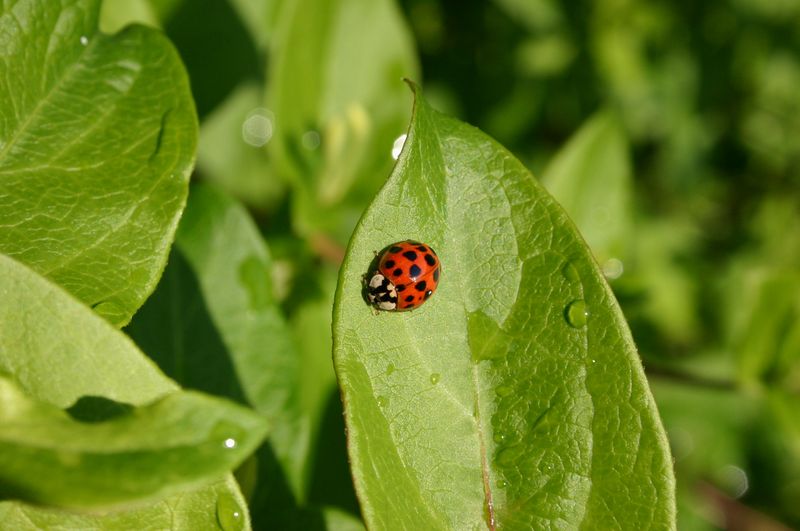
Your garden already has helpers.
Tiny parasitic wasps, lady beetles, lacewings, predatory mites, and other beneficial insects can all reduce scale pressure. They work quietly, and broad spraying can remove them before they make progress.
Avoid treating the whole yard. A scale problem on one azalea does not require spraying every shrub nearby.
Use targeted applications. Treat only infested stems or shrubs so beneficial insects in the rest of the garden have a better chance to survive.
Skip broad-spectrum insecticides when possible. These can reduce natural enemies and allow scale populations to rebound later.
Watch bloom timing. Azaleas attract bees and other pollinators when flowering, so treatments should wait until blooms have faded whenever possible.
Do not spray in wind. Drift can carry products onto nearby flowers, vegetables, or pollinator plants.
Keep ant activity in check. Ants drawn to honeydew may protect scale insects from predators, so reducing honeydew and managing ant trails can help natural enemies work.
Support plant health. Proper watering, mulch, and spacing help the azalea tolerate moderate pest pressure better.
Avoid excess fertilizer. Too much nitrogen can push soft growth that sap-feeding insects may use more easily.
Beneficial insects are part of the treatment plan.
The safest control strategy protects the helpers while reducing the scale.