The Maple Tree Holes Michigan Homeowners Should Photograph Before Calling It Woodpecker Damage
Neat rows of small holes circling a maple trunk are often mistaken for random woodpecker damage, but this pattern actually points to a specific bird behavior worth documenting.
Yellow bellied sapsuckers create these organized rows while feeding on sap and small insects attracted to the wounds.
Photographing the pattern before assuming general woodpecker activity helps homeowners and arborists identify the exact cause more accurately.
Repeated sapsucker visits to the same tree can eventually stress the maple, especially if holes ring the trunk completely around one section.
Checking whether holes appear in neat horizontal lines, rather than scattered randomly, helps confirm sapsucker involvement specifically. Wrapping trunks with burlap or mesh can discourage repeated visits without harming the birds themselves.
Consulting a local arborist becomes especially important if damage appears extensive or concentrated in one area. Documenting this pattern now helps determine whether any additional tree care is needed.
1. Perfectly Round Holes May Be Beetle Exit Holes
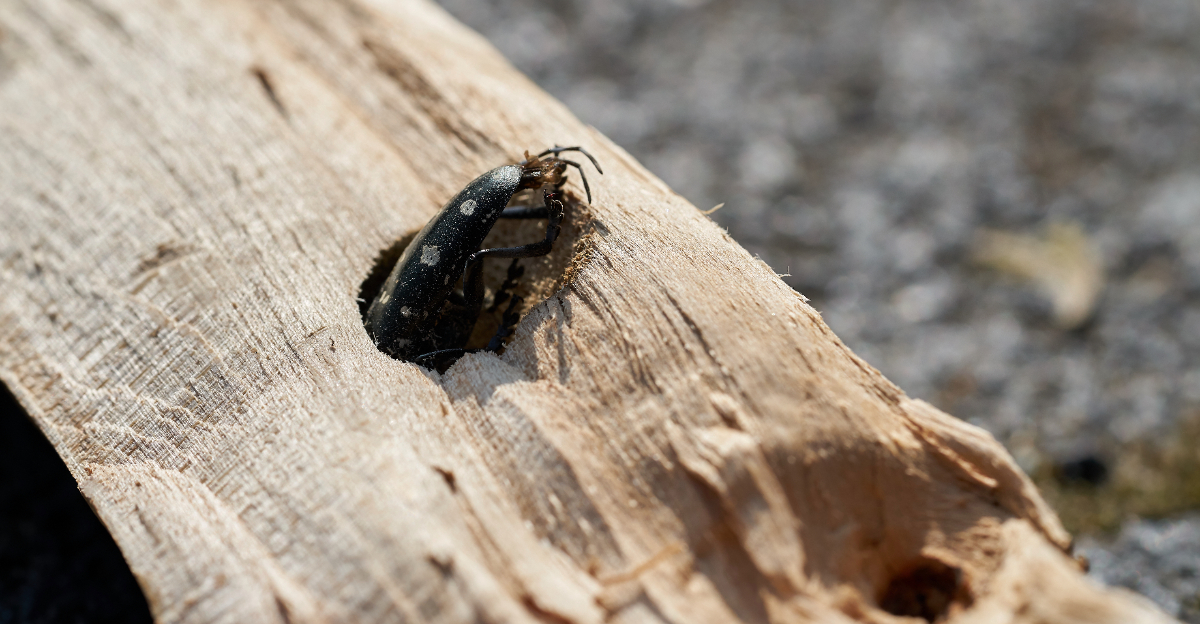
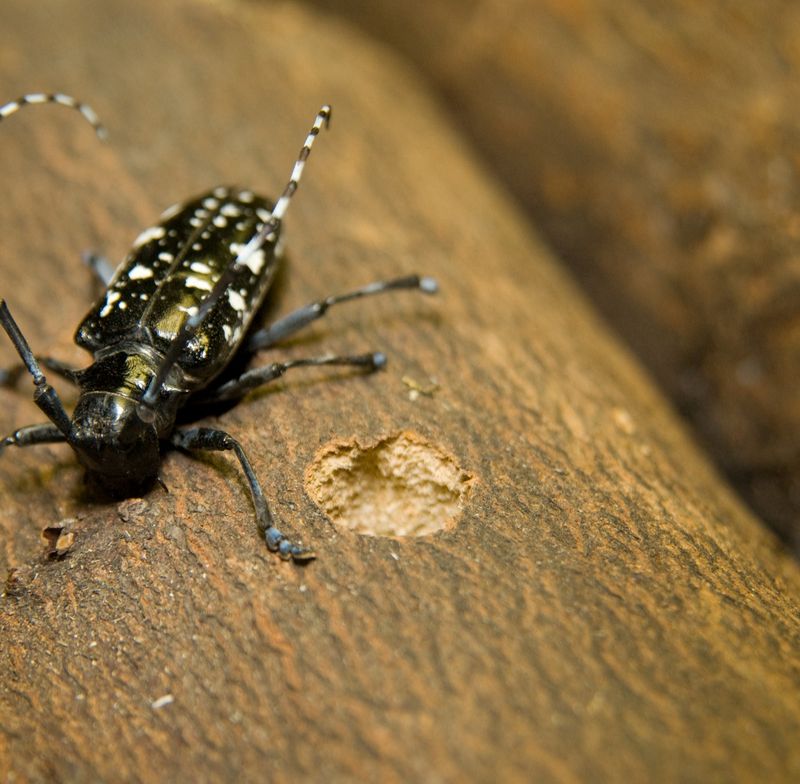
Not every hole in a maple tree comes from a bird. A clean, perfectly round hole drilled into the trunk or a thick branch of your Michigan maple could be an exit hole left behind by an adult Asian Longhorned Beetle.
These holes are roughly the size of a pencil in diameter and go deep into the wood itself, not just through the surface bark. That depth is a key detail worth noticing.
One hole alone does not automatically confirm an infestation. Physical injuries, other insects, and even natural tree processes can create similar marks.
However, a round, smooth-edged hole that enters the actual wood deserves more than a passing glance.
Many homeowners fill these holes or cut away the branch without ever documenting what they found, which makes it much harder for specialists to help later.
Before you reach for a ladder, a saw, or wood filler, grab your phone and take a photograph. Get close enough to show the shape and depth clearly.
If possible, place a coin or pencil next to it for size reference. Reporting an unusual hole to Michigan officials costs nothing and takes only a few minutes.
Early documentation has helped inspectors catch serious beetle activity in Michigan communities before it spread further, so your photograph could genuinely matter more than you think.
2. Sapsucker Holes Usually Follow An Orderly Pattern
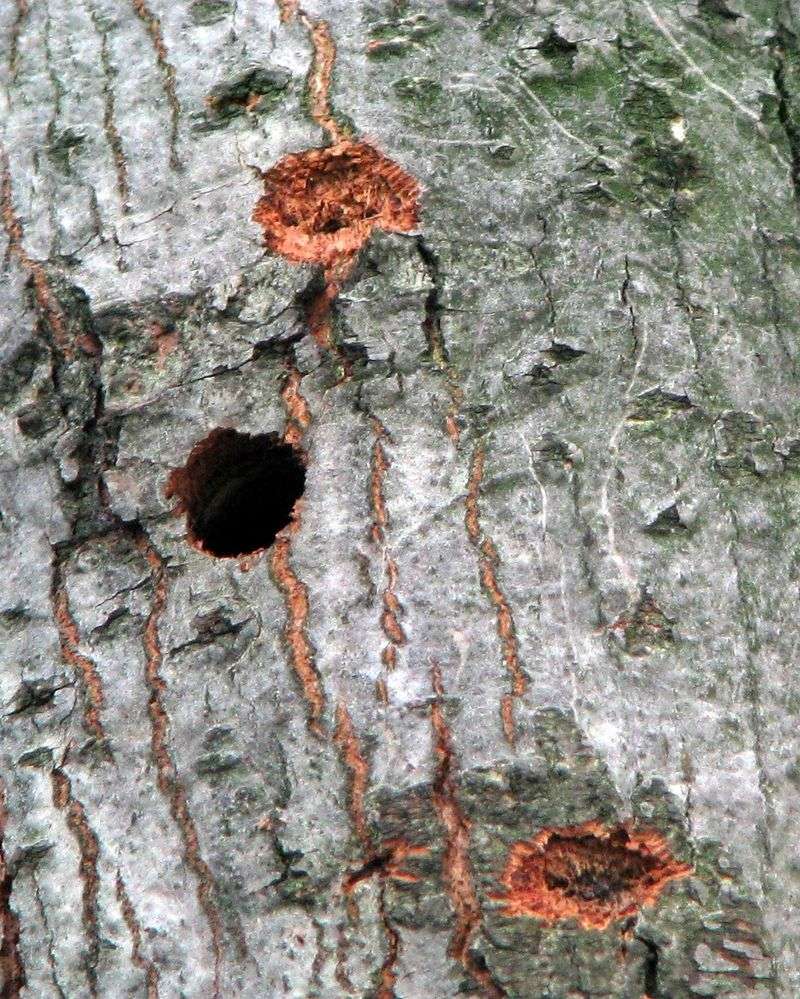
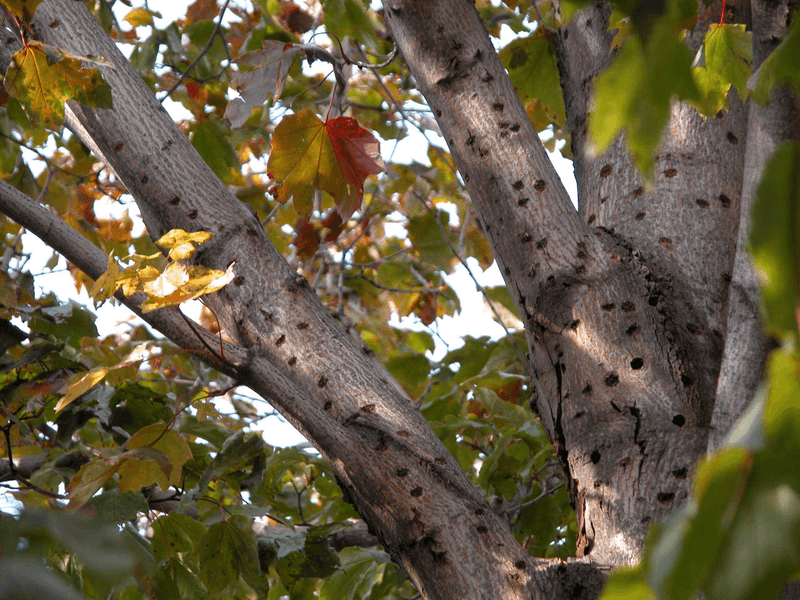
Picture a tidy row of small holes running straight across the bark of your maple like a line of stitches on fabric. That organized pattern is one of the clearest signs of a Yellow-bellied Sapsucker at work.
These birds create shallow holes in maple bark to reach the sugary sap flowing just beneath the surface.
Unlike random damage, sapsucker holes tend to appear in straight horizontal rows, repeated bands, or neat vertical columns that give the bark an almost decorative look.
Sapsucker activity is very common across Michigan and shows up on many species of trees. The good news is that a healthy, vigorous maple can handle sapsucker drilling without serious trouble most of the time.
Your Michigan Garden Changes Every Week. Your Plan Should Too.
Gardening in Michigan changes quickly throughout the season. Every Friday you’ll receive a simple weekly plan showing exactly what to plant, prune, fertilize, harvest, and protect so you never miss the right timing.
The holes are shallow and small, typically no wider than a pencil eraser, and they rarely penetrate deeply into the wood the way a beetle exit hole does.
Knowing the difference between sapsucker rows and the isolated, deeper, round holes associated with Asian Longhorned Beetle is genuinely useful.
Sapsucker holes appear in repeating organized lines, while beetle exit holes tend to stand alone and look cleaner and rounder.
If you are unsure which type you are looking at, photograph both the pattern and a close-up of a single hole.
Sharing those images with a Michigan forestry specialist gives them exactly what they need to give you a confident answer without ever leaving their office.
3. Asian Longhorned Beetle Holes Usually Appear On Trunks And Large Branches
Knowing where to look on a maple tree matters just as much as knowing what to look for.
Asian Longhorned Beetle exit holes tend to show up on the main trunk, thick branch junctions, and large upper limbs rather than on the small twigs at the tips of the canopy.
Inspecting only the lower bark at eye level means you could easily miss holes that are sitting higher up on major branches where the beetles prefer to emerge.
From the ground, upper canopy holes can be genuinely difficult to spot with the naked eye, especially once leaves fill in during spring and summer.
Using a pair of binoculars or the zoom feature on your smartphone camera is a much safer approach than climbing the tree or balancing on an unstable ladder.
A steady zoom shot from a safe distance can capture enough detail for a specialist to evaluate.
Walk slowly around the full base of your maple and scan upward in sections rather than glancing up once and moving on. Look for any spot where the bark surface looks disrupted, slightly discolored, or where a round opening appears against the wood.
Branch junctions are particularly worth examining because beetles often target those areas. If you spot anything unusual at height, photograph it from multiple angles using zoom.
Clear images taken from a safe position on the ground are far more useful than blurry close-ups taken from a shaky ladder perch.
4. Late Summer Is The Most Important Inspection Period
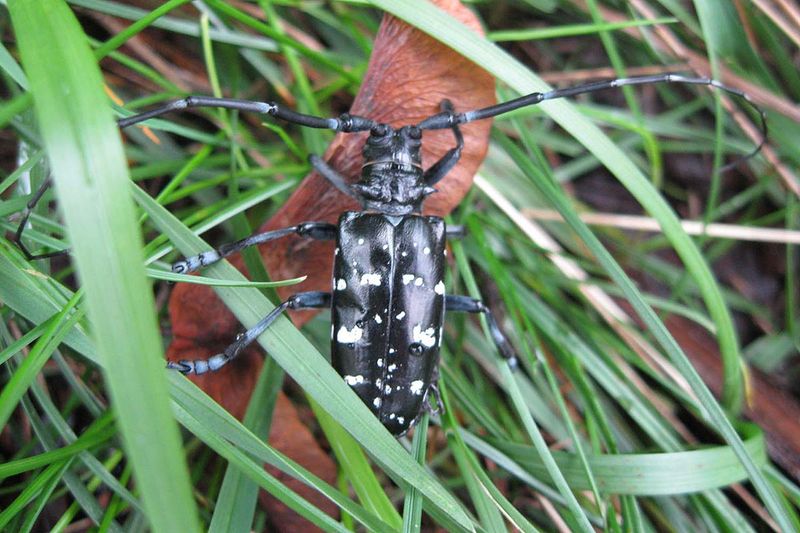
August has an official nickname in the tree care world, and it is a name every Michigan homeowner with a maple should know.
August is recognized nationally as Tree Check Month, a campaign specifically designed to encourage people to examine their trees for signs of Asian Longhorned Beetle activity.
Adult beetles chew their way out of infested wood during the warmer months of summer, which means fresh exit holes are most likely to appear between July and early September.
Catching activity during this window gives inspectors and homeowners the best chance of finding both fresh holes and, occasionally, the adult beetles themselves.
Adult Asian Longhorned Beetles are large enough to see clearly without magnification, and they are sometimes spotted resting on bark or on nearby surfaces during this period.
Photographing a beetle alongside the holes it created adds enormously valuable information to any report.
Even if you miss August, suspicious holes remain visible on the bark long after the beetles have moved on.
Maple bark does not heal over these openings quickly, so holes discovered in September, October, or even the following spring are still worth documenting and reporting.
The important thing is not to wait for the perfect time or assume that because summer has passed there is nothing worth checking.
Any month is a good month to photograph something unusual on your maple tree, and reporting it promptly always beats waiting until next year.
5. Maple Trees Deserve The Closest Attention
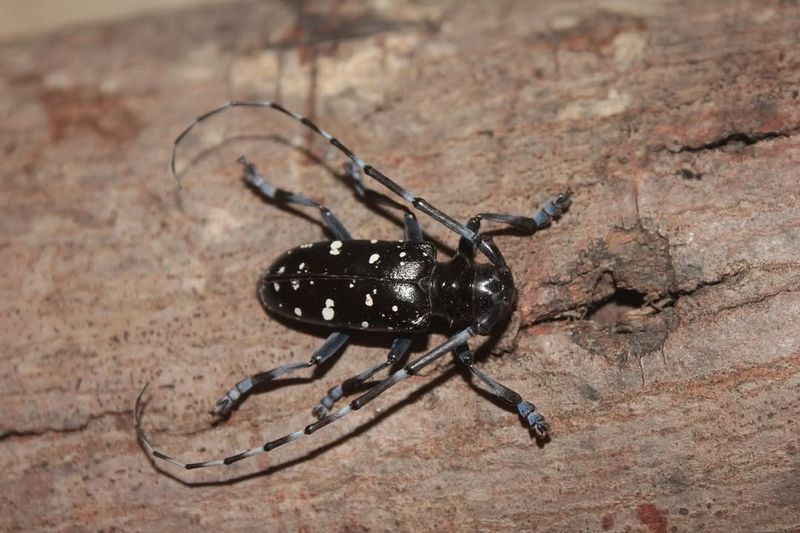
Michigan sits at the center of one of the most maple-rich landscapes in the entire country.
The state is home to more than one billion maple trees, covering forests, neighborhoods, parks, and roadsides from the Upper Peninsula all the way down to the southern border.
That staggering number is exactly why Asian Longhorned Beetle is considered such a serious concern for Michigan specifically.
Maples are the beetle’s preferred host, and the sheer abundance of them here creates conditions where an unchecked infestation could spread widely.
Sugar maples, silver maples, red maples, and Norway maples all fall within the range of trees this beetle targets. Beyond maples, the insect can also use other hardwoods including birch, elm, willow, sycamore, poplar, and horse chestnut.
However, maples consistently attract the heaviest beetle pressure, which means any round exit hole found on a maple carries more weight than the same hole found on a species the beetle uses less frequently.
Here is something worth remembering: a maple can look perfectly healthy on the outside while beetles are still active inside the wood. A full, green canopy does not rule out the possibility of beetle activity within the trunk or larger branches.
A round hole on an otherwise healthy-looking maple is still worth photographing and reporting.
The combination of Michigan’s enormous maple population and the beetle’s strong preference for maples makes careful inspection of these trees genuinely important for everyone in the state.
6. Wood Shavings And Sap Make The Holes More Suspicious
A hole by itself tells part of the story. The real picture comes together when you look at everything surrounding it.
Coarse material that looks like sawdust or wood shavings scattered on nearby branches or piled at the base of the tree is one of the additional signs that specialists ask homeowners to document.
This material, sometimes called frass, is produced as beetle larvae chew through the wood from the inside and push debris outward through their tunnels. Shallow oval or round scars in the bark are another sign worth photographing.
Female Asian Longhorned Beetles chew small pits into the bark surface to lay their eggs, and these scars have a slightly chewed or cratered appearance that stands out from normal bark texture.
Unusual sap flow near these scars, thinning patches of foliage in sections of the canopy, or branches that look less vigorous than the rest of the tree are all worth capturing in your photographs as well.
None of these symptoms alone confirms Asian Longhorned Beetle activity. Each one has other possible explanations, from fungal issues to environmental stress to other insects entirely.
But when several of these signs show up on the same tree at the same time, the case for getting an official identification becomes much stronger.
Photograph every detail you notice, including the wider view of the canopy, the base of the tree, and any individual marks in the bark. More photographs always give specialists more to work with.
7. Some Michigan Locations Receive More Official Attention
Asian Longhorned Beetle does not walk into Michigan on its own. It travels hidden inside raw wood, untreated firewood, wooden pallets, lumber shipments, and other wood products that move from place to place.
Because of this, Michigan inspectors focus their survey efforts on locations where infested wood is most likely to arrive. Understanding these higher-risk spots can help homeowners decide where to pay extra attention to their own trees.
Lumber mills, rail corridors, pallet recycling and storage facilities, highway rest areas, and campgrounds all appear on the list of locations that officials regularly monitor for signs of beetle activity.
Rest areas and campgrounds are particularly relevant because people frequently bring firewood from home and leave it behind, giving any beetles hiding inside the wood a new location to establish themselves.
Many states and Canadian provinces have firewood transport regulations specifically to reduce this kind of spread.
If your property sits near a lumber operation, a rail line, a pallet storage yard, or a campground, your maple trees are worth examining more carefully and more frequently than average.
The same applies if someone recently delivered firewood, lumber, or wood pallets to your property from another region. Inspect the maples closest to where that wood was stored or unloaded first.
Photograph any unusual holes you find, note the date and exact location on the tree, and contact your local Michigan Department of Agriculture and Rural Development office. Acting on a suspicion early is always better than waiting for certainty.
8. Photographs Should Show Size, Shape, And Location
A blurry snapshot taken from ten feet away is not going to help a specialist identify what made a hole in your maple.
When you photograph a suspicious opening, think about giving the viewer three separate pieces of information: the size of the hole, the shape and texture of it, and where exactly it sits on the tree.
Each of those details requires a slightly different shot, and taking all three takes less than two minutes.
Start with a close-up photograph that includes a size reference right next to the hole. A coin, a ruler, or a standard pencil works perfectly. This single image gives specialists an immediate sense of diameter without any guesswork.
Then take a second shot from slightly further back showing the surrounding bark, so they can see whether the bark surface looks disturbed, discolored, or scarred nearby.
Finally, take a wider photograph from a few steps back that shows the hole’s position on the trunk or branch, whether it sits low near the base, mid-trunk, or up at a branch junction.
Add photographs of any wood shavings, sap flow, egg-laying scars, or thinning canopy sections you noticed nearby. If you happen to spot an actual beetle anywhere on or near the tree, photograph it too without touching it.
Write down the date you took the photos and the street address or a GPS location for the tree.
Submitting clear, well-labeled photographs through Michigan’s official reporting tools gives specialists the best possible starting point for an accurate evaluation.
9. The Beetle Has Distinctive Black And White Markings
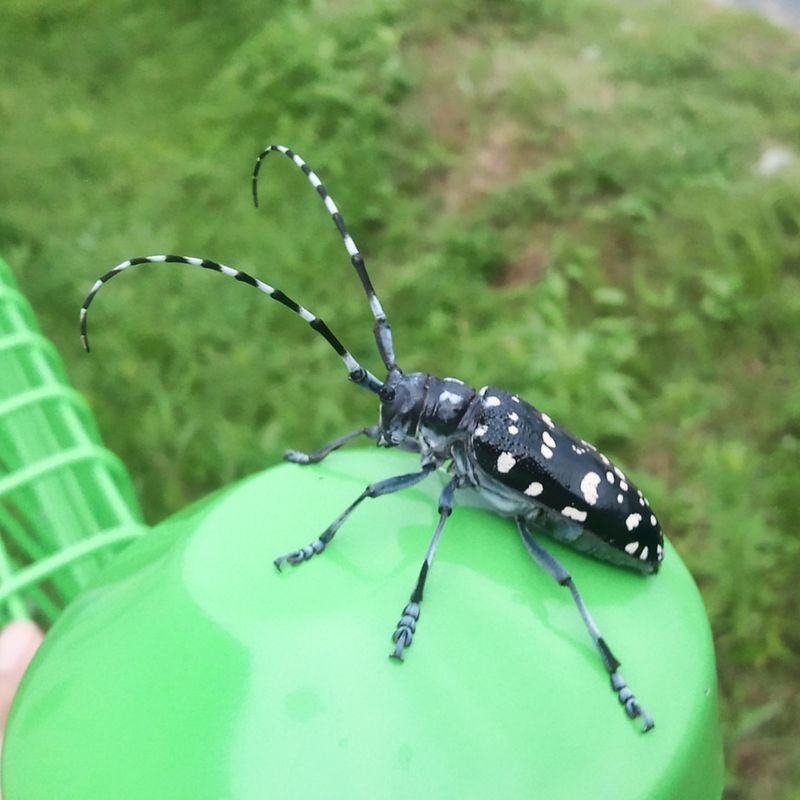
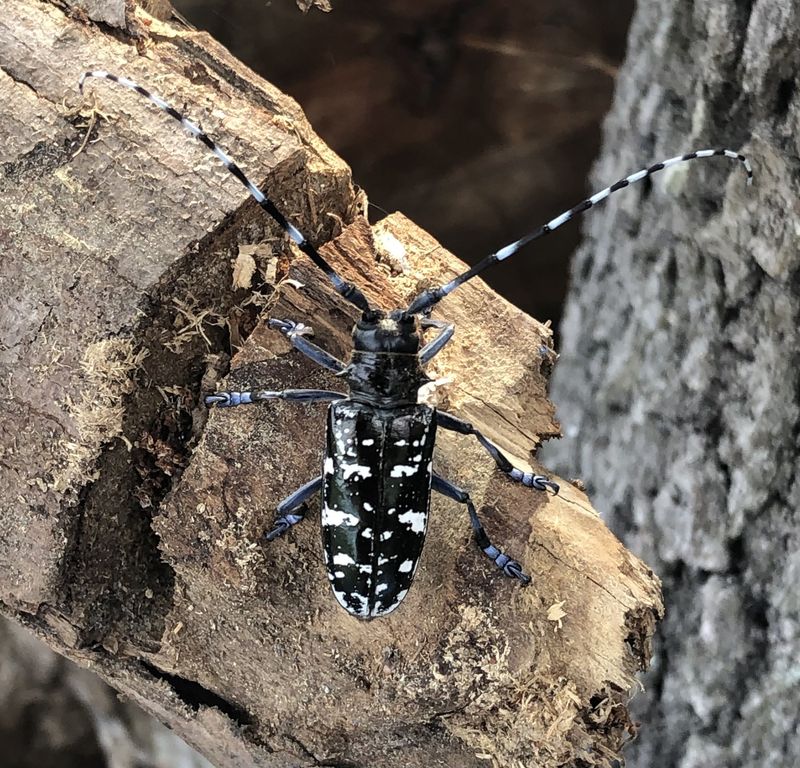
Spotting the beetle itself is the clearest possible evidence you can bring to a report. Adult Asian Longhorned Beetles are large, shiny, and striking in appearance.
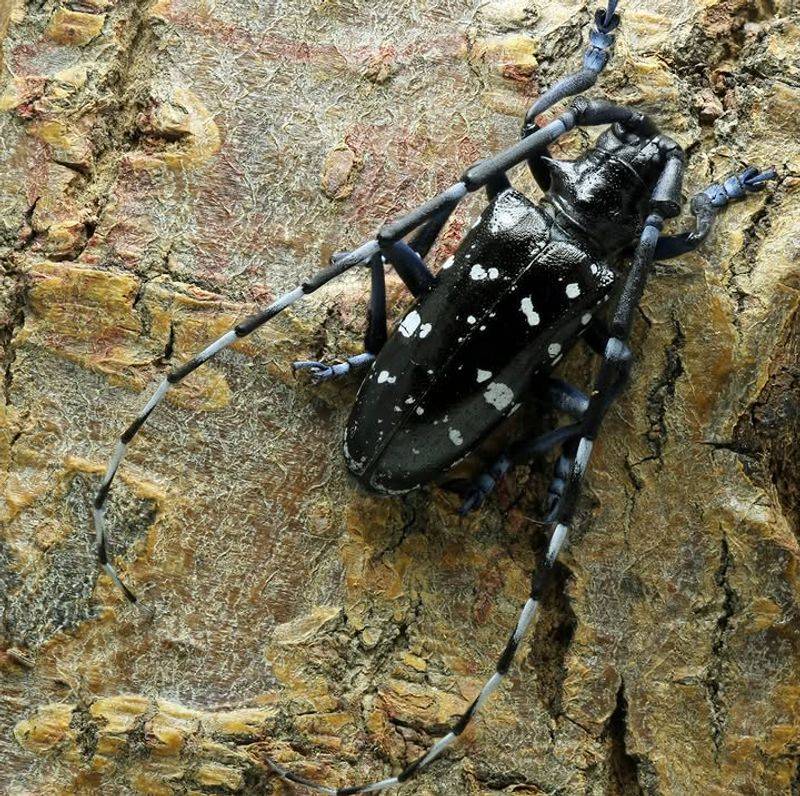
The body is jet black with a glossy surface and covered in irregular white spots scattered across the wing covers.
The antennae are especially eye-catching, banded in alternating black and white segments that can stretch longer than the beetle’s body itself. Once you see one, it is not something you easily forget.
Body length typically falls somewhere between one inch and one and a half inches, not counting those long, dramatic antennae.
That size puts the beetle firmly in the range of large native beetles that Michigan homeowners might also encounter, which is exactly why photographs matter so much.
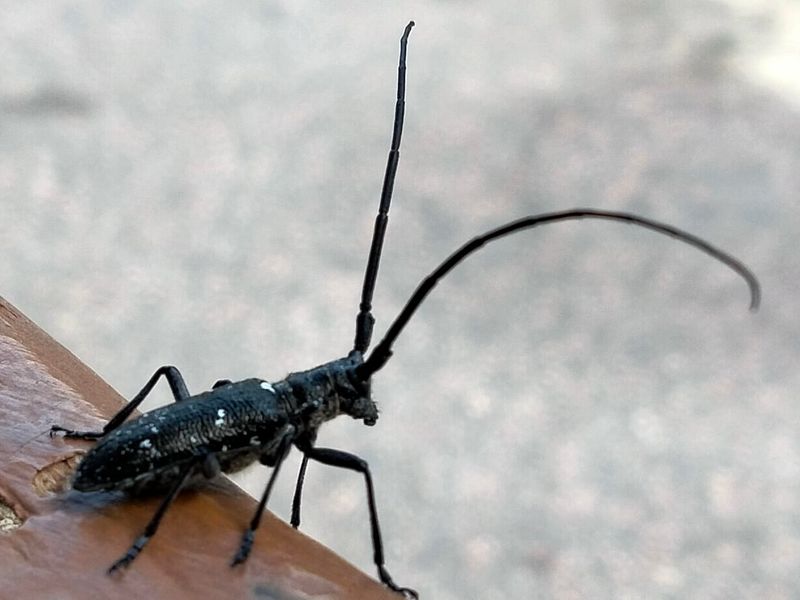
Several native species share a black body and spotted pattern with the Asian Longhorned Beetle, and color or size alone is not enough to tell them apart confidently.
A clear photograph captures the specific arrangement of the white spots and the precise banding on the antennae, details that allow specialists to make a definitive identification.
If you find a beetle on or near your maple, resist the urge to brush it away or step on it. Instead, photograph it from multiple angles if you can do so safely.
If the beetle is on a surface you can easily access, you may also place it carefully into a sealed container and refrigerate it, which preserves it for examination.
Report your find through the Midwest Invasive Species Information Network or contact the Michigan Department of Agriculture and Rural Development directly.