Why Michigan Gardeners Are Replacing Emerald Green Arborvitae With Smarter Privacy Plants
Something is happening in Michigan backyards, and once you notice it, you will see it everywhere.
The long, tidy rows of Emerald Green arborvitae that defined suburban privacy screens for two decades are coming out.
What is going in their place is different, layered, alive in ways a single evergreen row never managed to be.
Arborvitae seemed like the perfect answer for years. Affordable, narrow, winter green. Nurseries could not keep them stocked.
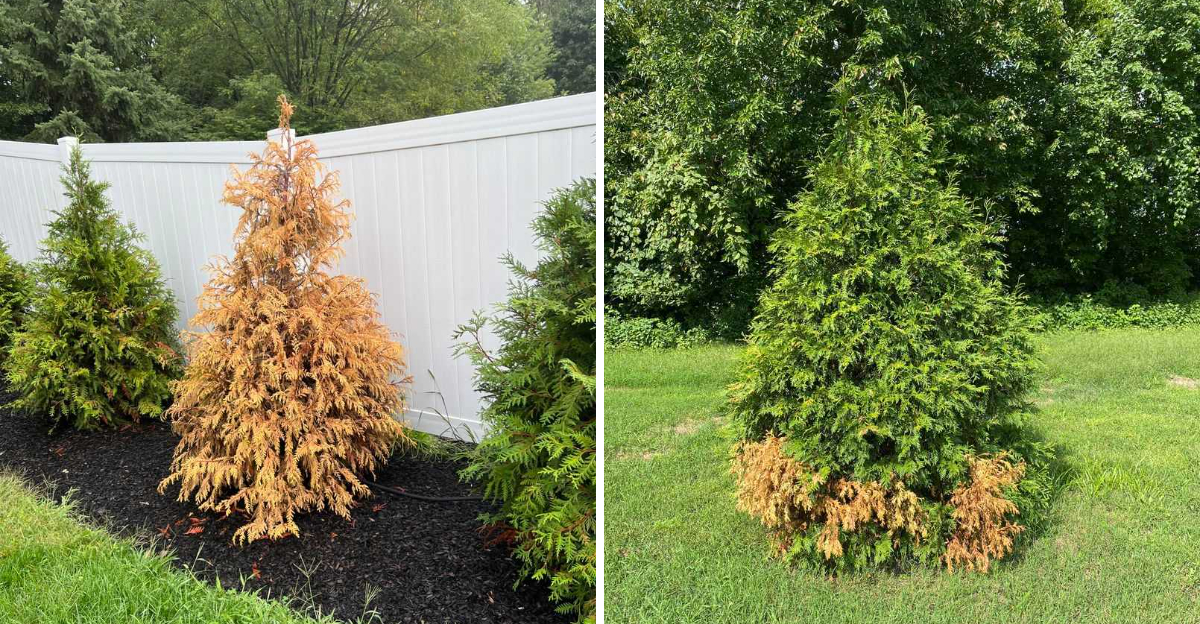
Then Michigan winters, Michigan deer, Michigan clay soil, and Michigan wind made their opinions known. Gaps appeared. Browning spread across exposed sides. Bent, lopsided shapes replaced what was supposed to be a clean, solid wall.
The low-maintenance promise started feeling like a yearly repair project with no end in sight.
What gardeners discovered is that no single plant species handles everything a Michigan yard throws at it. The smarter move is a mixed, layered screen built with plants that actually belong here.
These reasons explain why the switch is happening, and what is going in the ground instead.
1. Narrow Screens Leave Gaps Faster
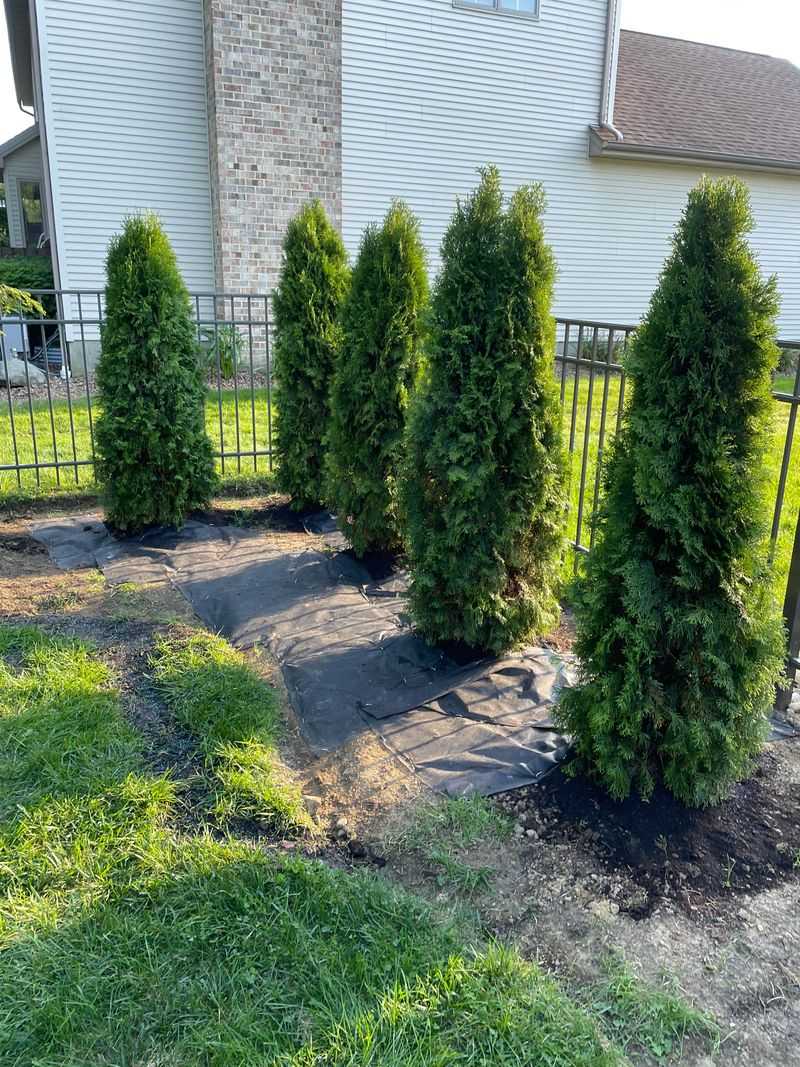
A single row of narrow trees sounds solid on paper.
Anyone who has watched an Emerald Green arborvitae screen for more than five years knows how that story actually ends: gaps appear faster than expected and never close on their own.
Emerald Green arborvitae averages only three to five inches of height gain per year under good conditions.
That slow pace means a young screen stays thin and see-through for years while neighboring properties and curious eyes are not waiting around.
Even a mature row rarely creates a truly solid visual barrier because the natural cone shape leaves open triangles near the base as trees age and lower branches thin.
The screen that looked complete from a distance has holes at the exact level where screening matters most.
A gap in a row of identical trees stands out immediately. A single stressed or struggling plant creates a visible hole with nothing around it to compensate.
Single-species, single-row evergreen plantings are among the least effective long-term privacy solutions for exactly this reason.
Wider screens built with a mix of species at different heights solve this naturally.
A layered planting with shrubs in front, mid-sized evergreens in the middle, and taller trees behind creates overlapping coverage at multiple levels.
When one plant has a rough season, the others fill the visual space without any additional effort from the gardener. Smarter privacy screens do not rely on one narrow line doing all the work.
Spreading that responsibility across many plants changes the whole reliability equation, and the math works out much better.
2. Winter Burn Shows On Exposed Sides
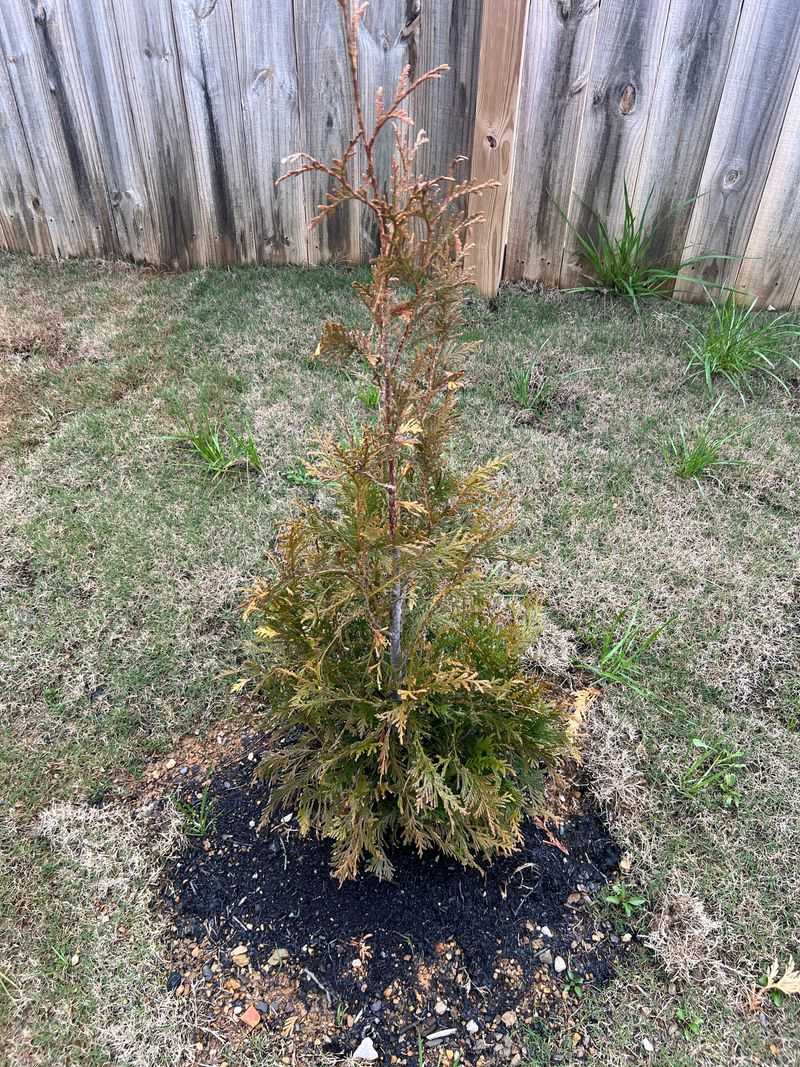
Stepping outside in March to find a once-green privacy screen half-brown and crispy on the road-facing side is one of the most discouraging sights in Michigan gardening.
Winter burn on Emerald Green arborvitae is not a random event. It is predictable, and it keeps happening to the same trees in the same spots every year.
Winter burn occurs when bright winter sun and cold dry wind pull moisture out of foliage faster than frozen roots can replace it.
Your Michigan Garden Changes Every Week. Your Plan Should Too.
Gardening in Michigan changes quickly throughout the season. Every Friday you’ll receive a simple weekly plan showing exactly what to plant, prune, fertilize, harvest, and protect so you never miss the right timing.
Michigan’s west-facing and south-facing exposures are especially demanding. Foliage desiccates and turns brown, sometimes across just one side of the tree and sometimes across entire sections of a row.
Emerald Green arborvitae is particularly vulnerable to winter desiccation in exposed sites with full sun and strong prevailing wind, which describes a significant portion of Michigan backyards.
Anti-desiccant sprays and burlap wrapping help reduce the damage, but both are annual chores that add cost and effort to what was supposed to be low-maintenance landscaping.
Many gardeners grow tired of the routine within a few seasons, and the trees suffer for it.
Native and adapted alternatives handle Michigan winters with far less intervention. Eastern red cedar, American holly, and inkberry holly maintain color and structure through cold months without special protection.
Plants with flexible stems and naturally waxy foliage resist wind desiccation the way arborvitae simply cannot.
Choosing plants genuinely suited to Michigan’s climate zone means spending less time in February wondering how bad the damage will look by April.
Some plants just know how to handle a Michigan winter, and arborvitae has never quite been one of them.
3. Deer Browse Can Ruin The Shape
Deer do not read plant tags. They do not care that thirty trees went into the ground at fifteen dollars each in a perfectly straight line.
What they know is that Emerald Green arborvitae is one of their preferred winter meals, and Michigan has no shortage of hungry deer looking for easy access when snow covers everything else.
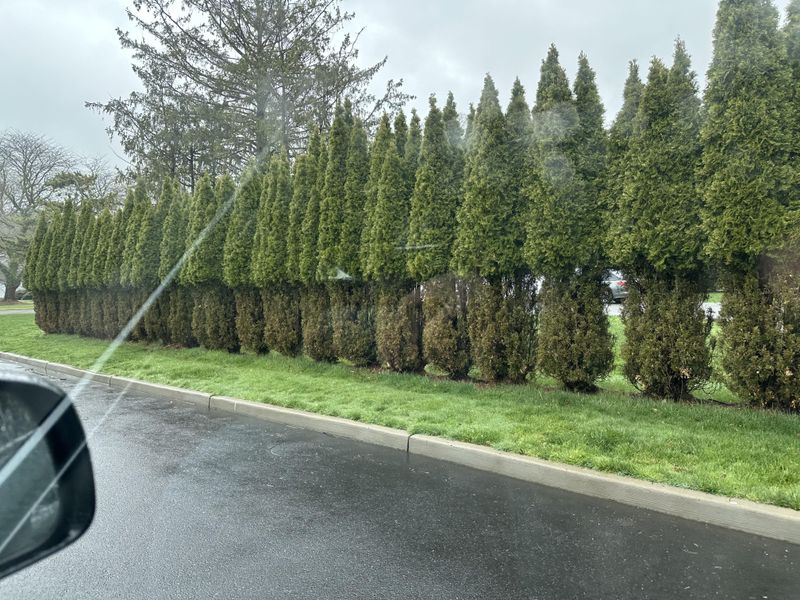
Deer browsing typically hits the lower three to five feet of arborvitae hardest, which is precisely the zone providing ground-level privacy.
Once lower branches are stripped, those sections rarely recover with the same density. The tree ends up looking like a green lollipop on a bare stick, with the gap right where the screening was needed most.
A row of browsed arborvitae can shift from solid screen to open fence in a single hard winter, and the damage is essentially permanent.
Arborvitae is classified as highly preferred deer browse, meaning protection measures are not optional in deer-heavy areas near Michigan woodlands and open fields.
Fencing, repellent sprays, and netting all help but require consistent upkeep and reapplication through the season. The labor adds up fast.
Deer-resistant alternatives make considerably more sense for vulnerable Michigan properties. American holly with its spiny leaves, native viburnums, and blue spruce are far less appealing to deer.
Incorporating thorny or strongly scented plants into a mixed screen creates a natural deterrent that does not require monthly maintenance.
The privacy goal stays intact. The annual November ritual of wrapping everything in burlap does not.
4. Tight Spacing Creates Thin Centers
Packing arborvitae close together is one of the most common planting mistakes in Michigan landscapes, and the logic behind it is completely understandable.
A freshly planted row of small trees looks sparse and underwhelming, so the instinct is to tighten the spacing and speed up coverage. The problem that instinct creates shows up a few years later and does not resolve on its own.
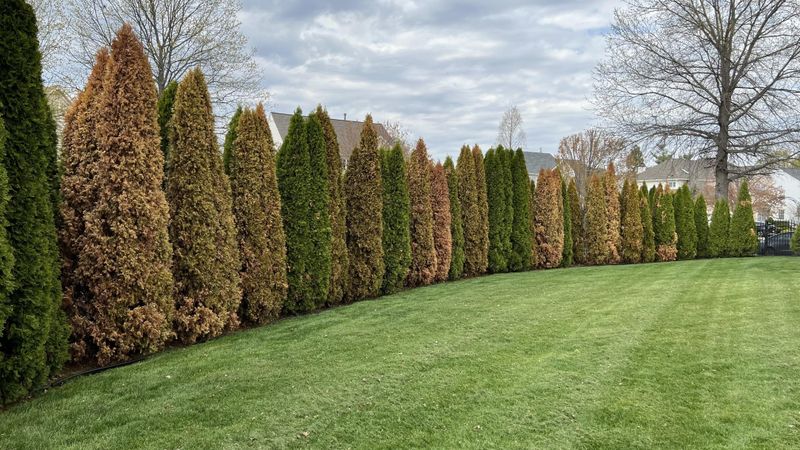
Emerald Green arborvitae needs three to four feet of spacing to develop properly. Planted closer than that, competition for sunlight, water, and nutrients begins almost immediately.
Interior branches starved of light start thinning out while outer surfaces stay green. The centers hollow out gradually, creating a screen that looks solid from a distance but has almost nothing going on inside.
Air cannot move through the dense canopy, which raises humidity levels and creates favorable conditions for fungal problems like tip blight that then spread through the entire row.
Poor airflow accelerates disease pressure and reduces overall plant vigor in tightly planted arborvitae, and a row that looks full from the outside can be surprisingly fragile on the inside.
The structure looks like a screen but behaves like a liability.
Mixed screens avoid this problem naturally because different plant shapes and sizes create varied spacing patterns without any deliberate effort.
Rounded shrubs, upright evergreens, and spreading groundcovers occupy different layers without competing for exactly the same resources at exactly the same depth.
Better airflow means fewer disease problems across the whole planting. Healthier plants hold the screen together through Michigan’s toughest seasons without the kind of internal collapse that tight arborvitae rows are prone to developing.
5. Wet Soil Adds Extra Stress
Michigan soil is not gentle. Heavy clay covers much of the Lower Peninsula, and clay holds water in ways that many popular landscape plants fundamentally cannot handle.
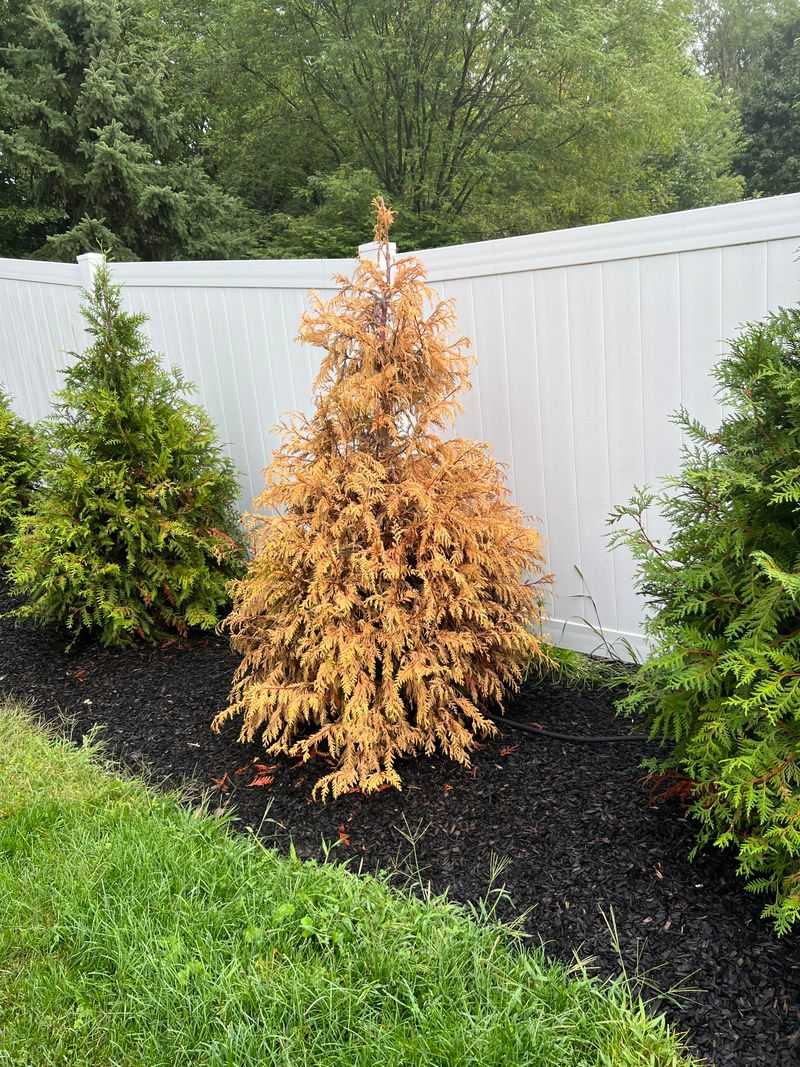
Emerald Green arborvitae, despite its reputation as an adaptable evergreen, struggles significantly in poorly drained or consistently wet conditions, which describes a substantial number of Michigan side yards and back borders.
Roots sitting in saturated soil cannot absorb oxygen properly. Over time this produces visible foliage decline, loss of color, and general loss of vigor that makes the plant more vulnerable to pests and disease simultaneously.
Phytophthora root rot, a water-mold pathogen that thrives in wet soil, is a documented problem in poorly drained arborvitae plantings across the Midwest.
Drainage issues are consistently identified as a leading cause of arborvitae decline in home landscapes across Michigan.
Raised beds and soil amendments help, but they add cost and labor to an already substantial planting project.
Many homeowners do not discover the drainage problem until the trees are already in the ground and starting to show stress symptoms that take seasons to appear.
By then the investment is already made and the struggle is already underway.
Native and adapted plants that tolerate wet Michigan soil handle these conditions without drama or intervention.
Winterberry holly, swamp white oak, and native buttonbush thrive in wetter areas and provide excellent screening alongside genuine habitat value.
Inkberry holly is another strong choice for moist sites.
Matching plants to actual soil conditions rather than forcing a popular species into a spot it cannot manage is the foundation of every privacy screen that actually survives long-term in Michigan.
The soil is not the problem. Ignoring it is.
6. One Planting Looks Too Uniform
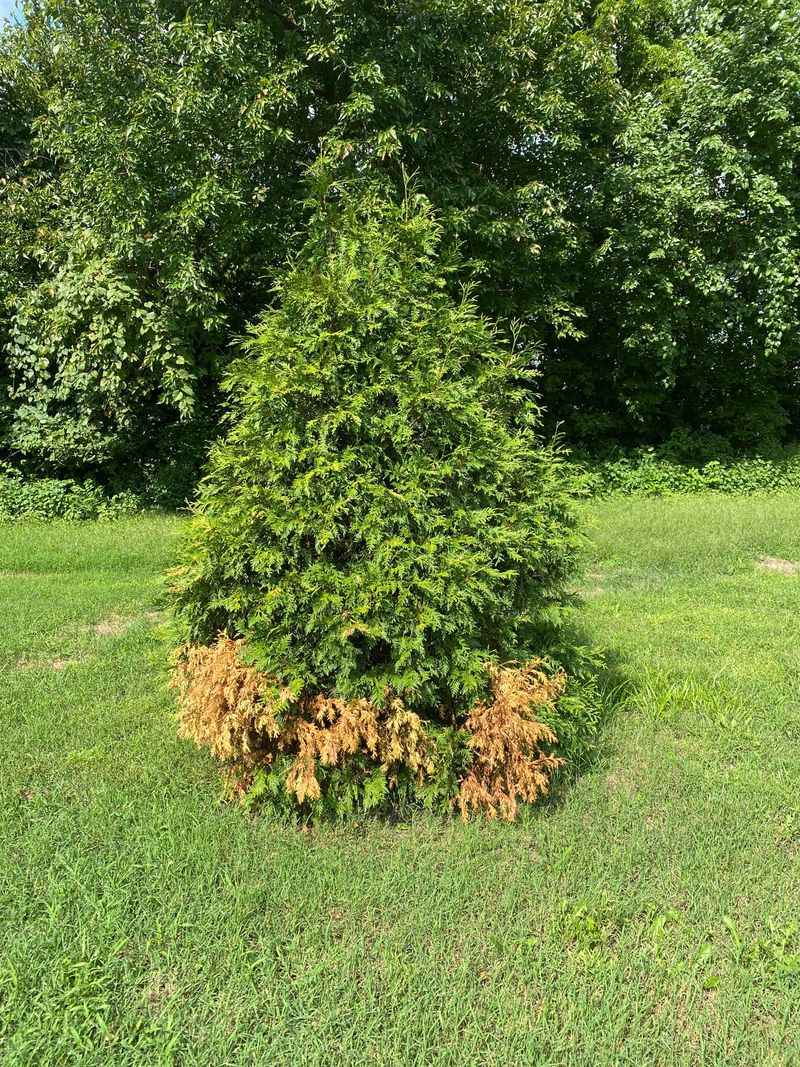
A perfectly straight row of identical green trees looks tidy and intentional at first. Spend a few seasons living behind one and a different feeling develops.
Uniform plantings go flat and lifeless once the novelty fades, and the longer they sit there unchanged through every season, the more they start to resemble a fence that happens to be organic.
Beyond aesthetics, uniformity in a privacy screen is a genuine design vulnerability.
When every plant in a row is the same species, the same age, and the same size, a single pest, disease, or weather event can affect the entire planting simultaneously.
Bagworms spread rapidly through dense arborvitae rows. One infestation can damage the whole screen before the gardener identifies the problem.
A monoculture is only as strong as its most vulnerable individual, and when that vulnerability is shared across every plant in the row, the damage potential is significant.
Diversity in planting design consistently produces more resilient, more visually interesting, and more ecologically functional results than single-species rows.
Variety in texture, color, and seasonal interest transforms a privacy screen from a fence substitute into a genuine garden feature that earns attention rather than disappearing into the background.
Mixing evergreens with flowering shrubs, native grasses, and deciduous plants with fall color creates a screen that changes meaningfully through the seasons and looks considered rather than institutional.
Privacy stays intact. The view from inside the house becomes worth looking at. A well-designed mixed screen generates compliments from neighbors instead of blending invisibly into the property line.
The best hedge is often the one that does not look like a hedge at all, and Michigan yards have plenty of plants capable of pulling that off.
7. Native Shrubs Offer More Wildlife Value
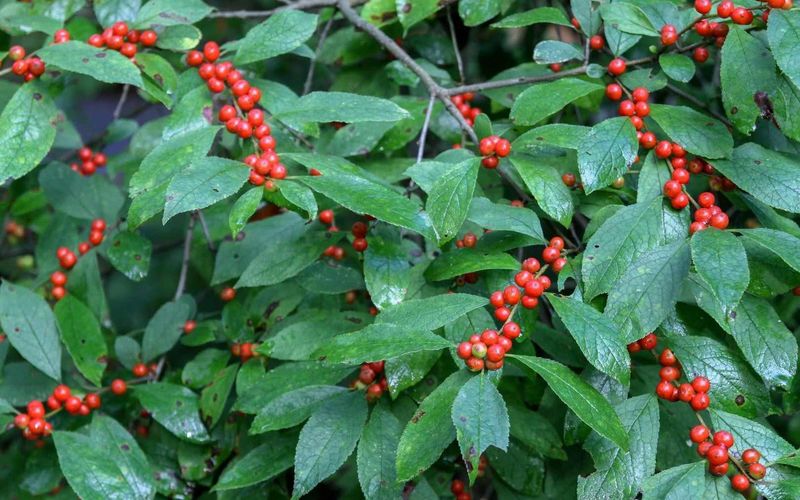
A privacy screen that feeds birds, supports pollinators, and shelters beneficial insects is doing considerably more work than a row of arborvitae ever could.
Native shrubs bring that kind of layered value to a Michigan yard, and the gardeners who made the switch consistently describe it as one of the most rewarding changes they have made to their property.
Winterberry holly produces brilliant red berries that persist through winter and attract cedar waxwings, robins, and bluebirds when other food sources are scarce across the frozen landscape.
Viburnums offer spring flowers that support native bees, followed by berries that over thirty bird species depend on during migration.
Native buttonbush produces unusual spherical flowers that draw butterflies and native bees through midsummer when many other shrubs have finished blooming.
These plants do not just look good in a border. They participate actively in the local ecosystem every season they are in the ground.
Michigan-native plants show superior adaptation to local soils, rainfall patterns, and temperature swings compared to imported alternatives.
Once established, they generally need less supplemental watering, less fertilizer, and fewer pesticide applications.
That translates to lower ongoing maintenance costs and less chemical runoff into local waterways, which matters more than many gardeners initially factor into their planting decisions.
Arborvitae, by comparison, offers almost no wildlife value beyond occasional nesting cover. It feeds nothing, supports no pollinators, and produces no berries or seeds that benefit local bird populations.
Swapping even a portion of a uniform arborvitae row for native shrubs creates a richer, more dynamic yard without sacrificing the privacy the original planting was meant to provide.
The privacy stays. The birds, the butterflies, and the satisfaction of a backyard that is genuinely contributing something to the neighborhood ecosystem all come along as part of the deal.