What It Really Means When Skinks Take Over Your Texas Yard This Summer
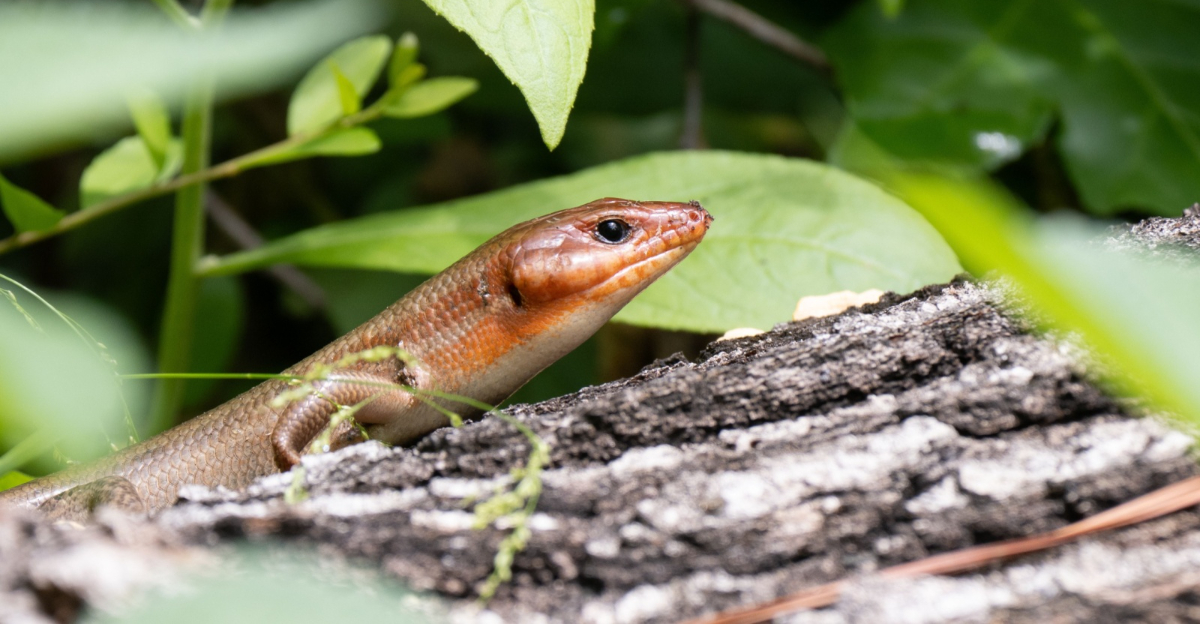
You are out on the patio enjoying a perfectly normal Texas summer morning and suddenly something small and shiny shoots across the pavers at an impressive speed. Then another one disappears into the flower bed.
And another rustles through the mulch near the fence. Before long you are wondering if your yard has quietly become skink headquarters without anyone consulting you about it.
Here is the reassuring part: it probably has, and that is actually good news. Texas yards that suddenly seem full of skinks during summer are not experiencing some kind of reptile takeover.
What is actually happening is much more straightforward.
Warmer temperatures, plentiful insects, leaf litter, mulch, and shaded corners are all coming together to make your landscape genuinely attractive to native wildlife that was already there, just a lot less visible before now.
1. Summer Warmth Has Increased Their Activity
Movement across a sun-warmed patio on a July afternoon is one of the most reliable signs that skinks have shifted into their most active phase of the year. As ectothermic reptiles, skinks depend entirely on external conditions to regulate their body temperature.
Unlike mammals that generate heat internally, skinks must absorb warmth from their environment before they can move efficiently, hunt effectively, or engage in courtship.
When Texas summers arrive with their characteristic intensity, skinks gain access to the kind of sustained warmth that allows them to stay active for longer stretches of the day.
You may notice them basking on rocks, bricks, or pavement in the morning, then retreating to shaded spots when midday heat becomes excessive.
This back-and-forth movement between warm surfaces and cool cover is completely normal behavior.
Seeing more skinks during summer does not mean they were absent during cooler months. Many simply remained hidden, moved more slowly, or stayed closer to stable shelter when temperatures were lower.
The increase in sightings reflects a genuine shift in activity level rather than a sudden jump in population. Texas heat essentially brings skinks out of the background and into plain sight, which can make a modest local group feel far more numerous than it actually is.
Paying attention to when and where they appear can tell you a lot about how your yard functions as a seasonal habitat for small native reptiles.
2. The Yard Provides Small Invertebrates To Eat
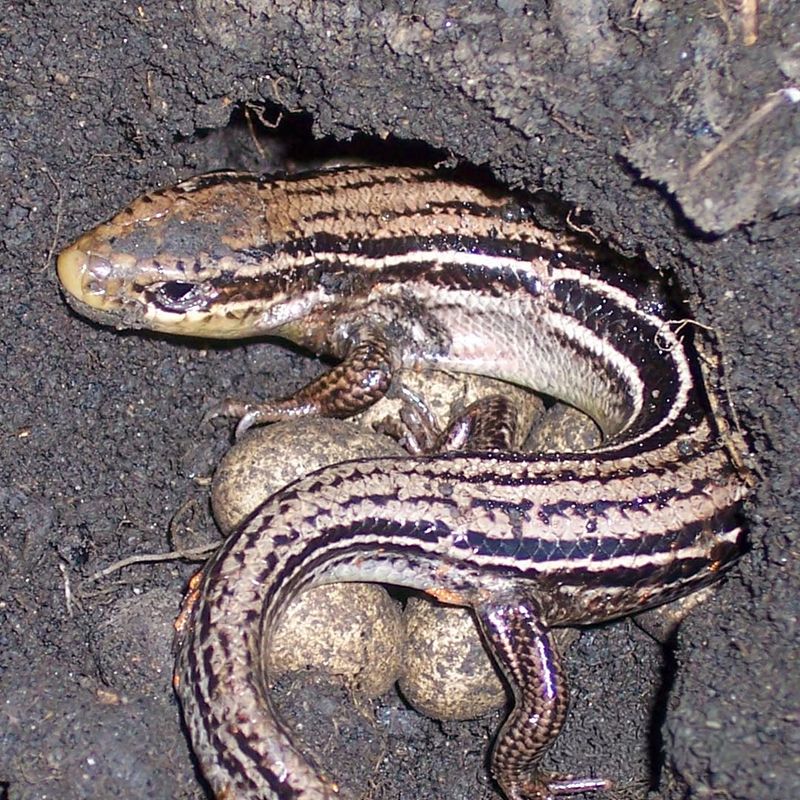
Finding a skink poking around the base of a planter or nosing through a pile of garden clippings is a good reminder that something edible is nearby.
Skinks are active hunters that feed primarily on small invertebrates, and a well-maintained Texas yard can offer a surprisingly steady supply of prey throughout the warm months.
Documented prey items for various skink species include crickets, beetles, grasshoppers, caterpillars, spiders, termites, and millipedes, though the specific diet of any individual skink depends on its species, size, age, and what happens to be available.
Younger, smaller skinks tend to pursue smaller prey, while larger adults may take on bigger insects or spiders without hesitation.
Skink activity in your yard does not mean you have a serious pest outbreak lurking beneath the surface. Many of the invertebrates skinks consume are ordinary parts of a functioning Texas landscape, present in most yards regardless of whether a skink ever shows up.
Your Texas Garden Changes Every Week. Your Plan Should Too.
Gardening in Texas changes quickly throughout the season. Every Friday you’ll receive a simple weekly plan showing exactly what to plant, prune, fertilize, harvest, and protect so you never miss the right timing.
A garden that supports beetles, spiders, and occasional crickets is simply a normal outdoor space, not a warning sign. The fact that skinks are hunting there suggests the food web in your yard is intact and active.
Noticing a skink near your vegetable bed or compost pile is worth a moment of quiet observation rather than concern, since the lizard is likely doing exactly what it is built to do.
3. Leaf Litter And Mulch Offer Useful Shelter
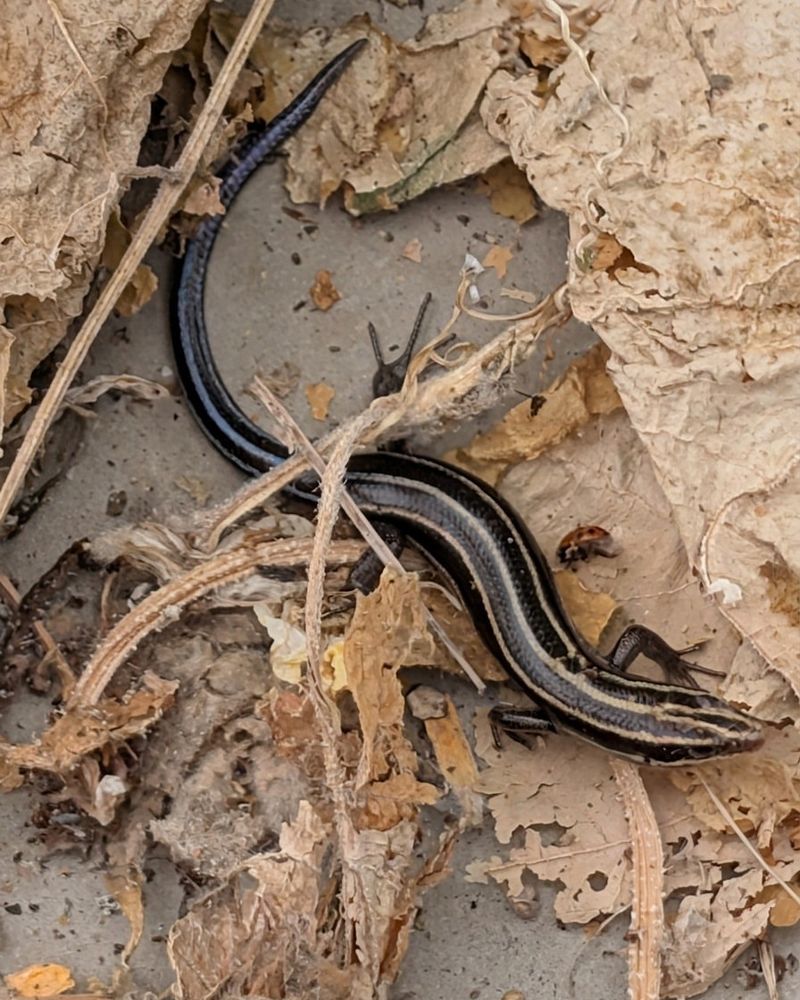
Rustling sounds beneath a freshly spread layer of hardwood mulch are easy to dismiss as wind or settling debris, but in a Texas yard during summer, that movement often has legs.
Leaf litter, mulch, fallen wood, loose bark, flat rocks, and gaps beneath landscape timbers create a layered environment that skinks use for both shelter and hunting.
Cover is essential to skinks because it helps them avoid predators and escape extreme surface temperatures. When the ground bakes under a Texas summer sun, the layer just beneath a few inches of mulch can be significantly cooler and more stable.
Skinks exploit these microclimates throughout the day, moving in and out of cover as conditions change above ground.
Keeping some natural material in garden beds does not require allowing hazardous debris, invasive plants, or unmanaged clutter to pile up near your home’s foundation.
A few inches of organic mulch around shrubs or a modest leaf layer in a corner bed can provide meaningful habitat without creating maintenance problems.
Fallen logs or stacked flat stones in a back corner of the yard are particularly useful because they offer both shade and structural hiding places.
Homeowners who maintain tidy but layered garden beds often find that skinks visit more regularly, which reflects the simple reality that these lizards need somewhere to retreat when the Texas heat or a passing bird makes open ground feel risky.
4. Shaded, Humid Refuges Are Available
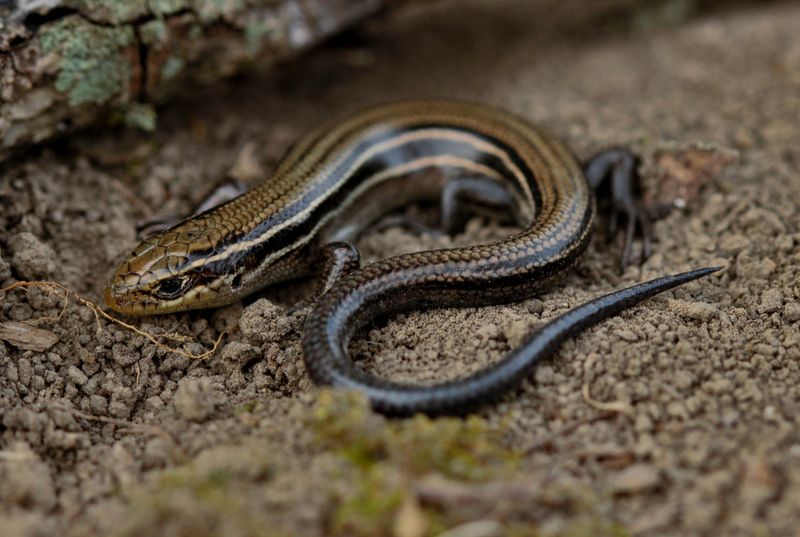
Not every corner of a Texas yard bakes equally under summer sun.
Dense shrubs, irrigated flower beds, spaces beneath containers, areas around outdoor water features, and the shaded undersides of fallen logs can remain noticeably cooler and more humid than exposed turf or gravel.
Skinks seek out these pockets with a kind of quiet precision that reflects millions of years of behavioral refinement.
Some Texas skink species, particularly those associated with the woodlands of East Texas, show a stronger preference for relatively moist or humid microhabitats than species adapted to drier western regions of the state.
Finding a skink near damp soil or a drip-irrigated bed does not prove that a garden is being overwatered or that moisture is attracting reptiles from far away.
It more likely means that a skink already living in the vicinity has identified a comfortable spot to rest or hunt.
Shaded garden beds with dense ground cover, spaces beneath potted plants left on soil, and the edges of compost areas can all function as humid refuges during the hottest parts of a Texas summer.
These spots allow skinks to stay active and find prey without exposing themselves to dangerous heat levels or open-air predators for longer than necessary.
If you regularly spot skinks near the same shaded corner of your yard, that location is probably providing something the surrounding landscape does not, whether that is cooler soil, higher moisture, or simply reliable cover from above.
5. Breeding And Hatching May Increase Sightings
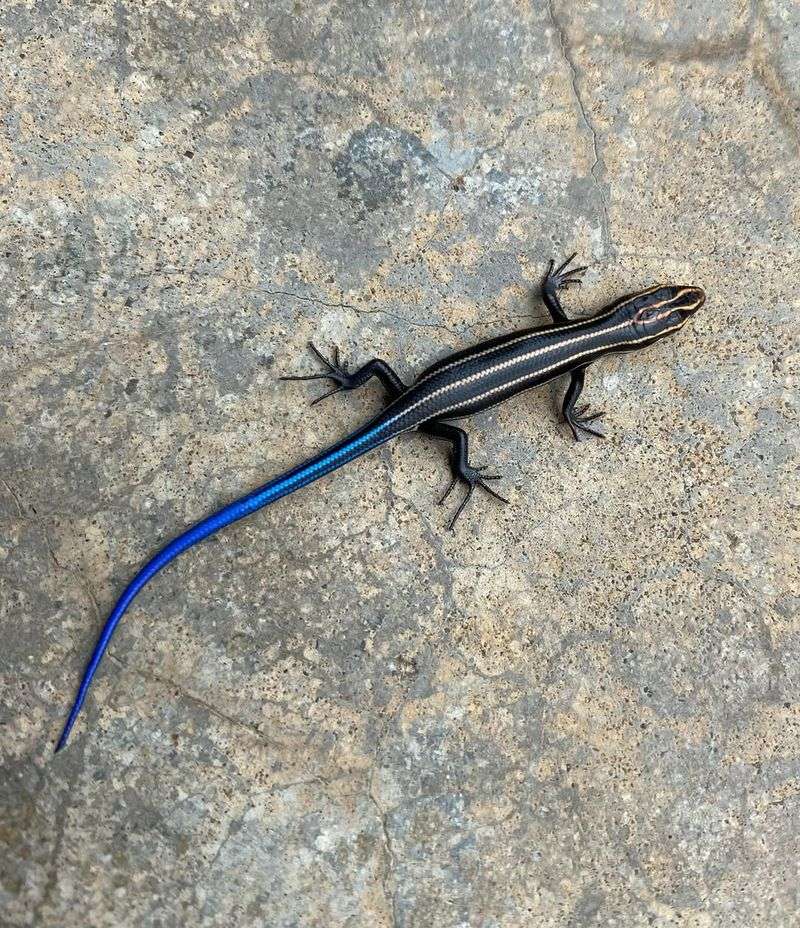
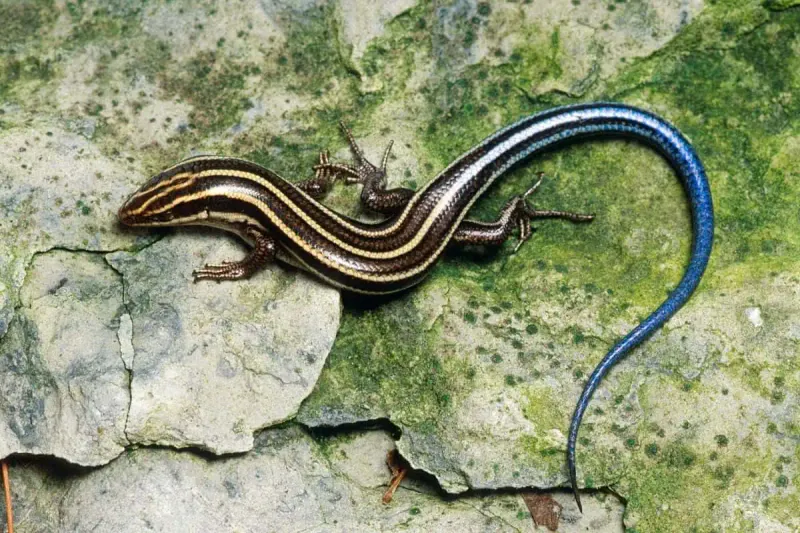
One of the most striking moments in a Texas summer yard is spotting a tiny lizard no longer than a finger, striped in bold yellow and black with a tail that glows an almost electric shade of blue.
Young five-lined skinks are among the most visually distinctive juvenile reptiles in the state, and their appearance during summer often catches homeowners completely off guard.
Summer in Texas can overlap with courtship activity, egg laying, incubation, and the emergence of newly hatched young, depending on the species and the region.
When a new generation of skinks begins exploring the yard, the number of visible lizards can increase noticeably even if the adult population has not changed.
Juveniles tend to move more erratically than adults, making them easier to spot even when they are trying to stay hidden.
It is worth knowing that juvenile appearance can differ significantly from adults of the same species. Young skinks may display vivid tail colors and strong body striping that fade or shift as they mature.
Males of some species develop broader, more reddish heads as adults. These visual differences can make it genuinely difficult to identify what you are seeing without careful observation.
Avoid assuming that every small striped lizard or every blue-tailed juvenile belongs to the same species, since several skink species occur across Texas and their young can look somewhat similar at first glance.
6. More Than One Native Species May Be Present
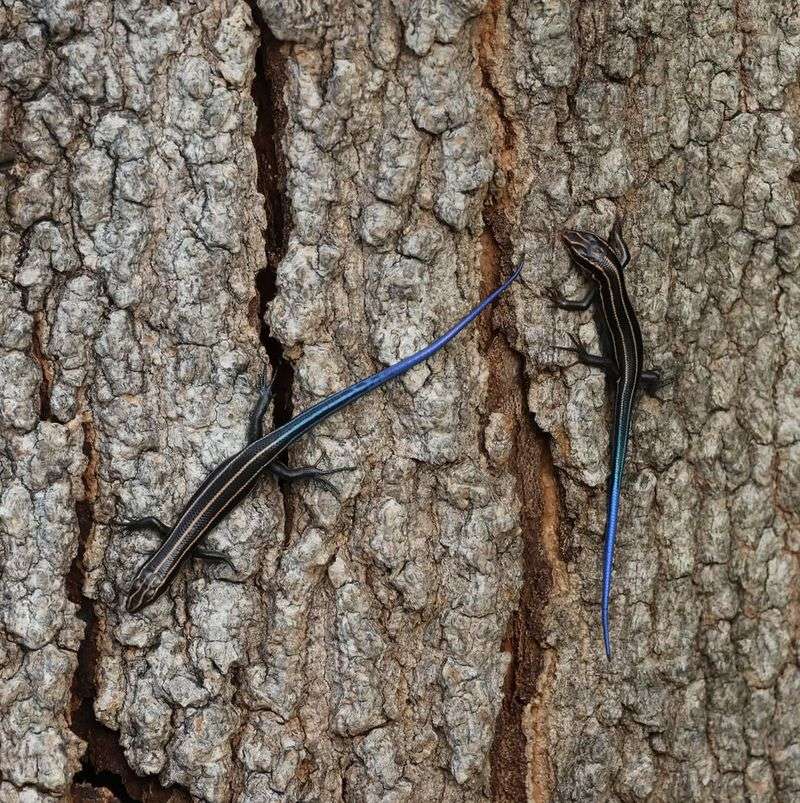
Size differences among the lizards crossing your yard can be a clue that more than one species has taken up residence.
Texas supports several skink species, including the five-lined skink, the broad-headed skink, the Great Plains skink, the prairie skink, and the ground skink, and their ranges, preferred habitats, body sizes, and behaviors can differ considerably.
Ground skinks are small, slender, and tend to move through leaf litter with a wriggling motion that can look almost snake-like. Broad-headed skinks are among the largest skinks in North America and may appear noticeably heavier and longer than their relatives.
Great Plains skinks favor more open, rocky, or grassy habitats and tend to appear in central and western parts of Texas rather than the wooded east. Prairie skinks occupy a relatively limited range within the state and may not appear in many suburban yards at all.
Common names and general appearance can lead to honest mistakes in identification, especially with juveniles or adults that have lost their distinctive markings over time.
Photographing a skink from a respectful distance and comparing the image to a regional field guide or a trusted wildlife resource is a far more reliable approach than trying to identify it by memory or a quick glance.
Observing quietly without attempting to catch or handle the animal gives you the best chance of seeing natural behavior and noting details like leg proportions, scale patterns, and overall body shape.
7. The Yard Supports A Connected Wildlife Community
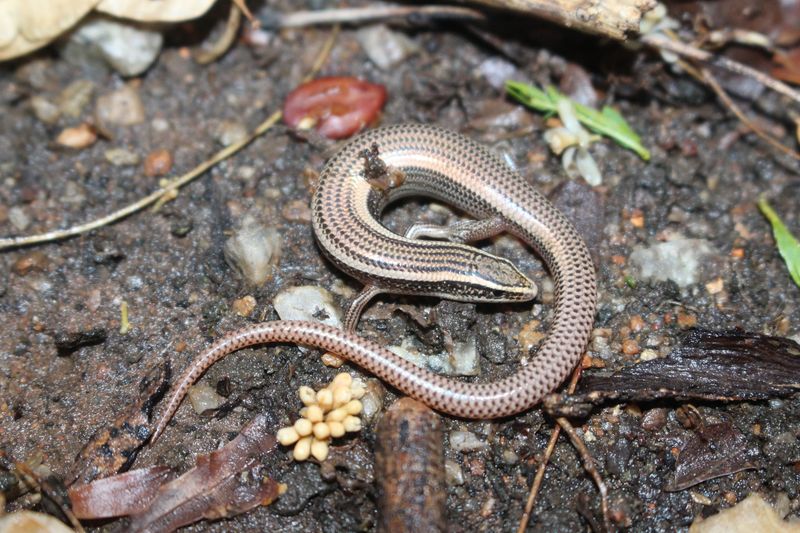
A skink threading its way between the roots of an oak tree and a low stone wall is doing more than just looking for lunch.
Within the broader Texas landscape, skinks occupy a meaningful position as both predators and prey, and their presence in a yard can reflect a wider network of wildlife activity that is easy to overlook.
As hunters, skinks consume small invertebrates that might otherwise go unchecked in garden soil and leaf debris.
As prey, they may provide food for a range of other animals, including certain bird species, larger snake species, and some mammals that share the same habitat.
A yard where skinks are active is also likely to support the birds, snakes, and other creatures that are part of the same connected system.
Noticing a skink does not prove that your landscape is perfectly balanced, chemical-free, or ecologically superior to neighboring properties.
What it does suggest is that the yard offers enough food, cover, and suitable conditions to support at least one layer of small native reptile life, which in turn may support other wildlife that depends on similar resources.
Texas yards that include native plants, organic mulch, water sources, and undisturbed corners tend to attract a broader range of wildlife visitors over time.
Skinks are one visible piece of that picture, and watching where they appear can reveal a great deal about the unseen activity happening just beneath the surface of your outdoor space.
8. They Are More Likely To Help Than Harm The Garden
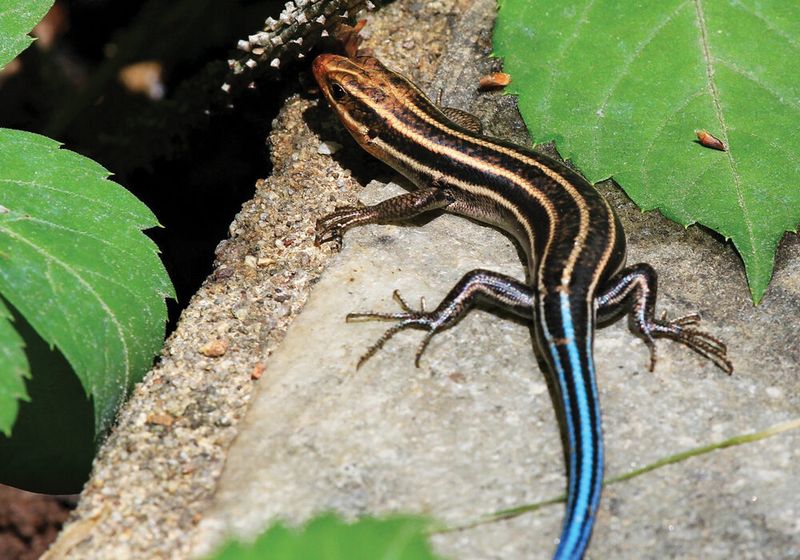
Spotting a skink near the tomato plants or along the edge of a raised bed can feel alarming if you are not sure what it is after, but skinks are not plant eaters.
Their diets are built almost entirely around small animals, which means your vegetables, flowers, shrubs, and turf are not on the menu.
Skinks may consume insects and spiders that gardeners sometimes consider nuisances, including certain beetles, caterpillars, and crickets that show up in garden beds during summer.
This does not mean skinks function as a reliable pest control service or that their presence will prevent plant damage.
The connection between skink activity and garden health is more casual than that, and many of the invertebrates they eat are harmless or even beneficial to the soil.
Skinks may occasionally move loose mulch while hunting or taking cover, but they are not generally known for causing meaningful garden damage. Leaving them undisturbed is the most practical response when one appears near your plants.
Skinks typically retreat quickly when approached, and attempting to handle or chase them causes real stress to the animal.
Some skinks can release part of their tail as a defensive response when threatened, so homeowners should avoid grabbing or cornering them.
Encouraging pets to leave skinks alone is also worthwhile, since repeated pursuit disrupts the lizard’s behavior and can cause unnecessary harm to a beneficial and entirely native Texas resident.