These Are The Signs Your Michigan Cucumber Plants Are Failing And What To Do To Save The Harvest
Cucumbers can look perfectly fine one day and completely fall apart the next, and by the time most gardeners notice something is wrong, the damage is already well underway.
Michigan summers are short and unforgiving, which means there is very little time to turn things around once problems start showing up in the bed.
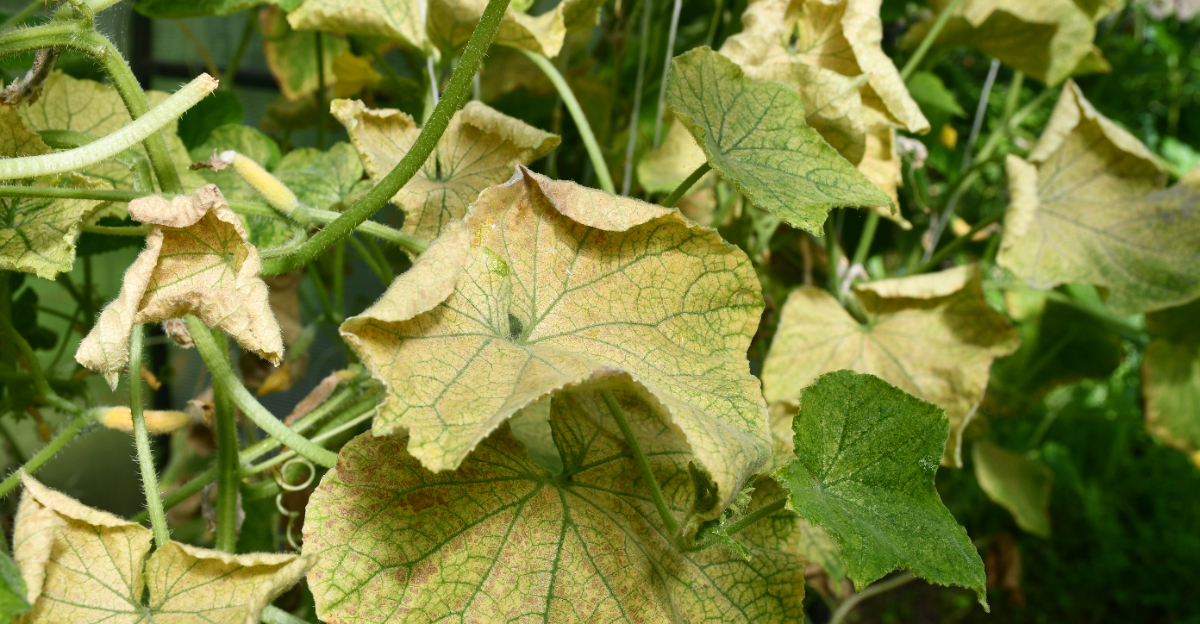
Yellowing leaves, stunted vines, wilting in the morning hours, and bitter or misshapen fruits are all signals that something has gone wrong either underground or on the surface of the plant.
Catching these warning signs early is what separates a full, productive harvest from a season that just fizzles out.
A few well-timed fixes can completely turn a struggling plant around before the growing window closes for good.
1. Wilting Leaves Despite Regular Watering
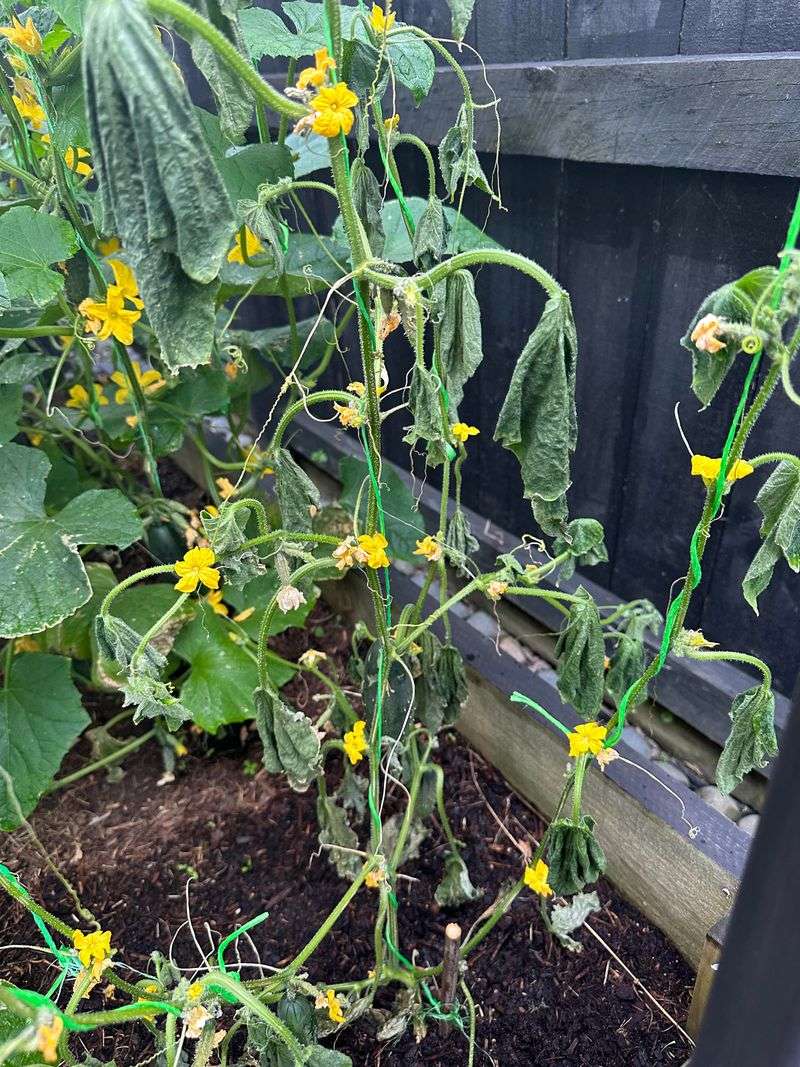
You water your cucumbers faithfully every day, yet the leaves still hang limp and sad like they have given up. That is one of the most confusing and frustrating signs a gardener can face.
When wilting happens even with regular watering, the problem is almost never about water itself.
Root rot is one of the top culprits, especially in Michigan’s heavier clay soils. When roots sit in waterlogged ground, they cannot absorb oxygen and begin to break down.
The plant wilts because damaged roots simply cannot deliver moisture to the rest of the vine, no matter how much water is sitting around them.
Soil compaction is another sneaky cause. Hard, dense soil squeezes out the air pockets that roots need to breathe and grow.
Try loosening the soil around your plants with a garden fork, going about six inches deep without disturbing the roots too much.
Vine borers can also cause sudden wilting. These pests tunnel into the base of the stem and disrupt the plant’s ability to move water upward.
Look for small entry holes and sawdust-like material near the soil line.
To fix drainage issues, mix compost or coarse sand into the planting area. Raised beds work wonderfully in Michigan for this reason.
Improving airflow at the root zone gives your cucumber plants a real fighting chance at bouncing back strong.
2. Yellowing Or Browning Leaf Edges
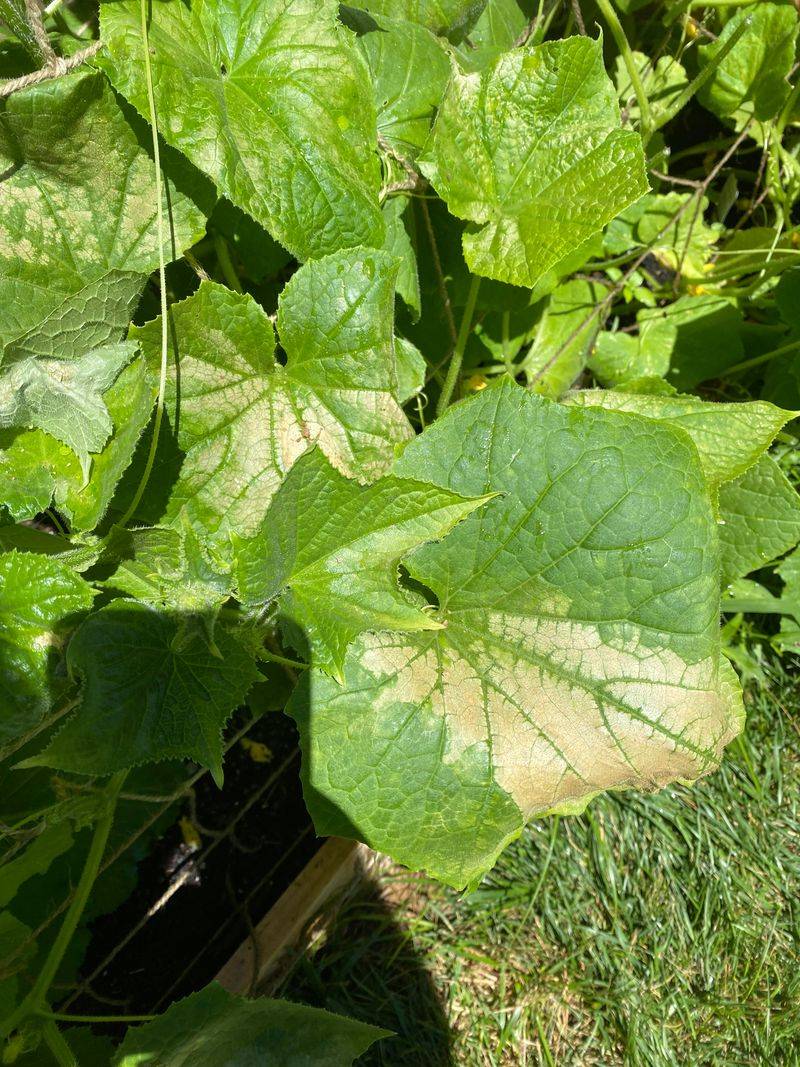
Leaf edges that turn yellow or crispy brown are basically your cucumber plant waving a distress flag. Most gardeners assume this means the plant needs more water, but nutrient deficiencies are often the real story hiding underneath.
Nitrogen deficiency is one of the most common causes in Michigan gardens, especially in sandy soils that drain quickly.
Without enough nitrogen, older leaves start yellowing from the edges inward, and the plant stops producing the lush green growth cucumbers need to thrive.
A balanced vegetable fertilizer with a higher nitrogen number, like a 10-5-5 blend, can make a noticeable difference within a week or two.
Potassium deficiency shows up differently, causing the very tips and margins of leaves to brown and curl slightly. Potassium helps regulate water movement inside plant cells, so without it, edges essentially dry out from the inside.
Adding a potassium-rich fertilizer or wood ash to the soil can help correct this quickly.
Your Michigan Garden Changes Every Week. Your Plan Should Too.
Gardening in Michigan changes quickly throughout the season. Every Friday you’ll receive a simple weekly plan showing exactly what to plant, prune, fertilize, harvest, and protect so you never miss the right timing.
Magnesium deficiency also causes edge discoloration, often alongside yellowing between the veins. Epsom salt dissolved in water, applied as a foliar spray or soil drench, is a fast and affordable fix that gardeners swear by.
Always test your soil before adding amendments. Michigan State University Extension offers affordable soil testing kits that tell you exactly what your garden needs so you never have to guess again.
3. Stunted Vine Growth
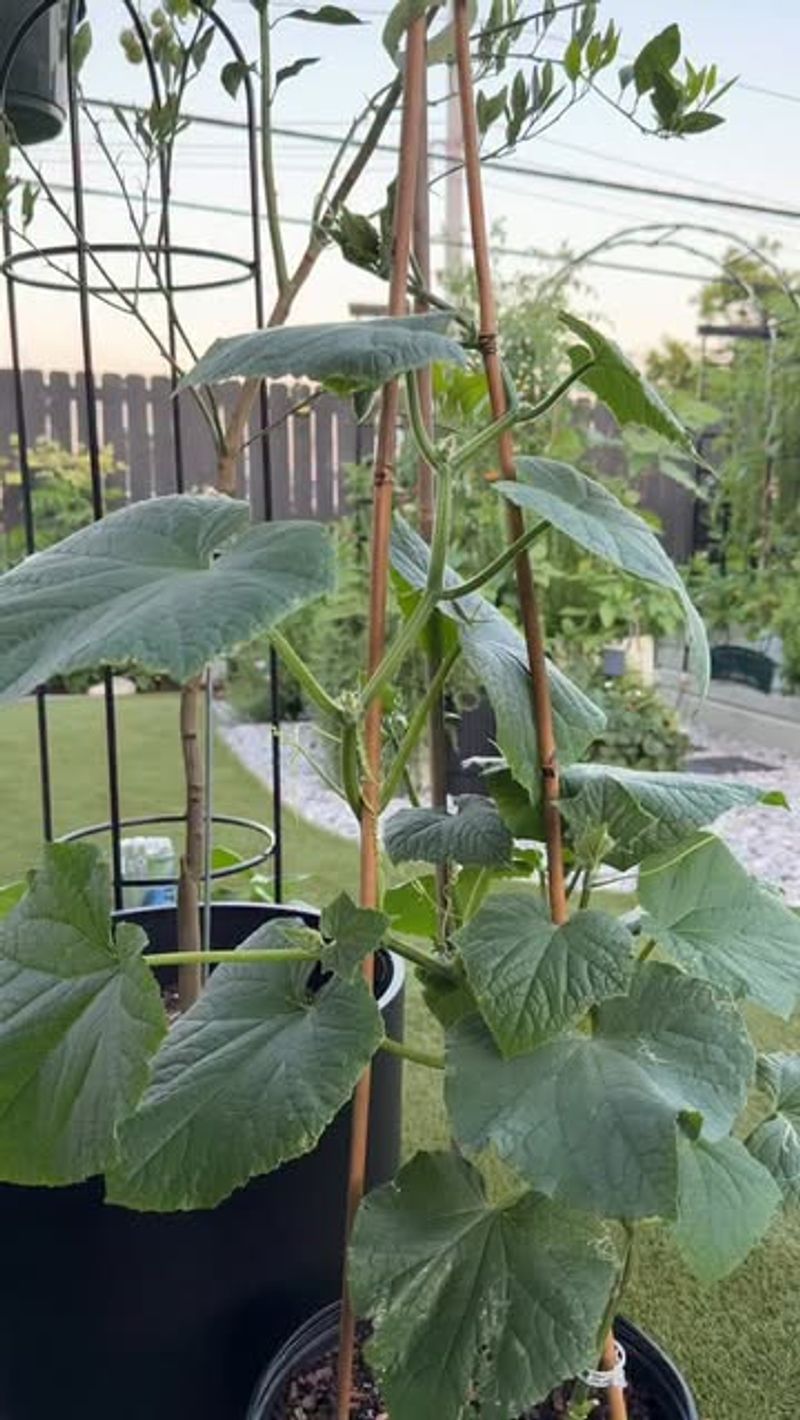
Watching a cucumber vine barely move for weeks while everything else in the garden takes off is genuinely puzzling. Stunted growth tells you the plant is struggling at a fundamental level, and pinpointing the cause quickly is key to saving your harvest.
Poor soil fertility is one of the biggest reasons vines stall out in Michigan. Cucumbers are heavy feeders that need rich, well-amended soil to grow vigorously.
If your soil has not been fed with compost or a balanced fertilizer before planting, the plant simply runs out of fuel early in the season.
Side-dressing your plants with compost or a slow-release vegetable fertilizer mid-season can restart growth surprisingly fast.
Pest pressure from cucumber beetles or aphids can also slow vine development significantly. These insects feed on young tissue and stunt the plant before you even realize there is a problem.
Inspect the undersides of leaves regularly and use row covers early in the season as a protective barrier.
Poor pollination is another overlooked cause. Without bees visiting your flowers, fruit will not form and the plant redirects energy in confusing ways.
Hand-pollinate by transferring pollen from male to female flowers using a small paintbrush or cotton swab on dry, calm mornings.
Consistent watering also matters more than most people realize. Uneven moisture causes stress that slows growth considerably.
Drip irrigation keeps moisture steady and helps vines push forward with confidence all season long.
4. Holes On Leaves
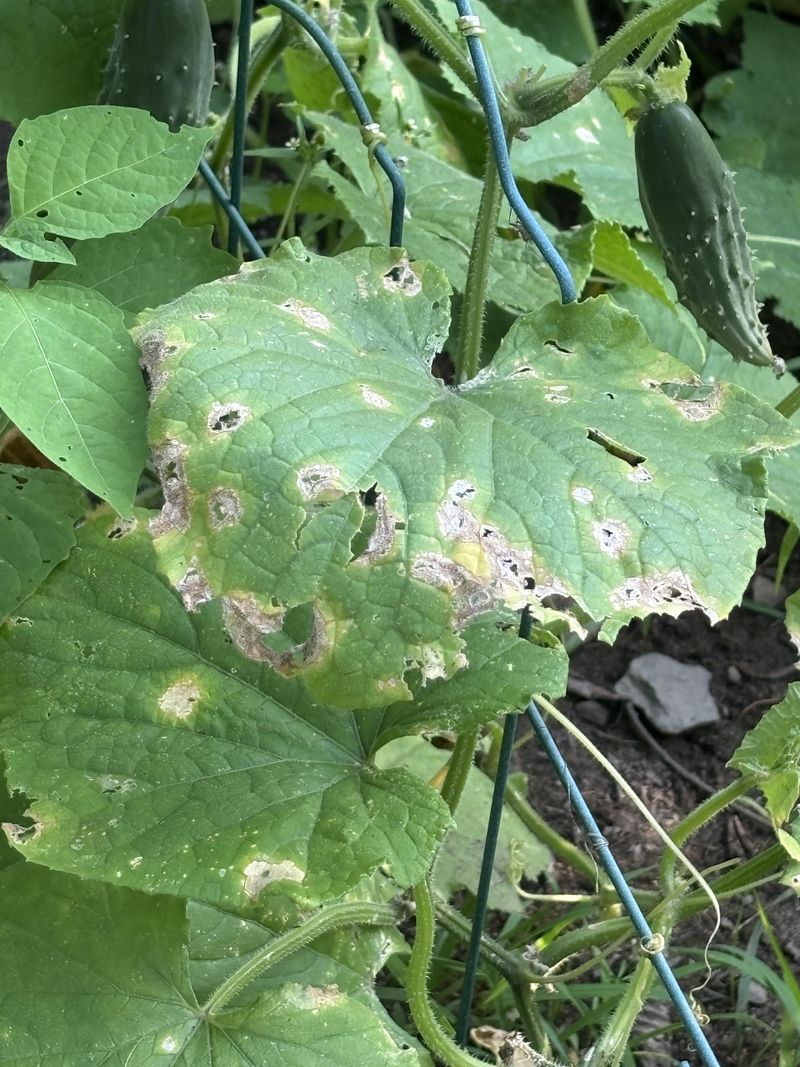
Finding your cucumber leaves riddled with holes or chewed down to bare veins is a sure sign that hungry insects have moved in. Pest damage like this can escalate quickly, so acting at the first sign of trouble makes all the difference.
Cucumber beetles are among the most destructive pests in Michigan gardens. Both the striped and spotted varieties chew through leaves and also spread bacterial wilt, a disease that can collapse an entire plant within days.
Yellow sticky traps help monitor beetle populations, and floating row covers placed right after transplanting keep them off your plants entirely during the most vulnerable growth stages.
Slugs are another common offender, especially during our cool, wet spring and early summer periods. They feed at night and leave ragged, irregular holes across leaves.
Placing shallow dishes of beer near plants or sprinkling diatomaceous earth around the base creates effective barriers without harming beneficial insects.
Caterpillars, including the larvae of various moths, can also skeletonize leaves rapidly. Hand-picking them off in the early morning works well for small infestations.
For larger problems, applying Bacillus thuringiensis, commonly known as Bt, is an organic and highly effective solution that targets caterpillars without affecting pollinators.
Healthy plants tolerate some pest pressure, so keeping your cucumbers well-fed and watered builds natural resilience. A strong plant with good nutrition bounces back from minor pest damage much faster than a stressed one ever could.
5. Flowers Dropping Prematurely
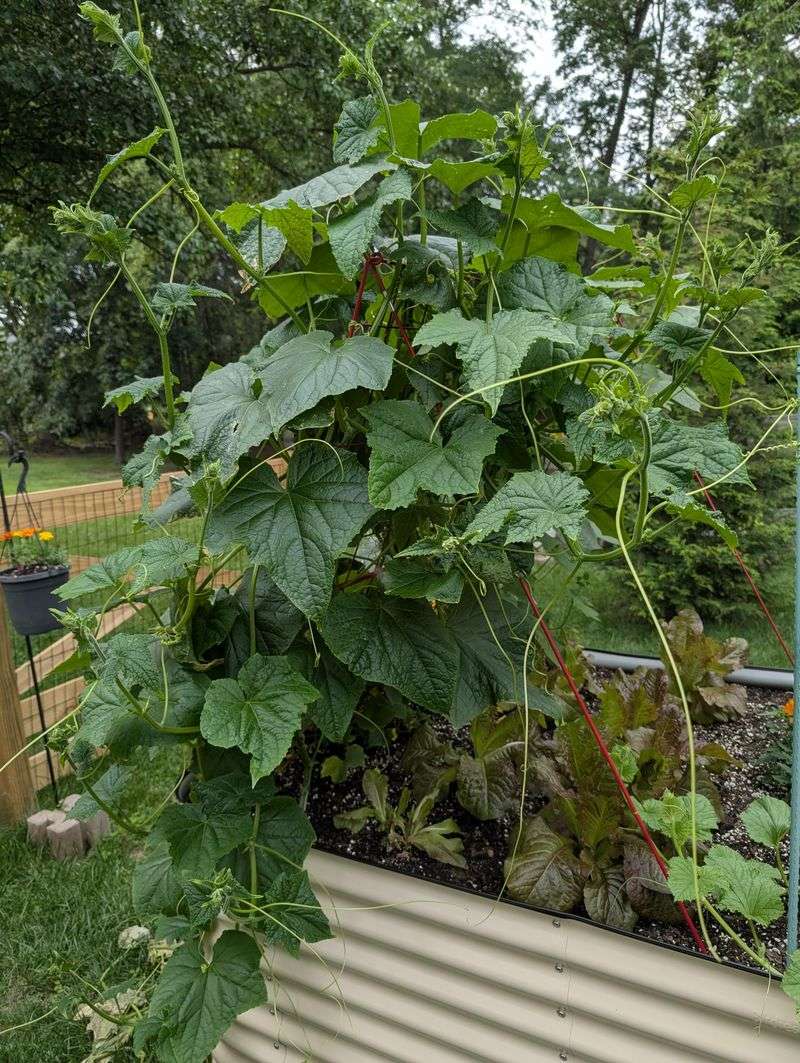
Seeing your cucumber flowers fall off before setting fruit feels discouraging, especially when the plants look otherwise healthy.
Flower drop is actually one of the most common cucumber complaints among Michigan gardeners, and the good news is that it is usually fixable.
One important thing to understand first is that cucumber plants naturally produce male flowers before female ones. Male flowers appear on straight stems and drop off after releasing pollen.
That is completely normal and not a cause for concern. Female flowers have a tiny immature cucumber at their base, and those are the ones you want to protect.
Heat stress is a major trigger for premature female flower drop. When daytime temperatures push above 90 degrees Fahrenheit, cucumber plants shift into survival mode and shed flowers to conserve energy.
Providing afternoon shade with a light cloth or shade netting during Michigan heat waves can help keep temperatures more manageable for your plants.
Inconsistent watering sends mixed signals to the plant and disrupts the hormonal process that keeps flowers attached.
Mulching around the base with straw or wood chips locks in soil moisture and smooths out fluctuations between watering sessions.
Nutrient imbalances, especially too much nitrogen, can push plants to grow excessive foliage at the expense of flowering.
Switching to a fertilizer higher in phosphorus once vines are established encourages stronger flower production and better fruit set throughout the season.
6. Curling Or Distorted Leaves
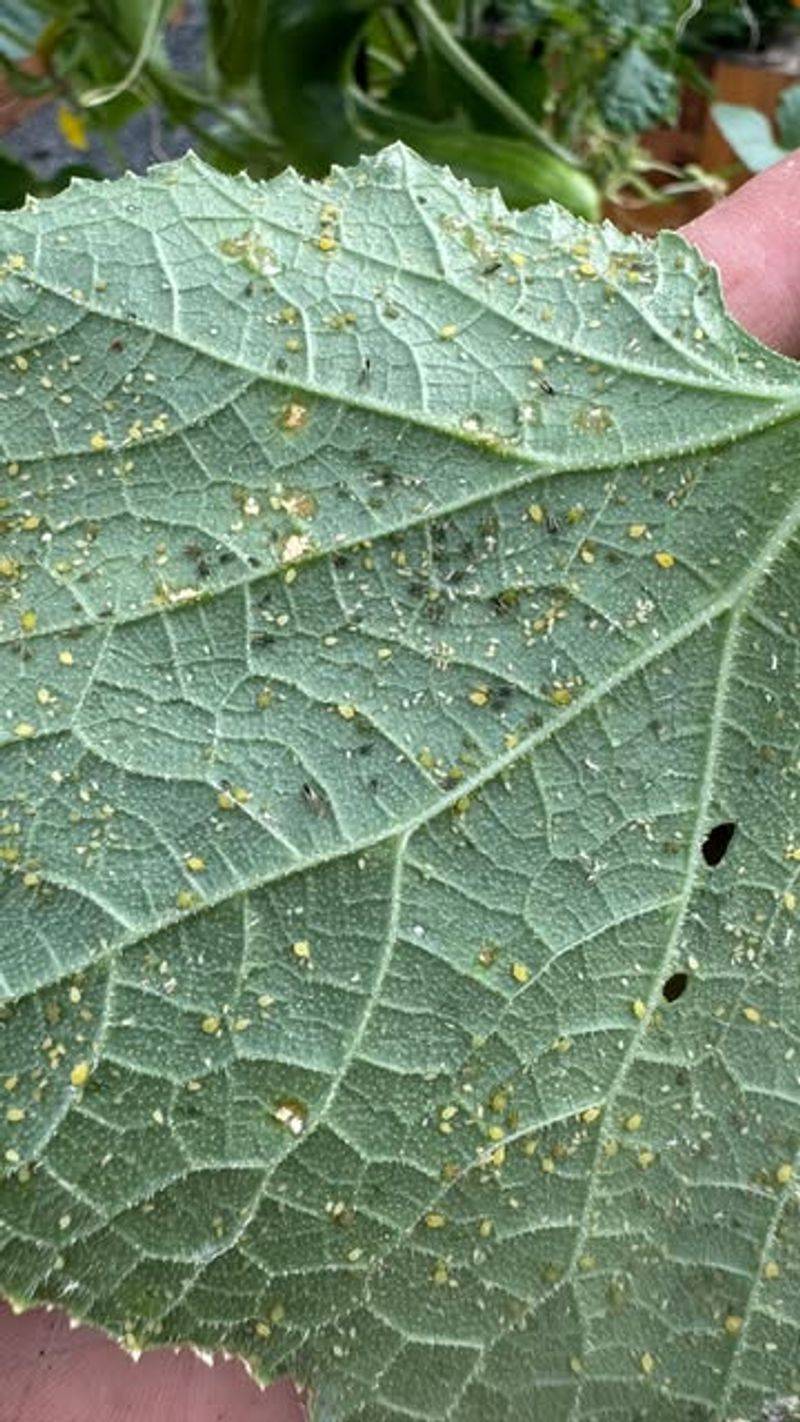
Curled or twisted leaves on your cucumber plants are not just an aesthetic issue. They are a clear signal that something is interfering with normal cell growth, and the cause can range from tiny insects to invisible viruses.
Aphids are one of the most frequent reasons cucumber leaves curl and distort in Michigan gardens. These small, soft-bodied insects cluster on the undersides of young leaves and suck out plant sap, causing the tissue to pucker and curl inward.
A strong blast of water from a hose dislodges them effectively, and neem oil spray applied in the early morning or evening provides longer-lasting control without harming beneficial pollinators.
Viral infections like Cucumber Mosaic Virus cause dramatic leaf distortion, including mosaic-patterned discoloration, bubbling, and severe curling.
Aphids actually spread this virus from plant to plant as they feed, making aphid control doubly important.
Infected plants cannot be cured, but removing them promptly prevents the virus from spreading across your entire garden.
Environmental stress from extreme temperature swings, which gardeners know all too well in spring and early summer, can also cause temporary leaf curling. Young plants are especially sensitive to cold nights followed by hot days.
Protecting transplants with row covers during the first few weeks after planting reduces this kind of stress significantly.
Keeping plants healthy, well-watered, and free from pest pressure builds the resilience cucumbers need to produce strong, straight leaves and a generous harvest all season.
7. Poor Fruit Development Or Misshapen Cucumbers
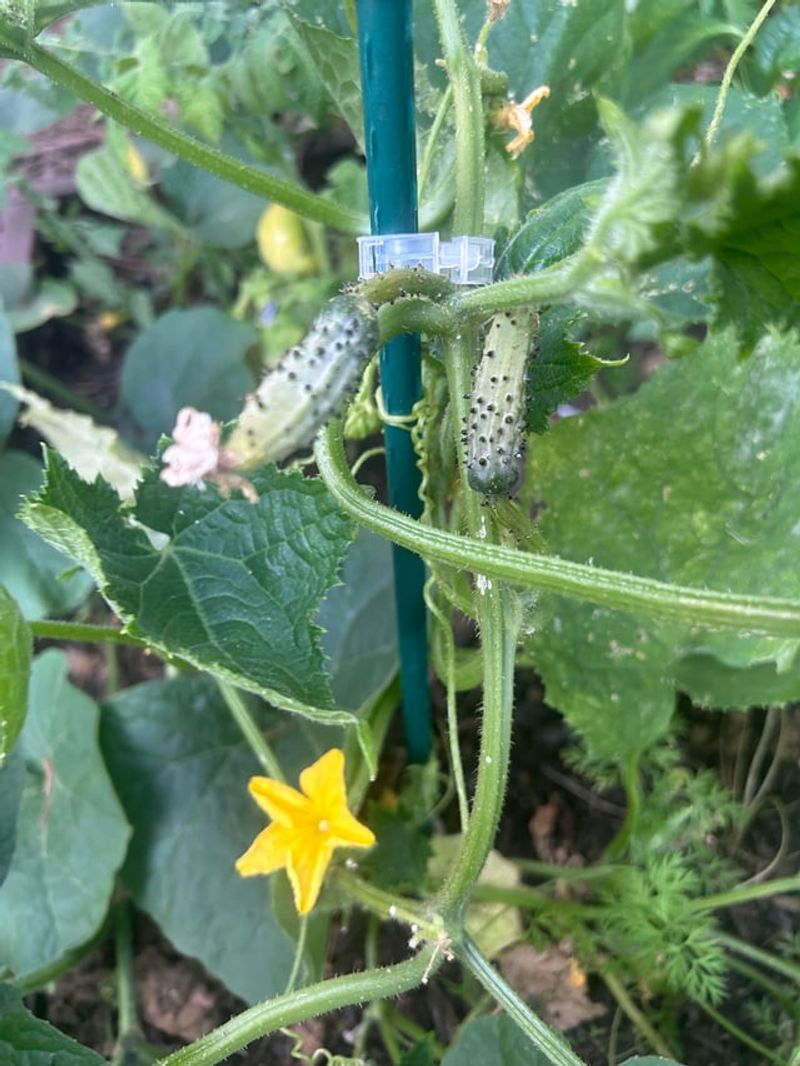
Pulling back the leaves to find bent, bulging, or undersized cucumbers is one of those gardening moments that leaves you scratching your head.
Misshapen fruit is almost always a clue that something went wrong during pollination or water management.
Incomplete pollination is the number one cause of misshapen cucumbers. When only part of the flower gets pollinated, the resulting fruit develops unevenly, producing those characteristic curved or tapered shapes.
Encouraging more pollinators by planting flowers like marigolds and zinnias nearby dramatically improves pollination rates. Hand-pollinating on calm, dry mornings using a small brush is another reliable technique when bee activity seems low.
Uneven watering causes a condition called irregular cell development, where one end of the fruit grows faster than the other. This often results in cucumbers that are fat at one end and narrow at the other.
Consistent moisture throughout the growing season, ideally through drip irrigation, keeps fruit development uniform and smooth.
Calcium deficiency can also contribute to poor fruit quality in Michigan’s more acidic soils. Without enough calcium, cell walls weaken and fruit develops soft spots or irregular texture.
Adding lime to raise soil pH and improve calcium availability before the season starts addresses this proactively.
Harvesting cucumbers regularly when they reach the right size encourages the plant to keep producing. Leaving overripe fruit on the vine signals the plant to slow down production, so staying on top of picking keeps the harvest flowing strong.
8. Signs Of Vine Borer Activity
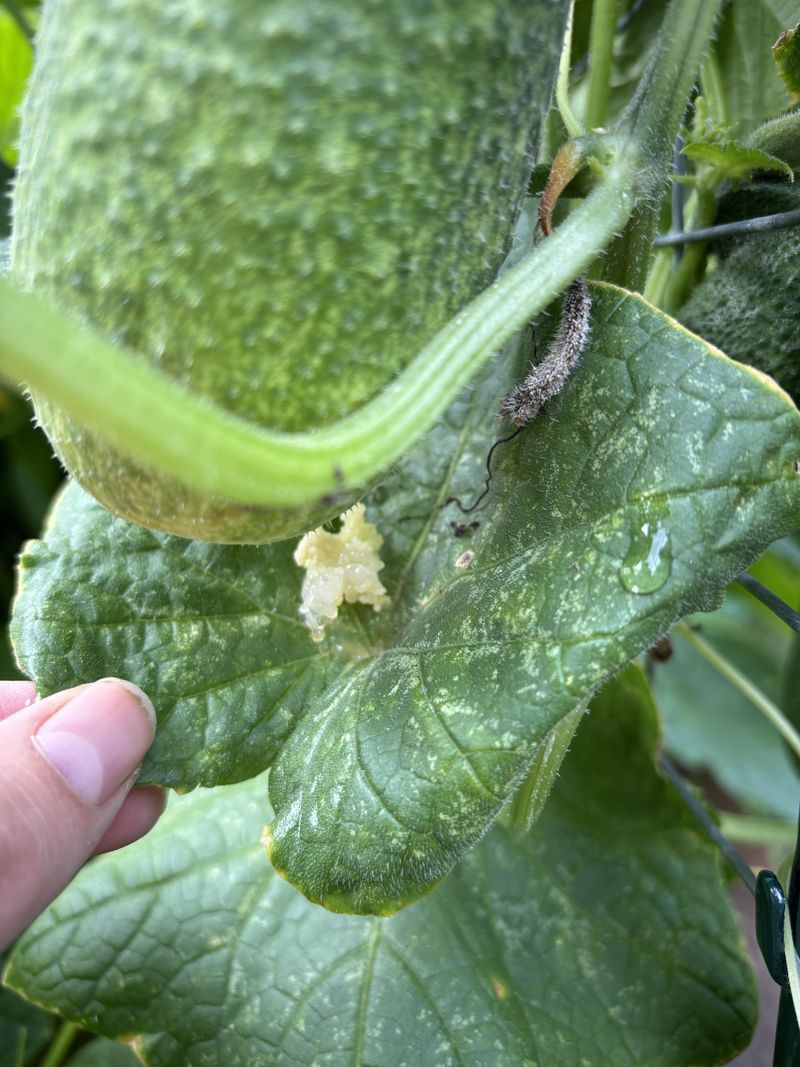
Most gardeners associate squash vine borers with zucchini and pumpkins, but these destructive pests will also target cucumber plants, especially when their preferred hosts are not available nearby.
Catching the signs early is everything with vine borers. The most telltale sign is a small pile of sawdust-like material, called frass, sitting at the base of the vine or along the lower stem.
This is essentially the waste left behind by the larva as it tunnels through the inside of the plant. You might also notice the vine starting to wilt suddenly from one side while the rest of the plant looks fine.
Adult vine borers are actually moths that lay tiny, flat, reddish-brown eggs on the stems of plants in late June through July in Michigan.
Checking stems weekly during this window and wiping off any eggs you find is one of the simplest and most effective prevention strategies available.
If a larva has already entered the vine, you can carefully slit the stem lengthwise with a clean blade, remove the grub, and cover the damaged section with moist soil to encourage new root formation.
It sounds intense, but many plants recover well from this intervention when done early enough.
Wrapping the base of stems with aluminum foil or applying sticky tape deters egg-laying females. Row covers installed before adult moths emerge in early summer provide the strongest barrier protection for your Michigan cucumber plants.
9. Yellowing Between Leaf Veins
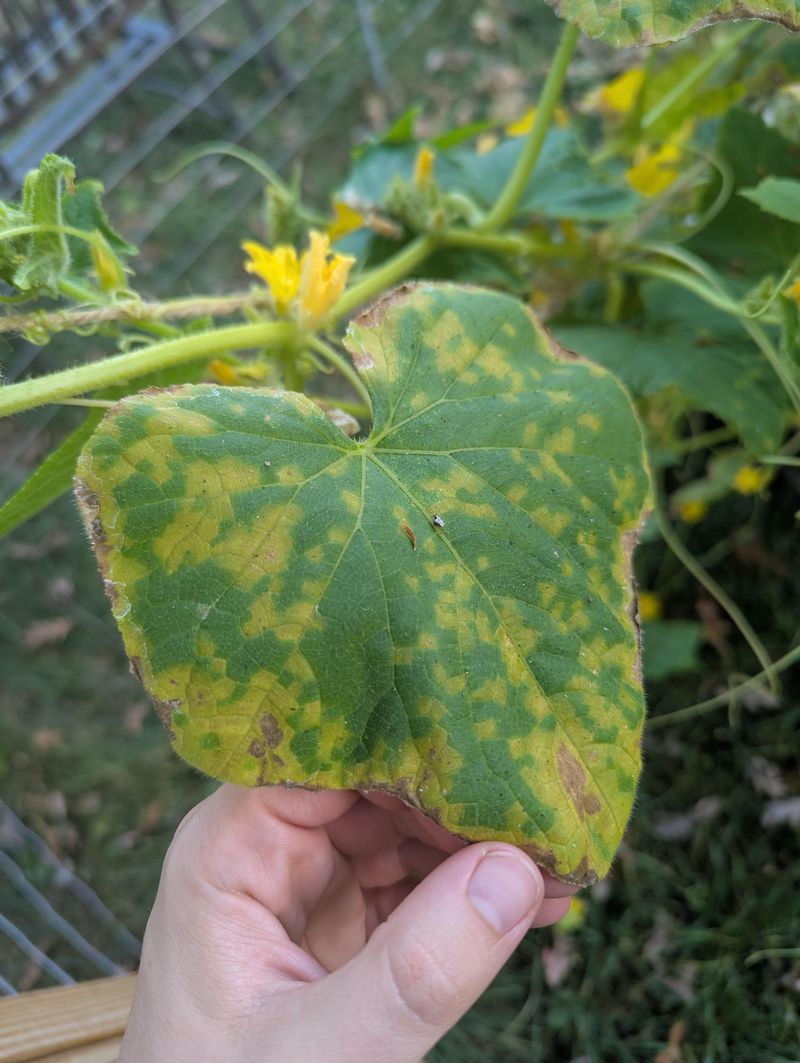
Bright yellow patches spreading between the green veins of your cucumber leaves are a textbook sign of a condition called interveinal chlorosis. It looks alarming, but with the right diagnosis and quick action, most plants respond well to treatment.
Magnesium deficiency is the most common cause in Michigan gardens, particularly in soils that have been heavily watered or have naturally low mineral content.
Magnesium is a central component of chlorophyll, the green pigment plants use to capture sunlight.
Without it, leaf tissue between the veins loses its green color while the veins themselves stay green, creating that distinctive patterned look.
The fastest fix for magnesium deficiency is a foliar spray made from Epsom salt. Mix one tablespoon of Epsom salt per gallon of water and spray directly onto the leaves on a cool, overcast morning.
Results often appear within a week as the plant absorbs magnesium directly through the leaf surface. A soil drench with the same solution also helps replenish magnesium at the root level.
Iron deficiency causes a similar appearance but typically shows up on younger leaves near the growing tips rather than older leaves. Iron becomes unavailable in soils with a high pH, which is why Michigan gardeners should test soil pH regularly.
Lowering pH with sulfur amendments improves iron availability without adding excess chemicals.
Michigan State University Extension soil testing services provide detailed nutrient reports, making it straightforward to identify exactly which minerals your garden needs most before applying any amendments.
10. Soft Or Rotting Stems
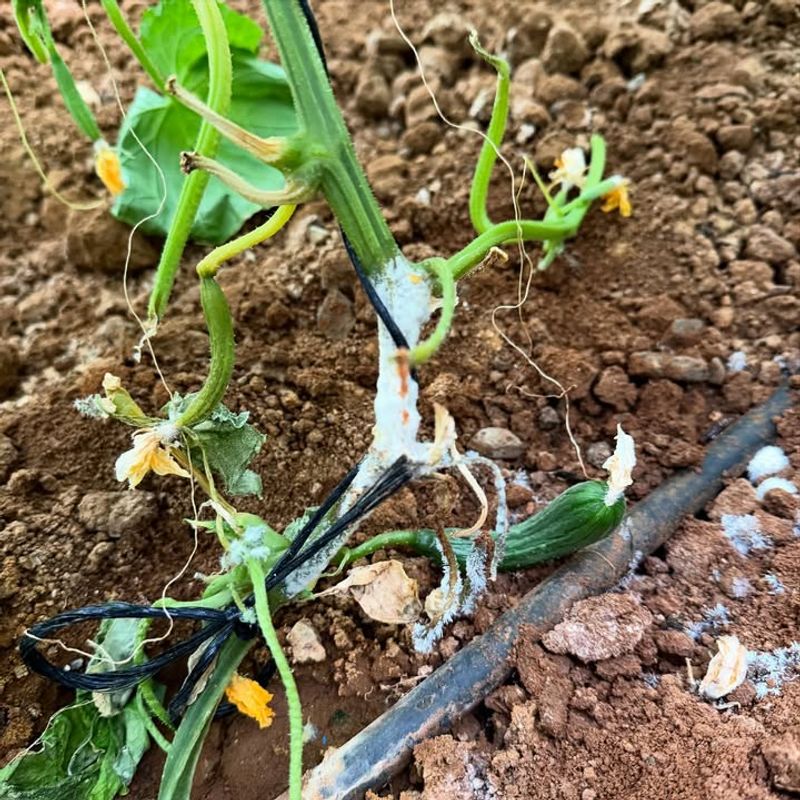
Soft, discolored, or mushy stems near the soil line are one of the more serious problems a cucumber grower can encounter. Stem rot moves fast and can compromise the entire plant if conditions continue to favor its spread.
Fungal pathogens like Pythium and Fusarium thrive in wet, poorly drained soils, making them a real concern in Michigan’s variable climate.
These fungi attack the stem at or just below the soil surface, causing it to turn brown, soften, and eventually collapse. Plants affected by stem rot often wilt suddenly and fail to recover even after watering.
Bacterial stem rot tends to produce a foul smell along with the soft tissue, which helps distinguish it from fungal problems. Both types are encouraged by overcrowding, poor air circulation, and leaves or mulch sitting directly against the stem.
Spacing plants at least twelve inches apart and keeping mulch pulled back a few inches from the base reduces moisture buildup dramatically.
Watering technique matters more than most gardeners realize. Watering at the base of the plant using drip irrigation or a soaker hose keeps foliage and stems dry, removing the surface moisture that fungal and bacterial pathogens need to spread.
If you catch stem rot early, trimming away affected tissue and applying a copper-based fungicide can slow or stop its progression.
Improving drainage by working compost into the planting area before next season creates a healthier root environment that resists rot from the very start.