The Heat-Tolerant Shrubs Texas Gardeners Are Planting Along Their Foundations
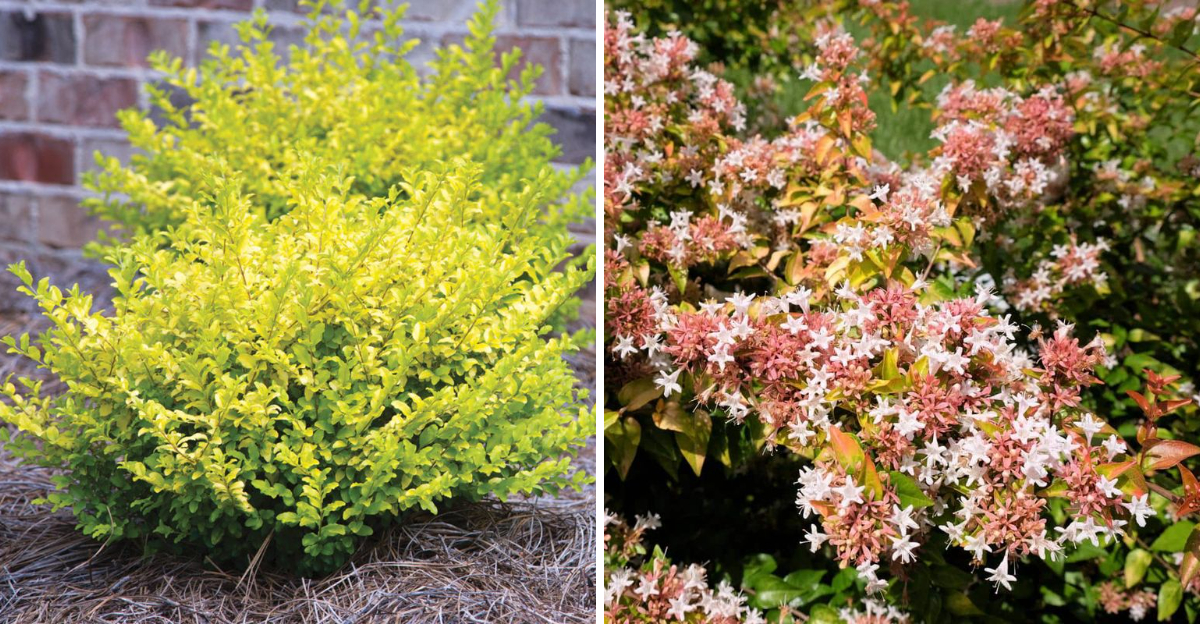
Foundation planting in Texas is one of those landscaping decisions that gets made once and then lived with for years, which makes choosing the right shrubs more important than most homeowners give it credit for.
The zone right up against a Texas home foundation is one of the harshest growing environments in the landscape.
Reflected heat from walls, reduced air circulation, dry soil that bakes through summer, and the occasional splash back from rain against the structure. Most shrubs struggle there eventually. But the right ones thrive in it.
Texas gardeners who have figured out foundation planting know that heat tolerance is not just a desirable feature. It’s a non-negotiable one.
A shrub that performs beautifully in a garden bed but slowly declines against a south or west facing foundation is not the right shrub for that spot, regardless of how well it does everywhere else.
There’s a category of shrubs that was practically made for Texas foundation conditions, and more homeowners are discovering them each season.
1. Texas Sage
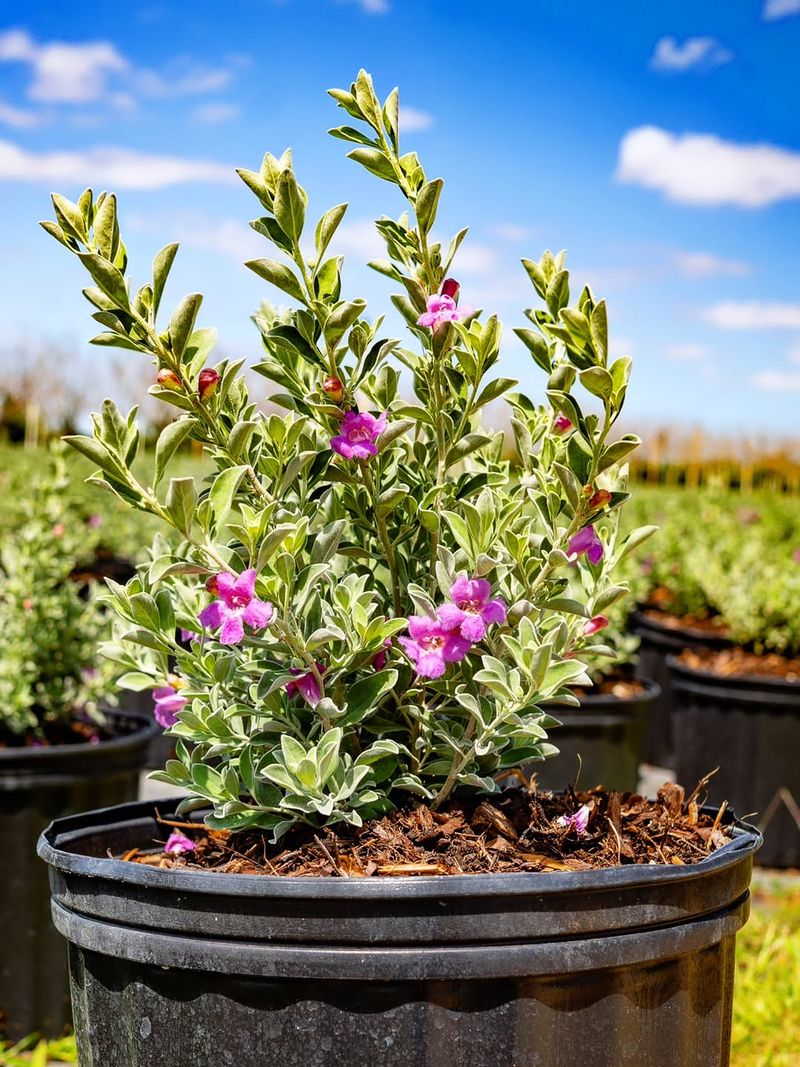
Walk through any West Texas neighborhood after a summer rainstorm, and you will likely spot Texas Sage bursting into brilliant purple bloom almost overnight.
That post-rain bloom show is one of the reasons locals call it the “barometer bush.” It seems to know when moisture is coming before you do.
Native to the rocky, dry soils of West Texas and northern Mexico, this shrub is built for punishment. The intense reflected heat that bounces off brick and concrete foundation walls does not slow it down one bit.
In fact, it seems to love that extra warmth. Its deep, silvery-green leaves stay attractive through the hottest Texas summers, and the purple blooms that pop up after rain are genuinely stunning.
Texas Sage grows slowly and naturally stays compact, which makes it easy to manage along a foundation without constant pruning. Most varieties top out between four and six feet tall and wide.
It handles alkaline soil beautifully, which is great news for gardeners in Central and North Texas where limestone-heavy soil is the norm.
One thing to keep in mind: Texas Sage absolutely needs well-drained soil. It will not tolerate wet roots or heavy clay that holds moisture.
If your soil stays soggy after rain, amend it with gravel or sand before planting. Once established, though, it is remarkably low-maintenance.
Skip the fertilizer, go easy on the water, and let it do its thing. Overwatering is the one mistake that trips people up most often with this shrub.
Treat it mean and keep it lean, and it will reward you with years of colorful, drought-tough beauty.
2. Dwarf Burford Holly
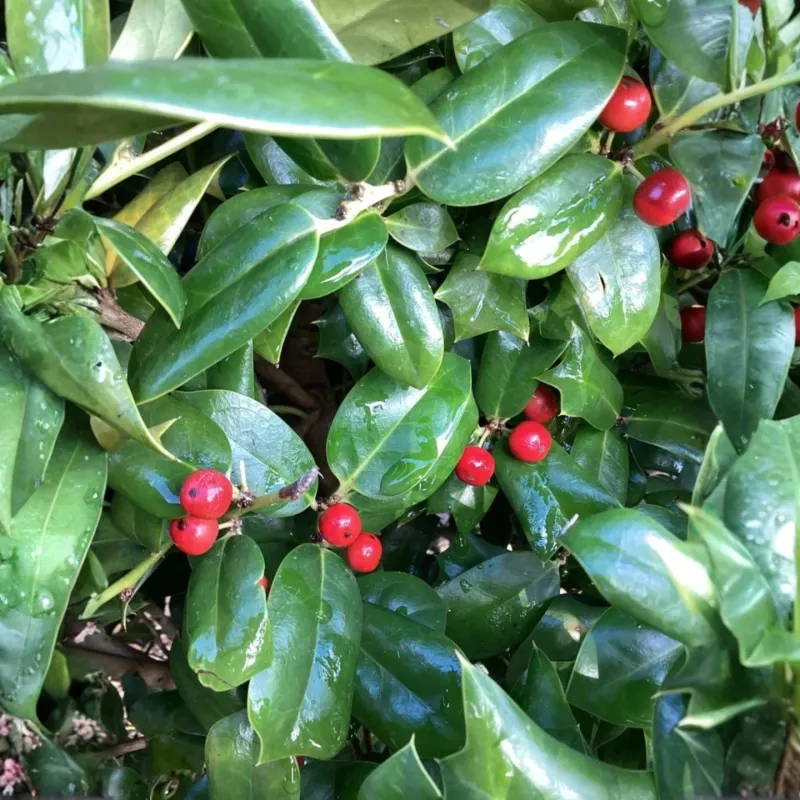
Not every foundation shrub gets to be flashy, but Dwarf Burford Holly earns its place through sheer reliability. Year after year, in clay-heavy yards across Texas, this shrub just keeps going.
It does not complain about the heat, the drought, or the compacted soil that makes other plants struggle.
What makes it such a popular foundation pick is its ability to handle dense, heavy clay soil better than most ornamental options. A lot of Texas yards, especially in the Dallas-Fort Worth area and Houston, are loaded with clay.
Your Texas Garden Changes Every Week. Your Plan Should Too.
Gardening in Texas changes quickly throughout the season. Every Friday you’ll receive a simple weekly plan showing exactly what to plant, prune, fertilize, harvest, and protect so you never miss the right timing.
That soil drains poorly and can be brutal on roots. Dwarf Burford Holly handles it with ease.
It tolerates full sun and dry spells once established, making it a genuinely low-maintenance choice. The glossy, dark green leaves stay on year-round, giving your foundation a tidy, polished look even in the winter.
Small red berries appear in fall and add a nice seasonal pop of color that birds absolutely love.
Growth is manageable and predictable. Dwarf Burford Holly typically reaches four to six feet tall and wide at maturity, though it responds well to shaping if you want to keep it tighter.
Pruning once a year in late winter is usually all it takes to maintain a clean look. Plant it about three feet from the foundation to give roots room to spread without crowding the structure.
Water it regularly for the first growing season, then back off. After that, it is pretty much on its own and thriving. For low-fuss, high-reward foundation planting in Texas, this holly is hard to beat.
3. Dwarf Yaupon Holly
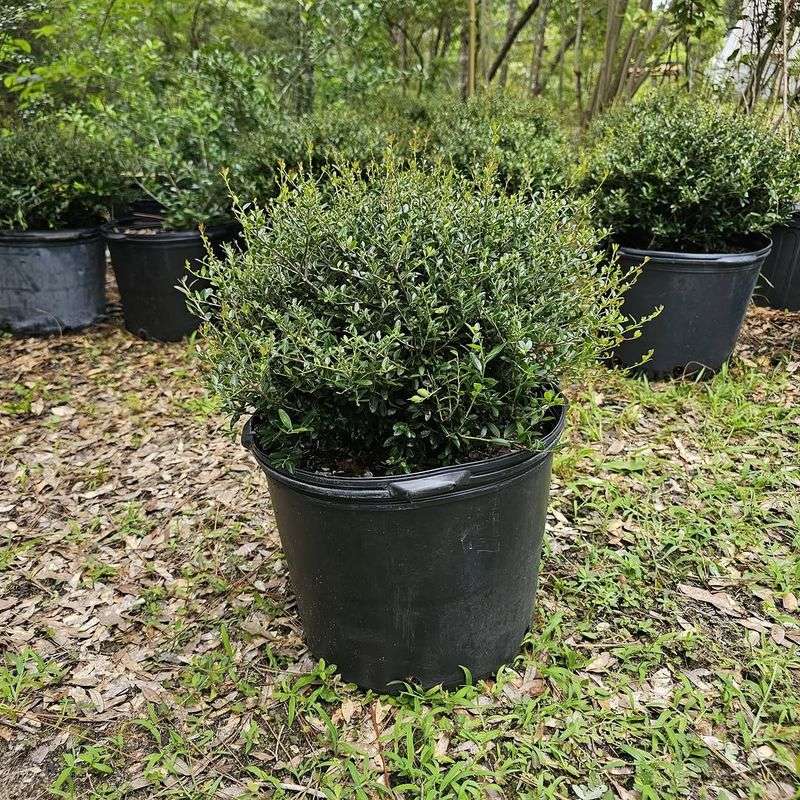
If there is one native Texas shrub that landscape professionals reach for again and again for foundation plantings, it is Dwarf Yaupon Holly. Ask any experienced Texas gardener about it and they will probably smile. It is that reliable.
Yaupon Holly is native to Texas and the broader southeastern United States, which means it evolved right here in conditions that would stress out plants from other climates.
The dwarf variety takes that toughness and packages it into a compact, rounded form that fits perfectly along a home’s foundation without growing out of control.
Most varieties stay in the two-to-three-foot range, though some can reach four feet with age.
Drought tolerance is one of its strongest features. Once established, Dwarf Yaupon Holly can go long stretches without supplemental watering, drawing on deep roots to find moisture in the soil.
It handles both full sun and partial shade, which gives you flexibility depending on which side of the house you are planting. The small, dark green leaves stay on year-round, keeping the foundation looking neat through every season.
Another big plus is its adaptability to different soil types. Sandy coastal soil, heavy clay in North Texas, or rocky Hill Country ground, this shrub handles them all without much fuss.
It is also resistant to most pests and diseases, which cuts down on maintenance headaches significantly. Fertilizing once in early spring with a slow-release fertilizer is plenty.
After the first year, watering needs drop dramatically. For gardeners who want a native, no-drama, always-attractive foundation plant, Dwarf Yaupon Holly is one of the smartest choices available in Texas.
4. Flame Acanthus
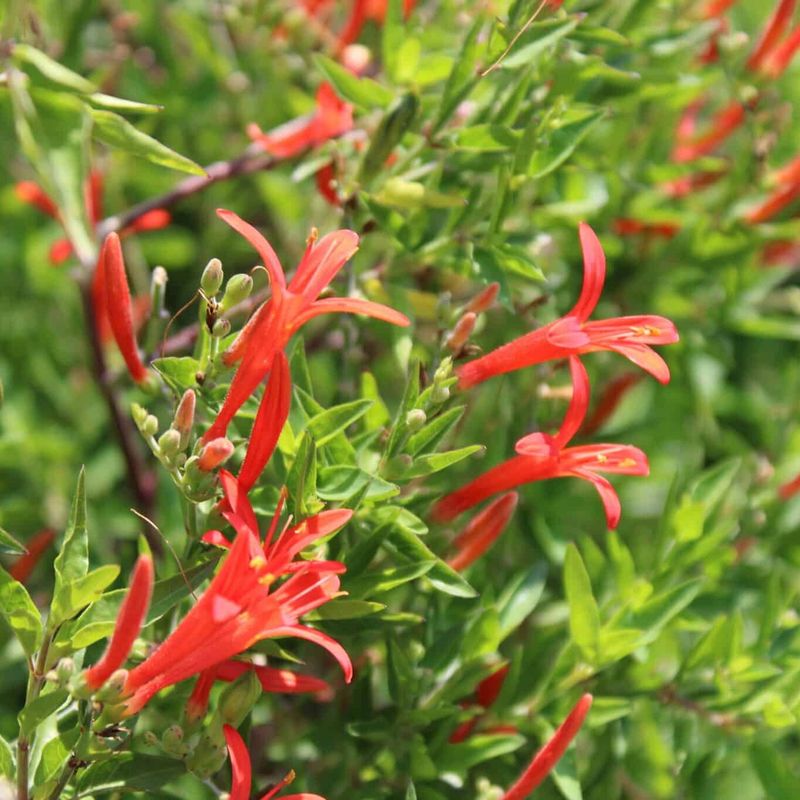
Picture a shrub that actually blooms harder the hotter it gets. That is Flame Acanthus in a nutshell, and it is one of the most exciting foundation plants a Texas gardener can choose.
The bright orange-red tubular flowers are practically neon, and they show up right when most other plants are struggling to survive the summer heat.
Native to the rocky slopes and dry creek beds of central and west Texas, Flame Acanthus has adapted over generations to heat, poor soil, and drought. It does not need rich, amended garden beds.
Give it rocky, well-drained soil and a sunny spot, and it will perform like a champion. The reflected heat from a south-facing foundation wall actually pushes it to bloom more aggressively, which is the opposite of how most plants respond to that kind of stress.
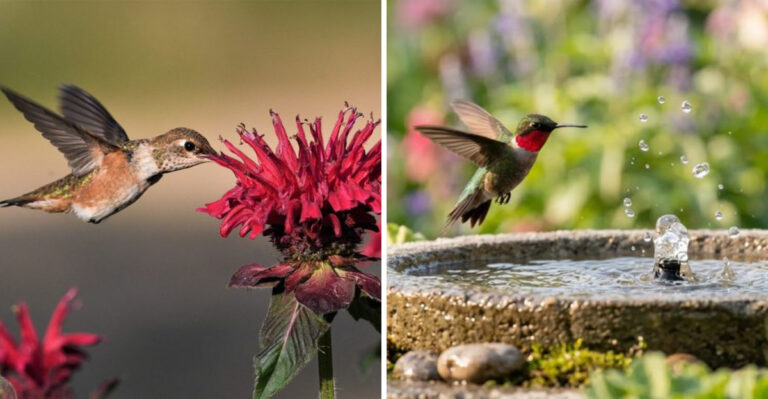
Hummingbirds are absolutely wild about this shrub. If you have been trying to attract them to your yard, planting Flame Acanthus along your foundation is one of the most effective moves you can make.
Butterflies visit frequently too, adding even more life and movement to the space around your home.
Flame Acanthus typically grows four to five feet tall and wide. It may freeze back to the ground in a hard North Texas winter, but it returns reliably from the roots each spring with impressive speed.
Pruning it back in late winter before new growth emerges keeps it looking tidy. Water it occasionally during its first summer to help it establish, then let it fend for itself.
Few foundation shrubs in Texas offer this level of drama and wildlife value for so little effort.
5. Abelia
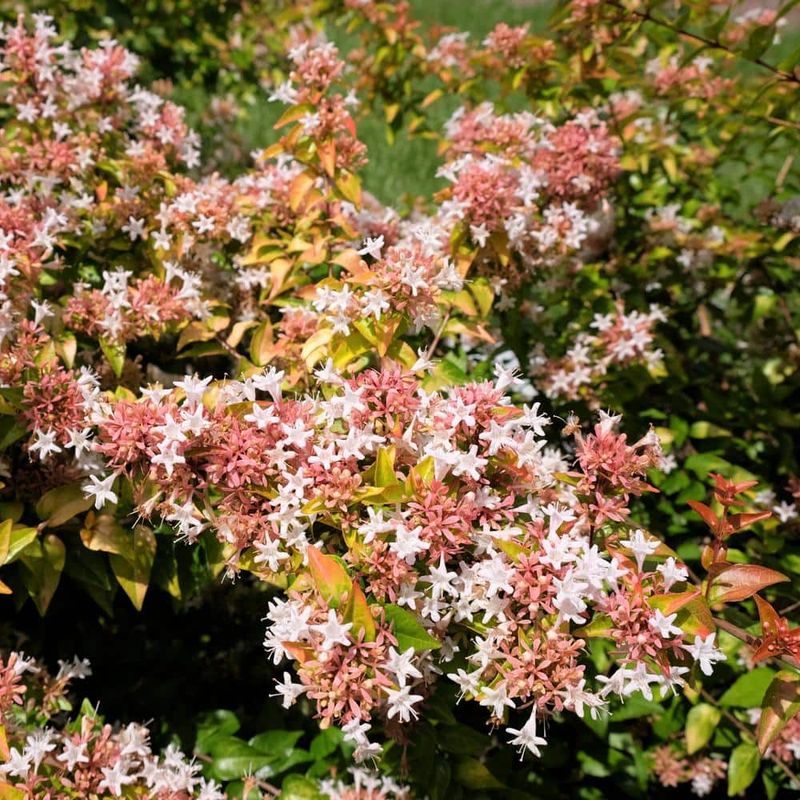
Some plants earn their reputation quietly, without flashy claims or trendy rebranding. Abelia is one of those plants.
It has been showing up in Texas foundation beds for decades, and there is a very good reason landscapers keep coming back to it. It simply works, season after season, without asking for much in return.
Abelia is a flowering shrub that handles high heat and dry climates with genuine ease. It thrives in full sun but also tolerates partial shade, which makes it versatile enough to work on almost any side of the house.
Small, bell-shaped flowers in white or soft pink bloom from late spring all the way through fall, giving you months of color.
The foliage is attractive too, with small glossy leaves that often take on bronze or reddish tones in cooler months, adding visual interest even after the flowers fade.
Used frequently as a hedge or foundation plant close to the home, Abelia stays tidy and manageable. Most varieties grow three to five feet tall and wide, though some compact cultivars stay even smaller.
It responds well to light pruning if you want to shape it or keep it from spreading. Fertilize lightly in spring and it will reward you generously through the growing season.
One thing gardeners appreciate about Abelia is how well it attracts pollinators. Bees and butterflies visit the flowers regularly throughout the long bloom season.
Established plants handle drought reasonably well, though a deep watering every couple of weeks during extended dry spells keeps them at their best.
For a reliable, long-blooming, low-maintenance foundation shrub, Abelia deserves serious consideration in any Texas yard.
6. Sunshine Ligustrum
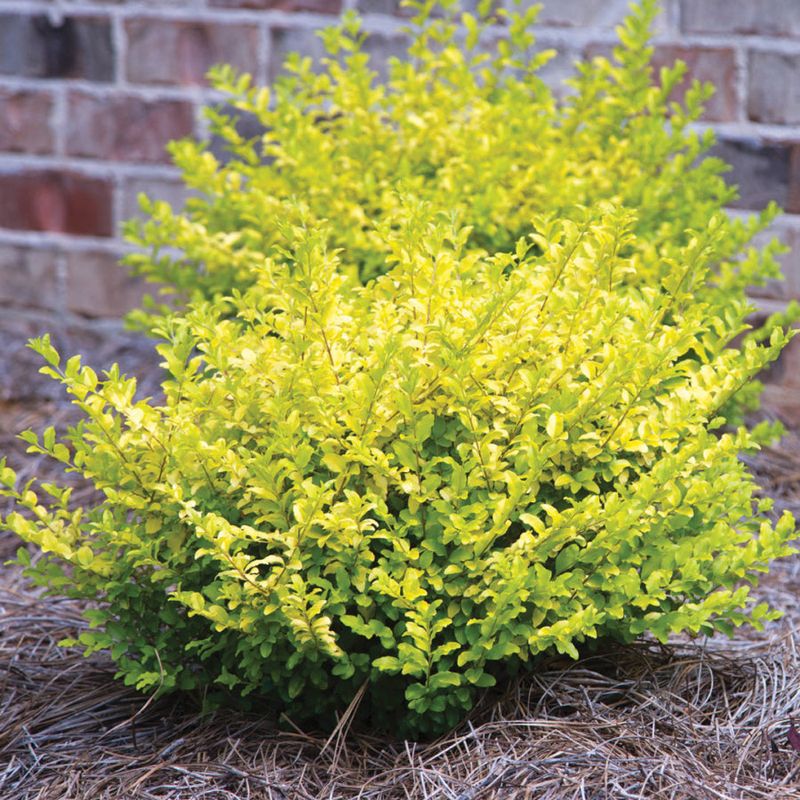
There is something almost cheerful about a shrub that glows golden yellow in the middle of a brutal Texas summer. Sunshine Ligustrum does exactly that.
While other plants are fading to dull greens or yellowing from heat stress, this evergreen shrub holds its vibrant golden color like it is putting on a show just for you.
Sunshine Ligustrum is a dwarf form of the common privet, but do not let the word “privet” fool you. This variety is sterile, meaning it does not produce seeds that spread invasively, which is a big plus for responsible gardeners.
It stays compact, typically reaching two to four feet tall and wide, making it a natural fit for foundation plantings where you do not want a shrub taking over the whole bed.
Full sun is where this shrub truly shines, and the hotter the better. The golden foliage actually brightens up in intense sunlight rather than bleaching out or fading.
Once established, it handles drought conditions well and rarely needs supplemental watering beyond its first growing season. It also tolerates a wide range of soil types, from sandy loam to clay, as long as drainage is reasonable.
Maintenance is minimal. A light trim once or twice a year keeps it looking polished, and it responds well to shaping if you want a more formal, uniform look along the foundation.
Fertilize once in early spring with a balanced slow-release product for best results. Sunshine Ligustrum pairs beautifully with dark green shrubs like Dwarf Yaupon Holly, creating contrast that makes both plants pop visually.
For bold color with almost zero effort, this shrub is a standout choice.
7. Compact Cherry Laurel
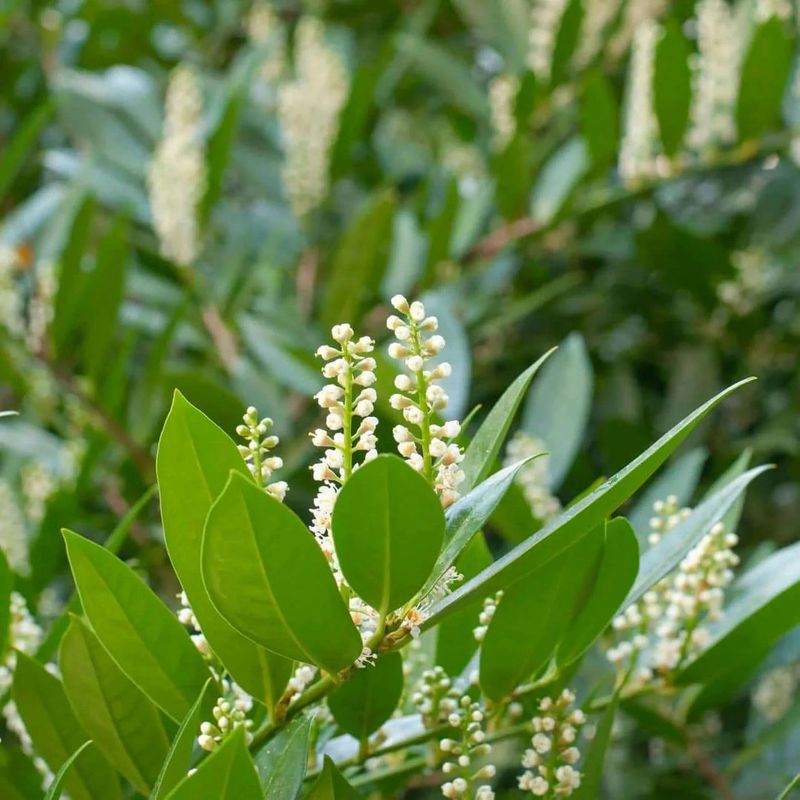
Big, bold, and built for Texas conditions, Compact Cherry Laurel brings a lush, almost tropical-looking texture to foundation plantings without requiring the kind of babying that tropical plants demand.
The large, glossy dark green leaves are eye-catching and stay on the plant year-round, giving your home’s foundation a full, polished look in every season.
Think of it as the tamed version of a tough Texas native evergreen. The standard Cherry Laurel can grow into a large tree or sprawling shrub, but compact cultivars like “Otto Luyken” and “Schipkaensis” stay in the three-to-five-foot range, making them much more suitable for foundation use.
They grow steadily and fill in nicely, creating a dense, attractive screen along the base of the house.
Compact Cherry Laurel handles the alkaline soils common to North Texas particularly well. Limestone-heavy ground that frustrates many ornamental plants does not bother it much.
It also tolerates both full sun and partial shade, giving gardeners flexibility. Brief dry spells are handled well once the shrub is established, though it appreciates a deep watering during extended summer droughts.
Small white flowers appear in spring and carry a pleasant fragrance that is a welcome bonus. After blooming, small dark berries follow, which birds find attractive.
Pruning once a year after flowering keeps the shape tidy without sacrificing the next season’s blooms. One thing to note: Cherry Laurel does best with decent air circulation, so avoid planting it too tightly against the wall.
Give it a foot or two of breathing room and it will reward you with years of dense, heat-tough, low-maintenance beauty along your foundation.