The August Citrus Tree Tasks Arizona Growers Should Never Skip
Citrus care in Arizona is not a set-it-and-forget-it routine. The tree may look steady from the patio, but the month is doing a lot at once.
Low desert heat pushes the canopy hard. Monsoon rain arrives unevenly. Drip lines clog quietly. Fruit sits exposed to fierce sun. Roots need water deep enough to matter, but not so much that the soil loses air.
That is the tricky part.
A citrus tree can decline from too little water, too much water, poor emitter placement, sun-exposed fruit, or a missed sanitation check after a storm. The symptoms may not show up right away, but the stress can follow the tree into fall.
August rewards growers who check, not guess.
A timer helps. A rainstorm helps. Mulch helps. None of them replaces walking the tree, testing the soil, and looking closely at fruit, leaves, and irrigation.
So which August citrus tasks should Arizona growers never skip?
Start with the root zone, then work outward through the drip system, mulch, canopy, fruit, and fertilizer schedule before the month gets ahead of you.
1. Adjust Irrigation After Monsoon Rain
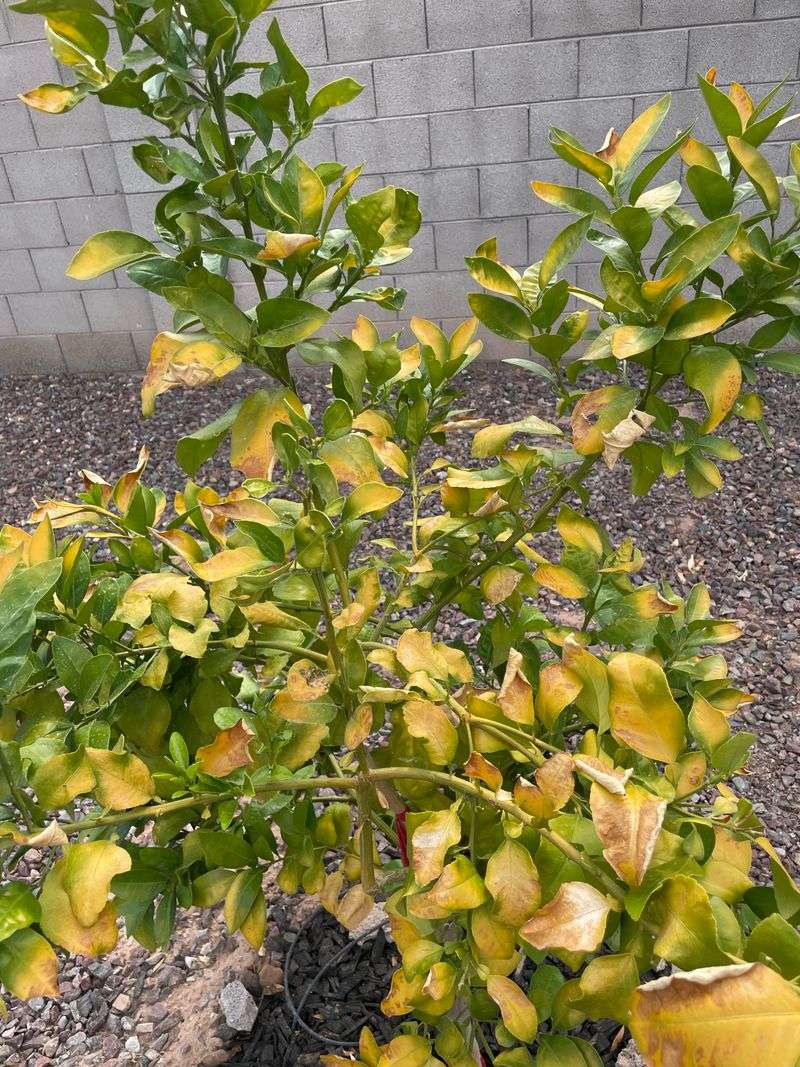
Monsoon rain can be helpful, but it is not always enough.
An Arizona storm may sound impressive on the roof and still fail to soak the citrus root zone deeply. One part of the yard may receive real moisture while another stays almost dry. That uneven pattern makes August irrigation tricky.
Use a rain gauge near the tree. A gauge placed near the citrus canopy tells you far more than guessing from puddles on the patio.
Check the soil after rain. Push a long screwdriver, soil probe, or metal rod into the ground near the canopy edge.
Easy movement usually means moisture reached that zone. Sharp resistance or dusty soil on the probe means the roots still need water.
Do not trust wet mulch alone. Mulch can look soaked while the soil underneath remains dry.
Avoid running the timer blindly. A fixed schedule can overwater after a strong storm or underwater after a storm that missed your block.
Pause only after confirmation. Shorten or skip irrigation only when the soil actually holds moisture deep enough for the roots.
Watch humidity too. Monsoon weather can slow drying, so the interval between waterings may need adjustment.
Resume carefully. Once the soil begins drying again, return to deep irrigation rather than quick surface watering.
The sky does not manage citrus roots evenly.
In August, the smartest growers let the rain help, then verify what the root zone actually received.
2. Inspect Emitters For Clogs
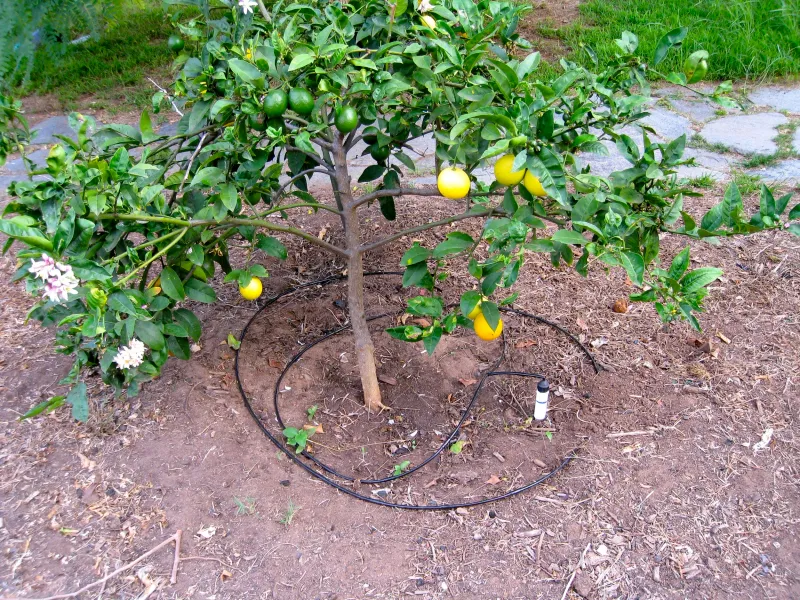
A drip system can run and still fail one side of a tree.
That is why August emitter checks matter so much. In Arizona heat, one clogged emitter can leave part of the root zone dry while the rest of the system looks perfectly normal.
Run the system while watching it. Do not just listen for water or assume the timer completed the cycle.
Walk the full tubing loop. Check every emitter beneath and just beyond the canopy.
Your Arizona Garden Changes Every Week. Your Plan Should Too.
Gardening in Arizona changes quickly throughout the season. Every Friday you’ll receive a simple weekly plan showing exactly what to plant, prune, fertilize, harvest, and protect so you never miss the right timing.
Look for weak trickles. A slow, uneven drip may mean mineral buildup is cutting the flow.
Hard water leaves clues. White crust, clogged heads, and reduced output often come from mineral deposits.
Check for dry soil circles. An emitter that should create a wet patch but leaves dry ground needs attention.
Look for sideways spray. A shifted or damaged emitter may water mulch, gravel, or the trunk instead of the soil.
Inspect tubing after storms. Monsoon runoff, fallen debris, pets, and yard work can move lines out of place.
Clear or replace clogged emitters. A stubborn emitter is not worth trusting through another stretch of extreme heat.
Clean filters too. A dirty filter can reduce flow across the whole citrus zone.
Emitter placement should grow with the tree. Mature citrus roots are not clustered at the trunk, so water points need to extend under the canopy and beyond the drip line.
A drip system is only as good as its weakest outlet.
August is the month to find that weak spot before the tree does.
3. Soak The Full Root Zone
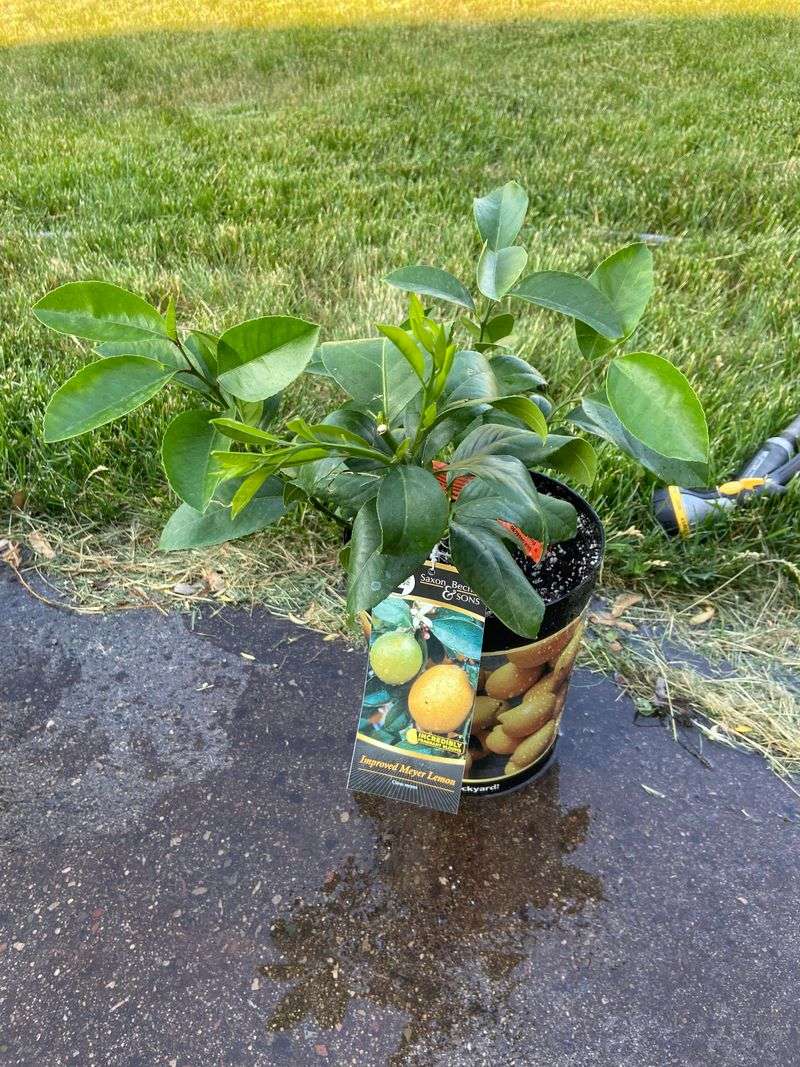
Citrus roots do not want water only at the trunk.
The most active feeder roots spread outward beneath the canopy and beyond. Watering close to the base may look tidy, but it misses the area where the tree absorbs much of its moisture.
Water wide. Place emitters or soaker lines around the canopy edge rather than bunched tightly against the trunk.
Water deep. Mature citrus needs moisture to move well below the surface, not just dampen the top few inches.
Use a soil probe after irrigation. The probe tells you how deep the moisture went and where dry layers remain.
Sandy soil drains fast. It may need carefully timed cycles that deliver water deeply without leaving the root zone dry again too soon.
Clay soil takes water slowly. Long single runs can create runoff before water sinks deeply.
Use cycle watering on difficult soil. Run the system, pause, then run again so moisture has time to move downward.
Watch for runoff. Water flowing away from the tree is not watering the roots.
Adjust by evidence. Run time should be based on soil response, tree size, and season, not habit.
Avoid frequent shallow watering. That pattern keeps roots near the hot surface and leaves the tree more vulnerable.
Deep soaking builds resilience.
A citrus tree facing August heat needs moisture where roots can actually reach it, not a quick splash that disappears before afternoon arrives.
4. Feed Lemons And Limes On Schedule
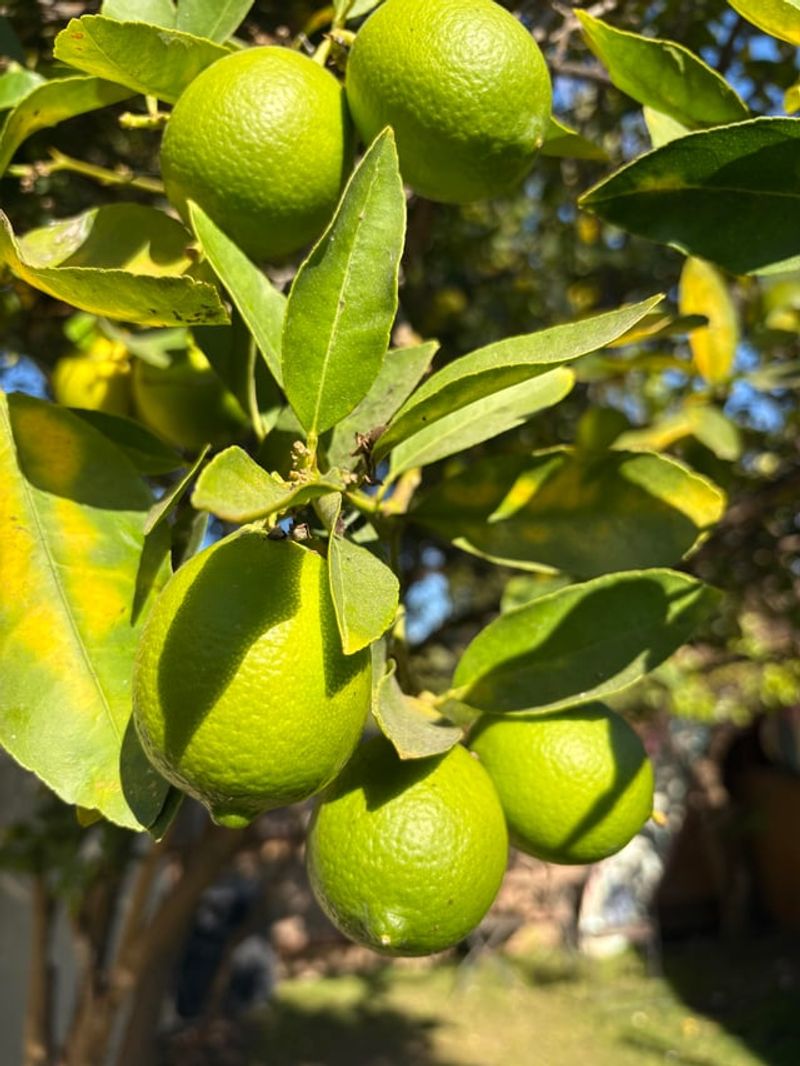
Fertilizer timing matters more than enthusiasm.
August can be part of the feeding schedule for some Arizona citrus, especially lemons and limes, but not every tree needs the same treatment. Tree type, age, past applications, and regional timing all matter.
Check the annual schedule first. Do not add fertilizer just because the tree looks busy or the month feels demanding.
Lemons and limes often differ from oranges and grapefruit. Their nitrogen timing may not match other citrus in the yard.
Count earlier feedings. An August application only makes sense when it fits the total yearly plan.
Young trees need smaller amounts. A newly planted or young citrus tree cannot handle the same dose as a mature tree.
Stressed trees need caution. Heat stress, dry soil, or root trouble makes heavy feeding risky.
Water before and after feeding. Fertilizer placed on dry soil can irritate roots and will not move properly into the active zone.
Spread fertilizer where roots are active. Keep it away from the trunk and distribute it beneath the canopy and outward.
Avoid piles. Concentrated fertilizer pockets can burn roots.
Skip feeding when the schedule says skip. More nitrogen is not automatically better in August.
Too much nitrogen can push tender growth. Soft new growth may struggle in heat and attract pests.
The goal is steady support.
A well-timed feeding helps citrus, while a rushed one can create new stress during the hardest month of summer.
5. Pull Mulch Away From Trunks
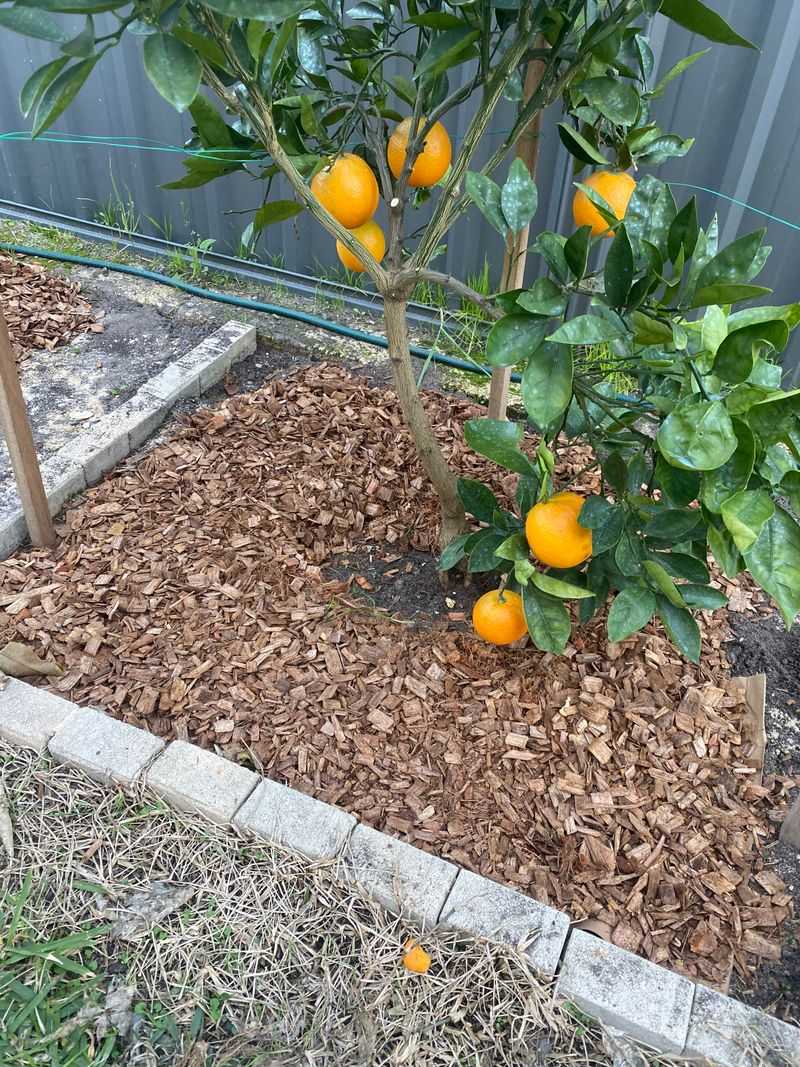
Mulch helps citrus, but only when it sits in the right place.
In Arizona, organic mulch can slow evaporation, moderate soil temperature, and protect the root zone during brutal heat. Mulch piled against the trunk, however, creates the wrong kind of moisture.
Keep the trunk clear. Pull mulch at least several inches away from the base of the tree.
The crown needs air. Bark at the soil line should stay visible and able to dry.
Avoid mulch mounds. A thick pile against the trunk can soften bark and encourage fungal problems.
Spread mulch outward instead. The root zone beneath the canopy needs protection far more than the trunk does.
Two to four inches is usually plenty. A moderate layer helps conserve moisture without blocking water movement.
Check old depth before adding more. Repeated top-ups can quietly create a layer that is too thick.
Fluff compacted mulch. Matted material can repel water or keep irrigation from reaching the soil evenly.
Expose hidden emitters. A buried emitter may water the mulch layer more than the ground below.
Use clean organic material. Wood chips, shredded tree trimmings, and similar mulches can improve soil over time.
Keep mulch wider than the canopy when possible. Feeder roots often extend beyond the branch tips.
Mulch is not decoration in August.
Placed correctly, it becomes root-zone protection. Placed against the trunk, it creates a problem the tree did not need.
6. Protect Exposed Fruit From Sun
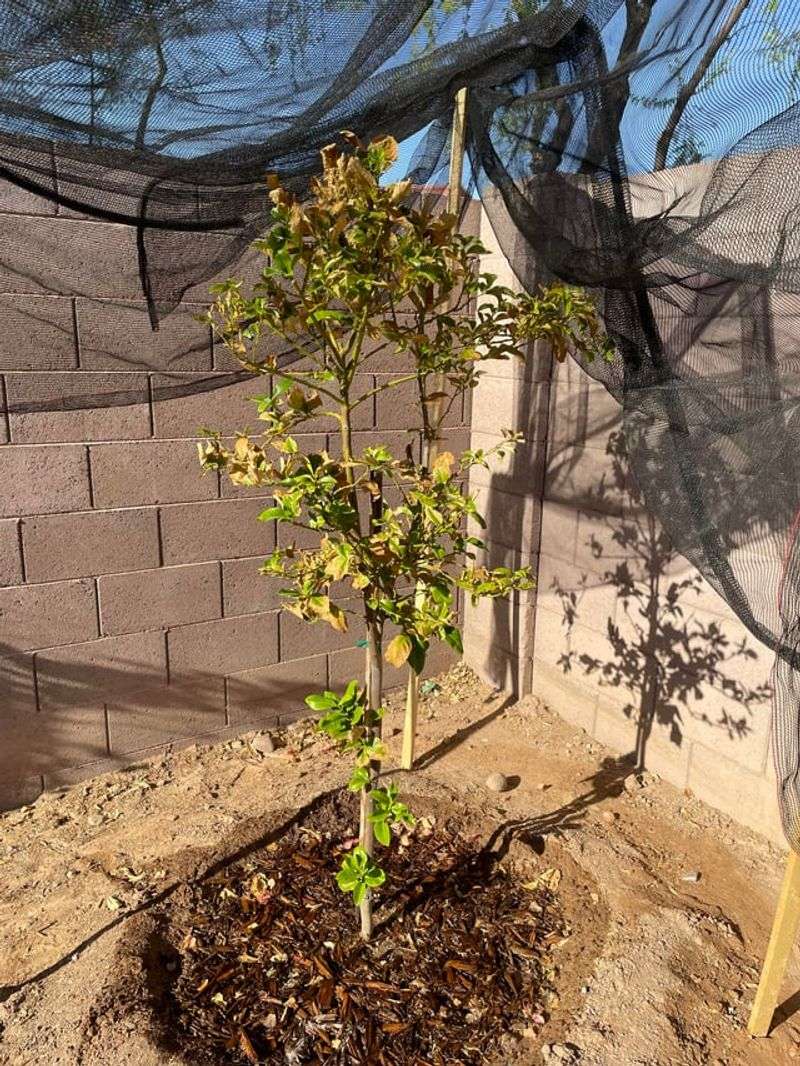
Citrus fruit can sunburn in Arizona heat.
The damage usually appears on fruit that suddenly loses leaf cover or hangs on the south or west side of the canopy. Once the exposed rind bleaches or turns tan, that injury does not reverse.
Leaves are the first protection. Healthy canopy foliage acts like a living shade cloth over developing fruit.
Do not strip interior growth for looks. August is the wrong time to open the canopy just to make the tree appear cleaner.
Avoid heavy summer pruning. Removing too many leaves exposes fruit and branches to intense sun.
Watch fruit after wind. Monsoon gusts can move branches, break small limbs, or expose fruit that was shaded before.
Check the west side often. Afternoon sun hits hardest there.
Use temporary shade where practical. Light shade cloth can protect exposed sections during the hottest periods.
Keep shade cloth off the fruit when possible. Airflow matters, and solid covers can trap heat.
Do not overthin fruit in heat. Removing fruit can change how sun reaches the remaining crop.
Remove severely damaged fruit. Fruit with major sun injury may decline in quality and distract from fruit still worth protecting.
Plan pruning for cooler timing. Structural cuts belong in a better season, not during peak summer exposure.
Sun protection starts with restraint.
In August, keeping the canopy intact is often the best fruit-saving move an Arizona citrus grower can make.
7. Remove Split Fruit Promptly
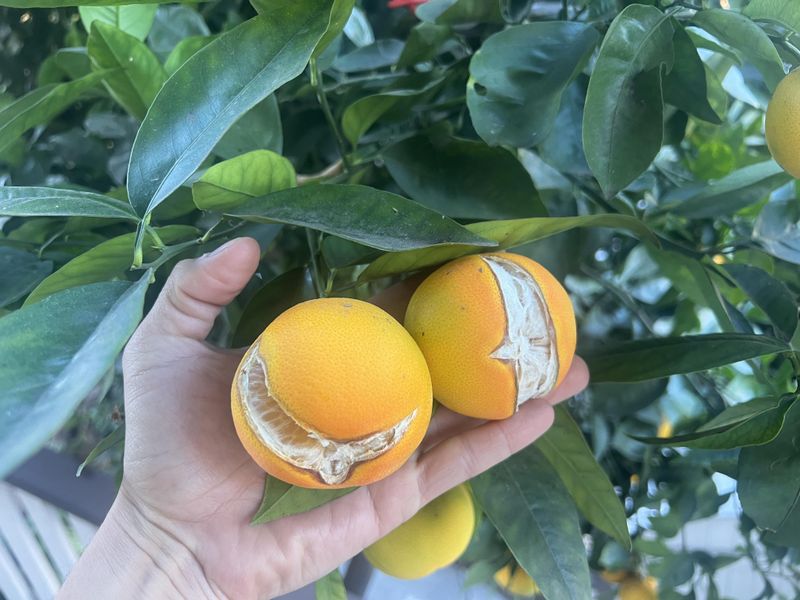
Split fruit should not stay on the tree.
After monsoon rain or a heavy irrigation correction, citrus fruit can crack when the inside expands faster than the rind can stretch. Once the rind opens, the fruit becomes vulnerable to insects and decay organisms.
Walk the tree after storms. Split fruit can appear quickly after a sudden moisture swing.
Check inside the canopy. Cracked fruit may hide behind leaves where pests find it before you do.
Remove badly split fruit cleanly. Do not leave it hanging as a pest invitation.
Pick up fallen fruit too. Fruit on the ground beneath citrus trees can attract insects, rodents, and unpleasant odors in heat.
Bag damaged fruit for disposal. Keep it away from the trunk and root zone.
Do not compost questionable fruit beside the tree. Warm, damaged fruit can create sanitation issues fast.
Look for patterns. Repeated splitting may point to irregular irrigation, heavy rain after dry soil, or variety sensitivity.
Smooth the watering cycle. Steady root-zone moisture reduces the harsh dry-to-wet swings that contribute to cracking.
Do not flood the tree to prevent splitting. Too much water can stress roots and create oxygen problems.
Use split fruit as a warning. It tells you the moisture pattern may need attention before more fruit is affected.
Sanitation protects the rest of the crop.
A few minutes of cleanup after a storm can prevent one split fruit from becoming a bigger August problem.