The Best Pennsylvania Native Flowers To Plant Now For Late Fall Pollinators
Most Pennsylvania gardens are winding down by late fall, and most gardeners are fine with that. The season is ending, the beds are tired, and the idea of still thinking about pollinators in October and November feels like going above and beyond.
But for the native bees, butterflies, and beneficial insects that are still active late in the season, building reserves and finding the last reliable food sources before winter, the flowers still blooming in your garden in late fall are not a nice to have. They’re essential.
Late fall pollinators in Pennsylvania are often overlooked, but they’re there, and the yards with the right plants still in bloom become critical resources at a time when most of the landscape has already shut down.
The native flowers that carry into late fall are genuinely doing conservation work simply by being there.
Planting them now gives them exactly the time they need to establish before putting on their most important show of the season. Here are the best Pennsylvania native flowers to plant right now for late fall pollinators.
1. Aromatic Aster
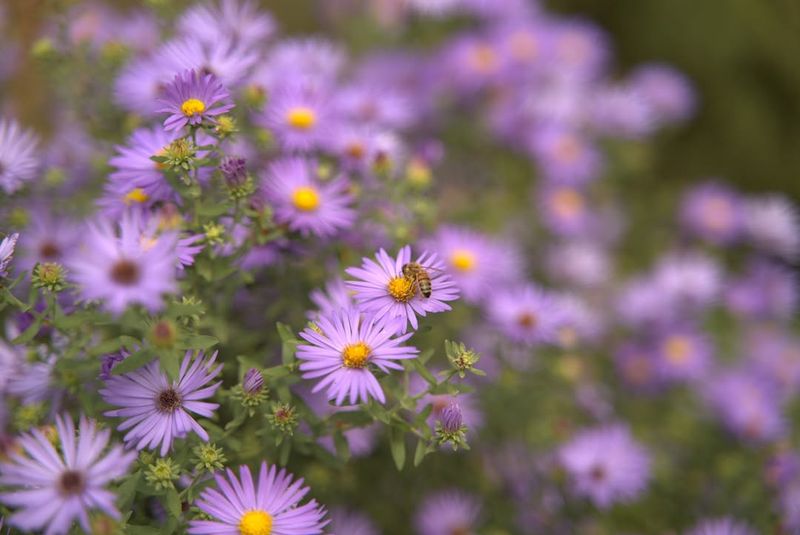
Picture a shrubby mound of green suddenly exploding into a billowing cloud of lilac-purple and blue in early October, just when most other flowers have called it quits.
That is exactly what Aromatic Aster does, and it is honestly one of the most jaw-dropping sights in the fall native garden.
The flowers are about the size of a quarter, each with a cheerful yellow center that glows in the low autumn sunlight.
Pollinators absolutely love it. Bees, butterflies, and even some late-season wasps visit the blooms constantly during its peak flowering window.
Because it blooms so late in the season, it fills a critical gap when food sources are getting scarce. Planting Aromatic Aster is like setting out a welcome sign for every pollinator still active in your neighborhood.
It thrives in full sun and handles dry, poor soils with ease, which makes it a great choice for spots where other plants struggle. It forms a dense, rounded mound that typically stays under 3 feet tall, so it fits neatly into the middle of a mixed border.
One fun thing about this plant is the name. Crush a leaf between your fingers and you will notice a faint but pleasant earthy fragrance.
That aromatic quality actually comes from tiny resin glands on the leaves. It rarely needs dividing and resists most pests and diseases without any intervention.
For a low-effort, high-impact plant that works overtime for fall pollinators, Aromatic Aster is nearly impossible to beat in a Pennsylvania garden.
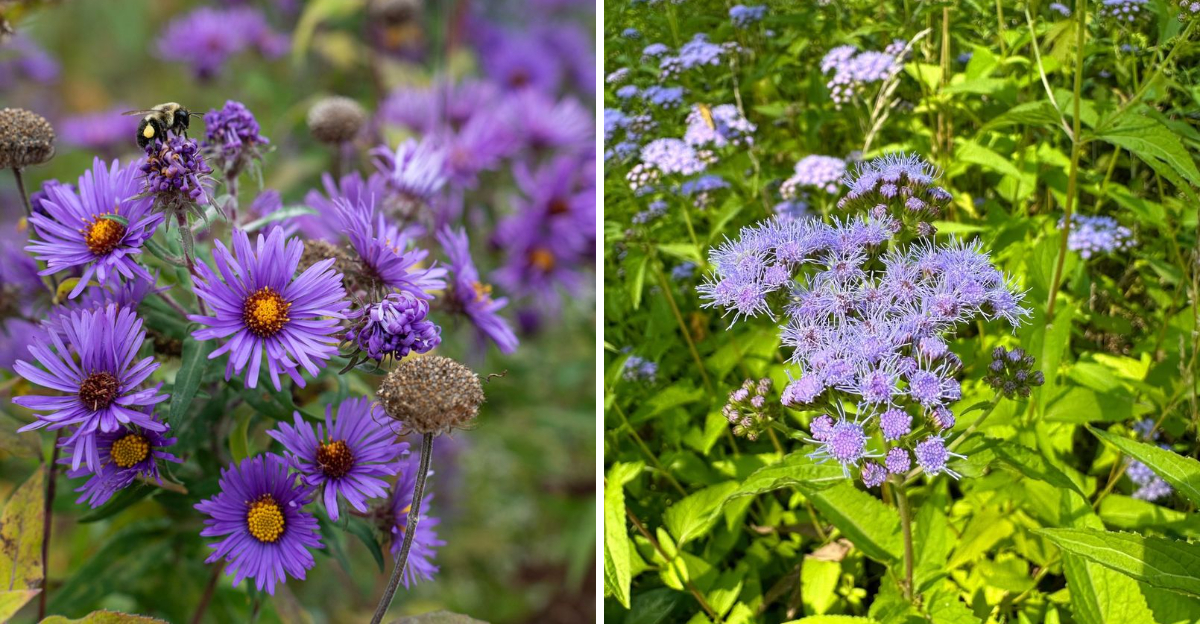
2. New England Aster
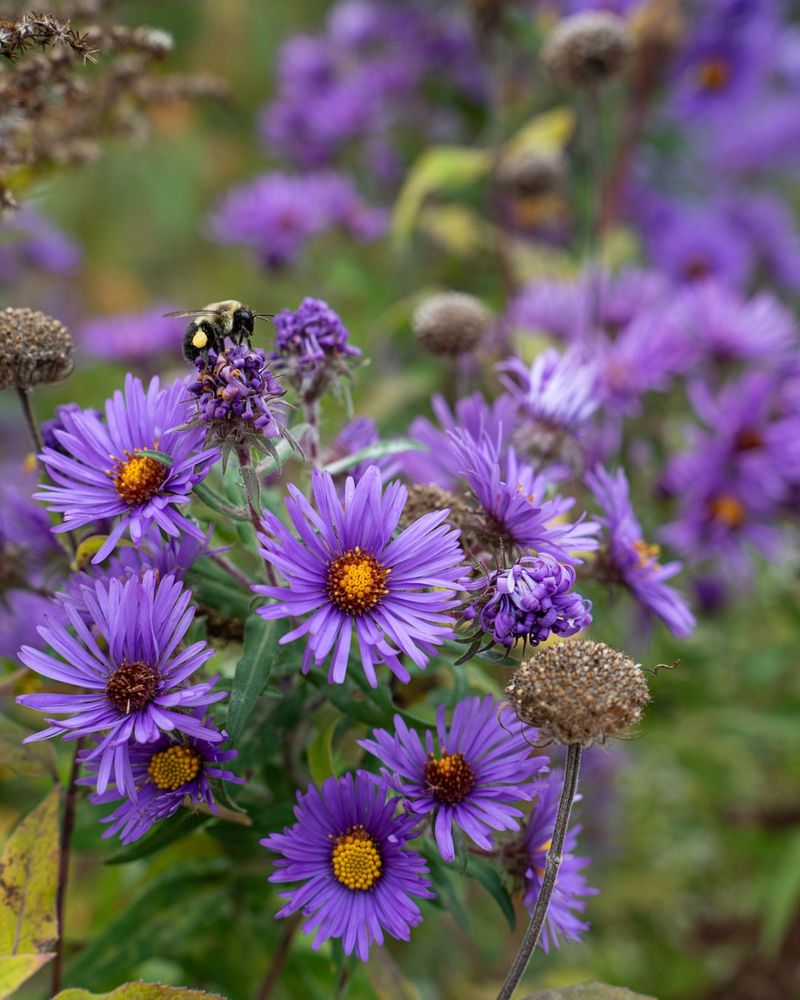
Monarch butterflies are one of nature’s most incredible travelers, and New England Aster is one of the flowers they count on most during their long migration south.
This native Pennsylvania wildflower blooms from late summer all the way through October, making it one of the last reliable food sources available before cold weather shuts everything down.
Native bees also flock to it in huge numbers, loading up on nectar and pollen before the season ends.
Your Pennsylvania Garden Changes Every Week. Your Plan Should Too.
Gardening in Pennsylvania changes quickly throughout the season. Every Friday you’ll receive a simple weekly plan showing exactly what to plant, prune, fertilize, harvest, and protect so you never miss the right timing.
New England Aster grows between 3 and 6 feet tall, so it works best planted toward the back of a flower bed where it will not block shorter plants. The flowers are a bold, rich purple with bright yellow centers that pop against the muted tones of fall foliage.
It creates a stunning visual display while doing serious ecological work at the same time. Plant it in a sunny spot with well-drained soil and give it some room to spread. It tends to flop a bit if grown in rich soil, so leaner conditions actually produce sturdier, more upright stems.
Cutting it back by about half in early summer encourages bushier growth and more blooms. Once established, it handles drought pretty well and spreads slowly over time.
This plant is incredibly tough and adapts to a wide range of conditions, which is part of why it has thrived across Pennsylvania for centuries.
Gardeners who plant it often say it quickly becomes one of their favorites because of how much wildlife activity it attracts every single fall.
3. Smooth Aster
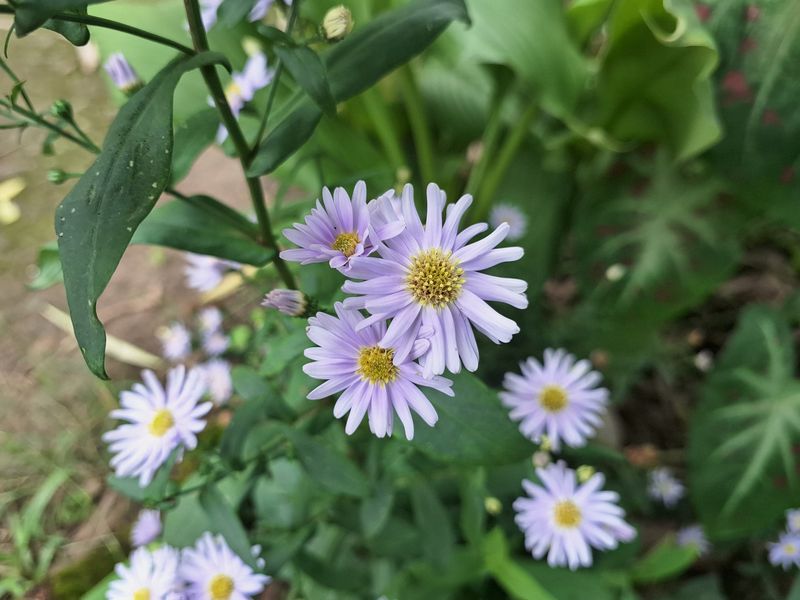
The Pennsylvania Horticultural Society has long used Smooth Aster as a go-to plant for late-season color, and once you see it in bloom, it is easy to understand why.
The cultivar known as Bluebird produces stunning powder-blue flowers that sit atop erect, sturdy stems reaching anywhere from 2 to 4 feet tall.
The color is soft and cool, a beautiful contrast to the warm oranges and yellows of fall foliage all around it.
What makes Smooth Aster especially noteworthy is how widely it grows across the eastern United States. Its native range covers nearly every state east of the Mississippi River, which means it is deeply adapted to the conditions Pennsylvania gardeners deal with every year.
It handles heat, humidity, and cold snaps without complaint, and it does not need much babying once it gets established in the ground.
Pollinators respond to Smooth Aster with enthusiasm. Bumblebees are particularly fond of the blooms, and you will often see them working the flowers on warm October afternoons when not much else is in bloom.
Plant it in full to partial sun with average soil and decent drainage. It pairs beautifully with goldenrods and taller asters, creating a layered look that feels both wild and intentional.
Gardeners who want a more structured, upright plant rather than a sprawling mound will appreciate how tidy Bluebird stays throughout the season. It also holds its foliage well into fall, giving the garden a finished, polished look right up until the first hard frost arrives.
4. Sweet Goldenrod
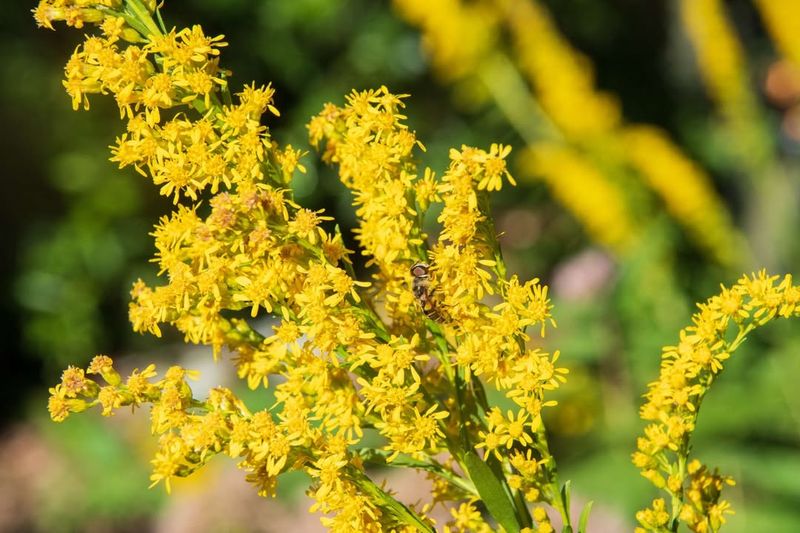
Goldenrods get a bad reputation because people often blame them for fall allergies, but that is actually a myth worth clearing up right away. The real culprit is ragweed, which blooms at the same time but spreads its pollen through the air.
Goldenrod pollen is heavy and sticky, meaning it travels by insect rather than wind. That is exactly why pollinators love it so much, and Sweet Goldenrod is one of the best of the bunch.
What sets Sweet Goldenrod apart from its many cousins is the scent. Crush one of the leaves and you will catch a pleasant, anise-like fragrance that is completely unique among goldenrods.
It is a small but charming detail that makes working in the garden feel a little more special. The bright yellow flower clusters bloom from late summer into early fall, providing a rich source of nectar and pollen for native bees, butterflies, skippers, and more.
Sweet Goldenrod prefers well-drained soil in full sun and tends to stay a bit more compact than some of its relatives, which makes it easier to manage in a home garden. It typically reaches 2 to 4 feet tall and spreads at a moderate pace through rhizomes underground.
If it starts to spread more than you want, simply dig up the edges in spring and share the extras with neighbors.
Pairing it with asters creates a classic fall combination that is both visually striking and enormously productive for the pollinators visiting your yard throughout the season.
5. Blue-Stemmed Goldenrod
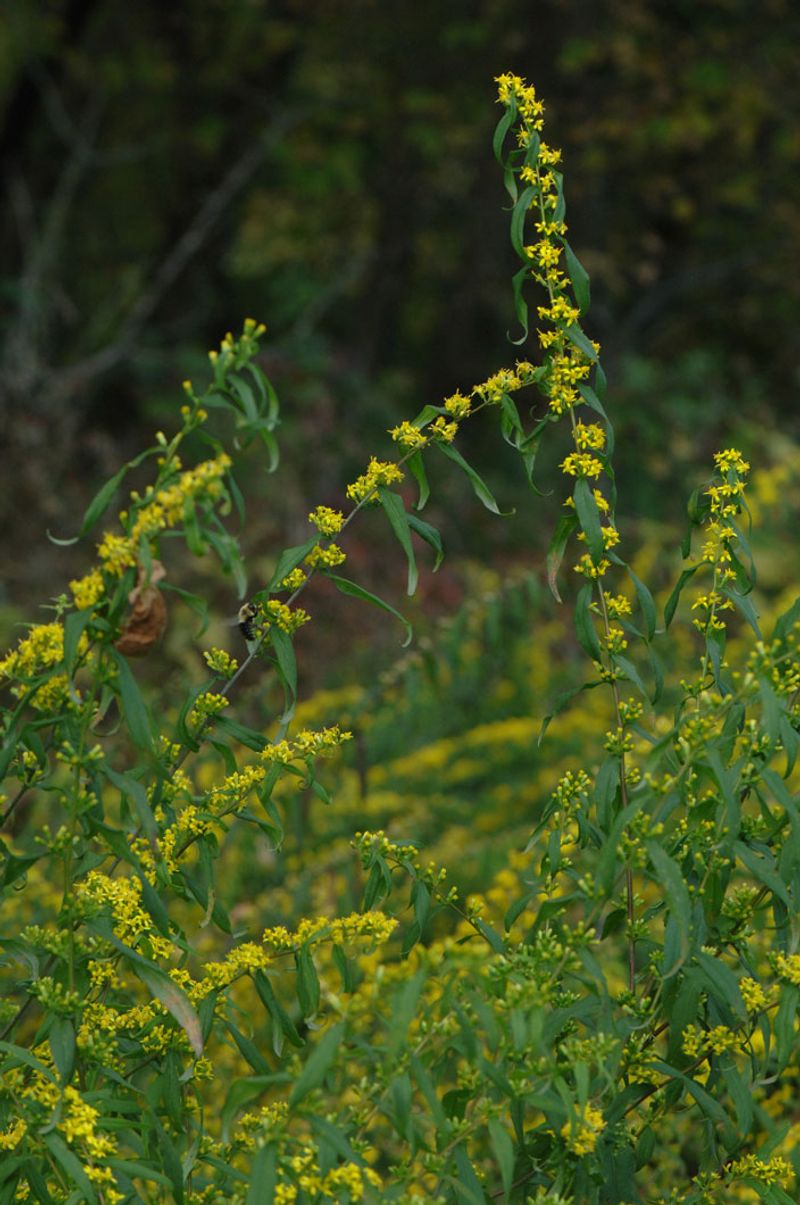
Most goldenrods are bold, bright, and a little wild-looking, but Blue-Stemmed Goldenrod brings something a little more refined to the fall garden. Look closely at the stems and you will notice a distinctive bluish-green or waxy coating that gives this plant its name.
It is a subtle but elegant detail that sets it apart from the crowd and makes it especially attractive in naturalistic garden designs.
The delicate yellow flowers appear from late summer into early fall, and they are absolutely packed with nectar. Bees, butterflies, and other pollinators visit the blooms constantly during peak bloom.
Because the flowers are a bit smaller and more gracefully arranged than some other goldenrods, they attract a wider variety of smaller bee species that might get overlooked in favor of showier plants. Supporting that kind of diversity is a real win for the local ecosystem.
Blue-Stemmed Goldenrod is also one of the more shade-tolerant goldenrods available, which opens up planting options that other sun-loving species simply cannot fill.
It grows well along woodland edges, under the dappled shade of deciduous trees, or in partially shaded border spots.
It typically reaches 1 to 3 feet tall and spreads slowly, making it one of the better-behaved goldenrods for smaller gardens. Give it average to slightly moist soil and it will reward you year after year with minimal effort.
For gardeners designing pollinator-focused spaces that also need to work in shadier conditions, Blue-Stemmed Goldenrod is a genuinely valuable and often underappreciated choice.
6. Blue Mistflower
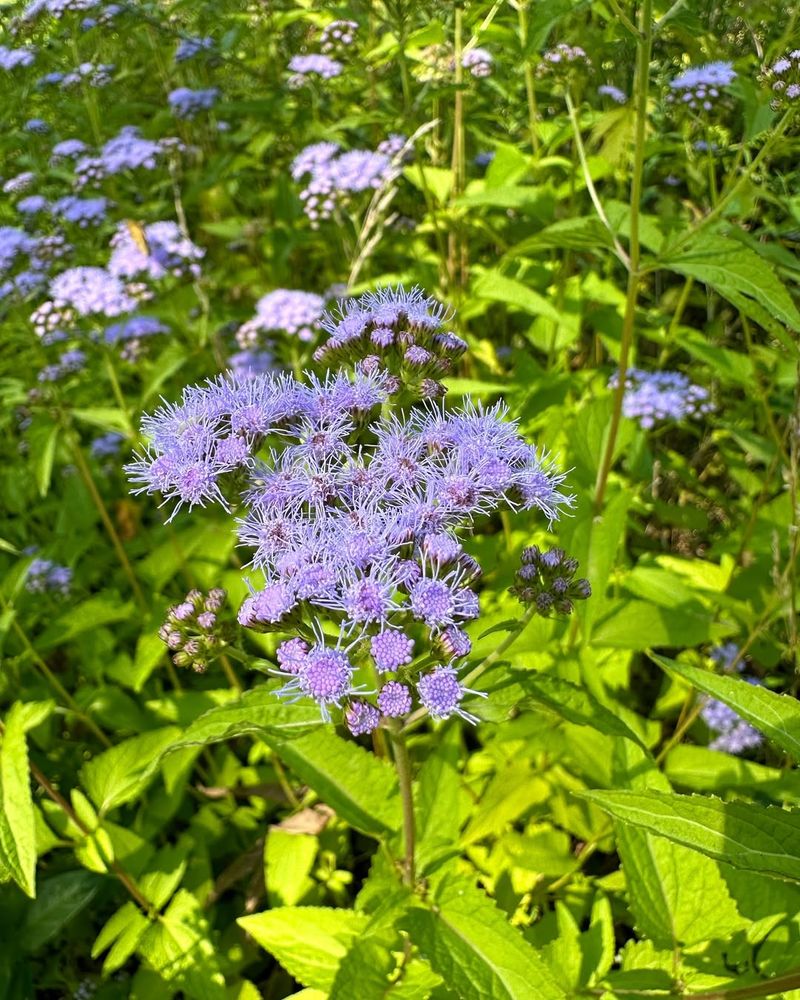
If the asters and goldenrods feel a bit bold and upright, Blue Mistflower brings a softer, almost dreamy quality to the fall garden. The flowers look like tiny puffs of powder-blue fluff clustered together in loose, frothy heads.
Up close, they almost resemble the flowers of a tropical ageratum, which makes sense since the two plants are actually related. In the garden, the effect is light and airy in the best possible way.
Blooming from late summer through fall, Blue Mistflower fills a valuable visual and ecological role right alongside the taller asters and goldenrods.
Butterflies are especially drawn to it, and you will often see several species nectaring at once on a warm fall afternoon.
Bees visit regularly as well, making it a reliable multi-pollinator plant rather than one that attracts only a narrow range of visitors.
Blue Mistflower typically grows 1 to 3 feet tall and spreads through underground runners, which means it can form a nice colony over time in the right conditions.
It prefers moist soil and can handle partial shade, making it useful in spots that might be too wet or too shady for goldenrods and asters.
Plant it near a rain garden, along a stream edge, or in a low spot in the yard where water tends to collect. It pairs beautifully with native grasses and ferns for a layered, naturalistic look.
Once established, it asks for very little and delivers a lot of charm and ecological value every single year without fail.
7. Sneezeweed
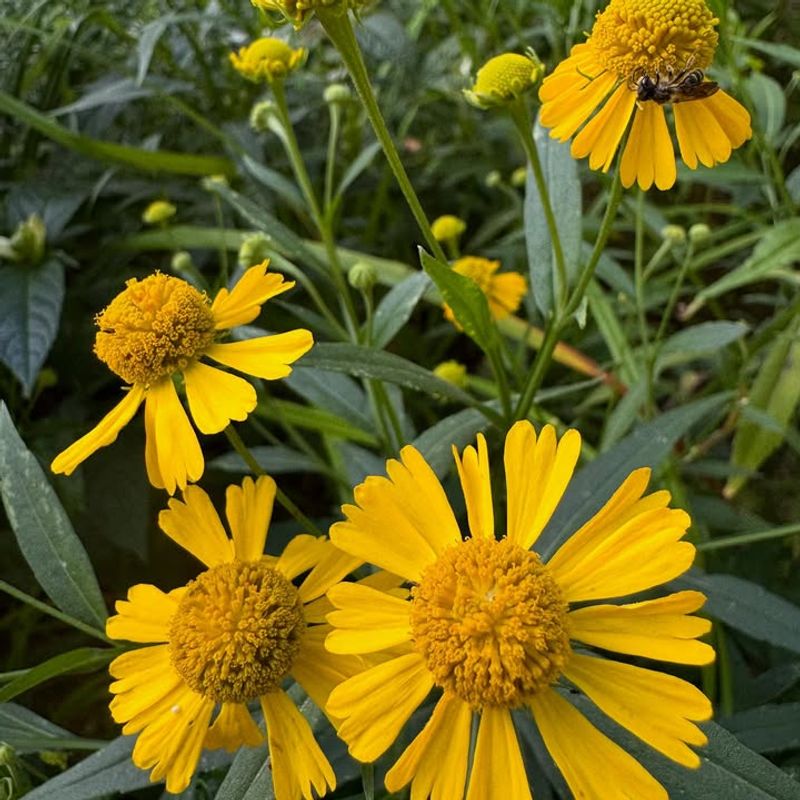
Do not let the name fool you. Sneezeweed does not actually cause sneezing, and it is one of the most cheerful and productive plants you can add to a fall native garden.
The name comes from an old practice of drying the leaves and using them as a kind of herbal snuff, which is a quirky bit of history that has nothing to do with how the plant behaves in your garden today.
What it actually does is produce waves of warm yellow-orange flowers that look like little sunbursts from late summer well into fall.
The color is genuinely exciting. While asters bring purples and blues and goldenrods bring bright yellows, Sneezeweed adds a warm, burnished tone that ties the whole palette together beautifully.
The petals fan outward from a raised central button, giving each flower a slightly three-dimensional, sculptural quality that catches the eye from across the yard. Bees and butterflies visit the blooms constantly, drawn in by the abundant nectar the flowers produce.
Sneezeweed grows in an upright, clump-forming habit and typically reaches 3 to 5 feet tall, making it a strong mid-to-back-of-border plant. It thrives in moist to average soil and prefers full sun, though it tolerates some light afternoon shade without much trouble.
Cutting the stems back by about a third in early summer, a technique called Chelsea chop, keeps the plants more compact and encourages heavier blooming later in the season. It is a reliable, long-blooming, and visually striking addition to any Pennsylvania pollinator garden.