The Most Underrated Pennsylvania Native Vine That Feeds Wildlife All Season
Vines get a complicated reputation in Pennsylvania gardening circles. Too many of the most visible ones are invasive, aggressive, and ecologically damaging, and that association has made some gardeners hesitant about adding any vine to their property at all.
But the right native vine tells a completely different story, and there’s one in particular that has been earning quiet admiration from ecologists and wildlife gardeners for years without ever quite breaking through to mainstream attention.
This vine feeds wildlife all season long. Spring flowers support early pollinators. Summer fruit attracts birds that return repeatedly through the season.
Fall and winter berries provide critical food resources for migrating and overwintering species at exactly the moment when other sources are drying up.
It is a continuous, living wildlife buffet that asks for very little in return beyond a surface to climb and the space to do it.
For a vine that does this much for Pennsylvania wildlife, it remains remarkably underused in residential landscapes.
This Vine Feeds Wildlife All Season
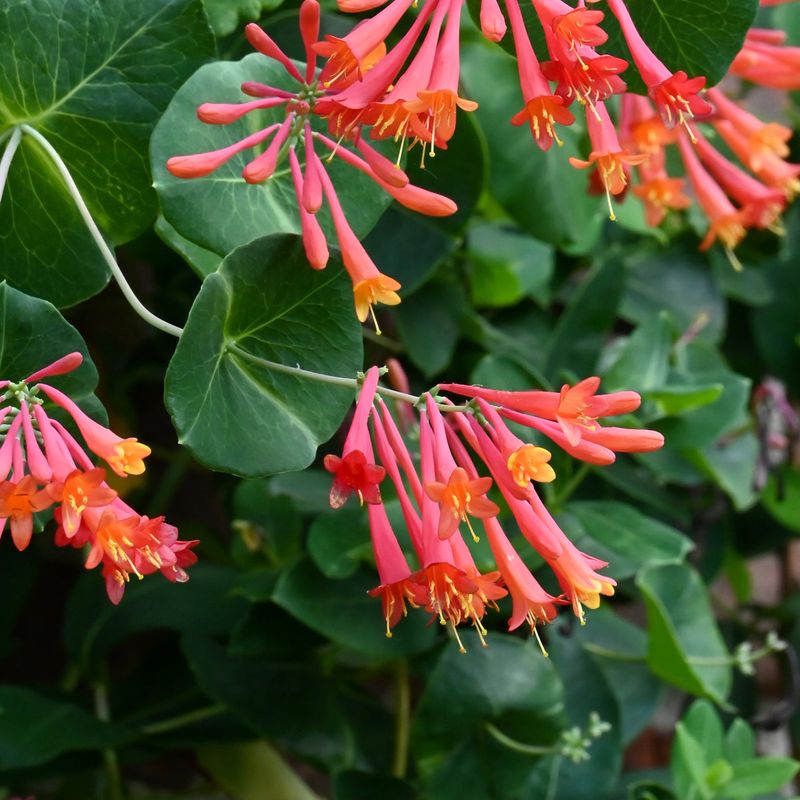
Walk through any Pennsylvania native plant nursery and you might spot a quiet, unassuming vine tucked between the showier plants. That vine is coral honeysuckle, and it is one of the most hardworking native plants you can add to your yard.
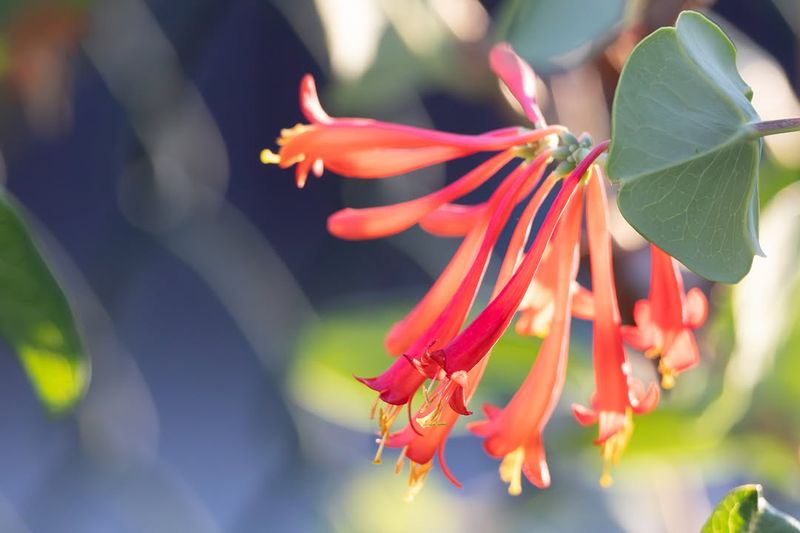
Its scientific name is Lonicera sempervirens, but gardeners also call it trumpet honeysuckle because of its narrow, tube-shaped blooms.
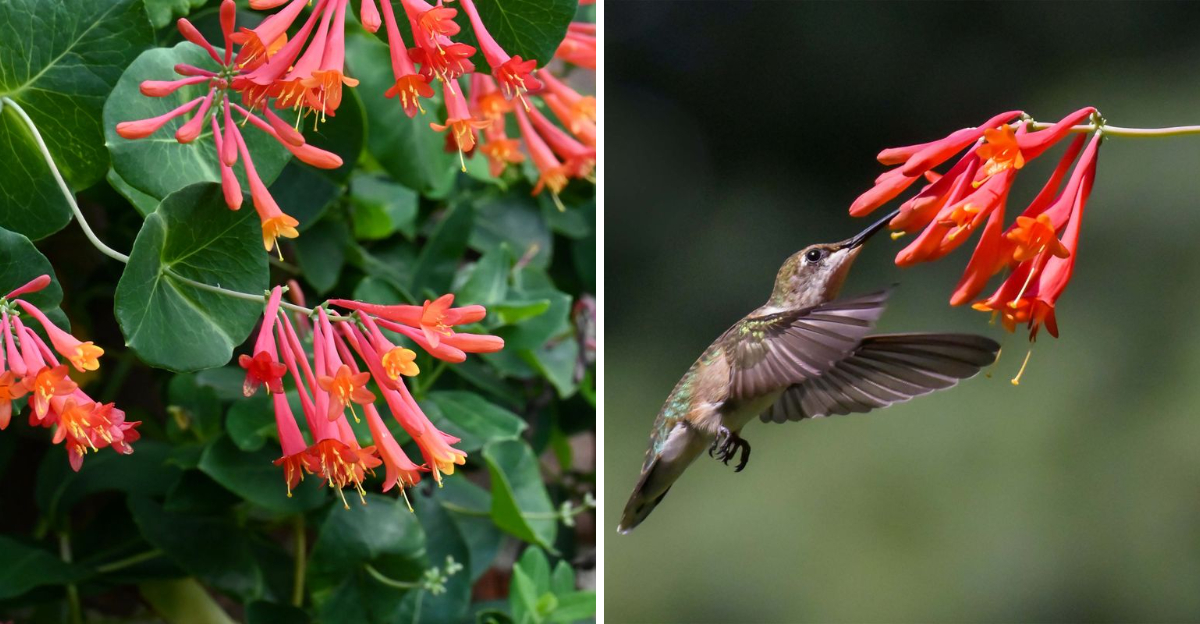
The flowers come in shades of red, coral, and orange. They grow in clusters near the tips of the stems, and they have a clean, elegant look that pairs beautifully with wooden fences, stone walls, and garden trellises.
The vine itself grows about 10 to 20 feet long, which makes it a manageable size for most home gardens.
One thing that sets coral honeysuckle apart from other vines is its behavior. It is a woody vine, meaning it builds strong stems over time and comes back reliably each year. It does not spread aggressively or choke out nearby plants the way invasive vines often do.
Many Pennsylvania gardeners mistakenly plant Japanese honeysuckle instead, not realizing it is an invasive species that can crowd out native plants. Coral honeysuckle is the responsible, wildlife-friendly choice.
It supports the local food web without disrupting the natural balance of your garden. If you have an arbor, fence, or trellis sitting empty in your yard, coral honeysuckle is exactly the right plant to train up and over it.
It rewards patient gardeners with color, wildlife activity, and season-long interest. Few native vines offer this much value in such a tidy, well-behaved package.
Its Flowers Supply Nectar From Spring Into Summer
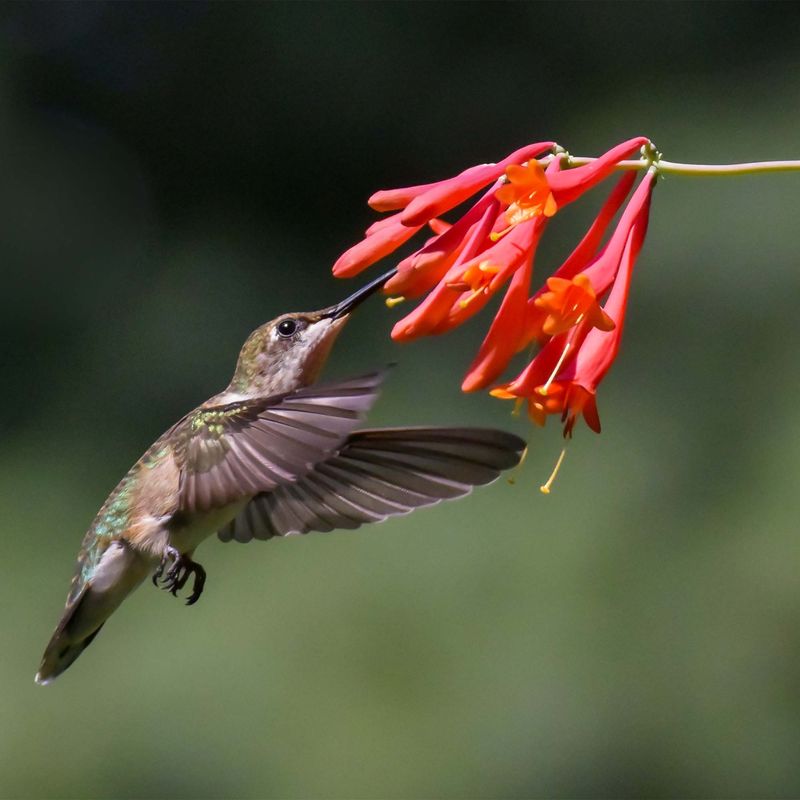
Timing matters a lot when you are feeding wildlife. Coral honeysuckle gets the timing just right.
The main burst of blooms kicks off in spring, right when hummingbirds are returning from their winter migration and pollinators are waking up and searching for food. That early nectar supply is genuinely important for wildlife that needs fuel after a long winter.
The flowering does not stop after that first big spring show. Established plants often push out additional flushes of blooms as summer gets going.
Your Pennsylvania Garden Changes Every Week. Your Plan Should Too.
Gardening in Pennsylvania changes quickly throughout the season. Every Friday you’ll receive a simple weekly plan showing exactly what to plant, prune, fertilize, harvest, and protect so you never miss the right timing.
This extended bloom time means your garden stays active with wildlife visitors for weeks longer than it would with a plant that flowers just once and finishes.
The tubular shape of the flowers is not an accident. Those long, narrow tubes are perfectly sized for hummingbird beaks.
The birds can reach the nectar easily, and the flower gets pollinated in return. It is a relationship that has been developing for thousands of years between this plant and the animals that depend on it.
Sunlight plays a big role in how well the vine flowers. Plants growing in full sun or with their upper stems reaching into bright light tend to produce the heaviest bloom.
If your vine is mostly shaded, you may still get flowers, but fewer of them. Positioning matters when you are planting for maximum nectar output.
Gardeners who want a reliable nectar bridge between early spring bloomers and midsummer perennials will find coral honeysuckle fills that gap perfectly.
It keeps the nectar flowing during a critical window and keeps hummingbirds and pollinators coming back to your yard consistently throughout the season.
Hummingbirds, Bees And Butterflies Visit The Blooms
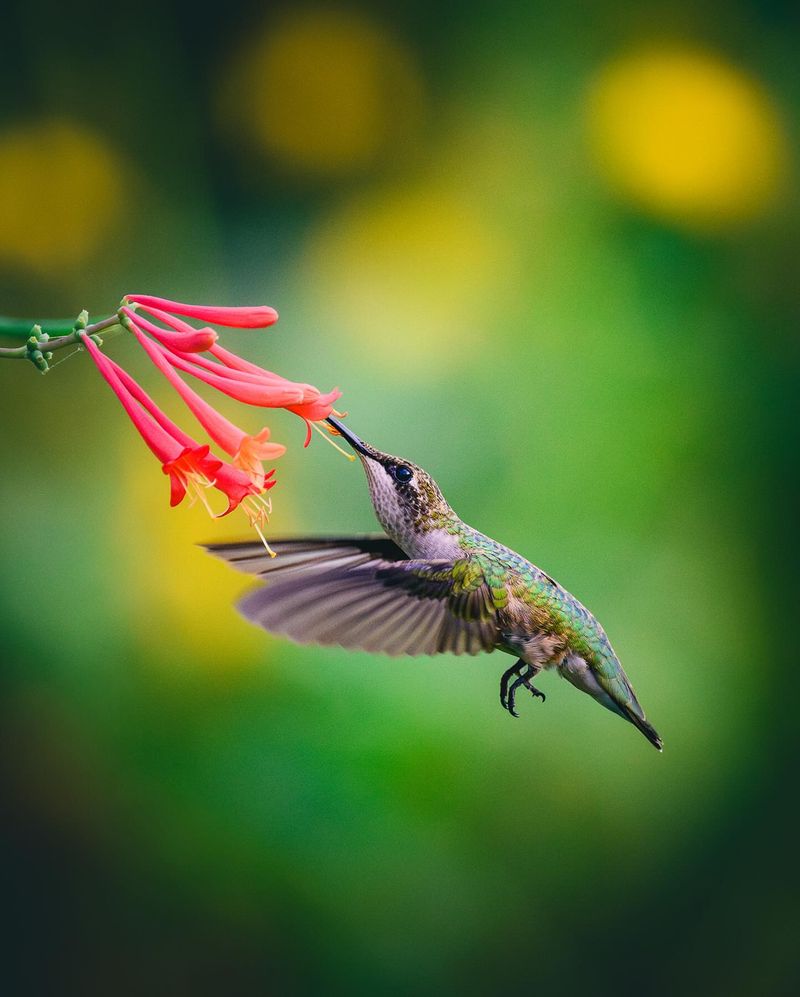
Picture this: a ruby-throated hummingbird hovering just inches from your window, its wings a blur, its beak slipped perfectly into a red trumpet flower. That is the kind of moment coral honeysuckle makes possible.
Ruby-throated hummingbirds are strongly drawn to red tubular flowers, and coral honeysuckle is basically a custom-built feeding station designed just for them.
Hummingbirds are not the only visitors, though. Bees find the blooms useful too, particularly longer-tongued bee species that can reach the nectar inside those narrow tubes.
Butterflies land on the flowers as well, sipping nectar and adding even more movement and color to the garden. Some moth species, especially those active at dusk, also take advantage of the blooms.
What makes coral honeysuckle especially valuable in a pollinator garden is its vertical growth habit. Most nectar plants are low to the ground or grow as shrubs.
Coral honeysuckle adds a whole new layer of wildlife habitat by climbing upward. Pollinators can feed at different heights, which helps reduce competition between species.
Planting the vine near a seating area, a kitchen window, or a porch gives you a front-row seat to all the wildlife action. You do not need binoculars or special equipment.
Just sit outside on a warm spring morning and watch the hummingbirds arrive. For Pennsylvania gardeners building a certified wildlife habitat or a native pollinator garden, coral honeysuckle earns its spot quickly. It does not take years to prove its value.
Once it establishes and starts blooming, the wildlife shows up almost immediately, making it one of the most rewarding native plants you can grow.
Its Late-Summer Berries Feed Songbirds
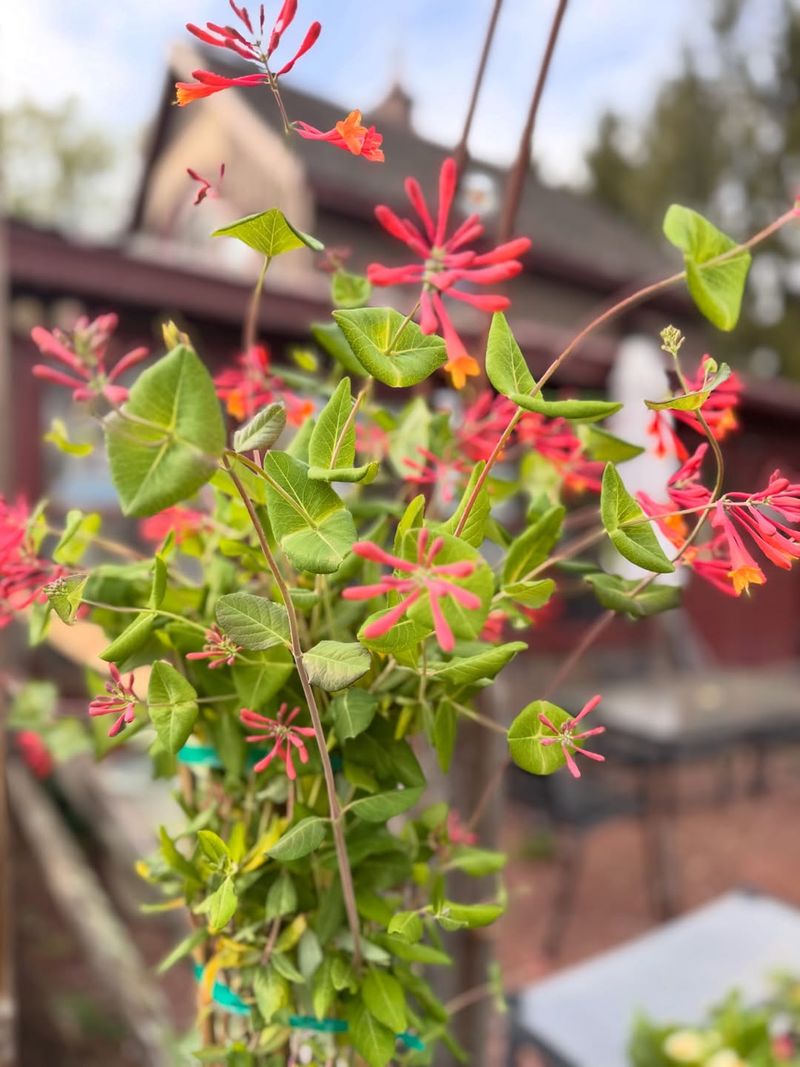
Most people think of coral honeysuckle as a flowering plant and forget about what comes next. After the blooms fade and pollination happens, the vine quietly gets to work producing something just as valuable: small, bright red berries.
These berries start developing in late summer and stick around into early fall, which is exactly when migrating songbirds need easy food sources.
Robins love them. Goldfinches, purple finches, hermit thrushes, and quail have all been documented feeding on coral honeysuckle berries.
That is a genuinely impressive guest list for a single vine. Having a plant that attracts this variety of bird species makes a big difference in the overall health and activity of your backyard wildlife habitat.
The berry production extends coral honeysuckle’s wildlife value well beyond its blooming period.
A plant that feeds hummingbirds in spring and then feeds songbirds in fall is doing double duty in your garden without requiring any extra effort from you. That kind of seasonal overlap is rare and worth celebrating.
One important note: these berries are wildlife food, not people food. They are not edible for humans and should never be treated as a garden snack or used in cooking. Leave them entirely for the birds, which is where they do the most good anyway.
If you have ever wanted to attract more songbirds to your yard during fall migration, planting coral honeysuckle near a shrub border or along a fence line is a smart move.
The birds will find the berries on their own. You just need to plant the vine and let nature handle the rest of the work from there.
It Supports Wildlife Beyond Nectar And Berries
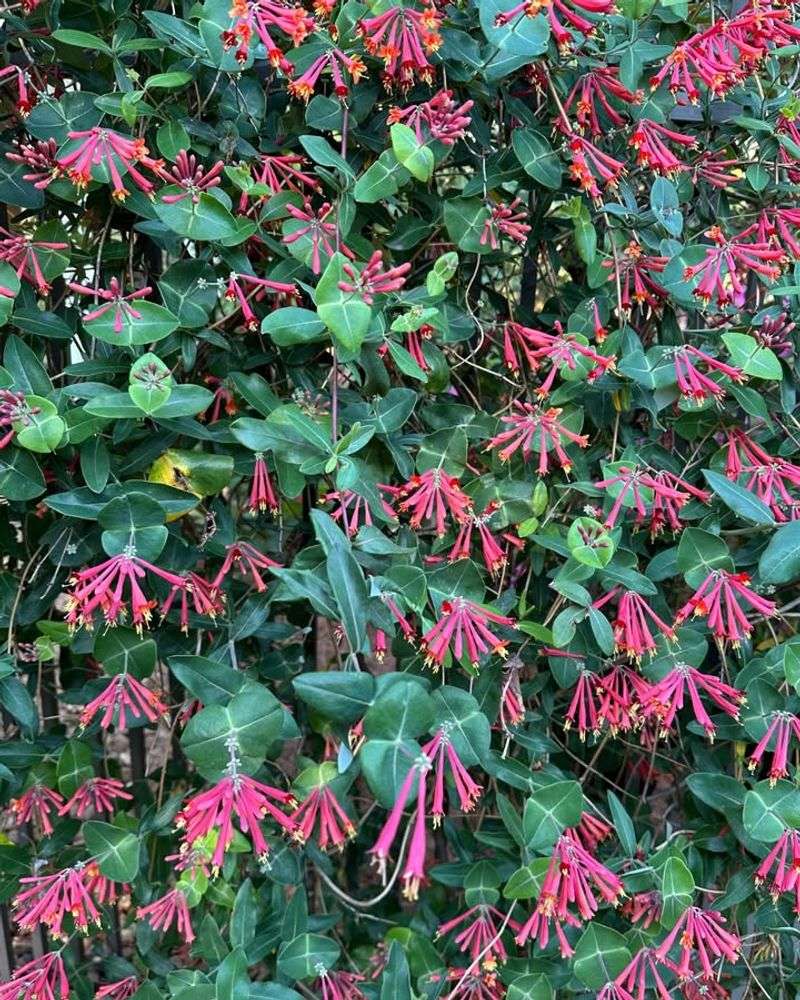
Nectar and berries are the obvious gifts coral honeysuckle gives to wildlife. But the vine goes even further than that.
Coral honeysuckle serves as a larval host plant for at least two well-known species: the spring azure butterfly and the snowberry clearwing moth.
This means female spring azures and clearwing moths lay their eggs on coral honeysuckle leaves, and the caterpillars feed on the plant as they grow.
Host plants are absolutely essential for butterflies and moths to complete their life cycles. Without them, these species cannot reproduce successfully.
By planting coral honeysuckle, you are not just feeding adult pollinators. You are helping ensure that the next generation of spring azure butterflies and snowberry clearwing moths actually makes it into the world.
The twining, leafy growth of the vine also provides light cover and perching spots for small animals. Birds sometimes tuck into the dense stems for brief shelter.
Insects rest among the leaves. The vine creates a small but genuine habitat layer that benefits multiple species at once.
This combination of roles, which includes nectar source, fruit producer, and caterpillar food plant, is what separates coral honeysuckle from many other garden plants. Most ornamental vines offer one type of wildlife value.
Coral honeysuckle stacks several types of value into a single plant across multiple seasons of the year.
Bird gardens, butterfly gardens, native plant gardens, and pollinator gardens all benefit from including this vine. It fits naturally into any wildlife-focused planting plan.
Few plants work as hard across as many different wildlife needs as coral honeysuckle does, which is exactly what makes it so underrated and so worth growing in Pennsylvania.
Give It Sun, Drainage And A Strong Support
Growing coral honeysuckle successfully comes down to three simple things: sunlight, drainage, and a solid structure to climb. Get those three elements right, and this vine will reward you with years of blooms, berries, and wildlife activity.
Skip one of them, and you may end up with a struggling plant that never quite reaches its potential.
Full sun is ideal. A spot that gets at least six hours of direct sunlight each day will produce the heaviest flowering.
Partial shade works too, but bloom production will be lighter. The upper stems especially benefit from reaching into bright sunlight, which is another reason training the vine upward onto a trellis or arbor pays off over time.
Soil drainage matters just as much as sunlight. Coral honeysuckle grows best in moist but well-drained soil.
Soggy, waterlogged spots can stress the roots and reduce vigor. If your yard has heavy clay soil, amending the planting area with compost or choosing a naturally raised spot will help the vine thrive more reliably.
Avoid fertilizing with high-nitrogen products. Too much nitrogen pushes the plant to produce lots of leaves at the expense of flowers.
Less is more when it comes to feeding this vine. A simple layer of compost worked into the soil at planting time is usually all it needs.
Pruning is simple. Remove any damaged or crossing stems and cut back overly long growth after the main bloom period.
Always double-check the botanical name at the nursery before buying. Japanese honeysuckle, Lonicera japonica, looks somewhat similar but is an invasive nonnative species.
Make sure you are bringing home Lonicera sempervirens, the true native coral honeysuckle.