What It Really Means When A Skunk Shows Up Near Your North Carolina Garden Beds
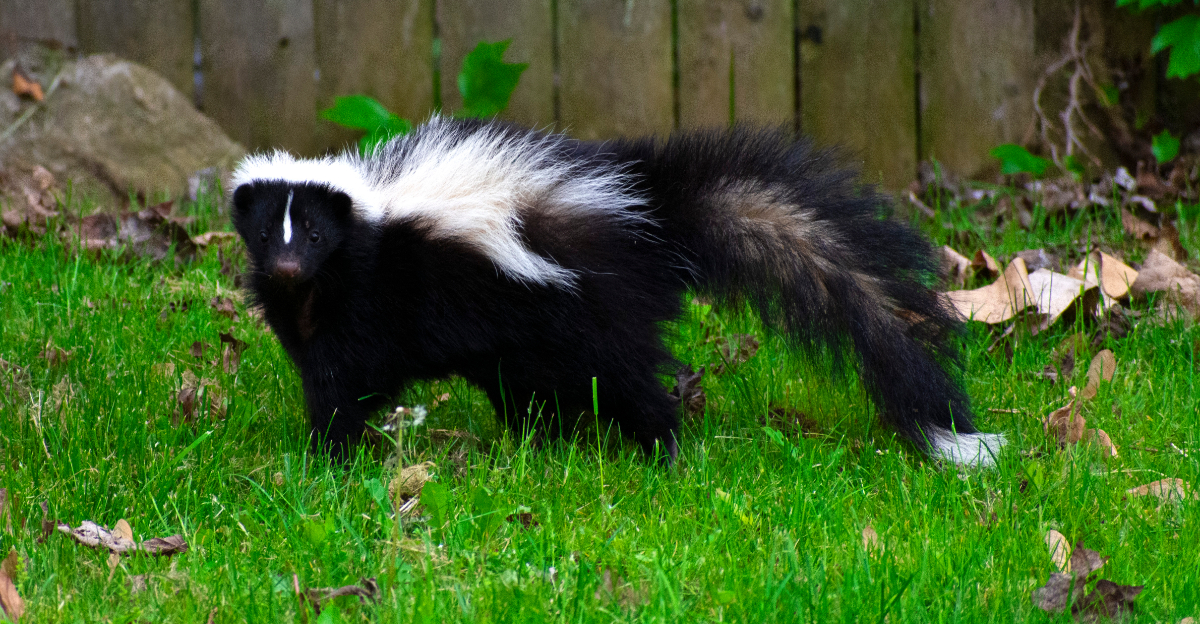
A skunk visiting your North Carolina garden beds is usually searching for grubs, insects, or small rodents rather than showing any interest in your plants directly.
These nocturnal animals have a strong sense of smell, drawn specifically to soil harboring insect larvae just beneath the surface.
Small, cone shaped holes scattered throughout a garden bed are a telltale sign of a skunk’s recent digging activity.
Their presence can actually indicate a helpful reduction in problematic grub populations that might otherwise damage lawns or garden plants.
Skunks are generally not aggressive and will only spray when they feel seriously threatened or cornered.
Keeping a respectful distance and avoiding sudden movements allows them to move along naturally without conflict.
Securing trash cans and removing easily accessible pet food reduces additional reasons for repeat visits.
Understanding their behavior helps put minds at ease rather than viewing every visit as a problem.
1. The Garden May Offer A Reliable Food Source
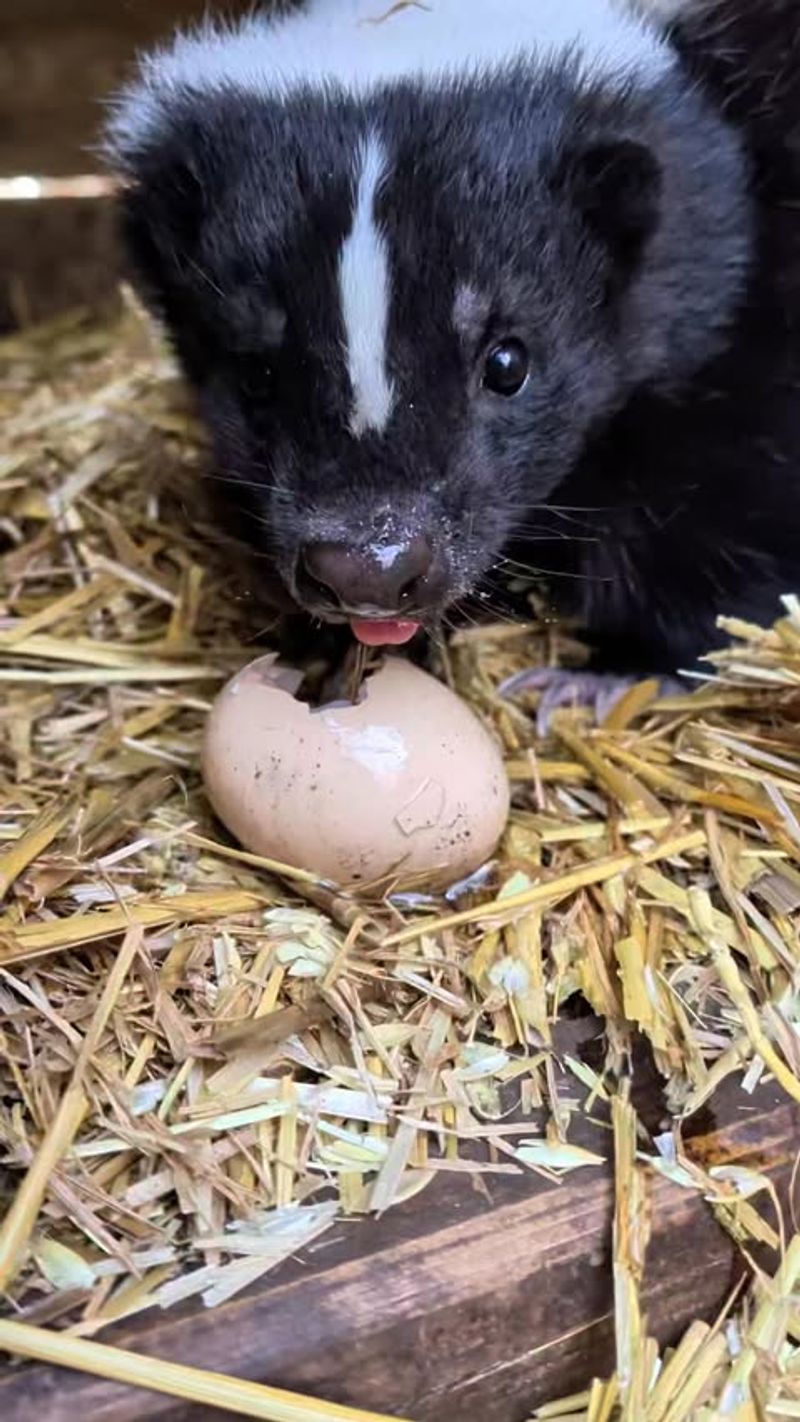
Skunks are opportunistic omnivores, which means they eat just about anything that is easy to find.
Striped skunks, the most common species in North Carolina, regularly feed on insects, earthworms, small rodents, bird eggs, wild berries, acorns, and even fallen vegetables.
When one keeps showing up near your garden beds, it has almost certainly discovered that your yard offers a reliable buffet.
Most of the time, a skunk is simply passing through on its nightly foraging route rather than trying to move in permanently.
North Carolina gardens, especially those with rich, organic soil and dense plantings, naturally attract the insects and worms that skunks love.
The skunk is following its nose, not specifically targeting your prized tomatoes or flower beds.
Before you make any changes to your yard, take a few evenings to observe what the skunk seems most interested in.
Is it sniffing around a specific corner of the bed, near the compost bin, or along the edge of the lawn?
Knowing exactly what draws it in gives you far more useful information than guessing.Watching its behavior first is always the smartest first step, and it costs you nothing.
Removing the food reward, rather than chasing the animal away, is the most effective long-term solution.
Once the skunk learns that your garden no longer offers an easy meal, it will naturally shift its foraging route elsewhere over time.
2. Small Soil Animals May Be Drawing It To The Beds
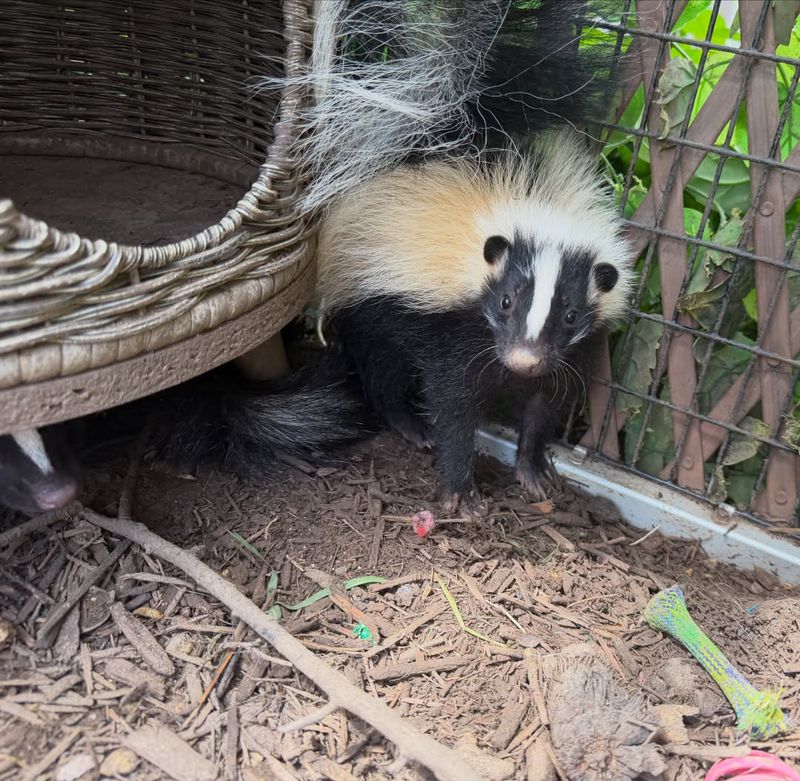
Skunks have an incredibly powerful sense of smell, strong enough to detect insects and worms moving just beneath the surface of the soil. When they catch that scent, they start digging.
Garden beds are especially attractive because loose, amended soil and thick layers of mulch are far easier to dig through than hard, compacted ground found elsewhere in the yard.
One of the clearest signs that a skunk has been foraging in your beds is finding small, cone-shaped holes scattered across the surface.
These holes are usually only a few inches deep and wide, just enough for the skunk to reach a grub or earthworm.
Your North Carolina Garden Changes Every Week. Your Plan Should Too.
Gardening in North Carolina changes quickly throughout the season. Every Friday you’ll receive a simple weekly plan showing exactly what to plant, prune, fertilize, harvest, and protect so you never miss the right timing.
Finding a handful of these little divots in the morning is a strong clue that a skunk visited overnight.
Occasional digging like this actually reflects normal feeding behavior rather than a serious infestation problem.
The skunk is responding to real food signals underground, not randomly tearing up your garden for fun.
In some cases, a healthy population of earthworms is what is attracting it, which is actually a sign that your soil is in great shape.
If the digging bothers you, the most practical response is to address whatever small animals are living in the soil rather than focusing entirely on the skunk itself.
Adjusting your mulch depth or using row cover fabric over freshly worked beds can reduce digging opportunities without harming your garden or the wildlife visiting it.
3. White Grubs May Be Present Beneath Nearby Turf
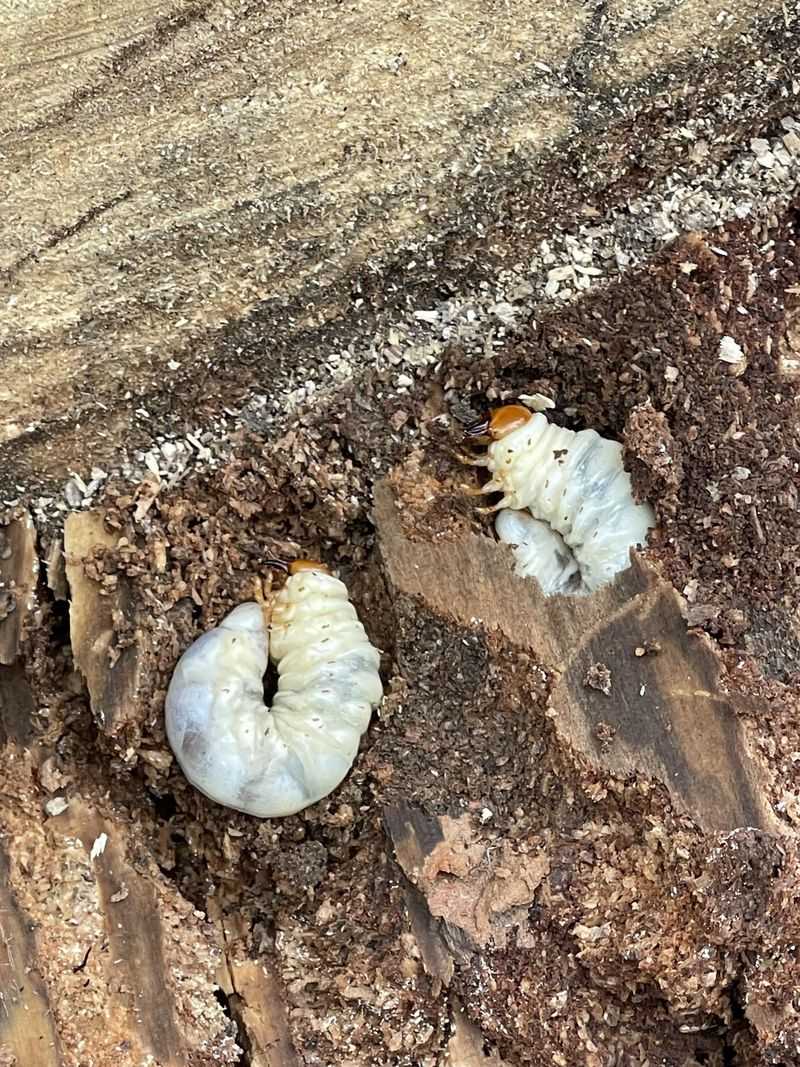
Lawn grubs are one of the favorite foods of the striped skunk, and North Carolina lawns can host healthy populations of beetle larvae throughout the warmer months.
When a skunk picks up the scent of grubs just beneath the surface of your turf, it will dig persistently until it finds them.
Sometimes that search leads the skunk right into the adjacent flower or vegetable beds as it follows the scent trail.
If you notice a skunk moving from your lawn into your garden beds, it makes sense to check the turf first.
Pull back a small section of grass near the areas where the skunk has been active and look at the top few inches of soil.
White, C-shaped grubs in that zone are a clear signal that the skunk found exactly what it was looking for.
Keep in mind that skunk activity alone does not confirm that your grub numbers are high enough to cause real lawn damage.
Lawns can support a modest grub population without showing any visible stress at all.
A general guideline used by turf specialists is that around ten or more grubs per square foot may justify treatment, but a lower count often does not require action.
Getting an accurate picture of what is actually in your soil before applying anything is always the smarter move.
Your local North Carolina Cooperative Extension office can help you assess the situation and recommend the most appropriate and environmentally responsible response for your specific lawn conditions.
4. Fallen Produce May Be Providing An Easy Meal
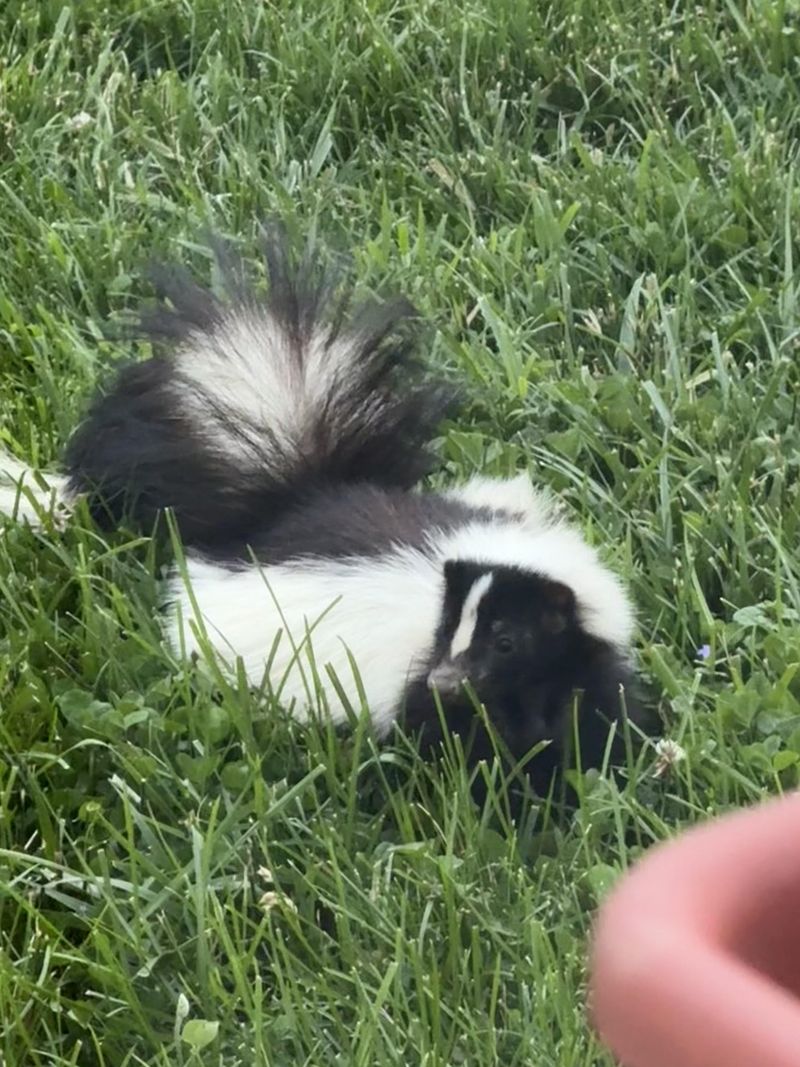
A skunk does not need to dig at all if your garden is already offering food above ground.
Ripe vegetables that drop from the plant, fallen tree fruit, scattered berries, cracked nuts, and damaged or overripe produce sitting on the soil surface are all easy, low-effort meals for a foraging skunk.
If your yard has fruit trees or berry bushes near the garden beds, the attraction is even stronger. Harvesting your crops promptly is one of the most practical steps you can take.
Getting out to the garden before evening to collect ripe produce and clear away anything that has fallen reduces the reward significantly.
Skunks are most active after sunset, so removing temptations before dark gives them far less reason to investigate your beds in the first place.
Repeated access to easy food does something important in an animal’s behavior.
It teaches the skunk to include your garden as a regular stop on its nightly route.
The longer that reward stays available, the more consistent those visits become, and the harder it is to discourage the habit over time.
Focusing on removing the food source itself is almost always more effective than repairing disturbed soil after the fact.
Patching holes without changing what attracted the skunk simply means you will be patching holes again the following morning.
A clean, harvested garden bed sends a clear message that there is nothing worth stopping for, and most skunks will move on once the reward disappears.
5. The Real Attraction May Be Outside The Garden
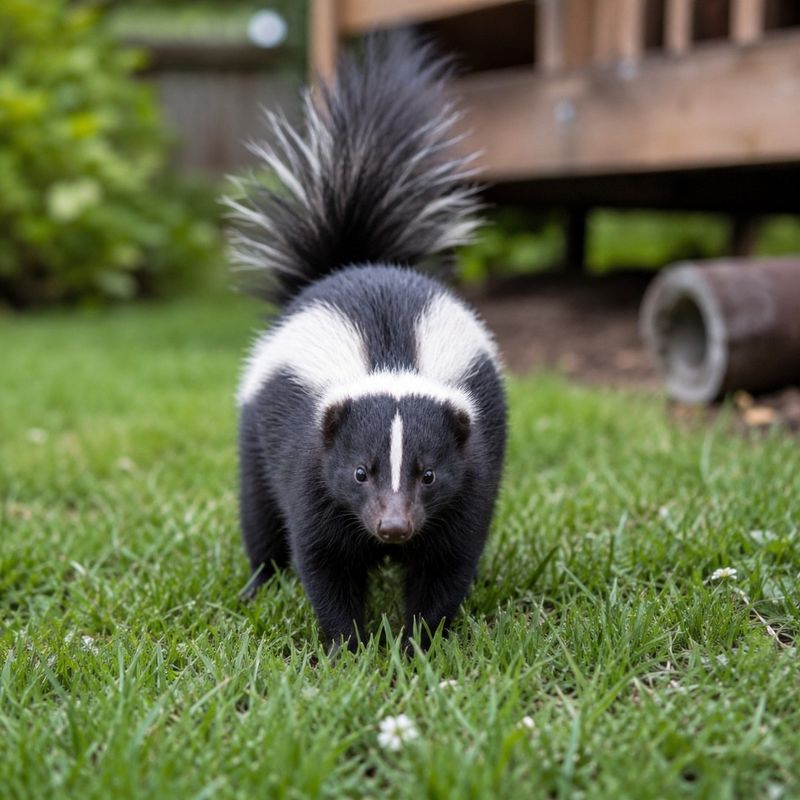
Sometimes the garden beds are not the main attraction at all.
A skunk may wander near your plants simply because it is already in your yard for a completely different reason.
Pet food left outside, spilled birdseed beneath feeders, unsealed garbage cans, outdoor grills with food residue, and leftover scraps from backyard cookouts are all powerful draws that can bring a skunk right into your yard every single night.
Before assuming your plants are the problem, walk around your entire yard and look at it from a skunk’s perspective.
Is there a pet bowl sitting on the porch? Are sunflower seeds piling up under the bird feeder? Does the garbage lid fit tightly?
These are the kinds of details that make a huge difference and are often overlooked when the focus stays on the garden.
Feeding pets indoors or removing their bowls immediately after mealtime is one of the simplest changes you can make.
Cleaning beneath bird feeders regularly and switching to a tray-style feeder that catches loose seeds can dramatically reduce the amount of food available at ground level.
Securing garbage lids with bungee cords or switching to wildlife-resistant bins adds another layer of protection.
Addressing these attractants around the whole yard often resolves skunk visits faster than any garden-specific strategy.
When the easy rewards disappear from the property entirely, the skunk has much less reason to keep returning, and your garden beds benefit automatically without requiring any changes to the plants themselves.
6. A Nearby Structure May Provide Shelter
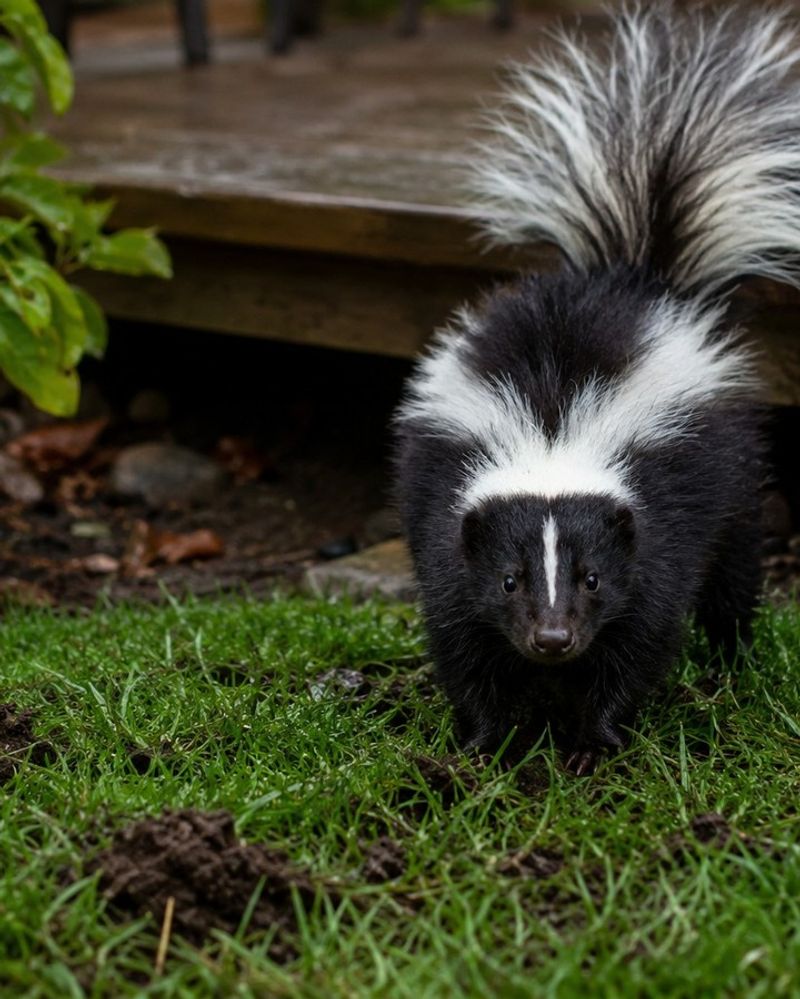
Spotting a skunk near your garden beds does not always mean it is interested in the plants or the soil at all.
Striped skunks regularly seek out quiet, dark, sheltered spaces for resting during the day or for raising their young.
Spaces beneath decks, porches, garden sheds, crawl spaces, and low outbuildings are all attractive options, and many North Carolina properties offer at least one of these by default.
If a skunk is consistently appearing in the same area of your yard, take a walk around nearby structures and look carefully at the base.
Small openings, gaps in lattice skirting, missing boards, or spaces where the ground has eroded beneath a foundation are all potential entry points.
The skunk may be sleeping nearby and simply crossing your garden beds on its way in or out each night.
Checking for openings during daylight hours, when the skunk is most likely resting inside, gives you a clearer picture of what you are dealing with.
Never seal an opening before confirming that no animal remains inside.
Trapping an animal inside a structure creates a much bigger problem and can cause significant distress to the animal.
Once you are certain the structure is unoccupied, use hardware cloth, heavy-gauge wire, or solid boards to close off the gap. Burying the barrier several inches underground prevents digging beneath it.
A licensed Wildlife Control Agent can assist if you are unsure whether the space is currently occupied or how to safely secure it.
7. A Daytime Sighting Does Not Automatically Mean Something Is Wrong
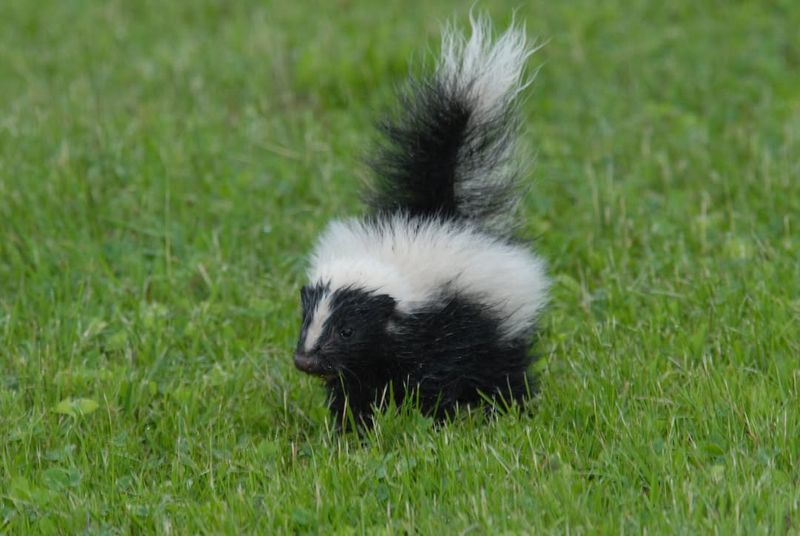
Seeing a skunk in broad daylight can feel alarming, but a single daytime appearance does not automatically signal a problem.
Striped skunks are primarily nocturnal, meaning they prefer to move around after dark.
However, healthy individuals do occasionally appear during daylight hours for completely normal reasons, such as searching for extra food while caring for young, relocating after being disturbed from a resting spot, or simply following an unusually strong food scent.
A mother skunk with a litter to feed has extra nutritional demands and may push her foraging hours into early morning or late afternoon.
Young skunks that have recently left their mother are still learning their territory and may appear at unusual times as they establish their own routines.
Both situations are normal parts of the animal’s life cycle and do not indicate illness. Give any skunk you encounter plenty of space and keep pets supervised whenever one is nearby.
A healthy skunk will generally try to avoid confrontation, giving warning signals like stomping its front feet or raising its tail before spraying. Respecting that space protects both you and the animal.
Contact your local animal control office if a skunk displays unusual behavior such as unexplained aggression toward people or animals, apparent confusion, stumbling, circling, or a complete lack of awareness of nearby activity.
Those specific behaviors can signal a health concern that warrants professional attention. A single calm daytime sighting, however, is rarely cause for immediate concern.
8. Repeated Visits Mean Food Or Access Is Still Available
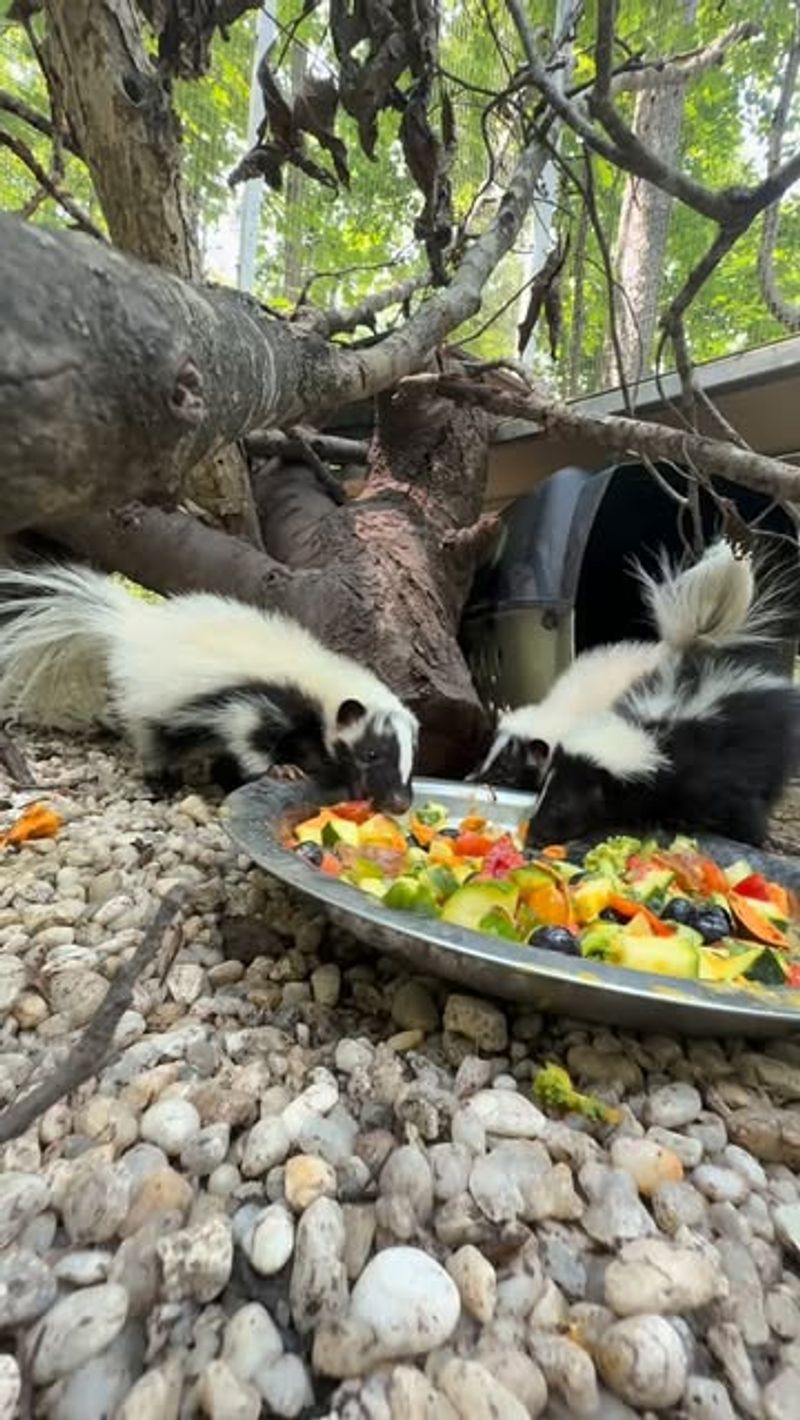
A skunk that keeps coming back is sending a straightforward message. Something in your yard is still worth returning for, whether that is food, shelter, or both.
Skunks are creatures of habit, and once they establish a rewarding route, they will follow it consistently until the reward goes away.
Understanding this pattern makes it much easier to break the cycle. Start by revisiting all the food-related attractants across the entire yard, not just the garden beds.
Remove fallen produce, secure garbage, bring in pet food, and clean beneath bird feeders. If a nearby structure is providing shelter, work on safely closing off that access point once you have confirmed no animals remain inside.
Addressing both food and shelter together gives you the best chance of discouraging repeat visits.
A motion-activated sprinkler is one of the most practical and humane tools available for protecting specific garden areas.
The sudden burst of water startles a skunk without harming it, and most animals quickly learn to avoid the area after a few encounters.
Place the sprinkler to cover the beds where activity has been highest for the best results.
One important legal note for North Carolina residents: relocating a skunk is unlawful under state wildlife regulations. Trapping and moving the animal is not a legal option for homeowners.
If visits continue and property damage is ongoing, contact the North Carolina Wildlife Helpline, or reach out to a licensed Wildlife Control Agent who can guide you through legal and effective options for your specific situation.