The Native Oregon Plant That Makes A Better Late-Summer Pollinator Patch Than Annuals
Annual flowers can put on a bright summer show, then fade just as pollinators need dependable food most. By late August, many beds look tired.
The bees still arrive with high expectations. Awkward.
One Oregon native handles this seasonal gap with far more staying power. Its flowers remain useful when shorter-lived favorites start to bow out.
The plant also fits local conditions without demanding the constant care that annuals often require.
That makes it an excellent choice for a pollinator patch with real purpose. It can support late-season visitors while giving the garden a natural look that feels right at home.
The best part is the return on effort. Instead of starting over each year, gardeners can build a patch that grows stronger with time.
Once this native settles in, those flashy annuals may start to feel like temporary guests at a much better party.
1. The Late-Summer Pollinator Patch Flower
Few plants earn the title of true pollinator powerhouse the way Douglas Aster does in the late-summer garden. While zinnias and marigolds slow down by August, this native wildflower is just getting started.
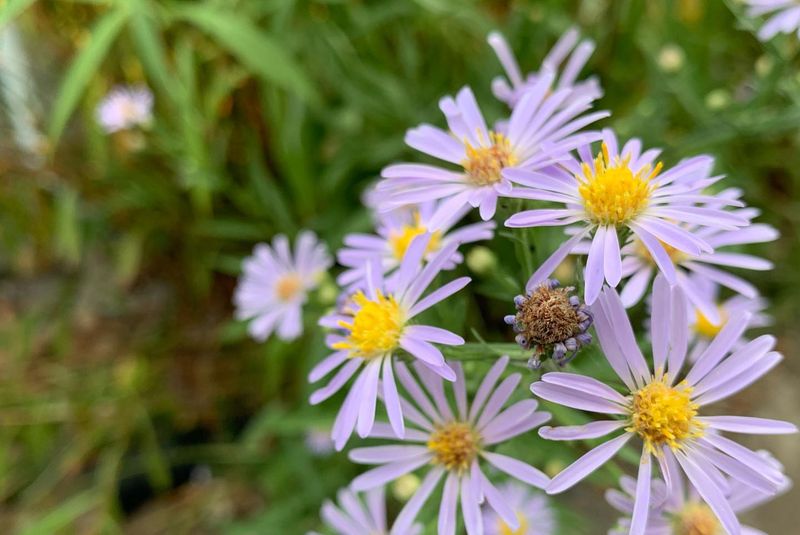
Its small, cheerful purple blooms with golden yellow centers open up right when pollinators are searching hardest for food.
Native to the Pacific Northwest, Douglas Aster (Symphyotrichum subspicatum) grows naturally along stream banks, meadow edges, and open woodlands across Oregon. It has been feeding local wildlife for thousands of years without any human help.
That long relationship with native insects means pollinators recognize it and return to it season after season.
A single patch can support dozens of bee species, multiple butterfly species, and even some beneficial flies and beetles. The blooms are packed tightly together on branching stems, giving insects many landing spots at once.
This makes it far more efficient than many annual flowers that offer fewer blooms per plant.
Planting Douglas Aster is one of the smartest moves a gardener can make. It costs less over time than buying annual transplants every spring.
It also requires far less water and fertilizer once it is established. Best of all, it gives back to the local ecosystem in a way that imported annuals simply cannot match.
Choosing this native plant is a win for your garden and for the pollinators that depend on late-season food sources to survive.
2. Purple Blooms Arrive When Annuals Fade
Late summer is a hard time for pollinators. Most spring and early summer flowers are long gone.
Annuals like petunias and impatiens start to look tired and sparse by August. That is exactly when Douglas Aster steps in and takes over the show with a fresh flush of purple blooms.
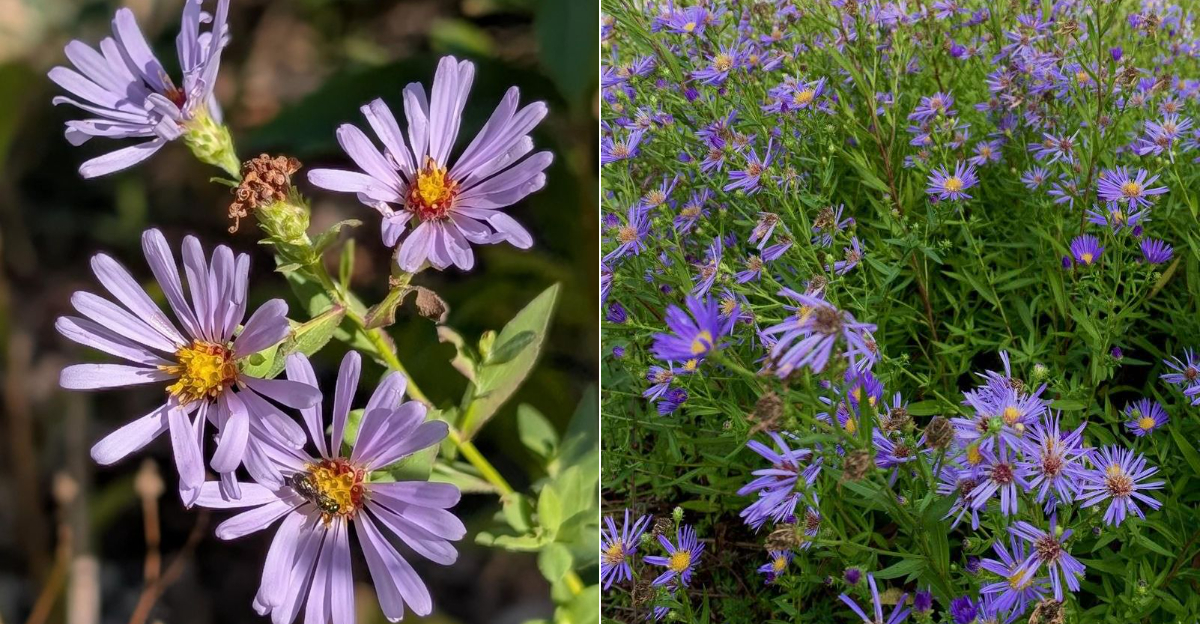
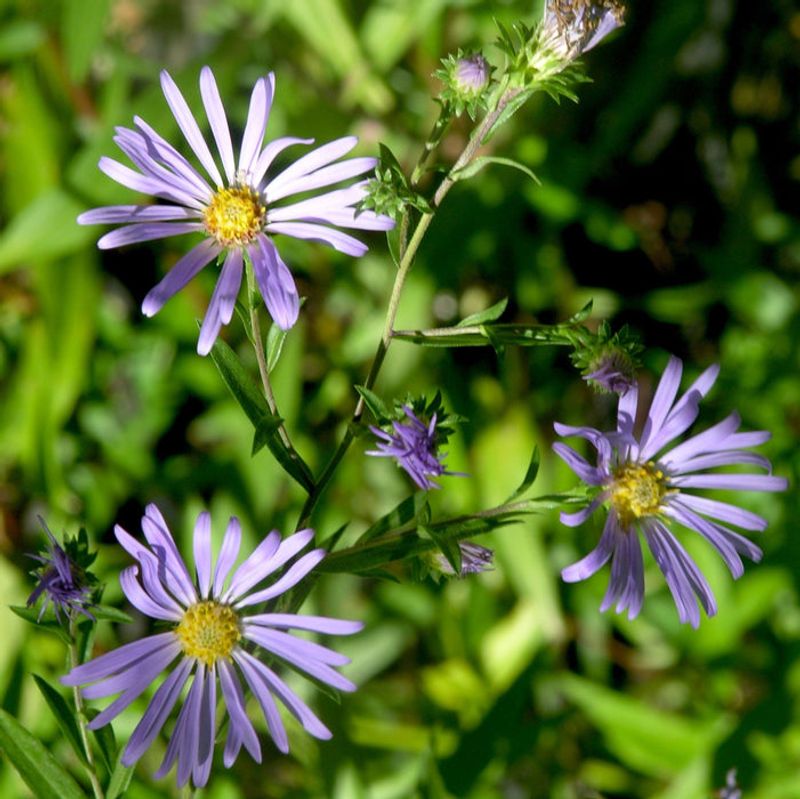
The blooms appear on tall, branching stems that can reach two to four feet high. Each flower looks like a small purple daisy with a warm yellow center that glows in the late afternoon sun.
The color is soft but eye-catching, and a whole patch of them creates a beautiful sea of lavender that stands out in any yard or garden bed.
Your Oregon Garden Changes Every Week. Your Plan Should Too.
Gardening in Oregon changes quickly throughout the season. Every Friday you’ll receive a simple weekly plan showing exactly what to plant, prune, fertilize, harvest, and protect so you never miss the right timing.
Timing is everything for pollinators. Bees need a steady food supply from spring through fall to build up their colonies and store enough energy for winter.
Butterflies need late-season nectar to fuel their migration journeys. Douglas Aster fills that critical late-summer gap better than almost any annual flower available at a garden center.
Gardeners in Oregon often notice a surge of insect activity the moment these blooms open. It is like the plant sends out a signal that dinner is ready.
Planting a row or cluster of Douglas Aster near a fence line or along a garden edge creates a reliable late-season food station. That kind of consistency is something annuals simply cannot offer year after year without replanting.
3. Bees Keep Working The Flowers In August
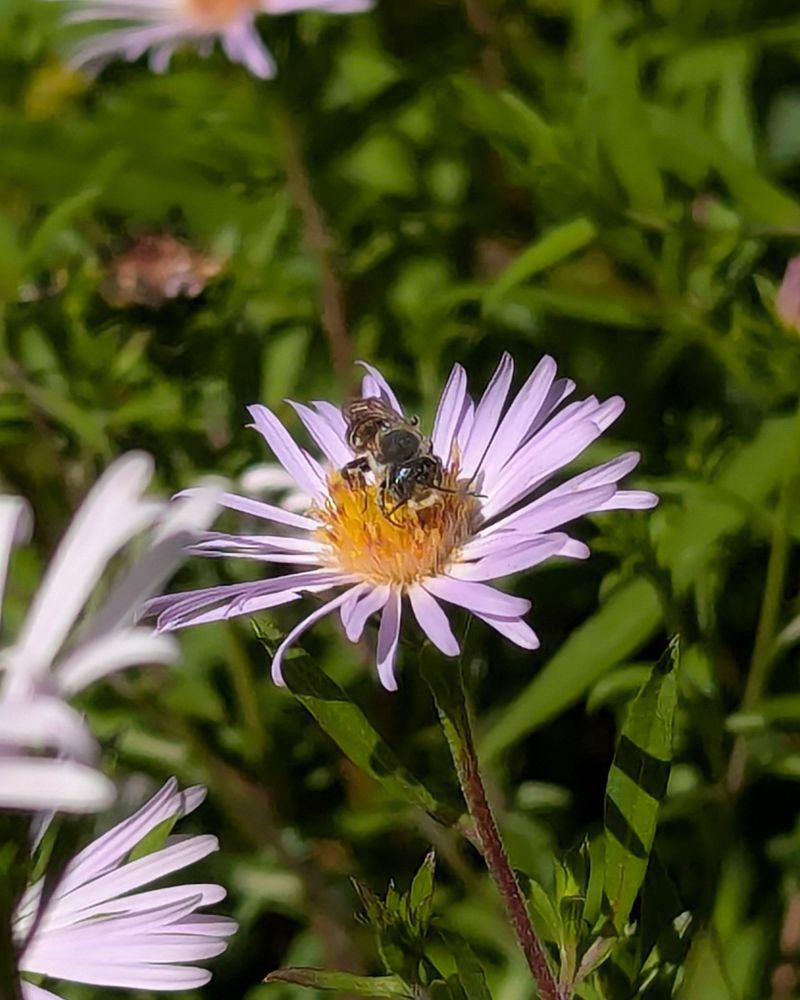
August can feel like a desert for bees. Many popular garden flowers have already peaked and faded.
Clover fields dry out. Lavender finishes its run. But Douglas Aster is wide open for business all through the hottest part of late summer, and bees know it.
Native bumblebees are some of the most frequent visitors. You can watch them move from bloom to bloom, collecting pollen and sipping nectar with impressive speed.
Sweat bees, mining bees, and leafcutter bees also show up regularly. Even honeybees from nearby hives will travel to find a patch of Douglas Aster when other sources run low.
The flower structure is perfectly suited for bees. The flat, open face of each bloom gives bees easy access to the pollen and nectar at the center.
There are no deep tubes or complicated petals to navigate. Bees can feed quickly and efficiently, which means they visit more blooms per hour than they would on many other flower types.
Research from native plant organizations has shown that native asters support more bee species than most non-native flowers. That is because local bees evolved alongside these plants over thousands of years.
The relationship is finely tuned. Planting Douglas Aster in August-blooming gardens gives bees a reliable food source right when they need it most.
A few square feet of this plant can make a measurable difference in the health of local bee populations throughout the season.
4. Butterflies Use It As A Late Nectar Stop
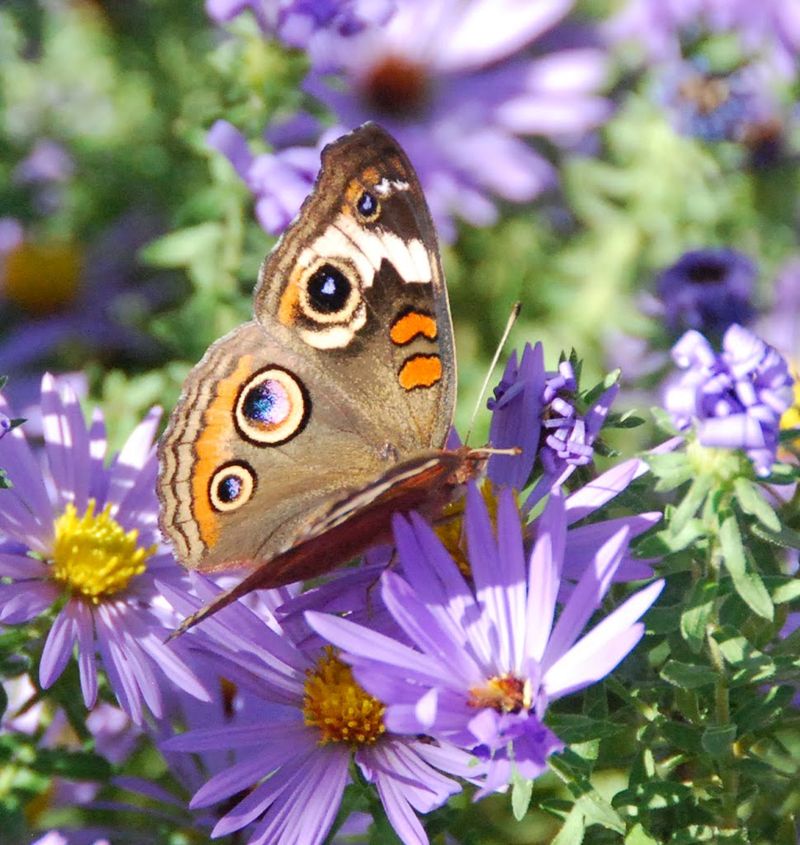
Butterflies are on a tight schedule in late summer. Many species are preparing for migration or searching for the last warm-weather nectar before temperatures drop.
Douglas Aster acts like a rest stop along the way, offering rich nectar at exactly the right time.
Painted ladies, western tiger swallowtails, cabbage whites, and skippers are among the most common butterfly visitors.
On a warm August afternoon, it is not unusual to see three or four different species feeding on the same patch at the same time.
The blooms are just the right size for butterflies to land on comfortably and probe the center for nectar.
Beyond feeding adults, Douglas Aster also supports butterfly larvae. Some native butterfly and moth caterpillars feed on the leaves of aster plants, making it a two-stage resource.
That means one plant supports both the adult and larval stages of the butterfly life cycle, which is something most annual flowers cannot offer at all.
Oregon gardeners who want to attract more butterflies should think about the full picture. Adult butterflies need nectar, but they also need host plants for their eggs and caterpillars.
Douglas Aster fills both roles. Placing it near a sunny fence, a garden path, or the edge of a lawn gives butterflies a clear, open landing zone.
The more patches you plant, the more species you are likely to see visiting your yard through September and even into early October on warm days.
5. It Comes Back Stronger Than Annuals
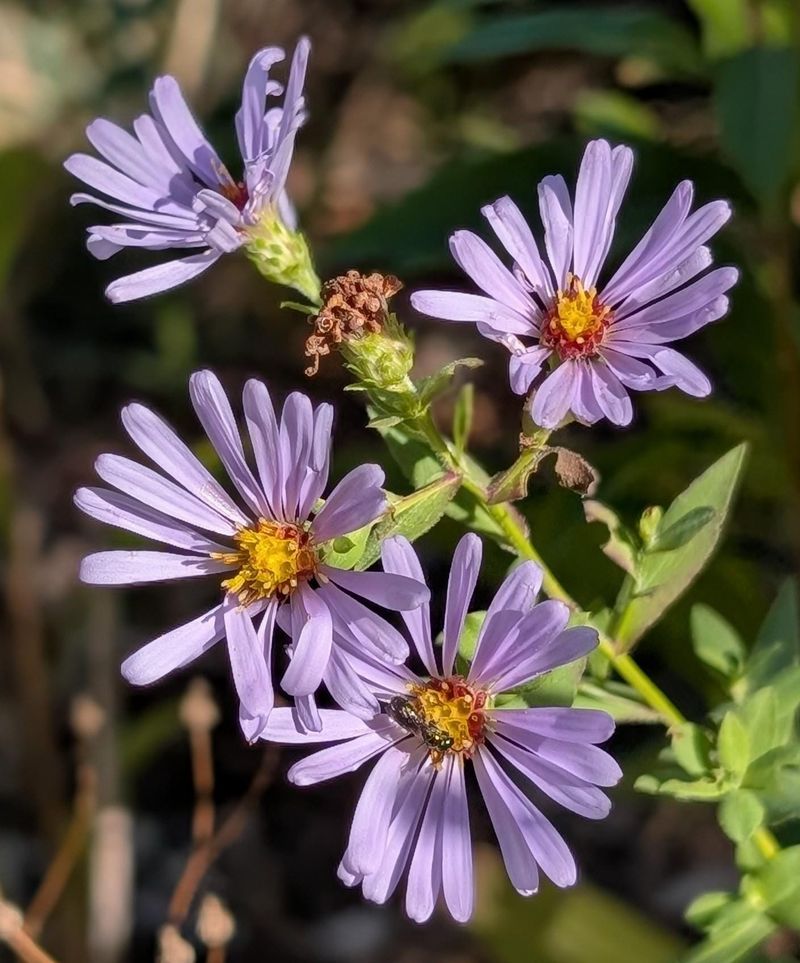
One of the biggest frustrations with annual flowers is starting over every spring. You buy transplants, plant them, water them all summer, and then watch them finish at the end of the season.
Next year, you do it all again. Douglas Aster breaks that cycle completely.
As a native perennial, it comes back from its root system every spring without any help from you. The first year, it may seem modest.
But by the second and third year, the clump is noticeably larger and produces far more blooms.
Each passing season, the plant becomes more established, more drought-tolerant, and more productive than it was the year before.
The root system is the key. Douglas Aster develops deep, spreading roots that anchor the plant firmly and help it access water even during dry Pacific Northwest summers.
Those roots also store energy over winter so the plant can push out strong new growth as soon as spring warmth arrives. Annual flowers have no such advantage because their roots do not survive the cold months.
Over a five-year span, a single Douglas Aster plant will produce far more blooms, attract far more pollinators, and cost far less money than replanting annuals each year. The math strongly favors the perennial.
Gardeners who make the switch often say they wish they had planted it sooner. Once established, it is one of the most low-maintenance, high-reward plants you can have in a Pacific Northwest garden.
6. A Small Patch Can Spread Into A Colony
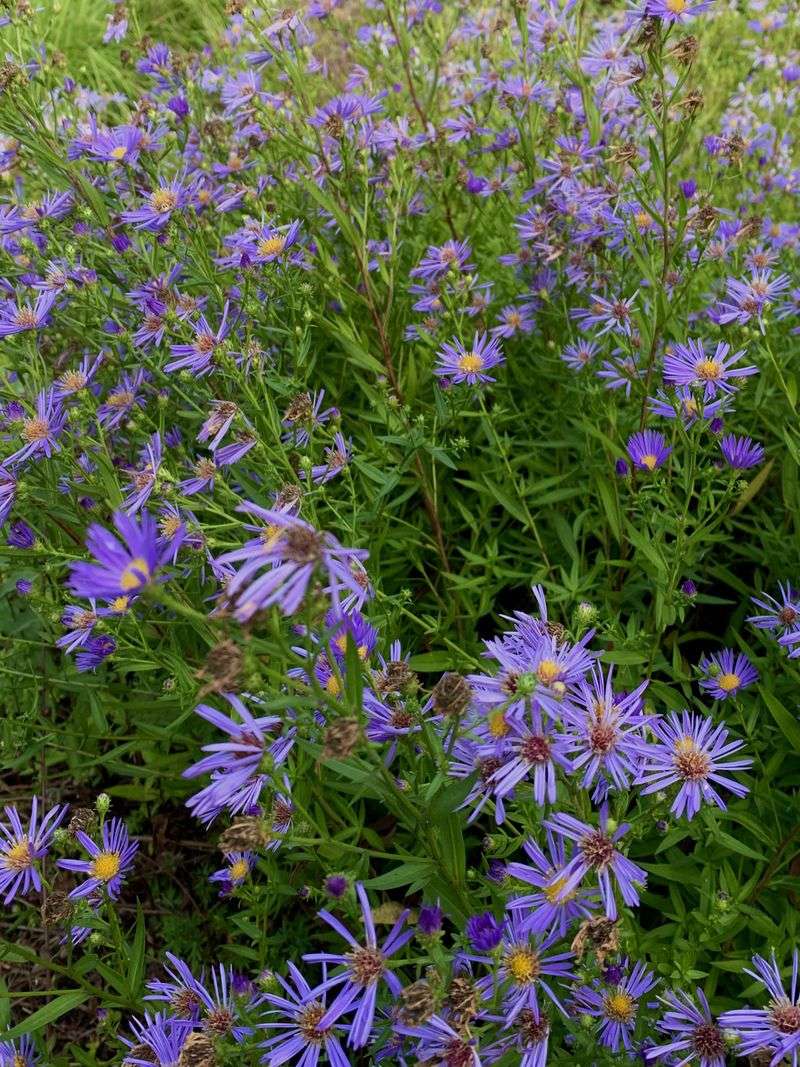
Plant one small start of Douglas Aster and you may have a whole colony within a few years. That is not a problem.
That is the plan. This native wildflower spreads naturally through both underground rhizomes and wind-carried seeds, filling in empty spaces and creating a lush, self-sustaining pollinator patch over time.
The spreading habit is actually one of its greatest strengths. As the colony grows, it chokes out weeds by shading the ground beneath its stems.
You end up with less weeding to do and more flowers for pollinators. It is a natural ground cover that doubles as a nectar buffet, and it handles that job without any fertilizer or extra watering once it gets going.
Gardeners who want to control the spread can simply cut back the edges each spring before new growth takes hold. The plant responds well to division, too.
You can dig up sections of the root clump and move them to new spots in the yard, share them with neighbors, or pot them up as gifts. It is a generous plant that keeps on giving.
In wilder parts of the yard, letting it spread freely creates a naturalistic meadow effect that looks beautiful and functions as a wildlife habitat.
Along a fence line, a ditch edge, or a low wet area, a spreading colony of Douglas Aster can transform an overlooked corner into one of the most ecologically valuable spots on your entire property.
That kind of growth is something no annual can replicate.
7. Moist Sunny Edges Are A Natural Fit
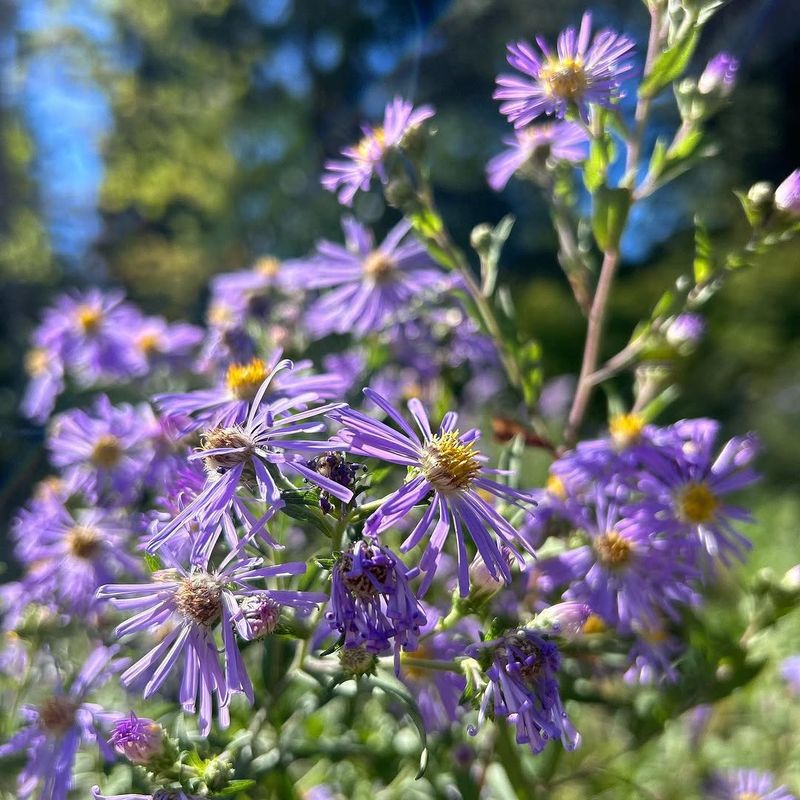
Walk along any stream bank or wet meadow edge in Oregon during late summer and you are likely to spot Douglas Aster growing in thick, happy clusters. That is its natural home.
It loves the combination of full sun and consistently moist soil, which makes it perfect for spots in the yard that stay wet longer than average.
Low areas near downspouts, edges of rain gardens, and spots that collect water after a heavy rain are often hard to plant. Many common garden plants struggle in soggy conditions.
Douglas Aster thrives there. It is one of the few attractive flowering plants that actually prefers those difficult wet-but-sunny spots rather than just tolerating them.
Planting it along a fence that borders a drainage ditch, near a pond edge, or at the low end of a sloped yard puts it right in its element.
Once it settles in, it roots deeply and stabilizes the soil, which is a bonus for areas prone to minor erosion.
The dense stems also slow water runoff, helping keep soil in place during heavy fall rains.
Gardeners in the Willamette Valley, along the coast, and in the wetter foothills of the Cascades will find Douglas Aster especially easy to establish. In drier areas, a little extra watering during the first summer helps it get started.
After that, it usually finds enough moisture on its own, especially in spots with some natural water flow nearby. Matching the plant to the right spot makes all the difference.
8. It Handles Part Shade Better Than Many Annuals
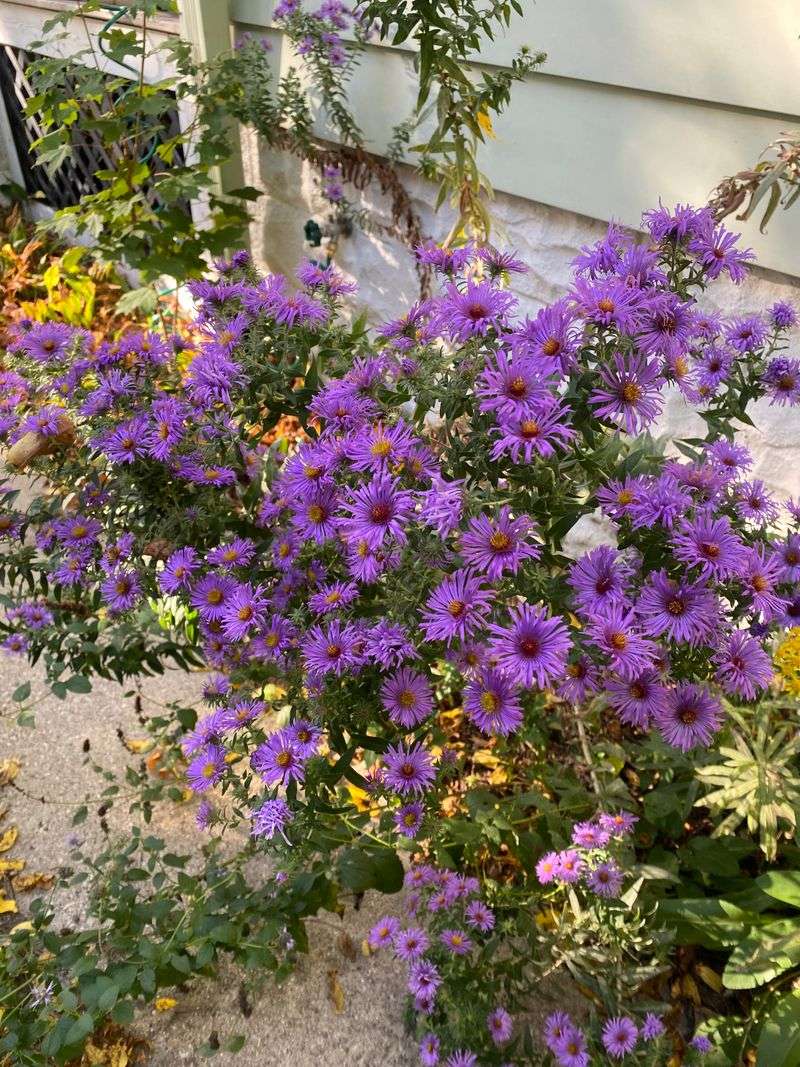
Not every yard has a full sun location available for a pollinator patch. Shade from trees, fences, and buildings limits where many flowering plants can grow.
Most annuals need at least six hours of direct sun to perform well, which leaves a lot of yards without good options. Douglas Aster is different.
It performs best in full sun, but it handles part shade with surprising ease. A spot that gets three to four hours of direct sunlight per day is usually enough for it to bloom reliably.
The blooms may be slightly less dense in shadier conditions, but the plant still grows well and still attracts pollinators. That flexibility opens up planting spots that most annual flowers cannot use.
Under the canopy of a large deciduous tree, along the north-facing side of a fence, or in a spot that gets morning sun and afternoon shade, Douglas Aster can still put on a good late-summer show. Very few annuals can say the same.
Impatiens can handle shade, but they offer almost no value to native bees. Douglas Aster gives you shade tolerance plus serious pollinator support in one package.
For gardeners in Oregon who have yards heavily shaded by conifers or large maples, this plant is a genuine solution. It bridges the gap between full shade plants like ferns and full sun plants like coneflowers.
Planting it along shaded garden edges or under the outer drip line of a large tree creates a soft, natural look while still providing critical late-season habitat for bees and butterflies.