Why North Carolina Gardeners Should Never Relocate A Box Turtle They Find In Their Yard

Box turtles form strong attachments to a specific home range, often spending their entire lives within just a few acres of the same area.
Relocating one to a new area, even somewhere that seems more suitable, can cause significant stress and disorientation for the turtle.
These reptiles rely on detailed memory of their home territory to find food, shelter, and safe hiding spots throughout the year.
Moving a box turtle elsewhere often results in it wandering extensively trying to find its way back, increasing exposure to roads and predators.
If a turtle appears in your yard, the best approach is simply leaving it alone unless it’s in immediate danger. Gently moving it just out of harm’s way, in the same general direction it was heading, causes far less disruption.
Box turtles also play a helpful role in gardens, feeding on slugs, insects, and fallen fruit. Letting them stay put supports both their wellbeing and the natural balance of your yard.
1. Your Yard May Already Be The Turtle’s Home

Picture this: you spot a box turtle tucked beneath your azalea bush, half-hidden under a layer of fallen leaves, and your first thought is that it must be lost. Surprisingly, it probably is not.
Eastern Box Turtles are well-established residents of North Carolina neighborhoods, and they are just as comfortable living near garden beds and suburban lawns as they are in forests and open fields.
A turtle resting near your house, crossing your lawn, or sheltering under your shrubs may have been using that exact spot for years, possibly even longer than you have lived there.
These animals build a detailed mental map of their surroundings over time, learning where to find food, water, and shelter. Your yard is likely a known and trusted part of that map.
Thinking a turtle needs to be rescued and taken somewhere more natural is one of the most common mistakes well-intentioned gardeners make.
A wooded park or a nature trail might look like a better habitat to you, but to the turtle, it is completely unknown territory.
Unfamiliar ground means starting over without any of the resources it has spent years locating.
The best thing you can do when you spot one is simply give it space. Watch from a distance, avoid startling it, and let it move on at its own pace.
A turtle moving through your garden is doing exactly what it is supposed to be doing. Your yard is not a problem for it. For that turtle, your yard might genuinely be home.
2. Box Turtles Spend Their Lives Within Small Territories

Most people assume that wild animals roam widely across large areas of land, but box turtles work very differently.
According to the North Carolina Wildlife Resources Commission, Eastern Box Turtles typically spend their entire lives within a home range smaller than two acres.
That is roughly the size of two football fields, and many turtles stay within an even tighter area than that.
Within that small territory, a box turtle learns everything it needs to survive. It knows which berry patches ripen first, where the coolest and dampest soil is on a hot afternoon, and which spots offer the best protection from predators.
Your North Carolina Garden Changes Every Week. Your Plan Should Too.
Gardening in North Carolina changes quickly throughout the season. Every Friday you’ll receive a simple weekly plan showing exactly what to plant, prune, fertilize, harvest, and protect so you never miss the right timing.
Building that knowledge takes years, and it becomes the foundation of the turtle’s entire way of life.
When a gardener carries a turtle to a new location, even a short drive away, that relocation can place the animal completely outside the familiar territory it has relied on for most of its life.
What seems like a modest distance to a person can be an enormous and disorienting stretch of unknown land to a creature with a two-acre world.
A new location does not automatically become a suitable home just because it looks greener or less developed. The turtle has no map for that place, no memory of its resources, and no established shelter.
Assuming a prettier-looking area is automatically better for the turtle misses the deeper reality of how tightly box turtles are connected to their specific, well-known patch of land. Keeping them where they belong is always the more responsible choice.
3. Strong Homing Instincts Make Distant Relocation Risky
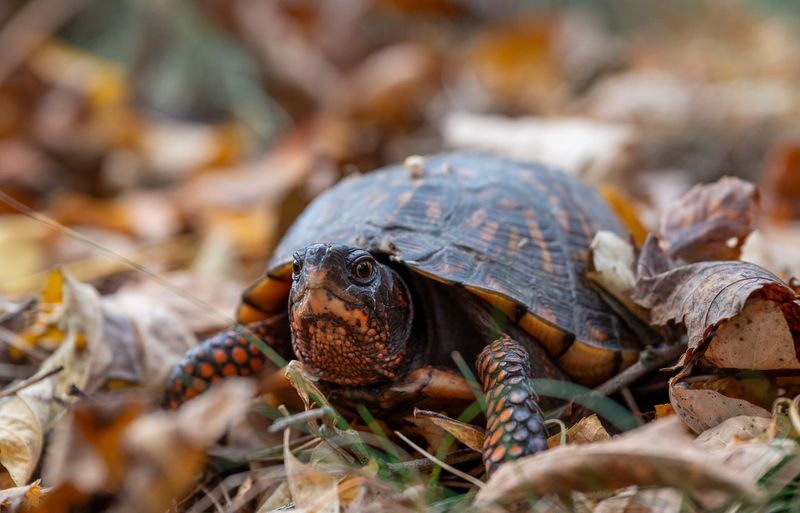
Box turtles have a remarkable internal compass. Once a turtle has established its home territory, that pull back toward familiar ground does not simply switch off when it gets moved somewhere new.
Research on box turtle behavior has consistently shown that relocated individuals often attempt to navigate back toward their original home range, sometimes traveling impressive distances to do so.
That homing drive might sound impressive, and in many ways it is, but it also puts the turtle in serious danger. A turtle trying to return to its original territory has to cross whatever terrain lies between its release point and its home.
That could mean open roads, developed neighborhoods, unfamiliar predators, and stretches of land that offer no food, water, or shelter along the way.
The turtle does not accept the release site as a replacement home simply because it was placed there. From the moment it is set down in an unfamiliar spot, its instinct is to move.
That movement is not random wandering. It is a determined attempt to get back to the only place it truly knows, and every obstacle along that route increases the risks it faces.
Gardeners who move a turtle with the intention of giving it a better life may actually be setting it on a long and hazardous journey it never needed to take. The kindest and most scientifically supported action is to leave the turtle exactly where it was found.
Its homing instinct is one of the clearest signals that it already belongs right where you discovered it in your yard.
4. Familiar Territory Contains Essential Resources
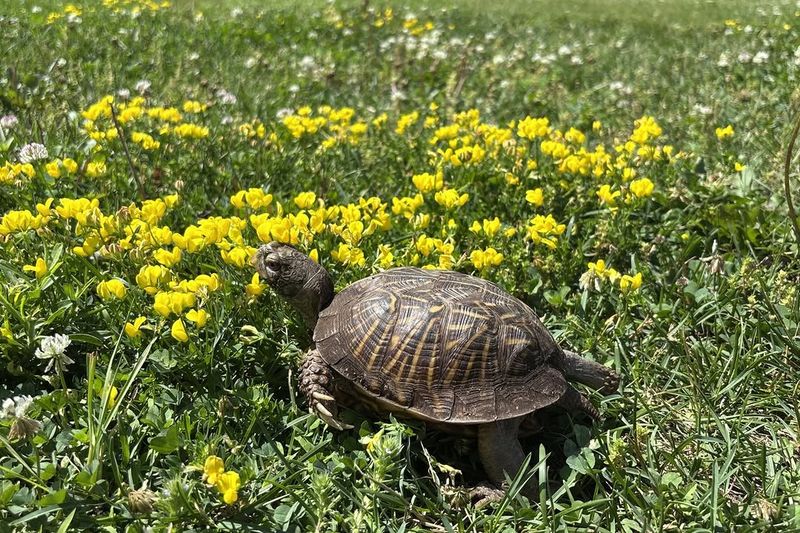
A box turtle’s home territory is not just a patch of land it happens to wander through. Over years of living in the same area, the turtle builds up an incredibly detailed knowledge of where to find everything it needs to thrive.
Food sources, moist hiding spots, seasonal shelter, and safe resting places are all part of a carefully memorized landscape that took a very long time to learn.
North Carolina box turtles eat a surprisingly wide variety of foods. Their diet includes wild berries, fruit, seeds, roots, flowers, mushrooms, grasses, snails, slugs, earthworms, and other small creatures they encounter along the way.
Knowing where these resources appear and when they are available is not something a turtle figures out quickly. That knowledge builds slowly over years of living in the same small area.
When a turtle is released into unfamiliar territory, it suddenly has none of that accumulated knowledge to draw on.
It does not know where the berry patches are, which areas stay moist during dry spells, or where to find shelter when temperatures drop.
Starting from scratch in an unknown environment is genuinely stressful and physically demanding for an animal that thrives on familiarity.
Gardeners sometimes imagine that releasing a turtle into a lush, green space automatically solves any problem. But a beautiful meadow or wooded area means nothing to a turtle that has no mental map of it.
The resources a box turtle needs are only truly accessible in the territory it already knows. Keeping it in its home range gives it the best possible foundation for a healthy and stable life.
5. The Turtle May Be Following An Important Route

When a box turtle appears to be moving with purpose through your yard, chances are it actually is. These animals are not wandering aimlessly when they cross a lawn or push through a garden bed.
They are traveling to somewhere specific, following routes they have used many times before, guided by memory and instinct built up over years of living in the same territory.
Seasonal movement is a big part of box turtle behavior in North Carolina. Females commonly search for nesting sites between May and July, which often means traveling across open ground in search of the right spot.
Outside of nesting season, turtles may move toward feeding areas, water sources, or shelter locations as conditions change throughout the growing season. Every journey has a purpose, even if it is not obvious to a person watching from the porch.
Picking a turtle up and turning it around, or carrying it in a different direction, can interrupt a journey that genuinely matters.
The turtle may have been heading toward a nesting site it has used for years, or moving toward a food source it knows is available right now. Redirecting that movement can cause real disruption to its seasonal routine.
When you need to help a turtle avoid a brief hazard, the most important thing is to keep it pointed in its original direction. Do not redirect it, do not carry it far, and do not assume you know a better route.
Trust that the turtle has a destination in mind. Your job as a gardener is simply to make sure nothing in your yard blocks the path it is already taking.
6. Every Wild Adult Matters To Local Populations
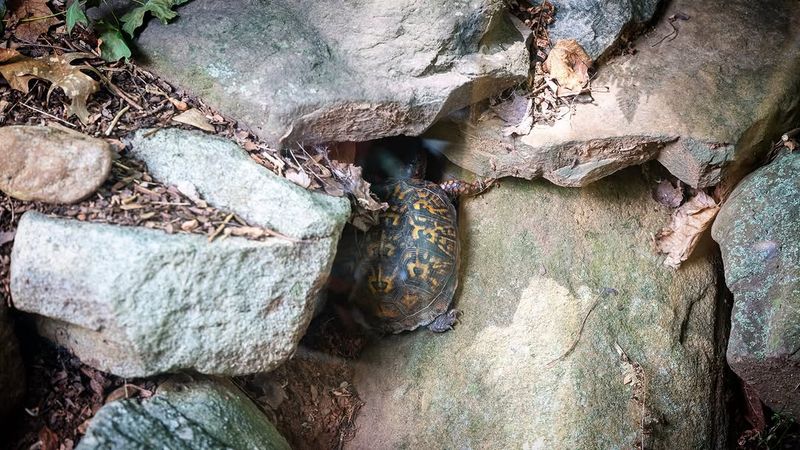
Box turtle populations across North Carolina have been declining in many areas where the species was once a common sight.
Biologists and wildlife managers have been tracking this trend with growing concern, and one of the key reasons the situation is so serious comes down to how slowly these animals reproduce.
Unlike many other wildlife species, box turtles cannot quickly bounce back from population losses.
Reaching reproductive maturity takes a box turtle somewhere between seven and ten years in most cases. That means every healthy adult in a local population represents years of growth and survival, and a long potential future as a breeding animal.
A single adult turtle that reaches maturity can remain part of the same local population and continue reproducing for decades, contributing to the group year after year.
Removing one healthy adult from its established territory does more than affect that individual animal.
It reduces the number of breeding turtles remaining in that local area, and because replacement takes so long, the gap it leaves behind is not quickly filled.
Small local populations are especially sensitive to these kinds of losses, and even a single removal can have a noticeable effect over time.
Gardeners who find a box turtle in their yard are essentially hosting one of North Carolina’s most ecologically valuable reptile residents.
Protecting that individual, keeping it in its home territory, and making sure it can continue its seasonal routines is a genuinely meaningful contribution to local conservation.
You do not need a wildlife management degree to help. You just need to leave the turtle exactly where it belongs.
7. Immediate Safety Help Should Be Brief And Local
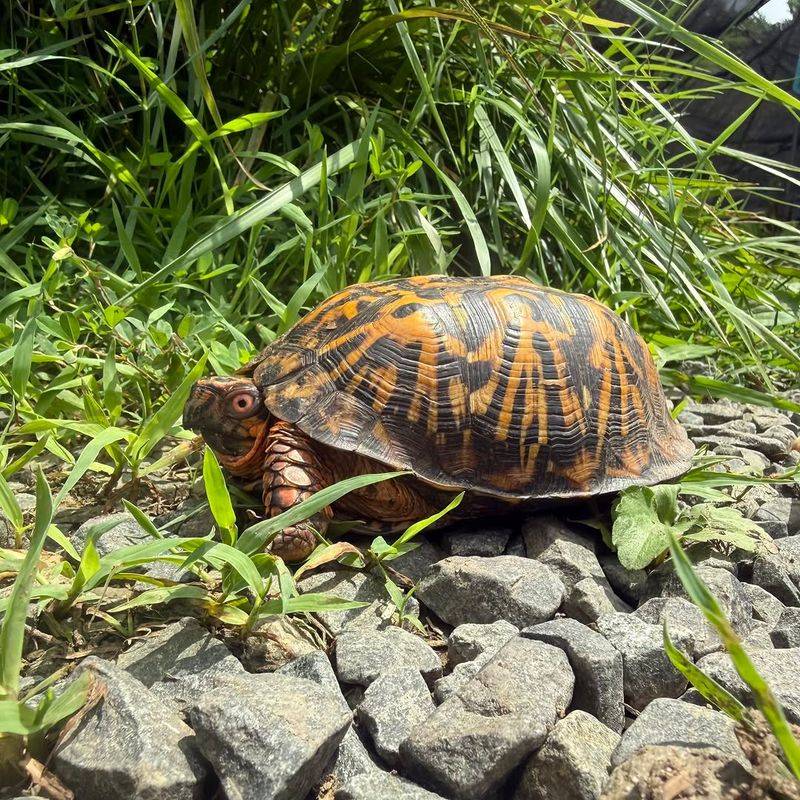
Sometimes a box turtle genuinely does need a quick assist from a nearby human.
If you are mowing the lawn and spot one in the path of the mower, or if a pet is showing too much interest, or if a turtle has wandered into an area where active work is happening, a brief and careful intervention is perfectly reasonable.
The key word here is brief, and the other key word is local. Whenever possible, pause whatever activity is causing the hazard and simply wait. Most of the time, the turtle will move out of the area on its own within a few minutes if given the chance.
Patience is almost always the best first response, and it requires no handling at all. Letting the turtle choose its own exit keeps its journey intact and avoids any unnecessary stress.
When you truly must move it, keep the distance as short as you can manage, ideally less than fifty feet. Hold it firmly but gently, keep it pointed in the same direction it was already heading, and set it down in a spot that is safe and similar to where you found it.
For a turtle crossing a road, carry it to the far side in the direction it was already traveling, not back the way it came.
Never place a box turtle in a container, bring it indoors, or carry it to another property with the intention of releasing it somewhere new.
Even a well-meaning relocation to a neighbor’s yard or a nearby park can cause all the same problems as a longer move. Brief, local, and directionally consistent is the golden rule for any safety assist you provide.