The Real Reason California Rosemary Struggles After Its Second Year
Rosemary often spends its first year looking nearly indestructible. It settles into the sun, pushes out fragrant growth, and rewards very little effort.
By the second year, though, that confidence can start to fade.
The plant may lose its compact shape or develop bare patches near the center. New growth can slow even when the care routine has not changed.
That is when gardeners often blame the heat or reach for more water.
The real issue usually starts much earlier and stays hidden until the shrub matures. Rosemary responds to age in ways that a young nursery plant does not reveal.
California conditions can make the shift even more noticeable.
A simple adjustment can help prevent that tired, woody look and keep the plant useful for much longer. The trick is to understand what changes once rosemary leaves its easy first season behind.
1. This Time Around Is When One Habit Backfires
Most people water their rosemary on a set schedule and never think twice about it. That works fine during the first year when the plant is young and still getting established.
But by year two, something important has shifted.
A mature rosemary plant has developed a deeper, wider root system. It can pull moisture from a much larger area of soil than it could when it was a seedling.
That means the same watering schedule you used in year one is now delivering way more water than the plant actually needs.
The roots start sitting in moisture for longer periods. The soil around the base stays damp instead of drying out between waterings.
Over time, this creates the perfect setup for root stress and fungal problems.
Many gardeners assume the plant is struggling because of heat or pests. They never consider that the watering routine they are so proud of is the actual problem.
Backing off your watering schedule by at least half is usually the first and most effective fix.
Try checking the soil four to six inches deep before you water. If it still feels even slightly moist, skip the watering session and check again in a few days.
Rosemary prefers to be slightly dry rather than consistently moist, especially once it has passed its first full growing season.
2. Established Rosemary Needs Less Help
There is a common gardening instinct that says more water equals a healthier plant. For most vegetables and flowers, that is a reasonable rule.
For rosemary, it is exactly the wrong way to think.
Once rosemary is fully established, usually after its first full year in the ground, it becomes surprisingly self-sufficient.
The plant has evolved over thousands of years to thrive in dry, sun-baked hillsides where rain might not fall for months at a time.
In California, many regions already get enough moisture from winter rainfall alone to keep mature rosemary happy through the rest of the year. Adding irrigation on top of that natural rainfall is often where the trouble starts.
Think of established rosemary like a succulent. It stores what it needs and does not appreciate being constantly topped off.
Your California Garden Changes Every Week. Your Plan Should Too.
Gardening in California changes quickly throughout the season. Every Friday you’ll receive a simple weekly plan showing exactly what to plant, prune, fertilize, harvest, and protect so you never miss the right timing.
When you keep watering it out of habit, you are essentially forcing it to live in conditions that go against its entire biological design.
A good rule of thumb is to cut your irrigation for rosemary down to once every two to three weeks during summer, and stop almost entirely during winter in most parts of California. Let the plant show you what it needs.
A slightly drooping or pale look after a long dry spell is a signal. Otherwise, leave it alone and let it do its thing.
3. Wet Roots Are The Hidden Problem
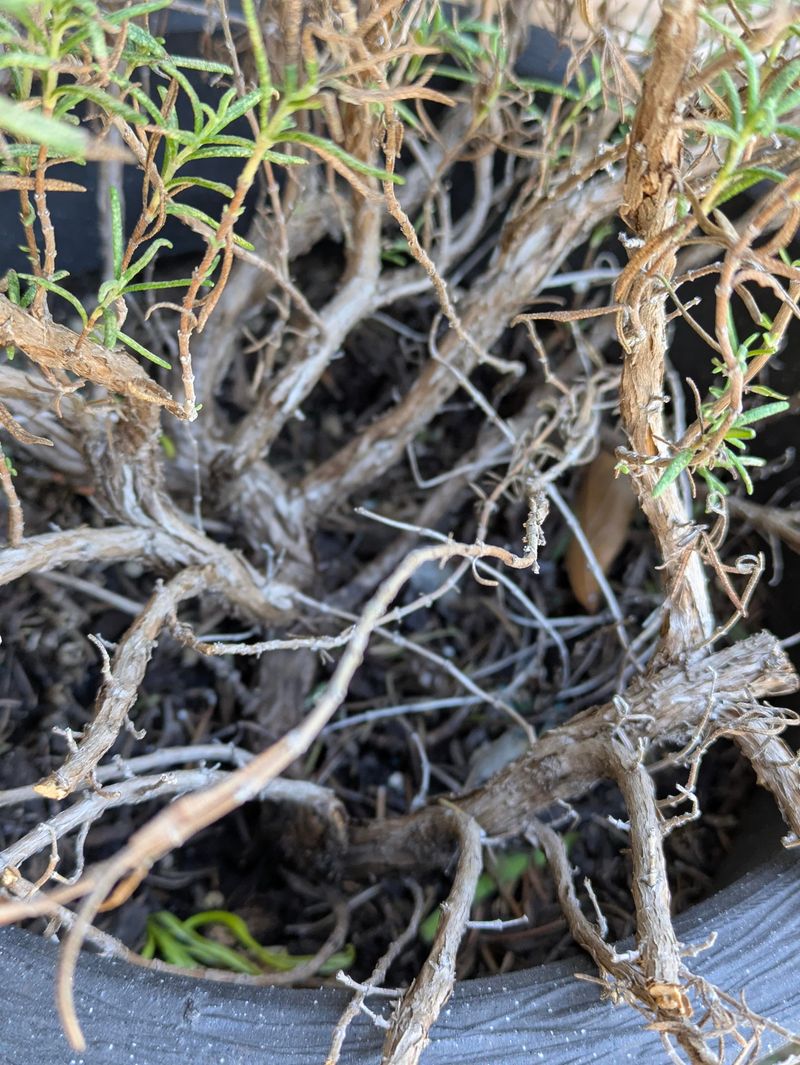
You cannot see what is happening underground, and that is exactly why wet roots catch so many gardeners off guard. By the time the plant looks bad above the soil, the roots have already been struggling for weeks or even months.
Rosemary roots are sensitive to standing water. They need air pockets in the soil just as much as they need moisture.
When soil stays wet for too long, those air pockets fill with water and the roots essentially suffocate. The plant cannot take up nutrients properly, and its immune system weakens.
Fungal pathogens love wet soil. Phytophthora and Armillaria are two common culprits in our state that attack rosemary roots when conditions stay damp.
These pathogens spread quickly and can affect the entire root system before you notice any symptoms above ground.
The first signs of wet root stress are often subtle. Leaves may look slightly grayish or dull instead of their usual vibrant green.
New growth may slow down or stop. The plant might look like it needs water even though the soil is wet.
Improving drainage is the best long-term solution. You can add coarse sand or pea gravel to planting areas.
Raised beds work really well for rosemary in regions with heavy soil. Getting the roots up and out of that consistently wet zone makes a huge difference in how the plant performs year after year.
4. Lawn Sprinklers Make It Worse
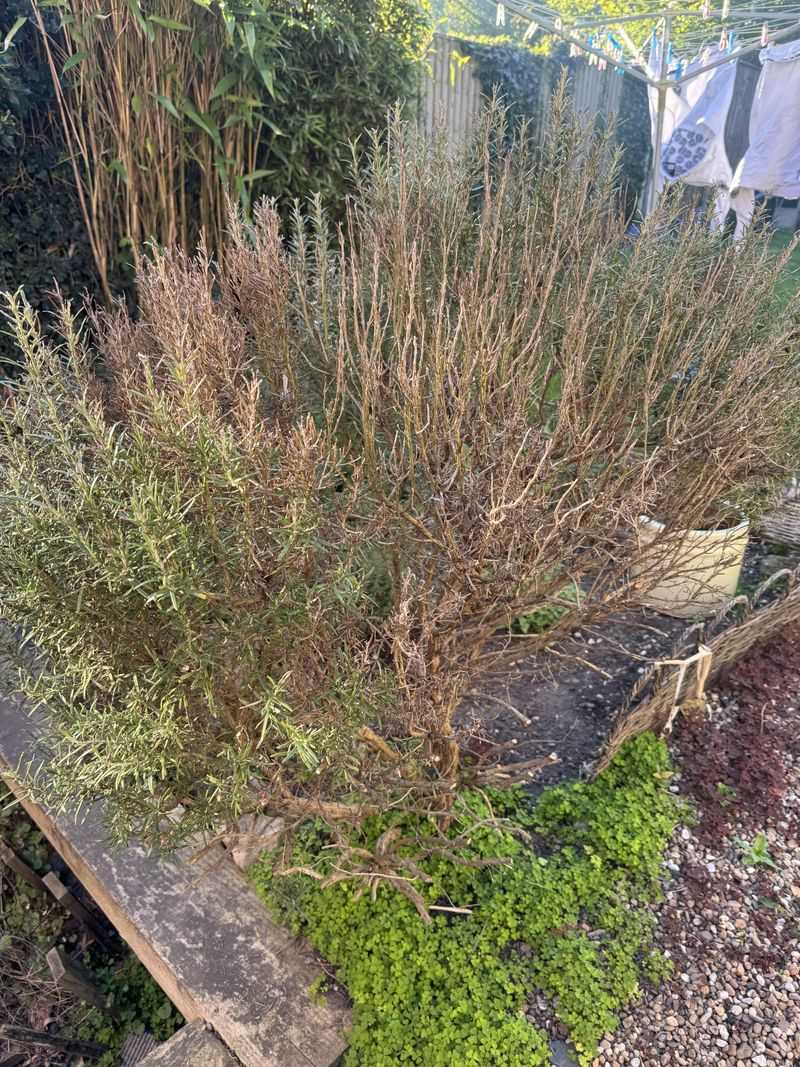
Sprinkler systems are designed with lawns in mind, not Mediterranean herbs. Grass needs frequent, shallow watering to stay lush and green. Rosemary needs the exact opposite.
When rosemary gets planted near a lawn or inside a mixed garden bed connected to a sprinkler zone, it ends up on the same watering schedule as the grass.
That usually means water three to five times a week, sometimes every single day during hot months. For rosemary, that frequency is far too high.
Overhead sprinklers also wet the foliage, which creates another problem. Rosemary does not like moisture sitting on its leaves and stems for long periods.
Wet foliage encourages powdery mildew and other fungal issues that weaken the plant over time.
Many California gardeners have switched to separating their rosemary from lawn irrigation zones entirely. Giving the plant its own dedicated zone with a much less frequent watering schedule is one of the smartest moves you can make.
If moving the plant or rewiring your irrigation is not an option right now, consider adjusting the sprinkler heads near your rosemary so they aim away from its base. Even reducing the spray radius in that area can help lower the amount of water the plant receives each week.
Small changes to your sprinkler setup can have a surprisingly large impact on plant health over a single season.
5. Clay Soil Holds Water Too Long
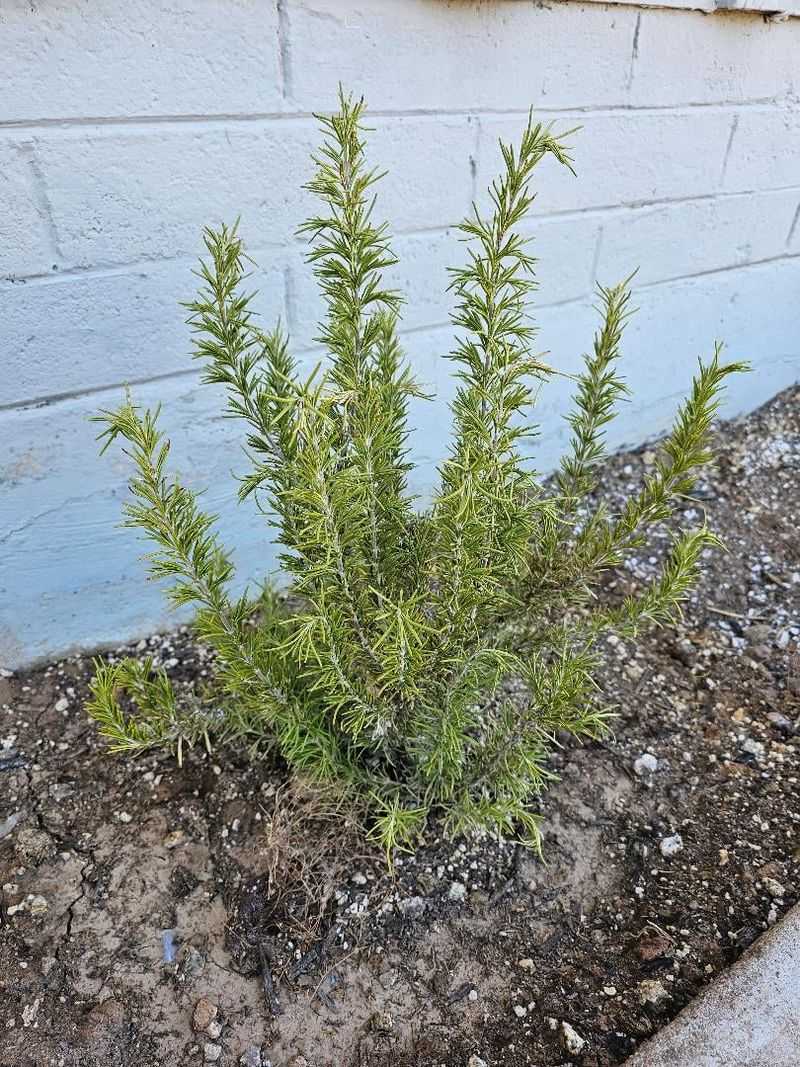
A lot of California sits on heavy clay soil. It is rich in minerals, which sounds like a good thing, but clay has a major flaw: it holds water for a very long time.
After a good rain or a watering session, clay soil can stay wet for days. For a drought-loving plant like rosemary, that slow drainage creates conditions very similar to having wet feet around the clock.
The roots never get the dry period they need to stay healthy.
Clay also compacts easily. When it dries out, it can form a hard crust on top that makes future water absorption uneven.
Water may pool on the surface and then slowly seep down to the root zone all at once, creating a cycle of drought and flood that rosemary handles very poorly.
Amending clay soil before planting is the best approach. Mixing in coarse sand, perlite, or decomposed granite helps break up the clay structure and improves drainage significantly.
A ratio of about one part amendment to two parts native soil is a good starting point for most garden beds.
For rosemary already planted in clay, top-dressing with gravel and working in organic matter around the drip line can help over time.
Planting on a slight slope or mound also encourages water to move away from the crown and roots rather than pooling right where the plant needs air most.
6. Drip Lines Can Still Overdo It
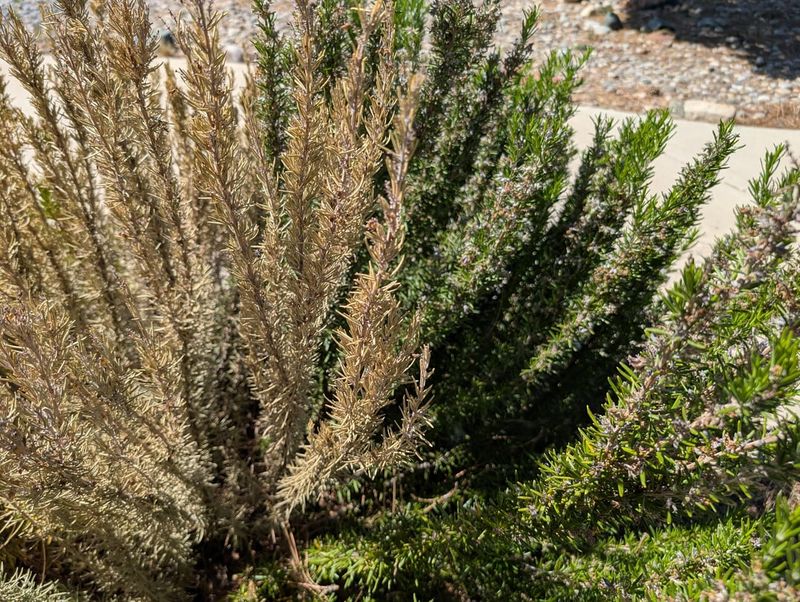
Drip irrigation has a reputation for being efficient and gentle on plants. That reputation is well earned for tomatoes, peppers, and most vegetables.
For rosemary, though, drip systems can quietly create just as many problems as overhead sprinklers if they are not set up correctly.
The issue is frequency. Many drip systems run on the same timer as the rest of the garden.
If that timer is set to water every day or every other day, the soil near the rosemary emitter never fully dries out between cycles.
Even a slow drip emitter delivering just half a gallon per hour adds up fast over a week. Multiply that by daily or near-daily cycles, and you have a plant sitting in consistently moist soil for its entire second year and beyond.
Rosemary actually does better with deep, infrequent watering rather than shallow, frequent drips.
Running your emitter for a longer session once every ten to fourteen days during warm months gives the roots a good drink and then allows the soil to dry out properly between cycles.
You might also consider removing the drip emitter from your rosemary entirely once it is established.
Hand-watering occasionally gives you much better control over exactly how much moisture the plant receives.
It also forces you to actually look at the soil and the plant before deciding whether to water, which is always a good habit to build into your routine.
7. Damp Crowns Lead To Decline
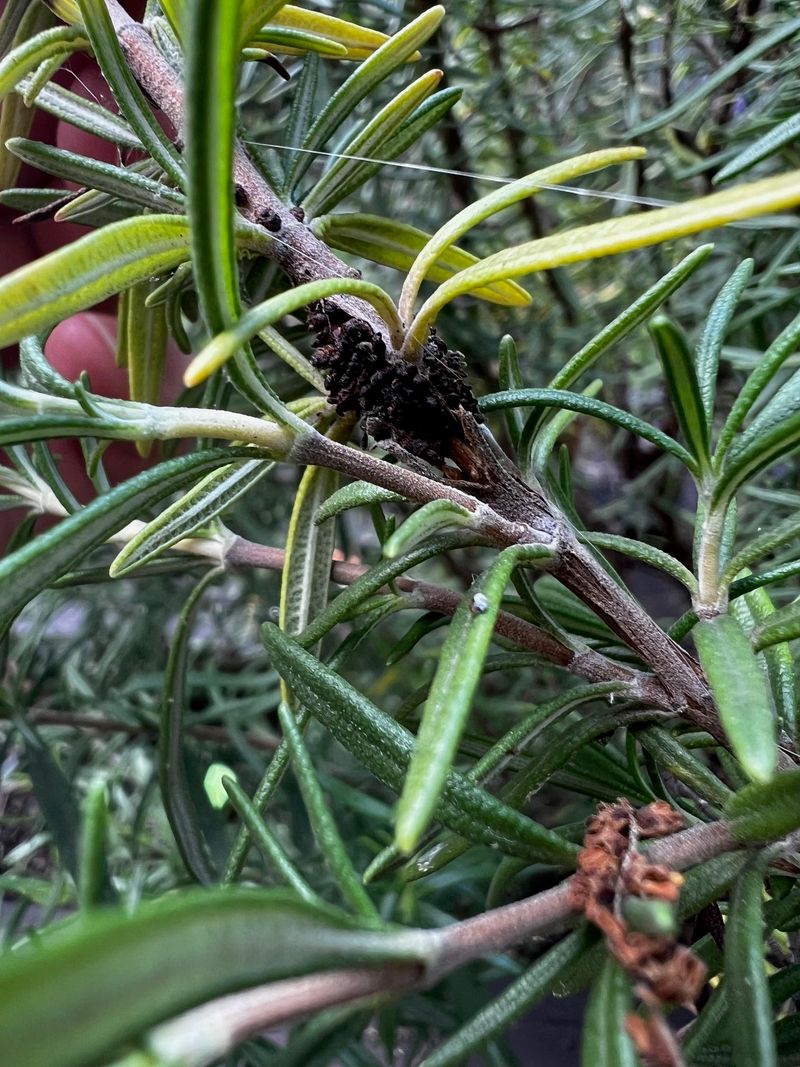
The crown of a rosemary plant is the point where the stems meet the roots, right at or just below the soil surface.
It is one of the most vulnerable parts of the entire plant, and keeping it damp is one of the fastest ways to cause serious problems.
When the crown stays wet, fungal pathogens move in quickly. Crown rot is a common condition in California, especially in garden beds where mulch is piled up against the base of the plant or where soil has been mounded around the stems.
Symptoms of crown trouble often look like general weakness at first. The plant may stop putting out new growth.
Older stems may start to look grayish or feel soft near the base. Sometimes the bark-like outer layer of the lower stems begins to crack or peel in an unusual way.
Keeping the crown dry is simpler than most people think. Pull mulch back at least four to six inches from the base of the plant.
Make sure the planting area slopes slightly away from the crown so water drains outward, not inward.
If you notice the soil level has risen around the base over time due to mulch breakdown or soil additions, gently scrape some of it back.
Exposing the lower crown to air and sunlight for even a few hours each day can help reverse early signs of moisture stress before the problem becomes harder to manage.
8. Woody Growth Shows The Stress

One of the most visible signs that rosemary has been dealing with too much water over time is the way its growth pattern changes.
When the plant is stressed, it tends to put energy into thickening and hardening its existing stems rather than pushing out fresh, soft new growth.
Woody stems on rosemary are totally normal as the plant ages. But when woodiness spreads rapidly up the plant and new green tips become sparse or short, that is a sign something has been off in the plant’s environment for a while.
Excess moisture slows the plant’s metabolic processes. It cannot move nutrients efficiently when its roots are struggling.
The result is a plant that looks old and tired much faster than it should, often by the end of its second or third year.
Pruning can help encourage new growth, but pruning alone will not fix the underlying issue. You have to address the water situation first.
Once drainage improves and watering frequency drops, you will often see the plant respond with a flush of new green growth within a few weeks.
Cut back woody sections by no more than one-third at a time. Never cut into bare wood that has no green growth above it, because rosemary does not regenerate well from completely bare stems.
With better soil conditions and a smarter watering routine, your plant can bounce back and look full and healthy again within a single growing season.