The Oregon Fig Watering Mistake That Leads To Small Fruit And Leaf Drop
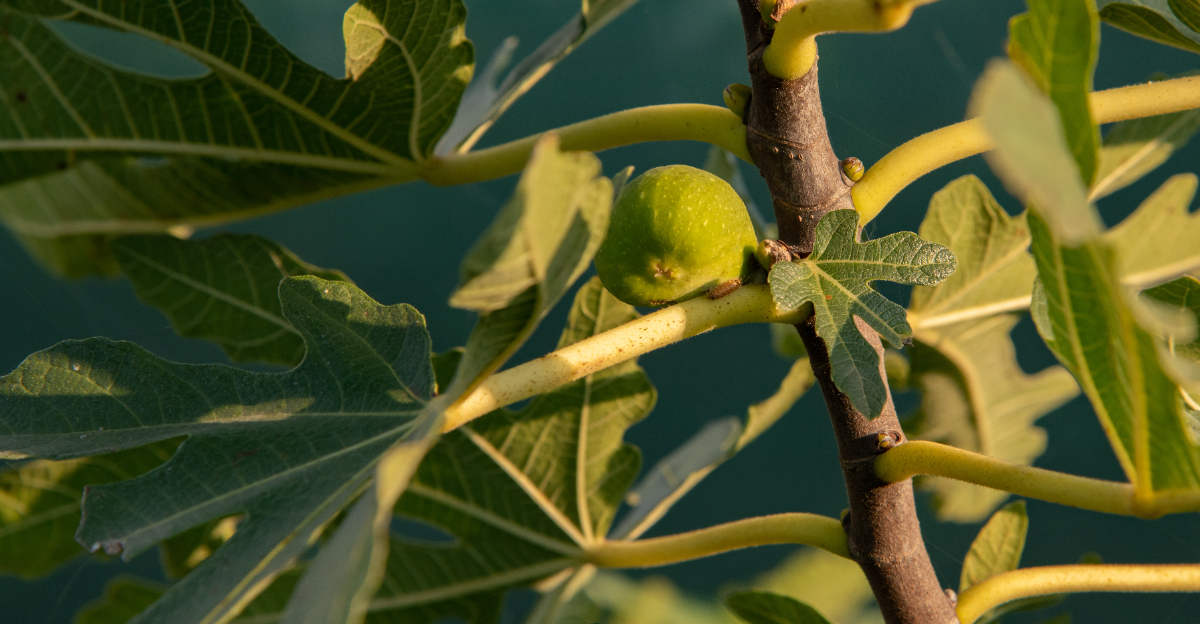
Fig trees can look tough enough to handle almost anything, which makes sudden leaf drop especially confusing.
The fruit stays small, the canopy thins, and the tree starts to look stressed right when the summer harvest should gain momentum.
In Oregon, one watering mistake often causes that decline. The problem is not always a lack of moisture.
It can come from an uneven routine that sends the roots through repeated swings between dry soil and heavy saturation.
Figs dislike that kind of drama. Their response may appear above ground long after the trouble starts below it.
A better approach can help the tree hold its leaves and support fuller fruit through the hottest part of the season. The fix does not require constant watering.
It requires a steadier pattern that matches the soil and gives the roots fewer surprises.
1. Don’t Make This Beginner Mistake
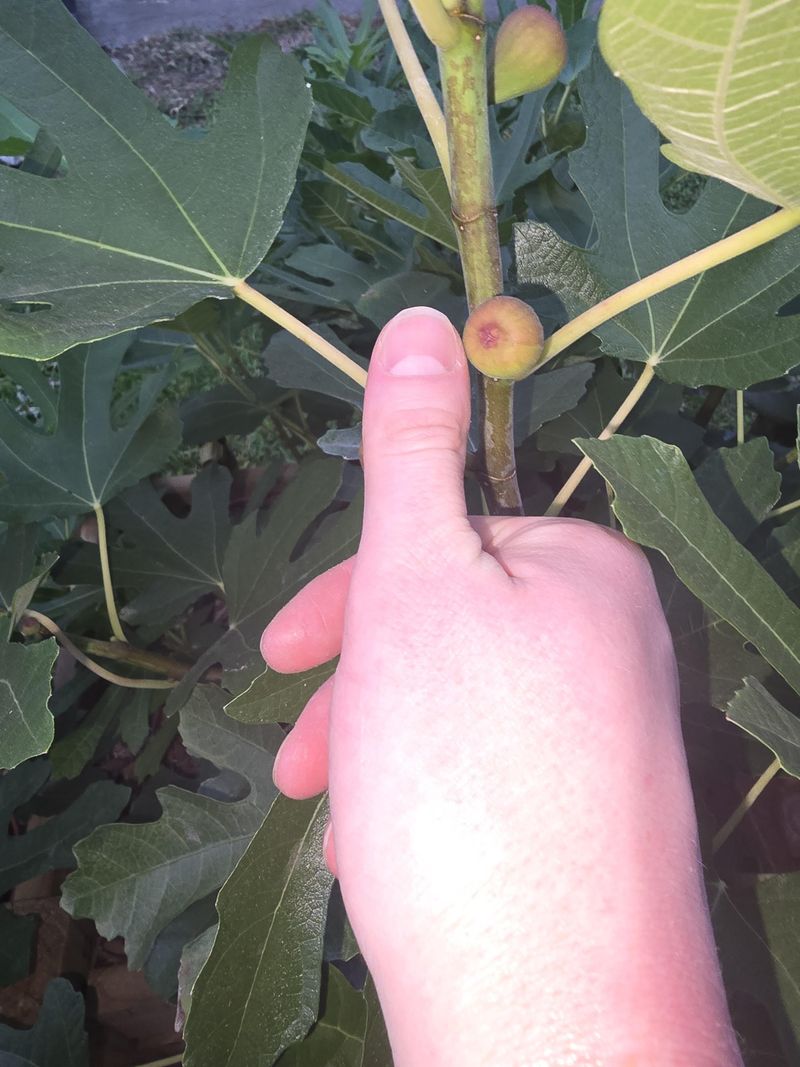
Most fig tree problems in Oregon trace back to one root cause: watering that goes up and down without any real schedule. One week the tree gets soaked, the next week it barely gets a drink.
That kind of unpredictability puts serious stress on the tree.
Figs are actually pretty tough plants, but they do expect some consistency. When moisture levels in the soil keep swinging from wet to dry and back again, the tree cannot settle into a steady growth rhythm.
It starts making survival decisions instead of fruit-growing decisions.
Gardeners sometimes think that watering more on hot days and skipping rainy weeks is enough. But figs need a more stable baseline than that.
A tree that gets two gallons one day and nothing for ten days is not getting what it needs, even if the total amount seems right.
The fix starts with building a simple routine. Check the soil around your fig tree at the same time every few days.
Push your finger two inches into the soil near the base. If it feels dry at that depth, it is time to water.
If it still feels moist, wait another day or two and check again. Keeping a simple watering log helps you spot patterns and avoid the feast-or-famine cycle that causes so many problems for fig growers across our state.
2. Figs Hate The Dry-Then-Drench Cycle
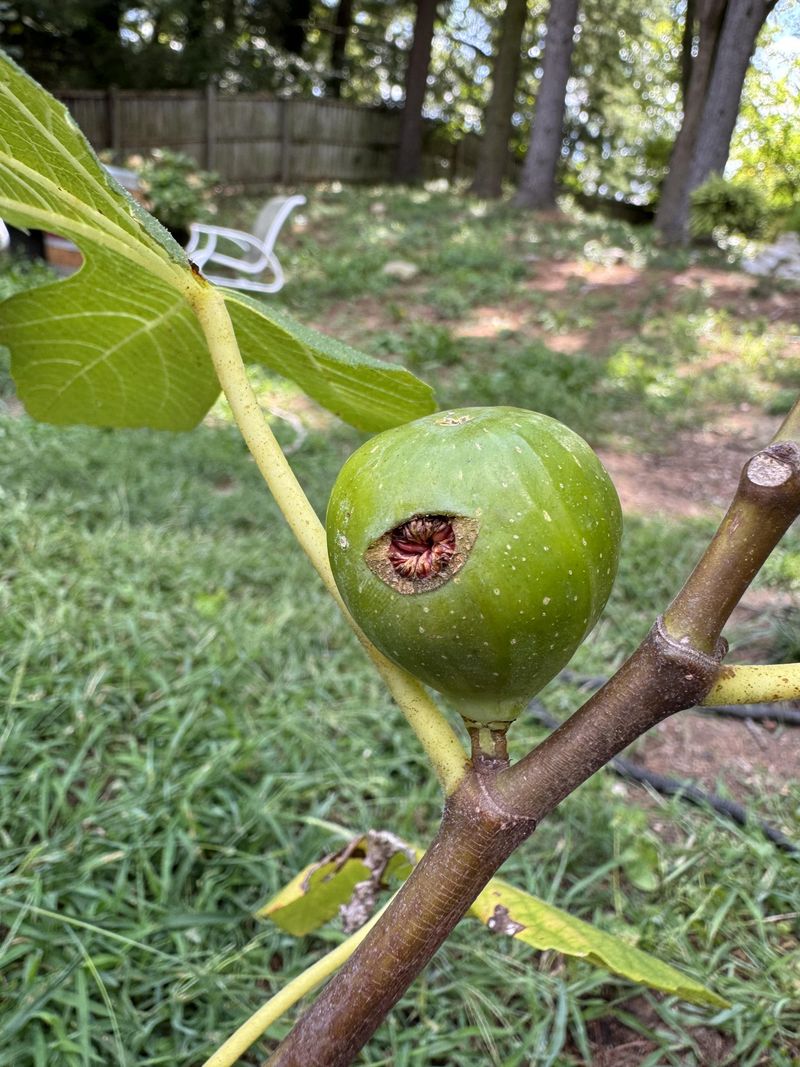
There is a watering pattern that feels intuitive but actually harms figs more than almost anything else.
It goes like this: the gardener forgets to water for a while, notices the tree looks sad, then soaks the soil heavily to make up for it. Repeat.
That dry-then-drench cycle is rough on fig trees. When the soil dries out too much, the roots start to pull back and fine root hairs can shrivel.
Then when a big flood of water arrives, the tree cannot absorb it efficiently. The sudden swing shocks the system.
Fruit development is especially sensitive to this pattern. Figs that are forming on the tree need steady moisture to size up properly.
When they go through dry spells followed by heavy watering, the skin of the fruit can crack, or the fruit simply stays small and falls off early.
Your Oregon Garden Changes Every Week. Your Plan Should Too.
Gardening in Oregon changes quickly throughout the season. Every Friday you’ll receive a simple weekly plan showing exactly what to plant, prune, fertilize, harvest, and protect so you never miss the right timing.
Think of it like trying to fill a dry sponge by dumping a bucket of water on it fast. Most of the water runs off rather than soaking in.
A fig tree’s root zone works the same way. Slow, steady watering that keeps the soil consistently moist but not soggy gives the roots time to actually absorb what they need.
Aim for deep, even moisture rather than dramatic swings. Your fig tree will respond with bigger fruit and healthier leaves all season long.
3. Small Fruit Is The First Warning
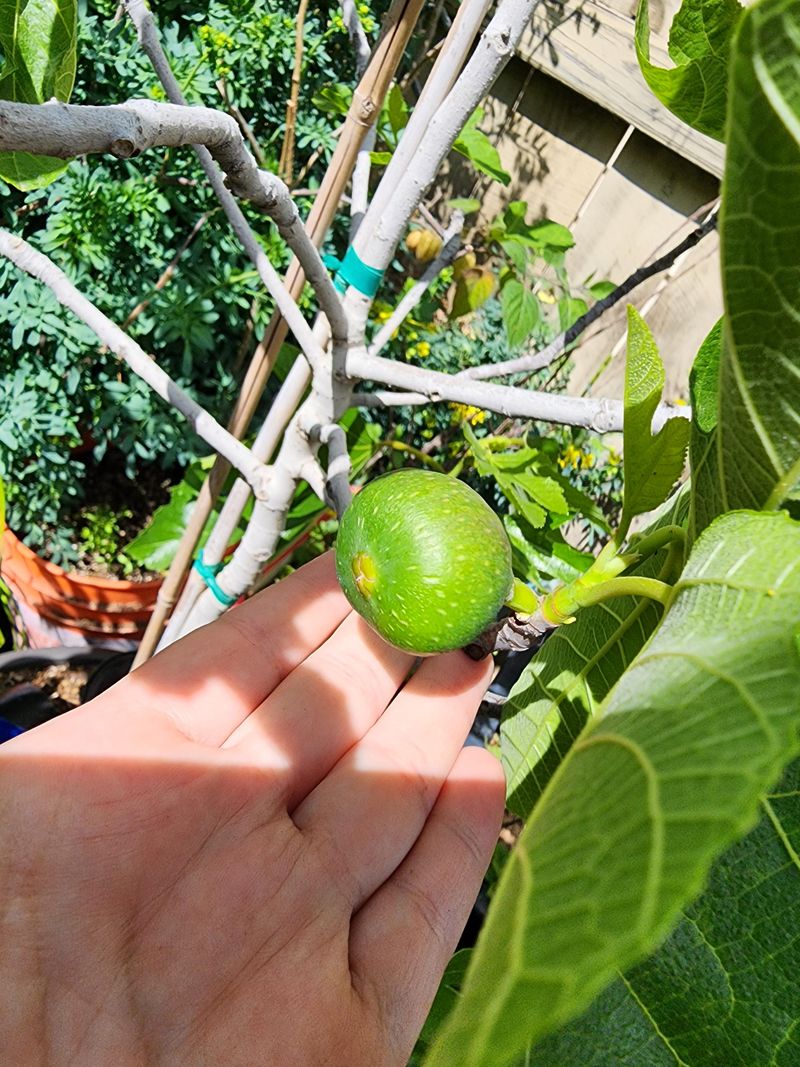
When fig fruit stays noticeably smaller than it should be, water stress is usually the first suspect. Small figs are not just a cosmetic issue.
They are a signal that something in the tree’s environment is out of balance, and moisture is almost always involved.
Figs develop in stages, and each stage needs adequate water to progress. During the early swelling phase, steady soil moisture is critical.
If the tree hits a dry stretch right when the fruit is trying to size up, growth simply stalls. The figs stop expanding and may never recover their full size even if watering improves later.
Some gardeners assume small fruit means the variety is just naturally small, or that the tree is too young to produce well.
Those can be factors, but if you have been growing the same tree for a few years and the fruit is getting smaller each season, watering habits are worth examining closely.
Checking fruit size against previous years is a smart habit. Take a photo of your figs at the same point each season and compare them year to year.
If they are shrinking, look at your watering schedule first before blaming soil or sun.
Adding a consistent deep watering routine during the fruiting window, usually midsummer in Oregon, can make a visible difference in fruit size within just a few weeks of getting the routine right.
4. Leaf Drop Means The Tree Is Stressed
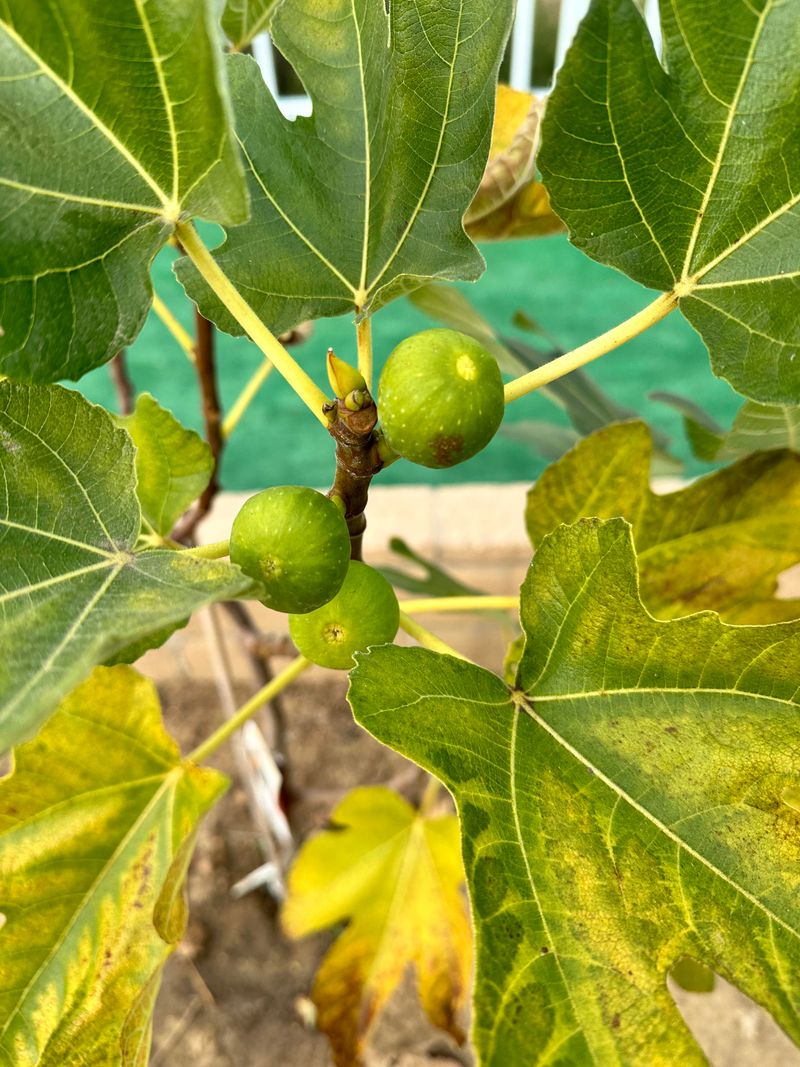
Seeing leaves fall off a fig tree in the middle of summer is alarming, especially when the tree looked perfectly healthy just a week before.
Summer leaf drop is not normal seasonal behavior. It is the tree telling you that something is seriously wrong.
Water stress is one of the most common triggers. When a fig tree cannot get enough consistent moisture, it starts shedding leaves to reduce the amount of water it loses through its foliage.
The tree is essentially cutting its losses and protecting what it can. It is a survival response, not a sign of permanent damage in most cases.
Leaf drop from water stress usually starts with the older leaves lower on the branches. They yellow first, then fall.
If the stress continues, the drop moves up the tree and spreads to younger growth. Catching it early gives you a much better chance of turning things around quickly.
When you notice summer leaf drop, check the soil immediately. Dry, powdery soil that pulls away from the tree’s base is a clear sign of underwatering.
Start a steady watering schedule right away. Water deeply at the base of the tree, not just on the surface.
Give the root zone a thorough soak and then stick to a regular schedule going forward. Most fig trees recover well once consistent moisture is restored, and new leaves often begin to appear within a couple of weeks.
5. Container Figs Dry Out Even Faster
Growing figs in containers is popular in Oregon because it lets gardeners move the tree indoors or into a sheltered spot during cold snaps. But container growing comes with a serious watering challenge that catches a lot of people off guard.
Pots dry out much faster than garden beds. The limited soil volume heats up quickly in the sun, and moisture evaporates through the sides of clay or fabric pots especially fast.
A fig tree in a container can go from well-watered to bone dry in just a day or two during a warm stretch.
That rapid drying is a setup for the exact inconsistency that figs hate. You water well, the pot dries out fast, and the tree goes through a mini drought before the next watering.
Do that repeatedly and you will see small fruit and leaf drop even if you think you are watering regularly.
Container fig growers should check their pots daily during warm weather. Lift the pot if it is small enough.
A light pot means dry soil. A heavy pot means moisture is still present.
You can also use a wooden chopstick or a moisture meter to check the soil deeper in the pot. Water until it drains freely from the bottom.
Use a saucer to catch runoff but empty it after an hour so roots do not sit in standing water. Consistent attention to container moisture pays off with noticeably better fruit.
6. Young Fig Trees Need Closer Watching
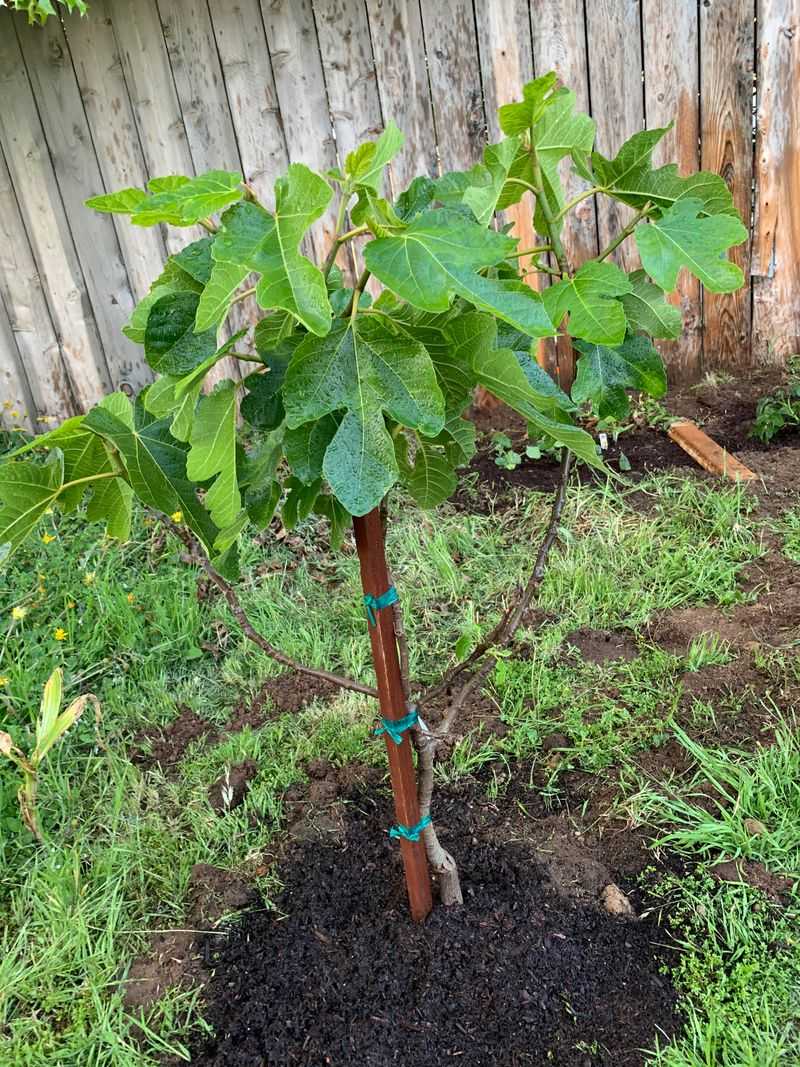
A fig tree that has been in the ground for several years has developed a deep, wide root system that can reach moisture from a larger area.
A young tree that was just planted this season does not have that advantage yet, and that makes all the difference.
Newly planted figs have small, shallow roots that are still establishing themselves in the soil.
They depend almost entirely on the moisture you provide because they cannot yet seek out water on their own.
Even a few days of dry soil can set back a young tree significantly.
Oregon spring planting is common, and the first summer is the most critical period. Temperatures can climb fast in July and August, and young figs can struggle to keep up if watering is not consistent.
The stress shows up quickly as wilting leaves, no new growth, and fruit that either does not form or falls off very early.
Check young trees every single day during the growing season. Water whenever the top two inches of soil feel dry.
Be thorough but not excessive. Soggy soil is just as harmful as dry soil for young roots.
As the tree grows and its root system expands, you can gradually reduce the frequency of watering and let the tree handle more on its own.
But for the first two to three seasons, treat your young fig like the investment it is and give it the close attention it truly needs to thrive.
7. Mulch Helps Even Out Soil Moisture
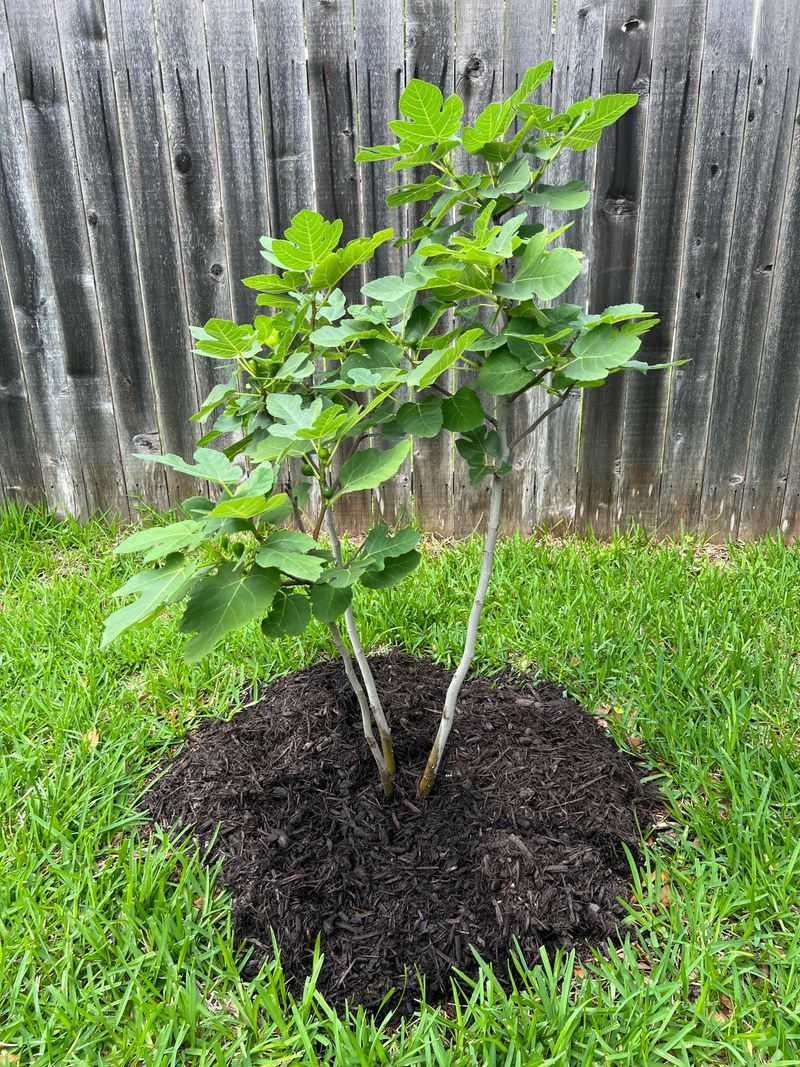
One of the simplest and most effective things you can do for your fig tree costs very little and takes less than an hour to set up. Laying down a good layer of mulch around the base of the tree changes how the soil holds moisture in a big way.
Mulch acts like a blanket over the soil. It slows down evaporation, which means the soil stays moist for longer after each watering.
That helps buffer the tree against the dry spells that cause so much trouble. It also keeps soil temperatures more stable, which is good for root health.
Wood chips, straw, and shredded bark all work well for fig trees. Spread the mulch in a wide circle around the base of the tree, going out as far as the branch tips if possible.
Keep the mulch a few inches away from the trunk itself to prevent rot and discourage pests from nesting right against the bark.
Aim for a layer about three to four inches thick. Thinner layers dry out too fast to make much difference.
Thicker layers can prevent water from reaching the soil at all. Refresh the mulch once or twice a season as it breaks down and compacts.
During wet winters, mulch also helps manage excess moisture by improving drainage around the root zone. It is a small effort that delivers real, measurable results for fig trees at every stage of growth.
8. Deep Watering Works Better Than Sprinkling
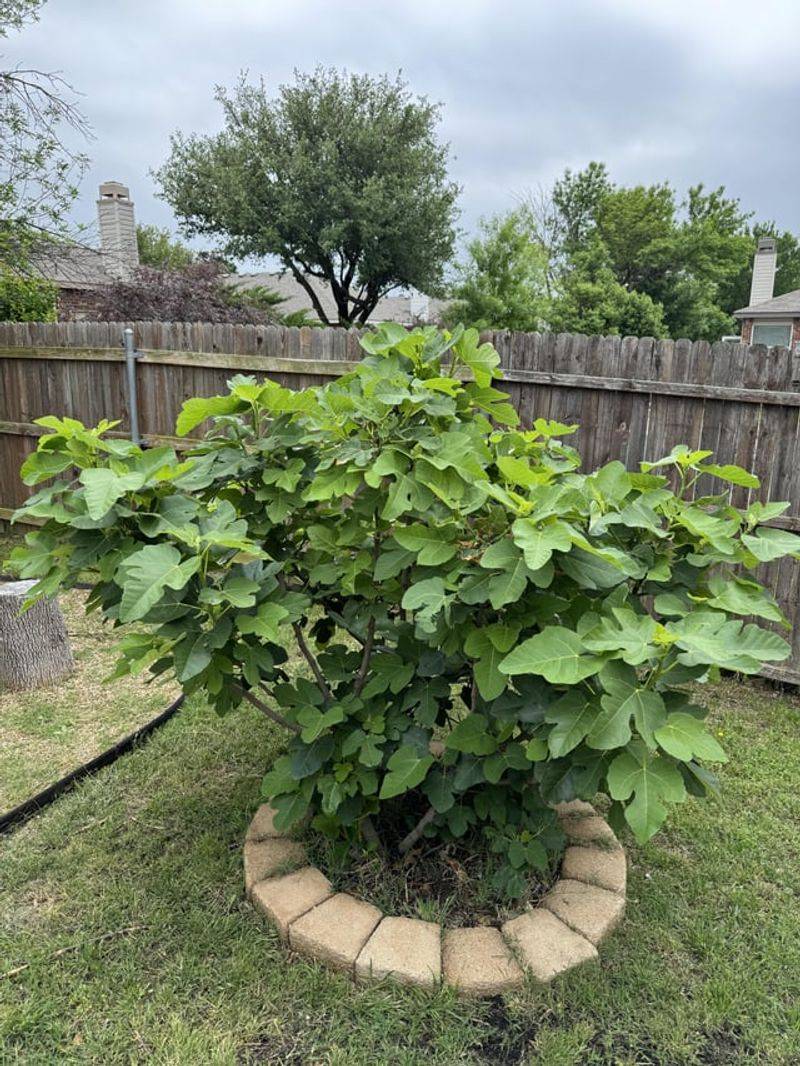
Many gardeners water their fig trees with a quick spray from a hose, moving on after just a minute or two.
That approach wets the surface but does not push moisture deep enough into the soil where the roots actually live.
Surface watering is one of the sneaky causes of fig stress.
Fig tree roots grow deep and wide. Shallow watering trains those roots to stay near the surface looking for moisture.
Surface roots are more vulnerable to heat and drought. Deep watering encourages roots to grow downward, where the soil holds moisture longer and temperatures stay cooler.
To water deeply, slow things down. Use a soaker hose, a drip line, or just hold the hose at the base of the tree and let it run slowly for fifteen to twenty minutes.
The goal is to wet the soil down to at least twelve inches. That depth keeps roots well-supplied between watering sessions.
You can check how deep the water is reaching by digging a small test hole near the tree after watering. If the soil is only moist in the top two or three inches, you need to water longer or more slowly.
In Oregon, where summer can bring weeks without rain, deep watering every five to seven days is usually enough for established trees. During heat waves, bump it up to every three to four days.
Getting the depth right is just as important as getting the frequency right.