7 Native Michigan Trees That Work Better Than Callery Pear For Fall Interest
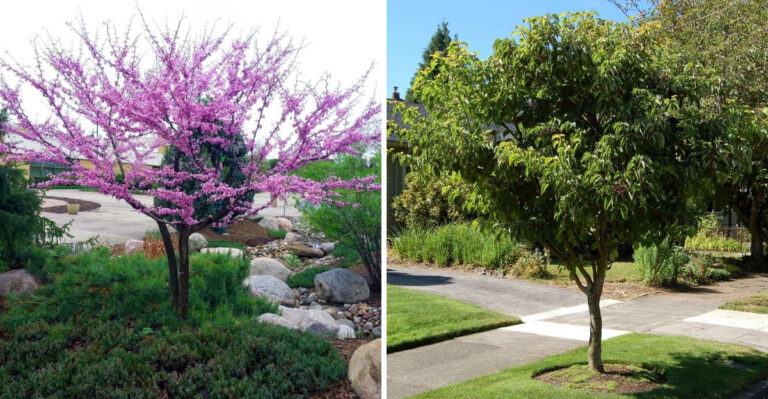
Callery pear has become a common yard tree, but its invasive spread and structural weakness make several native Michigan trees a much better choice for fall interest.
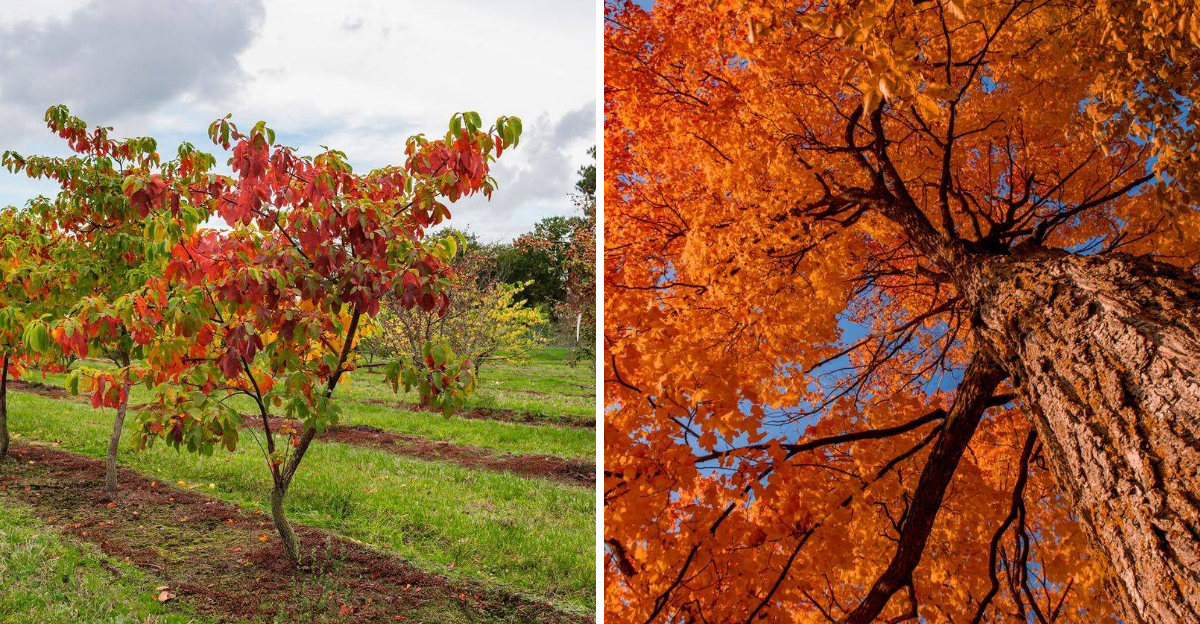
Sugar maple offers unmatched fall color, turning brilliant shades of orange and red that callery pear cannot compete with.
Black gum provides deep red foliage along with berries that attract birds throughout the fall season.
Sassafras brings unique, multicolored leaves in shades of yellow, orange, and red all on the same tree.
American hornbeam offers a more subtle but still attractive display, paired with excellent structural strength during storms.
Serviceberry combines fall color with earlier spring blooms, offering interest across multiple seasons rather than just one.
Sourwood produces striking red foliage along with fragrant summer blooms that callery pear lacks entirely.
Choosing any of these natives brings reliable fall beauty without the structural and ecological problems callery pear often creates.
1. Allegheny Serviceberry Offers Flowers Fruit And Fall Color
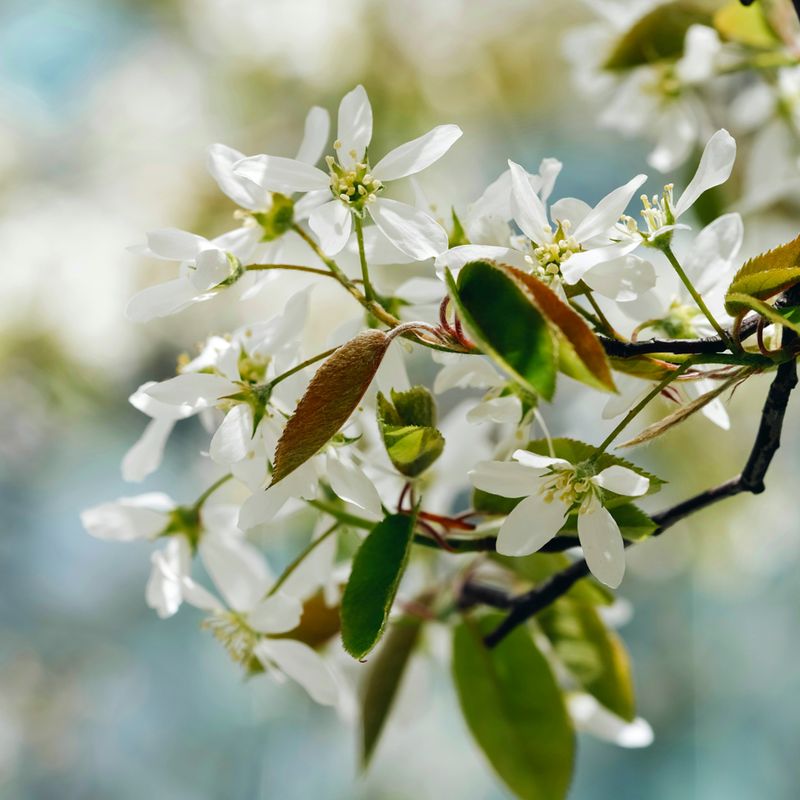
Few small trees pack as much seasonal interest into one package as Allegheny Serviceberry, known botanically as Amelanchier laevis.
In spring, clouds of delicate white flowers appear before the leaves even fully open, creating a soft, dreamy look that stops people in their tracks.
By summer, small dark purple berries ripen on the branches, attracting robins, cedar waxwings, and other birds that treat the tree like a buffet.
Come fall, the foliage shifts into warm shades of yellow, orange, and reddish bronze, turning an ordinary front yard into something worth photographing. The smooth gray bark adds quiet elegance during winter when leaves are gone.
Mature trees typically reach fifteen to twenty-five feet tall with a spread of around fifteen to twenty feet, making them an excellent fit for garden borders, patio edges, and smaller front yards.
Allegheny Serviceberry grows best in full sun to partial shade and prefers well-drained, slightly acidic soil.
Water consistently during the first two growing seasons to help roots establish, then reduce watering as the tree settles in.
One important shopping tip: several serviceberry species and hybrids get sold under nearly identical common names at nurseries.
Always confirm you are buying Amelanchier laevis specifically, not a closely related hybrid, to ensure you get the exact characteristics you expect.
Ask the nursery staff to show you the botanical name on the plant tag before purchasing.
This tree rewards patient gardeners with four full seasons of visual interest, wildlife activity, and low-maintenance charm that Callery Pear simply cannot match.
2. American Hornbeam Adds Orange And Red Color
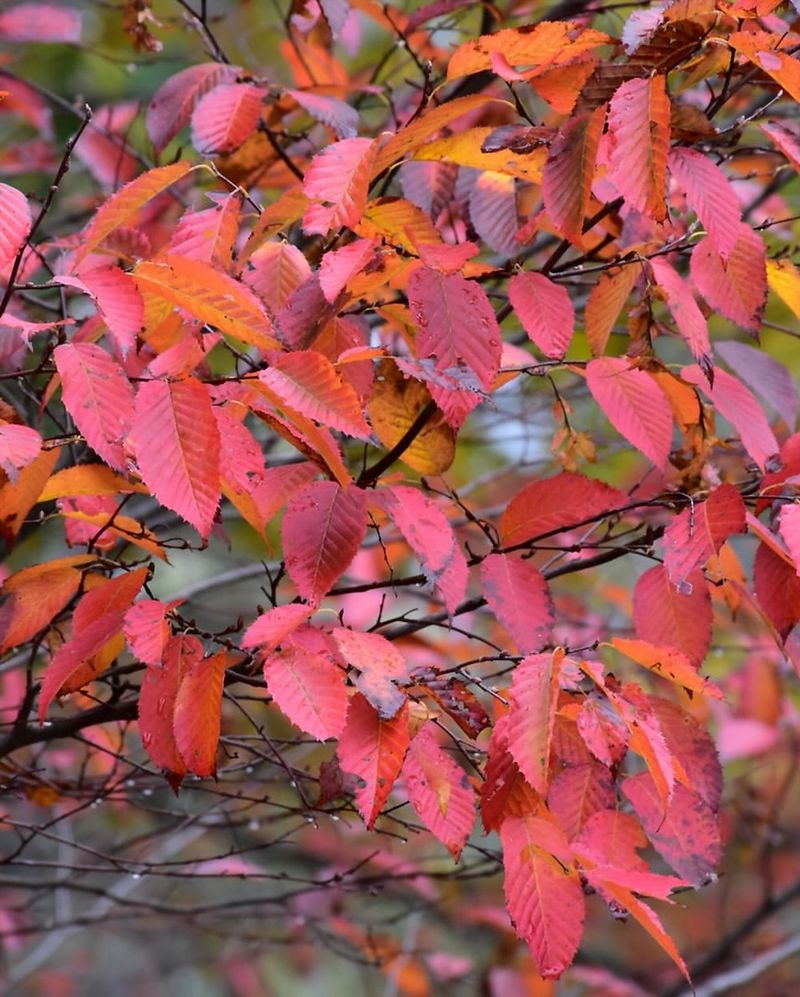
American Hornbeam has a secret that most gardeners walk right past without noticing.
The smooth, rippling bark on its trunk and branches looks almost like flexed muscle, earning it the nickname musclewood.
Up close, it is genuinely one of the most interesting-looking trunks in the entire Michigan native tree lineup, and that visual appeal carries the tree well beyond the fall season.
When autumn arrives, the compact canopy fills with warm orange and red foliage that glows beautifully in the lower-angle light of October afternoons.
Your Michigan Garden Changes Every Week. Your Plan Should Too.
Gardening in Michigan changes quickly throughout the season. Every Friday you’ll receive a simple weekly plan showing exactly what to plant, prune, fertilize, harvest, and protect so you never miss the right timing.
Carpinus caroliniana typically matures between twenty and thirty feet tall with a similar spread, which makes it a practical choice for spots where a full-sized maple would simply take over.
Woodland edges, partly shaded side yards, and garden corners near patios are all excellent locations for this understory tree.
American Hornbeam grows naturally along stream banks and in moist woodland areas, so it performs best in consistently moist, well-drained soil with partial to full shade.
It can tolerate more sun if soil moisture stays adequate, but it struggles in hot, dry conditions over long periods.
Water thoroughly during the establishment phase, typically the first two growing seasons, and mulch the root zone generously to retain moisture and moderate soil temperature.
When choosing a planting spot, think about positioning the tree so the distinctive muscular trunk remains visible from a nearby path, seating area, or window.
That trunk is genuinely worth showing off year-round, not just during the brief but beautiful weeks of fall color.
3. Black Gum Produces Brilliant Autumn Foliage
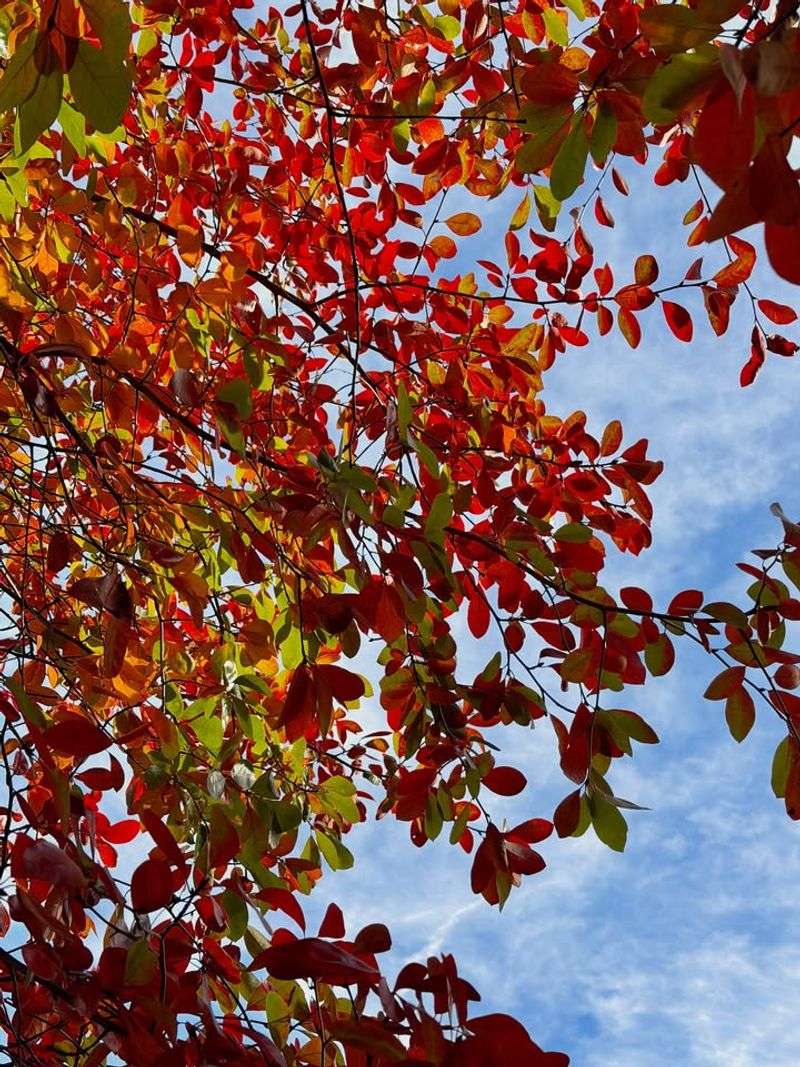
If you want the most jaw-dropping fall color a Michigan yard can produce, Black Gum might be exactly what you have been missing.
Nyssa sylvatica is one of the earliest trees to change color each autumn, and when it does, the transformation is stunning.
Glossy green summer leaves shift into a blazing mix of yellow, orange, scarlet, and deep red, sometimes all appearing on the same tree at the same time.
Beyond the fall fireworks, Black Gum offers something Callery Pear never could: genuine wildlife value.
Small dark blue fruits ripen in late summer and early fall, drawing in songbirds, wild turkeys, and even black bears in more rural areas.
The tree typically grows thirty to forty feet tall with a spread of twenty to thirty feet, making it a solid choice for medium to large yards with space to breathe.
Black Gum grows best in full sun to partial shade and strongly prefers acidic, well-drained soil.
Avoid planting it in areas with compacted ground or alkaline conditions, as both can slow its growth and reduce overall health.
Water deeply and regularly during the first two to three growing seasons, then taper off once roots are well established.
One important detail many gardeners overlook is that Black Gum has a taproot system, meaning it dislikes having its root zone disturbed by digging, construction, or heavy foot traffic.
Give it plenty of undisturbed ground around the base, and this tree will reward you with decades of spectacular autumn color.
4. American Hophornbeam Brings Yellow Leaves And Textured Bark
Not every yard needs a flashy scarlet showstopper. Sometimes the most satisfying fall tree is one that glows with warm, consistent golden yellow while offering interesting texture and structure throughout the year.
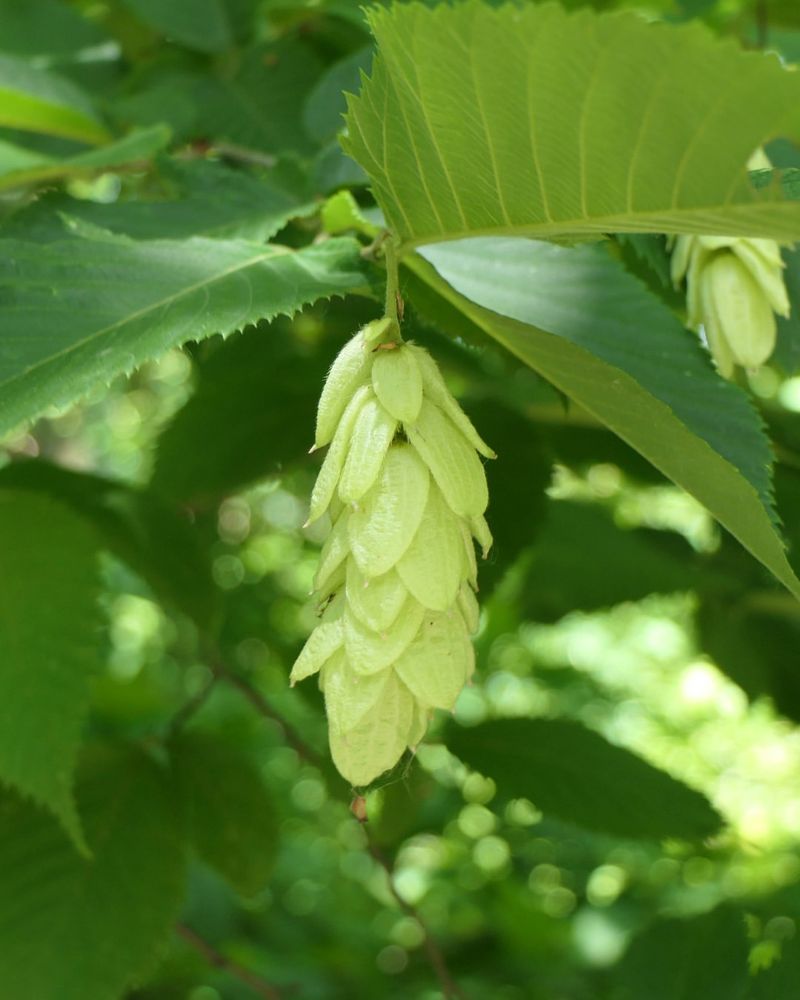
American Hophornbeam, or Ostrya virginiana, is exactly that kind of dependable, underappreciated gem that experienced Michigan gardeners tend to love. The hanging seed clusters are a real conversation starter.
They look remarkably similar to hops used in brewing, which explains both the common name and the curious looks from visitors who spot them dangling from the branches in late summer and fall.
The mature bark develops a shaggy, layered texture that adds visual interest during winter months when the tree stands bare.
At roughly thirty to forty feet tall at maturity with a spread of around twenty to thirty feet, it fits well into smaller yards and naturalistic planting areas.
One of the most practical qualities of American Hophornbeam is its tolerance for light shade and moderately dry soil once established.
This makes it a solid option for spots under a partial canopy or in areas where irrigation is limited.
That said, it is sensitive to road salt, so placement near heavily treated pavement or driveways is not a good idea. Spring planting gives roots the best chance to settle before summer heat arrives.
Water consistently through the first two growing seasons, applying a deep soak once or twice per week rather than light daily watering.
The slower growth rate means patience is required, but the long-term reward of a structurally beautiful, low-maintenance native tree is absolutely worth the wait.
5. Sassafras Creates A Mix Of Autumn Colors
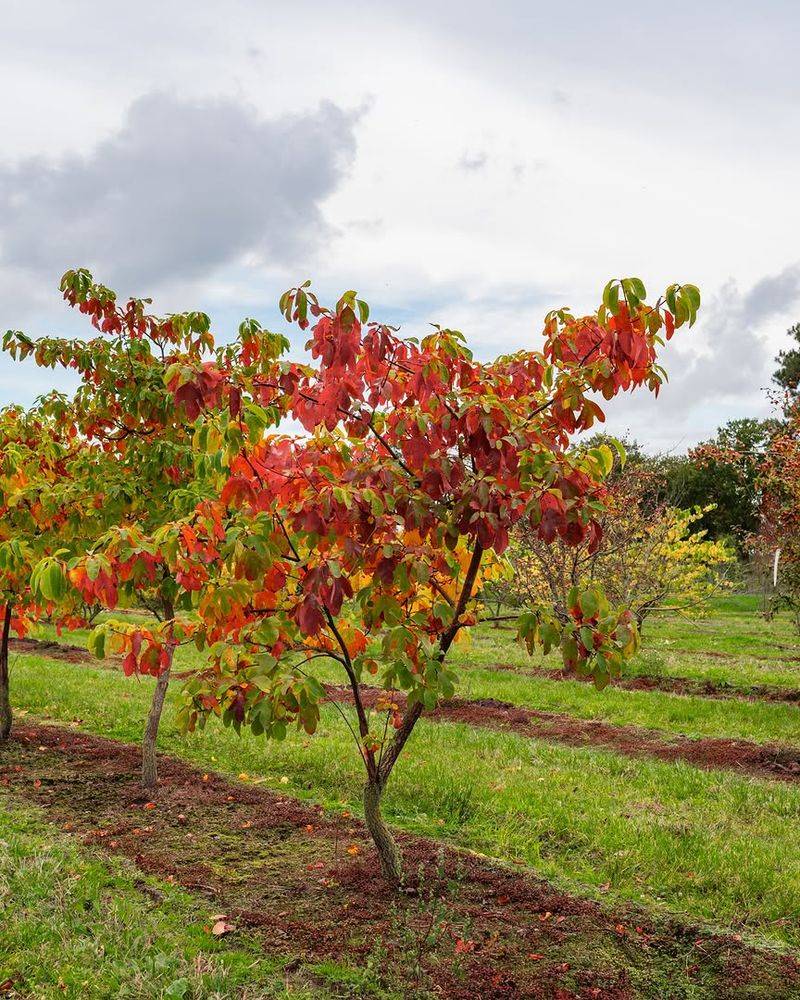
Walk past a Sassafras tree in October and you might do a double-take.
The leaves come in three completely different shapes on the same tree: some are oval, some have a single lobe like a mitten, and some split into three lobes like a three-fingered hand.
When those unusual leaves turn yellow, orange, and deep red all at once, the whole tree looks like an artist painted each branch individually.
Sassafras albidum also produces small dark blue fruits on bright red or orange stalks in late summer, adding another layer of visual interest just before the fall color show begins.
Birds are particularly fond of those fruits, and the tree supports several native moth and butterfly species as a host plant.
Mature Sassafras commonly reaches thirty to sixty feet tall depending on growing conditions, with an irregular, somewhat layered canopy that gives it a relaxed, natural character.
One thing to understand before planting Sassafras is its habit of sending up new stems from the root system over time.
In a wide open informal area or a naturalistic landscape, this colony-forming tendency can actually be a charming feature that creates a layered grove effect.
In a narrow formal bed or tight urban planting strip, it requires regular management to keep unwanted shoots under control. Sassafras grows best in full sun to partial shade with well-drained, slightly acidic soil.
Space trees at least twenty to thirty feet apart to give the mature canopy room to develop its full character.
Water regularly during the first growing season, then reduce supplemental watering as roots settle into the surrounding soil.
6. Red Maple Delivers Dependable Bright Autumn Color
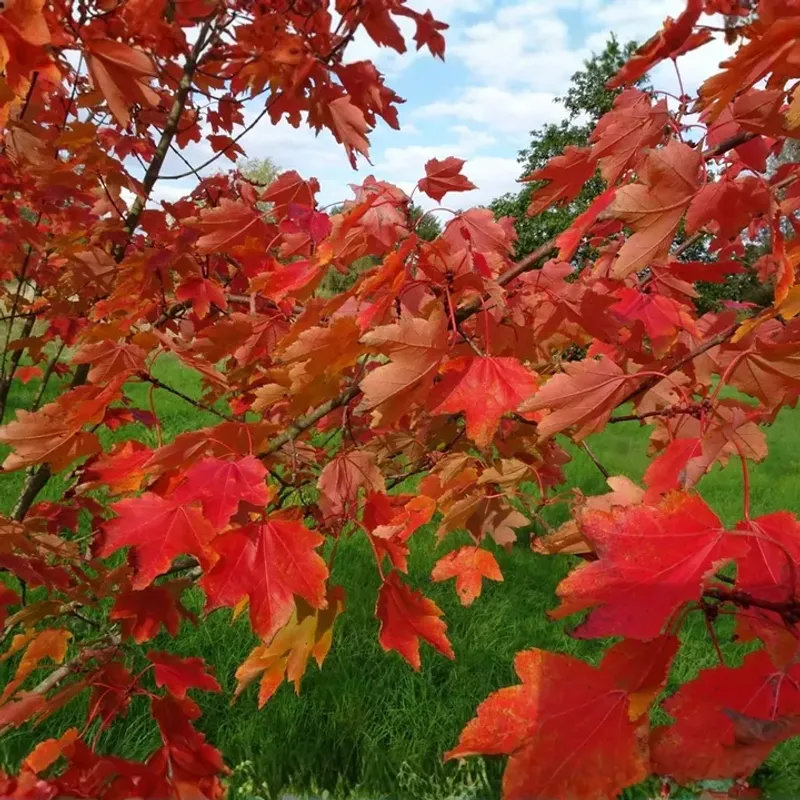
Red Maple earns its name twice over. In early spring, tiny red flowers appear on bare branches weeks before most other trees wake up, offering one of the first splashes of color after a long Michigan winter.
Then in fall, the foliage returns the favor with a display of red, orange, and sometimes yellow that can light up an entire neighborhood block.
Acer rubrum is also a genuinely valuable tree for Michigan wildlife. The early spring flowers provide nectar for bees emerging from winter. Seeds ripen in late spring and feed squirrels, birds, and small mammals.
At maturity, Red Maple typically reaches forty to sixty feet tall with a spread of thirty to fifty feet, so it needs a yard with real space rather than a cramped corner planting strip.
Plan spacing carefully and give roots plenty of undisturbed ground to expand into.
Red Maple adapts to a wide range of soil types including wet and dry conditions, but it performs noticeably worse in alkaline soils where nutrient uptake becomes restricted and foliage may yellow prematurely.
It is also sensitive to road salt, so avoid planting close to heavily treated streets or driveways.
Water deeply during the first two to three growing seasons to support strong root development.
One piece of advice worth following: even though Red Maple is widely available and easy to grow, planting several of the same tree across one neighborhood creates a monoculture that is more vulnerable to pests and disease.
Mix Red Maple with other native species to keep the overall landscape healthier and more resilient long term.
7. Sugar Maple Creates A Classic Michigan Fall Display
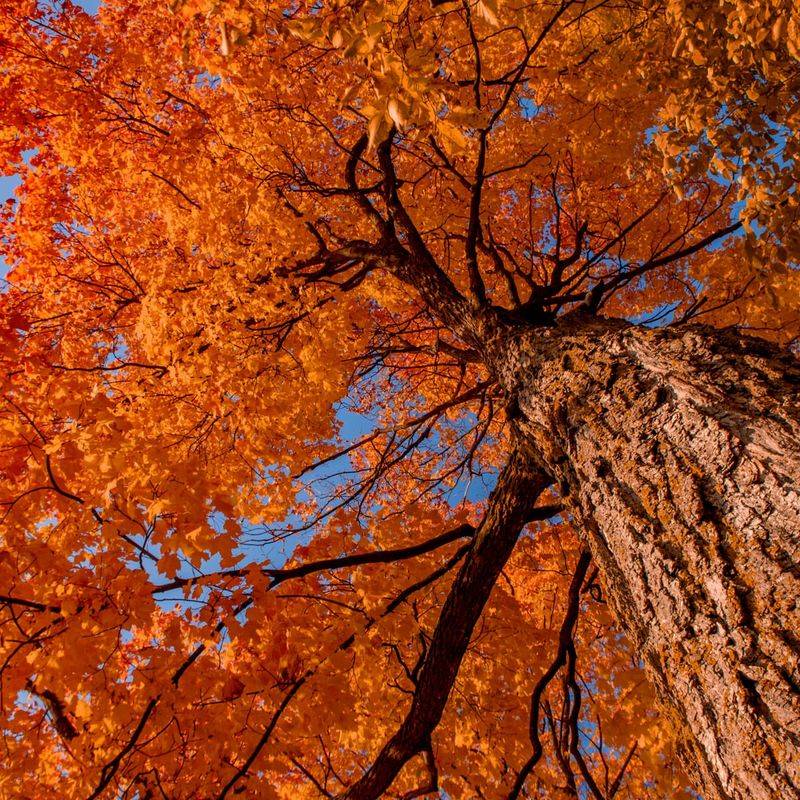
Sugar Maple is arguably the tree that defines autumn in Michigan.
Drive through any small town or rural road in October and you will almost certainly see the signature blaze of yellow, orange, and red that Acer saccharum produces at peak fall color.
It is the kind of display that draws visitors from other states and fills social media feeds every single year without ever getting old. Beyond the spectacular foliage, Sugar Maple supports a rich variety of wildlife.
Its seeds feed squirrels and birds, its flowers provide early pollen for native bees, and its canopy shelters countless species throughout the warmer months.
Mature Sugar Maples can reach sixty to seventy-five feet tall with a broad canopy spread of forty to fifty feet, which makes it very clear that this tree belongs in a large yard, not the cramped spot where a Callery Pear was squeezed in near a driveway or sidewalk.
Root space and soil quality are non-negotiable for Sugar Maple to truly thrive.
It needs deep, well-drained, slightly acidic to neutral soil and strongly dislikes compacted ground, road salt exposure, and poor drainage.
Water consistently and deeply during the first two to three growing seasons to encourage strong root establishment before summer heat and winter cold stress the young tree.
One point worth making clearly: Sugar Maple is already widely planted across Michigan neighborhoods, and while that popularity is completely understandable, mixing in other native species alongside it builds a more diverse and resilient community canopy.
Plant Sugar Maple where conditions are right, and it will reward generations of homeowners with one of nature’s most breathtaking seasonal performances.