What It Really Means When Japanese Beetles Single Out Certain North Carolina Plants
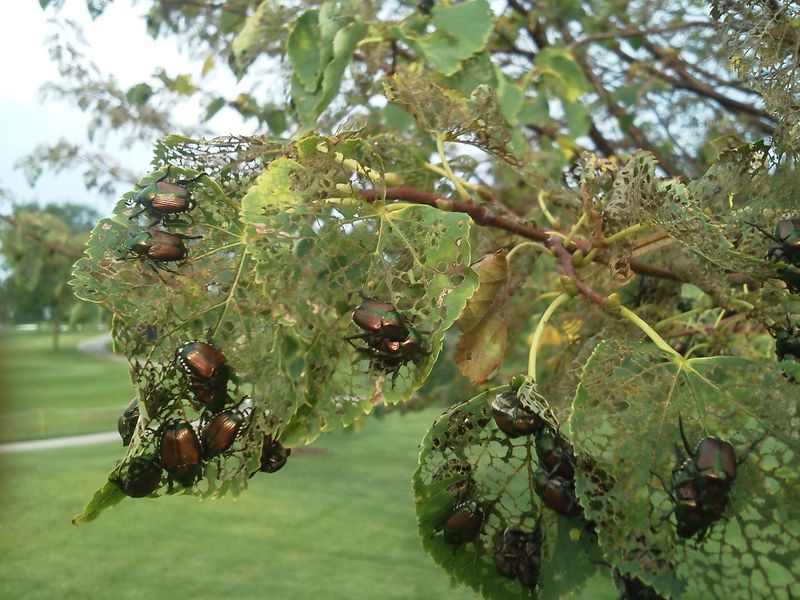
Walk out to your backyard on a July morning in North Carolina and you might find one rose completely covered in shiny beetles while the plant three feet away looks perfectly fine. That is not a coincidence, and it is not a sign that something is wrong with your rose. Japanese beetles are choosy feeders, and understanding why they single out certain plants can save you a lot of panic and a lot of unnecessary spraying.
Japanese Beetles Choose Hosts, Not Just Weak Plants
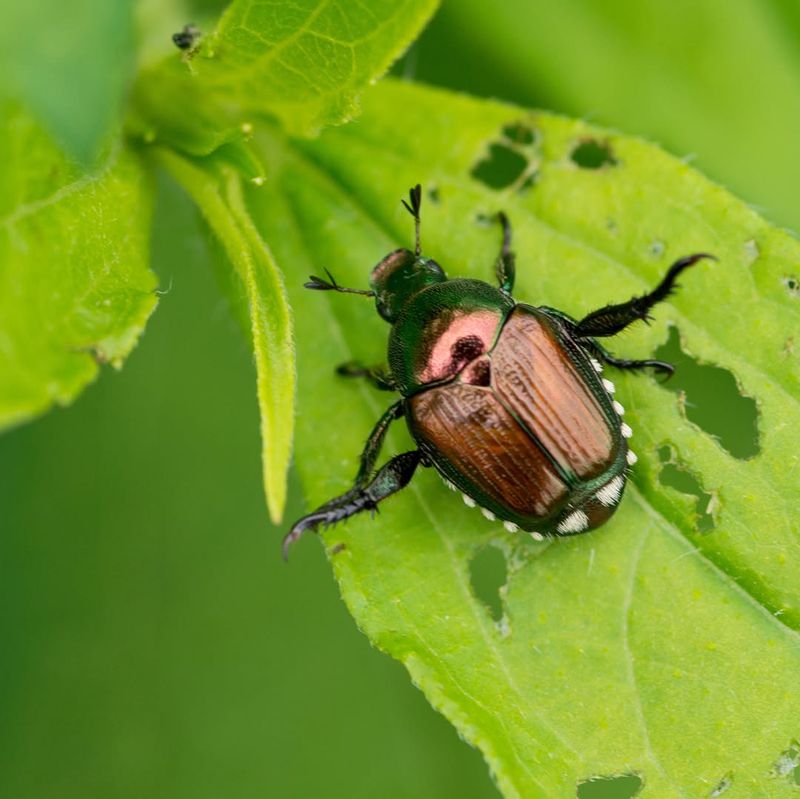
Pull one of those shiny beetles off your plant and look closely before you do anything else. A Japanese beetle (Popillia japonica) is about half an inch long, roughly 12 millimeters, with a metallic green body, copper-colored wing covers, and a row of six small white hair patches along each side near the abdomen. That combination is distinctive, and NC State Extension’s rose pest guidance describes the feeding damage as skeletonized foliage, where the tissue between the leaf veins disappears while the veins themselves stay behind like a lacy framework.
You may also notice ragged petals, chewed buds, and feeding on ripening fruit. North Carolina has Japanese beetles statewide, but NC State Extension notes that especially heavy infestations show up in the mountains and central Piedmont, where summer conditions suit them well.
Before you treat anything, confirm what you are actually looking at. Green June beetles are large, fast-flying scarabs with a dull green sheen that some folks mistake for Japanese beetles, and rose chafers are tan, long-legged beetles that can cluster on flowers in a similar way. University of Minnesota Extension’s scarab identification guidance reinforces that these beetles have different habits and need different management approaches, so treating a lawn or plant based only on a quick glance at a shiny beetle is a good way to waste time and money.
Here is the key thing to hold onto: a preferred adult food plant can be completely healthy and vigorous. Japanese beetles are not drawn to weak or struggling plants by some rule of nature. They are drawn to certain plants because those plants are genuinely good food sources for adult beetles, full stop.
What Makes One Plant So Tempting?
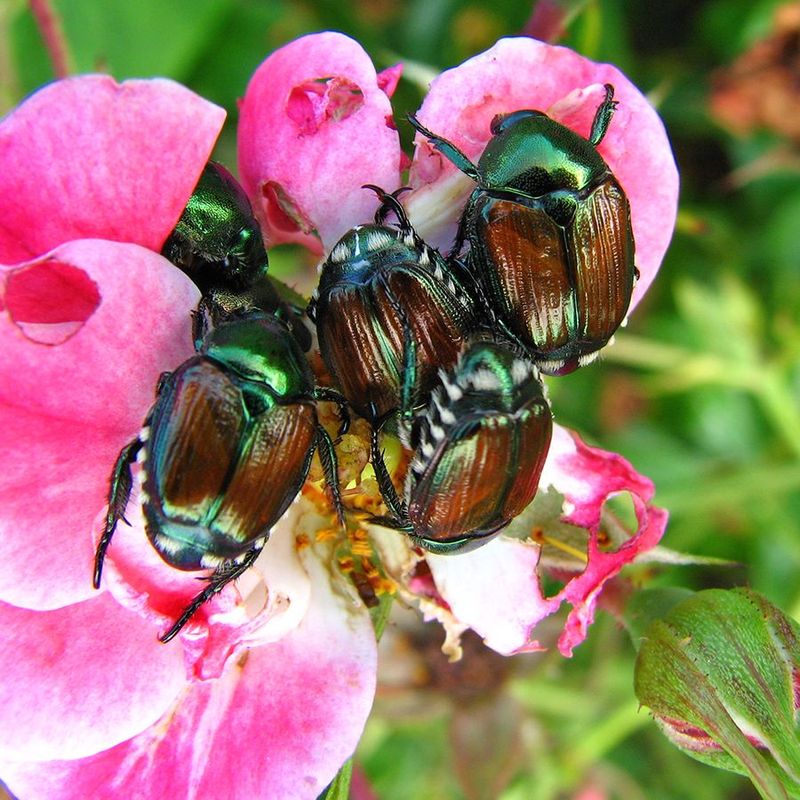
Adult Japanese beetles feed on more than 300 plant species, which sounds like every plant in your yard is equally at risk. In practice, though, they have strong favorites, and NC State Extension identifies roses as especially attractive, along with grapes, elms, birches, apples, and raspberries as common targets. A beetle landing on a rose is not behaving randomly. It is responding to that plant’s specific combination of odors, flower cues, and available food.
Plant species, bloom stage, ripening fruit, and the particular airborne compounds a plant releases can all concentrate feeding on one host while plants nearby go untouched. University of Minnesota Extension points out that Japanese beetles are also social feeders, meaning beetles already on a plant tend to attract more beetles to the same spot, which can make a preferred host look overwhelmingly targeted compared to its neighbors.
Your North Carolina Garden Changes Every Week. Your Plan Should Too.
Gardening in North Carolina changes quickly throughout the season. Every Friday you’ll receive a simple weekly plan showing exactly what to plant, prune, fertilize, harvest, and protect so you never miss the right timing.
The USDA APHIS Japanese beetle program manual documents the broad host range and confirms that adult feeding preference is driven by plant characteristics rather than plant condition. So when your grapevine or rose is swarming and the nearby hydrangea looks untouched, that contrast tells you something useful about beetle behavior, not about a deficiency in your soil, a fertilizer mistake, or a disease problem hiding under the surface.
A healthy, well-watered, properly fertilized rose can be absolutely hammered by Japanese beetles while a stressed shrub two feet away gets ignored. The beetles chose the rose because it is a rose, not because it needed help.
Feeding Damage May Increase Beetle Visits
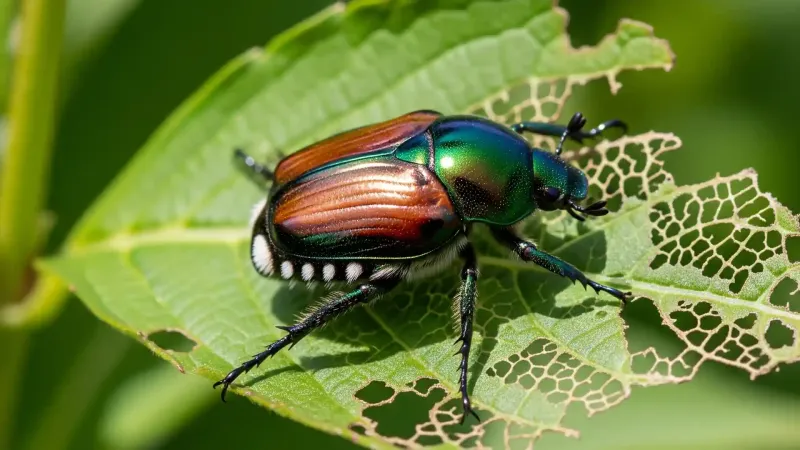
Once a few beetles find your plant, something interesting can happen. Research published in Environmental Entomology on feeding-induced plant volatiles found that grapevines already being fed upon released substantially larger amounts of airborne volatile compounds than undamaged vines, and those damaged vines attracted more beetles. Plant volatiles are simply airborne odors that a plant releases, and in grapevines, feeding damage appears to turn up the volume on those odors in a way that recruits additional beetles.
That finding is worth knowing, but it comes with a boundary. The evidence is strongest for grapevines specifically. A review in the Journal of Integrated Pest Management covers the broader ecology of Japanese beetle invasions, and the picture that emerges is that aggregation cues are real but vary by host species and situation. You should not assume that your rose or apple tree is producing the same recruiting signal in the same way that a damaged grapevine does.
Some gardeners hear a version of this and conclude that their plant is sending out a distress pheromone, or that the beetles themselves are releasing a long-distance chemical signal to call in reinforcements. Neither claim is fully supported by the research. What the evidence actually shows is that feeding-induced plant odors can attract more beetles on some hosts, particularly grapevines, and that this may vary depending on the plant and the situation.
Early handpicking makes practical sense in light of this. Removing beetles in the morning or evening, when they are cooler and less active, reduces current feeding. On some hosts it may also reduce the odor cues that draw more beetles to that same plant, though that is not a guaranteed outcome for every species in your yard. Think of it as interrupting the pattern rather than eliminating it.
Sunlight Changes Where the Damage Shows
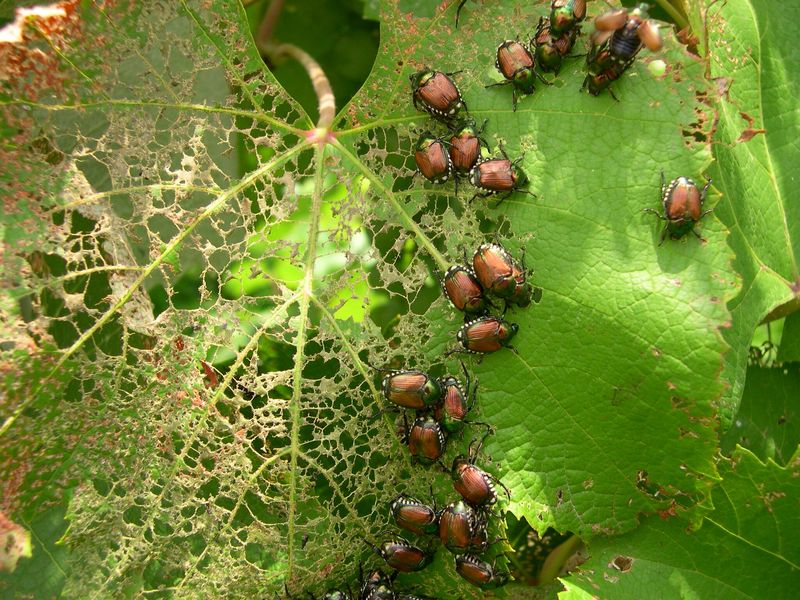
Many Piedmont gardeners notice that the damage on a tree or large shrub clusters at the top or on the sunny south-facing side, while the shaded interior looks almost untouched. A peer-reviewed study on linden trees, cited in University of Kentucky research on vertical stratification of Japanese beetle feeding, found four to 12 times more damage in upper canopy foliage than in lower foliage. The researchers concluded that height, visual orientation, and thermoregulation likely explain the pattern more than any nutritional advantage in the upper leaves.
Beetles are ectotherms, meaning they warm up with the sun, and a warm beetle in a sunny upper canopy is a more active, more feeding-ready beetle. A related study in Environmental Entomology on sun exposure and Japanese beetle activity adds nuance: the relationship between sunlight and beetle feeding varies with weather, canopy structure, and local population pressure, so moving a plant into shade is not a dependable control strategy. Beetles can still feed in shaded spots, and a large infestation year will find your plants regardless of light levels.
Flower color adds another layer to the picture for rose growers specifically. NC State Extension and University of Illinois Extension’s analysis of Japanese beetle plant preferences both note that white and yellow flowers tend to attract more beetles than darker-colored blooms. That is a real tendency worth knowing when you choose new cultivars, but it is not immunity. When beetle populations are high or preferred hosts are scarce, darker-flowered roses get fed upon too.
So if one corner of your yard looks devastated and another looks fine, check both the plant species and the sun exposure before drawing conclusions. The pattern is telling you where the beetles are comfortable, not necessarily which plants are weakest.
The Damage Pattern Tells You What to Protect
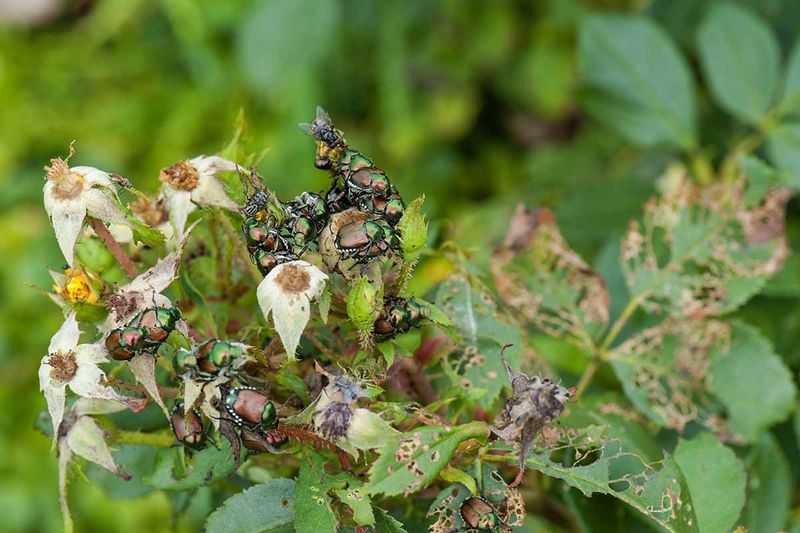
Adult Japanese beetles feed on leaves, flowers, buds, and fruit above ground. Their grubs live underground and feed mainly on grass roots. Those are two entirely separate problems, and treating one does not reliably address the other. Knowing which part of the life cycle is causing the damage in front of you shapes every decision you make next.
Established, vigorous plants often tolerate more defoliation than gardeners expect. NC State’s North Carolina Winegrape Growers Guide gives a useful grape-specific example: established vines may be able to tolerate beetle feeding as long as they retain at least 15 healthy leaves per shoot, while young or weak vines need earlier protection because they have less reserve to draw on. That 15-leaf number is a grape guideline, not a universal threshold you should apply to your rose or apple tree. Every plant has a different capacity to bounce back.
Young plants, newly transplanted shrubs, and plants already carrying a disease load genuinely need more attention than a mature specimen that has been in the ground for years. A three-year-old rose in Piedmont red clay that has established a strong root system is in a different situation than a container rose you put in the ground six weeks ago. Fruit quality on a bearing tree or vine is also a higher-stakes concern than leaf loss on a purely ornamental planting. University of Minnesota Extension frames damage tolerance this way: assess the plant’s value, its age, and how much of the canopy is actually lost before reaching for a product.
Adult flight timing also varies across North Carolina. NC State’s Japanese beetle turf guidance acknowledges that emergence and peak activity shift with elevation, region, and seasonal weather patterns, so mountain gardeners, Sandhills growers, and coastal homeowners may experience peak feeding at noticeably different times. Watch your plants rather than the calendar.
Start With the Smallest Effective Response
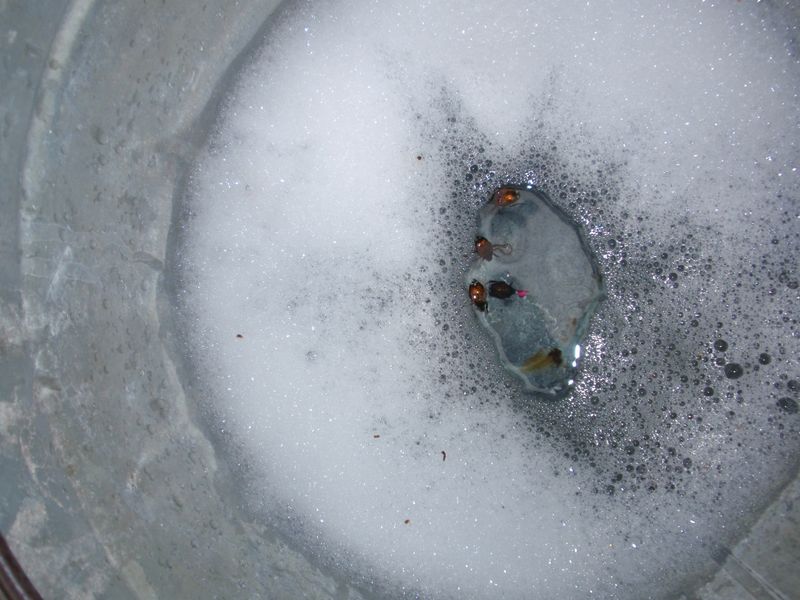
For most home gardeners with a few high-value plants, the most sensible first step costs nothing but time. Go out in the early morning or evening, when beetles are cooler and less active, and knock them into a container of soapy water. University of Minnesota Extension recommends this approach specifically because it removes beetles without any chemical exposure to pollinators or beneficial insects. You will need to repeat it, sometimes every day or two during peak flight, but it genuinely reduces feeding on the plants you care most about.
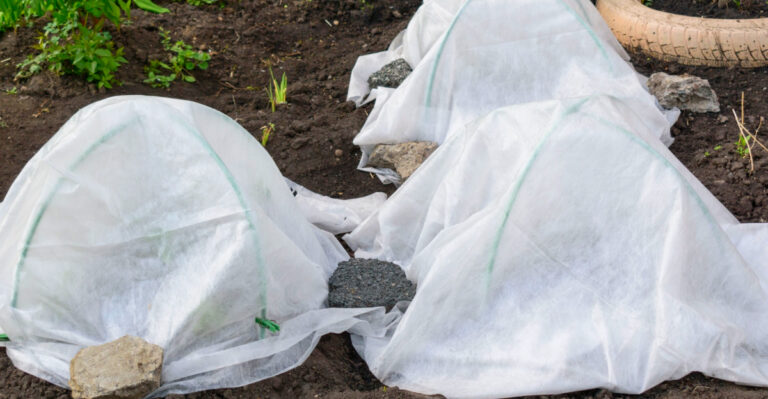
University of Illinois Extension’s guidance on protecting plants from Japanese beetles also supports using fine netting or cheesecloth to physically exclude beetles from a high-value plant during adult flight. This works well for a prized rose or a small fruiting shrub. The one firm rule: do not cover a flowering fruit plant while it needs pollinator access. Bees need to reach those blooms, and excluding them to stop beetles defeats the purpose of growing fruit in the first place.
For roses specifically, NC State’s rose pest management calendar lists covering, handpicking, and carefully timed chemical treatment as options rather than a fixed protocol. The right response depends on how much of the plant is affected, how valuable the plant is to you, and whether pollinators are actively working the blooms.
Handpicking also makes sense in light of what we know about feeding-induced odors on some hosts. Removing beetles early in a feeding event may reduce the cues that draw more beetles to the same plant, at least on certain species. That is not a guaranteed outcome, but it is a reasonable reason to act quickly rather than waiting to see how bad it gets.
Traps and Lawn Treatments Miss the Real Problem
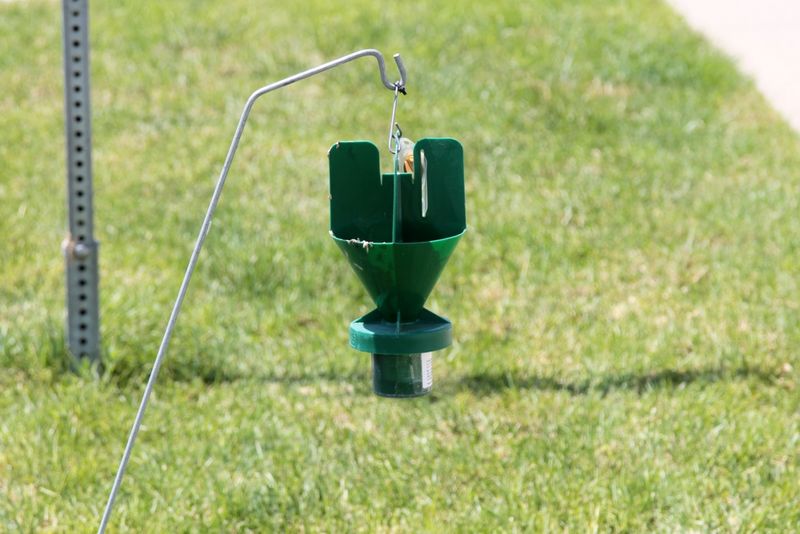
Commercial Japanese beetle traps are one of the most tempting purchases a gardener can make when beetles are swarming. The lure works well, which is actually the problem. NC State Extension’s Japanese beetle page specifically advises against placing traps near fruit trees because the lure draws beetles toward the trap zone, and not all of them make it into the bag. Some land on your plants instead.
Research and extension guidance consistently warn that traps can increase feeding injury around nearby ornamentals and fruit plantings, which is the opposite of what most gardeners want.
Grub control is a separate question. Treating lawn grubs with an appropriate product can protect turf when grub injury is confirmed or strongly expected, and NC State’s turf guidance covers that use case. But grub treatment will not stop adult beetles from flying in from neighboring lawns, fields, parks, or untreated properties. Japanese beetles are strong fliers, and a healthy, well-treated lawn can sit right next to a rose bed that takes heavy adult feeding every summer.
The adults and the grubs are essentially separate populations from a management standpoint.
Milky spore is another product that sounds appealing because it targets the grub stage biologically. University of Minnesota Extension notes that modern university trials have not demonstrated reliable or meaningful benefit from commercial milky spore products. NC State’s winegrape management guide is more specific: milky spore may reduce some turf injury in limited situations, but it is unlikely to measurably reduce the number of adult beetles flying into a vineyard or ornamental planting.
The pattern here is consistent. Whole-yard fixes aimed at the wrong life stage, or products that draw more beetles toward the plants you are trying to protect, add effort without solving the problem at the plant level.
Build a Calm, Pollinator-Aware Plan
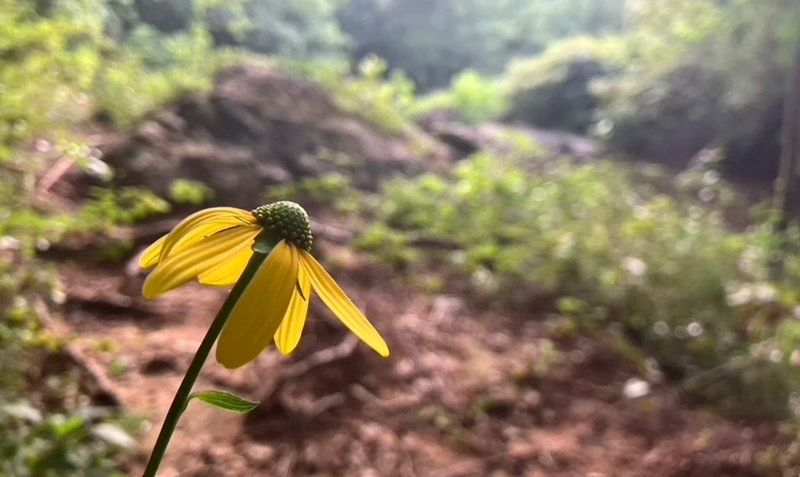
Reducing how many preferred hosts you grow is one genuinely useful long-term lever. USDA APHIS’s list of plants resistant to adult Japanese beetle feeding includes dogwood, redbud, tulip poplar, magnolia, holly, pine, and hickory as less-favored options for adult feeding. USDA is explicit that the list is incomplete and does not cover every susceptible or resistant species, so plant selection can reduce your exposure but cannot guarantee a beetle-free yard. Use the list as a starting point for new plantings, not as a promise.
Combine plant selection with the practical steps covered earlier: confirm the identification first, handpick during cool morning hours, use physical covers on a few high-value plants, and make damage-based decisions about how much protection each plant actually needs. University of Minnesota Extension frames layered management this way: no single tactic eliminates Japanese beetles from a landscape, but combining several targeted responses reduces damage to an acceptable level on the plants that matter most to you.
If you decide to use a pesticide on a heavily damaged plant, read the label fully before applying. EPA pollinator protection labeling requirements restrict certain applications while bees are actively foraging or while a plant is in bloom. Do not spray open flowers. Broad-spectrum insecticides can kill beneficial insects along with beetles, and NC State’s winegrape pest management chapter cautions that heavy insecticide use can make secondary pest problems worse by removing the natural enemies that keep other insects in check.
A plant covered in Japanese beetles is not a sign that your yard is failing or that you made a mistake. It is a sign that you planted something beetles genuinely prefer, and now you know where to focus your attention. That is actually useful information, and a calm, targeted response will serve your garden better than treating the whole yard by reflex.