The Fast-Growing Arizona Privacy Tree That Rarely Needs Extra Water
Privacy is becoming harder to find in many neighborhoods. A fence helps, but it rarely softens a yard the way a well-placed tree can.
Many fast-growing trees come with one big drawback. They demand far more water than most homeowners expect.
Some varieties handle desert conditions without becoming constant chores. They grow quickly while asking for surprisingly little once established.
Choosing the right tree is especially important in Arizona, where every watering decision matters. A poor choice can create years of extra work.
Before planting the first privacy tree you find, take a closer look at the options. Growth rate is only part of the story.
One tree stands out because it delivers privacy without becoming thirsty year after year.
That combination explains why it keeps earning a place in more desert landscapes.
1. Shoestring Acacia Is A Top Low-Water Privacy Tree
Not every tree can handle blazing heat and thin desert soil without constant watering. Shoestring Acacia pulls it off without much drama.
Once established, this tree gets by on natural rainfall in many low-desert areas. It does not need weekly irrigation the way most ornamental trees do.
Homeowners in dry climates often find it survives on very little supplemental water after the first year or two, though results vary depending on soil type and local conditions.
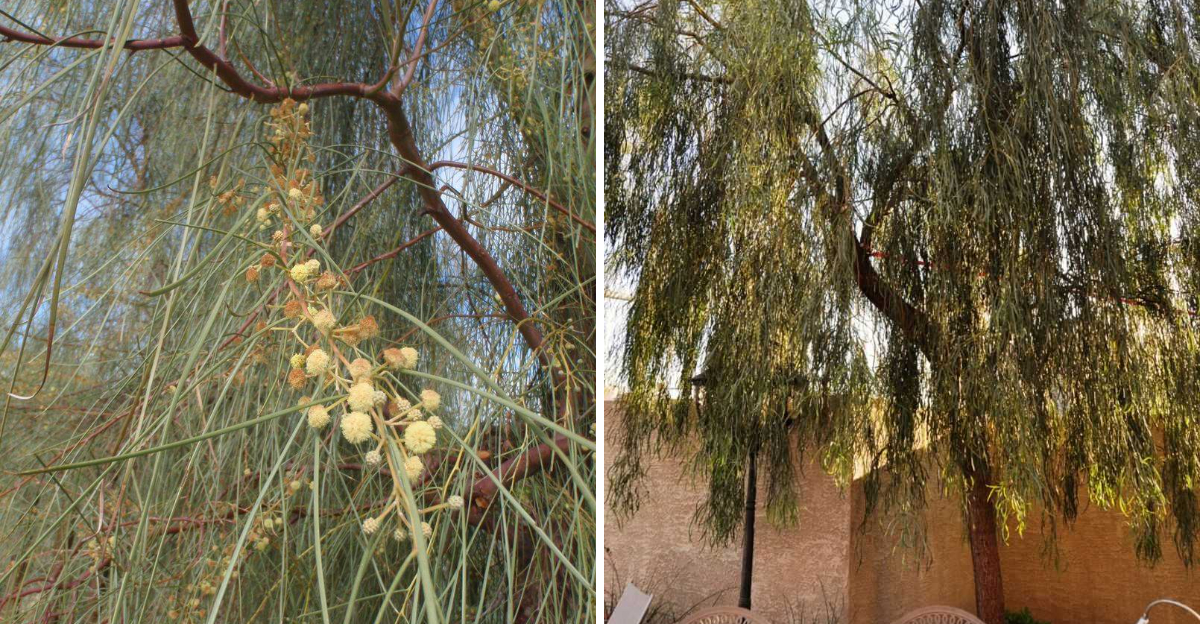
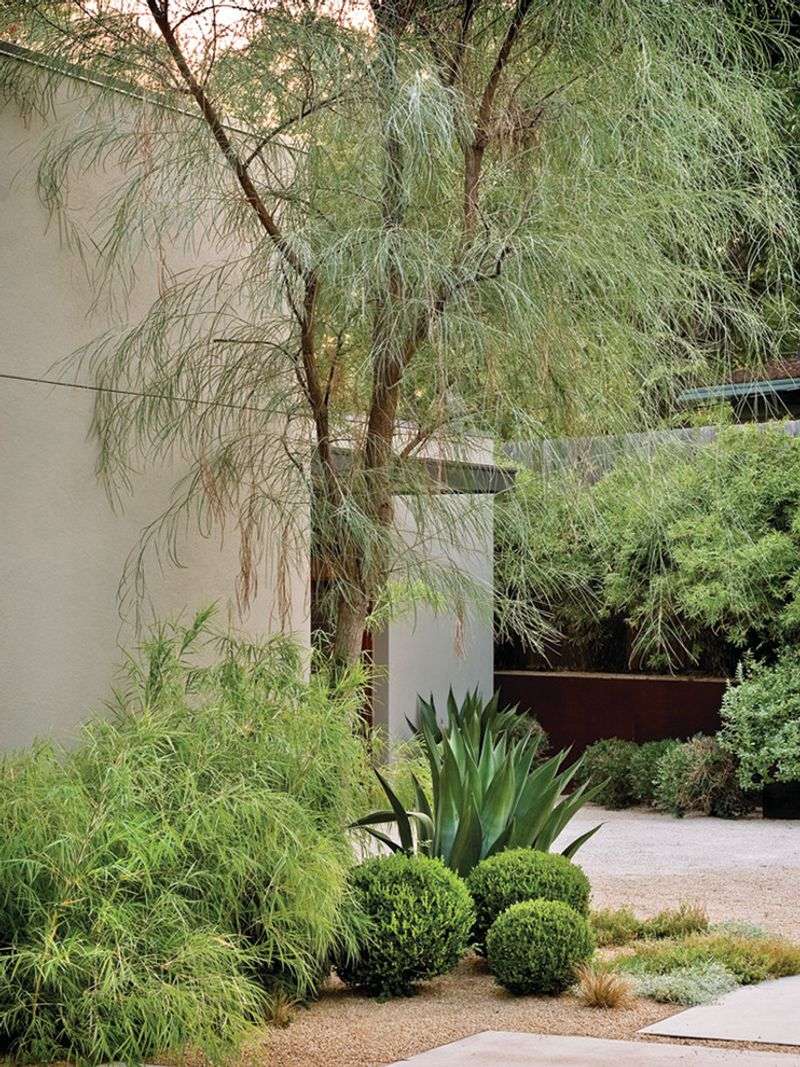
What makes it stand out as a privacy tree is the density of its branches. Those long, narrow, weeping green phyllodes, which look like leaves but are actually flattened stems, hang close together and create a thick visual barrier.
A row of these trees along a fence can block sightlines effectively within a few growing seasons.
Shoestring Acacia grows at a moderate to fast rate, often adding several feet per year under decent conditions. It can reach 20 to 30 feet tall at maturity, with a spread wide enough to fill gaps in a privacy planting.
Compared to many water-hungry privacy trees, it is a genuinely practical choice for dry-climate yards.
2. Full Sun Produces The Best Growth
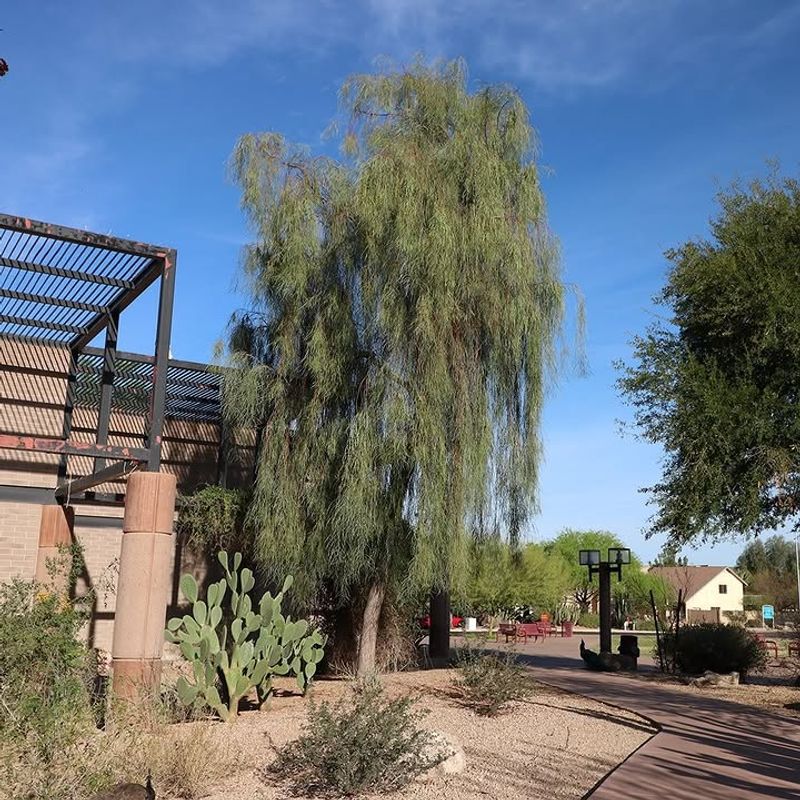
Shade is not this tree’s friend. Shoestring Acacia absolutely thrives when it gets six or more hours of direct sunlight every day.
Planting it in a partially shaded spot tends to produce slower, weaker growth. Branches may stretch awkwardly toward available light, and the overall density of the canopy suffers.
Full sun encourages compact, upright growth and a fuller, more effective privacy screen over time.
In hot desert regions, some homeowners worry about giving trees too much sun. With Shoestring Acacia, that concern does not really apply.
Strong sun exposure is actually what this tree prefers. It evolved in harsh, bright conditions, so a south-facing or west-facing yard is usually a great match.
Soil drainage matters just as much as sunlight. Poor drainage in heavy clay soil can limit root health even when sun exposure is ideal.
If your yard has dense soil, mixing in some coarse sand or gravel before planting can help water move through more freely.
Choosing the right planting spot makes a noticeable difference in how quickly the tree fills in. A sunny, open location with good airflow around the base gives Shoestring Acacia exactly what it needs to perform well.
Your Arizona Garden Changes Every Week. Your Plan Should Too.
Gardening in Arizona changes quickly throughout the season. Every Friday you’ll receive a simple weekly plan showing exactly what to plant, prune, fertilize, harvest, and protect so you never miss the right timing.
3. Regular Moisture Builds Strong Roots
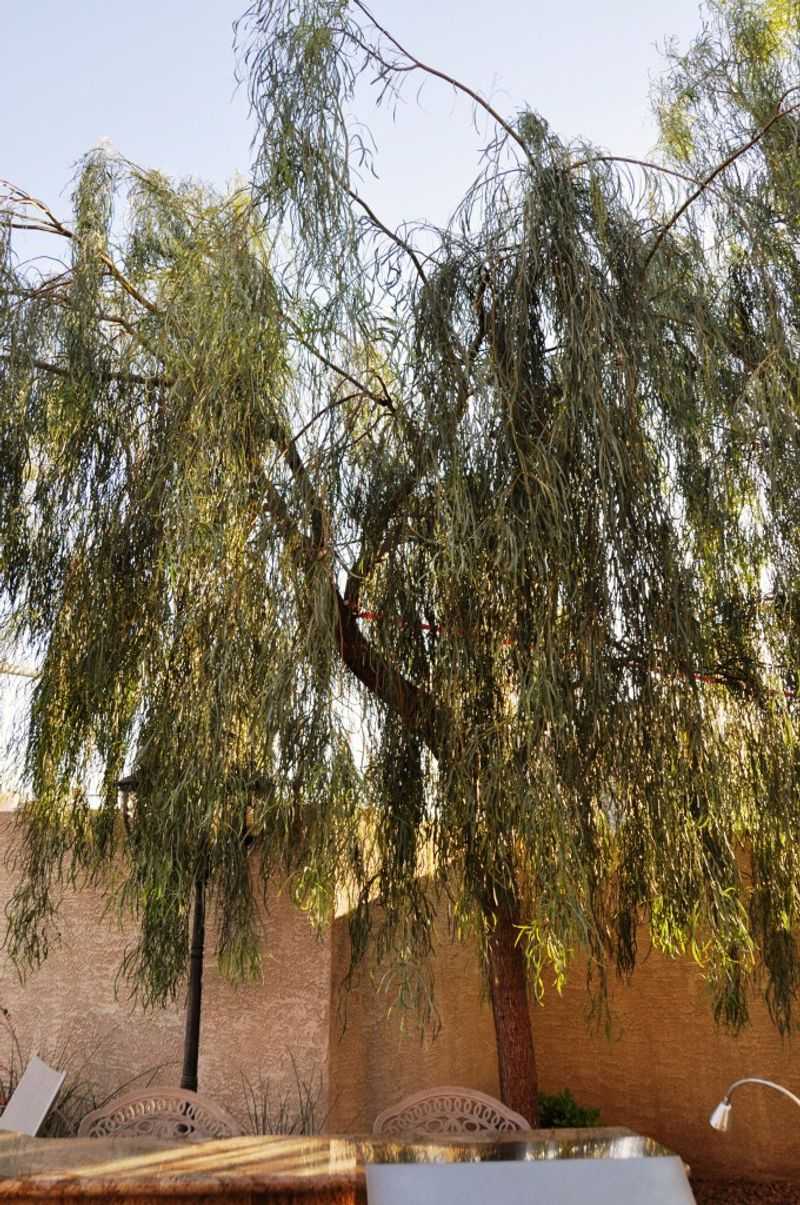
Drought tolerance does not mean you skip watering entirely when the tree is young. During the first year, consistent moisture is what builds a root system strong enough to handle dry spells later.
Deep, infrequent watering works better than shallow, frequent watering. When you water deeply, roots follow the moisture downward.
That downward growth anchors the tree and allows it to access water stored deeper in the soil during dry periods. Shallow watering keeps roots near the surface, where they are more vulnerable to heat and drought stress.
A good general approach is to water slowly and thoroughly at the base, allowing water to soak in rather than run off. During summer months in hot desert climates, newly planted trees may need water every one to two weeks.
In cooler months, that frequency can drop significantly.
Established trees in Arizona typically need very little supplemental irrigation, though this depends on local rainfall and soil conditions. A mature Shoestring Acacia with a deep root system can often go several weeks without extra water during mild weather.
During extended heat waves or dry stretches, an occasional deep soak can help maintain healthy foliage.
Patience during the establishment phase pays off.
4. Light Pruning Creates A Fuller Screen
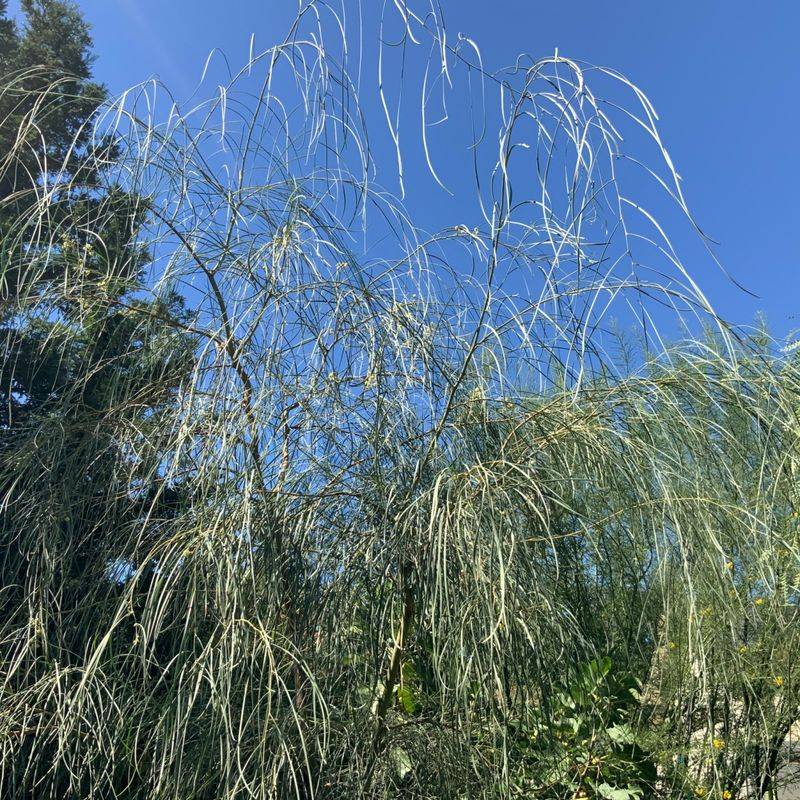
Pruning Shoestring Acacia is not about cutting it back hard. A light touch is what actually encourages denser, fuller growth over time.
When you trim just the tips of outer branches, the tree responds by pushing out new side growth. That lateral branching is exactly what fills in gaps and creates a tighter privacy screen.
Heavy pruning, on the other hand, can shock the tree and slow down the overall growth rate.
The best time to prune is in late winter or very early spring, before new growth begins. Avoid pruning during extreme summer heat, since fresh cuts are more vulnerable to stress when temperatures are high.
Light shaping once a year is usually enough to keep the form tidy and the screen dense.
Remove any crossing branches or ones that grow inward toward the center of the tree. Good airflow through the canopy reduces the chance of fungal issues, especially in areas that get occasional summer monsoon humidity.
Sharp, clean tools make a real difference. Dull blades tear rather than cut cleanly, which can leave ragged wounds that are slower to close.
Wipe blades with a damp cloth between trees if you are pruning multiple plants in the same session.
5. Deep Roots Improve Drought Tolerance
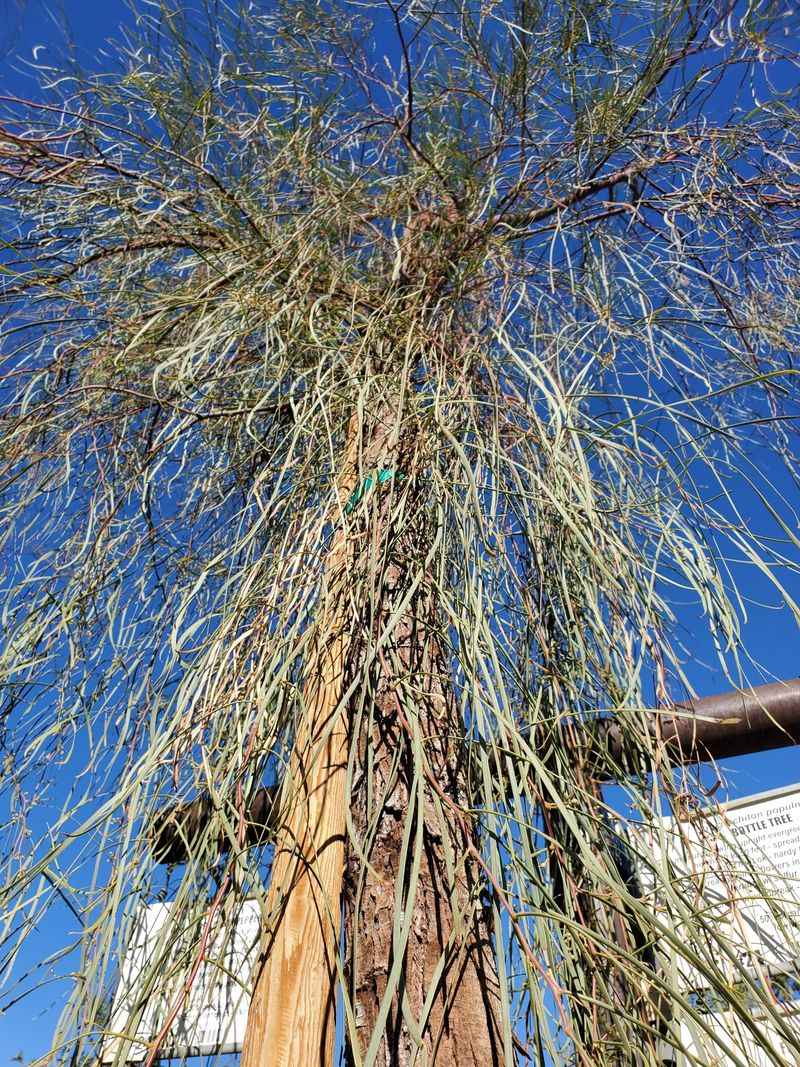
Root depth is the real reason Shoestring Acacia handles dry conditions as well as it does. A tree with shallow roots struggles when surface soil dries out fast.
Deep roots reach moisture that stays in the ground long after the surface has dried.
Encouraging deep root growth starts with how you water. Slow, deep watering pushes roots downward.
When water only wets the top few inches of soil, roots stay shallow and the tree becomes more dependent on frequent irrigation. Switching to a deep-soak method early on sets the tree up for much better long-term performance.
Avoid planting in areas with hardpan or compacted soil layers if possible. Those dense layers block downward root growth and force roots to spread horizontally near the surface instead.
If hardpan is present, breaking it up before planting gives roots a better path downward.
In Arizona landscapes, deep-rooted trees are genuinely valuable. Surface soil heats up fast and dries out quickly in summer.
A tree that can tap into deeper, cooler moisture has a clear advantage during long stretches without rain.
Shoestring Acacia is not unique in developing deep roots, but it responds especially well to watering practices that encourage that downward growth.
6. Mulch Keeps Roots Cooler Longer
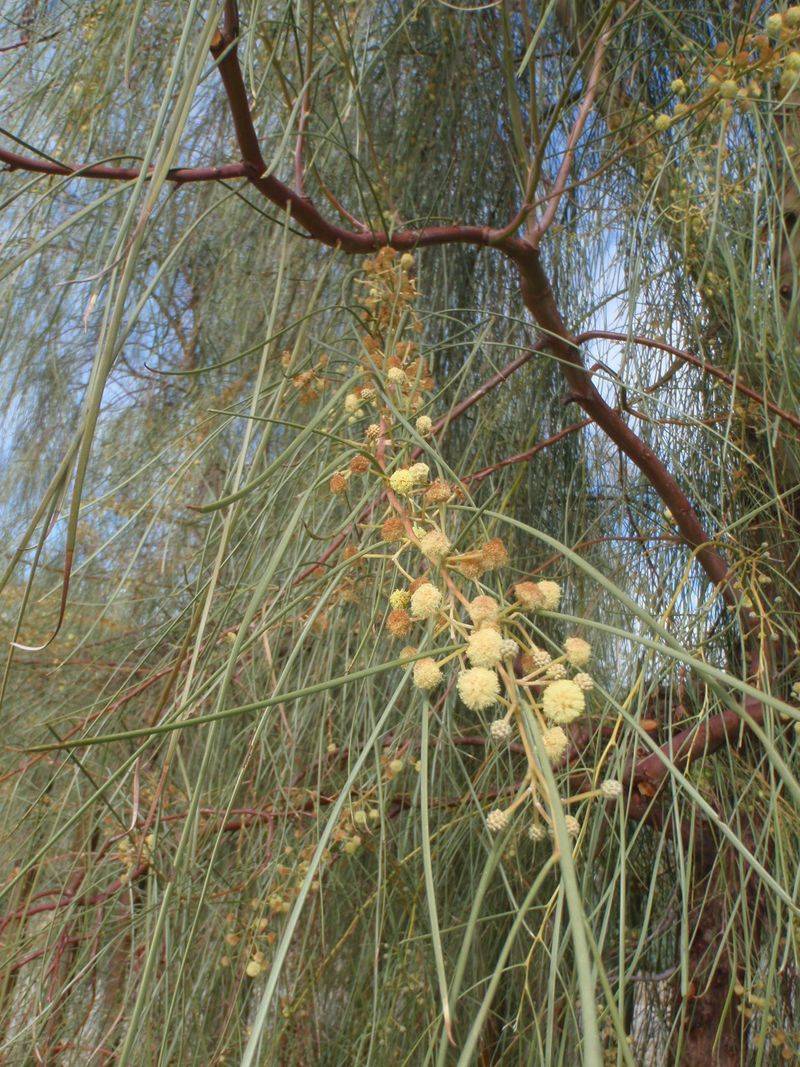
Mulch is one of the simplest upgrades you can make for any desert tree. A three-to-four inch layer around the base of a Shoestring Acacia does several useful things at once.
Surface soil in hot, dry climates heats up fast. Mulch acts as insulation, keeping the soil underneath noticeably cooler during peak afternoon heat.
Cooler soil means less moisture evaporation, which translates to longer stretches between waterings. That matters a lot during dry summer months.
Mulch also slows down weed growth near the base of the tree. Weeds compete for the same moisture and nutrients your tree needs, so reducing them gives the tree a clear advantage.
A clean mulched ring also makes it easier to water deeply without runoff.
Wood chips, shredded bark, or even coarse gravel all work reasonably well. Organic mulches like wood chips break down slowly and add a small amount of organic matter to the soil over time.
Keep mulch pulled back a few inches from the actual trunk to avoid trapping moisture against the bark, which can lead to rot or pest issues.
Refreshing the mulch layer once a year keeps it effective. Over time, organic mulch compacts and breaks down, reducing its insulating benefit.
7. Give Branches Room To Spread Naturally
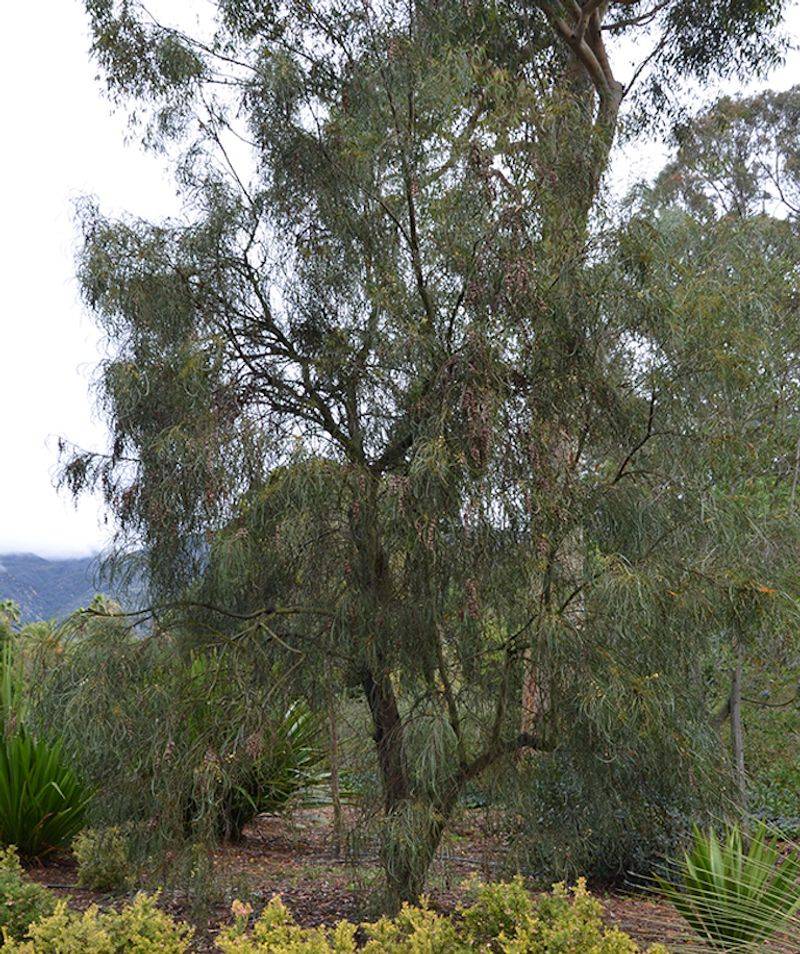
Crowding a Shoestring Acacia slows it down. When branches cannot spread freely, the tree puts energy into competing for space rather than filling out into a strong, dense screen.
Spacing matters from the start. Planting trees too close together or right up against a fence can cause branches to grow unevenly.
One side gets compressed while the other reaches outward, and the overall shape becomes lopsided over time.
A general guideline is to plant at least eight to ten feet from structures or other large plants, though spacing needs vary depending on the specific planting goal.
Shoestring Acacia’s weeping branches are part of what makes it such an effective privacy tree. Those long, flowing stems cascade downward and outward, creating a soft but solid visual barrier.
Giving them room to hang naturally produces the fullest, most attractive screen.
Watch for nearby structures as the tree matures. Rooflines, fences, and overhead utilities can interfere with branch development if the tree was planted too close.
Catching those issues early with light directional pruning is much easier than managing a larger problem later.
Open space also improves airflow around the canopy.
Good circulation reduces humidity buildup, which can sometimes lead to fungal issues during Arizona’s summer monsoon season.