What Michigan Gardeners Should Check When Basil Leaves Look Shredded Overnight
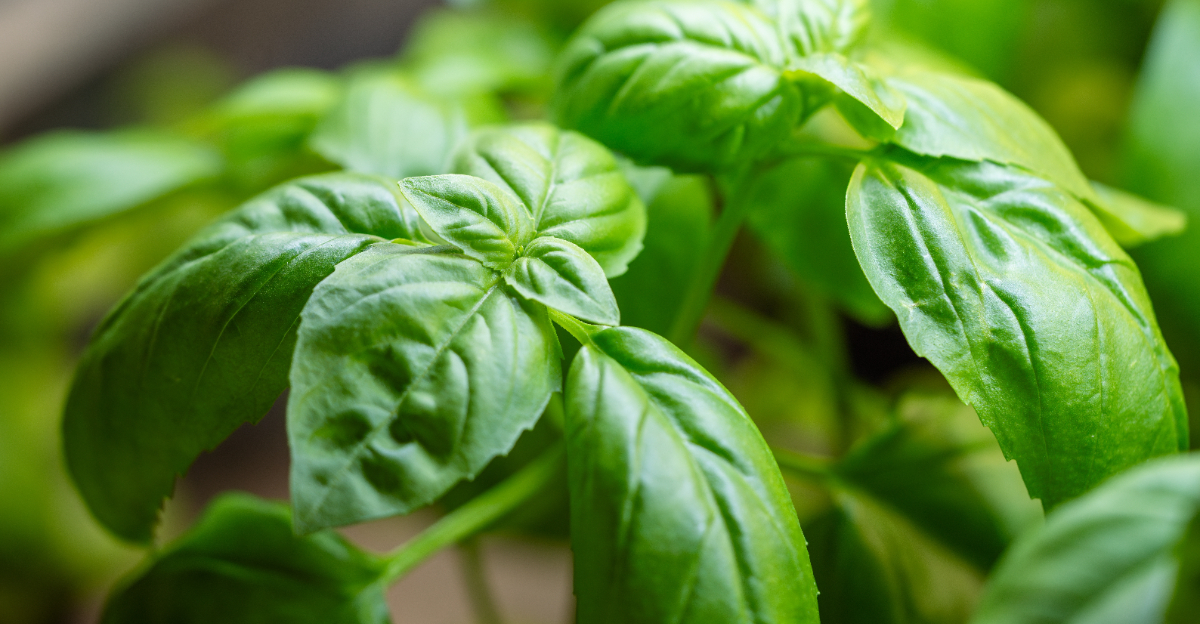
Basil can look perfect at sunset and suspicious by breakfast.
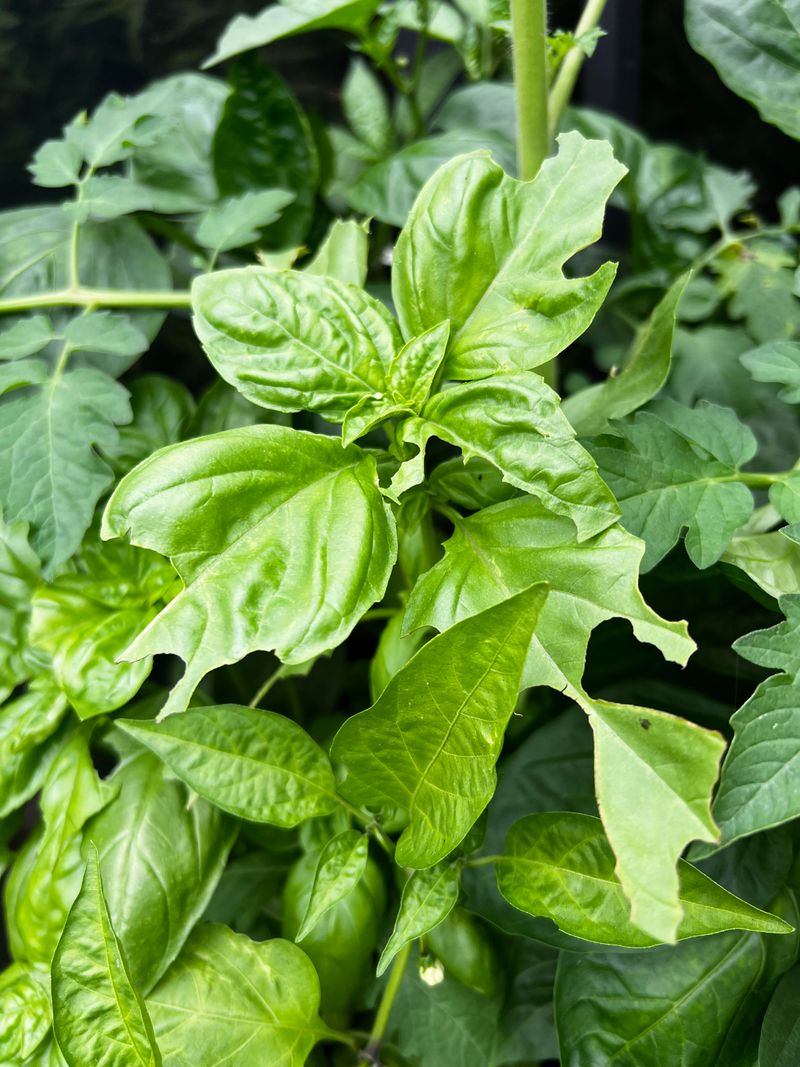
One evening, the leaves are full, glossy, and ready for pesto. The next morning, they look torn, ragged, and chewed through in strange patterns.
A few leaves may have holes. Others may have missing edges. Some may look shredded as though something dragged tiny scissors through the plant after dark.
That kind of damage invites panic.
But the leaves alone do not tell the whole story. Michigan gardens can host several overnight troublemakers, and summer storms can mimic pest damage well enough to fool even careful gardeners.
A spray bottle should not be the first response. A flashlight should be.
The most useful clues are usually hiding on the soil surface, under leaves, around pots, inside folded foliage, or in the weather that passed through while you were asleep.
So what should Michigan gardeners check when basil leaves look shredded overnight?
Start with the evidence around the plant, then match the damage pattern to the real cause before taking action.
1. Follow Every Silvery Slime Trail
A shiny trail is one of the clearest clues in the basil bed.
Slugs feed after dark, and basil leaves are soft enough to make an easy meal. Their damage often looks ragged, with irregular holes and chewed patches that can appear almost overnight.
The trail matters. A silvery ribbon across soil, mulch, pot rims, or lower leaves points strongly toward slug activity.
Look low first. Slugs often feed near the base of the plant before moving higher.
Check the undersides of leaves. A slug may rest there after feeding, especially when the morning stays cool and damp.
Lift hiding spots nearby. Boards, flat stones, dense mulch, overturned pots, plant saucers, and garden debris can shelter slugs during the day.
Damp conditions increase pressure. Michigan stretches of rain, cool nights, and heavy mulch give slugs exactly what they like.
Pull mulch back from basil stems. A little air around the base makes the plant less inviting.
Use simple traps. A damp piece of cardboard or rolled newspaper placed near the plant at dusk can collect slugs by morning.
Hand removal works well. Drop any slugs you find into soapy water.
Do not confuse this with flea beetle damage. Flea beetles leave smaller holes and no slime trail.
A slime trail is not subtle.
Once you find it, the mystery becomes much easier to solve without reaching for the wrong product.
2. Check Folded Leaves For Earwigs
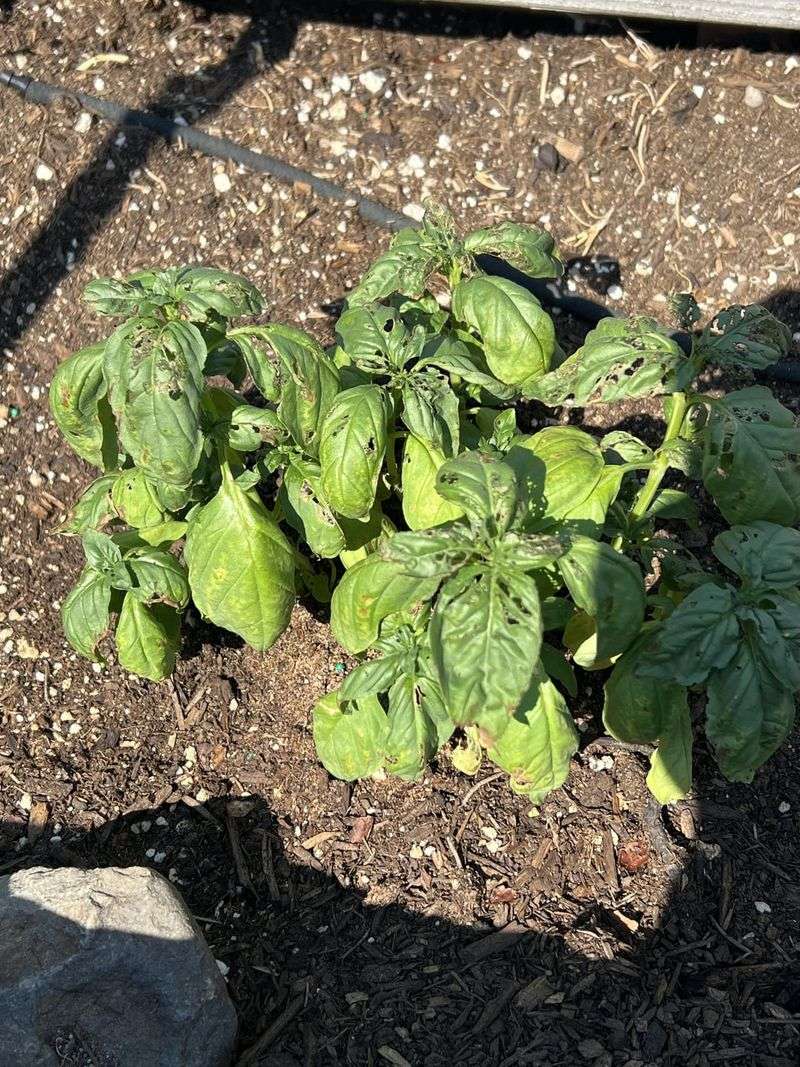
Folded basil leaves deserve a careful look.
Earwigs tuck into tight spaces during the day, then feed after dark. Their chewing can leave leaves ragged, torn, and uneven in ways that look similar to slug or caterpillar damage.
Unroll curled leaves gently. An earwig may be hiding inside the folded surface.
Look near the soil too. Earwigs rest under mulch, containers, boards, and plant debris when the sun is up.
The pincers give them away. Those curved tail-end forceps look dramatic, but the insect is not out to bother people.
Your Michigan Garden Changes Every Week. Your Plan Should Too.
Gardening in Michigan changes quickly throughout the season. Every Friday you’ll receive a simple weekly plan showing exactly what to plant, prune, fertilize, harvest, and protect so you never miss the right timing.
Earwigs are not all bad. They can feed on aphids and other small insects, which makes total removal less useful than local control around damaged basil.
Use a damp cardboard trap. Roll corrugated cardboard loosely, place it near the basil at dusk, and check it in the morning.
Shake trapped earwigs into soapy water. Repeat for several nights when damage continues.
Reduce hiding places. Thick, wet mulch and clutter around pots can make the area more appealing.
Check damage location. Earwig feeding often creates ragged patches along tender leaves and hidden folds.
Look for missing frass. Caterpillars usually leave droppings nearby, while earwigs usually do not.
Do not wipe out every earwig in the garden.
Focus on lowering the number right around vulnerable basil, especially young plants with soft new leaves.
3. Inspect The Soil Line For Cutworms
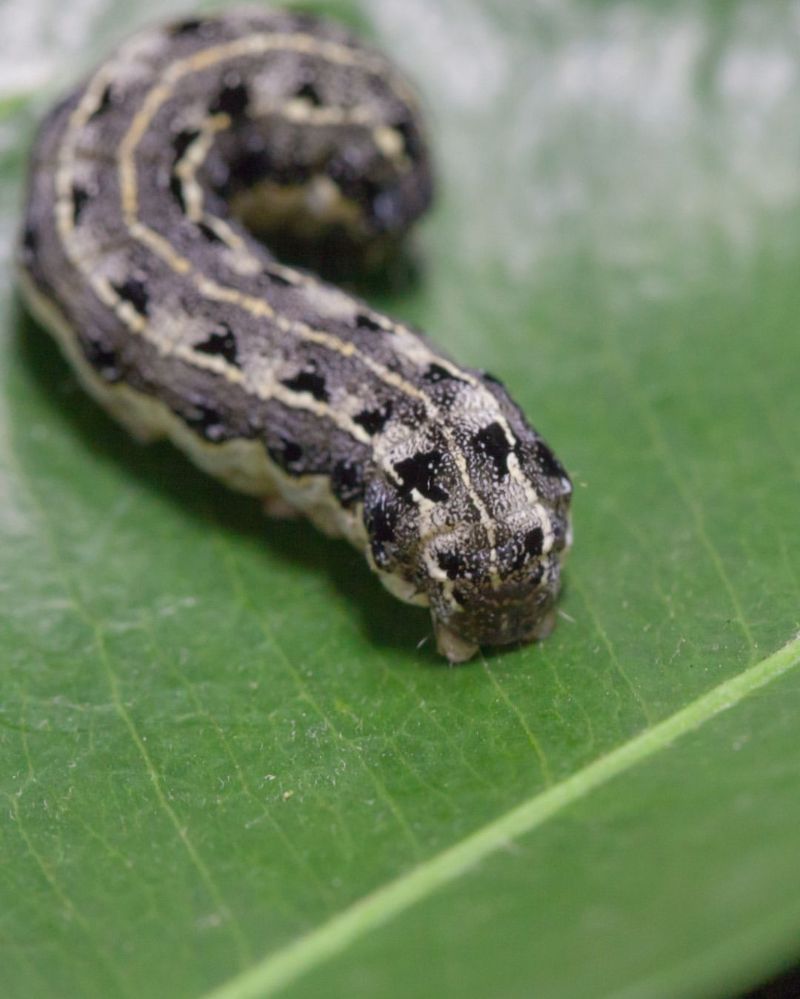
A clipped basil seedling tells a different story.
Cutworms do not usually shred leaves first. They often cut young stems at or just below the soil surface, leaving seedlings collapsed as though someone snipped them with tiny pruners.
The cut can look surprisingly clean. That is the main clue.
Young transplants are most vulnerable. A basil seedling newly planted into the garden may be taken down in one night.
Search the soil nearby. Gently scratch the top inch of soil within a few inches of the damaged stem.
Look for a curled larva. Cutworms often curl into a tight C-shape when disturbed.
The body may be gray, brown, tan, or dull-colored. They blend well with soil and are easy to miss.
Remove any you find. Drop them into soapy water or dispose of them away from the garden.
Protect remaining seedlings with collars. A cardboard tube, paper cup ring, or small barrier pressed partly into the soil can block nighttime feeding.
Keep weeds down around the bed. Weedy edges can create better egg-laying and hiding spots for cutworm moths and larvae.
Do not blame rabbits too quickly. Animal feeding often looks more jagged and may remove larger sections of the plant.
A cleanly clipped seedling is a soil-line clue.
The culprit is often hiding just below the basil, not up on the leaves.
4. Search For Caterpillars And Droppings
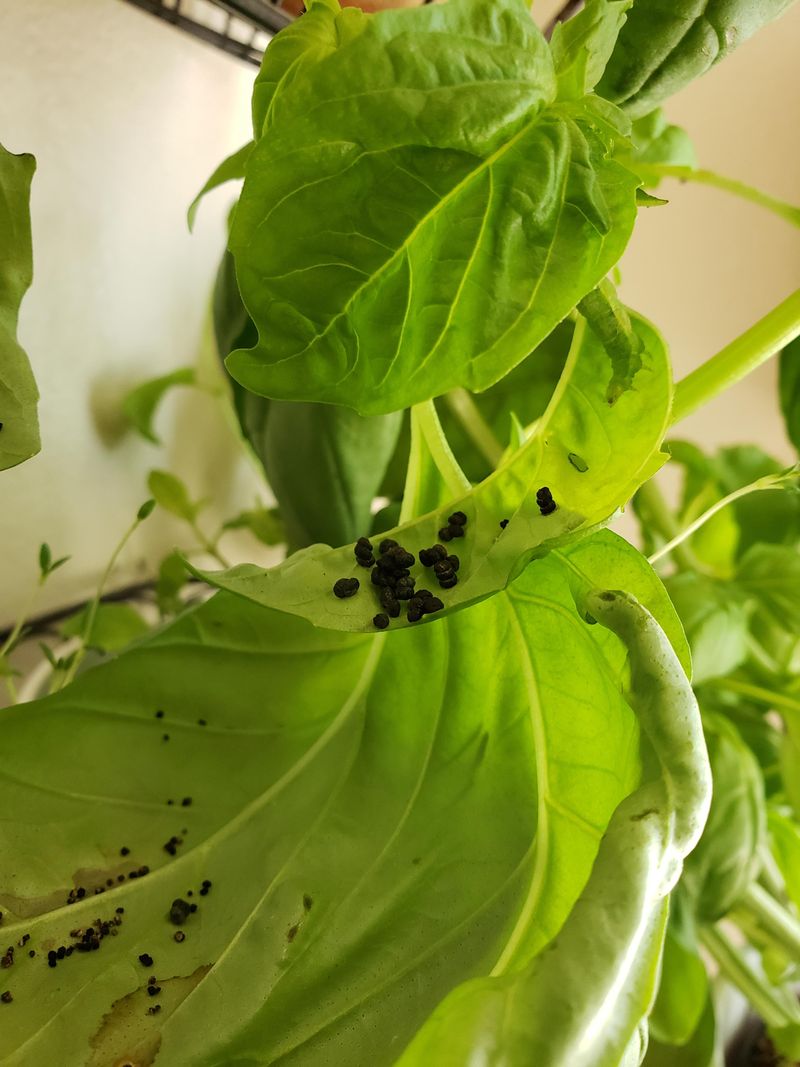
Tiny dark pellets can solve the case.
Caterpillars often feed quietly while blending into the plant. The shredded leaves may catch your eye first, but the droppings, called frass, are often the better clue.
Look on leaves and soil. Frass may collect beneath the feeding area or sit on lower foliage.
Pellet size helps. Larger droppings usually point toward a larger caterpillar somewhere nearby.
Flip every leaf. Green caterpillars can match basil foliage so closely that they disappear in plain sight.
Check along midribs. Many larvae rest near veins or stems where shadows hide them.
Look for uneven leaf loss. Caterpillars may chew edges, centers, or whole sections depending on their size.
Use gloves for handpicking. Drop caterpillars into soapy water when removal is needed.
Check nearby plants too. Caterpillars may move between basil, peppers, tomatoes, and other herbs.
Look before removing parasitized larvae. Tiny white cocoons or egg-like structures on a caterpillar mean natural enemies are already working.
Leave parasitized caterpillars in place. They are unlikely to keep feeding for long, and they support beneficial wasps.
Do not mistake frass for soil crumbs. Caterpillar droppings tend to be shaped, consistent, and slightly glossy.
A caterpillar may stay hidden during the day.
A return visit after dark often reveals the feeder that daytime searching missed.
5. Look For Beetles After Sunrise
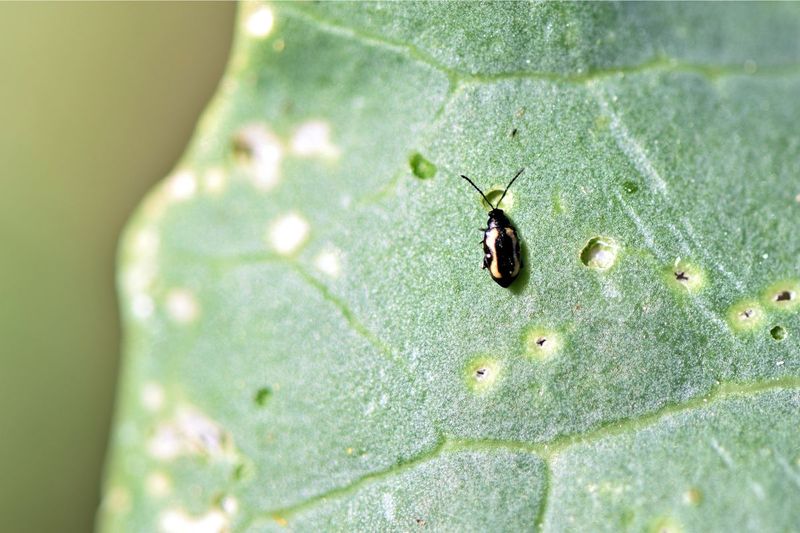
Some damage shows up overnight even though the pest fed by day.
Beetles can chew basil during warm daylight hours, then leave behind holes that you only notice the next morning. That timing can make them seem like nighttime pests.
Flea beetles create small holes. The damage often looks like tiny round or slightly irregular punctures scattered across the leaf.
They jump when disturbed. A quick touch to the plant may send small shiny beetles springing away.
Check in the morning. Flea beetles can be easier to notice before the day gets hot.
Japanese beetles make a different pattern. They are larger and may skeletonize leaves, leaving a lacy look between veins.
Basil can recover from light feeding. A few holes on older leaves are not always worth intervention.
Protect young plants first. Seedlings and small transplants suffer more from beetle feeding than large established basil.
Use row cover early. Lightweight fabric can keep beetles off young plants when installed before damage builds.
Handpick larger beetles. Drop them into soapy water during cooler morning hours.
Avoid treating without identification. Basil is an edible crop, and any product used on it must be labeled appropriately.
Flea beetle damage is not the same as slug damage.
Small clean holes with no slime and no droppings point toward a daytime beetle check, not a nighttime slug hunt.
6. Compare Ragged Edges With Grasshopper Feeding
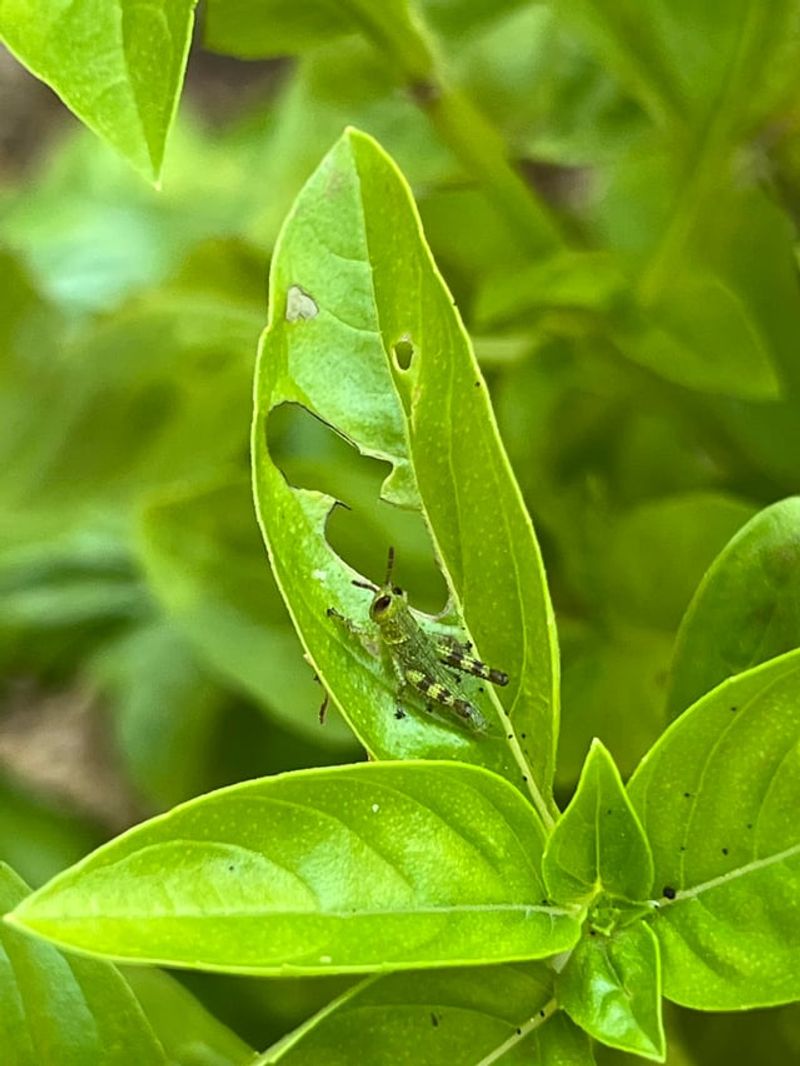
Grasshoppers leave bold missing sections.
Their chewing often starts along leaf margins, removing larger bites from the edges. The damage can look ragged but cleaner than slug feeding, with fewer clues left behind.
Look for jumping insects near the bed. Grasshoppers often move fast when disturbed.
Morning checks work best. Cooler temperatures can make them slower and easier to spot.
Check dry borders nearby. Weedy fence lines, lawn edges, driveways, and sunny rough patches can shelter them before they move into herbs.
Hot, dry spells can increase pressure. Grasshoppers often become more noticeable as surrounding vegetation dries.
They usually feed by day. Overnight discovery does not always mean overnight feeding.
Use fine mesh protection. Row cover or insect netting can shield small basil patches without pesticides.
Secure the edges well. Grasshoppers can slip under loose fabric easily.
Hand capture is possible but tedious. Early morning gives you the best chance.
Reduce tall weeds around the garden edge. That can make the immediate area less inviting.
Do not confuse them with earwigs. Earwig damage often comes from hidden folds and sheltered spots, while grasshoppers tend to take larger exposed bites.
Grasshopper damage feels obvious once you compare patterns.
Big edge bites, few droppings, no slime, and jumping insects nearby all point in the same direction.
7. Rule Out Hail And Wind Damage
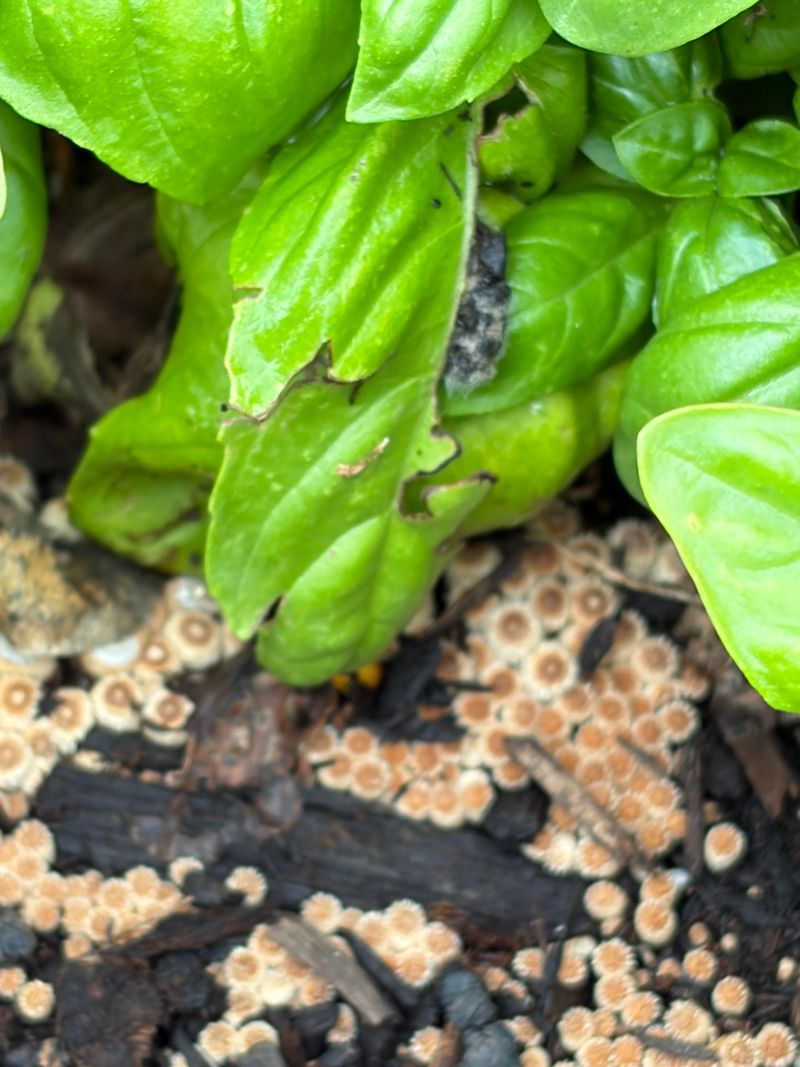
Not every shredded basil leaf comes from a hungry mouth.
Michigan summer storms can tear basil badly. Hail, wind, heavy rain, and windblown debris can shred soft leaves in minutes, leaving damage that looks surprisingly similar to pest feeding.
Check the weather history. A storm that passed overnight deserves serious consideration.
Look beyond the basil. Weather damage usually affects several plants at once.
Torn leaves across tomatoes, peppers, zinnias, beans, and herbs point toward wind or hail.
Hail often leaves bruises. Water-soaked spots, pale impact marks, and broken tender stems may appear with torn foliage.
Wind tears follow leaf veins. Basil leaves may split or shred in one direction after strong gusts.
Pest damage is more selective. Slugs, caterpillars, and earwigs often target certain leaves or plants rather than battering the whole bed evenly.
Remove the worst torn leaves. This improves airflow and lowers the chance of disease moving into damaged tissue.
Leave healthy growing tips. Basil regrows quickly when the central growth remains intact.
Do not spray after storm damage. Pesticides cannot fix weather injury and can add stress to already damaged plants.
Water only when the soil needs it. Storms may wet the surface without soaking the root zone evenly.
Weather damage can look dramatic.
The clue is scale: many plants damaged at once usually means the sky did it, not a hidden pest.
8. Return With A Flashlight After Dark
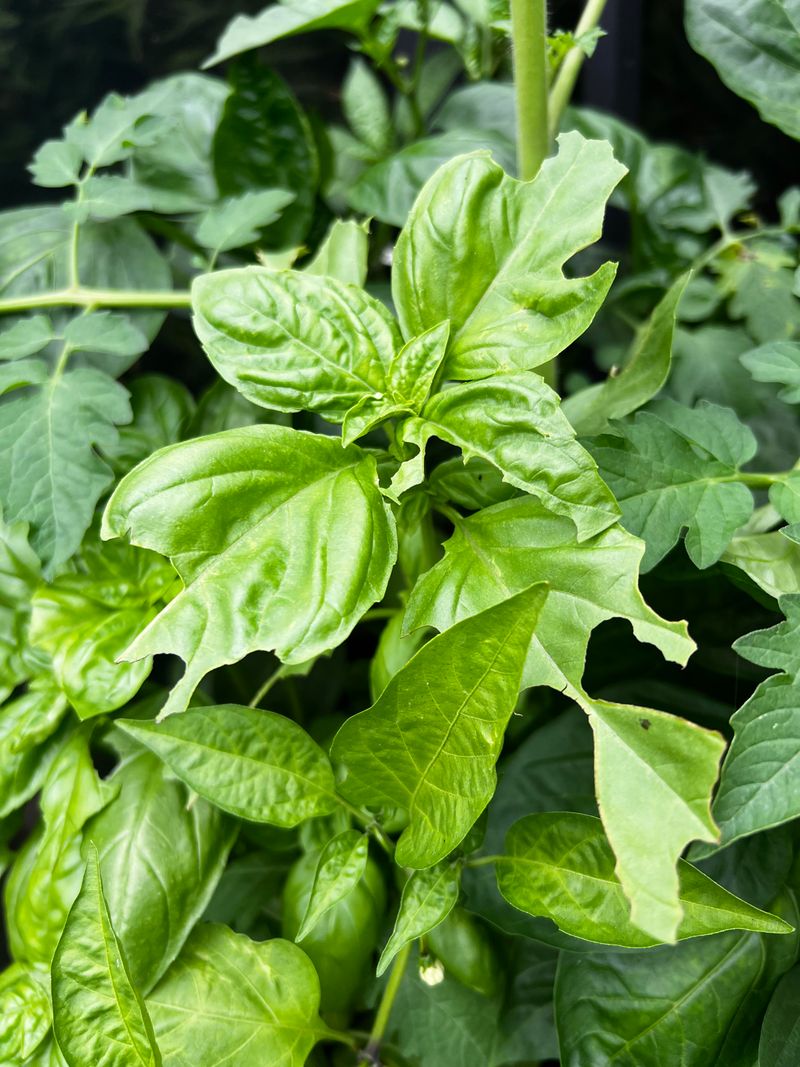
Night inspection is the best basil investigation.
Many pests responsible for shredded leaves feed when the garden is quiet. A daytime search can turn up nothing because the culprit is already under mulch, inside a leaf fold, or below the soil surface.
Go out an hour or two after sunset. That timing catches many feeders while they are active. Use a bright flashlight or headlamp. A headlamp frees both hands for lifting leaves and collecting pests.
Move slowly. Sudden movement can knock insects off the plant before you identify them. Check leaf undersides first. Caterpillars, slugs, and earwigs may all feed there.
Look at the soil surface. Cutworms, slugs, and ground-moving insects may be active around the base. Bring soapy water. Confirmed pests can be collected immediately.
Take photos before removing insects. A clear photo helps with later identification, especially when the insect is unfamiliar.
Repeat the check. Two or three nights can reveal patterns that one inspection misses. Do not remove every dark beetle. Some ground beetles are predators that eat slugs and other pests.
A flashlight turns guesswork into evidence. For overnight basil damage, it is often the most useful tool in the shed.