What It Means When A Black Phoebe Nests Under Your California Patio Roof
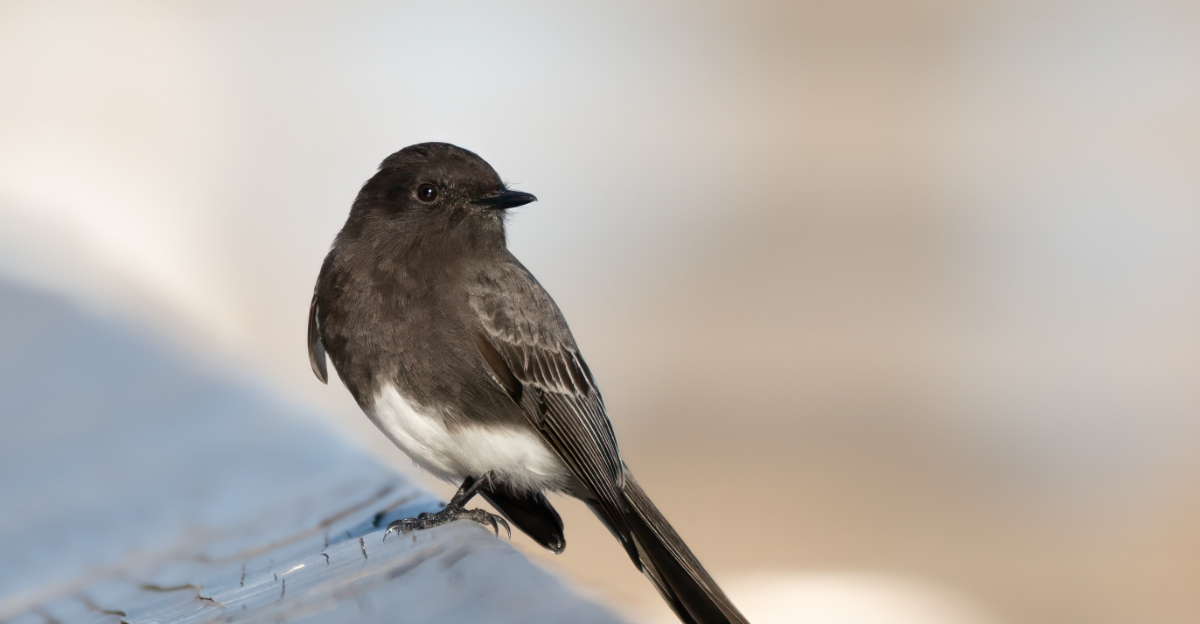
A black phoebe choosing your patio is rarely a random decision. These small flycatchers are surprisingly selective, returning to places that offer the shelter and hunting conditions they need.
A covered patio roof checks many of those boxes. It protects the nest from rain and harsh sun while giving the birds a sturdy ledge that stays relatively undisturbed.
Nearby open space also makes it easier for them to dart out after flying insects before returning to the nest.
Their arrival often says as much about the yard as it does about the bird. A steady supply of insects, access to water, and a quiet nesting spot can all make a California property especially appealing.
Watching a black phoebe build a nest can be a rewarding part of the season. Understanding why it picked your patio helps explain what these birds look for and why they sometimes return to the same location year after year.
1. Your Patio Offers Safe Shelter
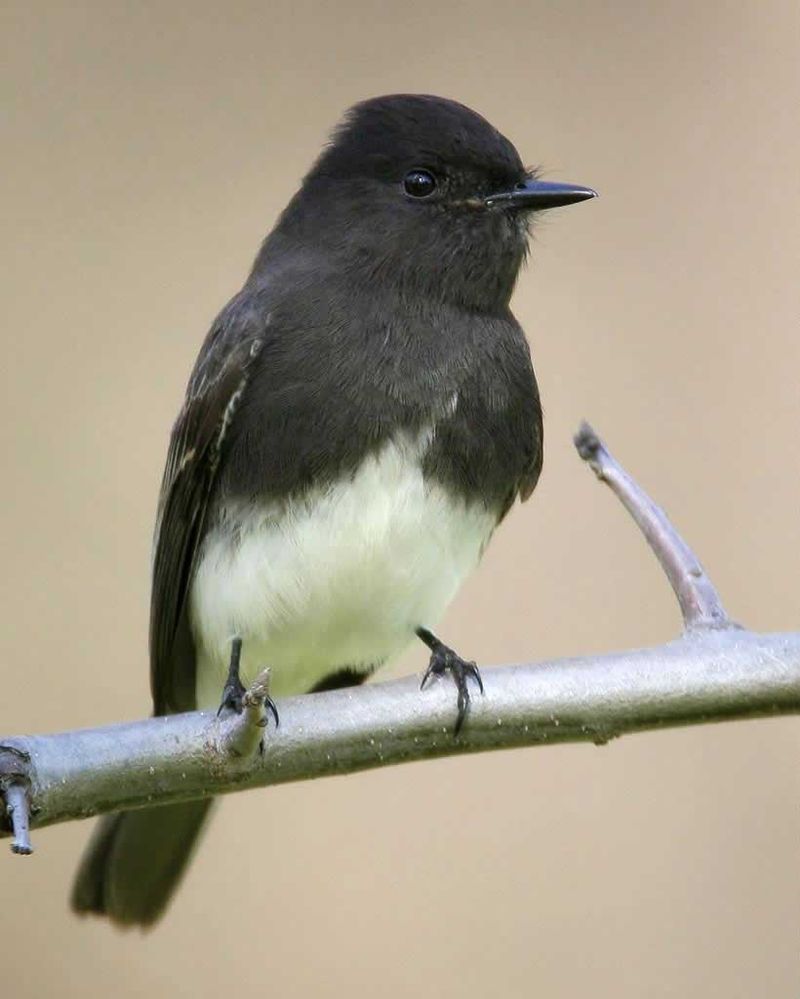
Not every yard gets chosen by a Black Phoebe, so when one picks yours, take it as a real compliment. These birds are selective about where they raise their young.
Your patio must be offering something that feels safe and stable to them.
Black Phoebes prefer sheltered spots that protect them from rain, wind, and predators. A covered patio checks all of those boxes.
The roof keeps the nest dry, the walls or posts provide anchoring points, and the human activity nearby actually helps discourage some natural threats like hawks or cats that tend to avoid busy areas.
Your yard’s overall setup matters too. Phoebes feel most comfortable near water, whether that is a garden pond, a birdbath, a creek, or even a dripping hose.
If you have any of those nearby, that likely sealed the deal for this bird. They need water close to their nesting site because they hunt insects that hover near moist environments.
The fact that a phoebe chose your patio means your outdoor space is healthy, welcoming, and close to a food source. Many homeowners in California never realize how bird-friendly their yards already are until a phoebe shows up and makes itself at home.
Think of it as a small stamp of approval from local wildlife.
2. A Roof Overhang Makes An Ideal Nest Site
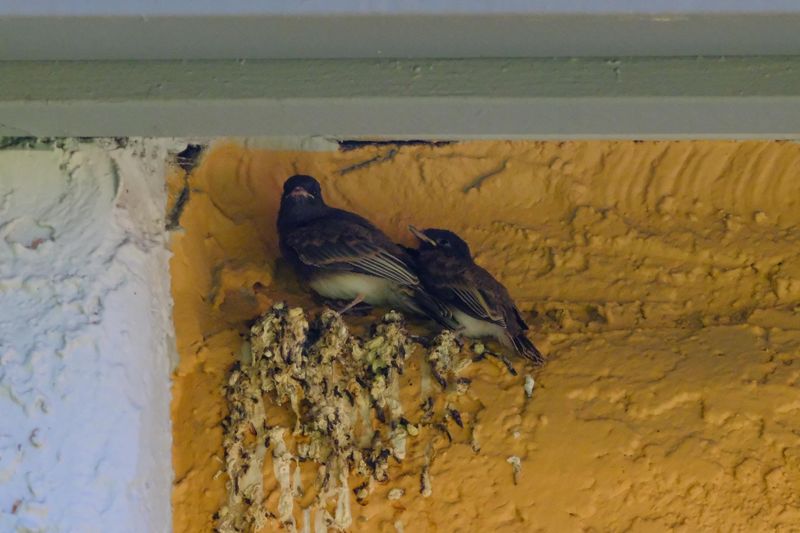
Roof overhangs are some of the best real estate a small bird can find. They offer overhead protection, a solid surface to attach a nest to, and a sheltered angle that keeps eggs and chicks out of direct weather.
Black Phoebes have figured this out over generations. In the wild, these birds nest on cliff faces, rock ledges, and the undersides of bridges or culverts. A patio overhang mimics those natural surfaces almost perfectly.
The rough texture of wood beams, stucco, or even painted surfaces gives the mud nest something to grip onto without sliding off.
Phoebes tend to build their nests in corners or against a vertical surface where the overhang meets a wall. That junction gives the nest three sides of support, making it much more secure.
Your California Garden Changes Every Week. Your Plan Should Too.
Gardening in California changes quickly throughout the season. Every Friday you’ll receive a simple weekly plan showing exactly what to plant, prune, fertilize, harvest, and protect so you never miss the right timing.
If you look closely, you may notice the nest is tucked right into one of those protected angles rather than hanging out in the open.
Across California, from the foggy northern coast to the warm inland valleys, covered patios and carports have become popular nesting spots for this species. The bird does not know it is using a human structure.
It just knows the overhang feels right. And honestly, for a bird that needs a safe, stable place to raise chicks, it really is the perfect fit.
3. They Stay Close To Flying Insects
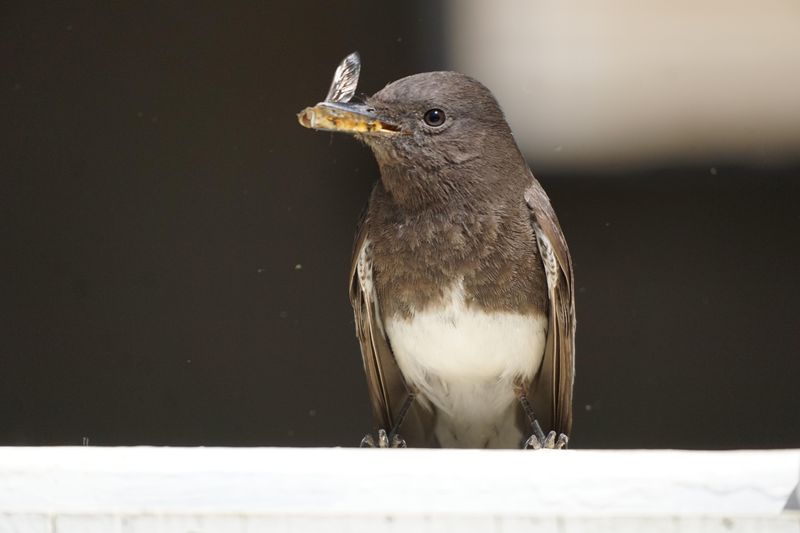
One of the biggest reasons a Black Phoebe chose your patio is the food supply nearby. These birds are flycatchers, which means they eat flying insects almost exclusively.
They spot a bug, launch off their perch, snatch it mid-air, and return to the same spot to watch for the next one.
Yards with water features, dense plants, or composting areas tend to attract more insects, which in turn attract phoebes. If your patio sits near a pond, a dripping faucet, or even a patch of damp soil, you have created a reliable hunting ground for this bird.
That proximity to food is a key reason they nest so close to where they feed.
Phoebes are very methodical hunters. They often use the same perch over and over, watching and waiting with sharp eyes.
You might notice them sitting on a fence post, a low branch, or even your patio furniture before launching out to grab something invisible to you. Their eyesight is excellent, and they can spot tiny insects from several feet away.
Having a phoebe nesting nearby is actually a natural form of pest control. They eat mosquitoes, gnats, small beetles, and flies.
Over a single nesting season, a pair with chicks to feed can consume a significant number of insects. Your patio just became a little more comfortable without you doing a thing.
4. Mud Is A Sign Nest Building Has Started
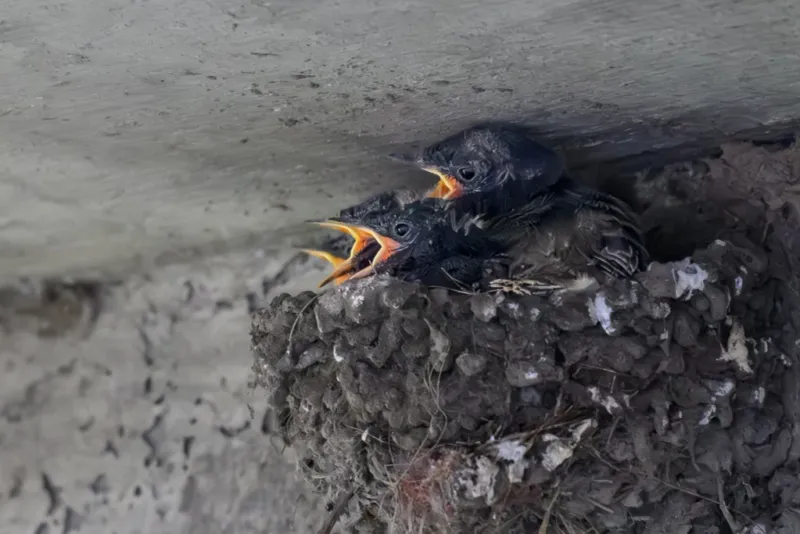
Spotting small blobs of mud on your patio wall or roof beam is one of the first clues that a Black Phoebe has started building.
These birds construct their nests almost entirely from wet mud mixed with dry plant fibers like grass stems, moss, and hair. The result is a surprisingly sturdy cup-shaped structure.
The building process takes about one to two weeks. The female does most of the construction, making dozens of trips to a muddy water source each day.
She presses the mud into place with her beak and body, shaping the nest as it slowly dries. Each layer needs time to harden before the next one goes on.
You might notice muddy streaks on your wall near where the nest is forming. That is completely normal and just part of the process.
Once the nest is finished and the season ends, the dried mud is easy to scrape off if you want to clean the surface.
Phoebes often reuse or rebuild nests in the same spot year after year. If you already see an old nest and a bird is adding fresh mud on top, that means a new breeding season has begun.
Finding mud near your patio is not a problem. It is actually exciting evidence that a small family is putting down roots right outside your door, and the whole process is worth watching from a respectful distance.
5. Both Parents Work To Feed The Chicks
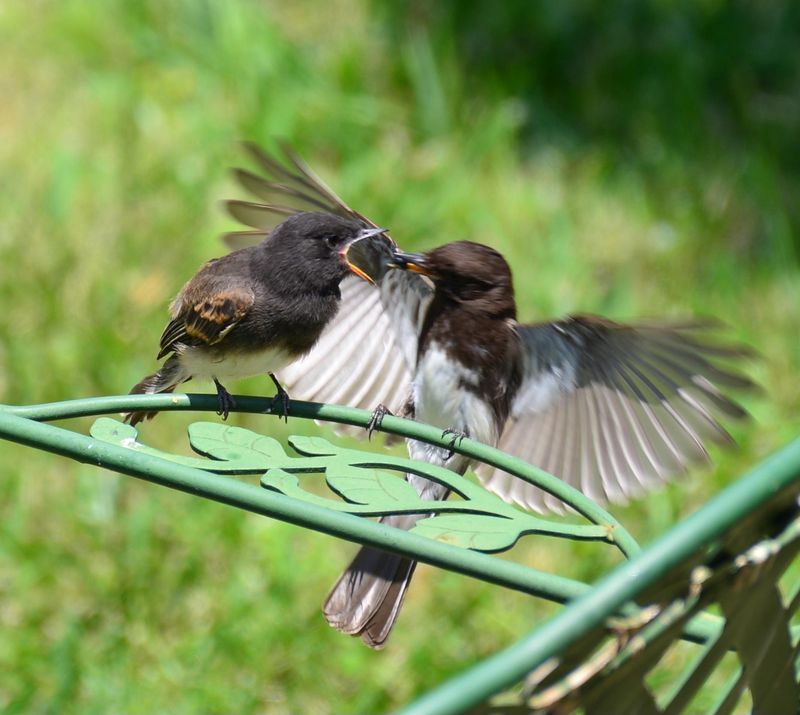
Once the eggs hatch, the real work begins. Black Phoebe parents are dedicated and hardworking.
Both the male and the female take turns catching insects and bringing them back to the nest to feed their growing chicks. The pace is almost non-stop during daylight hours.
Chicks grow fast and need a lot of food to fuel that growth. A nesting pair can make hundreds of feeding trips in a single day.
You may start to notice the parents flying back and forth from your patio to a nearby bush, fence, or water source in a very predictable pattern. That rhythm is the feeding routine in full swing.
The male often takes on a guard role as well, perching in a visible spot near the nest and watching for anything that might threaten the chicks.
If a larger bird or a neighborhood cat gets too close, you might hear sharp, repeated chip calls from the male as a warning.
Watching both parents share the workload is one of the most heartwarming parts of having phoebes nest nearby. They are genuinely cooperative partners.
Some pairs raise two or even three broods in a single year, which means the feeding cycle can continue well into late summer.
Your patio essentially becomes a busy little nursery, full of movement, sound, and life from early morning to dusk.
6. Avoid Disturbing An Active Nest
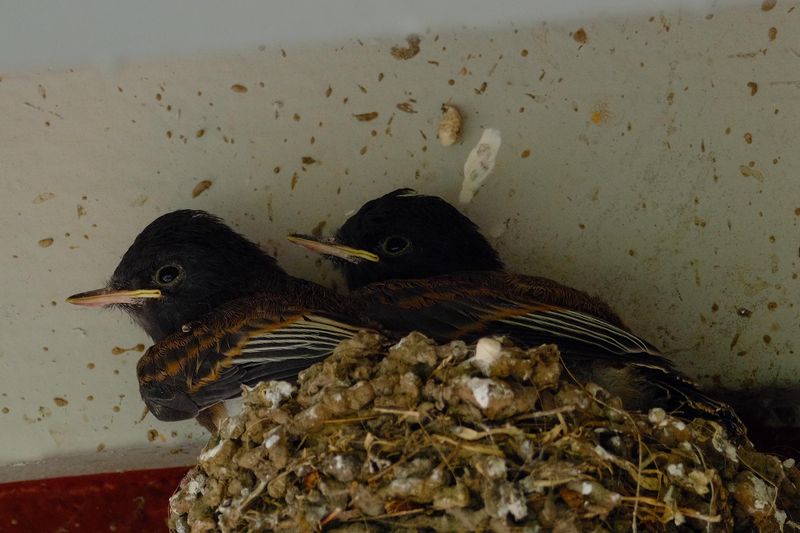
Once a Black Phoebe has eggs or chicks in the nest, the best thing you can do is give the family space.
These birds are generally tolerant of human presence, but sudden movements, loud noises, or direct interference near the nest can cause stress that affects the chicks.
You do not need to avoid your patio entirely. Phoebes are used to people moving around nearby.
Just try to keep your distance from the nest itself and avoid reaching toward it or touching it. Under federal law, active nests of native songbirds are protected, and disturbing them can carry real consequences.
If you have outdoor lights near the nest, try to avoid turning them on and off repeatedly at night. Consistent, low-level lighting is less disruptive than sudden flashes.
Also, if you are doing any maintenance or repairs on your patio, try to wait until after the nesting season ends and the birds have moved on naturally.
Keeping pets indoors or supervised during nesting season is another helpful step. Cats in particular can stress nesting birds even without making direct contact.
Simply being nearby can cause the parents to abandon their feeding routine temporarily.
A little awareness and a few small adjustments to your routine can make a huge difference for the family living just above your head. Watching quietly from a few feet away is always welcome.
7. Droppings Below The Nest Are Normal
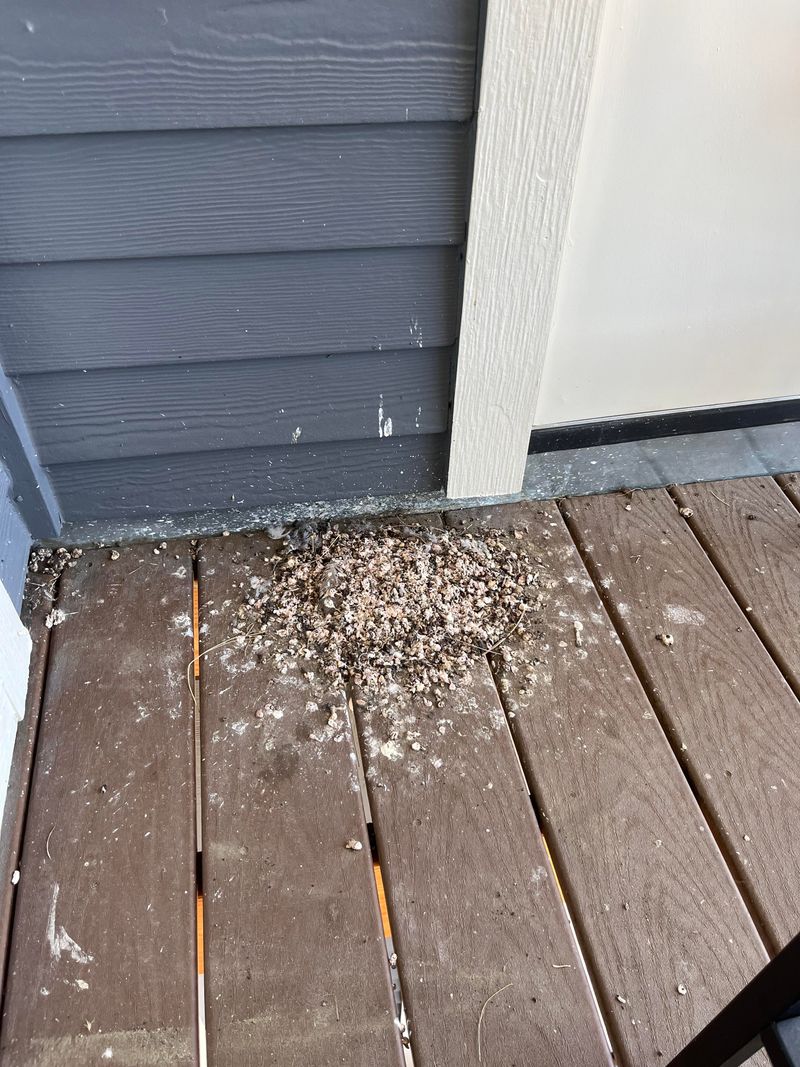
One of the less glamorous parts of hosting a nesting bird is the mess that comes with it. If you notice white droppings appearing on your patio floor directly below the nest, that is a completely normal sign that the chicks are active and being fed regularly.
It is not a cause for concern. Young birds produce what are called fecal sacs, small waste packets that the parents carry away from the nest to keep it clean.
However, as the chicks get older and bigger, some waste does fall directly below the nest opening.
This tends to increase in the final week or two before the chicks leave.
A simple piece of cardboard or a plastic tray placed below the nest can catch most of the droppings and make cleanup much easier. Just slide it out every few days and replace it.
This keeps your patio looking tidy without disturbing the nest above.
Once the nesting season is over and the birds have moved on, cleaning up is straightforward.
The dried mud nest can be scraped off the beam, and the area can be wiped down with a mild cleaner.
Many homeowners in California choose to leave the old nest in place, knowing the phoebes may return to use it again next year.
A little mess for a season is a small price for the experience of watching wild birds thrive right outside your door.
8. Young Birds Leave Before The Nest Is Empty
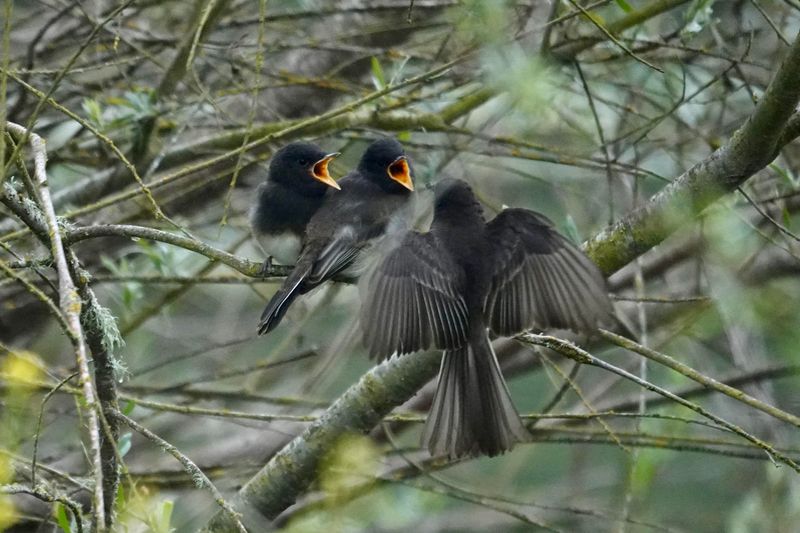
There is a funny thing that happens near the end of a phoebe nesting cycle. The young birds start leaving the nest one by one before all of them are ready to fully fly on their own.
This is called fledging, and it can look a little alarming if you do not know what to expect.
You might find a young phoebe sitting on your patio floor or hopping around in your garden looking a bit lost. Its feathers may still look fluffy and uneven, and its tail may be shorter than an adult’s.
This is completely normal. The parents are still nearby, watching and feeding it even while it is on the ground.
The best thing to do when you spot a fledgling is to leave it alone. As long as the parents are coming to it regularly with food, the bird is doing exactly what it is supposed to do.
Moving it or trying to help it can actually interfere with the natural process and cause the parents to lose track of their young.
Within a few days, the fledglings gain strength and confidence and begin short flights. By the time the last chick leaves the nest area, the whole family has usually shifted to a nearby territory.
The nest may sit empty for a few weeks before the parents return to start the cycle again. In many parts of California, that next round begins sooner than you might think.