The Native North Carolina Shrub That Turns A Bare Erosion Gully Into A Wildlife Thicket
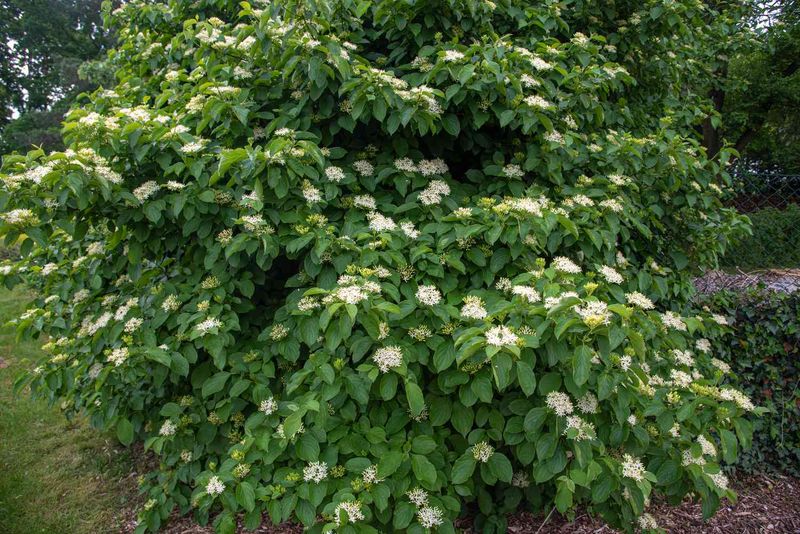
Every heavy rain, that raw gully behind your fence loses a little more ground, and the bare dirt just sits there daring you to fix it. Silky dogwood, Cornus amomum, is a North Carolina native shrub that genuinely fits moist, troubled bank edges, and it brings birds and butterflies along with it. Plant it right and it can become part of a real solution, though no single shrub repairs every gully on its own. What it can do, under the right conditions, is worth knowing.
A Well-Suited Shrub for a Moist Bank
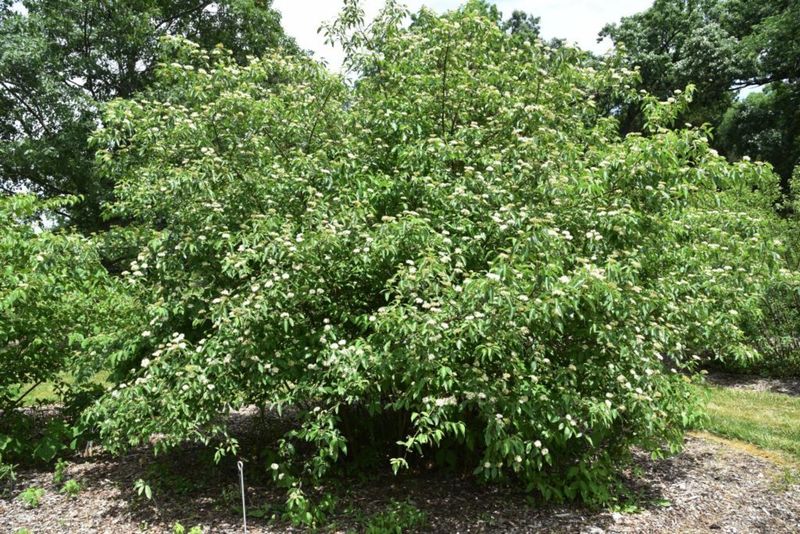
Silky dogwood earned its place on this list honestly. NC State Extension lists Cornus amomum as a North Carolina native suited to wet soils, stream banks, ponds, naturalized areas, and erosion control. That is a specific combination of endorsements, and it matches exactly what a moist drainage edge needs.
The shrub typically grows 6 to 12 feet tall and about as wide. It is multi-stemmed and open in form, so it fills space naturally rather than growing in a tidy mound. That informal habit makes it a good fit for a naturalized bank or drainage swale, not a clipped foundation bed.
Here is where the honest part comes in. Silky dogwood can contribute to bank protection and wildlife habitat after it establishes, but it will not automatically transform or repair every bare gully. A gully that receives fast, concentrated stormwater from a large paved area is a different problem than a moist bank that just needs rooted cover. NC State’s stream-repair guidance makes clear that woody plants generally outperform turf on bank edges, but the same guidance recommends a mix of trees, shrubs, grasses, and other plants because different root structures provide different benefits.
Silky dogwood is a credible, well-supported starting point for a moist North Carolina bank. Think of it as one strong layer in a broader plan, not the single fix for every drainage problem you have.
How Its Growth Can Contribute to Bank Protection
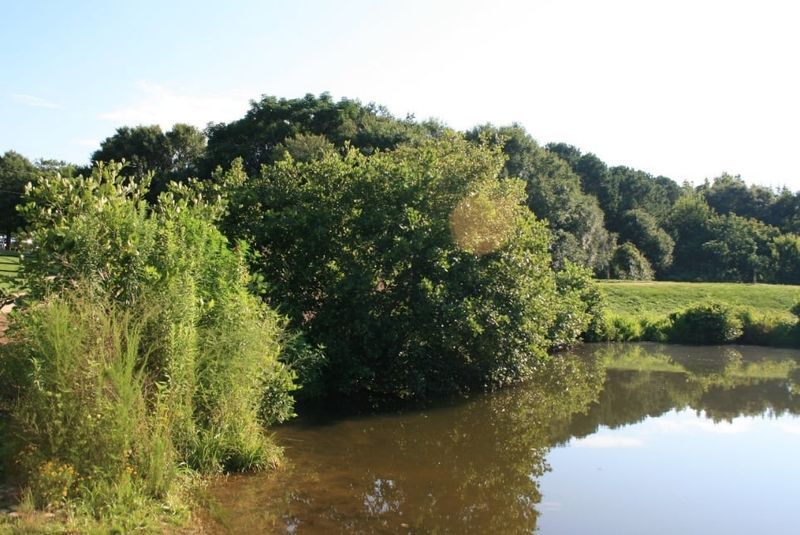
Silky dogwood has a useful habit that most ornamental shrubs do not. Its branches can root at the nodes wherever they touch the ground, which is how a single plant can gradually spread into a low thicket over several seasons. More stems mean more surface cover, more roots working into the bank, and more resistance to the sheet flow that strips bare soil during a Piedmont afternoon storm.
That said, the roots of silky dogwood are fibrous rather than deeply anchored, so calling it uniquely deep-rooted would overstate the case. What it actually provides is a network of surface and near-surface roots combined with above-ground stems that slow runoff and catch sediment. That combination genuinely helps on a moist bank under suitable conditions.
NC State’s guidance on riparian buffers and bank stability explains that roots become thicker and more stabilizing as plants mature, and that a mix of root structures, from deep trees to fibrous shrubs to grasses, provides the broadest protection. Silky dogwood fits well in the shrub layer of that mix.
Your North Carolina Garden Changes Every Week. Your Plan Should Too.
Gardening in North Carolina changes quickly throughout the season. Every Friday you’ll receive a simple weekly plan showing exactly what to plant, prune, fertilize, harvest, and protect so you never miss the right timing.
One of the most practical things you can do right now costs nothing. Stop mowing the bank. Many Piedmont homeowners mow right to the water’s edge out of habit, but NC State recommends allowing mixed vegetation to grow, often up to 15 feet from the water’s edge, because above-ground growth slows runoff and roots strengthen with age. Let what is already there come back, then add silky dogwood into the recovering zone.
A Thicket Can Add Real Wildlife Value
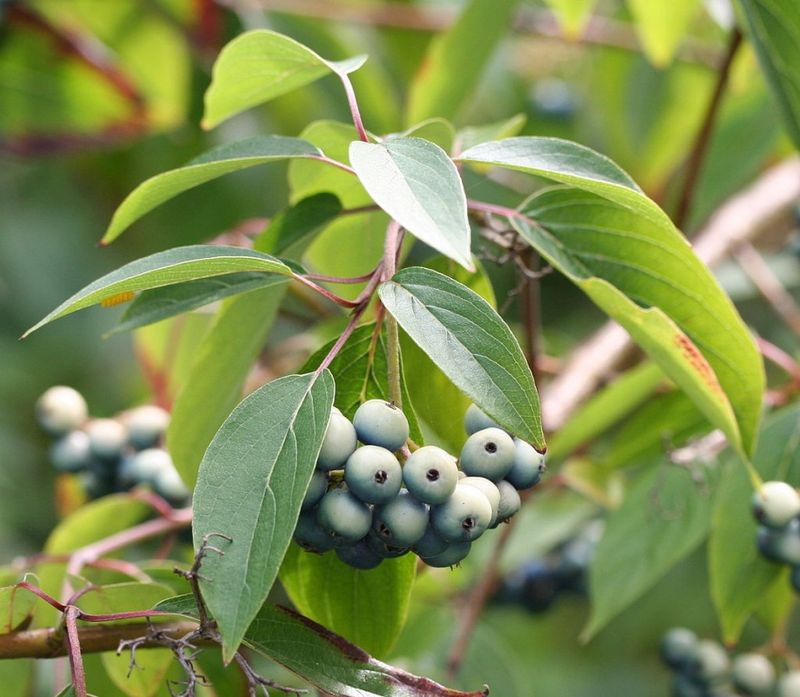
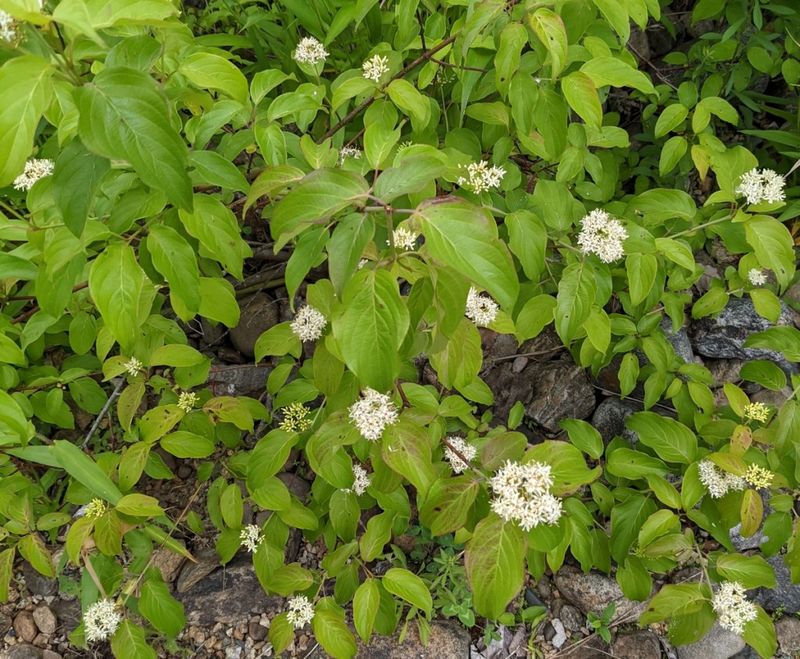
Once silky dogwood fills in, the bank stops being a bare problem and starts being a working piece of habitat. The creamy-white flower clusters that appear in late spring provide nectar and pollen for a range of insects, including native bees and other pollinators that move through your yard all season.
The shrub also hosts spring azure and summer azure butterflies, which use it as a larval plant. If you have watched those small blue butterflies flickering low over a drainage area in April or June, there is a good chance a native dogwood was nearby. That host-plant relationship is documented by NC State’s plant records for Cornus amomum, and it is one of the details that separates a native shrub from a well-meaning exotic.
The blue drupes ripen from August through September, right when migrating songbirds are moving through North Carolina. Wood thrushes, gray catbirds, cedar waxwings, quail, turkey, and various mammals eat the fruit. The dense branching also provides nesting sites and year-round cover for birds that need low, shrubby structure near water.
One note worth keeping in mind: the fruits should stay for wildlife. NC State’s plant records flag silky dogwood as having low-severity poison characteristics for people and pets. Leave the berries for the birds and discourage children and pets from eating any unfamiliar berry they find along the bank.
Match the Shrub to the Water and Soil
Silky dogwood is not a plant that tolerates neglect on a dry slope. It genuinely prefers medium to wet, acidic soil, full sun to partial shade, and cool, moist roots through the summer heat. That last requirement matters more in North Carolina than it might seem, because a muggy August in the Piedmont can bake a bare bank down to cracked clay.
A dry, sunny Sandhills bank or an upland Piedmont slope that only gets wet during a storm and dries out completely between rains may not give this shrub what it needs to establish well. The site has to stay reliably moist, not just receive occasional runoff. If your gully is bone dry two days after rain, a different plant or a different approach may serve you better.
Where standing water is common, the picture changes again. Silky dogwood handles moist and intermittently wet conditions well, but a site that holds water for extended periods after rain is better suited to buttonbush, Cephalanthus occidentalis. NC State Extension notes that buttonbush is native throughout North Carolina, tolerates wet soils and standing water up to 3 feet deep, delivers exceptional wildlife benefits, and can be used for erosion control on wet sites. These two shrubs are not interchangeable, they fill different niches.
Pick the one that fits what the site actually does, not what you wish it did. A moist stream-margin bank is silky dogwood territory. A low spot that pools after every rain leans toward buttonbush.
Check Whether the Gully Has Stream Rules
Not every gully is a stream, and the difference can matter legally. North Carolina distinguishes ephemeral features, which carry water only during and shortly after rain, from intermittent streams, which flow seasonally, and perennial streams, which flow year-round. The NC Forest Service explains these categories and why they carry different implications for land use near the water.
A drainage swale or hollow that only runs during a storm may be an ephemeral feature with no buffer requirement. But if your gully connects to or functions as an intermittent or perennial stream, watershed-specific rules may apply before you grade, excavate, remove existing vegetation, install structures, or place fill material near it.
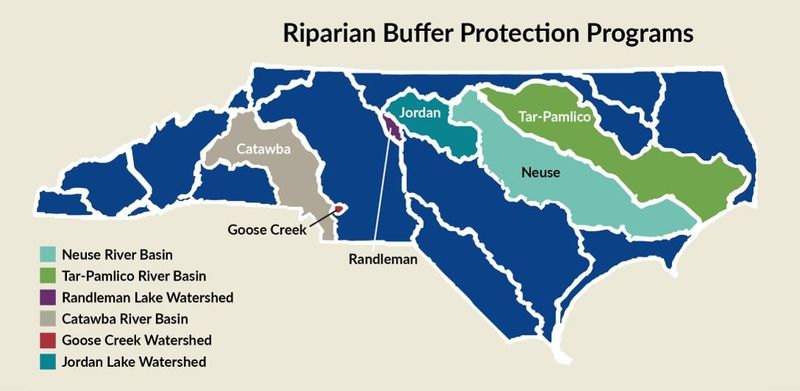
North Carolina has riparian-buffer programs tied to specific river basins and watersheds, including the Neuse, Tar-Pamlico, Catawba, Randleman Lake, Jordan Lake, and Goose Creek areas. NC DEQ’s buffer permitting FAQ explains which waterbodies and basins trigger these rules and what activities require a permit or authorization.
Check with NC DEQ or your county planning office before you do anything beyond planting into an existing, stable bank. Planting native vegetation into an undisturbed bank is generally lower-risk than grading or installing structures, but knowing your site classification first protects you from an expensive mistake. Buffer widths vary widely by purpose, slope, soil, waterbody type, and applicable rule, so there is no single distance that applies to every North Carolina gully.
Use Dormant-Season Plants or Live Stakes

Timing your planting to the dormant season gives silky dogwood its best chance. NC State recommends planting woody material during dormancy, generally October through March in North Carolina, when the plant is not actively pushing new growth and can focus energy on root development before summer heat arrives.
You have two practical options for getting plants in the ground. The first is a healthy container-grown silky dogwood from a native plant nursery. Container plants are easy to handle, the root system is intact, and you do not need any special harvesting skills. The second option is dormant live stakes, which are lengths of silky dogwood stem cut during dormancy and pushed directly into moist bank soil where they can root and grow.
Live stakes work because silky dogwood roots readily from stem cuttings. NC State’s streambank repair plant list includes silky dogwood as a live-stake species for North Carolina, and the NC State live-stake installation guide describes dormant silky dogwood branches as material that can be pushed into a stream bank. The NC State stream restoration guidebook provides restoration-scale guidance: stakes roughly 3 feet long and one-half to 2 inches in diameter, spaced 2 to 4 feet apart in triangular spacing, with approximately one-half to four-fifths of each stake below ground and at least two buds above ground.
Those measurements come from professional restoration work, not a universal homeowner prescription. If you are not confident identifying silky dogwood correctly in winter, harvesting at the right time, and keeping cuttings cool and moist until planting, buy container plants from a reputable native nursery instead. Penn State Extension’s live-staking guide reinforces that stakes need to come from healthy, correctly identified plants and be planted promptly after cutting.
Placement matters as much as timing. A bank toe location, where the bank meets the channel, can work if the soil stays moist and the spot is not exposed to fast, scouring flow. Do not put new material in the active channel where high water can pull it out before roots form.
Protect the First Season of Growth
Getting silky dogwood in the ground is only half the job. The first season is when new plants are most likely to fail, and most of the reasons are avoidable with a little attention.
Drying out is the most common early killer, even on a moist bank. The root system of a new plant is small relative to what the stems need, especially during a dry Piedmont July. NC State recommends 2 to 4 inches of mulch around silky dogwood roots to hold moisture and moderate soil temperature. Keep the mulch a few inches away from the stems themselves and do not place loose material where it can wash into the channel during the next rain.
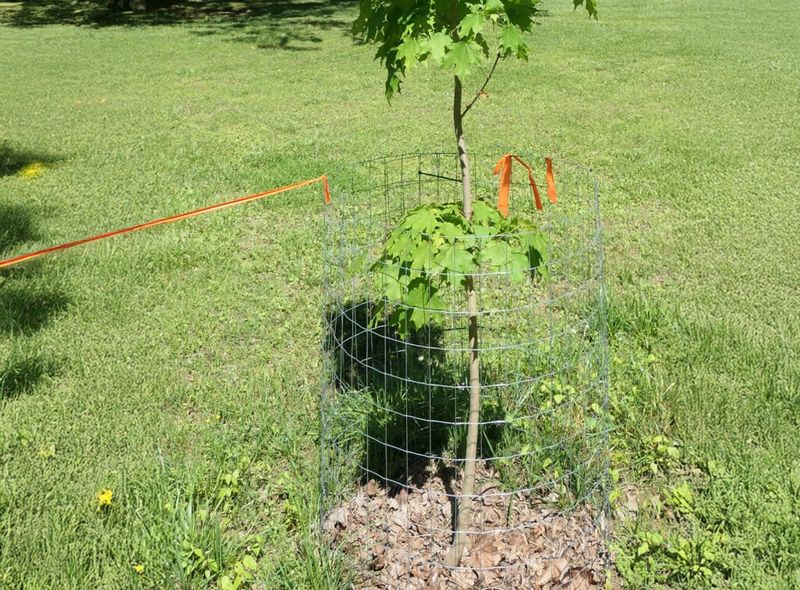
Mowing is a quiet threat that takes out more new native plantings than most homeowners realize. Mark your plants clearly and make sure anyone mowing the property knows the boundary. Deer browsing can set back a young shrub badly in one night, especially in suburban Piedmont or mountain areas with high deer pressure. A simple wire cage around each plant through the first two growing seasons costs very little and makes a real difference.
The NC State live-stake guide also flags washout as a risk for newly installed material before roots anchor the stem. Avoid planting just before a forecast heavy rain event if you can time it differently.
Silky dogwood generally has no serious routine pest or disease problem, but scale, borers, leaf miners, leaf spot, canker, blights, root rot, and powdery mildew can occur. Keep an eye on new plants and address problems early rather than assuming the shrub will always shrug them off.
Know When a Planting Plan Needs More

Planting silky dogwood on a moist, reasonably stable bank is a solid move. Planting it on a near-vertical 8-foot clay wall that is actively slumping after every storm is a different situation, and the shrub alone will not solve it.
NC State is direct on this point: steep or vertical banks may continue losing soil even after vegetation is established. Sites with banks over 5 feet, major instability, culverts, pipes, roads, buildings, or substantial channel changes may require grading, erosion-control matting, structural measures, changes to how runoff reaches the bank, or professional evaluation before planting makes sense. NC State’s backyard stream repair guidance recommends getting professional help when the situation goes beyond what vegetation alone can handle.
The root cause of most serious bank erosion is not a missing shrub, it is concentrated stormwater. Urbanization, impervious surfaces, channel incision, steep slopes, erodible soils, and the force of water hitting the bank toe all drive erosion in ways that roots cannot fully counter. NC State’s riparian buffer research explains that bank stability depends on rooting depth and density, soil material, slope, channel incision, surface protection, and water force at the toe together, not any single factor.
If your neighborhood added a lot of pavement in recent years and the gully is getting worse each season, that is a sign the drainage volume itself may need addressing. Penn State Extension’s stream restoration guidance reinforces that live staking and vegetation work best when the underlying hydraulic problem is understood and managed.
Silky dogwood is a genuinely useful native shrub for a moist North Carolina bank, and a well-established thicket can add real cover, habitat, and surface protection over time. Think of it as one capable layer in a site-specific plan, the kind of plant that quietly does its job once the bigger forces are working in its favor.