What It Really Means When Owls Start Calling Near Your Texas Home At Night
A Texas night can feel completely ordinary until the first call rolls through the dark.
One moment, the yard is all porch light, warm air, cicadas, and quiet shadows. Then a low hoot drifts from the live oak.
A raspy trill rises near the cedar break. A hollow screech cuts across the back fence, and suddenly the whole landscape feels more alert.
The sound can seem mysterious, even a little eerie.
Most owl calls have natural explanations rooted in territory, courtship, family contact, hunting routes, and young birds asking for food.
The calls are not warnings meant for people, and they rarely signal anything strange happening around the house. They usually mean your neighborhood has the trees, cover, prey, and nighttime quiet an owl can use.
That is good habitat news.
So what does it really mean when owls start calling near your Texas home at night?
Start by listening for the pattern, because the meaning is often hidden in rhythm, location, and season.
1. Territory Calls Mark A Claimed Space
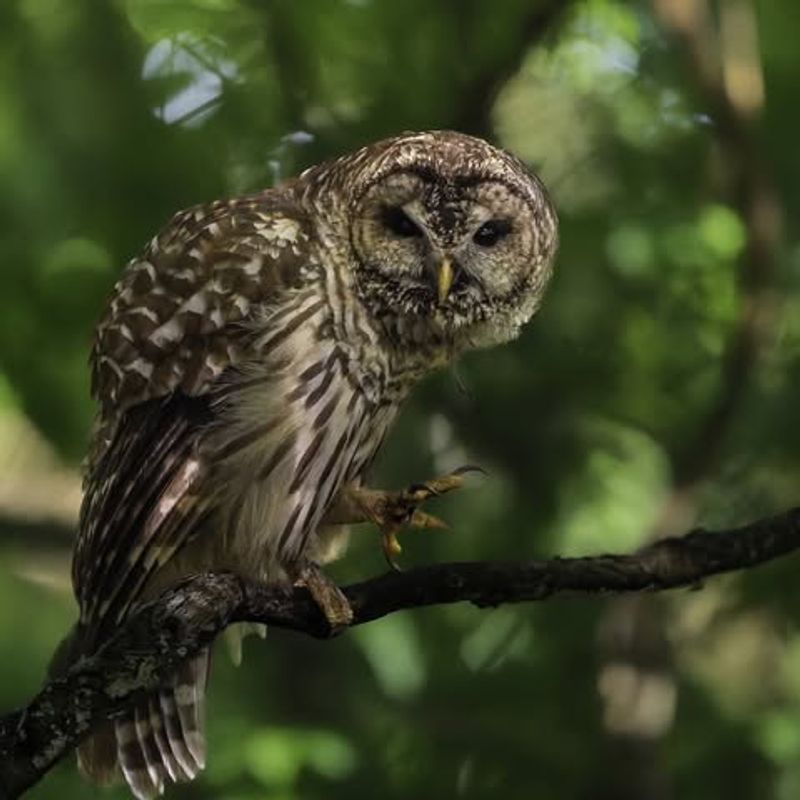
A steady hoot from the same place often means territory.
Owls use sound to mark invisible boundaries. Instead of patrolling every branch or fighting every neighbor, a calling bird can announce that a particular stretch of trees, creek edge, pasture, or backyard belongs to it.
A great horned owl may repeat a deep, rhythmic hoot from a tall tree. That sound can carry far through a quiet Texas neighborhood.
A barred owl sounds different. Its rolling call has a conversational rhythm, but it can serve the same purpose.
Eastern screech-owls use trills and whinnies. Their smaller size does not make their territorial message any less serious.
The location matters. A call from the same oak, snag, roofline, or fence post night after night points toward a favored boundary perch.
Territory calling reduces conflict. A clear vocal message can keep another owl from moving too close.
It also tells you the area has value. Food, shelter, nesting spots, and safe perches may all be nearby.
Calling may intensify during cooler months. Many owls reestablish pair bonds and nesting territories before spring arrives.
A territorial call is not aimed at you.
It is the sound of an owl drawing a line across the night and telling other owls to pay attention.
2. Duets Often Signal A Mated Pair
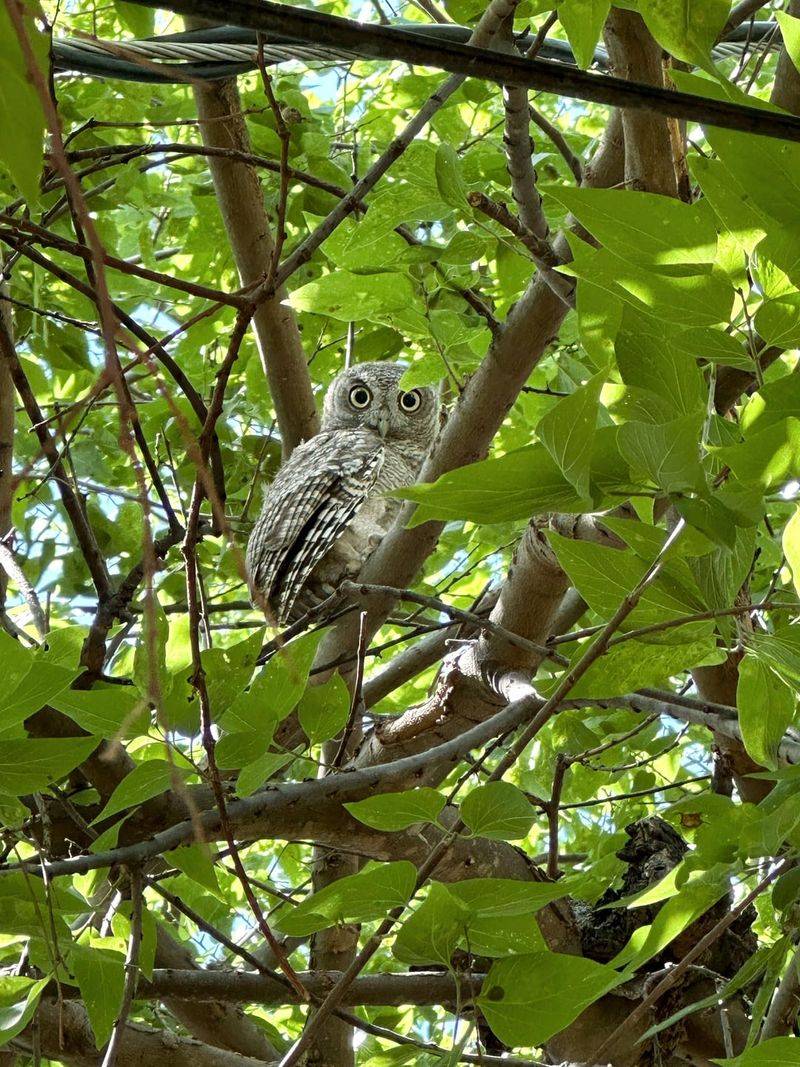
Two voices can mean a pair is nearby.
Owls do not call only to strangers. Mated pairs often call back and forth to keep contact, strengthen their bond, and coordinate their movements through a territory. To a person listening from the porch, it can sound like a hidden conversation moving through the trees.
Great horned owls may duet in low hoots. The female’s voice is often slightly higher than the male’s, though the difference can be subtle.
Barred owls can be much louder and more dramatic. Their paired calling may rise into wild, laughing exchanges that carry through wooded neighborhoods.
Eastern screech-owls use softer contact calls. A trill or descending whinny can help mates locate one another after dark.
Your Texas Garden Changes Every Week. Your Plan Should Too.
Gardening in Texas changes quickly throughout the season. Every Friday you’ll receive a simple weekly plan showing exactly what to plant, prune, fertilize, harvest, and protect so you never miss the right timing.
Listen for the spacing. One call from the front yard and another from the creek side suggests two birds answering each other.
Listen for rhythm too. Duets often feel more interactive than a single bird repeating the same phrase.
The calls may build before nesting season. Pair bonding becomes more important as breeding activity approaches.
A duet does not mean the nest is in your yard. It simply means the pair is using the surrounding territory.
That sound is special.
It means two birds are maintaining a relationship in the dark, using voices instead of sight to stay connected.
3. Repeated Calls Suggest A Regular Route
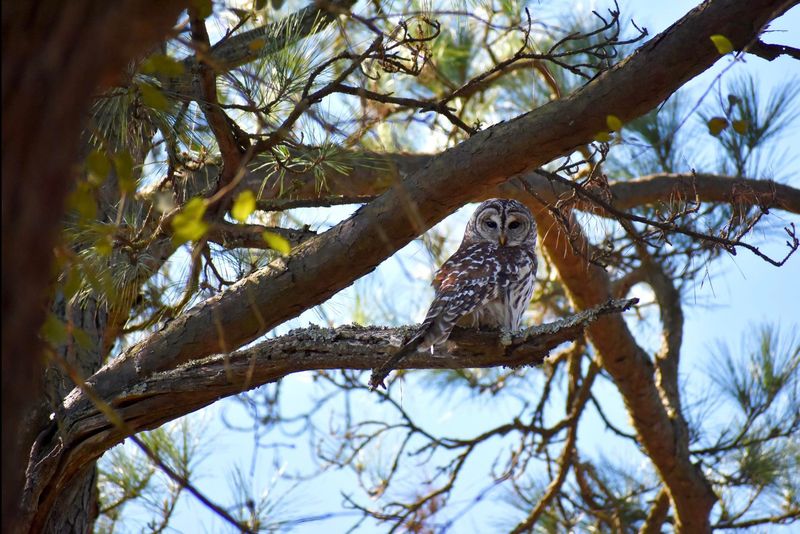
Owls are often creatures of routine.
A call from the same fence line at the same time each evening may reveal a hunting route. Many owls move through familiar circuits, using reliable perches along tree rows, creek banks, pasture edges, rooftops, and open lawns.
That routine is practical. A perch that gives a clear view or good listening position becomes worth revisiting.
Barn owls may patrol fields and pastures. Their pale shape and harsh calls fit open Texas landscapes where rodents are active.
Great horned owls often use tall trees, utility poles, and sturdy branches. They prefer perches with command over the area below.
Barred owls favor wooded creek bottoms and mature trees. Repeated calls near water can match their preferred habitat.
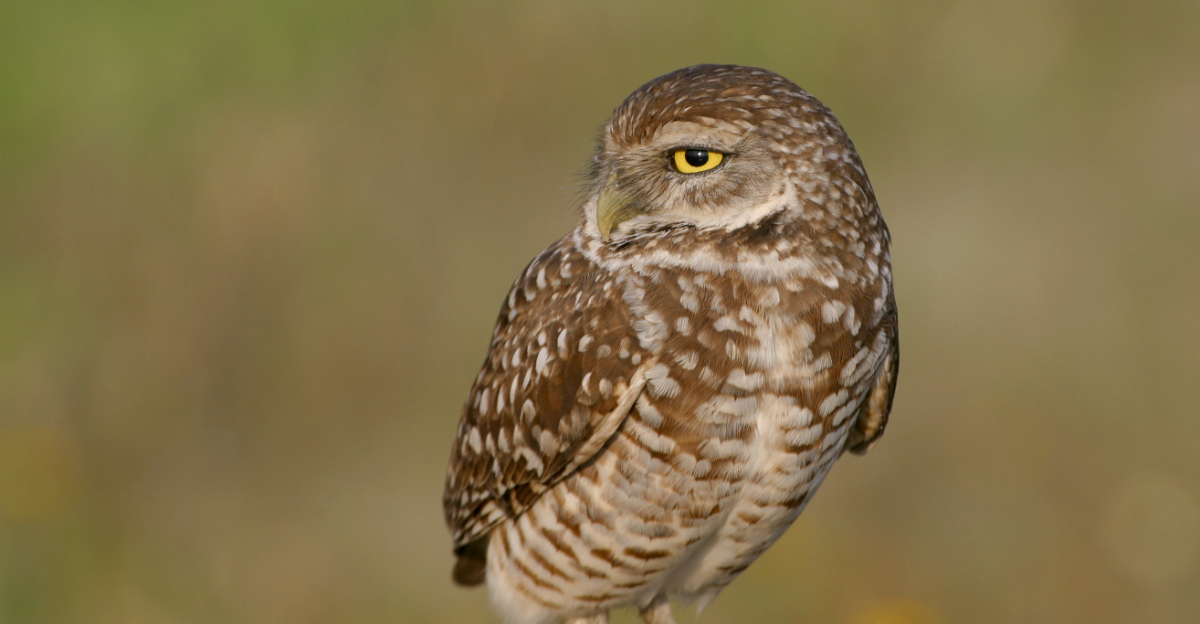
Burrowing owls use open country differently. In parts of Texas, they may call near burrows, posts, or low perches.
A regular route does not always reveal a nest. Hunting stations and nesting sites can be separate.
Keep a simple note. Time, direction, sound, and weather can reveal patterns over a week.
The same call night after night is not random.
It may be the owl’s evening commute through a landscape that reliably provides food.
4. Seasonal Calling Can Mark Courtship
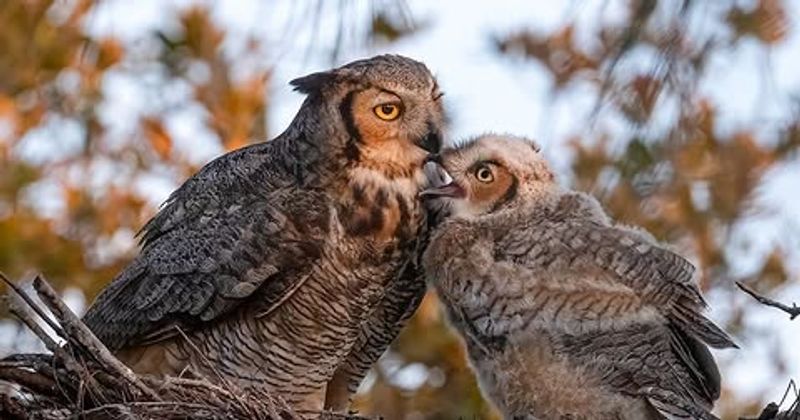
Owl activity changes with the calendar.
Texas is large, and the timing can vary by region, but many owls become more vocal as they move toward courtship and nesting. Cooler months can bring more frequent calls, more duets, and more movement between favored perches.
Great horned owls are early nesters. Their courtship calls may become noticeable in fall and winter.
Barred owls often grow more vocal through winter into early spring. Their wooded territories can become surprisingly loud at night.
Eastern screech-owls may call often around nesting cavities. Mature trees, nest boxes, and older neighborhoods can all attract them.
Courtship calls may feel more persistent. A male may call repeatedly, shift perches, and stay close to a female’s location.
The sound can seem urgent. That intensity is normal during pair bonding and territory defense.
Food can play a role. Some owls offer prey during courtship, strengthening the pair connection.
Weather matters too. Warm stretches may increase activity, while storms or cold fronts can quiet the night briefly.
Do not assume every call marks a nest. Courtship can happen across a broader territory.
A seasonal calling increase is usually a sign of normal breeding behavior.
The owls are not reacting to your house. They are responding to each other and to the season.
5. Night Hunting Means Prey Is Nearby
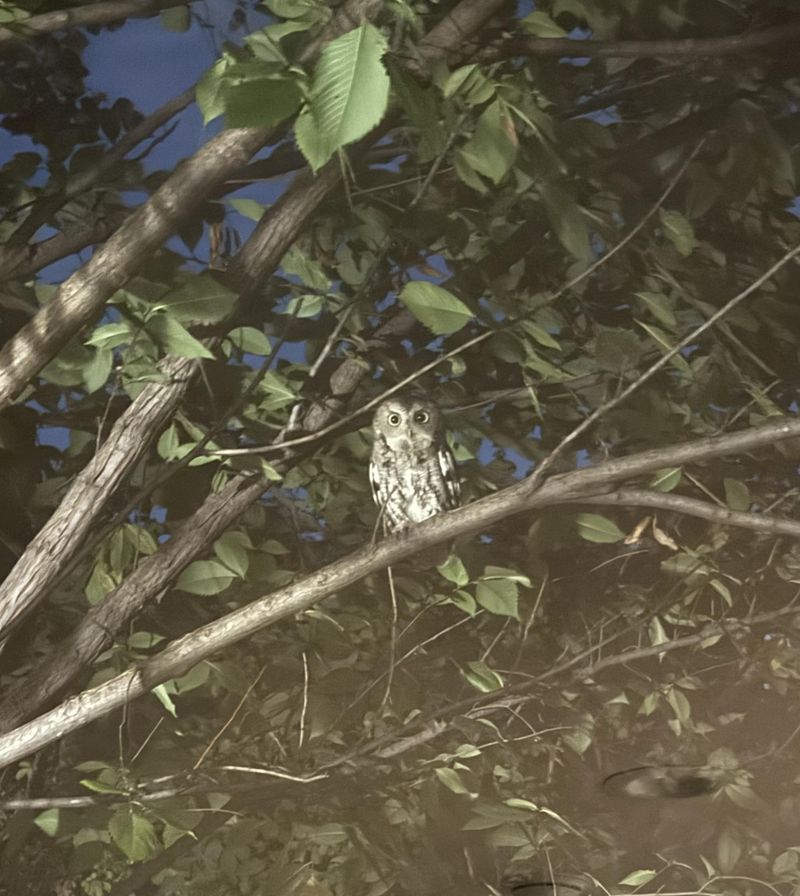
An owl call says something about the food web.
Owls go where hunting makes sense. A call near your home can mean the area supports rodents, insects, frogs, small birds, or other prey, depending on the owl species and habitat around you.
Great horned owls are powerful generalists. They can take rabbits, rodents, birds, and other small animals.
Barn owls are famous rodent hunters. Fields, barns, pastures, and open acreage often suit them.
Barred owls like wooded, wetter areas. Creek bottoms and mature tree corridors can support the prey they use.
Eastern screech-owls eat a wide menu. Large insects, mice, small reptiles, and other small prey may all be part of their diet.
Burrowing owls in open landscapes often take insects and small vertebrates. Grasshoppers and beetles can be important food.
A calling owl does not guarantee pest control. Owls follow prey availability, not human schedules.
Still, their presence can signal a functioning habitat. Native grasses, brushy edges, mature trees, and quiet nighttime areas all support that web.
Avoid using poison for rodents. A poisoned rodent can harm predators that eat it.
An owl calling near the yard is not just a sound.
It is evidence that the night shift of the ecosystem is active.
6. Young Owls Add Begging Notes
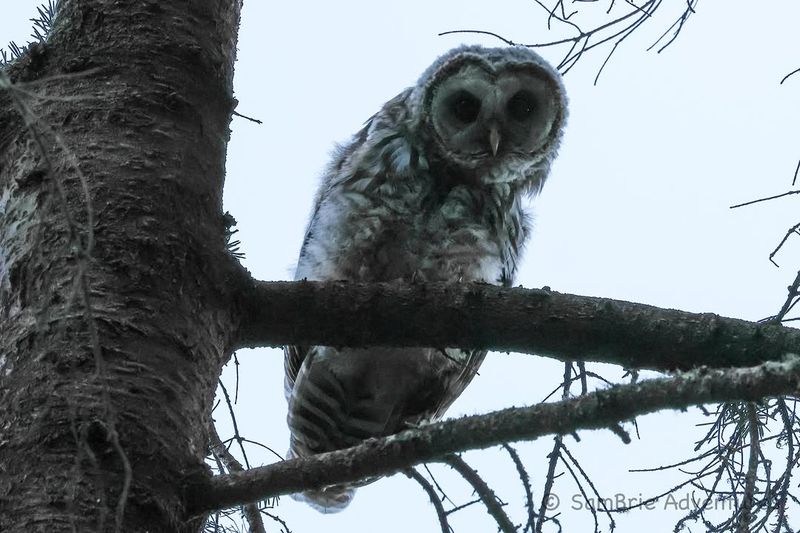
Not every strange owl sound comes from an adult.
Late spring and early summer can bring raspy, repetitive, almost unsettling calls from young owls. Juveniles are not polished singers. Their begging notes can sound like hisses, shrieks, whines, or rough cries repeated again and again.
That noise often means hungry youngsters. Young owls call to parents for food and contact.
Great horned owl young may leave the nest before they fly well. They perch on nearby branches and continue calling.
Those branchers can look awkward. Fluffy down, oversized feet, and alert eyes are normal at this stage.
Young barred owls can sound especially eerie. Their raspy calls carry far on still nights.
Eastern screech-owl fledglings may give thin, trembling calls. They often sound unlike the adults nearby.
Parents are usually close. They may stay silent or hidden while the young birds call.
A grounded young owl is not automatically abandoned. Many are still being fed by adults.
Keep pets away. Dogs and cats can quickly turn a normal fledgling stage into an emergency.
Call a licensed wildlife rehabilitator when a bird is injured, grabbed by a pet, or in immediate danger.
Juvenile calls can be loud and persistent.
They usually mean an owl family is moving through a normal stage of growing up.
7. Quiet Listening Protects The Routine
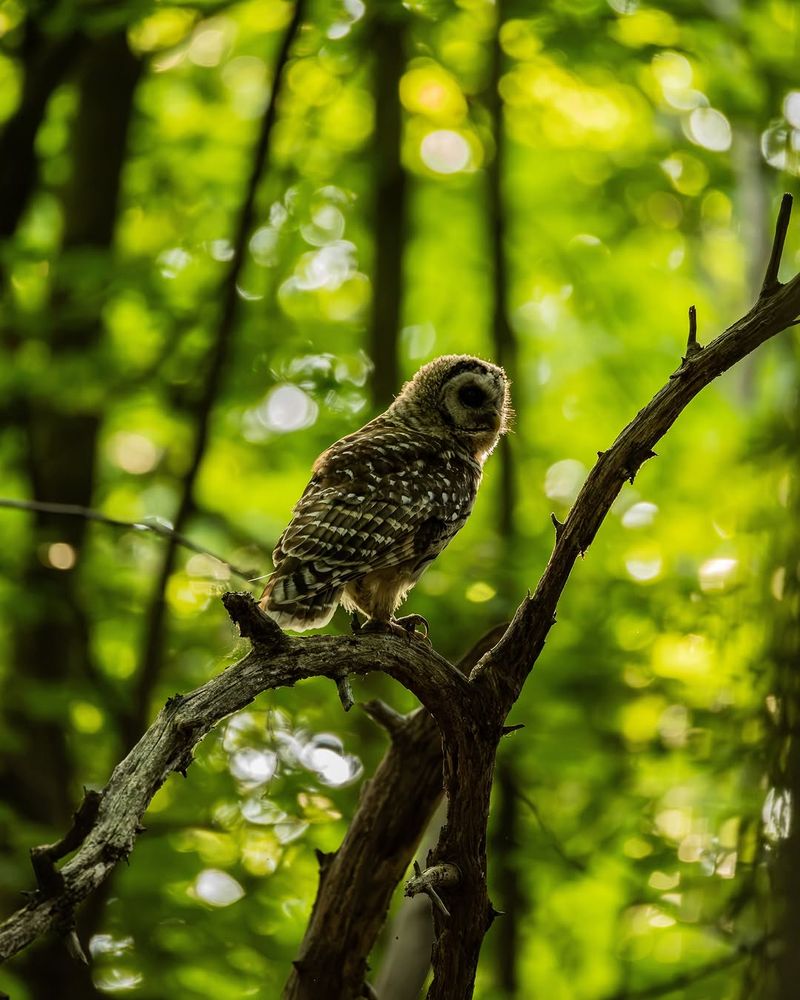
The best owl tool is attention.
A few nights of careful listening can reveal patterns that a single dramatic call never explains. You may learn when the owl arrives, which direction it travels, which species call nearby, and how the sounds change by season.
Start with time and date. Note when the call begins.
Add direction. Front yard, creek side, pasture edge, or neighbor’s oak can all matter.
Describe the sound. Hoot, trill, screech, whinny, bark, or hiss gives useful clues.
Notice repetition. A steady single call differs from a back-and-forth duet.
Record weather. Wind, rain, cold fronts, and warm nights can affect activity.
Use a bird identification app carefully. Apps can help, but final identification still benefits from repeated listening.
Do not chase the bird. Moving closer can interrupt the behavior you are trying to understand.
Compare over weeks. Patterns become clearer with patience.
Share observations with local bird groups when appropriate. Backyard records can be useful to community naturalists.
Let the mystery stay a little wild. Not every call needs an immediate answer.
Owls calling near a Texas home usually mean life is happening after dark exactly as it should.
Territories are being claimed, pairs are staying connected, young birds are learning, and hunters are moving through the night with a rhythm older than any porch light.
8. Outdoor Lights Can Change The Night
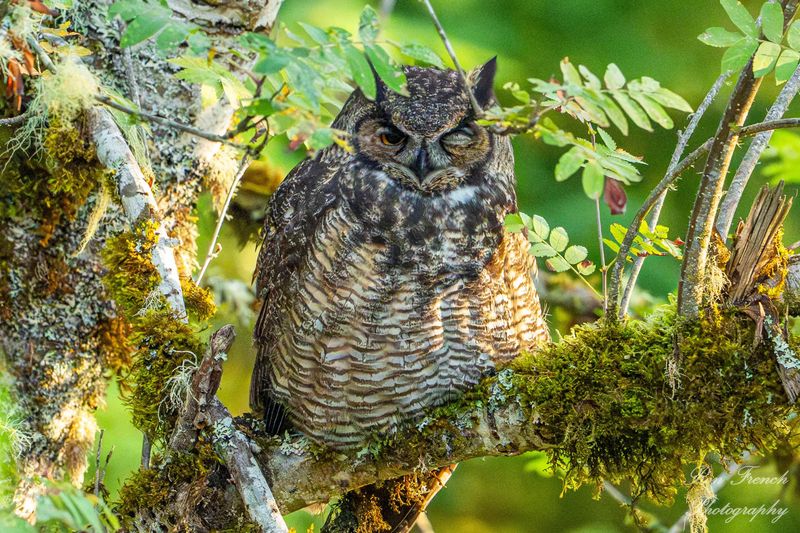
Lighting affects more than visibility.
Owls are adapted to darkness, and their prey are part of that same nighttime world. Bright lights around yards, barns, trees, and fences can change where animals move and how comfortable owls feel using the space.
Floodlights aimed into trees are disruptive. They can wash out roosting and hunting areas.
Downward-facing lights are better. They protect walkways without lighting the whole canopy.
Motion sensors reduce constant glare. Light appears when needed and then darkness returns.
Warm, lower-intensity lighting is usually gentler than harsh bright light.
Avoid lighting nest trees. Active nesting areas deserve a wider quiet zone.
Turn off unnecessary decorative lights during peak calling or nesting periods. The night does not need to look like daytime.
Keep porch lights shielded. Less spill into shrubs and trees helps nocturnal wildlife.
Do not shine flashlights directly at an owl for long. A brief look is different from repeated pursuit.
Use sound more than sight. Listening often reveals more than searching with light.
A darker yard can feel more alive.
Reducing unnecessary nighttime glare lets owls, insects, bats, and other night-active animals move more naturally.