Native Ohio Plants To Grow Instead Of Hostas In Shady August Beds
Hostas own August shade beds in Ohio by default. Not because they are the best option.
Because they are the familiar one, the one that was there when the house was bought, the one the garden center always has, the one nobody questions because it is always fine. Fine is a low bar for a garden bed that could be doing something more interesting.
Ohio native plants built for shade bring what hostas never could. Wildlife value, seasonal change, a connection to this landscape that a plant from Asia cannot offer regardless of how reliably it fills a spot.
Several of them peak in August specifically. That is not a coincidence.
It is an evolutionary response to the exact conditions Ohio shade beds produce in late summer, conditions that hostas simply endure while certain natives treat as their best moment of the year. August shade has better options.
They have been here all along.
1. Wild Ginger Brings Bold Leaves To Deep Shade
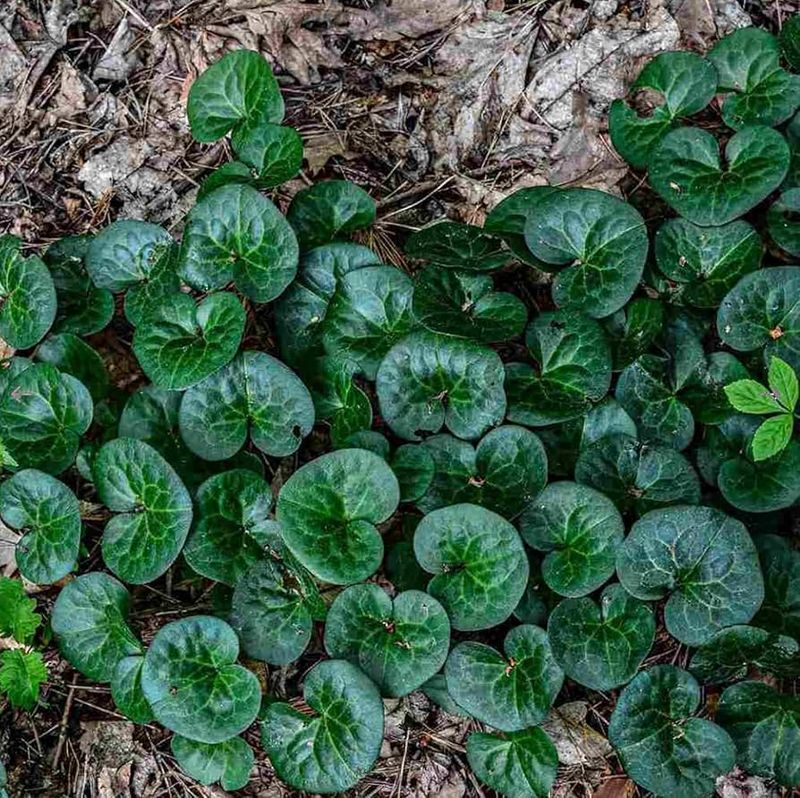
A spot where even shade-adapted plants grow thin and pale is often the hardest corner to fill. Wild ginger, known botanically as Asarum canadense, is a low-growing Ohio-native perennial.
It reaches only about six to eight inches tall and spreads steadily through underground rhizomes. Its broad, heart-shaped leaves are soft to the touch and deep green through the growing season, providing the kind of bold foliage mass that anchors a shaded planting.
By August, an established colony holds its leaf cover well, making it useful long after spring bloomers have faded. The unusual reddish-brown flowers appear at ground level in spring, but they are easily missed and not the plant’s main appeal.
Closely spaced nursery-grown transplants can create a fuller look from the start, though complete coverage across a large area may take two or more growing seasons.
Wild ginger prefers moist, well-drained soil rich in organic matter and does best in partial to full shade beneath deciduous trees.
It can tolerate somewhat drier conditions once established, but it does not hold up well in hot, exposed locations or compacted dry soil.
Avoid digging aggressively near large tree roots when planting. Water new transplants every one to two days during dry August stretches.
Note that this plant is unrelated to culinary ginger and should not be used in any food or remedy preparation.
2. Foamflower Builds A Soft Woodland Carpet
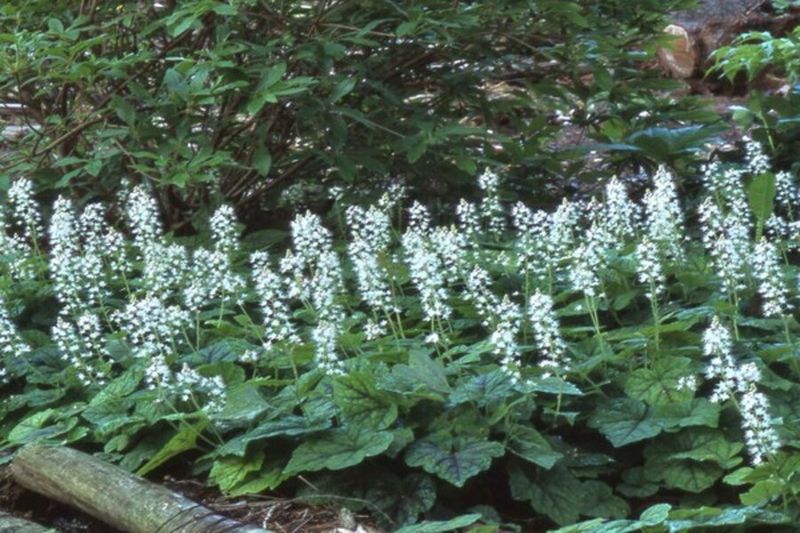
A moist, sheltered bed with gaps between taller plants often needs something low and spreading to tie the planting together.
Foamflower, Tiarella cordifolia, is an Ohio-native perennial that forms a basal rosette of lobed, mapple-like leaves, typically six to twelve inches tall in foliage.
The straight species spreads through stolons, sending out horizontal runners that root and form new plants nearby over time.
By August, the airy white flower spikes of spring are long finished, but the foliage remains attractive in reliably moist soil. Leaves often show a darker central marking that adds subtle pattern without relying on flower color.
The texture is softer and finer than many broad-leaved shade plants, which makes it useful for filling spaces between ferns or larger perennials.
Your Ohio Garden Changes Every Week. Your Plan Should Too.
Gardening in Ohio changes quickly throughout the season. Every Friday you’ll receive a simple weekly plan showing exactly what to plant, prune, fertilize, harvest, and protect so you never miss the right timing.
Foamflower performs best in partial to full shade with consistently moist, humus-rich, well-drained soil. It is not a dependable choice for severely dry soil beneath shallow-rooted trees.
If the ground dries out for extended periods in summer, leaves may show scorch along the edges or begin to look thin. Mulching around the plants helps retain moisture without burying the crown.
Space nursery transplants about twelve inches apart for a reasonable start, but expect stolons to fill gaps gradually rather than all at once.
Keep in mind that named cultivars and hybrids may behave quite differently from the native straight species in terms of size and spread rate.
3. American Alumroot Adds Texture Without Full Sun
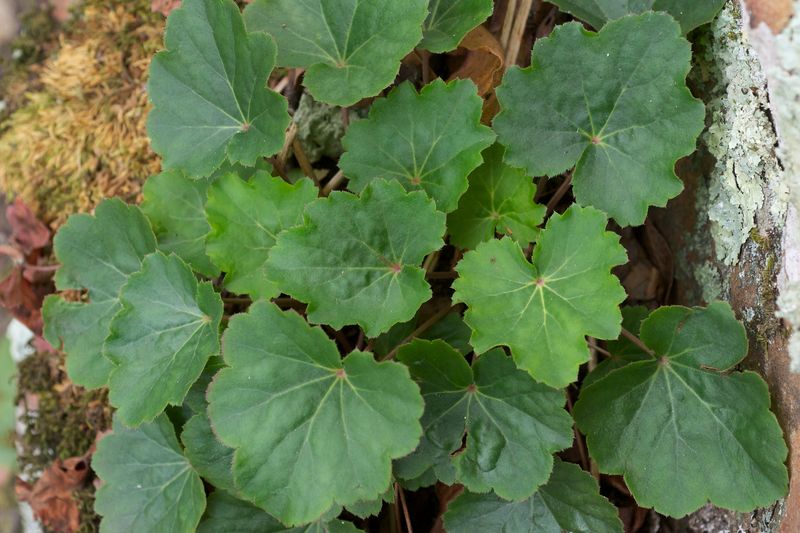
A shaded border that needs a tidy, low mound near its front edge often benefits from a plant with interesting leaf texture rather than showy blooms.
American alumroot, Heuchera americana, is a clump-forming Ohio-native perennial with rounded, shallowly lobed leaves.
In wild populations, these can display subtle silver or gray mottling. Mature clumps typically reach ten to eighteen inches tall in foliage, with slender flowering stems rising higher in late spring to early summer.
The small, greenish-white flowers appear on wiry stalks and are modest compared to the ornamental coral bells hybrids sold widely in garden centers.
Those hybrids carry vivid leaf colors bred through complex crosses, and those traits do not belong to the straight native species.
American alumroot foliage tends toward green with natural variation in markings across different plants and sites.
By August, the flowering stems have finished, and the basal leaf mound becomes the plant’s main contribution. It contrasts well with the finer texture of ferns or the broader leaves of other woodland perennials.
American alumroot grows in partial to full shade and tolerates a range of soils, including somewhat rocky or lean woodland soil, once established. Soggy, poorly drained ground is a problem, and the crown should sit at or just above the soil surface to prevent rot.
It expands slowly as a clump rather than spreading quickly, so plan spacing accordingly and water new transplants consistently through late summer.
4. Smooth Solomon’s Seal Lifts Shady Borders With Grace
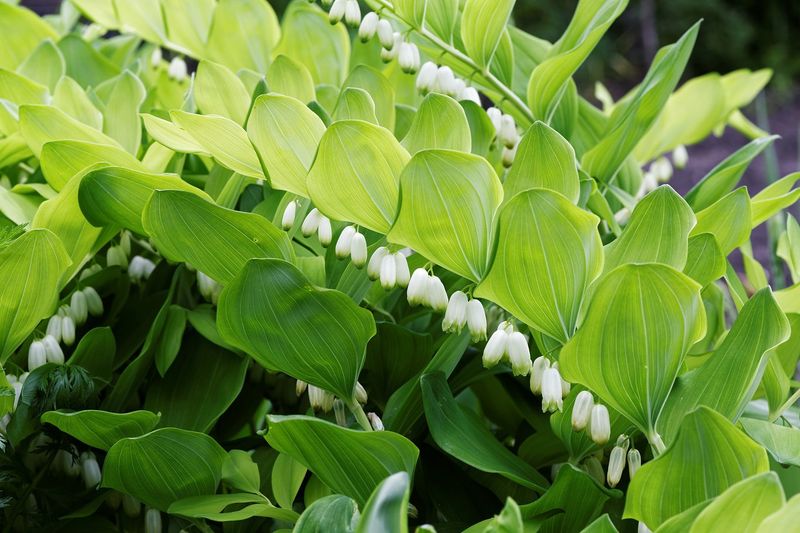
A middle or back section of a shaded border often lacks height without becoming stiff or blocky. Smooth Solomon’s seal, Polygonatum biflorum, fills that role with arching stems that rise and then curve outward, carrying alternating oval leaves along their length.
Mature plants typically reach two to three feet tall, though larger forms exist in some populations. The stems create a layered, relaxed silhouette that reads very differently from a low foliage mound.
Small, tubular, creamy-white flowers hang beneath the stems in spring. By August, those flowers have given way to round berries that ripen to a blue-black color.
This adds quiet seasonal interest at eye level when the stems arch over shorter plants. No part of the plant should be eaten, as the berries are not safe for consumption.
Rhizomes allow established colonies to expand gradually, but smooth Solomon’s seal is not a rapid filler for a large bare area. Plan for a slow, steady spread and give each plant enough room so the arching stems do not crowd a narrow path.
Clumps that mature over several years may lean outward noticeably, so place them where that spread is welcome rather than a problem. The plant prefers partial shade and moist, well-drained, humus-rich soil.
It can handle brief dry periods once established but performs better with reliable moisture. Water new transplants every day or two during hot August weather until roots settle.
5. Christmas Fern Keeps Dark Corners Looking Full
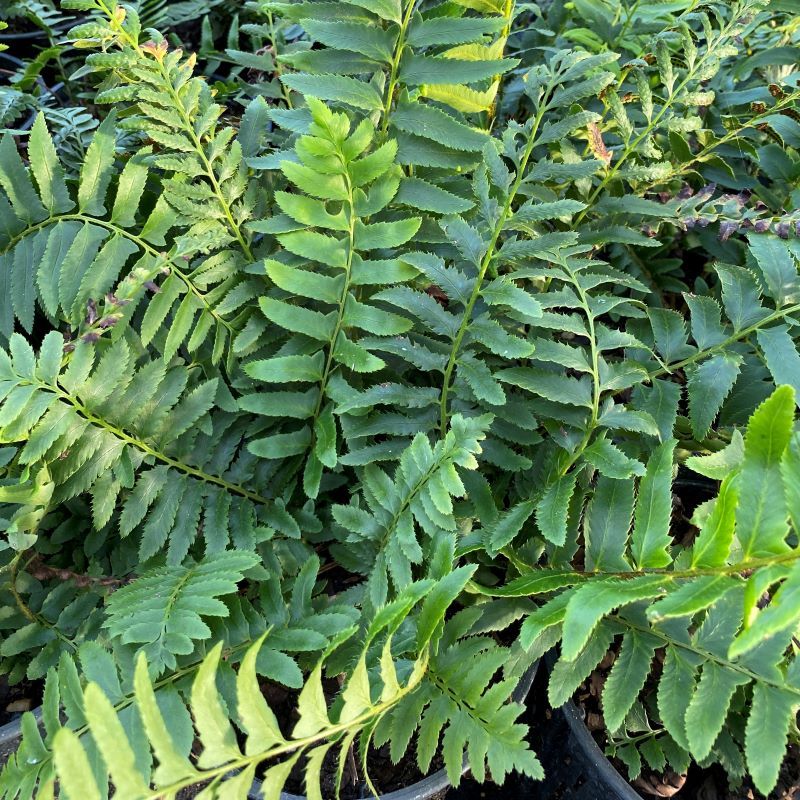
A dark corner that needs dependable leafy structure after spring woodland flowers have finished blooming is exactly where Christmas fern earns its place.
Polystichum acrostichoides is a clumping, evergreen to semi-evergreen fern native to Ohio and much of eastern North America.
Mature clumps typically reach one to two feet tall with fronds arching outward from a central crown. The individual leaflets are firm, dark green, and slightly glossy, giving each frond a leathery look.
That look holds up through late summer heat better than many finer-textured ferns.
In mild winters, the fronds often remain green into early spring, though hard freezes and heavy snow can cause them to flatten. By August, a well-sited plant presents a full, arching clump that adds reliable structure to spots where other plants thin out.
Several clumps spaced two feet apart can create repeating form through a longer shaded border without the plants merging into a single mass.
Christmas fern tolerates partial to full shade and prefers moist, well-drained soil with good organic content. It has a reported tolerance for somewhat drier shade once established, making it more adaptable than many ferns.
Still, a newly planted specimen needs consistent watering through August. Plant with the crown at soil level and avoid burying it.
Slopes and woodland edges suit it well because drainage remains good even after rain. Remove only damaged fronds that have become completely flat against the ground.
6. Lady Fern Unfurls Fresh Feathery Texture
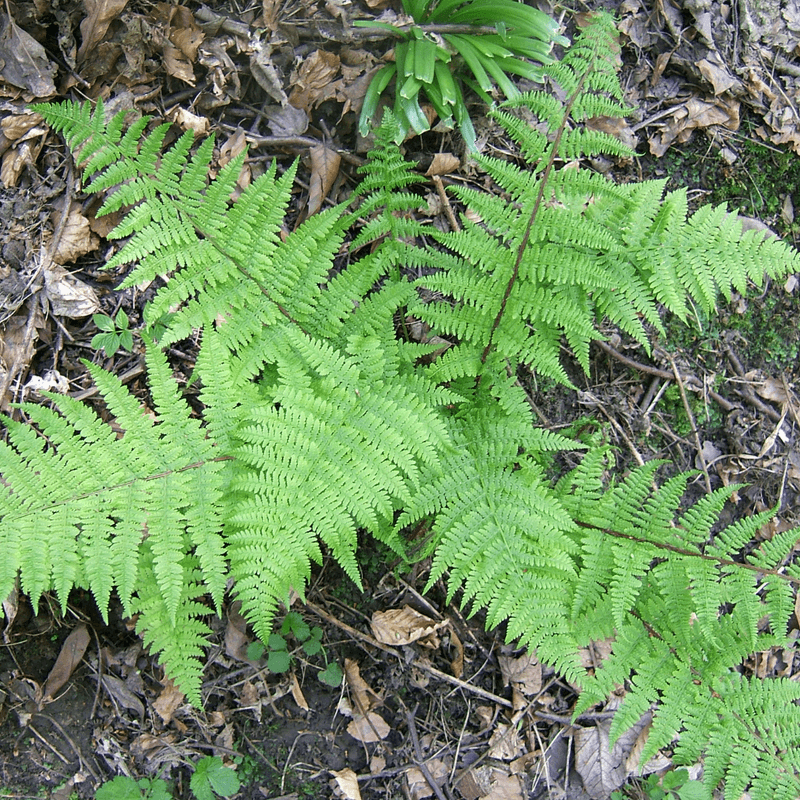
A cool, moist pocket where broad leaves dominate can feel heavy without something lighter to break up the mass. Lady fern brings finely divided, arching fronds that contrast sharply with coarser foliage nearby.
For populations native to Ohio and the broader region, authoritative botanical sources commonly apply the name Athyrium filix-femina. Regional taxonomy has seen ongoing review, though.
Use that name as a working reference while acknowledging that some sources recognize distinct varieties within the species complex.
Mature plants typically reach two to three feet in height, forming upright to arching clumps rather than a spreading carpet. The fronds are bright green with a soft, feathery appearance that comes from the closely spaced, finely cut leaflets along each frond axis.
That fine texture sets it apart from stouter woodland perennials and creates useful contrast in a mixed planting.
Lady fern needs consistent moisture and does not belong in dry shade beneath shallow-rooted trees. In prolonged summer dryness, fronds may brown at the tips, collapse partially, or go dormant early.
That limitation matters most in August, when heat and dry soil can combine quickly. Place it near shaded rain garden margins, low spots with moisture-retentive soil, or areas that receive supplemental water reliably.
Mulch lightly around the crown to slow moisture loss, but keep the mulch pulled back from the crown itself. Water new transplants deeply every day or two until roots establish, and do not expect full, lush fronds through every hot stretch.
7. Wild Geranium Fills Gaps Beneath Open Canopies
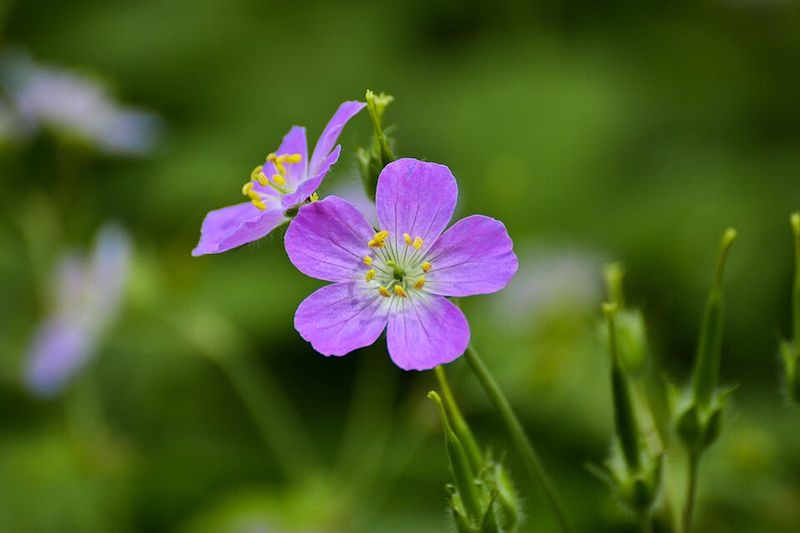
Dappled light beneath an open tree canopy creates a different growing environment than the deep shade under a dense evergreen. Wild geranium, Geranium maculatum, is an Ohio-native perennial that fits naturally into that kind of bright, shifting shade.
Its deeply lobed leaves form a loose, rounded mound that typically reaches one to two feet tall. Rhizomes expand the clump gradually over time, and self-sown seedlings may appear nearby, helping the plant occupy open gaps without any intervention.
The rose-purple spring flowers are the plant’s most recognized feature, but they are finished well before August arrives. By late summer, the focus shifts to the foliage mound and the developing seed capsules that follow flowering.
The leaves hold reasonably well through summer in sites with adequate moisture, but hot, dry conditions can cause them to look ragged or go partially dormant. Supplemental watering during establishment helps preserve the foliage during that vulnerable first season.
Wild geranium is not the same plant as the annual garden geranium or the Pelargonium species sold in hanging baskets. The two groups are unrelated despite sharing a common name.
This native species prefers partial shade and moist to moderately dry, well-drained soil with organic matter. Place it beneath open-canopy trees, along woodland edges, or among taller perennials where the mound can fill gaps naturally.
Move unwanted seedlings rather than viewing their appearance as a problem, since they transplant easily when small.
8. Blue Stemmed Goldenrod Brightens Late Summer Shade
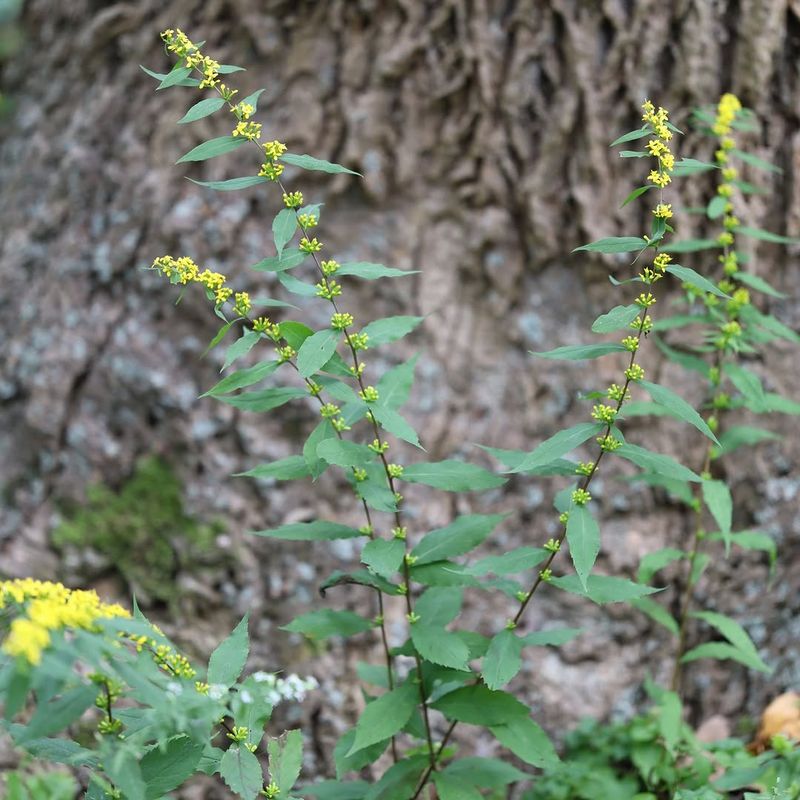
A shaded border that goes quiet after spring bloomers finish can feel unfinished through the back half of the season. Blue-stemmed goldenrod, Solidago caesia, addresses that gap directly by flowering from late summer into fall in partial to dappled shade.
The stems have a distinctive blue-green or glaucous cast that gives the plant its common name. Small clusters of yellow flowers appear along the stem at the leaf axils rather than only at the tip.
That arrangement creates a softer, more scattered look than the large arching plumes of sun-loving goldenrod species.
Mature plants typically reach two to three feet tall, sometimes a bit more. That means this species reads as a mid-border or back-of-border plant rather than a low foliage substitute.
Its upright to slightly arching habit adds vertical rhythm behind shorter ground covers or mounded perennials. The plant forms clumps and may spread modestly through rhizomes, but it does not behave aggressively in most garden settings.
Goldenrod pollen is heavy and carried by insects rather than wind, so it does not contribute to hay-fever symptoms the way wind-pollinated ragweed does.
Blue-stemmed goldenrod attracts bees and other pollinators during a period when many flowers have already finished.
It prefers partial shade and moist to moderately moist, well-drained soil. Place it behind lower plants so its height works as a backdrop.
Water new transplants consistently through August and keep the root zone mulched to slow moisture loss while roots establish.