Why Beets Seeded Now In North Carolina Turn Sweeter As The Fall Cold Sets In
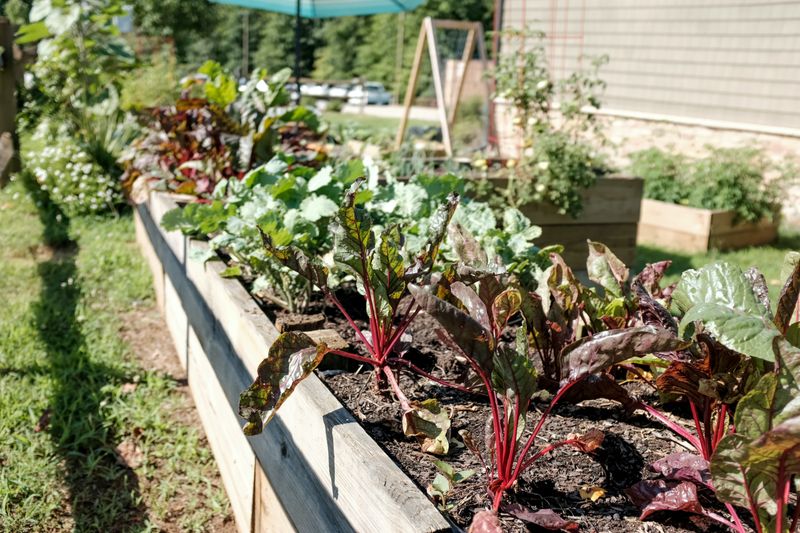
Dropping a handful of beet seeds into hot August soil feels like a mistake, but it is actually one of the smarter moves a North Carolina gardener can make. Beets are cool-season crops that thrive as summer heat eases, and a well-timed late-summer sowing can put tender, flavorful roots on your table just as the season turns. Several weeks of cool fall weather may genuinely improve their eating quality, though the results depend on timing, your region, and how well you manage the seedbed. Get those pieces right and you set yourself up for a harvest worth the effort.
Late-Summer Sowing Can Set Up a Fall Beet Harvest
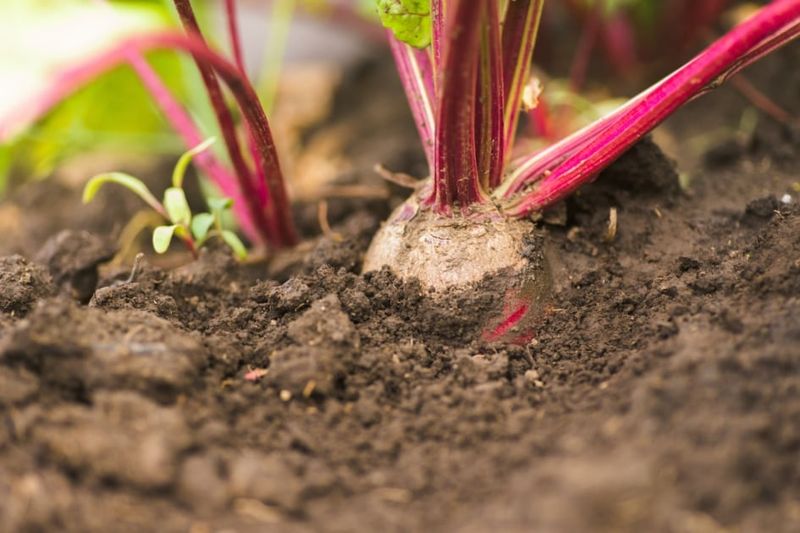
Beets belong to the cool season, not the scorching heart of a North Carolina August, so seeding them now is less about defying the heat and more about outrunning it. The plant’s scientific name is Beta vulgaris, and NC State Extension’s vegetable gardening guidance lists beets among the cool-season annuals well suited to both spring and fall production in the state. The goal of a late-summer seeding is to give the roots enough time to develop before the hardest freezes arrive, not to rush them through the hottest weeks.
Beets grow and develop noticeably better when temperatures stay below about 70 degrees Fahrenheit. Planting before the cool weather arrives simply hands the seedlings a running start, so they are already established when fall temperatures begin to moderate. Whether that planting actually succeeds depends heavily on heat, moisture, soil condition, and the specific weather your county sees between now and harvest.
The flavor benefit is real but qualified. Utah State Extension’s beet-growing research notes that high temperatures can reduce root quality and sugar levels, and that heat and water stress can make roots woody. Several weeks of sustained cool conditions may improve eating quality and texture, but not every cool night automatically produces a sweeter root. Think of cooler weather as removing a barrier to good quality rather than flipping a guaranteed sweetness switch.
Choose a Regional Sowing Window
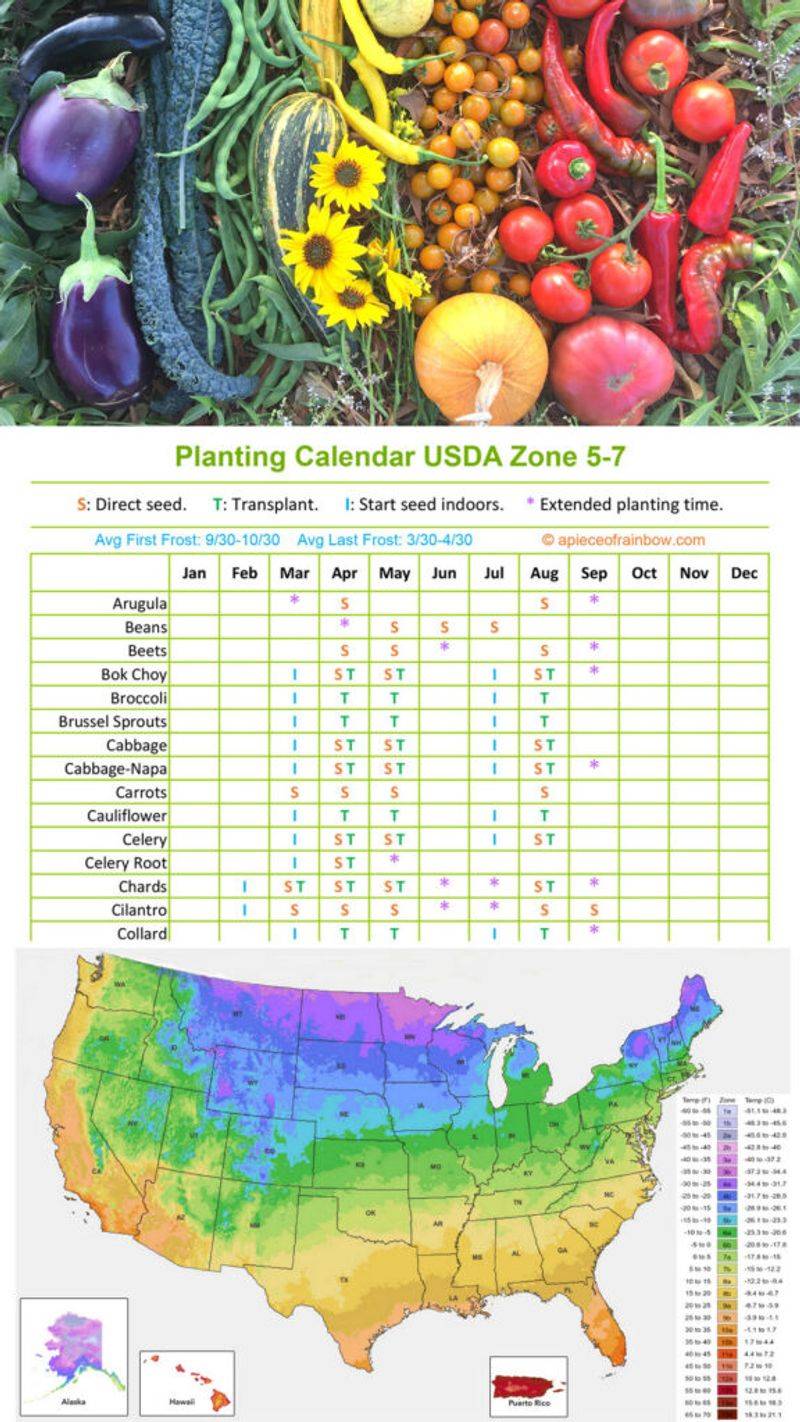
Picking the right week to sow is where a lot of gardeners get tripped up, mostly because North Carolina stretches across three very different growing zones and one statewide planting date simply does not exist. The practical method is to start with the NC State planting calendar for your region, find your expected fall frost date, and count backward roughly 55 to 60 days. That window is where your beet seeds need to go in the ground.
Mountain gardeners in the western counties generally need to sow earlier than anyone else in the state. NC State’s vegetable gardening handbook states that western North Carolina planting dates may run 10 to 20 days earlier than central recommendations, while Coastal Plain dates can shift 7 to 14 days later. If you garden in Asheville or Boone, your window may open in mid-July or early August. Raleigh and the Piedmont follow the central calendar, with the main fall-garden push landing in August.
Gardeners near Wilmington or on the Outer Banks often have room to sow into mid-August or even a touch later.
Your North Carolina Garden Changes Every Week. Your Plan Should Too.
Gardening in North Carolina changes quickly throughout the season. Every Friday you’ll receive a simple weekly plan showing exactly what to plant, prune, fertilize, harvest, and protect so you never miss the right timing.
August is the main fall-garden planning period, not a hard deadline that applies equally everywhere. The Eastern North Carolina Planting Calendar and the Western North Carolina Planting Calendar give region-specific windows that account for local frost timing and typical soil temperatures. Also check the Central North Carolina Planting Calendar if you are in the Piedmont. Treat those windows as your best planning tool, not a promise, because elevation, soil temperature, and local weather can shift your actual results by a week or more in either direction.
Manage Late-Summer Heat During Germination
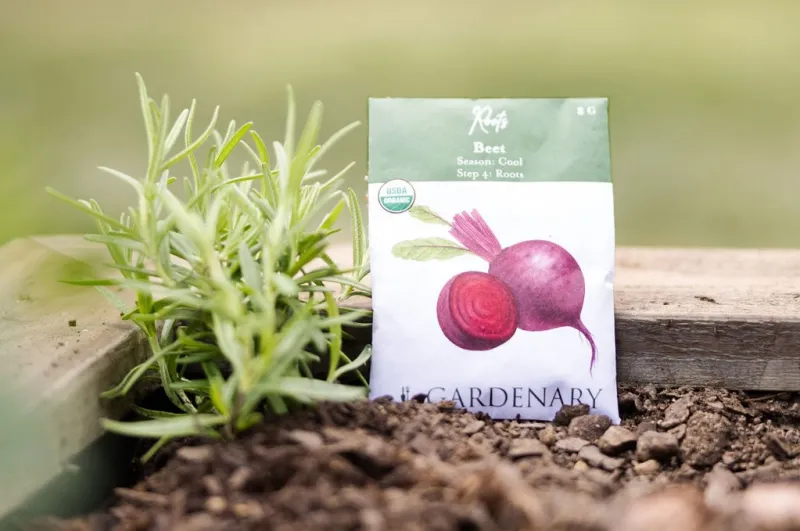
Here is where it gets tricky. You are asking beet seeds to sprout in soil that may still feel like a frying pan, and they will push back. Beet seeds germinate best when soil temperatures sit around 55 to 75 degrees Fahrenheit, and germination rates can drop noticeably once temperatures climb above 80 degrees. A late-August seedbed in the Piedmont or Coastal Plain can easily exceed that threshold, especially at the surface where the seeds actually sit.
Keeping the seedbed consistently moist is the single most useful thing you can do. Dry soil during germination is a quick way to lose the whole planting. Water gently and often enough that the top inch never fully dries out, but do not leave the bed waterlogged. A light cover of burlap, newspaper, or a board laid over the row can drop surface temperature noticeably and slow moisture loss.
Check under it daily and pull it off as soon as seedlings begin to push through, because they need light the moment they emerge.
Planting depth is one spot where advice varies, so follow your seed packet rather than assuming a single rule applies. NC State notes that fall seedings may go somewhat deeper than spring ones because hot, dry surface soil can prevent germination, while Utah State’s general guidance puts beet depth at roughly a quarter to half an inch. Because those numbers differ, the seed packet for your specific variety is the safest reference. What matters most is getting the seed into consistently moist soil and shading the surface until the seedlings are up and growing on their own.
Understand What Cooling Weather Can Do for Flavor
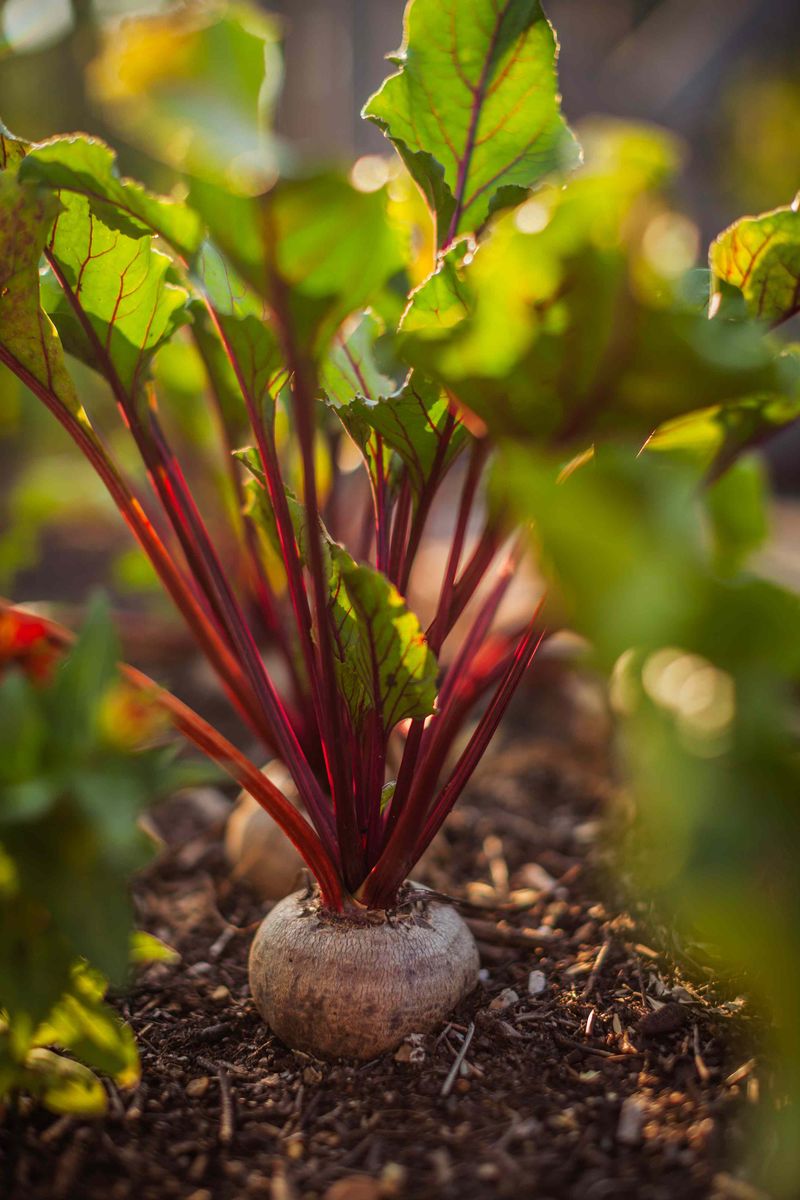
The claim that cold makes beets sweeter is directionally true but worth unpacking, because the actual picture is more nuanced than a simple temperature-equals-sweetness equation. Beets produce and store sucrose in their taproots, and published research on sugar storage in sugar beet taproots helps explain the underlying biology. But commercial sugar beets and the red, golden, or striped varieties in a home garden are not identical in their flavor response, and sucrose concentration in a processing crop does not directly predict what your Chioggia or Detroit Dark Red will taste like on a fall evening.
What the evidence does support is this: heat and water stress both work against beet quality. Utah State Extension’s beet research notes that high temperatures can reduce root quality and sugar levels, and that beets develop their best quality in the range of roughly 50 to 65 degrees Fahrenheit. Several weeks of cool or frosty weather may improve eating quality, and a plant that spends its final weeks growing in October air rather than August heat is simply operating under better conditions. That is a meaningful difference, even if it is not a guaranteed sweetness dial.
Flavor in a garden beet also depends on the cultivar you chose, how large the root grew before harvest, whether the plant experienced drought at any point, soil fertility, and how you cook or prepare it. A well-watered, timely-harvested beet grown in good soil will almost always taste better than one that sat too long or stressed through a dry spell, regardless of how cold the nights got. Think of the cooling weather as removing the obstacles to good flavor rather than actively manufacturing sweetness on its own.
Build Healthy Roots With Even Moisture and Space
Soil preparation is not the glamorous part of growing beets, but it is the part that most determines what you actually pull out of the ground in October. Beets do best in fertile, well-drained soil with a pH somewhere in the range of 6.0 to 6.5, which is the general target NC State recommends for vegetable gardens. If your Piedmont red clay compacts easily or your Coastal Plain sand drains too fast, adding organic matter before you seed will improve both moisture retention and root development. A soil test is the cleanest way to know what amendments you actually need rather than guessing.
Even moisture matters more than most gardeners expect. Utah State Extension recommends avoiding both water stress and fertilizer stress throughout the growing season. Water deeply enough to reach the developing root zone, then let the top inch dry slightly before watering again. Saturated soil invites rot and can misshape roots just as surely as drought can.
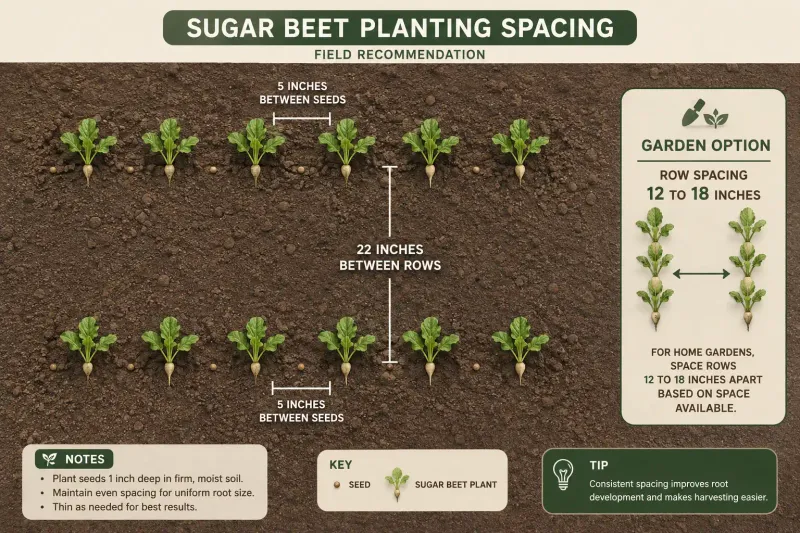
Thinning is the step that many first-time beet growers skip, and it costs them. What looks like a single beet seed is often a dried cluster holding several true seeds, so a row of beet seedlings can come up thick and crowded almost overnight. Utah State’s root-crop spacing guidance recommends about 3 inches between plants, while NC State lists 2 to 3 inches as an intensive spacing that works in well-prepared beds. Crowded roots compete for space and nutrients and tend to stay small or develop poorly.
Thin as soon as seedlings are an inch or two tall, and toss the thinnings into a salad because they are genuinely good to eat.
Read Frost and Pest Risks Correctly
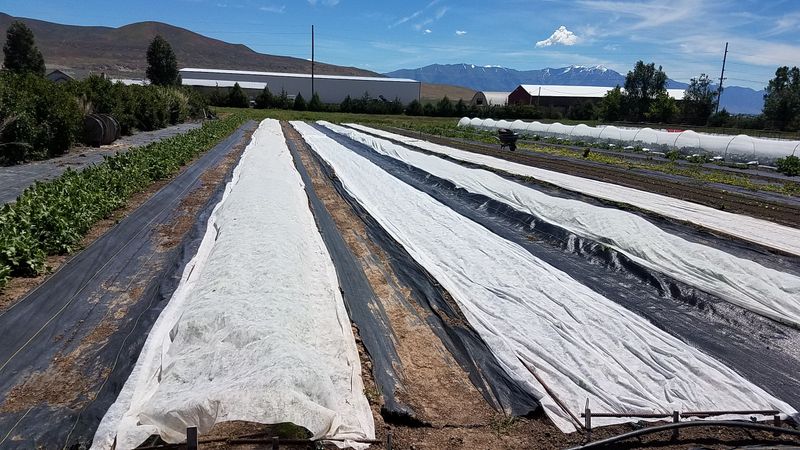
Established beets are tougher than they look when a light frost rolls through. University of Minnesota Extension notes that beets can survive temperatures in the high 20s once the plants are well established. That tolerance is genuinely useful in North Carolina, where a surprise cold snap in October does not have to mean a lost crop. But hard freezes, prolonged periods of frozen soil, and sudden cold exposure when plants are still very young are different situations entirely.
Harvest before a severe freeze is forecast or cover the bed if one is coming.
There is also a bolting risk worth knowing about. The Southeastern U.S. Vegetable Crop Handbook notes that two to three weeks of temperatures below 50 degrees Fahrenheit after several true leaves have formed can trigger seedstalk development in some cultivars. This is most relevant to unusually early sowings or abnormal cold spells in the mountains, not a reason to avoid normal fall planting in the Piedmont or Coastal Plain.
Pests do not simply disappear when temperatures drop. NC State’s root-knot nematode guidance points out that nematode activity slows below 60 degrees Fahrenheit but can be extensive in warm, infested soil between 70 and 85 degrees. A late-summer planting in sandy Coastal Plain soil may face real nematode pressure before the ground cools. Flea beetles are a separate concern for young seedlings, and
NC State’s insect pest guide recommends scouting, crop rotation, sanitation, and row covers as layers of protection.Scout the bed regularly rather than assuming cooler weather has handled everything for you.
Harvest by Root Size and Weather
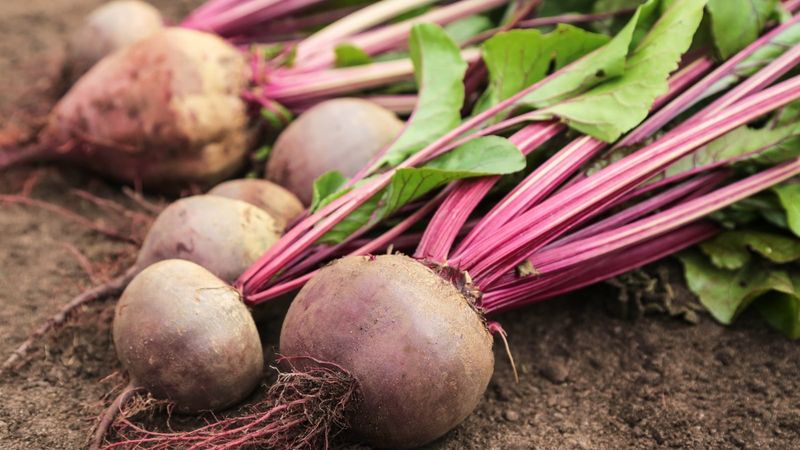
No calendar date guarantees that your beets are ready. Roots may mature anywhere from about 55 to 80 days after seeding depending on the variety, how the summer heat affected early growth, and whether the plants hit any moisture stress along the way. The NC State Eastern Planting Calendar lists roughly 55 to 60 days as a planning estimate, but treat that number as a starting point for checking rather than a finish line.
The best signal is the root itself. Gently brush away a little soil around the base of a few plants and look for shoulders that have sized up to about 1.5 to 3 inches across. Utah State Extension notes that younger, smaller roots are generally more tender, while oversized roots that stay in the ground too long tend to become fibrous and lose quality. You do not need to wait for the first frost to pull them.
Harvest whenever roots reach a usable size, and work through the bed gradually rather than trying to pull everything at once.
When a hard freeze is in the forecast, harvest what you can and protect what remains with a thick layer of straw mulch. For roots you are bringing inside, twist or cut the tops off while leaving about an inch of stem attached, and handle them gently to avoid nicks that invite rot. Utah State’s root-crop storage guidance recommends keeping beets at roughly 32 to 35 degrees Fahrenheit with very high humidity, close to 98 to 100 percent, where they may hold well for 2 to 4 months under suitable conditions. A refrigerator crisper drawer works for small quantities, while a cool basement or root cellar suits a larger harvest.
Make the Fall Beet Bed Safe and Practical
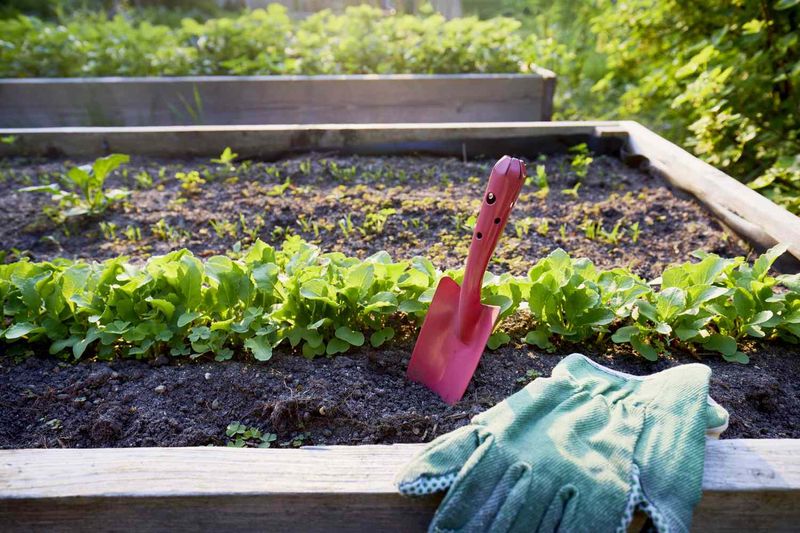
Pulling together a successful fall beet planting comes down to a handful of decisions made in the right order. Pick your sowing window from the NC State calendar that matches your region, count backward from your expected frost date, and get the seeds in before the window closes. Keep the seedbed consistently moist through the hot first weeks, thin the seedlings promptly to 2 to 3 inches apart, and scout for pests rather than assuming cool weather has handled them.
One safety consideration that does not always make the gardening articles deserves a clear mention here. Beets are root crops, meaning the part you eat grows in direct contact with the soil. NC State’s guidance on soil contaminants in urban gardens specifically flags root crops as a concern near older buildings, roadsides, demolition sites, former industrial areas, or ground that has flooded. If your garden sits in any of those situations, get a soil test before planting beets in the ground, or build a raised bed filled with clean, imported soil.
Washing and peeling roots reduces but does not eliminate every risk.
Late-summer sowing is a reasonable opportunity for a fall crop, not a magic formula. Follow regional timing, manage the seedbed through the heat, give roots space and steady moisture, and harvest by size rather than by date. The quality of what you grow may genuinely benefit as North Carolina’s long, warm fall cools into October, and that is reason enough to put those seeds in the ground.