What Happens To Florida Tomato Plants During Afternoon Thunderstorms (And How To Help)
Florida tomatoes do not get a quiet summer. They get drama on schedule.
One minute, the plants look sun-baked and thirsty. The next, the sky cracks open, rain slams the bed, and the whole garden turns into a splash zone. It feels helpful. It looks refreshing. Your tomatoes may even perk up for a moment.
Then the sneaky part starts.
Storms can change the soil, leaves, stems, fruit, and mulch faster than most gardeners expect. A plant that looked fine before lunch can need a small rescue mission by dinner. Not panic, though. More like garden triage with better snacks.
The trick is to know what the storm did before you grab pruners, add fertilizer, spray, or apologize to your tomato cage.
Florida growers need storm habits, not perfect weather. Your reward is fewer split fruit and fewer mystery leaves. That feels fair enough.
So what really happens to Florida tomato plants during those afternoon downpours, and how do you help them bounce back without making the mess worse?
1. Rain Splashes Pathogens Onto Lower Leaves
Tomato leaves do not need a mud facial. They get one anyway when rain hits bare soil.
A fat drop lands beside the plant, bursts outward, and tosses tiny soil particles onto the lower leaves. That splash can carry bacteria, fungal spores, and bits of old plant debris right into the canopy.
The lowest leaves take the first hit. They sit closest to the soil, so they catch the mess before the upper plant ever knows trouble has arrived.
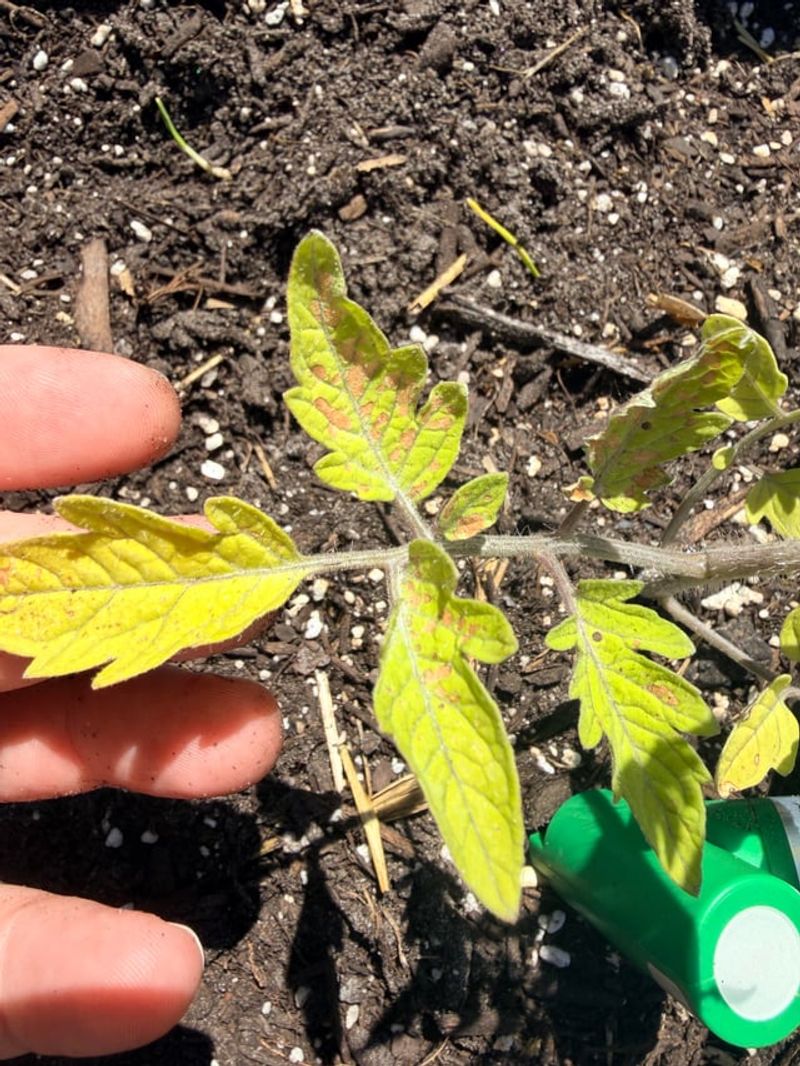
Check the bottom six inches after a hard storm. Look for small dark spots, yellow edges, greasy-looking patches, or leaves that suddenly look tired for no obvious reason.
Do not rush for a spray bottle. First, clean up the splash zone.
Mulch is the tomato plant’s raincoat. A two-to-three-inch layer of straw, pine bark, shredded leaves, or clean mulch softens the impact of rain and keeps soil where it belongs.
Keep that mulch a couple inches away from the main stem. A mulch volcano around a tomato stem is not garden care. It is a damp little bad idea.
Stake or cage plants so leaves stay off the ground. Air and space help the lower canopy dry faster after storms.
Remove badly spotted lower leaves with clean pruners. Bag them instead of letting them sit under the plant.
One storm can make a mess. A mulched, lifted plant handles the next one with much less drama.
2. Saturated Soil Starves Roots Of Air
Roots need air more than gardeners realize.
After a Florida downpour, soil can fill with water so fast that air gets pushed out of the tiny spaces roots use. The plant may wilt even though the bed looks soaked. That feels unfair, but tomatoes are dramatic little athletes with complicated plumbing.
A wilted plant in wet soil is not asking for more water. It may be short on oxygen.
Check below the surface before you react. Push a finger, chopstick, or soil probe about four inches into the bed. Moist crumbs are fine. Muddy slurry means the root zone needs time to drain.
Your Florida Garden Changes Every Week. Your Plan Should Too.
Gardening in Florida changes quickly throughout the season. Every Friday you’ll receive a simple weekly plan showing exactly what to plant, prune, fertilize, harvest, and protect so you never miss the right timing.
Raised beds help in many Florida yards because water can move out more easily. Flat beds in compacted soil may stay soggy longer after repeated storms.
Containers need a separate check. Drain holes clog with roots, potting mix, mulch, or random porch debris. One blocked hole can turn a decent pot into a tomato bathtub.
Tilt containers slightly after a major storm when water sits on the surface. Clear drain holes as soon as the pot is safe to handle.
Do not fertilize right after saturation. Stressed roots cannot use nutrients well, and extra salts can add pressure.
The funny part is that the plant can look thirsty while it sits in too much water. Tomato logic, right.
Drainage fixes that confusion better than another round from the hose.
3. Fast Moisture Swings Split Ripening Fruit
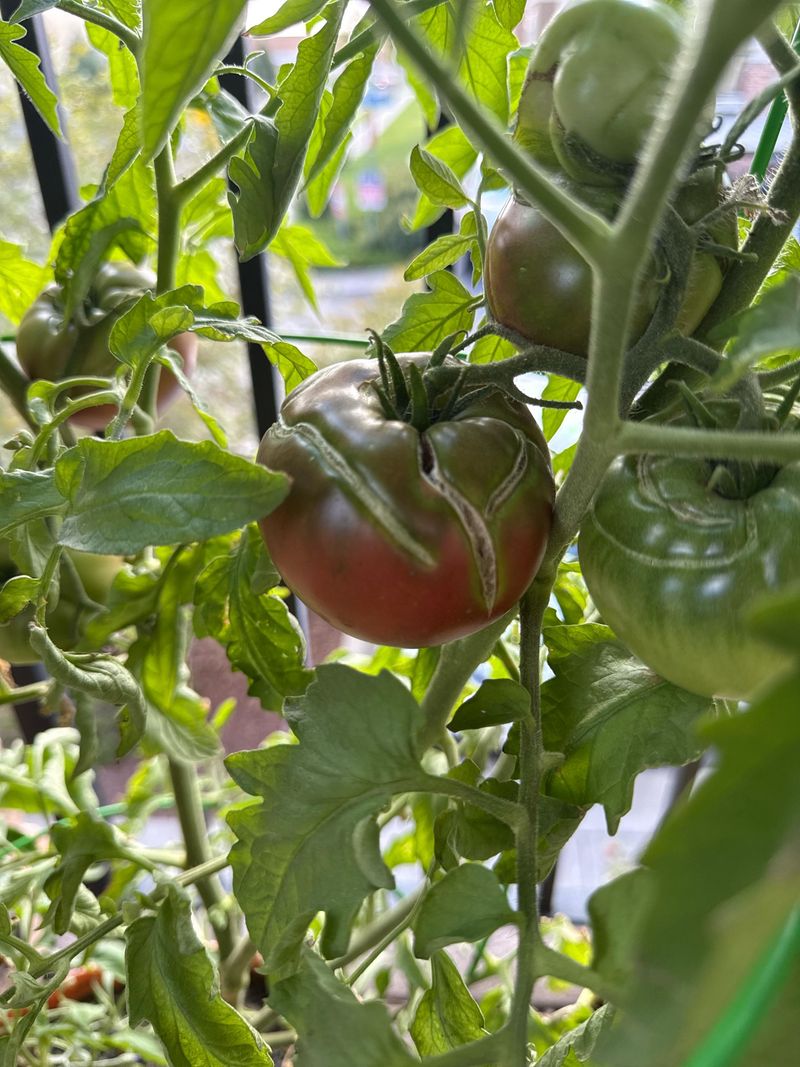
Nearly ripe tomatoes have thin patience.
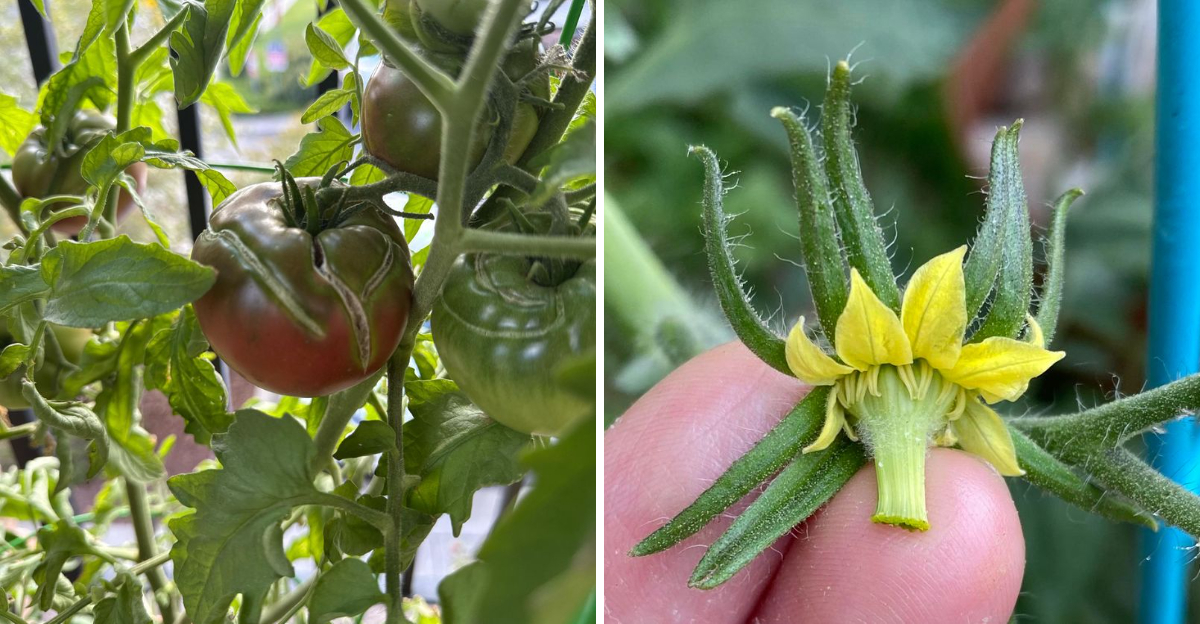
After a dry stretch, a sudden storm can send a rush of water through the plant. Fruit close to ripe may swell faster than the skin can stretch. The result is a crack near the stem or a ring around the shoulder.
The tomato is not trying to betray you. It just got filled too fast.
Florida’s rainy season loves this trick. Hot mornings dry the bed, then afternoon rain hits hard. That fast swing puts the most pressure on fruit already near full size.
Mulch helps smooth the ride. A steady layer around the plant slows soil dry-down between storms, so the next rain does not feel like a flood after a drought.
Drip lines or soaker hoses help too. They keep moisture more even during dry gaps, which reduces the size of the storm surprise.
Harvest fruit at the first blush of color. A tomato that has started to turn can finish indoors on the counter with plenty of flavor.
This simple move keeps ripe fruit from sitting through three more storms and gaining extra cracks like badges of chaos.
Use a shallow basket, not a deep bucket, so fruit does not bruise under its own weight.
Cracked fruit can still be useful when clean and fresh. Sauce forgives a lot. Sandwich slices, sadly, can be pickier.
4. Strong Winds Break Unsupported Stems
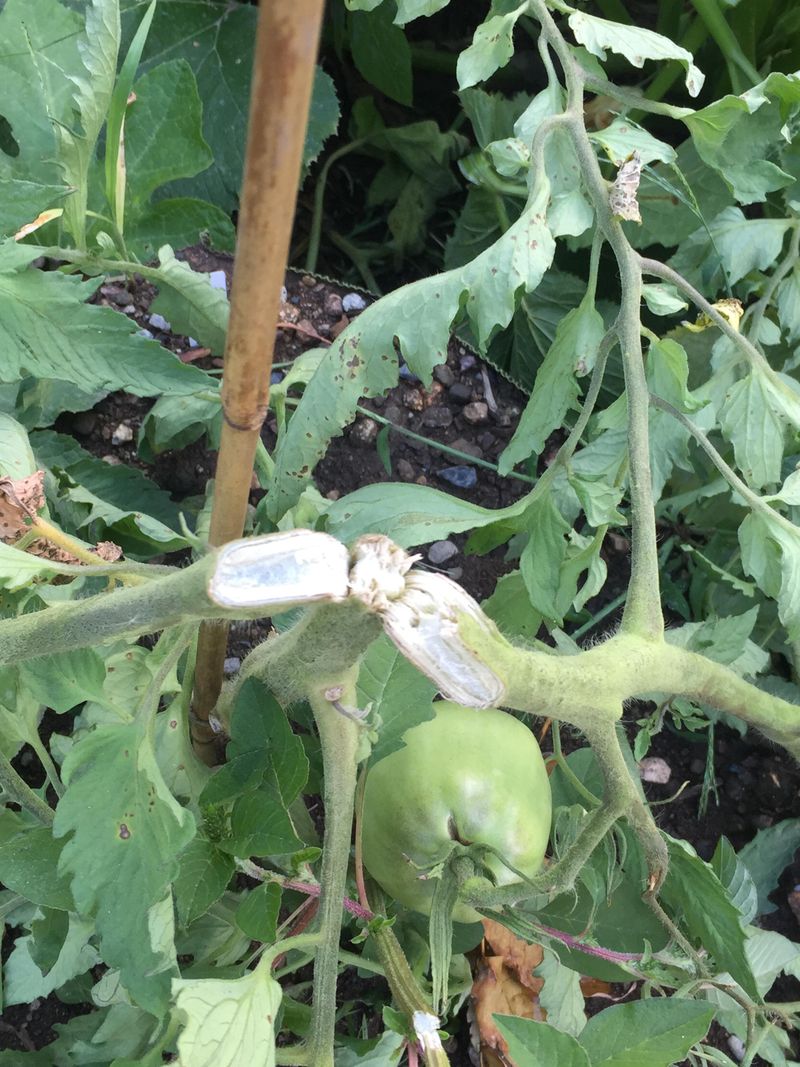
A tomato plant full of fruit can act like a sail.
Florida storm gusts arrive fast, and a heavy vine catches that wind with surprising enthusiasm. Weak cages, loose ties, and tall stems can lean, split, or fold before the rain even starts.
Cheap cone cages often look confident in the store. By August, many become tomato jewelry.
Stronger support makes a big difference. Use heavy cages, sturdy wooden stakes, cattle panel sections, or a Florida weave system for rows.
Set stakes deep. A shallow stake rocks in wet soil and makes the plant wobble more with each gust.
Check ties before storm season gets rowdy. Soft cloth, garden tape, silicone clips, or strips of old T-shirt hold stems without cutting into them.
Avoid tight wire and rigid zip ties. Stems keep expanding, and hard ties can pinch them.
Fruit-heavy branches may need their own support. One small clip under a loaded cluster can spare the stem a lot of stress.
After a storm, do not yank a bent stem upright. Support it gently and give it a chance to recover.
A stem with one side still intact may keep water flow intact. A padded tie and a quiet few days can do more than heroic tugging.
Remove fully collapsed growth with clean pruners once you know it will not rebound.
Your tomato cage should not need a rescue squad. Upgrade support before the weather goes full drama queen.
5. Wet Foliage Extends Disease Pressure
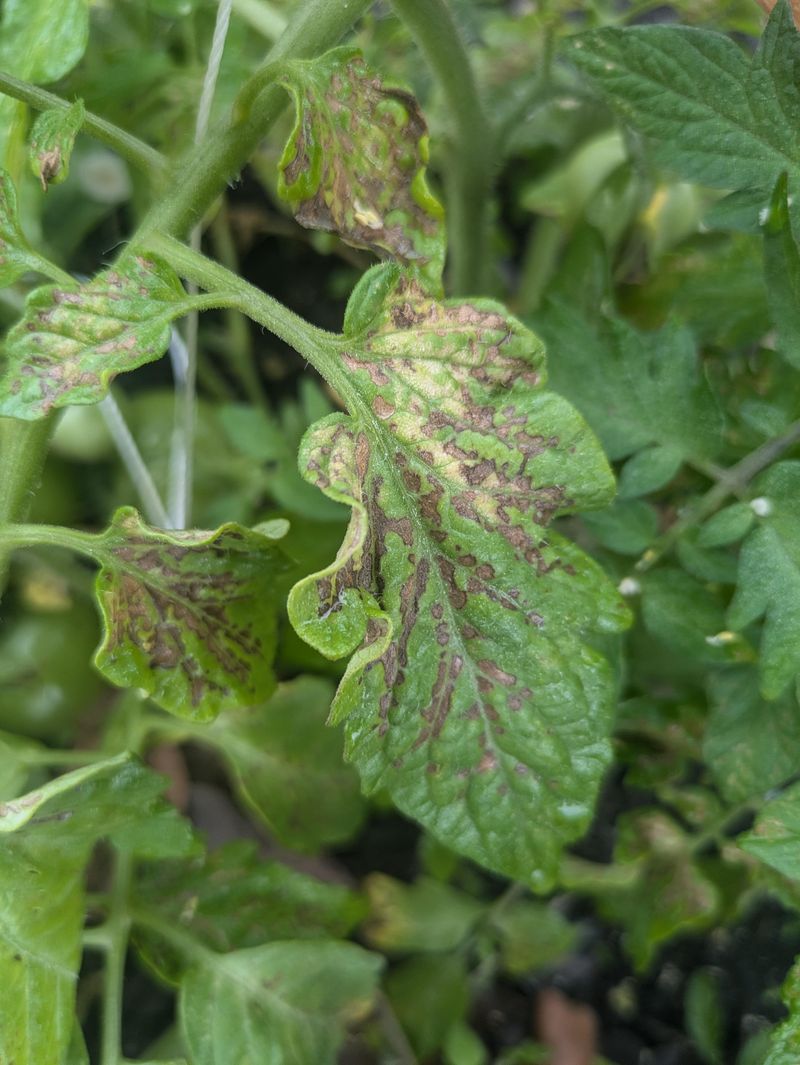
Wet leaves are trouble’s favorite lounge.
Florida already gives tomato plants warm nights, heavy humidity, and frequent rain. Add an extra overhead rinse, and foliage can stay damp longer than the plant needs. That longer wet period can invite leaf problems, especially inside crowded plants.
Start with airflow. A dense tomato canopy may look impressive, but air has a hard time moving through it.
Remove the lowest leaves that touch soil. Thin only enough to open the plant, not enough to expose fruit to harsh sun.
Water at the base. Drip tubing, a soaker hose, or a careful hose stream keeps moisture near roots instead of across the leaves.
Morning is the safer time for any necessary rinse. Leaves then have daylight and heat to dry.
Look closely before you use a treatment. Small dark spots, yellow halos, greasy patches, and brown rings can point to different issues.
Heat stress, mites, nutrient problems, and storm injury can also mimic disease. The plant is allowed to be confusing. It is a tomato.
Remove heavily affected leaves first. Clean pruners and clean hands matter more than gardeners like to admit.
Do not leave suspect leaves on the bed. That gives the next storm more material to splash around.
A dry canopy is not fancy advice. It is basic tomato manners.
Roots get the water. Leaves get air. The plant gets a better chance.
6. Mulch Washes Away From The Root Zone
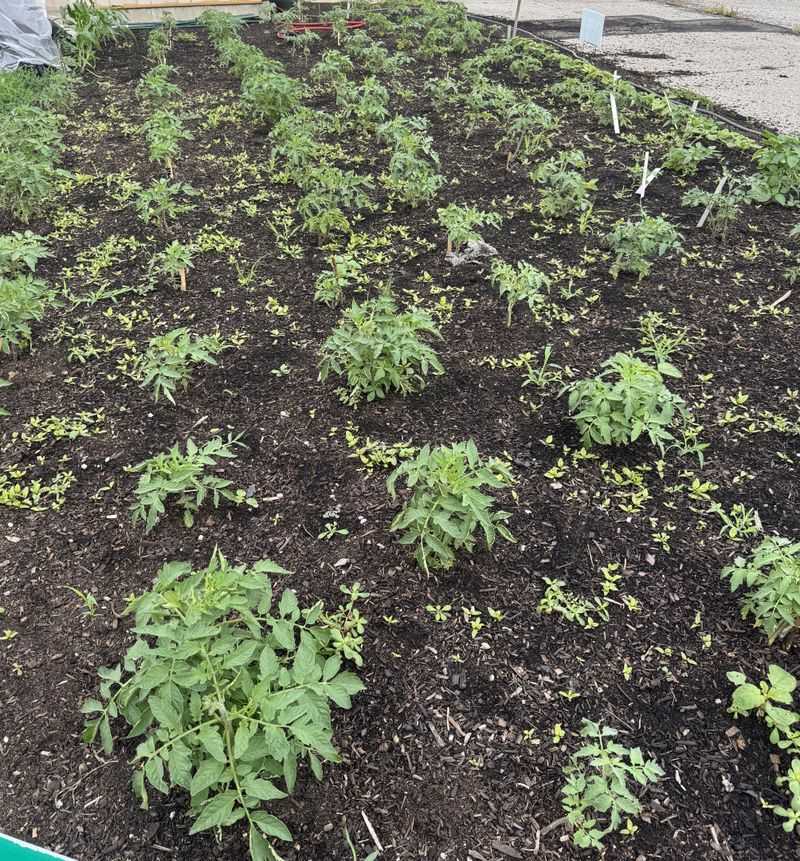
Mulch can go on a little storm vacation.
One minute, it sits neatly around the tomato plant. After a hard Florida downpour, it may be piled against the fence, shoved into a corner, or gathered in strange little islands across the bed.
That matters because bare soil heats fast and splashes hard. Roots near the surface lose protection, and the next storm has a clear path to throw soil onto the leaves.
Wait until the bed is not muddy before you fix it. Wet soil compacts easily under tools and hands.
Then rake or hand-pull mulch back into a wide ring around the plant. Keep it even, loose, and a couple inches away from the main stem.
Add fresh material where the layer has thinned. Pine bark, straw, shredded leaves, or wood chips can all help.
Heavier mulch tends to stay put better than fine straw during intense rain. On a slope, it may help to use small branch pieces, edging, or contour rows to slow runoff.
Do not mound mulch against the stem. A damp collar around the base can invite problems.
Look for channels carved by runoff. Fill small grooves and redirect water before the next storm turns them into mini rivers.
Tomatoes appreciate mulch with boundaries. It should act like a blanket, not a clingy scarf.
7. Storm Humidity Can Stall New Fruit Set
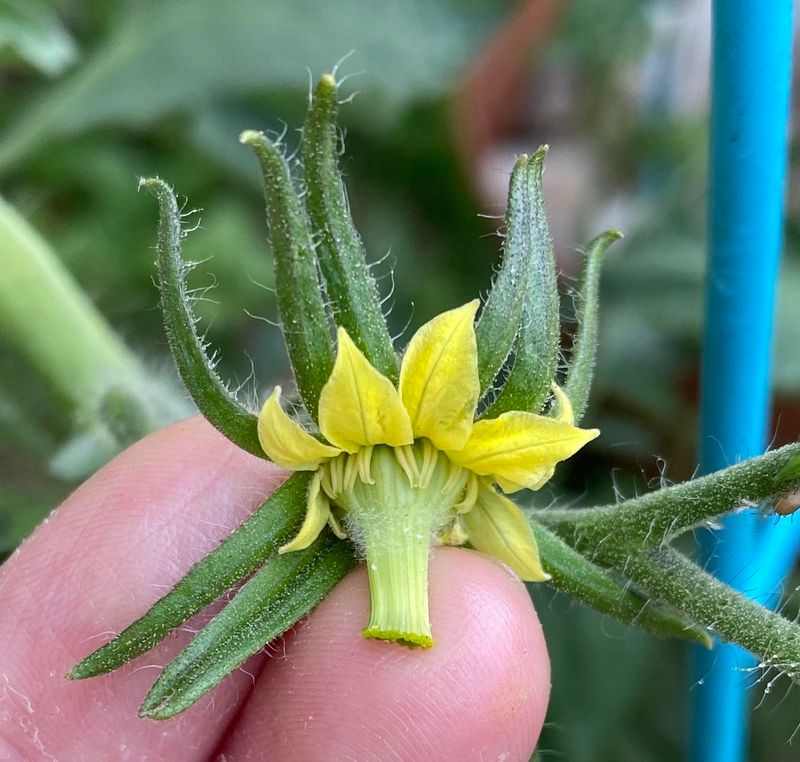
Tomato flowers are pickier than they look.
A Florida thunderstorm does more than soak leaves and shove mulch around. It can also leave the air heavy, the pollen clumpy, and the blossoms less likely to set fruit over the next day or two.
Tomato pollen needs to move. A little vibration from wind, bees, or a gentle tap helps it drop inside the flower.
After a muggy storm, pollen may not shed as easily. Add high heat, damp air, and stressed plants, and some blossoms may simply drop without making fruit.
That does not mean the plant is finished. It may just be taking a short weather timeout, which honestly feels relatable in August.
Check the flower clusters after several stormy afternoons in a row. Yellow blossoms that fall cleanly without a tiny fruit behind them point toward poor fruit set, not a mystery pest.
Help the plant by reducing stress around the roots. Keep soil moisture steady, refresh mulch, and avoid heavy fertilizer that pushes leafy growth instead of balanced fruit production.
Shake cages or tap flower stems gently in the morning once plants are dry. That small vibration can help pollen move before the next round of clouds rolls in.
Patience helps too. When the weather steadies, healthy tomato plants often return to setting fruit. Florida storms may pause the harvest rhythm, but they do not get the final word.
8. Reset Plants With Drainage Mulch And Support
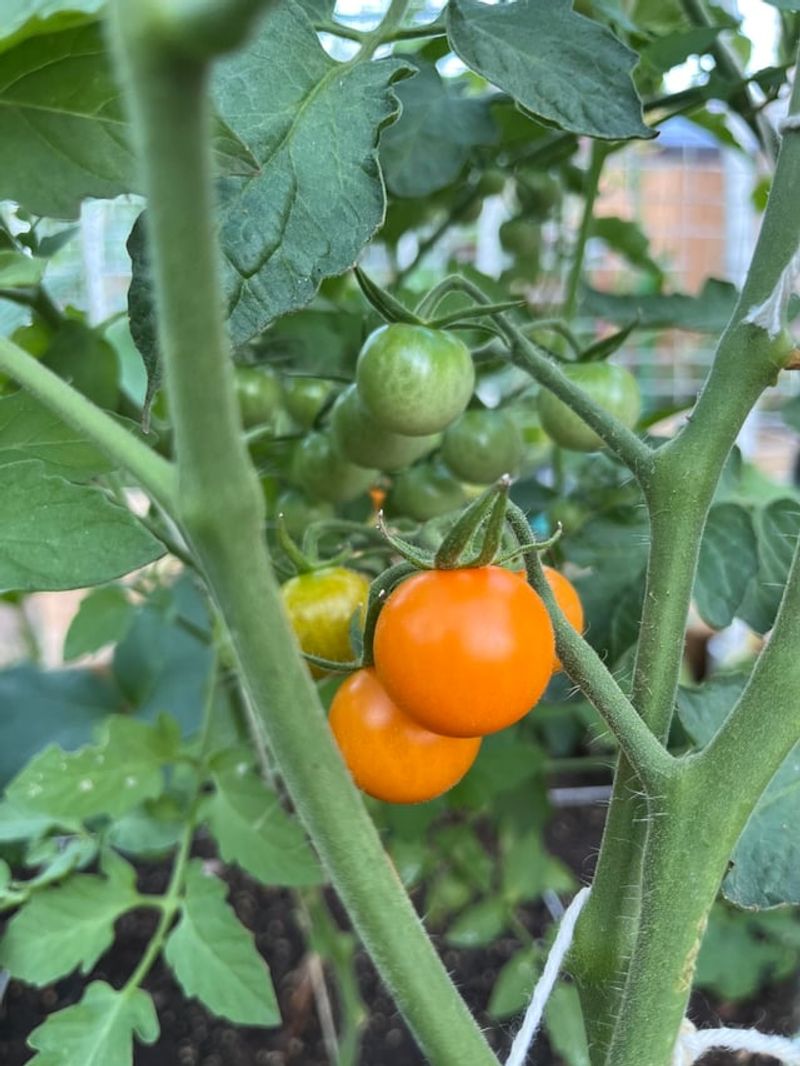
A smart post-storm move is a calm walk.
Not a panic sprint. Not a fertilizer parade. Just a slow lap around the tomato bed with clean pruners, curious eyes, and maybe coffee, because Florida tomato care should come with emotional support.
Start with the soil. Check four inches down before you add water. Wet surface soil can fool you, and saturated lower soil needs air more than another drink.
Clear anything that blocks drainage. Leaves, fallen fruit, mulch clumps, and wind-blown debris can create tiny dams around stems and containers.
Check cages and stakes next. Wet soil loosens anchors, so a support that stood firm yesterday may lean today.
Retie stems with soft material. Give heavy branches a better angle rather than force them into a perfect pose.
Prune only what is clearly crushed, badly split, or in decline. Clean cuts above a healthy node help the plant redirect energy without extra drama.
Hold fertilizer for several days after a major storm. Roots under stress need recovery time before they can handle a nutrient push.
Watch new growth near the top. Fresh, firm leaves over the next few days are a good sign.
Storm recovery is less about one big heroic fix and more about small smart resets.
Drainage, mulch, support, and patience. That little lineup can carry tomatoes through plenty of afternoon thunder.