The One Native Tree That Pulls Mosquito-Eating Bats Into Your North Carolina Yard By Dusk
You drag your patio chair into the shade at dusk, and the mosquitoes find you before you even sit down. There is a native North Carolina tree called shagbark hickory that has a real, documented connection to bats, and bats do eat mosquitoes, so the idea of planting one sounds like a dream fix. But the full story is more honest than the headline, and honestly, it is still worth telling. Shagbark hickory is a genuinely remarkable tree, the bat connection is real, and knowing what it can and cannot do will help you make smarter choices for your yard and your porch evenings.
What Shagbark Hickory Can—and Cannot—Do
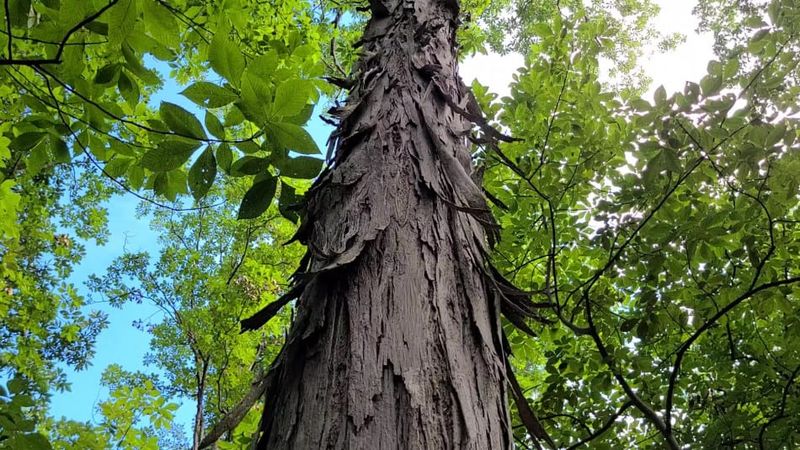
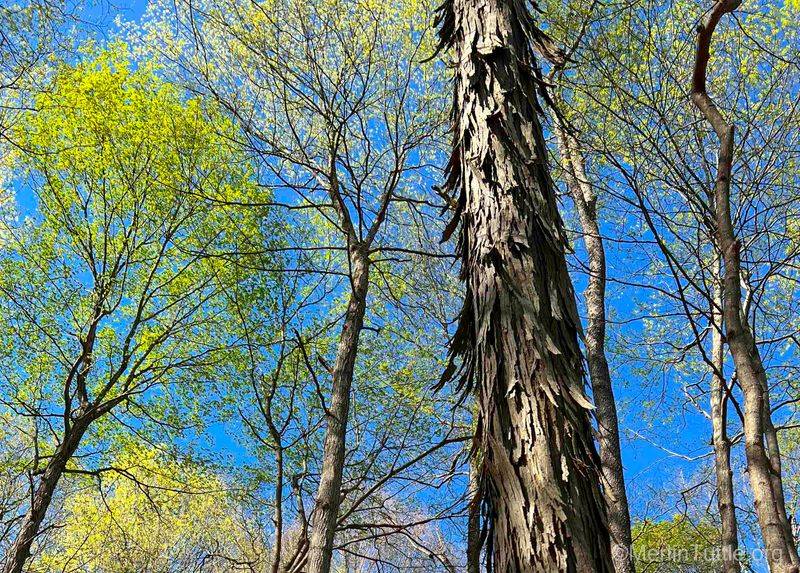
Shagbark hickory, Carya ovata, is a native North Carolina tree with one feature that genuinely sets it apart for bat habitat: its loose, peeling bark. As the tree matures, the outer bark lifts away from the trunk in long, curling plates, creating narrow gaps and sheltered spaces underneath. The National Park Service identifies this loose bark as bat shelter, and that connection is well-supported.
Here is where it gets tricky. Planting one shagbark hickory will not guarantee that bats arrive in your yard by dusk, and no reliable evidence shows that a single tree will noticeably reduce the mosquitoes on your porch. According to NC State Extension’s bat habitat guidance, bats need a combination of nearby roosts, insect-rich foraging areas, and permanent water, and those elements work together, not independently.
What shagbark hickory actually offers is long-term habitat potential. A mature tree with well-developed peeling bark can become part of a bat-friendly landscape over time. Think of it as one durable piece of a larger puzzle, not a mosquito-control device you install and forget. For immediate relief from mosquitoes, you will need a separate set of actions, and this article covers those too.
The NC State Extension plant profile for shagbark hickory describes a tree worth knowing on its own terms, independent of any pest-control promise.
Why Its Peeling Bark Matters to Bats
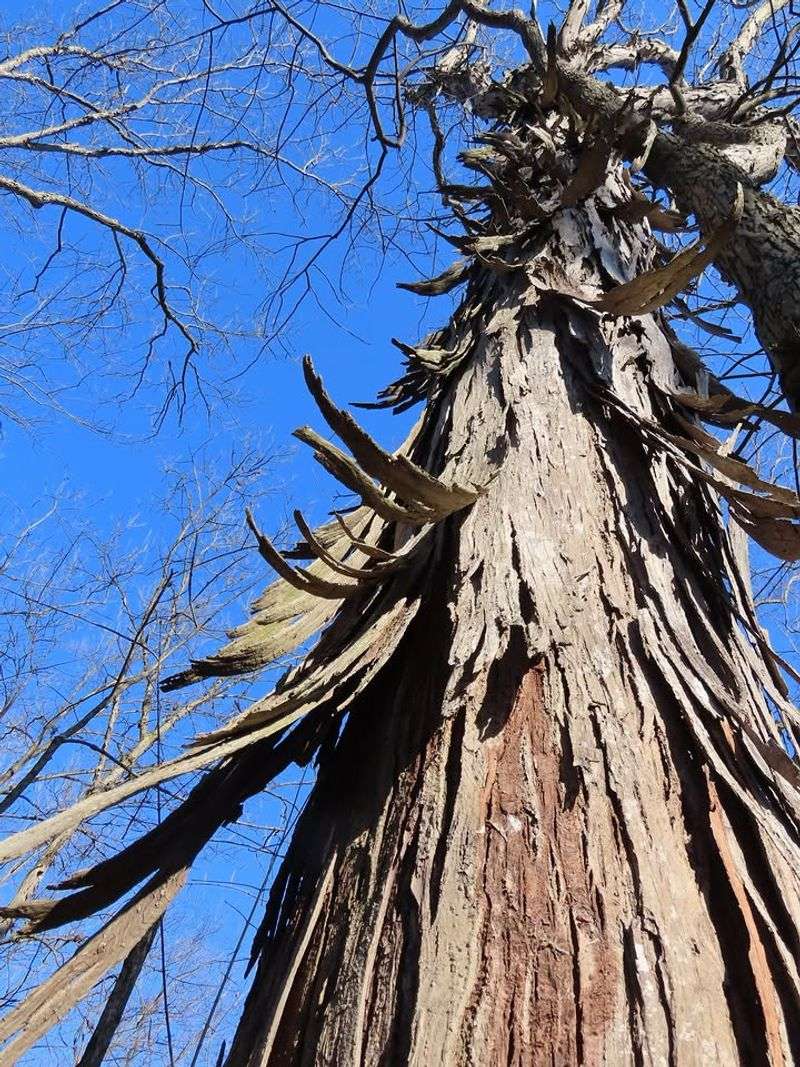
Most trees hold their bark tight. Shagbark hickory does the opposite, and that difference matters enormously for certain bats. The long, shaggy plates that peel away from the trunk create a microhabitat that bats can actually use: a narrow, sheltered space that stays a few degrees warmer than the open air and hidden from most predators. The National Park Service notes this bark structure specifically as bat shelter, describing it as the kind of daytime roost that some species actively seek out.
Research on Indiana bats in Midwestern upland oak-hickory forests adds useful detail, though it comes with important limits. That study found Indiana bats preferred live or dead shagbark hickories as maternity roost trees in that specific region, but roost selection also depended on tree size, canopy position, proximity to forest edges, the degree of bark peeling, and closeness to water. No single factor drove the choice.
Applying those Midwestern findings directly to every North Carolina bat species would be a stretch. North Carolina has a different mix of bat species and landscape conditions. What the research does confirm is that loose, peeling bark is a genuine structural feature that some bats use for daytime shelter, not a scent or food source that draws them in from a distance the way a feeder attracts birds. The bark offers a place to rest, not a reason to travel miles out of the way.
Your North Carolina Garden Changes Every Week. Your Plan Should Too.
Gardening in North Carolina changes quickly throughout the season. Every Friday you’ll receive a simple weekly plan showing exactly what to plant, prune, fertilize, harvest, and protect so you never miss the right timing.
A Sapling Will Not Bring Bats by Dusk
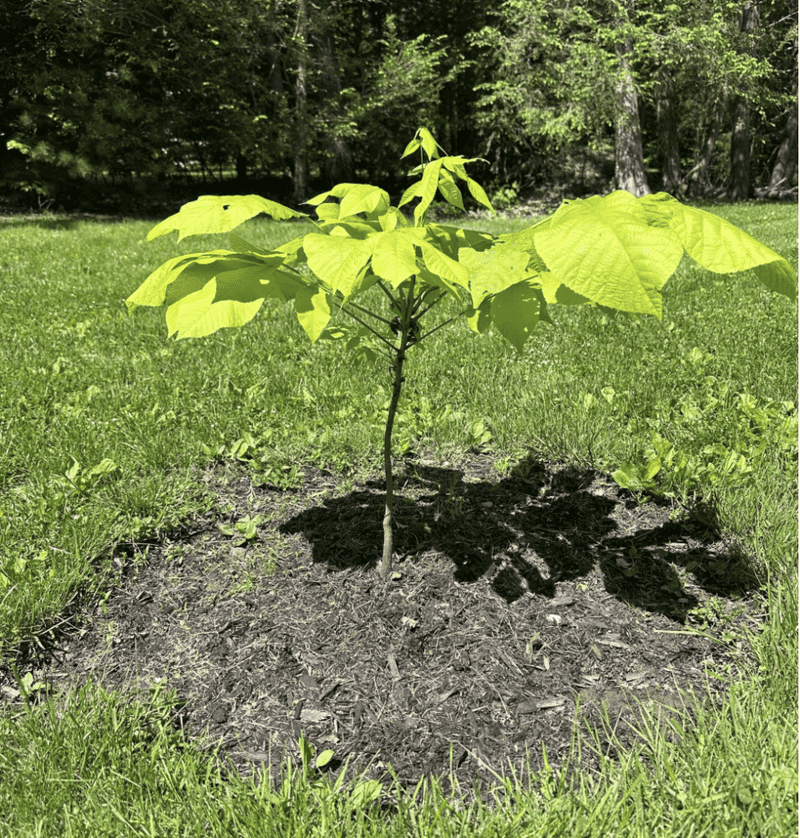
A nursery-fresh shagbark hickory is a healthy start, but its bark is smooth and tightly attached. The dramatic peeling that makes the tree useful as bat habitat develops as the tree matures, which takes years and sometimes decades. Buying one this weekend and expecting bats by Friday evening is not how this works, and no cited evidence shows that bats detect a newly planted tree and arrive that same night.
Bat activity in a yard depends on much more than one tree. NC State Extension explains that bats need roosts, insect-rich foraging areas, and permanent water close together to use a location consistently. A lone sapling in a mowed lawn with no water feature nearby and no existing woodland edge does not check those boxes yet.
The mosquito side of the equation deserves equal honesty. Bats do eat mosquitoes, that part is true. A 2018 North American diet study detected mosquito DNA in little brown and big brown bat feces, showing real consumption. But detecting mosquito DNA in bat droppings tells you what was eaten, not how many mosquitoes were consumed or whether the local population around a particular yard went down as a result.
A separate peer-reviewed analysis found that mosquitoes generally made up a small portion of bat diets and were not commonly the dominant prey for most species studied. Bat diets are broad, shifting with season and what insects are flying that night, and moths, beetles, and flies often make up the bulk of what they catch.
Plant the shagbark hickory because it is a genuinely valuable native tree. Just do not count on it to solve your mosquito problem before the tree is old enough to vote.
Check the Tree’s Fit for Your North Carolina Yard
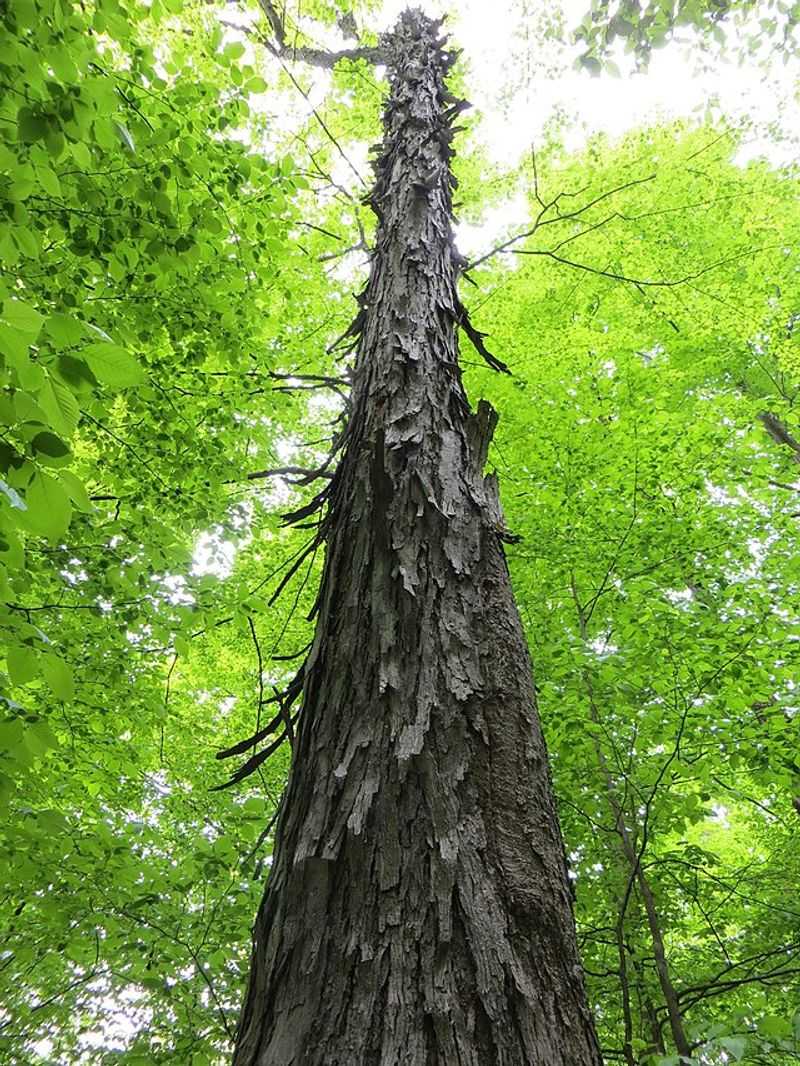
Shagbark hickory does not grow equally well across every corner of North Carolina. According to the NC State Extension plant profile, the species occurs mainly in the Piedmont, with sporadic distribution in the mountains and Coastal Plain. If you garden in the Sandhills or along the coast, the tree is not impossible, but it is less naturally at home, and your local soil drainage, moisture levels, and existing plant community matter more than the tree’s name alone.
For soil, shagbark hickory prefers deep, fertile, well-drained ground. It adapts to sandy and clay loams, which covers a good portion of Piedmont red clay territory, and it tolerates full sun or partial shade. Once established, it becomes notably drought tolerant, a real advantage during North Carolina’s muggy summers when afternoon storms can disappear for weeks at a stretch.
Before you purchase, honestly assess your site. Is there nearby woodland, a stream, or a pond that could support the broader habitat bats need? Does your yard drain reasonably well after a heavy rain? Those conditions matter as much as whether the tree itself will survive.
NC State Extension notes that bat-friendly habitat works best when roosts, foraging areas, and permanent water are close together, so a shagbark hickory planted beside a dry, open lawn far from any water source contributes less than one near a naturalized edge or pond margin. Think about the whole picture your yard offers, not just the one tree you are adding to it.
Plan for a Large, Slow-Growing Habitat Tree
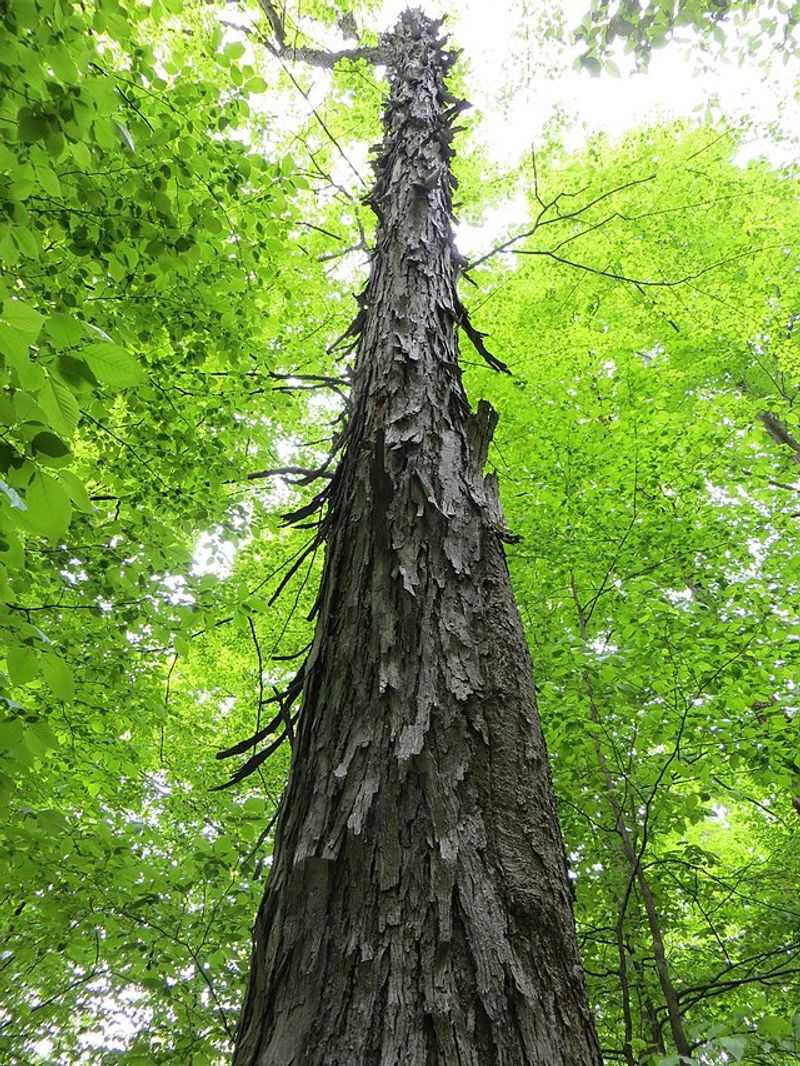
Shagbark hickory grows into a genuinely large tree. The NC State Extension plant profile lists mature dimensions of roughly 70 to 90 feet tall and 50 to 70 feet wide, with more than 60 feet of available planting space recommended. That is not a tree for a narrow side yard, a foundation bed, or any spot beneath utility lines. Give it room, or do not plant it.
The species has a deep taproot and is difficult to transplant, so choosing the right location from the start matters more than almost any other decision you will make about this tree. Pick the spot carefully before the tree goes in the ground, because moving an established shagbark hickory later is not a realistic option. Protect the root zone from soil compaction during and after planting, keep foot traffic and heavy equipment away from the area under the canopy, and water during the establishment period without following a rigid schedule, since your local rainfall and soil drainage will guide that better than any universal rule.
Growth is slow, and the timeline for habitat value is long. The tree may take roughly 40 years to begin producing nuts reliably, and its potential lifespan stretches to 200 or even 300 years. The peeling bark that makes it attractive to bats develops with age, so a tree planted this fall is a gift to the yard’s future occupants as much as to you. Frame this as a habitat investment, not a fast fix, and it becomes genuinely exciting.
You are planting something that could shelter wildlife for centuries, and that is worth doing right.
Add the Habitat Features Bats Actually Need
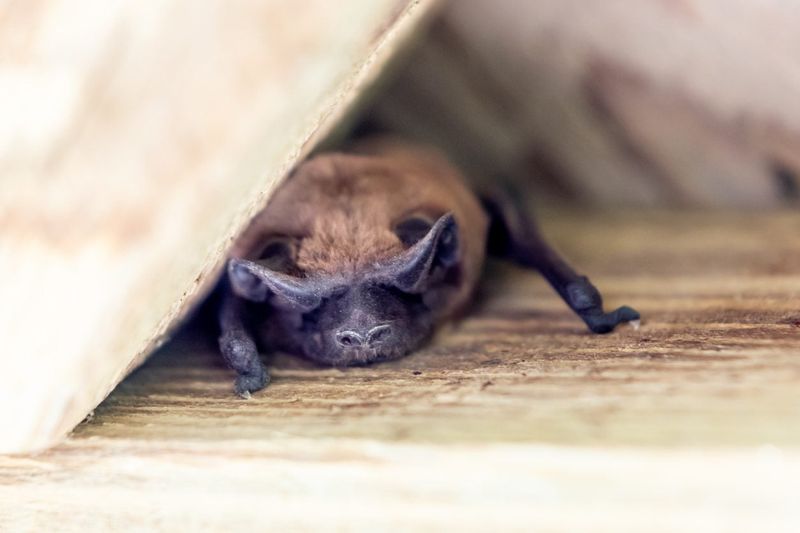
One tree, even a great one, does not make a bat habitat on its own. Bats are practical creatures, and they show up where the full package is available: a safe place to rest during the day, insects to chase at night, and water to drink. NC State Extension recommends protecting permanent water sources such as beaver ponds, marshes, and streams, because they provide both drinking water and concentrations of insects that bats forage over.
Beyond water, naturalized areas with leaf litter, native plantings, and reduced mowing support the insect populations that bats actually hunt. Avoiding insecticides where you can is genuinely important here, because broad spraying knocks down the very prey base bats depend on. If your property has a suitable snag, a standing dead tree with intact bark and no risk of falling on people, driveways, play areas, or power lines, that can add roosting and foraging value too. When a dead tree poses a real safety risk, consult a certified arborist rather than leaving a hazard in place.
A bat house can supplement natural roost habitat where options are scarce, though it is not a replacement for the real thing and not a guaranteed mosquito fix on its own. NC State Extension recommends mounting bat houses 10 to 15 feet above ground, near rivers, lakes, ponds, or marshes, and away from overhanging limbs that give predators easy access. One last note: seeing bats flying over your yard at dusk is a good sign, but it does not prove your mosquito population has dropped. Bats follow forest edges, water, and insect concentrations across a broad foraging route, and your yard may simply be one stop along the way.
Use Direct Mosquito-Control Measures Too
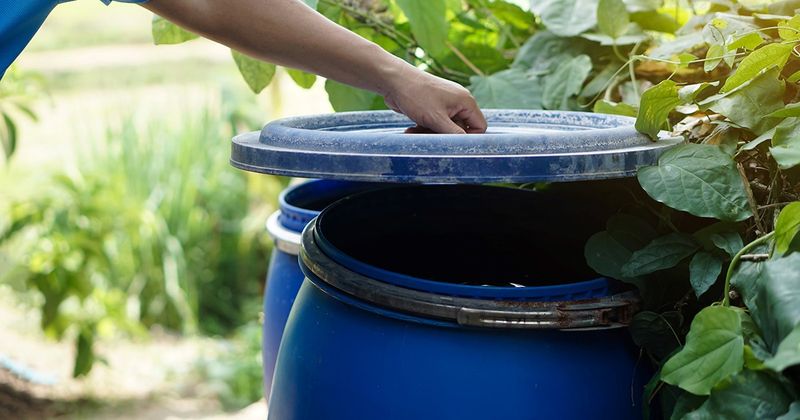
Bats are fascinating and genuinely helpful, but they are not a substitute for the actions that actually reduce the mosquitoes breeding in your yard right now. The most effective first step costs nothing and takes about 20 minutes once a week. The CDC recommends emptying, scrubbing, turning over, covering, or discarding any item that holds water on a weekly basis.
In a typical North Carolina yard, that means checking flowerpot saucers, birdbaths, toys left on the lawn, buckets, clogged gutters, rain barrels without tight covers, and pool covers that collect puddles after a storm. Mosquitoes can complete their larval stage in less than a week during warm summer weather, so the weekly rhythm is not arbitrary. Missing one round can mean a new generation is already airborne by the time you check again.
For water you cannot remove or cover, such as a decorative pond or a low spot that stays wet, the EPA notes that homeowner Bti products can target mosquito larvae when applied according to label directions. Bti is a naturally occurring bacterium that affects developing larvae, not adult mosquitoes, and it should be applied as the label directs rather than used as a catch-all solution. For personal protection on the porch or in the garden, the EPA recommends using EPA-registered repellents according to label directions and keeping screens in good repair to reduce indoor exposure.
Shagbark hickory offers real, durable habitat value as it matures. But standing-water control and personal protection are what stand between you and a miserable porch evening this summer, and those tools work right now, not in 40 years.
Protect People, Bats, and Trees
Enthusiasm for bat habitat can lead well-meaning people into a few genuinely risky situations, so this is worth saying plainly. If you find a bat on the ground during the day, roosting in an unusual spot indoors, or behaving in a way that seems off, do not handle it. CDC guidance on bats and rabies is clear: bat bites can be tiny or go unnoticed, and any possible contact should be reported to a healthcare provider or local public health department. A bat found indoors should not be released outside before you have addressed any possible exposure concern with public-health guidance.
Tree cavities sometimes hold water, and some people assume filling them will reduce mosquito breeding. CDC guidance on tree holes specifically advises against filling cavities with gravel, sand, or concrete, and against drilling holes to drain them, because those approaches can harm the tree and do not reliably solve the problem. Follow the CDC’s recommended approach instead of improvising with materials from the garage.
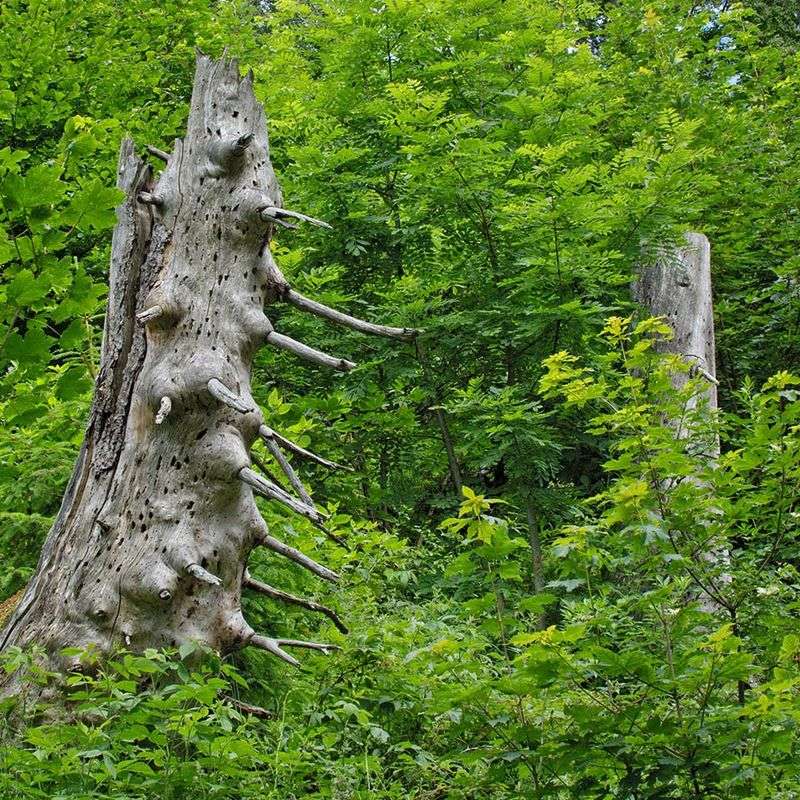
Dead trees, or snags, can be valuable habitat when they are stable and positioned safely. NC State Extension recommends retaining snags in mature woodlots where conditions allow, but a declining tree near your home, driveway, children’s play area, or power lines is a different matter entirely. Consult a certified arborist to assess whether a dead or dying tree can stay safely or needs to come down. Good habitat intentions are worth protecting, and so is everyone in the yard.
A yard that supports bats, native trees, and the people who use it every day is the goal worth working toward, one careful decision at a time.