The Ohio Pond Plants Moving From Legal To Illegal
Ohio pond plants have been flying under the radar on invasive species lists for long enough that water gardeners never saw the restrictions coming. Plants that created beautiful, low-maintenance water features for years are showing up on prohibited lists.
Their spread into our natural waterways has become impossible to ignore. Yellow flag iris, flowering rush, and others that have been standard pond center inventory for decades are now restricted or banned in parts of our state.
The regulations are moving faster than most water gardeners realize. A plant purchased legally last season may be on a restricted list this one.
For anyone with these plants already in a pond, or planning to add water plants this fall, knowing where Ohio law currently stands matters. The list is more surprising than expected.
Some of the most popular pond plants in Ohio have been quietly reclassified.
1. Pinnate Mosquitofern Floated Onto The Prohibited List
Floating across the surface of a still pond, a tiny mat-forming plant can seem like a natural part of the scenery.
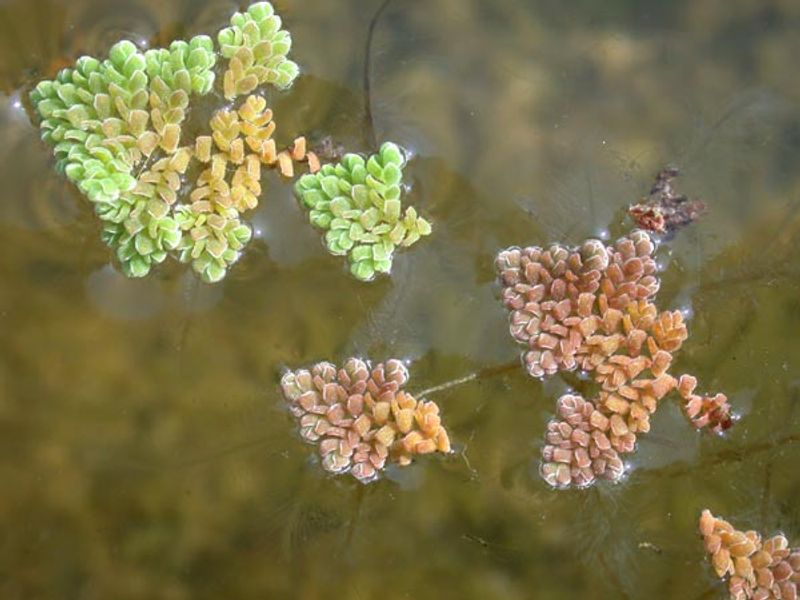
Pinnate mosquitofern, known scientifically as Azolla pinnata, is an aquatic fern, not a moss, even though its overlapping leaves give it a soft, carpet-like appearance.
It was added to Ohio’s prohibited plant list in 2023.
Azolla pinnata reproduces through spores and also spreads when fragments break off and drift to new locations. A single fragment can establish a new colony under the right conditions.
Dense surface mats can reduce light reaching submerged plants and affect oxygen exchange at the water’s surface.
Native mosquitofern species exist in North America, so identification matters before taking any action. Color alone is not a reliable way to tell Azolla species apart, since color can shift with temperature, nutrient levels, and light.
A reliable identification should consider leaf arrangement and size.
Under the 2023 rule, selling, distributing, importing, or intentionally spreading Azolla pinnata is prohibited. Ordinary possession of a plant already in your pond is not broadly illegal, but causing further spread is not allowed.
If you find an unidentified floating fern in your water feature, avoid moving water or plant material to another location. Contact the Ohio Department of Agriculture or a local extension office for guidance before attempting removal or disposal.
2. Anchored Water Hyacinth Lost Its Legal Sales Status
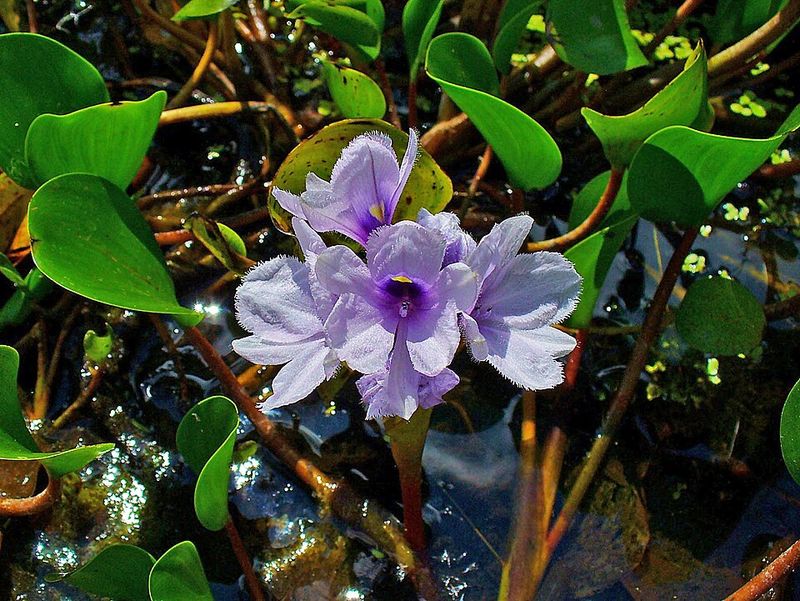
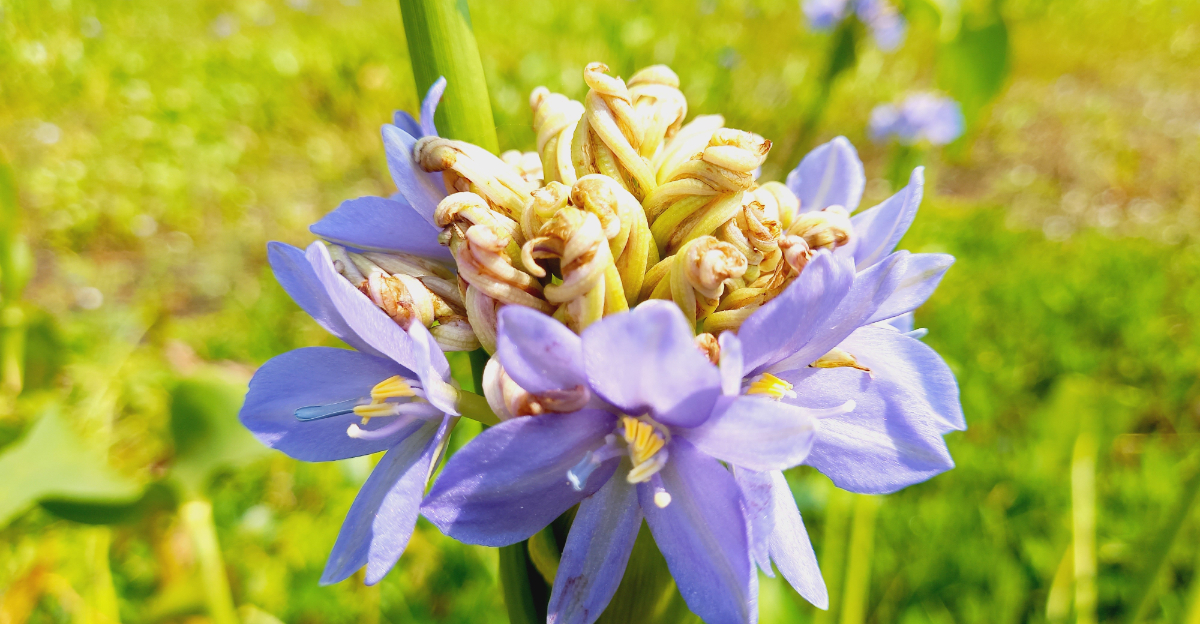
Purple flowers drifting across a slow-moving waterway can look peaceful and even beautiful. Anchored water hyacinth, listed in the state rule as Eichhornia azurea, is a rooted aquatic plant that differs from common water hyacinth in an important way.
While common water hyacinth floats freely, Eichhornia azurea anchors itself to the bottom through submerged stems and roots.
Some current taxonomy places this species under the genus Pontederia. But the Ohio rule uses the name Eichhornia azurea, and that name controls its legal status in the state.
Its leaves grow both above and below the waterline, and its violet to purple flowers emerge on stalks. Dense growth along waterway margins can interfere with water movement and crowd out native vegetation.
Your Ohio Garden Changes Every Week. Your Plan Should Too.
Gardening in Ohio changes quickly throughout the season. Every Friday you’ll receive a simple weekly plan showing exactly what to plant, prune, fertilize, harvest, and protect so you never miss the right timing.
Fragments of Eichhornia azurea can break free and establish new growth in suitable conditions. Not every purple-flowered pond plant is this species, so confirming identification before disposal or control is a responsible step.
The 2023 rule change prohibits selling, offering for sale, propagating, distributing, importing, and intentionally spreading this plant in Ohio.
If you believe you have this plant in a water garden, do not move cuttings or water to another site. Avoid letting trimmings reach storm drains or drainage ditches.
Reach out to the Department of Agriculture for current guidance on safe handling specific to your situation.
3. Indian Swampweed Joined The Statewide Restriction
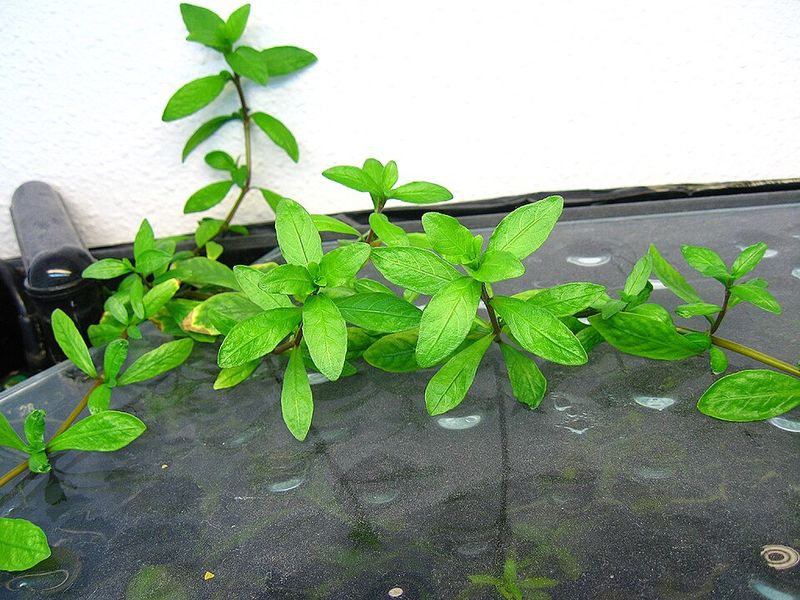
Aquarium hobbyists have long used leafy, fast-growing stem plants to keep tank water clear and provide shelter for fish. Indian swampweed,
Hygrophila polysperma, built much of its reputation in the aquarium trade before its spread risks became better understood.
It was added to prohibited plant list as part of the 2023 rule update.
One reason identification can be tricky is that Hygrophila polysperma looks different depending on where it grows. Submerged stems carry narrow, pale green leaves, while emergent growth above the waterline can develop broader, darker foliage.
The same plant can appear to be two different species based on water depth and light conditions.
Spread can occur through stem fragments, rooted sections, and seeds. A fragment left in a bucket, net, or boot can reach a natural waterway without the owner realizing it.
Dumping aquarium water or trimmings outdoors is one verified pathway for aquatic plants to enter natural systems. That’s why official guidance consistently advises against it.
Cold weather does not remove all risk from this plant, since fragments can survive in protected areas or be reintroduced through repeated disposal events.
The prohibited activities under Ohio’s rule include selling, distributing, importing, and intentionally causing dissemination.
If you have this plant in your aquarium, follow current state disposal guidance. It generally recommends sealing plant material in a bag and placing it in the trash rather than releasing it outdoors.
4. African Oxygen Weed Can No Longer Be Distributed
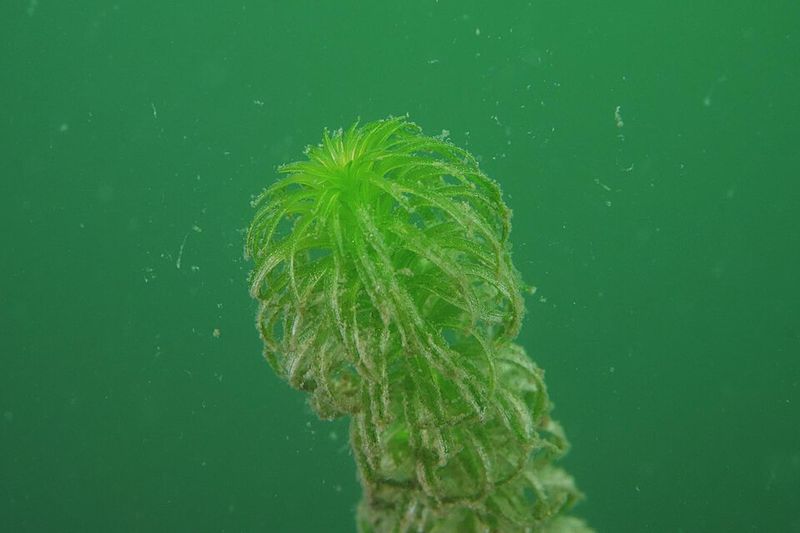
Sold for years as a pond oxygenator, African oxygen weed earned a reputation for keeping water clear and providing cover for aquatic life. Lagarosiphon major is a submerged plant with long, flexible stems covered in leaves that spiral backward along the stem.
That distinctive spiral leaf arrangement helps separate it from some other submerged plants, though a careful look is always recommended before drawing conclusions.
The common name “oxygen weed” should not be taken as proof that this plant benefits every pond or natural waterway. Dense underwater growth can reduce light for other submerged species and alter the structure of aquatic habitats over time.
Its behavior in a contained ornamental pond may differ from its behavior in open water with more space and resources.
Spread through fragments is a verified concern. Fragments can travel on boats, equipment, wading gear, and water currents.
Once a fragment reaches suitable conditions, it can root and establish a new colony. Lagarosiphon major should not be confused with Brazilian waterweed, hydrilla, or native water plants, all of which have different leaf arrangements and growth patterns.
Ohio’s 2023 rule prohibits selling, offering for sale, propagating, distributing, importing, and intentionally spreading this species. If you have it in a water feature, do not release trimmings into any waterway, pond, or drainage system.
Clean and dry all equipment that contacted the plant before using it elsewhere, following current official guidance on aquatic plant material handling.
5. Asian Marshweed Entered The 2023 Plant Ban
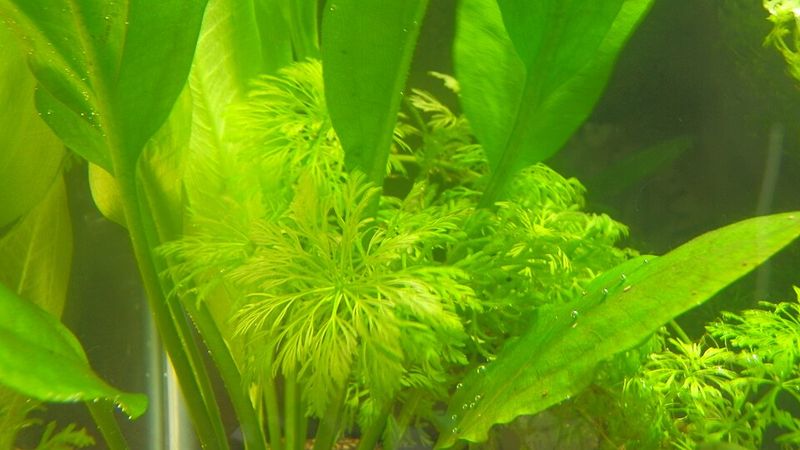
Finely divided, feathery leaves swaying beneath the surface of a well-lit aquarium tank can be genuinely captivating. Asian marshweed, Limnophila sessiliflora, has that delicate look, which made it a popular choice among planted aquarium enthusiasts.
Its addition to prohibited list in 2023 changed the rules around its sale and distribution in the state.
Submerged growth in Limnophila sessiliflora features whorls of finely cut leaves arranged around a central stem, giving it a soft, almost feathery texture.
When conditions allow emergent growth above the waterline, the leaves can take on a different, less divided form.
This variation makes identification from photographs alone unreliable, especially when only part of the plant is visible.
Reproduction and spread can occur through stem fragments, which is a common concern for aquatic stem plants. A trimmed section left in a container of water, poured into a yard, or dropped near a drainage ditch can find its way into a natural system.
Native aquatic plants with finely divided leaves exist here, so a careful identification is worthwhile before acting on any plant found in the wild.
Asian marshweed is not confirmed to be present across Ohio’s ponds and waterways as a widespread population. Its 2023 listing reflects both confirmed risks and preventive regulation.
Aquarium owners should avoid releasing any trimmings outdoors. Bag the material securely and place it in household trash, following current state recommendations for aquatic plant disposal.
6. European Water Clover Became A Regulated Aquatic
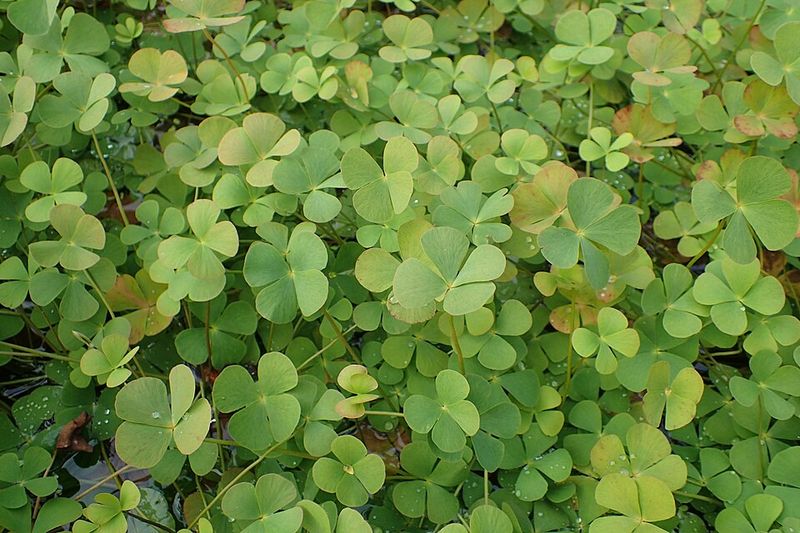
At first glance, a plant with four rounded leaflets floating on the surface of a pond might look like a lucky clover patch. European water-clover, Marsilea quadrifolia, has exactly that appearance, but it is actually a fern.
Its clover-like leaves can make it easy to overlook as something familiar and harmless, which is part of what makes it worth knowing.
Marsilea quadrifolia grows with a creeping rhizome along the bottom or bank of shallow water, sending up leaf stalks that hold the four-part leaves at the surface.
As a fern, it reproduces through spores produced in hard, bean-shaped structures called sporocarps.
Rhizomes, spore cases, and plant fragments are all verified pathways for spread.
The spelling of the species name appears as quadrifolia in most current botanical references, and that spelling aligns with the name used in Ohio’s rule. Not every four-leaved wetland plant is this species.
Several native and common plants share a similar shape. That visual similarity to clover can create confusion and hide the aquatic invasive risk this plant carries in natural shallow-water habitats.
The 2023 rule prohibits selling, distributing, importing, propagating, and intentionally spreading Marsilea quadrifolia. If you have it in a water garden, do not move rhizomes, sporocarps, or plant fragments to another site.
Keep equipment, boots, and containers clean and dry after contact. Reach out to a local extension program or the Department of Agriculture for current removal guidance specific to your situation.
7. Arrowleaf False Pickerelweed Was Added To The List
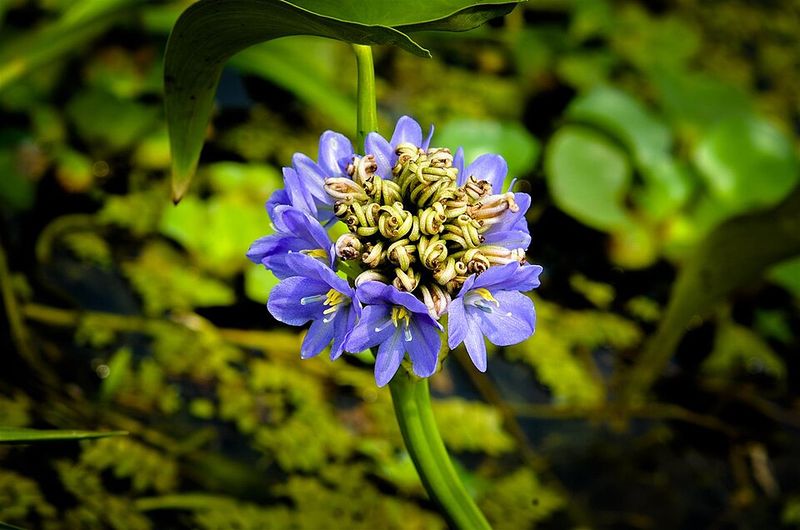
Standing tall in shallow water with bold, arrow-shaped leaves, this plant can catch the eye of any water gardener.
Arrowleaf false pickerelweed, Monochoria hastata, belongs to the same family as native pickerelweed but is a separate species with different characteristics.
The shared common name can cause confusion, so the scientific name matters when identifying what is actually growing in your pond or wetland margin.
Monochoria hastata produces larger leaves than its relative Monochoria vaginalis. Its leaf base extends into two pointed lobes that give it the arrow shape described in its common name.
Flowers are small and blue-purple, appearing in clusters. It grows in wetlands, shallow water, and areas with saturated soil, where it can form dense stands under favorable conditions.
Reproduction occurs through seeds and vegetative growth. Seeds can spread through water movement and on material attached to equipment or animals.
Dense stands in suitable wetland habitats can reduce space available for other plant species. This behavior varies with local conditions, though, and is not uniform across all environments.
Arrowleaf false pickerelweed was added to prohibited list in 2023. The rule bars selling, offering for sale, propagating, distributing, importing, and intentionally causing its dissemination.
Do not assume a plant with arrow-shaped leaves near water is this species without a careful identification. Contact a qualified botanist or your local extension office if you are unsure what you have found.
8. Heartshape False Pickerelweed Rounded Out The Eight
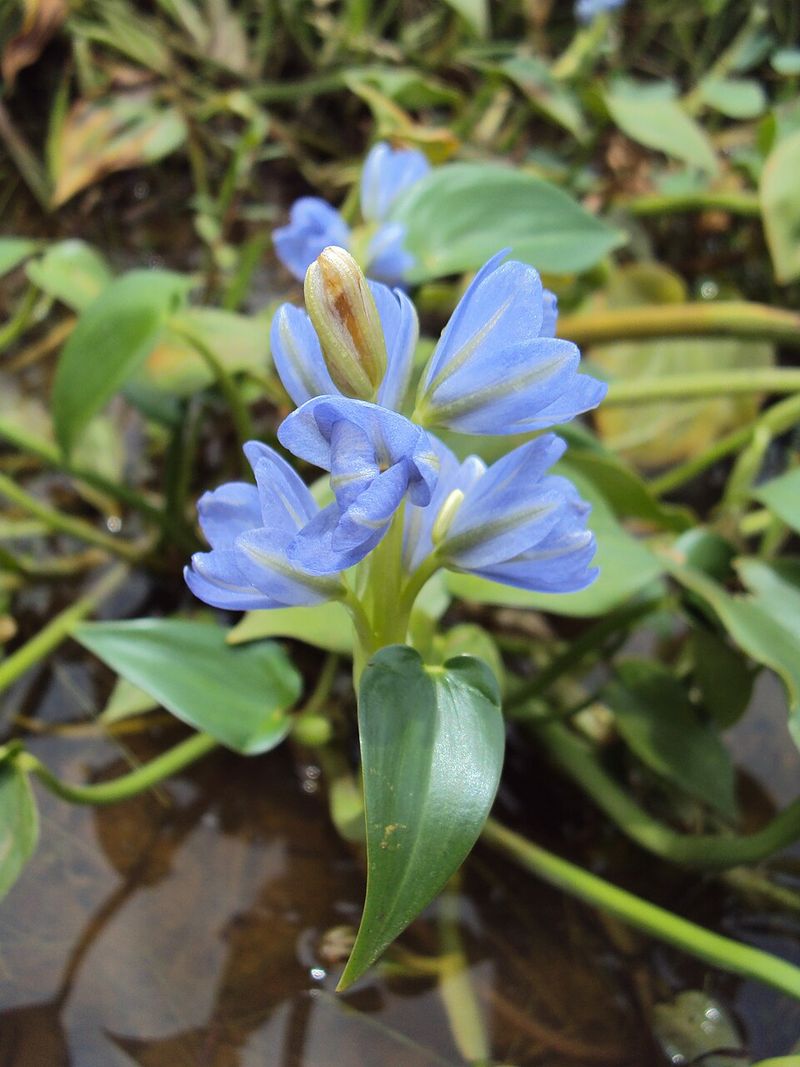
Shallow water at the edge of a rice field or wetland can support a wide variety of plants, and not all of them are easy to tell apart. Heartshape false pickerelweed, Monochoria vaginalis, rounds out the eight aquatic plants selected for this article.
It’s worth noting, though, that more aquatic species were added to rule in 2023 beyond these eight. The species was included in the 2023 update to Ohio Administrative Code Rule 901:5-30-01.
Monochoria vaginalis is distinguished from Monochoria hastata by its heart-shaped or broadly oval leaf base, rather than the arrow-shaped base of hastata. Its leaves are smaller overall, and it tends to grow in shallower water and more disturbed, muddy margins.
Flowers are blue-purple and appear in short clusters on a stalk that emerges from a sheathing leaf base.
Seed production is a verified means of spread for this species. Seeds can move through water, on equipment, and in soil attached to footwear or tools.
Shallow water edges, wetland margins, and saturated soils near rice agriculture are environments where this plant can establish and spread. Its behavior in natural areas is not fully documented across the state.
Before moving or disposing of any suspect material, confirm the species with a qualified source. Do not transport plant material without sealing it securely.
Consult current Ohio Department of Agriculture instructions for disposal. Clean all tools, boots, and containers that came into contact with the plant before using them near other water bodies.