The Native Ohio Plant That Brings Swallowtail Butterflies Better Than Anything Else
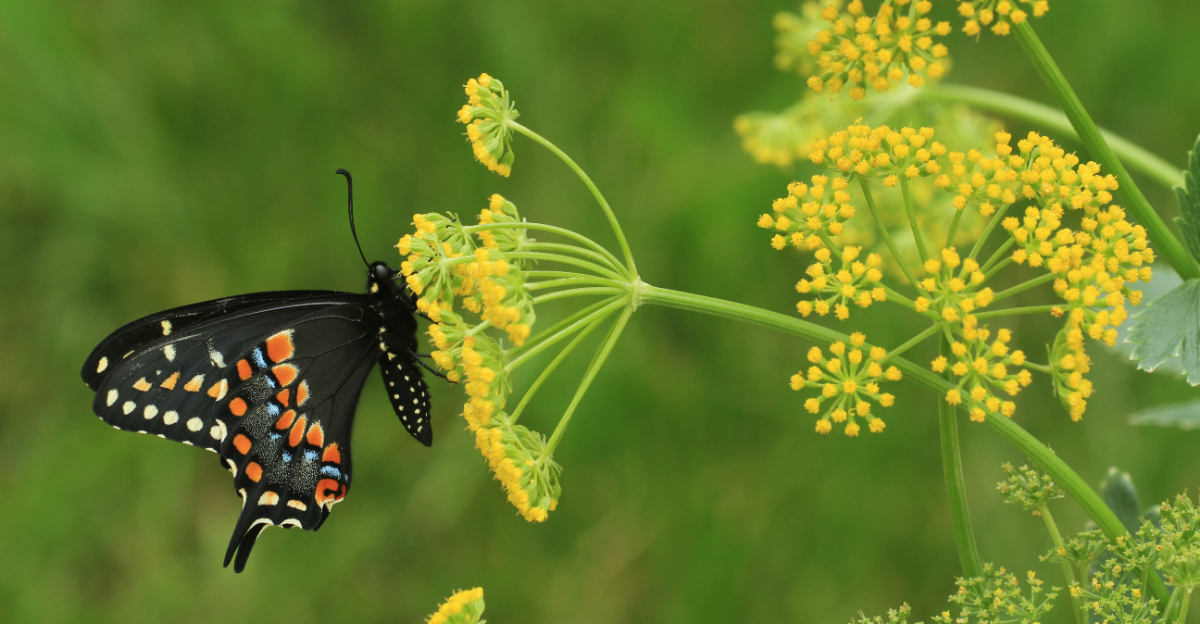
Swallowtail butterflies are not random about where they land. They are looking for something specific, and a yard that has it becomes a reliable stop on a route they return to season after season.
A yard without it gets a flyover at best. Most Ohio gardeners chasing swallowtails reach for the obvious choices.
Milkweed, coneflower, something colorful and well-marketed. Those plants have value, but none of them speak to swallowtails the way one particular Ohio native does.
This plant is not flashy in the way garden center plants are trained to be. It earns attention by what it attracts rather than how it looks on a bench.
Swallowtails find it with a reliability that experienced Ohio gardeners have noticed and talked about for years. One native plant.
A genuine difference in which butterflies show up and how long they stay. Your garden has room for it.
1. Plant Golden Alexanders For Black Swallowtail Caterpillars
A butterfly garden changes completely when it feeds the caterpillar stage, not just the adult flying through. Black swallowtail butterflies lay their eggs on plants in the carrot family.
Golden alexanders is one of the best Ohio native representatives of that group growing in this state. The plant gives newly hatched caterpillars exactly the foliage they need to grow and develop.
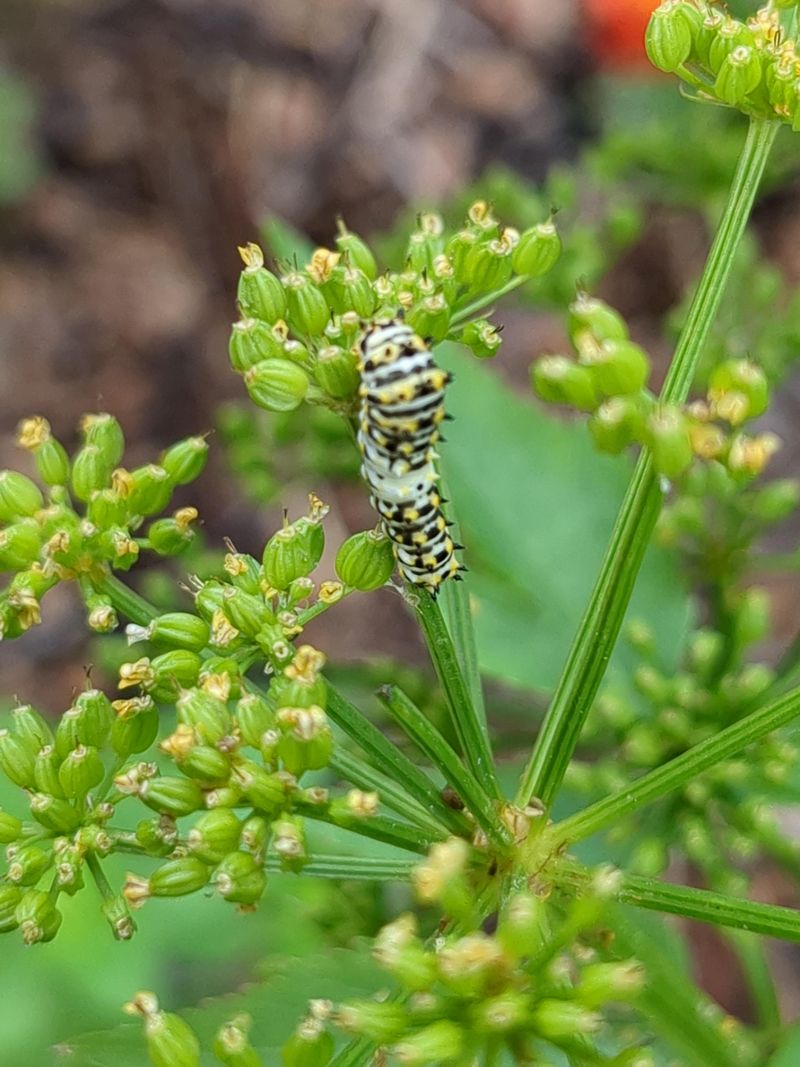
Young black swallowtail caterpillars start out small and dark, mimicking bird droppings for protection. As they grow, they shift into the familiar green, black, and yellow-banded pattern that many gardeners recognize.
All of that growth happens on the leaves of host plants like golden alexanders, making the plant far more valuable than a simple nectar source.
Parsley, dill, and fennel can also host these caterpillars, but those are annual herbs that need replanting each season. Golden alexanders is a native perennial that returns each spring without any extra effort.
It fits into habitat gardens, rain gardens, and native borders without looking out of place. Planting it means offering black swallowtails a regionally appropriate food source that supports the full life cycle from egg to adult butterfly.
2. Grow It Where Spring Sun Reaches The Leaves
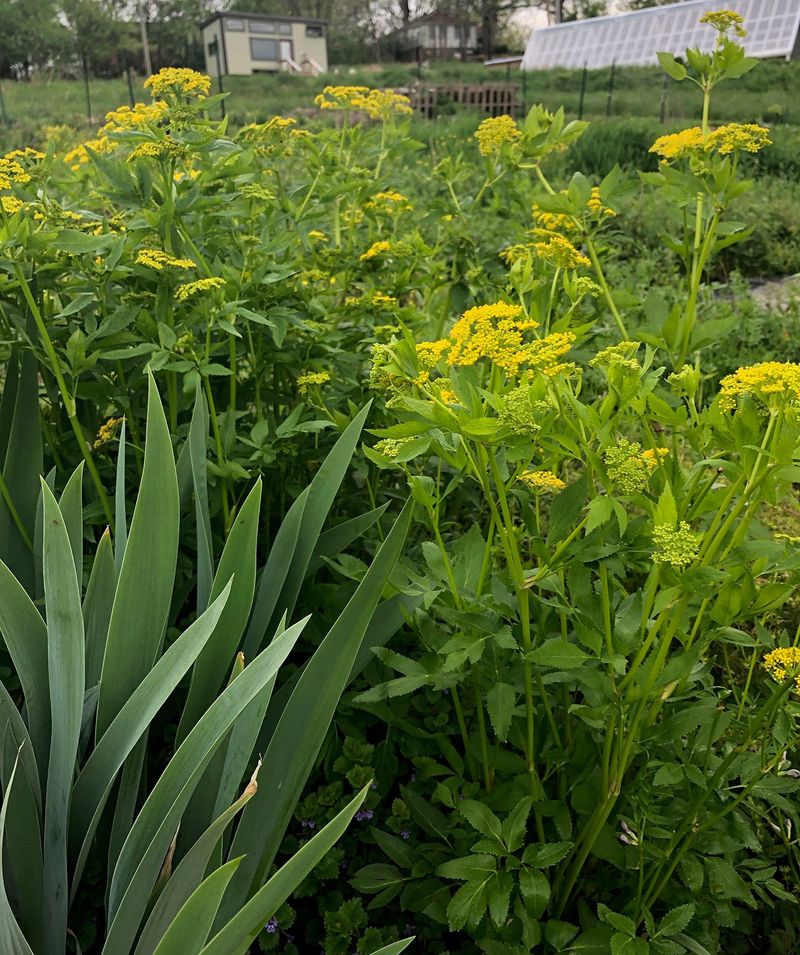
Placement matters more than most Ohio gardeners realize when it comes to getting the best performance from a spring-blooming native perennial.
Golden alexanders grows well in full sun to part shade, making it flexible enough for a range of spots in the home landscape.
A site that receives at least four to six hours of direct sunlight gives the plant what it needs to bloom well and stay healthy through the season.
In partly shaded spots under open tree canopies, golden alexanders can still perform respectably, especially in the spring before overhead trees fully leaf out. That early light window is often enough to fuel good growth and a solid bloom.
Avoid placing it in deep, dry shade, where flowering tends to suffer and the plant struggles to establish.
Sunny borders along fence lines, the edges of woodland gardens, and open native beds all work well.
The plant reaches roughly two to three feet tall at maturity, so it fits comfortably in mid-border positions without crowding out shorter plants nearby.
Your Ohio Garden Changes Every Week. Your Plan Should Too.
Gardening in Ohio changes quickly throughout the season. Every Friday you’ll receive a simple weekly plan showing exactly what to plant, prune, fertilize, harvest, and protect so you never miss the right timing.
Good air circulation around the foliage helps keep the plant looking clean. Choosing the right spot from the start saves a lot of adjusting later and sets the plant up for reliable returns each spring.
3. Let Yellow Flower Clusters Feed Early Pollinators
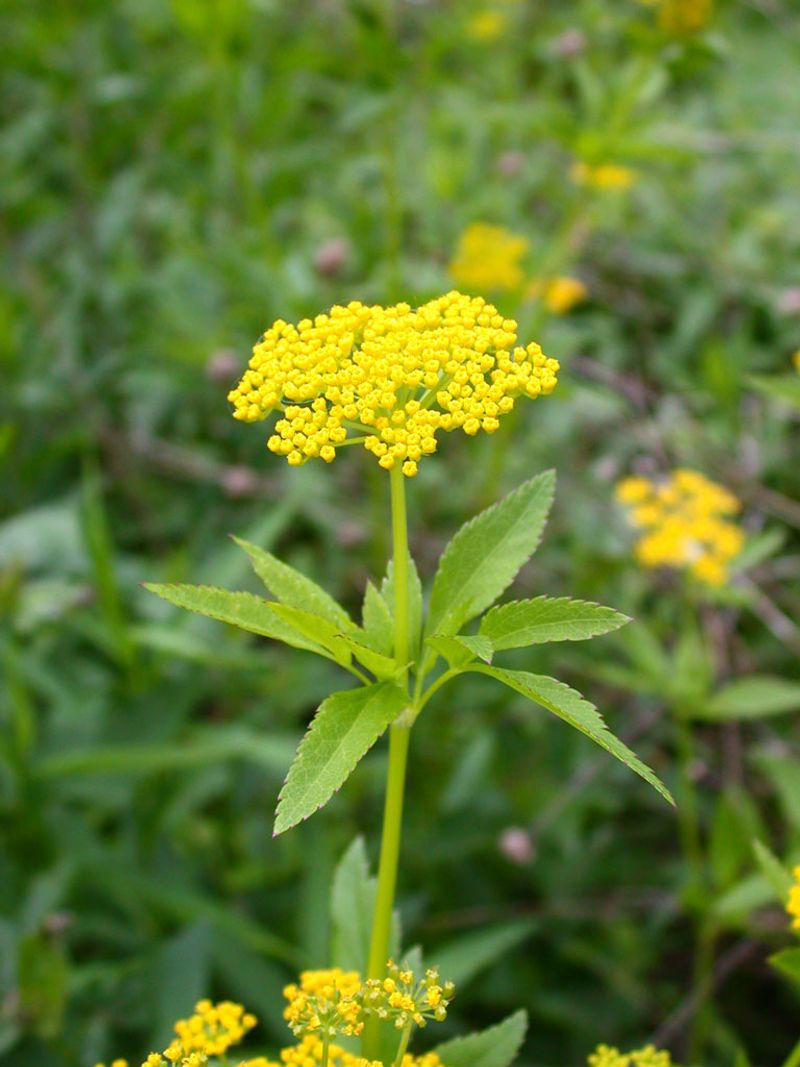
Before most summer perennials have even pushed their first buds, golden alexanders is already open and buzzing. The flat-topped clusters of tiny yellow flowers typically bloom in April through June across much of this state.
They arrive when early pollinators are actively searching for food. Small native bees, mining bees, and various flies are among the first visitors to show up.
The flower structure, called an umbel, is characteristic of the carrot family. That wide, open platform makes it easy for a range of insects to access pollen and nectar without needing specialized mouthparts.
That accessibility is part of what makes the plant so broadly useful during the spring pollinator season.
The bloom period is not endless, typically lasting a few weeks depending on weather and site conditions. But those weeks arrive at a critical time in the garden calendar when few other native plants are flowering at the same level.
After the flowers fade, attractive dark fruits develop on the plant and can add visual interest into summer. The bright yellow color also makes golden alexanders a cheerful focal point in spring borders before other plants take the spotlight.
It earns its space from the moment it blooms.
4. Skip Sprays Where Caterpillars Are Feeding
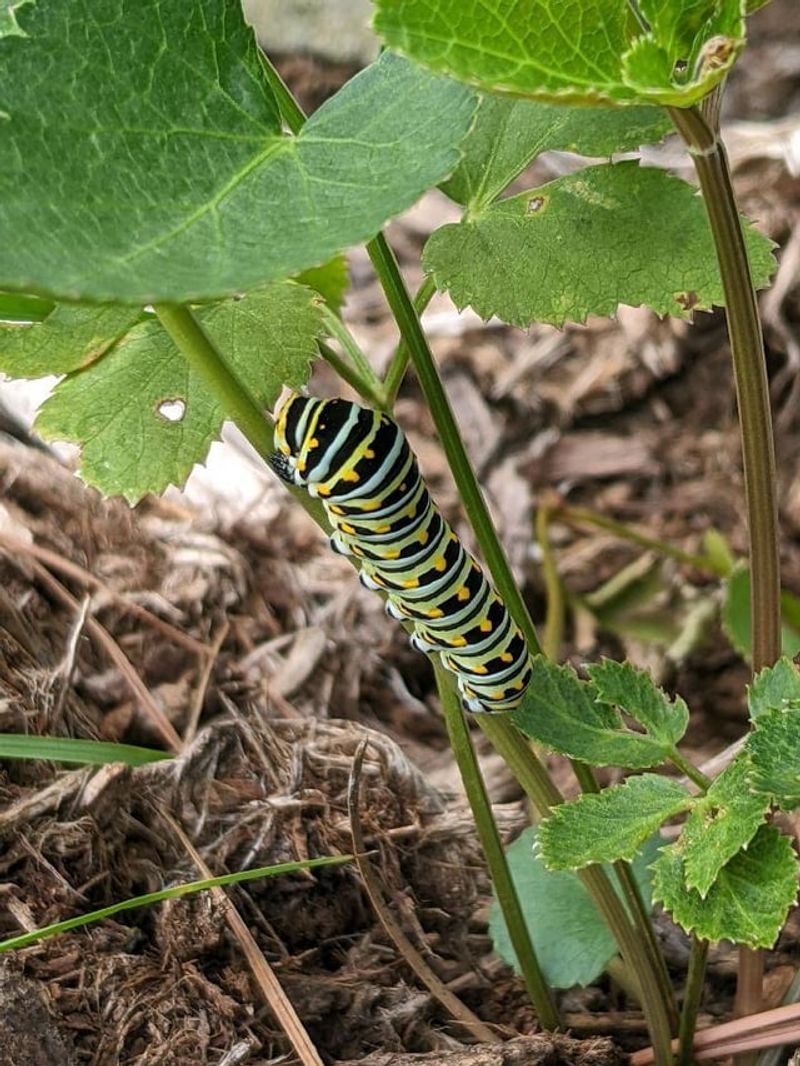
Chewed leaves on a host plant can feel alarming at first glance, especially for Ohio gardeners used to keeping their beds looking tidy. But on golden alexanders, chewed foliage is often the best possible sign.
It means a black swallowtail found the plant, laid her eggs, and the caterpillars are doing exactly what they are supposed to do.
Reaching for a spray bottle when caterpillars appear is one of the most common mistakes in pollinator gardening. Insecticides, including many labeled as organic or natural, can harm or eliminate caterpillars quickly.
Even sprays applied to nearby plants can drift onto host-plant foliage and affect feeding larvae. The safest rule is to avoid spraying anything in the area where caterpillars are actively feeding.
Systemic pesticides absorbed through soil can also make their way into plant tissue, leaving foliage harmful to any caterpillar that eats it.
If you have recently treated nearby lawn or garden areas with systemic products, that exposure risk is worth considering before planting host plants in the same zone.
A pollinator-safe garden does not need to be perfect. It just needs to be a safe place for the caterpillar stage, which is the most vulnerable part of the butterfly life cycle.
5. Pair It With Other Native Swallowtail Host Plants
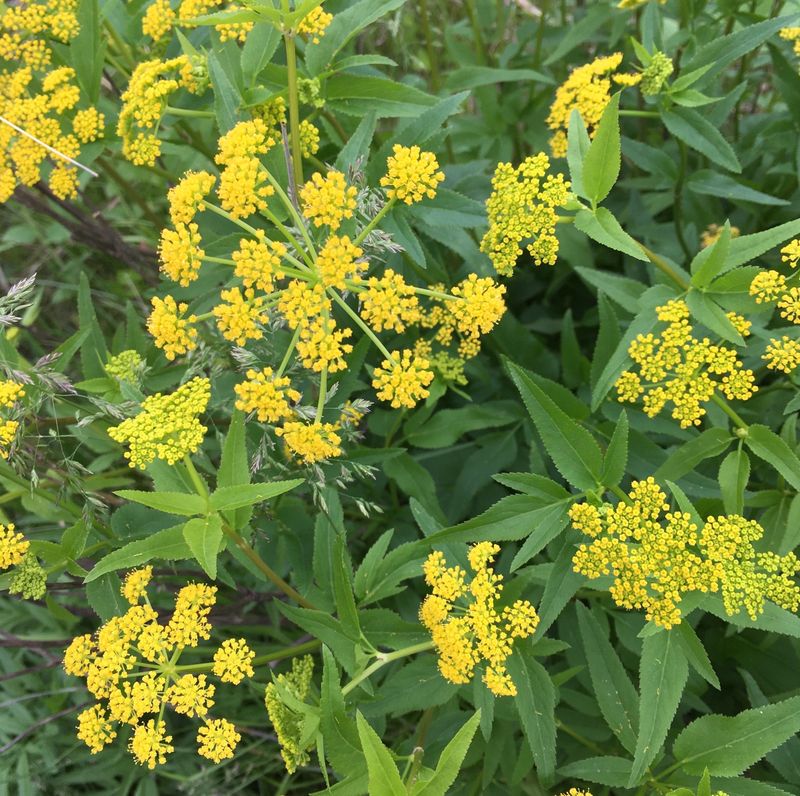
One plant is a starting point, not a finished habitat. Pairing golden alexanders with other native host and nectar plants gives black swallowtails more reasons to stay, breed, and return to the same garden year after year.
A layered approach to planting almost always produces more butterfly activity than a single-species planting.
For black swallowtails specifically, golden alexanders works well alongside other carrot-family natives where they are available and appropriate.
For adult nectar feeding, plants like wild bergamot, native coneflowers, and joe-pye weed provide summer and late-season resources.
They extend the garden’s value well beyond the spring bloom window. Eastern tiger swallowtails are a different species and prefer host plants like wild black cherry and tulip tree.
Those can be added to support a broader range of swallowtail visitors.
The goal is to think of the garden as a series of connected resources rather than a collection of individual plants. Host plants feed caterpillars.
Nectar plants fuel adults. Native grasses and leaf litter provide overwintering habitat for pupae.
Each element reinforces the others. Golden alexanders fits naturally into that system as a spring-blooming, caterpillar-feeding anchor plant that other natives can be built around throughout the season.
6. Leave Some Chewed Leaves As A Good Sign
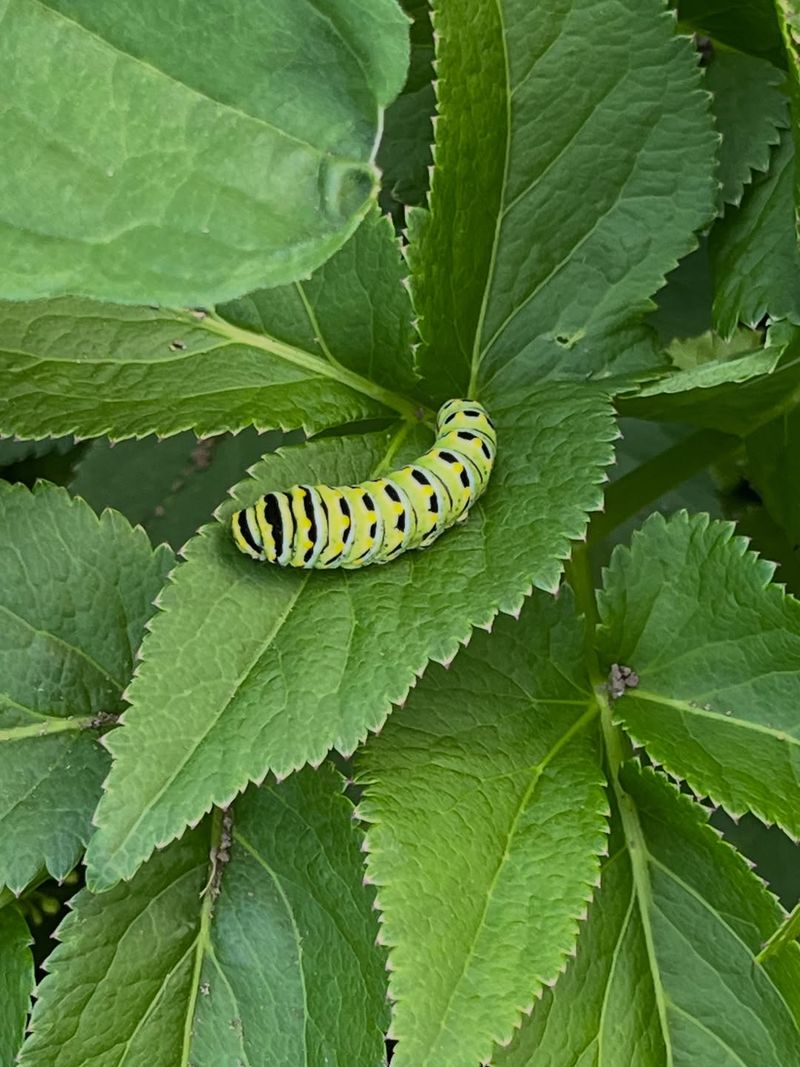
A few ragged leaves on golden alexanders in midsummer might look like a problem, but experienced butterfly gardeners know better. Caterpillar feeding is the whole point of planting a host plant.
When the foliage shows feeding damage, the plant is functioning as habitat, not failing as a garden specimen.
Black swallowtail caterpillars move through several growth stages called instars before they are ready to form a chrysalis. During that time, they can consume a noticeable amount of foliage on a single plant.
A well-established clump of golden alexanders can usually handle that pressure without long-term damage. The plant has been supporting this relationship with native butterflies for far longer than any garden has existed.
Resisting the urge to tidy up chewed plants is one of the more important mindset shifts in habitat gardening. The goal is not a perfect-looking bed.
The goal is a functioning ecosystem where butterflies can complete their life cycle. Leaving caterpillars alone and letting the plant do its job is the most effective thing a gardener can do at that stage.
After the caterpillars move on, golden alexanders often puts out fresh new growth and recovers its appearance before the end of the season.
7. Give It Moist Well-Drained Soil To Settle In
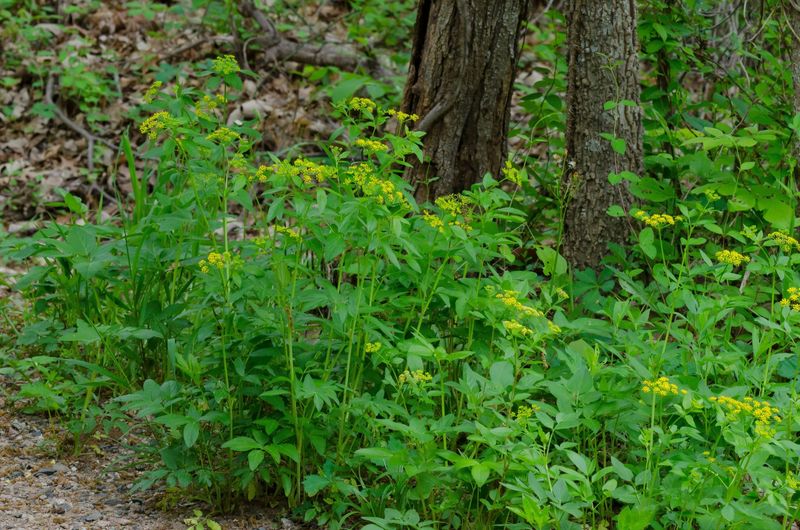
Getting golden alexanders established on the right terms makes a real difference in how quickly it settles in and begins to thrive. The plant generally performs best in consistently moist, well-drained soil.
It tolerates average garden conditions once established, but the first season or two calls for a little extra attention to watering during dry stretches.
In its natural range, golden alexanders grows in moist meadows, open woodlands, and along stream edges. It appreciates soil that does not dry out completely between rain events.
That said, it does not want to sit in standing water for extended periods. Good drainage paired with decent moisture retention is the sweet spot.
Amended garden soil with added compost usually fits that description well.
Heavy clay soils can be improved with organic matter before planting. Sandy or fast-draining soils may need more frequent watering during the first growing season.
Once the root system is established, the plant becomes notably more resilient and can handle short dry periods without much visible stress.
Native plants grown from local-ecotype seed or nursery stock sourced from regional suppliers tend to establish more smoothly in local conditions.
Buying plants from reputable Ohio native nurseries is one of the simplest ways to set this perennial up for long-term success.
8. Choose A Native Host Plant Over Another Herb Pot
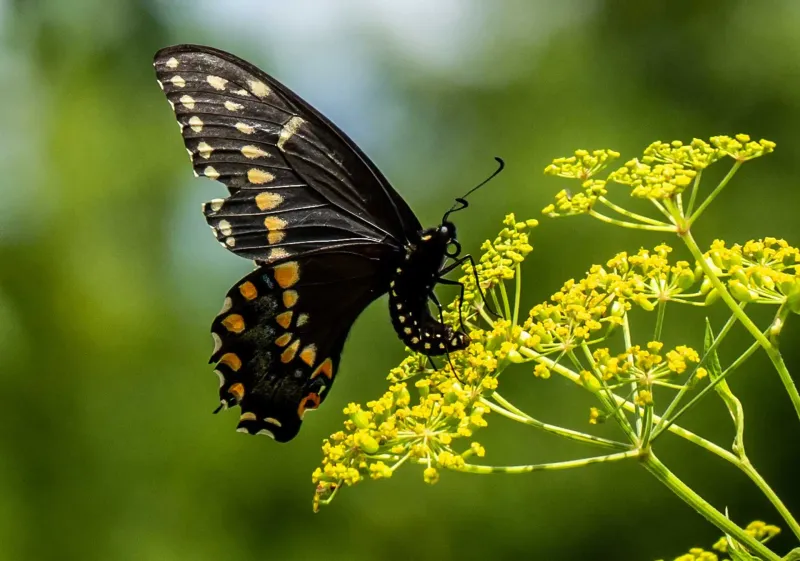
An herb pot full of parsley or dill on the back porch can absolutely attract a black swallowtail looking for a place to lay eggs. That is a real and documented fact.
But there is a meaningful difference between a container of annual herbs and a native perennial host plant growing in the ground as part of a designed habitat garden.
Golden alexanders comes back every spring without replanting. It spreads slowly by seed and rhizome over time, gradually building into a more substantial clump that can support more caterpillars each season.
It belongs to this region’s native plant community. That means it has ecological relationships with local insects, soil organisms, and other native plants that annual herbs simply cannot replicate.
Choosing golden alexanders over another herb pot is not about giving up convenience. It is about investing in a plant that works harder for the local ecosystem over many years.
It feeds caterpillars in spring, supports early pollinators during bloom, and provides structure in the native border through the growing season. Some gardeners want to plant for the full butterfly life cycle rather than just the occasional adult visit.
For them, golden alexanders is one of the most straightforward native choices available in this state.