What It Means When Septoria Leaf Spot Appears On Your Pennsylvania Tomatoes
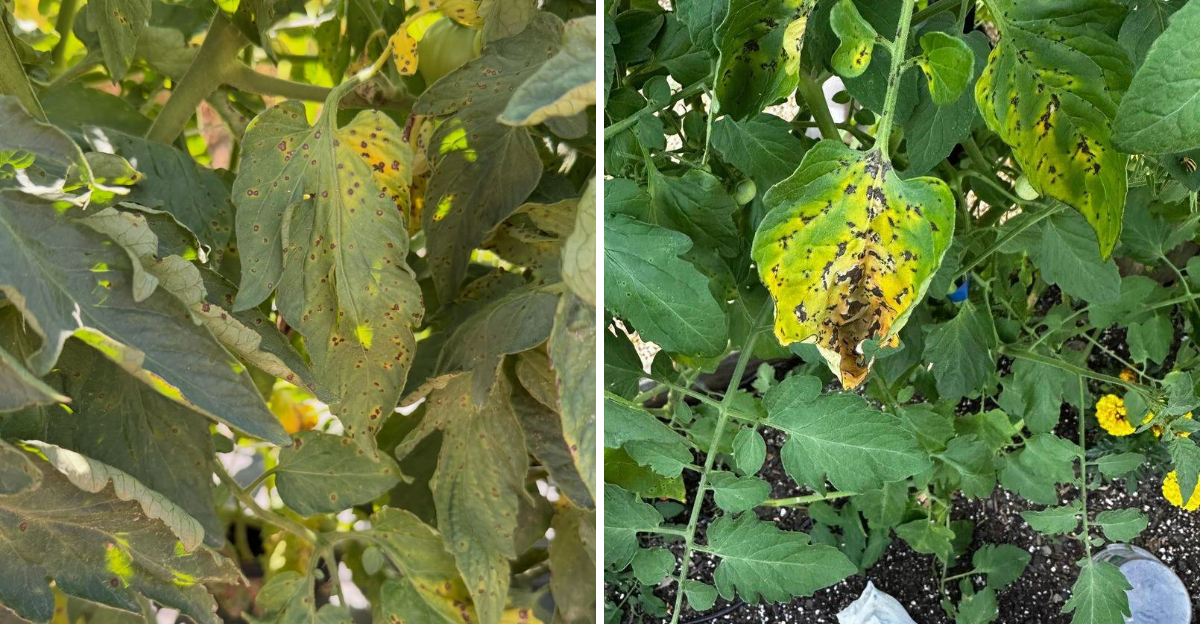
A humid Pennsylvania morning can turn a tomato check into a detective scene fast.
One day, the plants look strong. The next, the lowest leaves are dotted with small brown spots, a few yellow patches are starting to show, and the whole plant suddenly feels less secure than it did yesterday.
Septoria leaf spot does not usually announce itself with dramatic collapse. It starts low, quietly, and easy to dismiss.
That is exactly why it matters.
This common tomato disease can move quickly when warm weather, wet leaves, and dense foliage line up.
It rarely attacks the fruit directly, which sounds comforting at first, but it can strip away the leaf cover fruit needs to ripen well and avoid sun damage.
So what does it really mean when Septoria appears on your tomatoes?
It means the plant is sending an early warning. The disease is active, moisture is helping it spread, and your next few habits can decide how much of the harvest stays protected.
1. Lower Spots Mean The Disease Is Starting Early
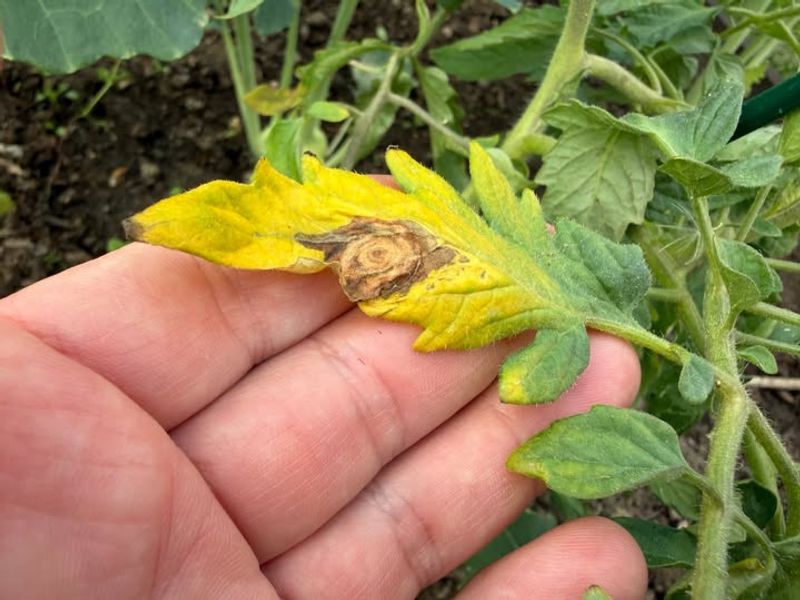
Small spots near the bottom of a tomato plant are easy to ignore.
That is what makes Septoria leaf spot so sneaky. It usually begins on the oldest, lowest leaves, where foliage sits closest to the soil and stays damp the longest after rain, irrigation, or morning humidity.
In a Pennsylvania summer, that lower canopy can become the perfect place for the disease to get started.
Those early spots are not just cosmetic marks. They are the first visible clue that the fungus is active on the plant.
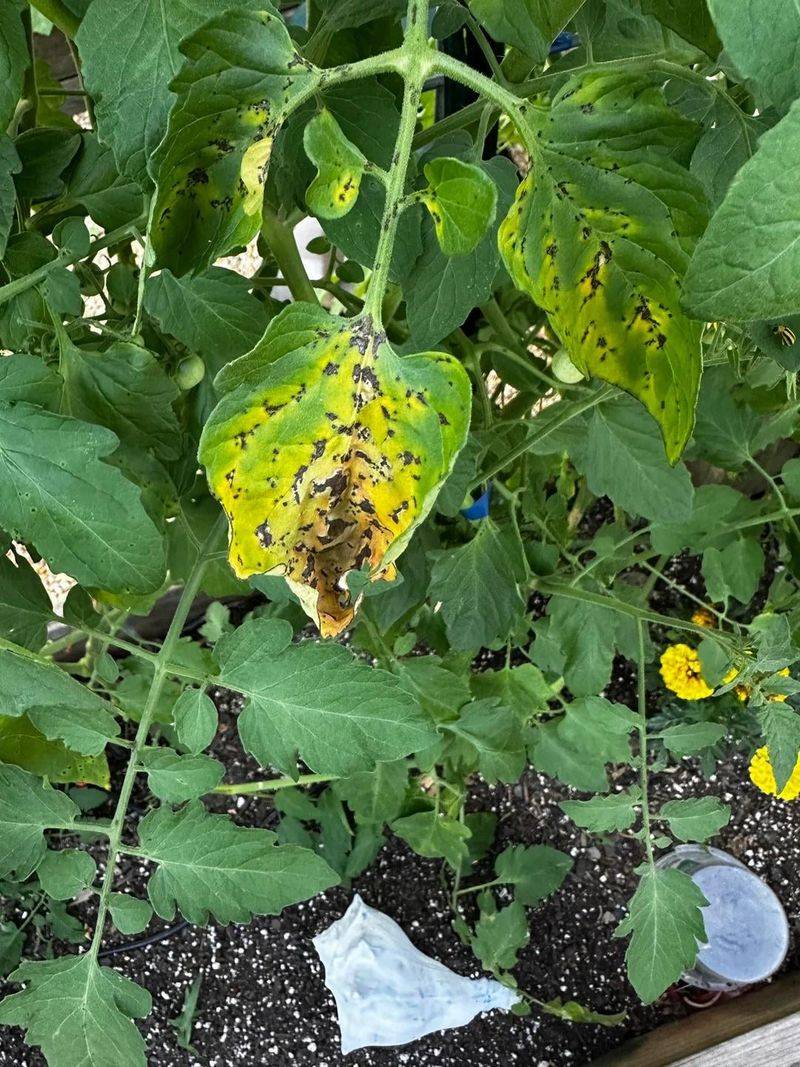
Septoria lesions often begin as tiny water-soaked spots. As they develop, they usually form pale tan or grayish centers with darker brown edges. A single leaflet may show just a few circles at first, then suddenly look peppered with them a few days later.
The timing often lines up with early fruit set. By then, plants have more foliage, the lower leaves are shaded, and airflow can be limited near the soil. That creates a damp pocket where disease can settle in.
Pennsylvania gardeners should start checking tomatoes once plants reach knee height. Do not only admire the top growth. Crouch down, lift the lower branches, and flip leaves over. The first signs often sit below your normal line of sight.
Early detection gives you more options. A few affected leaves can be removed. Watering habits can be adjusted. Mulch can be added. Fungicide decisions, if needed, can be made before the disease has climbed halfway up the plant.
Septoria does not mean the season is over.
It means the quiet part of the problem has ended, and the management part needs to begin.
2. Black Specks Mean Septoria Is Producing Spores
The tiny black dots inside the spots matter.
They are easy to miss without a close look, but they are one of the clearest signs that the disease is Septoria leaf spot.
Use a hand lens, magnifying glass, or your phone camera zoom and look at the pale center of a fresh lesion. If you see tiny pepper-like specks embedded in the tissue, you are likely looking at pycnidia.
Your Pennsylvania Garden Changes Every Week. Your Plan Should Too.
Gardening in Pennsylvania changes quickly throughout the season. Every Friday you’ll receive a simple weekly plan showing exactly what to plant, prune, fertilize, harvest, and protect so you never miss the right timing.
Those pycnidia are the spore-producing structures of the fungus.
That detail changes the urgency. A spot with active fruiting bodies is not just damage from last week’s rain. It is a source of more spores that can move to nearby leaves when moisture is present.
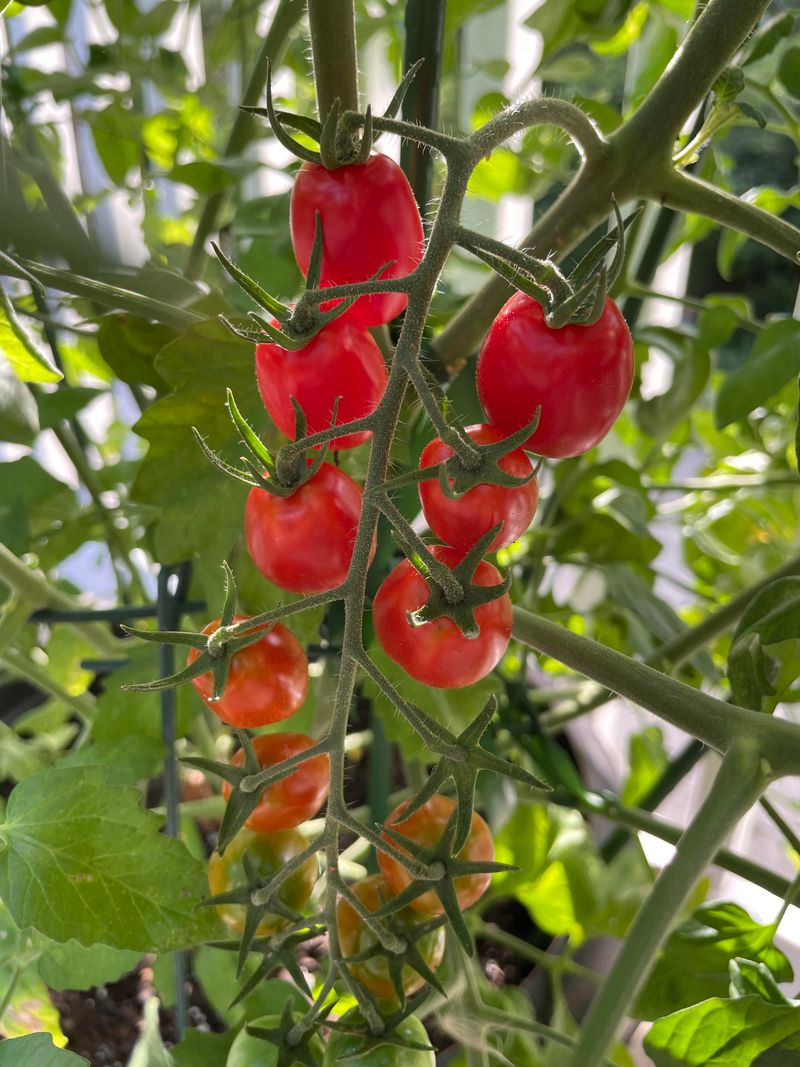
This is also where correct identification becomes important. Septoria can be confused with early blight, bacterial spot, or other tomato leaf problems.
Early blight often makes larger lesions with target-like rings. Bacterial spot may stay darker, wetter-looking, or more irregular. Septoria’s pale center, dark margin, and black specks create a more specific pattern.
Do not diagnose the whole plant from one leaf if the symptoms look mixed. Pennsylvania tomato plants can carry more than one problem at once during a wet summer. A plant may have Septoria on lower leaves and another issue elsewhere.
If lesions vary widely, if stems look affected, or if fruit begins showing symptoms, get help with diagnosis before treating. A county Extension office or plant disease clinic can help confirm the cause.
Accurate identification prevents wasted effort. It also keeps gardeners from spraying broadly for the wrong problem.
Black specks inside the lesions mean the disease is ready to spread.
Once you see them, the goal is to reduce moisture, remove the worst sources, and protect clean foliage above.
3. Wet Foliage Means Spread Can Speed Up Fast
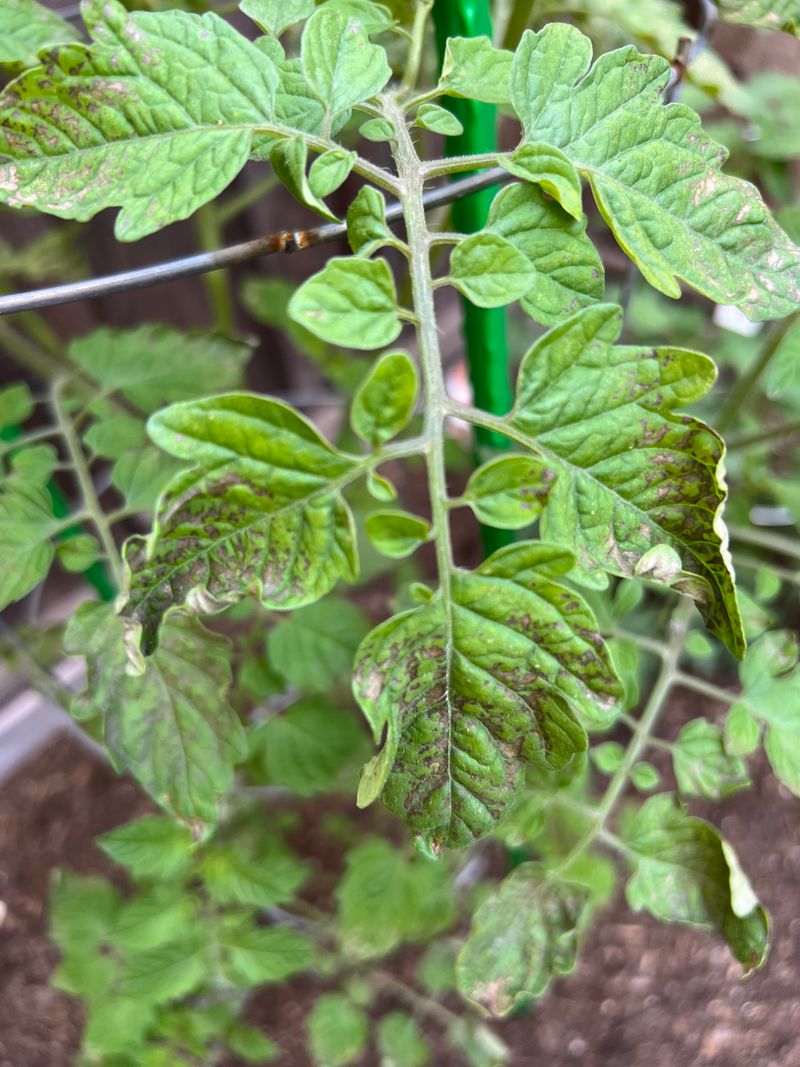
Septoria loves wet leaves.
Rain, overhead sprinklers, dense foliage, and long humid stretches all help the disease move. The fungus releases spores when moisture is present, and splashing water can carry those spores from lower leaves or soil debris onto healthy foliage above.
That is why Pennsylvania weather can make Septoria feel so explosive.
A single quick shower is not always the worst situation. The bigger issue is how long leaves stay wet. A slow rain, heavy dew, humid morning, or evening sprinkler run can leave foliage damp for hours.
That long wet period gives spores more time to spread and germinate.
Lower leaves are especially vulnerable because they dry slowly. They sit near the soil, under the canopy, where airflow is limited. If plants are crowded, moisture lingers even longer.
Spacing helps. Tomato plants need enough room for air to move between them. Crowded rows may look productive early in the season, but they create a leafy wall that dries poorly after rain.
Staking and caging help too. Upright plants shed water faster than sprawling plants. Keeping foliage off the soil also reduces the splash route that moves spores upward.
Avoid working in the tomato patch while leaves are wet. Hands, sleeves, tools, and baskets can carry spores from one plant to another. Waiting until foliage dries before pruning, harvesting, or scouting is a small habit with real value.
If overhead watering is your only option, use it early in the morning. Leaves need time to dry before evening temperatures drop.
Wet foliage means the disease has help.
Dryer leaves, better airflow, and careful timing take some of that help away.
4. Leaf Loss Means Fruit Needs Better Protection
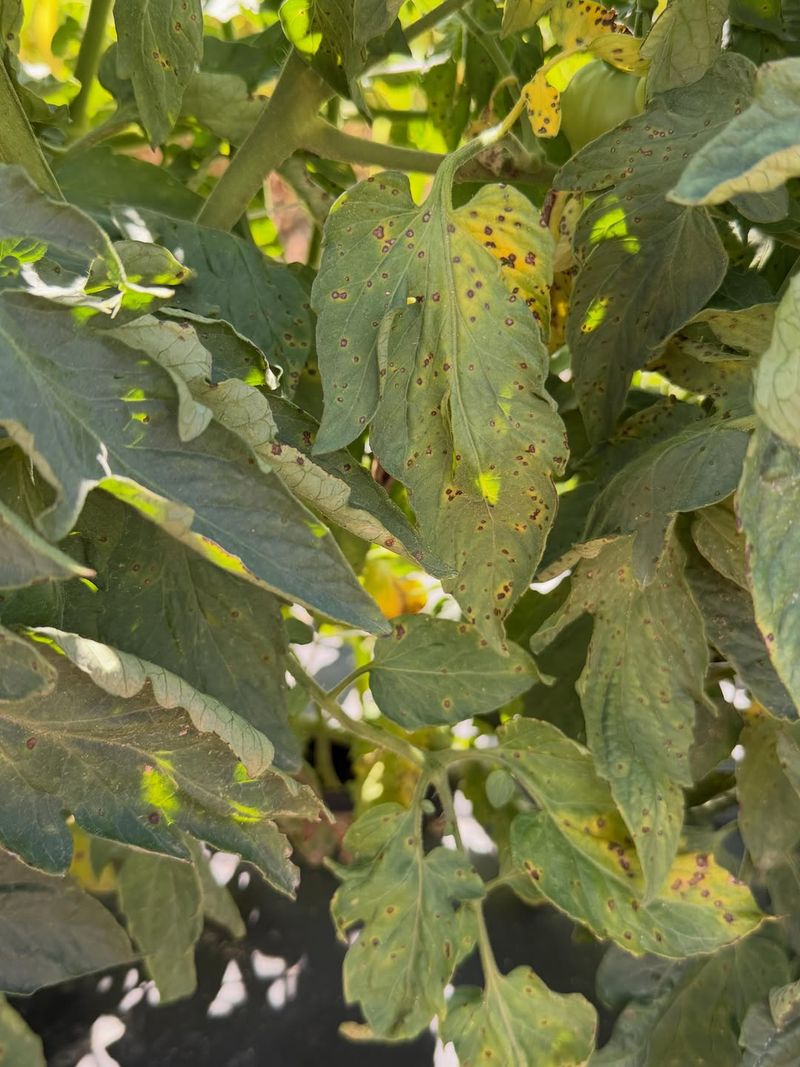
Septoria does not usually go after tomato fruit directly.
That sounds like good news, and in one narrow way, it is. The disease mainly damages leaves. But tomato fruit depends on those leaves more than many gardeners realize.
When Septoria removes too much foliage, fruit loses shade, energy support, and protection during some of the hottest weeks of summer.
That is where the real harvest risk begins.
Leaves fuel ripening through photosynthesis. Fewer healthy leaves mean less energy moving through the plant. Fruit may ripen more slowly, size may suffer, and the plant may have fewer reserves to keep producing.
Leaf cover also protects tomatoes from sunscald. When fruit that was shaded suddenly sits in direct sun, pale papery patches can form on the exposed side.
Those patches may soften, crack, or invite secondary molds. The fruit may still be usable if damaged areas are cut away, but quality drops quickly.
That is why aggressive leaf removal can backfire. Removing diseased leaves is useful, but stripping the plant too heavily can expose fruit faster than the plant can adjust.
Protecting fruit means protecting enough canopy.
The goal is not a spotless plant by tomorrow. The goal is to slow disease while preserving the leaves needed to ripen the crop.
Keep the middle and upper canopy as healthy as possible. Remove the worst lower leaves, but avoid turning the plant into a bare stem with tomatoes hanging in full sun.
If the disease appears early, act before it climbs. Cultural controls and labeled fungicides, when appropriate, work best before heavy defoliation has already occurred.
Leaf spots mean more than spotted leaves.
They mean the fruit canopy is at risk, and that canopy is part of the harvest.
5. Spotted Lower Leaves Mean Sanitation Starts Now
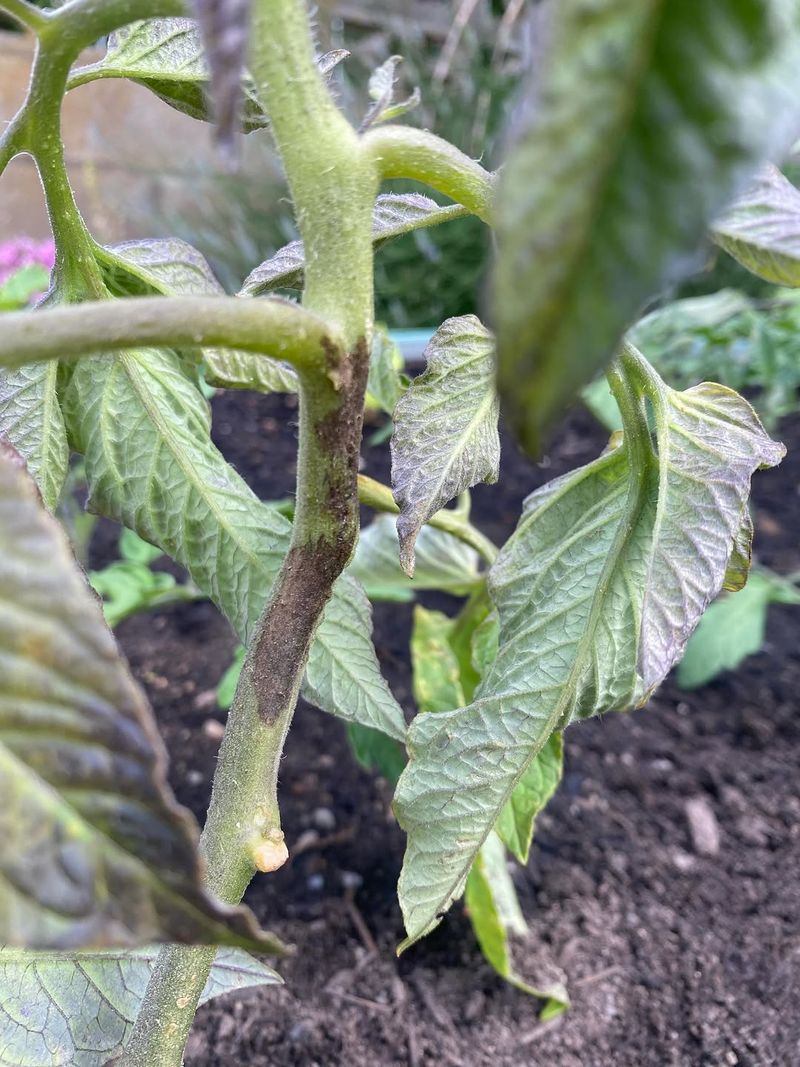
Once Septoria is confirmed, the worst lower leaves become spore sources.
Leaving them in place allows the disease to keep producing and spreading spores whenever moisture returns. Removing heavily infected foliage can slow the disease’s climb and make the plant easier to manage.
The key word is carefully.
Focus first on leaves that are badly spotted, yellowing, or already failing. Leaves that are more than half covered with lesions are usually better removed than left hanging in the lower canopy.
They are not helping the plant much anymore, and they can keep feeding the disease cycle.
Do not strip too much at once. A tomato plant still needs foliage for energy and fruit shade. Removing a few strategic lower leaves is different from clearing the lower half of the plant in one frustrated session.
As a practical rule, avoid removing more than about one-third of the foliage at a time. Less is often better, especially if fruit is already exposed.
Use clean pruners or scissors. Wipe blades between plants with rubbing alcohol or another suitable disinfecting method. If a plant is heavily infected, clean tools more often so you do not move spores around as you work.
Drop removed leaves straight into a bag. Do not toss them onto the soil or leave them in the path. That only keeps infected tissue close to the plants.
Home compost piles often do not stay hot enough long enough to reliably handle diseased tomato material. Disposal through trash or appropriate yard waste collection is safer.
Sanitation is not glamorous, but it works with everything else.
Removing the worst leaves lowers the disease pressure right where Septoria usually starts.
6. Wet Leaves Mean Your Watering Method Matters
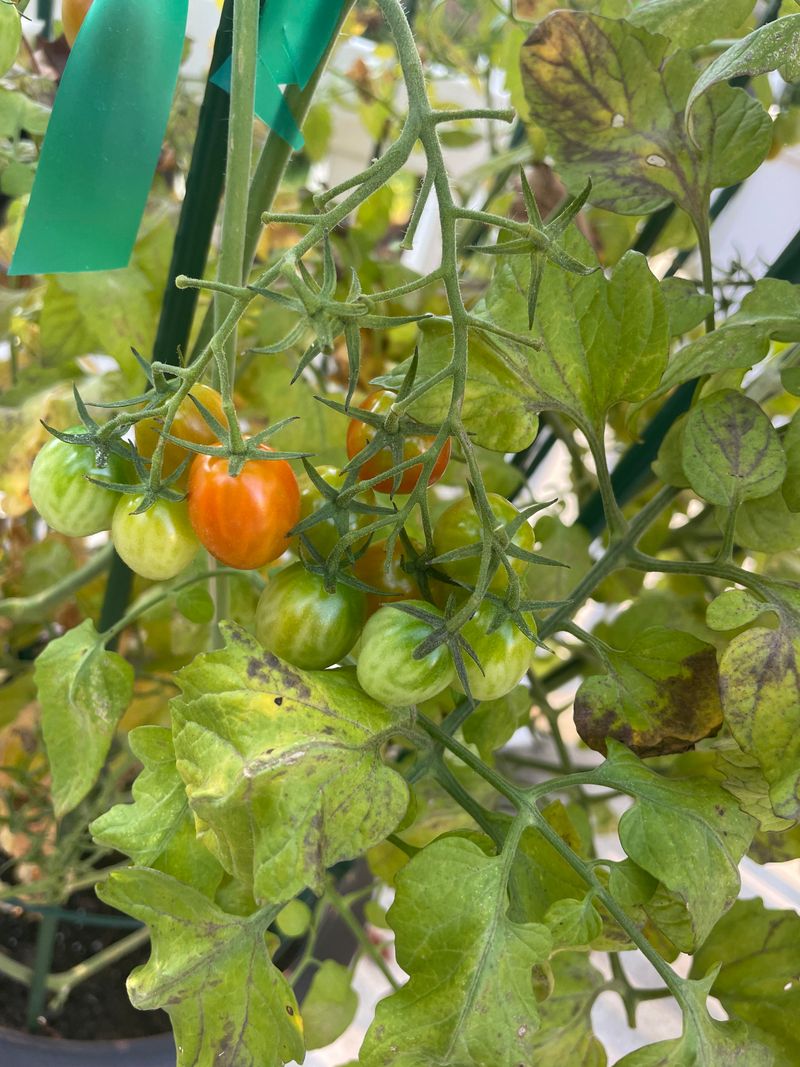
Where the water lands can change how hard Septoria pushes.
Tomatoes need steady moisture, especially during fruiting, but the leaves do not need to be soaked every time the garden gets watered.
Overhead irrigation keeps foliage wet, splashes spores upward, and extends the damp conditions Septoria uses to spread.
Watering the soil is the better habit.
Drip irrigation, drip emitters, and soaker hoses deliver moisture directly to the root zone. Leaves stay dry, roots get water, and the disease loses one of its easiest pathways.
Soaker hoses are especially useful in home tomato beds. Lay them along the row before plants get large, then cover them lightly with mulch.
Drip emitters also work well in raised beds, containers, and in-ground rows if they are positioned near the root zone.
Do not place all the water directly at the stem. Tomato roots spread outward, so moisture should reach the wider root area.
Mulch adds another layer of protection. A 2- to 3-inch layer of straw, shredded leaves, or clean organic material helps reduce soil splash during rain. It also keeps soil moisture steadier, which helps tomatoes avoid the stress of swinging from dry to soaked.
Keep mulch slightly pulled back from the stem to reduce crown moisture problems.
Consistent root-zone watering also supports plant resilience. A tomato that is drought-stressed will have a harder time replacing damaged leaves and keeping fruit ripening well.
If overhead watering cannot be avoided, water early in the day and avoid watering in the evening. The shorter the leaf-wetness period, the better.
Wet leaves mean Septoria gets an advantage.
Watering the soil takes that advantage away without depriving the plant of moisture.
7. Tomato Debris Means Next Year’s Infection Can Start Early
Septoria does not disappear just because the tomato season ends.
The fungus can survive in infected tomato debris left in the garden. Old leaves, stems, fallen plant pieces, and neglected vines can hold disease material through the off-season, giving next year’s tomatoes a rough start before the transplants even settle in.
Fall cleanup matters more than it feels like it should.
After the final harvest, pull tomato plants completely. Remove stems, leaves, fallen fruit, and as much infected debris as possible. Do not leave diseased vines to collapse into the bed over winter.
That old plant material can become next season’s inoculum source.
Bag diseased debris or send it to an appropriate disposal stream. Avoid casual home composting unless the pile is managed hot enough to break down disease material reliably. Many backyard piles do not reach that standard, especially in cool fall weather.
Clean supports too. Tomato cages, stakes, trellises, clips, and ties can carry plant residue and spores. Scrub them before storage. Let them dry well before stacking them away for winter.
Remove volunteer tomatoes the following spring. They may seem like free plants, but they can carry disease pressure into the new crop.
Volunteers are usually not placed with proper spacing, support, or rotation, which makes them risky hosts.
A clean bed does not guarantee a disease-free year. Spores can still move from nearby areas, weather still matters, and susceptible varieties may still get infected.
But cleanup reduces the head start.
Tomato debris means the problem can wait quietly for next season.
Clearing it gives your next planting a cleaner beginning.