These Are The Ohio Vines Moving From Legal To Illegal
Ohio’s landscape is about to lose some of its familiar green faces. Several vines once welcomed in gardens, farms, and wild spaces now face legal bans because they spread fast, choke native plants, damage trees, and reshape habitats.
What looks harmless on a fence can become a costly threat across forests, roadsides, and riverbanks.
State officials have drawn a harder line, and the shift could surprise homeowners, landscapers, nurseries, and plant collectors who still see these species for sale or rooted in their yards.
The new rules do more than target a few aggressive plants. They signal a wider battle over biodiversity, property damage, and public land.
Some vines on the list have long histories in Ohio, which makes their move from legal to illegal even more controversial. Before you buy, trade, plant, or keep one, know which vines now cross the line and why the state wants them gone.
1. Porcelainberry Entered The State Ban In 2023
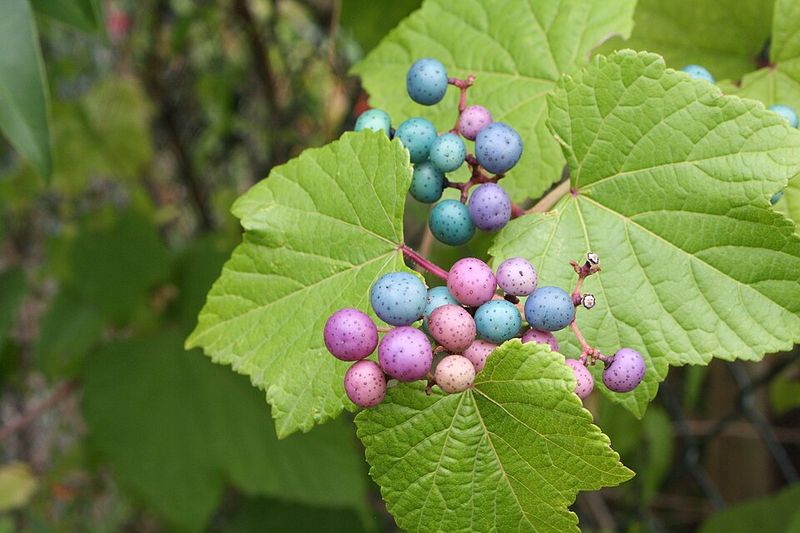
Gardeners sometimes spot a vine with eye-catching speckled berries and assume it is a native grape. That vine may be porcelainberry, known scientifically as Ampelopsis brevipedunculata.
It was added to the Ohio invasive-plant list under Ohio Administrative Code Rule 901:5-30-01 in 2023.
Porcelainberry produces lobed leaves that closely resemble those of native grapes, making visual ID tricky. Its tendrils help it climb fences, shrubs, and tree trunks.
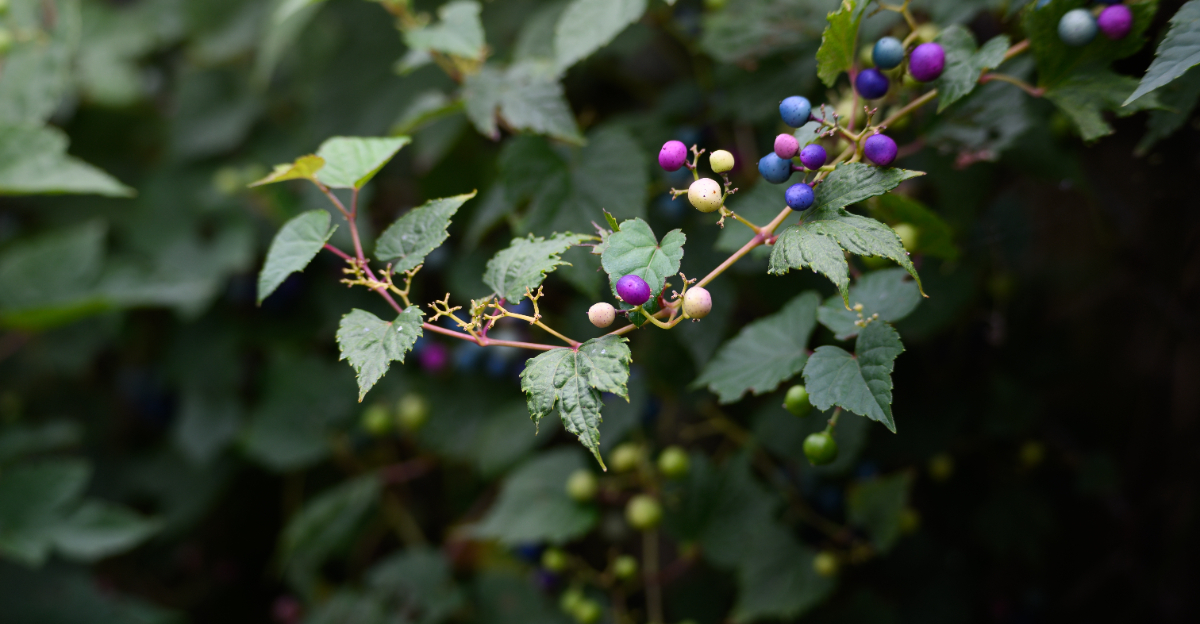
The berries shift through green, yellow, pink, lilac, and blue-purple as they ripen.
Berry color alone is not a reliable way to confirm identity. A closer look at the lenticels on the stem and the pith inside the cane can help separate it from native grapes.
When in doubt, consult a local extension office before removing anything.
Birds eat the berries and scatter seeds widely. Discarded clippings and garden waste can also carry viable material to new sites.
Porcelainberry was added to the list in 2023. Since then, the state has restricted its sale, propagation, distribution, importation, and intentional spread.
If you find this vine on your property, avoid moving stems, roots, or berries to other locations. Bag removed material securely and follow current county disposal guidelines.
Contact a certified arborist or extension professional if the vine has climbed into trees.
2. Asian Bittersweet Has Been Restricted Since 2018
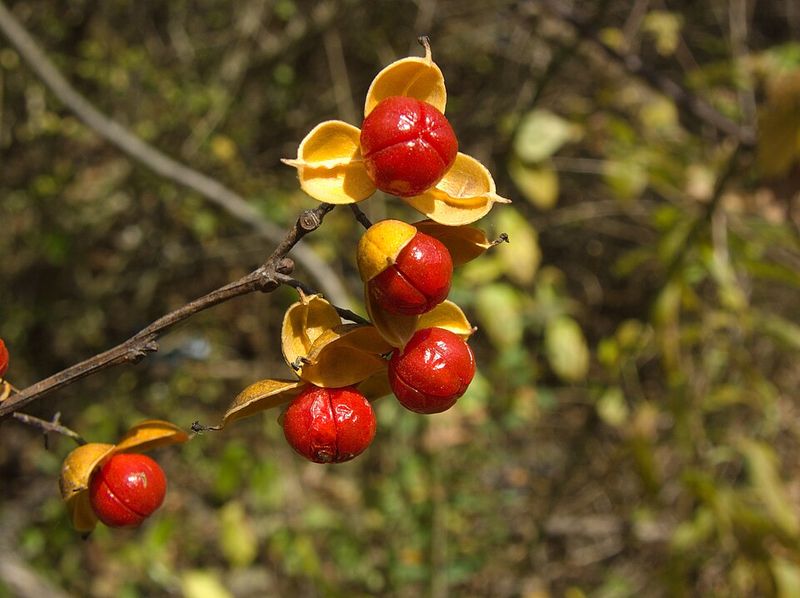
Walk past a hedgerow in autumn and you might notice bright orange-and-yellow seed capsules clinging to a twining vine. That is often Asian bittersweet, Celastrus orbiculatus, which has been on the Ohio invasive-plant rule since 2018.
The stems twine tightly around shrubs and tree trunks, sometimes girdling them over time. Leaves are nearly round with a fine-toothed edge.
Fruit capsules split open in fall to reveal red-coated seeds that birds and mammals readily spread.
Asian bittersweet is frequently confused with American bittersweet, Celastrus scandens, which is native. The key difference is fruit placement.
Asian bittersweet produces fruit all along the stem. American bittersweet clusters fruit only at the branch tips.
Relying on a single leaf shape is not enough for a confident ID.
Your Ohio Garden Changes Every Week. Your Plan Should Too.
Gardening in Ohio changes quickly throughout the season. Every Friday you’ll receive a simple weekly plan showing exactly what to plant, prune, fertilize, harvest, and protect so you never miss the right timing.
Vegetative spread also occurs when stem fragments root in disturbed soil. Because the fruiting stems look attractive, people sometimes collect them for wreaths or arrangements.
Transporting those stems moves viable seeds to new areas, which is now a restricted act under the invasive-plant rule.
For removal, cut stems at ground level and monitor for regrowth. Larger infestations growing into tree canopies benefit from professional assessment.
Dispose of cut material in sealed bags rather than leaving it on-site where seeds could still disperse.
3. Japanese Honeysuckle Lost Its Legal Sales Route
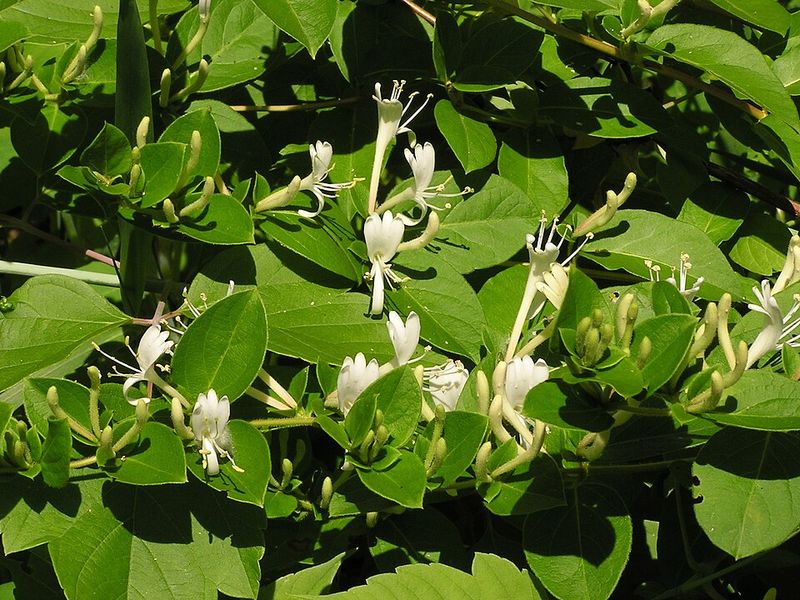
Few vines smell as sweet in early summer as Japanese honeysuckle. That familiar fragrance belongs to Lonicera japonica, a twining vine.
It was placed on the invasive-plant list under Rule 901:5-30-01. This ended its legal sale and propagation in the state.
The plant has opposite, oval leaves that may stay on the vine through mild winters. Paired white or yellow tubular flowers bloom from late spring into summer.
Small black berries follow and are eaten by birds, which scatter seeds across roadsides, woodland edges, and stream banks.
Japanese honeysuckle is not the same as native honeysuckle vines, which have different leaf arrangements and growth habits. Confusing them can lead to removing a plant that should stay.
A local extension office or native plant guide can help confirm identity.
Vegetative spread happens when stems touch soil and root at the nodes. Established patches can form dense mats that shade out low-growing plants.
Repeated cutting or mowing can reduce the vine but may not remove the root system after one season of effort.
For small patches, hand-pulling young plants before they root deeply is practical. Larger stands may need a licensed applicator using a properly labeled herbicide.
Always confirm the species before starting any control work, and dispose of pulled material away from natural areas.
4. Kudzu Falls Under Two State Regulatory Lists
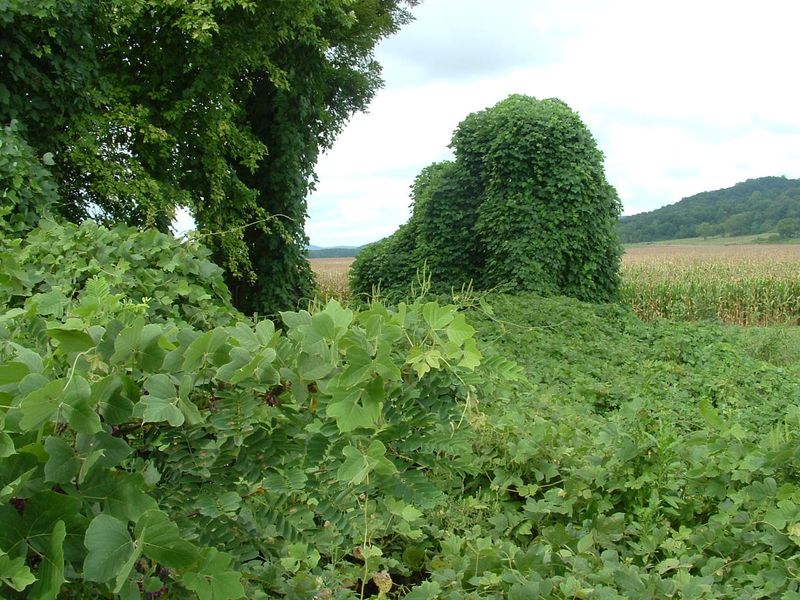
Roadside travelers sometimes see entire hillsides blanketed in large green leaves. Kudzu, Pueraria montana var. lobata, is one of the more recognizable vines in this group.
It holds a notable position because it appears on two separate state regulatory lists.
Under Rule 901:5-30-01, kudzu is listed as an invasive plant, restricting its sale, propagation, distribution, import, and intentional spread. It also appears as a prohibited noxious weed under Ohio Administrative Code Rule 901:5-37-01.
This designation can create control duties and seed restrictions for affected landowners. These two rules work differently and should not be treated as one combined restriction.
Kudzu grows large compound leaves with three broad leaflets. Its stems twine and also spread along the ground, rooting at nodes to form crowns.
The root system can become very deep over several seasons, storing energy that supports rapid regrowth each spring.
Moving rooted crowns or viable stem sections to new locations can establish new patches quickly. Not every large roadside vine is kudzu, so positive identification matters before any action is taken.
If a large patch is suspected on your land, contact the Ohio Department of Agriculture or your local extension office for guidance. Control across large areas often requires a coordinated, multi-season approach from professionals familiar with both regulatory systems.
5. Mile-A-Minute Carries Overlapping State Restrictions
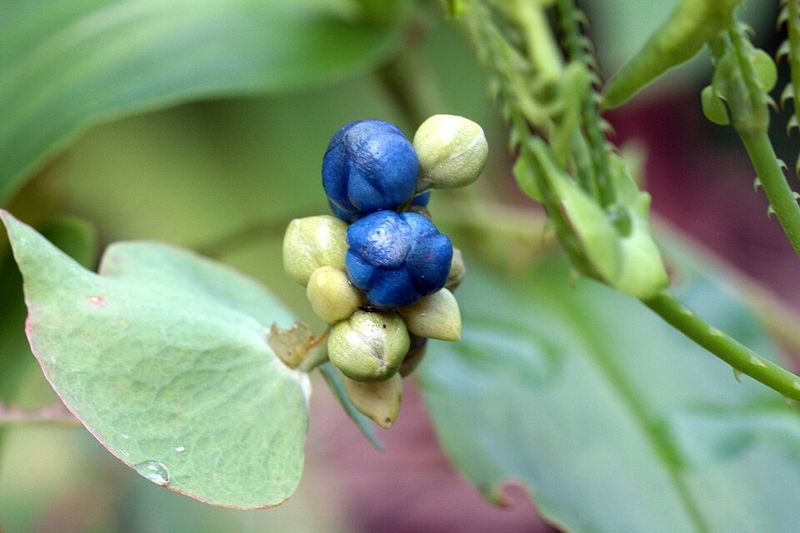
Reaching into a thicket and feeling tiny barbs catch your skin is a quick introduction to mile-a-minute, Persicaria perfoliata. This annual vine is unusual in this group because it holds status under both the invasive-plant list and the prohibited noxious-weed rule.
Its triangular leaves sit above distinctive circular, saucer-shaped structures called ocreae that wrap around the stem at each node. Stems are armed with recurved barbs that catch on clothing, animals, and equipment, aiding its spread.
Small blue berries ripen in late summer and are moved by birds and water.
Seeds also travel in contaminated soil, mulch, or on equipment moving through infested areas. Because mile-a-minute is an annual, removing plants before seeds mature is one of the most practical ways to reduce its spread.
A single season of seed production can leave a long-lasting seed bank in the soil.
Wear thick gloves and protective sleeves when handling this plant. Avoid touching the stems with bare skin.
Pulled material with mature seeds should be bagged securely before disposal. One season of removal does not guarantee the infestation is finished, since seeds already in the soil may sprout in following years.
For large infestations near waterways or on slopes, professional help is advisable. Check current official guidance before using any herbicide near water or wetland edges.
6. Black Swallowwort Cannot Be Sold Or Spread
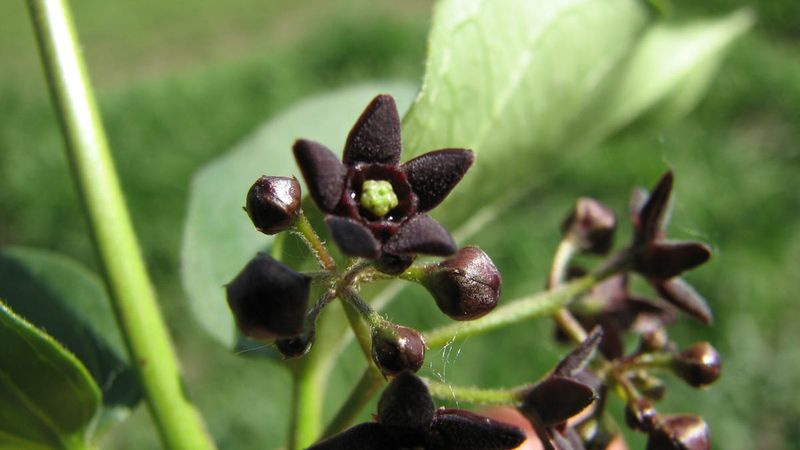
A small vine with nearly black flowers and slender seed pods might not look threatening at first glance. Black swallowwort, Vincetoxicum nigrum, is one of the more recent additions to the invasive-plant list under Rule 901:5-30-01.
Selling or intentionally spreading it is now restricted.
The plant twines and scrambles over shrubs and along fences. Its opposite, glossy leaves are oval to lance-shaped.
Clusters of tiny, dark maroon to near-black star-shaped flowers bloom in summer, followed by narrow, elongated pods that split to release seeds attached to silky fibers.
Those silky fibers carry seeds on the wind, making seed dispersal efficient once pods mature. Spread can also occur through root fragments and crowns.
Black swallowwort should not be confused with pale swallowwort, Vincetoxicum rossicum, which has pink flowers, or with native milkweeds in the Asclepias genus.
Identification from seed pods alone is not reliable. A full look at flower color, leaf shape, and growth habit together gives a more accurate picture.
Black swallowwort does not support monarch butterfly reproduction the way native milkweeds do, despite some surface similarities.
Cutting pods before seeds mature reduces wind dispersal. Removed material with pods should be bagged immediately.
Consult current official guidance for disposal methods, since composting viable seed material is not recommended. Professional removal is worth considering for patches on slopes or near natural areas.
7. Field Bindweed Became A Prohibited Noxious Weed
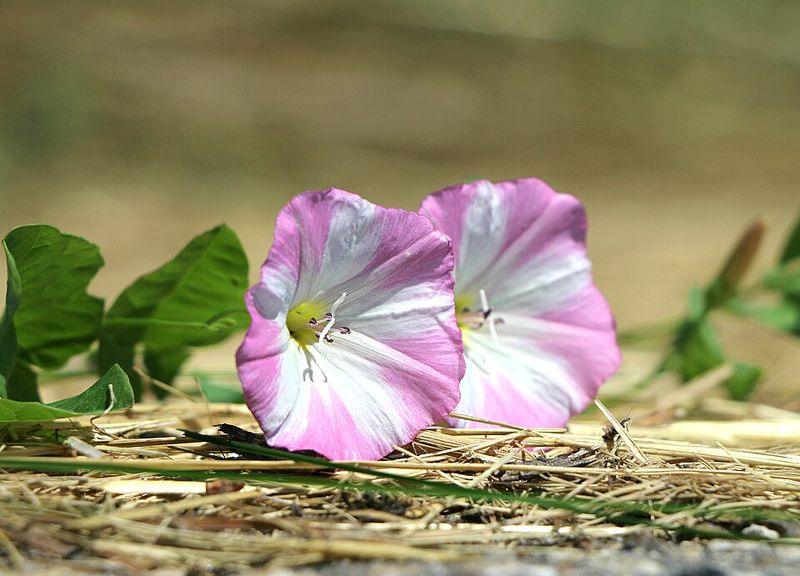
Seeing small funnel-shaped flowers winding up a fence post in a crop field is a common sight in agricultural areas. Those flowers often belong to field bindweed, Convolvulus arvensis.
This vine is regulated through the noxious-weed and seed-law systems rather than the invasive-plant sales rule.
Field bindweed appears under Ohio Administrative Code Rule 901:5-37-01 as a prohibited noxious weed. It is also subject to prohibited-seed rules under Rule 901:5-27-06.
These rules differ from the invasive-plant rule and can create control duties for landowners as well as restrictions on seed presence in commercial seed lots.
The plant has arrow-shaped leaves with pointed basal lobes. White to pale pink flowers are small, about an inch across, and funnel-shaped.
Stems twine around crop plants, fences, and low shrubs. The root system can reach several feet deep, which makes surface cutting a slow process.
Repeated cutting can reduce growth over time but may not provide fast results. Tilling without care can move viable root pieces to new spots, potentially spreading the plant.
Seeds remain viable in soil for many years.
Field bindweed differs from hedge bindweed in leaf size, flower size, and the bracts near the flower. Landowners who suspect control duties should review current state rules or consult their county extension office.
This article provides general information and is not a substitute for legal advice.
8. Hedge Bindweed Joined The Noxious Weed List
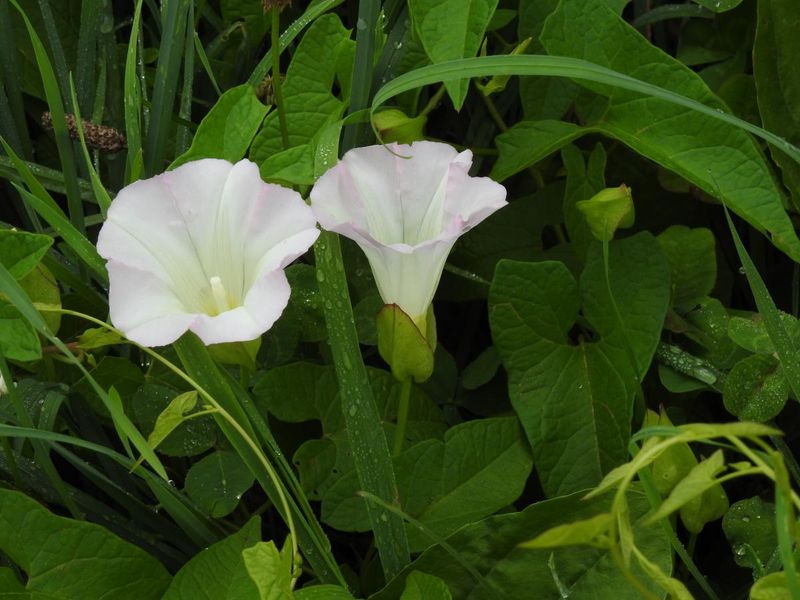
A vine with noticeably large white trumpet flowers climbing over a hedgerow or garden fence is easy to admire at first. That plant is often hedge bindweed, Calystegia sepium, a separate species from field bindweed and one that carries its own regulatory status.
Hedge bindweed appears on the prohibited noxious-weed list under Rule 901:5-37-01 and is also subject to seed rules under Rule 901:5-27-06. Its regulatory path runs through the noxious-weed system, not the invasive-plant sales rule.
The legal effects of these two systems are distinct.
The leaves are larger and broader than those of field bindweed, with squared-off basal lobes rather than pointed ones. Flowers are bigger too, often reaching two to three inches across.
Two large leafy bracts sit close to the base of each flower, nearly covering the sepals. These bracts are a helpful ID feature.
The native status of some hedge bindweed populations is complex and debated among botanists. Certain populations may have native origins, while others are considered introduced.
The state’s legal designation as a prohibited noxious weed controls the regulatory discussion here, regardless of origin questions.
Underground rhizomes spread laterally and make control slow. Moving soil, roots, or rhizome fragments can establish new patches.
Identify the species carefully before removing plant material or moving any seed or soil from an infested site. You should also review current state rules or contact your county extension office.