These Are The Arizona Native Trees That Cool A Yard Without The Mess
Arizona shade is precious.
A good tree can soften a west-facing wall, cool a patio, protect a window, and make a yard feel livable again when the afternoon sun gets harsh.
But shade trees also come with a practical question every homeowner eventually asks: how much cleanup is this going to create?
No tree is completely clean. Leaves, flowers, pods, cones, and needles are part of how trees live. The goal is not a mess-free fantasy.
The goal is a smarter match: a tree that gives meaningful shade, fits the space, handles Arizona conditions, and drops litter that is easy to manage in the right location.
That matters even more in a state with such different growing regions. A tree that thrives in a low desert yard in Tucson may struggle in Flagstaff.
A high-country evergreen may be completely wrong for Phoenix. Soil, elevation, irrigation, reflected heat, and mature size all change the answer.
The best low-mess shade tree is not just the one with the smallest leaves.
It is the one planted where its natural litter lands in the right place, breaks down easily, or can be swept up without turning every weekend into yard work.
1. Plant Desert Willow For Filtered Shade
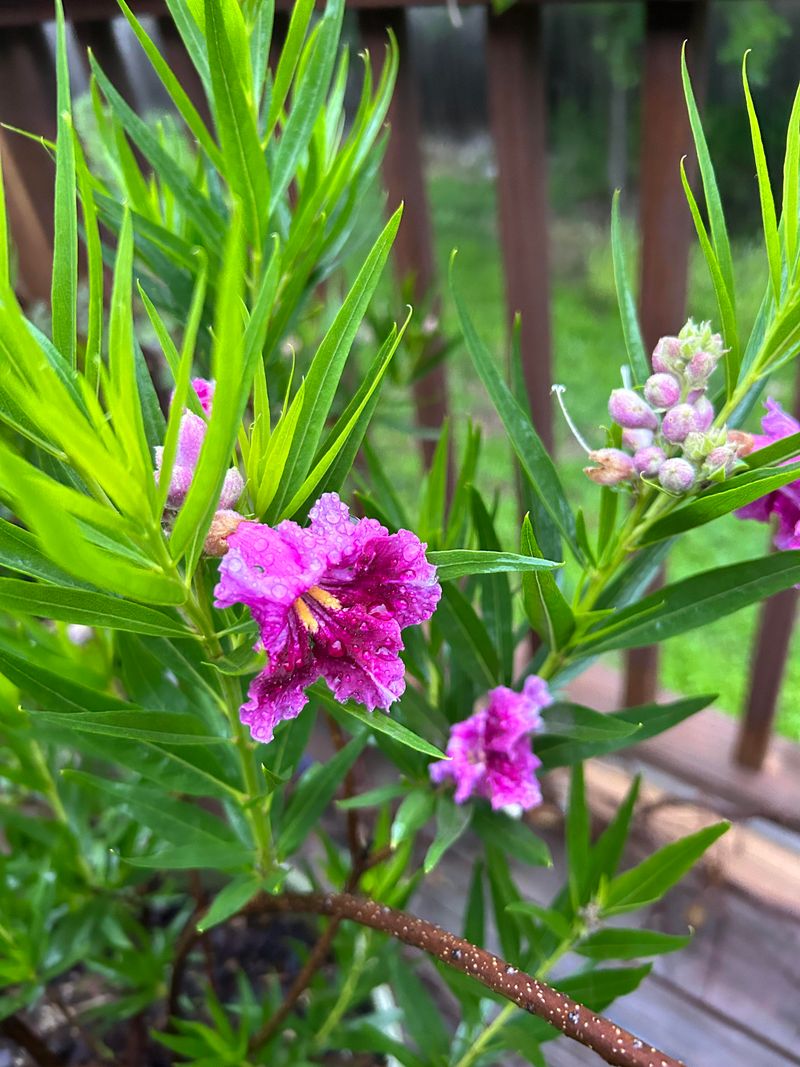
Desert Willow is one of the easiest Arizona native trees to love near a patio.
It gives light, filtered shade rather than a heavy, dark canopy, which makes it especially useful around seating areas, walkways, and sunny walls that need relief without feeling closed in.
The narrow leaves cast a soft shadow, and the open branching lets enough light through for nearby desert-adapted plants to keep growing.
The flowers make the tree feel generous. From late spring into warm weather, Desert Willow can produce trumpet-shaped blooms in pink, lavender, white, or mixed tones, depending on the selection.
Hummingbirds often find them quickly, which adds movement without adding maintenance.
The cleanup is manageable when the tree is placed well.
Winter leaf drop is not usually a major problem because the leaves are narrow and light. They can settle into mulch, break down in planted beds, or sweep easily from paving.
The bigger litter concern is the long seed pods that follow flowering. They are not thorny or sticky, but they can look untidy if the tree hangs over a patio or pool edge.
That is where placement and light grooming help. Plant Desert Willow where pods can fall into a gravel bed, native planting area, or easy sweep zone.
If you want fewer pods, remove spent flower clusters before they fully mature, at least on branches close to outdoor seating.
Mature size usually stays friendly for suburban yards, often around 15 to 25 feet tall and wide. Train young trees early so the structure stays clean and walkable underneath.
Desert Willow thrives in full sun and well-drained soil. Once established, it handles drought well, but deep, occasional irrigation during extreme heat helps keep the canopy fuller.
For low-desert yards that need cooling shade without heavy cleanup, Desert Willow is one of the most graceful choices.
Your Arizona Garden Changes Every Week. Your Plan Should Too.
Gardening in Arizona changes quickly throughout the season. Every Friday you’ll receive a simple weekly plan showing exactly what to plant, prune, fertilize, harvest, and protect so you never miss the right timing.
2. Use Desert Ironwood For Deep Desert Durability
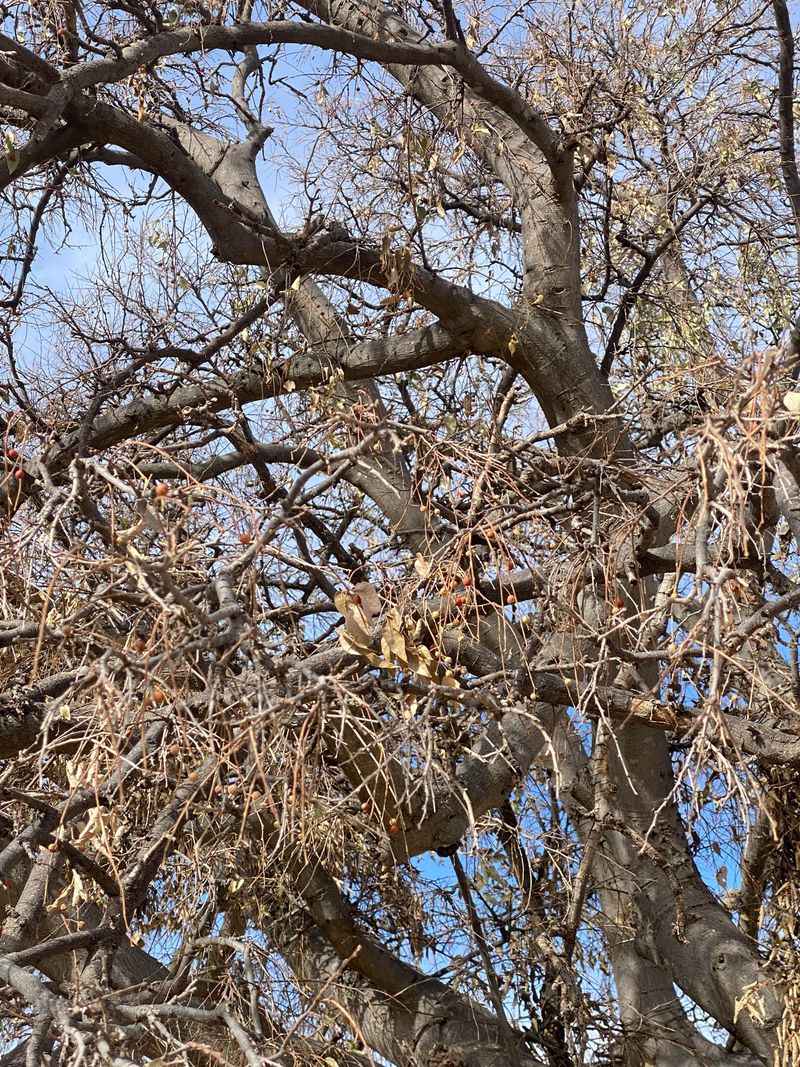
Desert Ironwood is not the fastest shade tree, but it is one of the toughest.
This Sonoran Desert native has the kind of durability Arizona homeowners appreciate after watching weaker trees struggle through heat, drought, wind, and poor soil.
Its canopy can become dense enough to create real cooling shade, especially in open low-desert yards where the afternoon sun turns gravel and walls painfully hot.
The foliage is made of small gray-green leaflets. That detail matters for cleanup. When leaves drop, they do not create big slippery piles or heavy mats.
They fall as fine debris that usually blends into desert soil, gravel, or mulch. Small pods may drop too, but they are generally easier to manage than large fleshy fruit or bulky seed litter.
The trade-off is patience.
Desert Ironwood grows slowly. A young tree may take years before it becomes a major shade feature. But that slow growth also brings strength.
The wood is famously hard, and mature trees develop a sturdy framework that tends to hold up better than many fast-growing shade options.
This is not a tree for tight play areas or narrow paths. Branches carry short paired thorns, so give it room and keep it away from spots where people brush past regularly.
It belongs in a broad desert planting, an open front yard, a wildlife-friendly back corner, or a sunny area where shade can spread without constant pruning.
Plant it in full sun with excellent drainage. Overwatering can push weak growth and reduce the natural toughness that makes the tree valuable. Once established, it should need very little supplemental water in many low-desert settings.
Also buy carefully. Desert Ironwood is protected under Arizona native plant rules, so nursery-grown trees should come from reputable sources with proper documentation.
If you want dense desert shade and litter that mostly disappears into the landscape, Desert Ironwood earns its keep beautifully.
3. Choose Blue Palo Verde For Broad Coverage
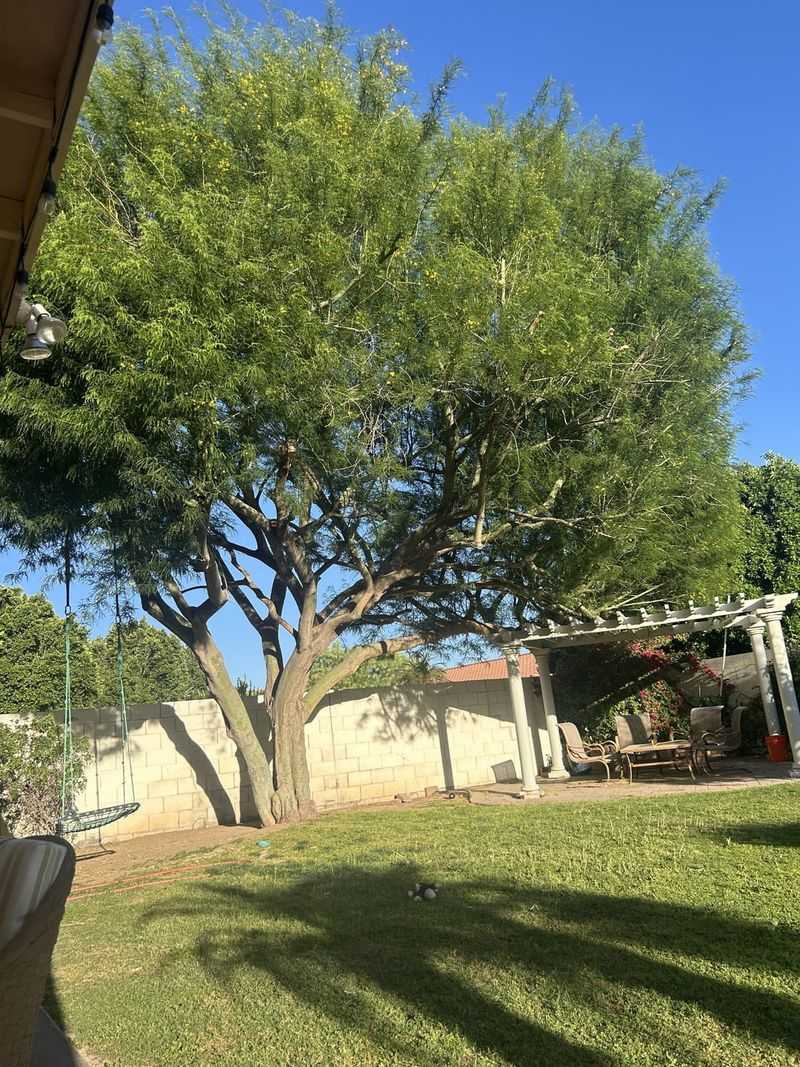
Blue Palo Verde is made for broad desert shade.
Its canopy can stretch wide, which makes it useful near west-facing patios, open gravel yards, and sunny outdoor spaces that need meaningful cooling.
The shade is dappled rather than solid, but the coverage can still make a dramatic difference during late afternoon heat.
The spring bloom is unforgettable. Yellow flowers cover the tree so heavily that the whole canopy seems to glow.
When they drop, they can briefly carpet the ground, but the petals are soft, light, and short-lived. In many yards, they blow into corners or rake up quickly.
That is one reason Blue Palo Verde fits the low-mess idea better than homeowners expect.
The tree does drop seed pods later, and those are the main cleanup issue. They are not usually difficult, but they are noticeable on hard surfaces.
Avoid planting Blue Palo Verde directly over pools, narrow courtyards, or patios where every pod will bother you. Place it where pods can fall onto gravel, native soil, or a wide bed, and cleanup becomes much easier.
Mature trees can reach 20 to 30 feet tall with a similar or wider spread. That size is helpful for cooling, but it means the tree needs room from fences, rooflines, and paving.
Crowding it into a tiny space often creates the very maintenance headache people are trying to avoid.
Blue Palo Verde also has green bark that helps with photosynthesis, a useful adaptation in desert conditions. The leaves are small and temporary, which keeps leaf litter light compared with many broadleaf shade trees.
Water young trees deeply through establishment. After the first couple of summers, reduce irrigation and let the tree grow with a stronger, more drought-adapted structure. Too much water can create rapid, weak growth.
Train the canopy early for clearance and branch strength.
For a large low-desert yard that needs real shade, Blue Palo Verde offers major cooling with seasonal litter that stays manageable when the tree has space.
4. Use Foothill Palo Verde In Lean Soil
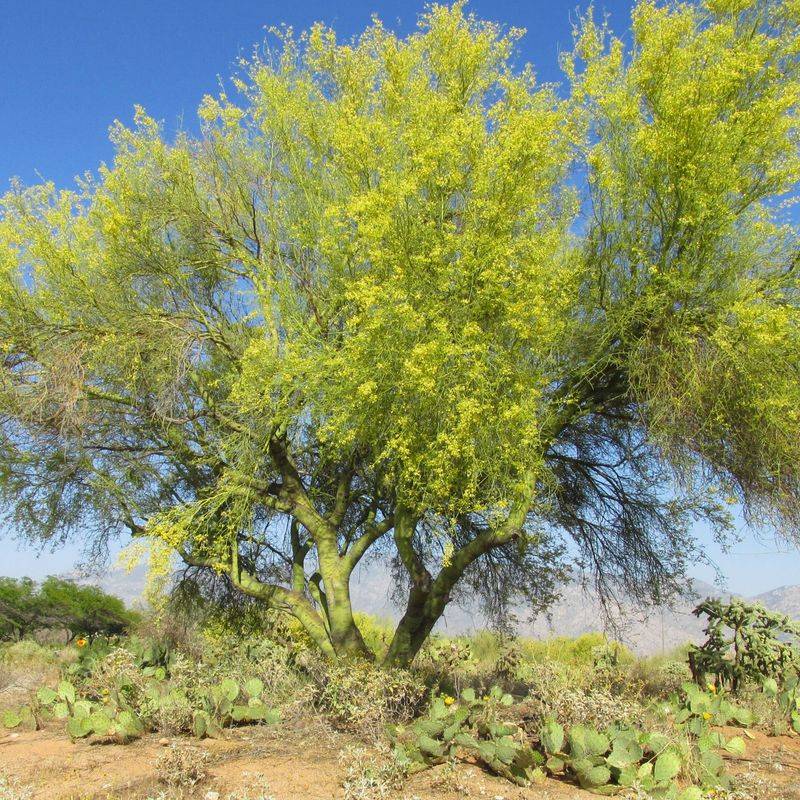
Foothill Palo Verde is the quieter cousin, and that is exactly why many Arizona yards need it.
It does not grow as large or as fast as Blue Palo Verde. It does not create the same dramatic spring flower storm. But it fits smaller, leaner, rockier spaces with less fuss, less scale, and less cleanup.
That makes it valuable in compact desert yards.
Mature size often stays closer to 10 to 20 feet, depending on site conditions. The canopy is open and graceful, giving light shade that cools without overwhelming a courtyard, side yard, or narrow planting strip.
It looks especially natural in gravel landscapes, boulder plantings, and low-water native gardens.
Foothill Palo Verde handles poor, rocky, alkaline soil better than many trees that need constant improvement.
It is built for difficult desert ground. Once established, it needs little supplemental irrigation and can decline if treated like a thirsty ornamental.
The litter is generally modest. Small flowers drop in spring, but not usually in the same dramatic volume as Blue Palo Verde. Leaves are tiny, and seed pods are typically fewer on smaller trees.
In the right setting, most debris blends into desert mulch or gravel rather than demanding immediate attention.
That low-key nature is part of the appeal.
The tree does have thorns, so placement still matters. Keep it away from tight walkways, seating edges, and children’s play zones. In a low-traffic planting area, the thorns are easy to work around.
Pruning needs are usually light. Remove crossing, rubbing, or poorly placed branches in late winter, but avoid forcing the tree into an overly formal shape. Its natural structure is part of its beauty.
Overwatering is the mistake to avoid. Frequent irrigation can push soft growth that is less stable and less drought-tough.
Foothill Palo Verde cools smaller spaces without creating a large-tree cleanup burden. For lean desert soil, it is one of the smartest native choices.
5. Let Netleaf Hackberry Shade Small Spaces
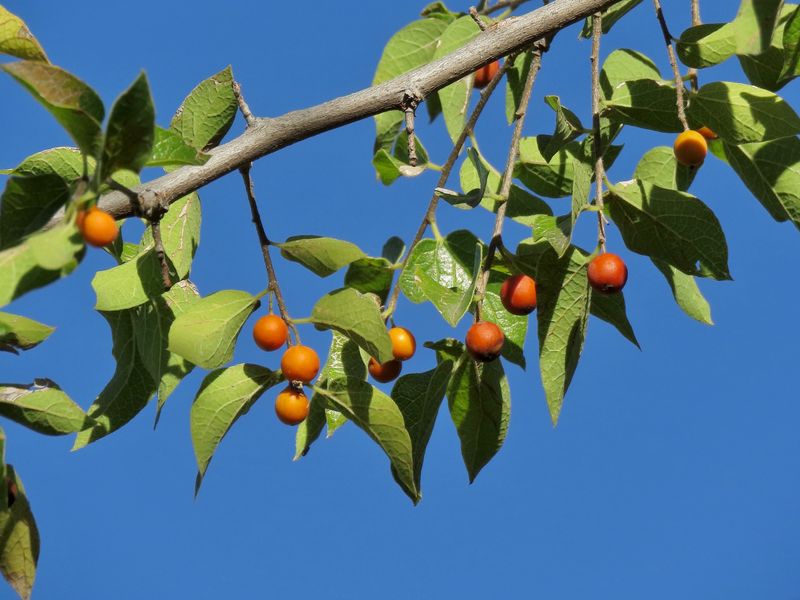
Netleaf Hackberry is a practical shade tree with a wildlife bonus.
It can cool smaller spaces without the huge footprint of some desert trees, and it brings birds into the yard with small fruits that ripen from orange-red to dark purple.
Thrushes, mockingbirds, waxwings, and other birds may visit when the fruit is available, turning a quiet corner into a lively feeding spot.
The tree typically reaches around 20 to 30 feet tall, though site conditions matter. That size works well for a small patio, side yard, reading nook, or backyard edge where a very broad canopy would feel too large.
Its shade is useful but not oppressive. The leaves are rough-textured, with a netted vein pattern that gives the tree character.
In winter, the tree drops its leaves, but cleanup is usually straightforward. The leaves gather in a fairly manageable area and can be swept, composted, or left to break down in planted beds.
Fruit is the one litter detail to plan around.
Birds often handle much of the crop, but fruit can still fall. Do not place Netleaf Hackberry directly over a pristine patio, pool deck, or pale paving where every berry will be noticeable.
Site it where fruit can land in mulch, gravel, native soil, or a wildlife bed.
This tree grows across a range of Arizona elevations, but local suitability should still be checked before planting.
It is more adaptable than many homeowners realize, especially in rocky or alkaline soil, but it still needs the right match for climate and exposure.
Roots are not usually considered aggressive, but spacing is still wise. Keep it several feet from paving, foundations, and walls to allow healthy development.
Pruning is minimal once the basic structure is established. Its slightly irregular winter form can be attractive rather than messy.
Netleaf Hackberry cools a yard and feeds wildlife, with litter that stays manageable when fruit is allowed to fall where birds and soil can use it.
6. Add Arizona Cypress For Evergreen Cover
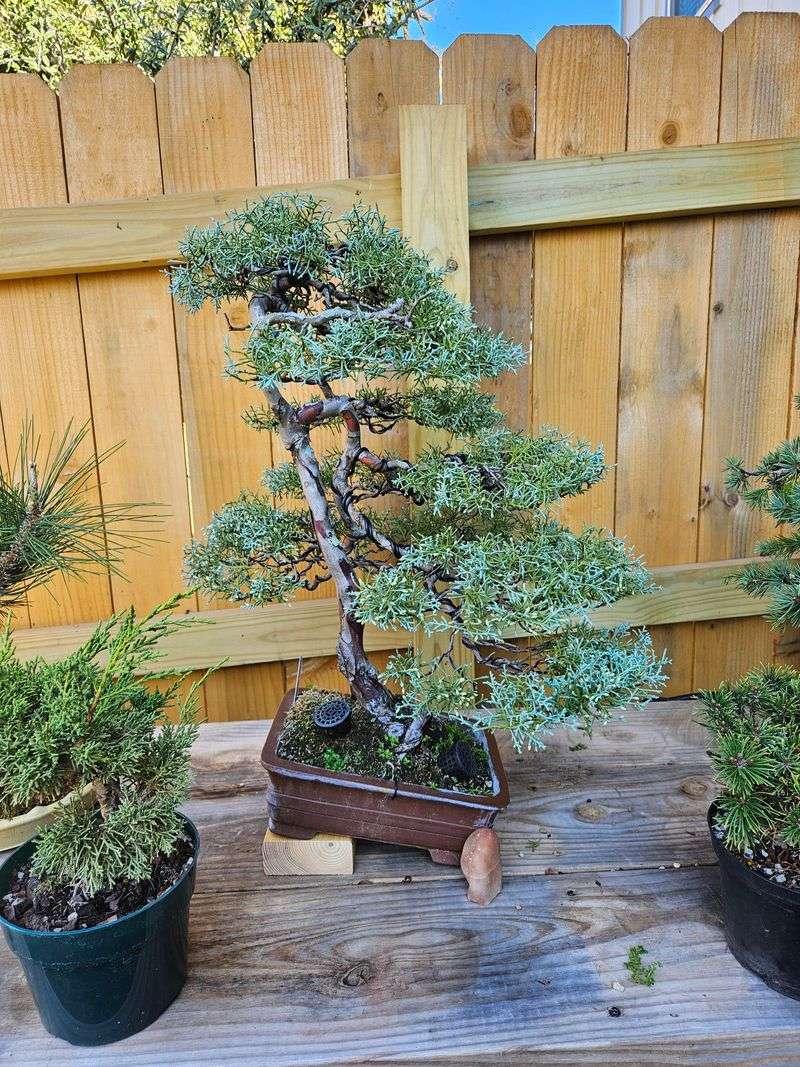
Arizona Cypress is the native choice for year-round cover, but only in the right part of the state.
This is not a low-desert Phoenix or Tucson porch solution. It belongs in cooler, higher-elevation Arizona landscapes, including areas around Prescott, Flagstaff, the White Mountains, and similar zones where the climate better matches its natural range.
In the right place, it is extremely useful.
Unlike many desert shade trees, Arizona Cypress holds foliage all year. That makes it valuable as a privacy screen, windbreak, winter shade source, and backdrop for high-country landscapes.
The blue-gray foliage gives it a softer look than many evergreens, and the upright form can bring structure to large properties.
The cooling effect comes from dense evergreen cover. Planted where it shades a wall, driveway edge, or outdoor sitting area, it can reduce heat buildup during sunny parts of the day. It also blocks wind, which can make exposed yards feel more comfortable.
The mess is mostly cones and dry foliage shed. Small cones collect beneath the canopy, but they are dry and easy to rake or blow. This is not sticky fruit litter or large pod drop. Still, the debris should be managed in fire-wise landscapes.
That is the biggest maintenance note. Avoid deep organic mulch piled under conifers, especially near the trunk.
Keep the base clean, use non-combustible materials where recommended, and maintain spacing between trees for airflow and fire safety.
Mature Arizona Cypress can reach 40 to 70 feet tall, so it needs real room. Do not squeeze it under utility lines or beside a small courtyard wall.
Once established in a suitable high-elevation site, it usually needs little supplemental water beyond what the region provides, though drought periods may call for deep irrigation.
Arizona Cypress cools with evergreen density and cleans up easily, but only when planted where Arizona’s climate is cool enough to support it.
7. Site Velvet Mesquite Away From Walkways
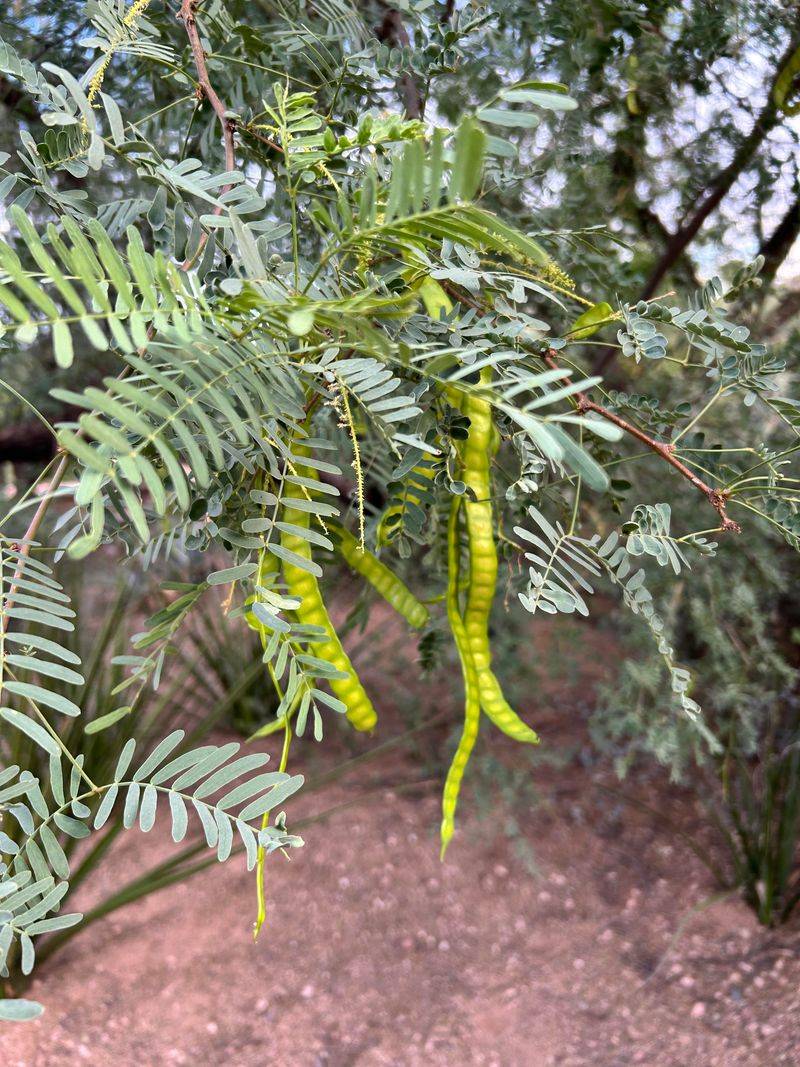
Velvet Mesquite is one of Arizona’s classic shade trees for a reason.
Its open, feathery canopy creates filtered shade that feels comfortable rather than heavy. Air moves through it, light filters through it, and the ground beneath can feel noticeably cooler during brutal summer afternoons.
This tree is best for open areas, not tight polished spaces.
The foliage is fine-textured, so leaf litter is light and generally easy to let blend into native soil, gravel, or mulch. The seed pods are a bigger consideration.
They drop in summer and can create cleanup problems on patios, walkways, pool decks, and driveways. On natural soil or decomposed granite, they are much easier to rake, gather, or leave for wildlife.
That is why placement determines whether Velvet Mesquite feels low-mess or high-maintenance.
Plant it where pods can fall away from daily foot traffic. A back corner, open desert-style yard, wildlife area, or broad planting bed works well. Avoid narrow walkways, seating zones, and places where pods become slippery or sticky underfoot.
Thorns also matter. Young branches can carry sharp thorns, so the tree should not be planted where people constantly brush against it. Early structural pruning helps lift the canopy and keep thorny growth above normal traffic height.
Watering habits affect roots and long-term maintenance. Frequent shallow irrigation can encourage surface roots that compete with nearby plants or interfere with paving.
Deep, infrequent irrigation during establishment is better. Once established, Velvet Mesquite can become remarkably drought-resilient.
Give it space to mature. Trying to keep a mesquite too small often creates repeated pruning chores and weak structure.
When planted in the right spot, Velvet Mesquite gives excellent cooling shade with litter that belongs on the ground beneath it.
It is messy in the wrong place, but wonderfully practical in the right one.