These Are The Arizona Flowers That Bring Color Without The High Water Bill
Bright flowers do not have to come with constant watering and endless upkeep. Some of the most colorful yards stay beautiful because the plants are naturally suited to the climate.
Many homeowners assume they have to choose between colorful blooms and saving water. The truth is, the right flowers can give you both.
Plant selection makes a bigger difference than most people realize. Choosing wisely from the beginning can save time, effort, and water throughout the season.
Beautiful landscapes are possible even during Arizona’s hottest months. The secret is knowing which flowers continue performing when others begin fading.
There is no reason to settle for a dull summer yard.
A few dependable bloomers can keep your landscape colorful while asking for far less water than you might expect.
1. Desert Marigold Blooms With Very Little Water
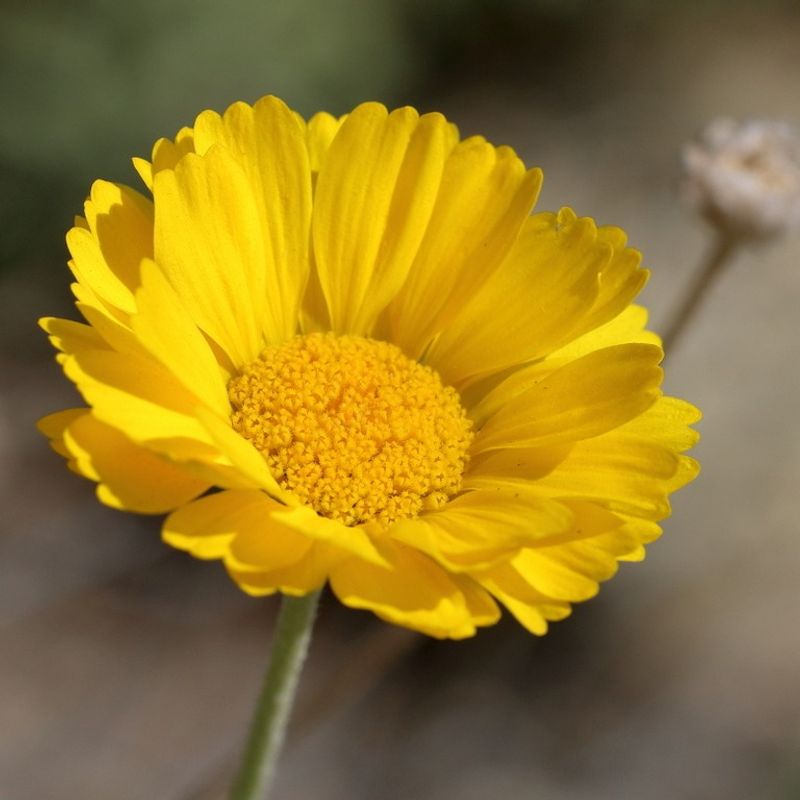
Bold and cheerful, Desert Marigold brings intense yellow color to landscapes where most flowers would struggle to survive.
Native to the Sonoran Desert, this plant is genuinely built for heat and low rainfall.
Once established, it can handle weeks without irrigation.
Gardeners in hot, dry regions often find it one of the easiest flowering plants to maintain through summer.
It blooms from spring through fall, and sometimes longer in mild years. The flowers sit on tall, silvery stems that give the plant a soft, airy look even in full sun.
Plant it in well-draining soil and give it a spot with at least six hours of direct sunlight daily. Avoid heavy clay soil, which tends to hold too much moisture around the roots.
Deadheading spent blooms can encourage more flowers, though the plant often reseeds on its own. Expect a natural colony to form over a few seasons if left undisturbed.
It attracts butterflies and bees regularly, making it a solid choice for pollinator-friendly yards. Few plants offer this much visual impact with so little effort in a hot desert garden.
Its bright blooms keep the landscape colorful even during long stretches of hot, dry weather.
With very little care, Desert Marigold continues to thrive where many other flowering plants struggle.
2. Blackfoot Daisy Flowers For Months In Dry Conditions
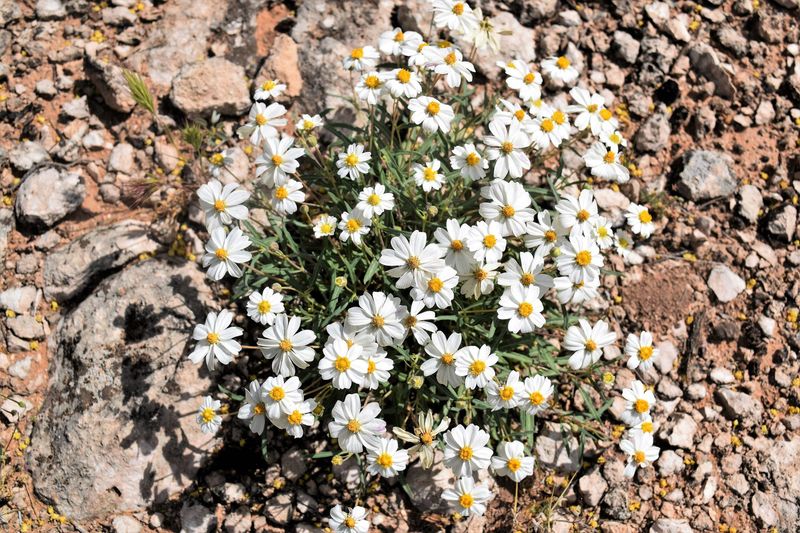
Compact, cheerful, and surprisingly tough, Blackfoot Daisy is one of those plants that keeps giving long after others have faded. Small white flowers with bright yellow centers cover the plant from late winter into fall in most areas.
It handles poor, rocky soil better than most ornamental plants.
Rich, amended soil can actually cause it to grow too fast and flop over, so skip the heavy fertilizing.
Established plants in Arizona need only occasional deep watering during the hottest months. In spring and fall, natural rainfall is often enough to keep them looking healthy and full.
Each plant stays fairly small, usually under a foot tall and about two feet wide.
That compact size makes it easy to fit into borders, rock gardens, or container plantings on patios.
Bees visit the flowers regularly, and the plant produces seeds that birds sometimes feed on. It has a light honey-like fragrance that becomes noticeable on warm afternoons.
Your Arizona Garden Changes Every Week. Your Plan Should Too.
Gardening in Arizona changes quickly throughout the season. Every Friday you’ll receive a simple weekly plan showing exactly what to plant, prune, fertilize, harvest, and protect so you never miss the right timing.
Expect some natural browning during the coldest months, but the plant typically bounces back with new growth in early spring.
It is a reliable performer in desert landscapes with minimal maintenance required.
Its long blooming season adds steady color without demanding constant attention.
For Arizona gardens, Blackfoot Daisy remains one of the easiest native wildflowers to grow year after year.
3. Angelita Daisy Stays Colorful Through The Heat
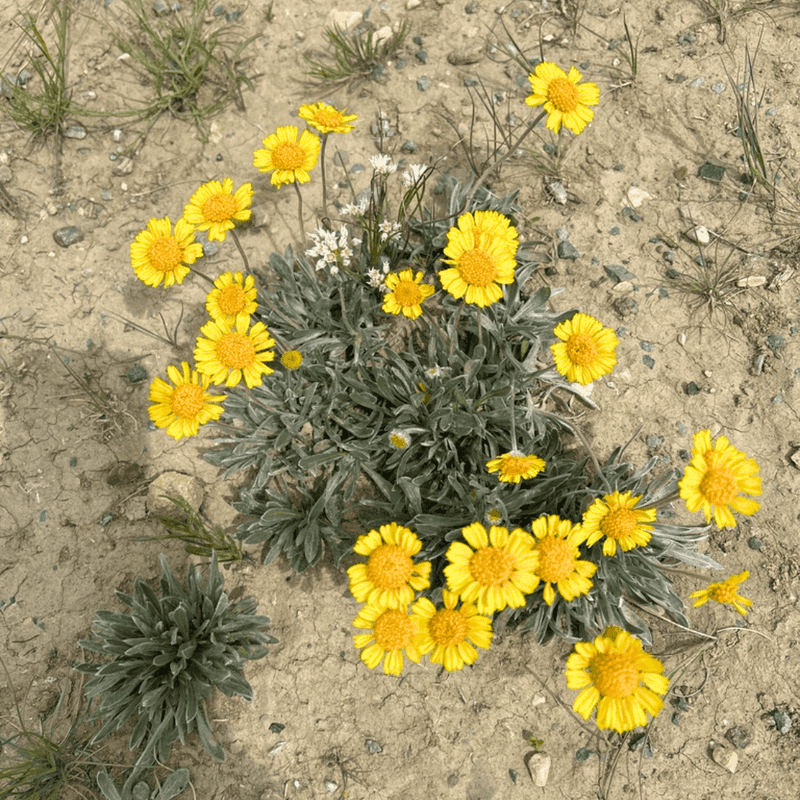
Even when summer temperatures push past 105 degrees, Angelita Daisy keeps producing its cheerful yellow blooms without complaint.
That kind of heat tolerance is rare, and it makes this plant genuinely valuable in a low-water garden.
Unlike many perennials that go dormant in summer, Angelita Daisy stays active and colorful through the hottest stretch of the year. That consistent color is exactly what most desert gardeners are looking for.
Plant it in full sun with good drainage and it tends to establish quickly.
Gravel mulch around the base helps retain some soil moisture while keeping roots from sitting in wet conditions.
Water it deeply every week or two during summer, then reduce frequency once cooler weather arrives. Overwatering is a more common problem than underwatering with this plant.
It grows in a neat mound, usually reaching about one foot tall and wide. That tidy habit makes it easy to use along walkways, in rock gardens, or as a ground-level accent near taller shrubs.
Butterflies and native bees are drawn to the blooms throughout the season. Minimal pruning is needed, though light shaping in late winter can keep the plant looking fresh heading into spring.
4. Globe Mallow Thrives In Hot Dry Landscapes
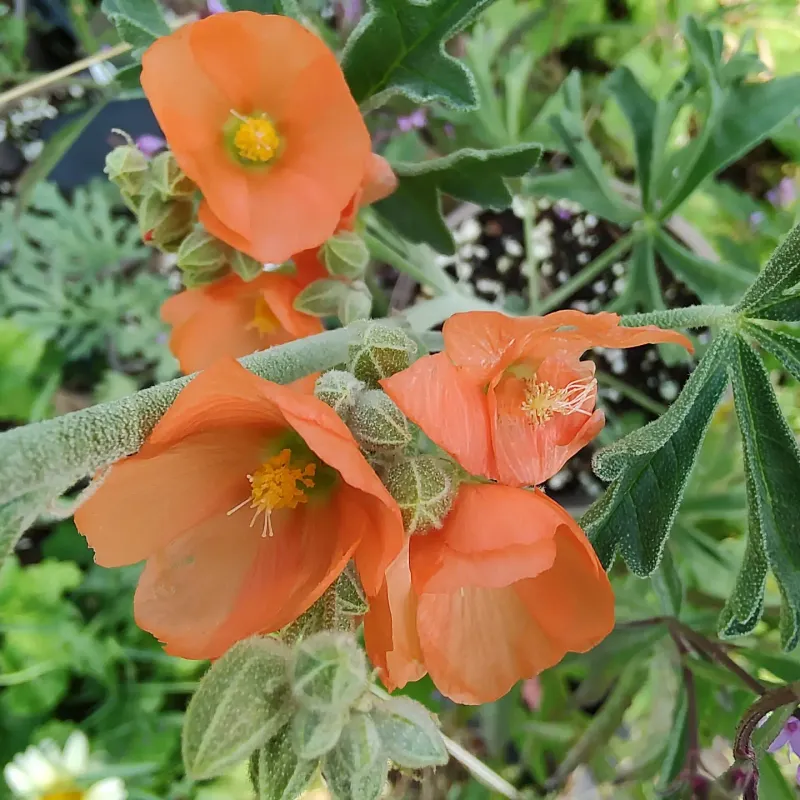
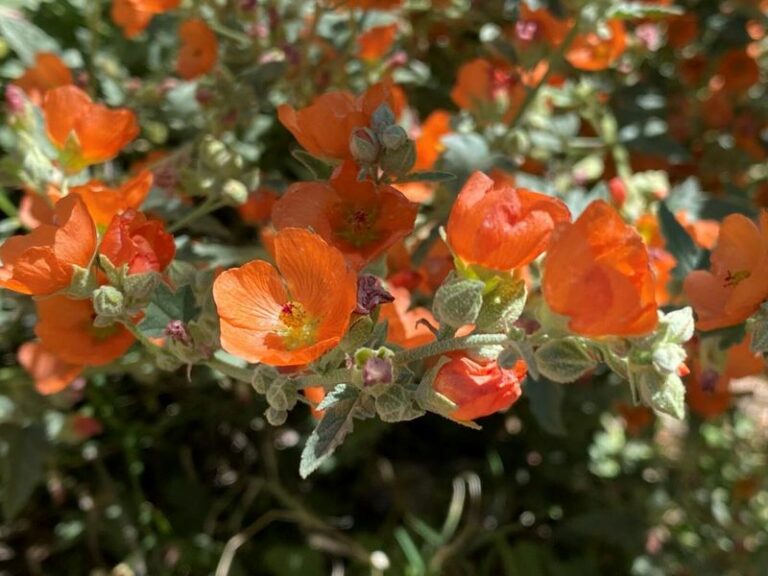
Few native plants match Globe Mallow for sheer color output in a drought-tolerant setting. Clusters of cup-shaped blooms appear in shades of orange, red, pink, and occasionally white, covering the plant from late winter into spring.
It grows naturally in sandy washes, rocky slopes, and roadsides across the desert Southwest.
That native toughness translates directly into low maintenance once it settles into your garden.
After the main bloom period, cut stems back by about half to encourage a second flush of flowers later in the season. Without trimming, plants can get leggy and open in the center.
Water deeply once or twice a month during dry summer stretches.
Established plants have shown they can go longer without water, though consistent deep watering tends to produce better blooms.
Globe Mallow reseeds fairly freely, so expect new plants to pop up nearby each year. Thin them out if spacing gets too crowded, or transplant seedlings to other spots in the yard.
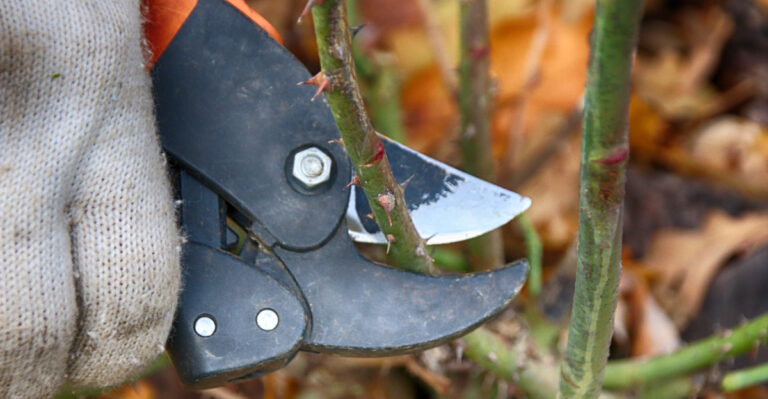
Hummingbirds and native bees regularly visit the flowers. The fuzzy stems and leaves can irritate sensitive skin, so wearing gloves during pruning or transplanting is a smart habit to keep.
5. Desert Zinnia Keeps Blooming In Full Sun
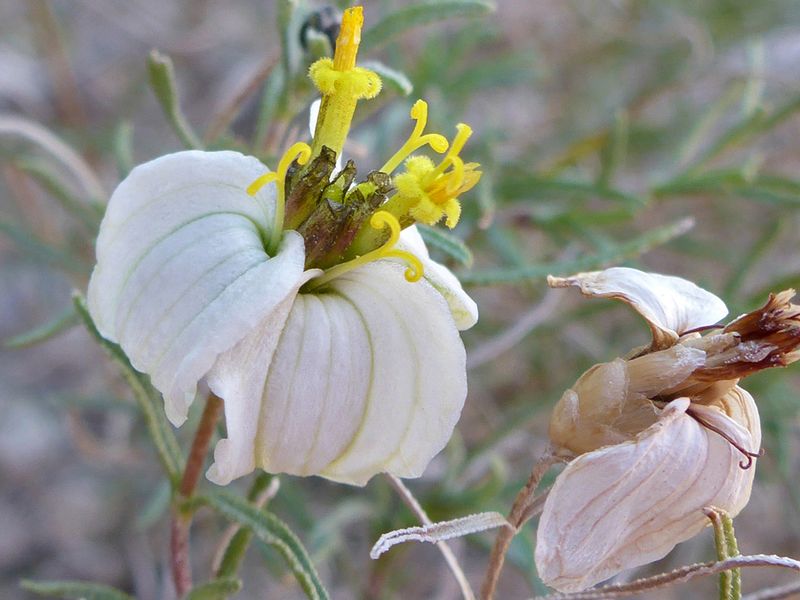
Underrated and overlooked at most garden centers, Desert Zinnia quietly outperforms many showier plants when temperatures climb. It produces small white flowers with yellow centers on a low, spreading mound of foliage.
This plant handles full desert sun without wilting or dropping leaves. Other zinnias may need regular water to stay upright in summer heat, but Desert Zinnia manages with far less.
Once established, it can go extended periods without supplemental irrigation in areas with some seasonal monsoon rainfall. During long dry spells, a deep soak every two to three weeks tends to be enough.
It stays low to the ground, usually under eight inches tall, which makes it a natural fit for rock gardens, dry borders, or slopes where erosion is a concern. The spreading habit fills gaps between larger plants nicely.
Blooming often continues from spring well into fall if conditions stay favorable.
Deadheading is not strictly necessary, but removing old blooms can extend the flowering period noticeably.
Pollinators visit regularly, and the plant handles poor, rocky soil without much fuss. It is a genuinely low-effort choice for gardeners who want consistent color without constant watering or feeding schedules.
6. Damianita Keeps Blooming Through The Hottest Months
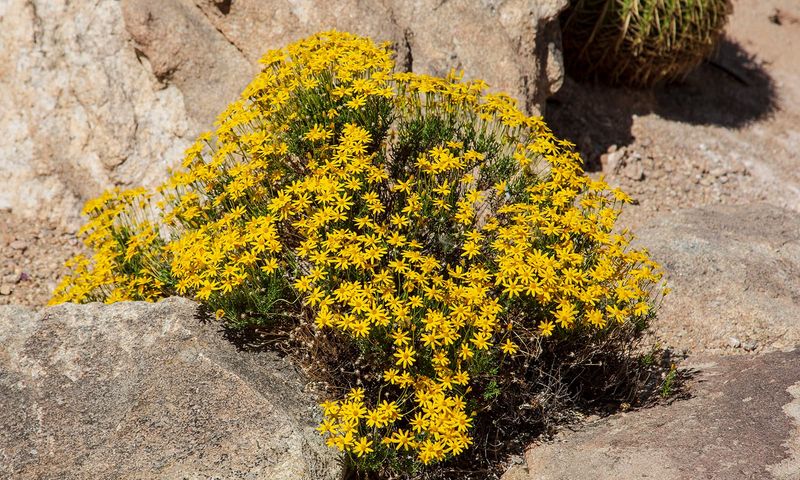
Covered in tiny golden flowers from spring into early summer, Damianita is one of those plants that looks almost too good to be drought-tolerant. It is a small, woody shrub with needle-like leaves and a strong herbal fragrance.
The scent is noticeable when you brush against the foliage, which makes it an interesting choice near patios or garden paths. Some gardeners find the smell pleasant, others find it sharp, so a quick sniff before planting is worth doing.
Damianita thrives in rocky, well-draining soil and full sun exposure. Soggy soil or heavy clay can cause root problems, so proper drainage is more important than soil richness.
In the hottest months, established plants may slow their bloom production but hold their foliage well.
A deep watering once every two to three weeks during summer is generally enough to keep the plant stable.
It stays compact, usually reaching about one to two feet tall and wide. That manageable size works well in containers, along pathways, or mixed into dry perennial borders.
Butterflies are frequent visitors during peak bloom. Light pruning after the main flowering period helps maintain a tidy shape and may encourage scattered re-blooming later in the year.
7. Chocolate Flower Adds Color And A Sweet Fragrance
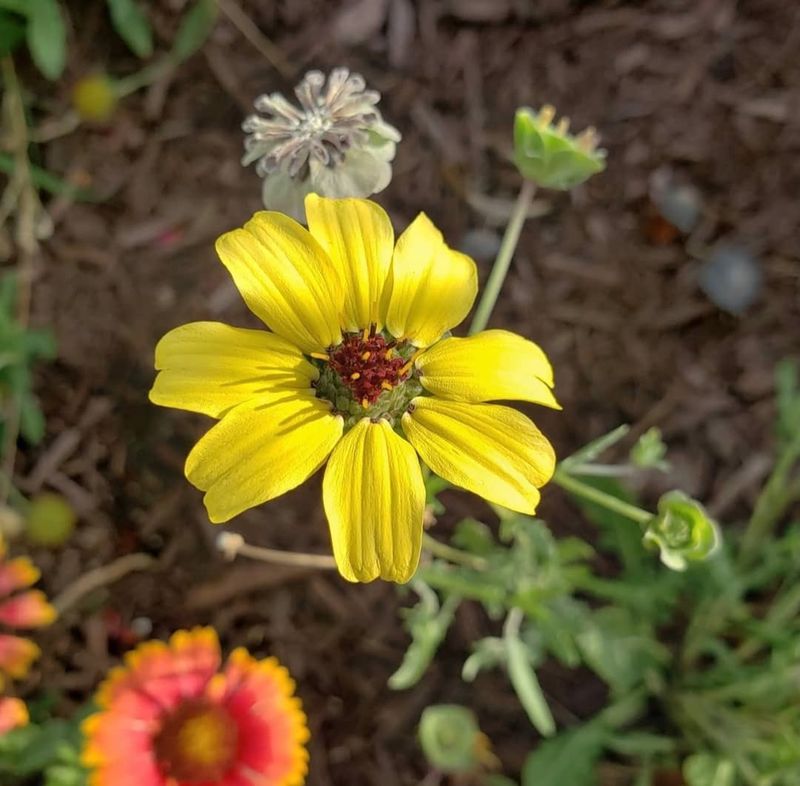
Walk past Chocolate Flower on a warm morning and the scent will stop you in your tracks.
The blooms carry a genuine chocolate-vanilla fragrance that gets stronger as the day heats up, which is a rare and welcome quality in any garden plant.
Flowers are yellow with dark maroon centers, and they appear reliably from late spring through fall. Each bloom opens in the morning and closes by afternoon, so morning is the best time to enjoy both the color and the fragrance.
It grows naturally in dry grasslands and rocky slopes across the desert Southwest. That origin means it handles poor soil, minimal water, and intense sun without much intervention from the gardener.
Water established plants deeply but infrequently, roughly every one to two weeks during summer depending on conditions. Overwatering tends to cause more problems than drought stress with this species.
Plants reach about one to two feet tall and spread to a similar width.
They fit naturally into wildflower gardens, dry meadow plantings, or as filler between larger desert shrubs.
Bees and butterflies visit the flowers frequently. Chocolate Flower reseeds on its own in many gardens, so expect new plants to appear in surrounding areas after the first season or two.
8. Desert Ruellia Handles Heat With Minimal Water
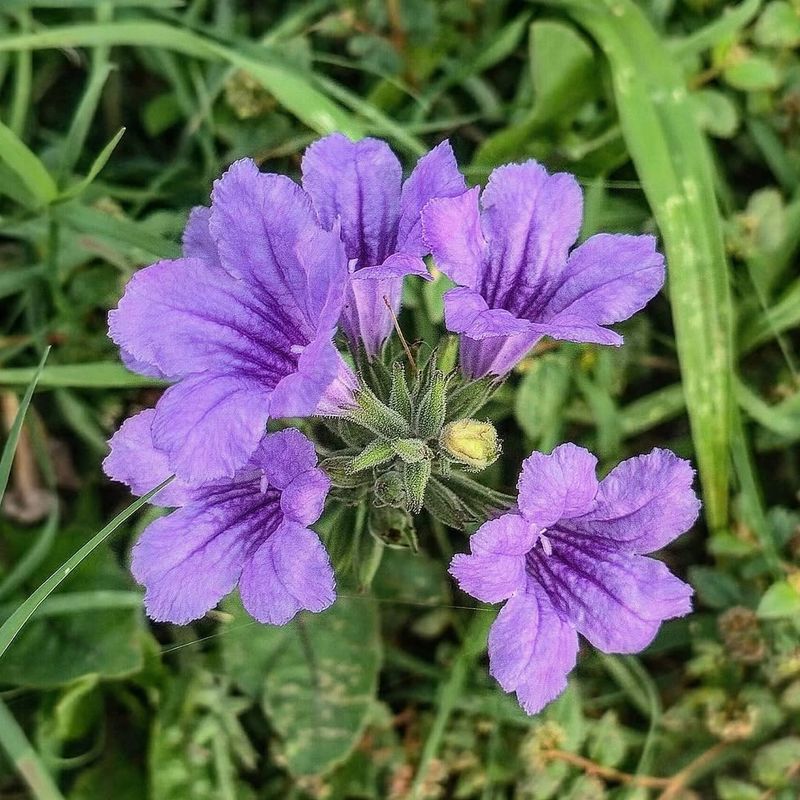
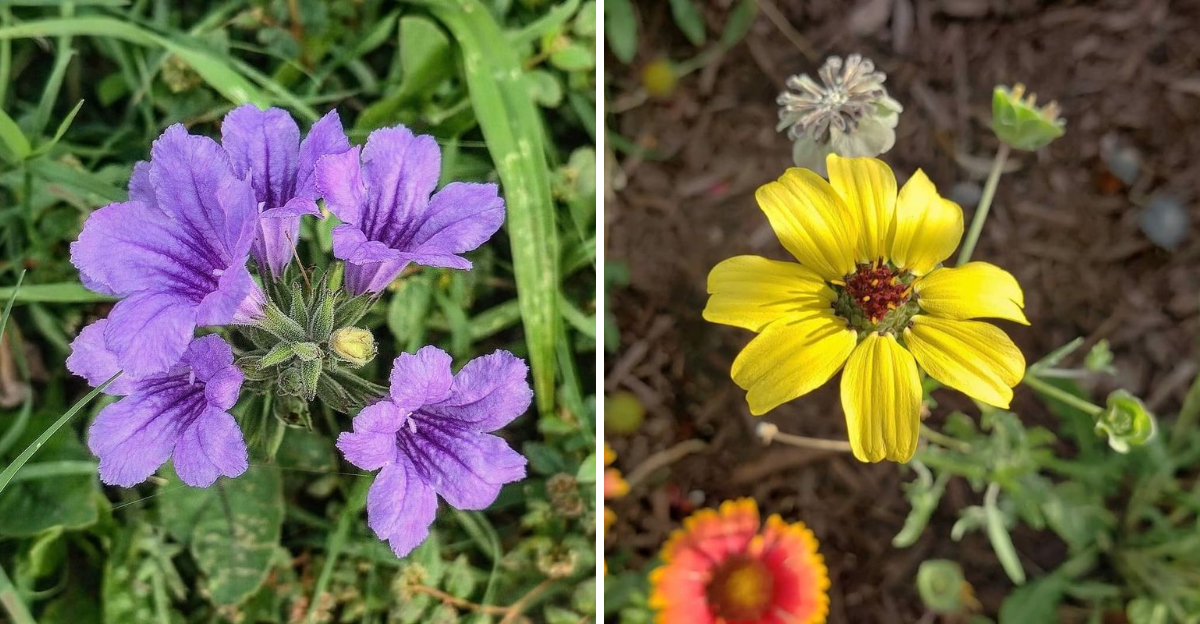
Purple blooms in the middle of summer heat are not something most plants can offer, but Desert Ruellia delivers them consistently.
Trumpet-shaped flowers in lavender to violet shades appear from spring through fall, often peaking during the monsoon season.
Native to dry rocky habitats in the Sonoran region, this plant has adapted to survive on minimal rainfall. Once established in a garden, it rarely needs much supplemental watering outside of prolonged dry spells.
It spreads slowly by underground runners, forming a low, ground-hugging mat over time.
That spreading habit makes it useful as a ground cover on slopes or in areas where you want low maintenance coverage.
Full sun is ideal, though it tolerates light afternoon shade in the hottest parts of the desert.
Soil drainage matters more than soil quality for this plant.
Hummingbirds are strongly attracted to the tubular flowers, which makes it a great addition to wildlife-friendly yards. Bees also visit regularly during peak bloom periods.
Plants typically reach six to twelve inches tall and spread several feet wide over multiple seasons.
Minimal pruning is needed, though cutting back winter-damaged stems in early spring helps encourage fresh, healthy growth as temperatures warm up again.
9. Red Yucca Produces Colorful Flower Spikes All Season
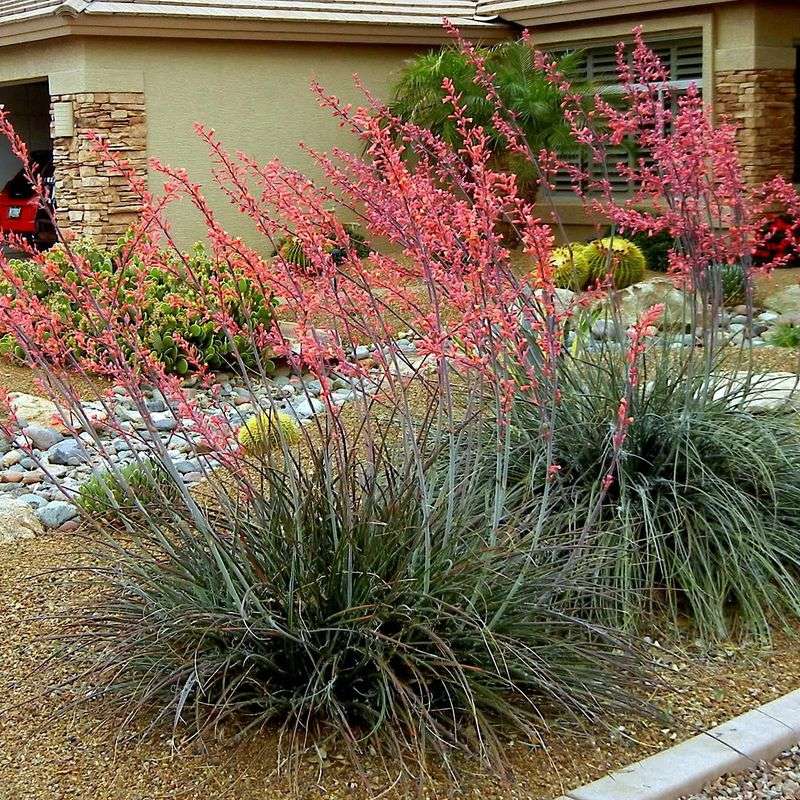
Tall, dramatic, and built for the desert, Red Yucca sends up flower spikes that can reach five to six feet and hold coral-pink blooms for weeks at a stretch. It is not a true yucca, but the name stuck because of its similar leaf shape.
Hummingbirds are practically obsessed with the tubular flowers, visiting repeatedly throughout the day from spring into early summer.
Few plants in a low-water garden attract this much wildlife activity so reliably.
Established plants in Arizona can survive on rainfall alone in most years, though a deep soak once or twice a month during summer heat can improve bloom production.
Soil drainage is essential since standing water around the base causes serious root stress.
Foliage stays evergreen and forms a graceful arching mound of grass-like leaves. That year-round structure makes it valuable even when the plant is not actively blooming.
It handles full sun and reflected heat from walls or pavement without much visible stress. That tolerance for tough planting spots gives it an edge in urban desert landscapes.
Plant it in rocky or sandy soil and avoid heavy fertilizing. Red Yucca tends to perform best when left alone to establish at its own pace rather than being pushed with amendments or frequent irrigation.