The Landscaping Choice That Changes How Hot Your Arizona Yard Feels
Touch a metal patio chair in Arizona at 2 PM and you’ll yank your hand back like you touched a hot stovetop. Ten feet away, something else in the same yard barely raises a sweat under that same sun.
Nobody plans a yard around this fact, yet it decides if sunset feels bearable or borderline unbearable. Some choices hoard heat for hours, others let it go instantly.
That difference isn’t random, and it isn’t about taste either. It comes down to a handful of decisions most homeowners make without ever thinking about temperature at all.
Canopy Cover Cuts Ground Temperatures More Than Any Other Fix
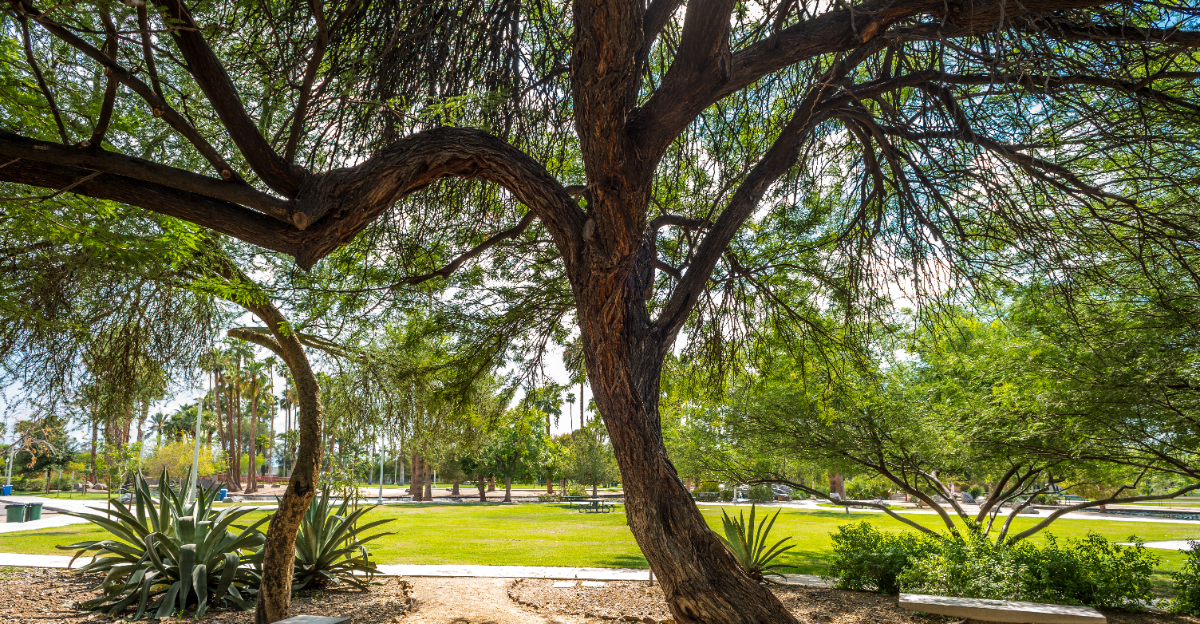
Stand under a mesquite tree at three in the afternoon and the change hits you immediately. The air feels different, the ground feels different, and your whole body relaxes without you noticing why.
Shaded ground surfaces can run significantly cooler, often 20 to 40 degrees, than the same material sitting in direct sun. That gap dwarfs what color changes or material swaps can achieve on their own.
The reason comes down to timing. Shade intercepts solar energy before it ever reaches the ground, so the surface underneath barely has a chance to heat up in the first place.
Compare that to a light-colored gravel bed baking in full sun all day. It still absorbs a fraction of what dark rock would, but it is working against constant exposure the entire time.
Even average materials perform far better once a tree canopy is doing the heavy lifting overhead.
Homeowners spend money on gravel colors, paver types, and stone finishes without realizing that none of it comes close to what a mature tree can do. Shade is one of the most effective ways to cool an Arizona yard.
That does not mean material choice stops mattering. It means shade should come first, and everything else becomes a secondary adjustment layered on top of it.
Native Trees Like Palo Verde And Mesquite Deliver Shade Fast
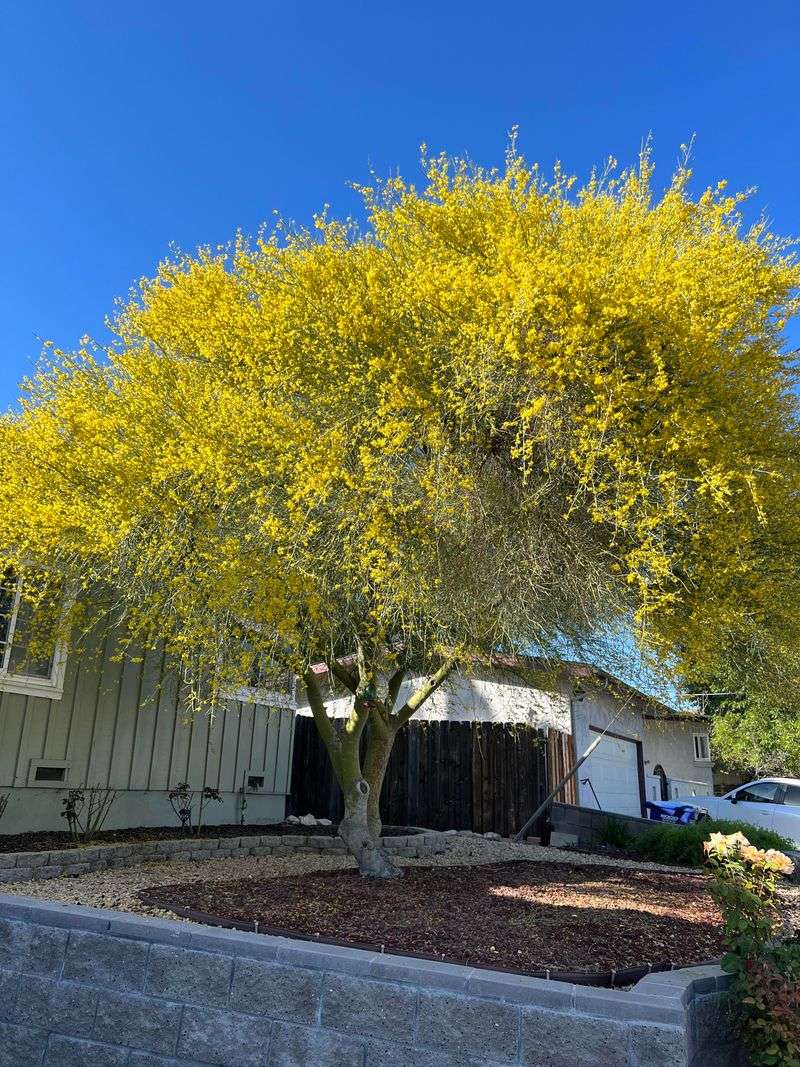
Not every tree earns its place in a desert yard. Some species struggle against the heat, drink far more water than the climate allows, and grow too slowly to matter within a reasonable timeframe.
Palo verde is one of the fastest growing native canopy trees suited to Arizona conditions. It tolerates poor soil, needs minimal irrigation once established, and produces a wide, filtered canopy within a few growing seasons.
Mesquite offers similar advantages with a denser canopy shape. Its root system reaches deep for moisture, which means it survives long dry stretches without constant watering from homeowners.
Desert willow rounds out a solid trio for canopy planting. It grows quickly, tolerates reflected heat from nearby walls, and adds seasonal blooms that most other desert trees skip entirely.
All three species share a key trait beyond speed. Their canopies are open enough to let some airflow through, which prevents the stagnant, muggy feeling that denser non-native trees sometimes create underneath.
Choosing natives also means lower long-term maintenance. These trees evolved for exactly this climate, so they resist the stress that non-native species show during extended heat waves.
Your Arizona Garden Changes Every Week. Your Plan Should Too.
Gardening in Arizona changes quickly throughout the season. Every Friday you’ll receive a simple weekly plan showing exactly what to plant, prune, fertilize, harvest, and protect so you never miss the right timing.
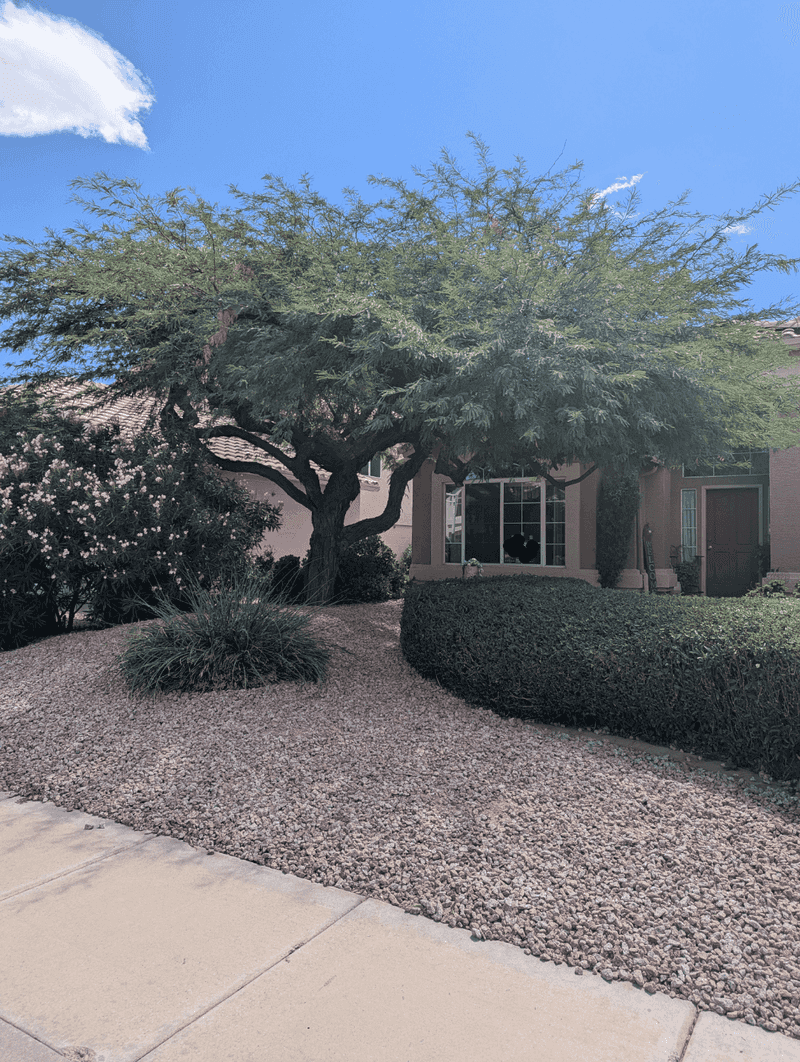
A newly planted palo verde will not shade much in its first year. Within three to five years, though, its canopy can cover a meaningful portion of a patio or seating area.
Placement On The West Side Blocks The Harshest Afternoon Sun
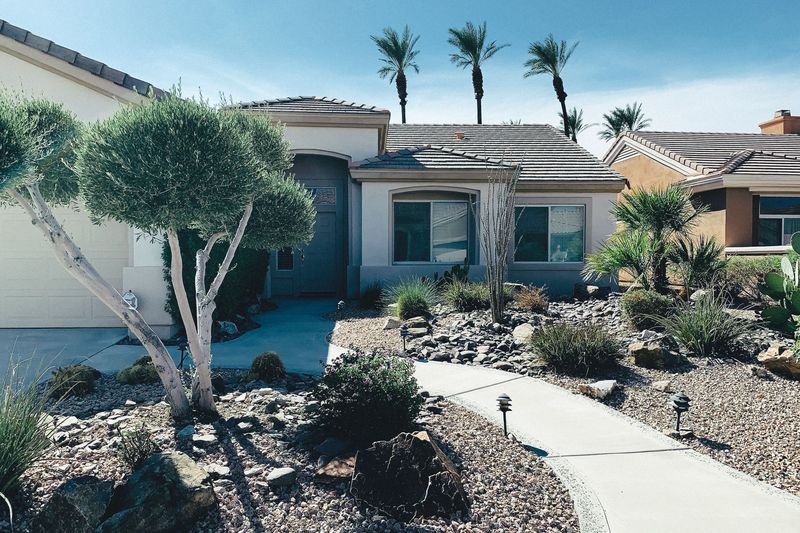
Where a tree goes matters almost as much as which tree gets planted. A canopy on the wrong side of the yard can leave the hottest hours completely unaddressed.
Afternoon sun coming from the west and southwest carries the most intense heat of the day. Morning sun is milder and shorter, so shading the east side offers less relief overall.
Planting native canopy trees on the west and southwest sides intercepts that afternoon sun before it reaches patios, walkways, and windows. That placement targets the exact window when temperatures peak and outdoor spaces feel least usable.
South-facing walls also benefit from strategic tree placement nearby. A canopy positioned to shade a south wall during peak hours reduces how much heat that wall absorbs and later releases into the home.
Spacing matters too. Trees planted too close to a foundation can cause root issues, while trees placed too far away provide little shading benefit where it counts most.
A good rule of thumb is planting canopy trees close enough to shade the patio by early afternoon, but far enough to avoid future root conflicts with plumbing or foundations. Most native desert species need roughly 15 to 20 feet of clearance from structures.
Homeowners planning a new patio or seating area should think about tree placement before pouring any concrete. Retrofitting shade around an existing hardscape is possible, but planning ahead saves both money and years of waiting.
Even Poor Surface Materials Perform Better Under A Canopy
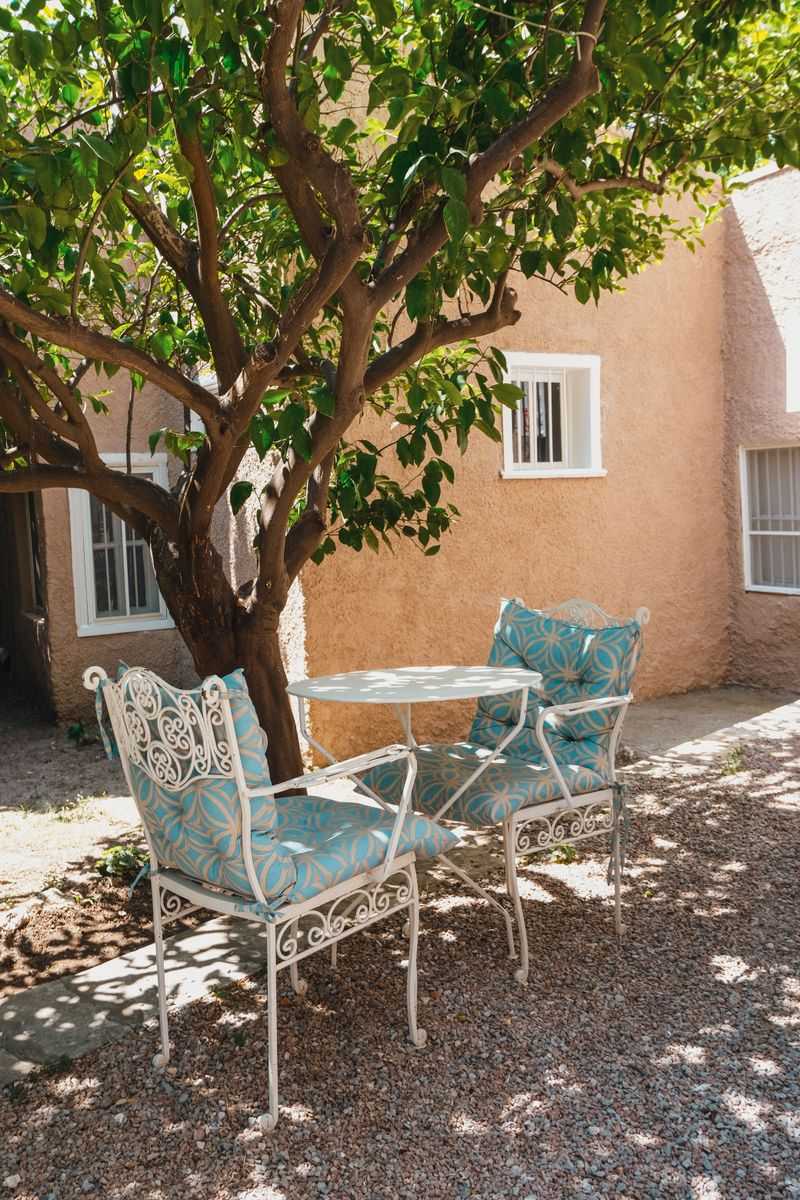
Dark gravel has a reputation for holding onto heat longer than almost any other landscaping material. Under direct sun, that reputation is well earned.
Put that same dark gravel under a mature tree canopy, though, and its behavior shifts noticeably. Shaded dark rock can perform closer to light-colored gravel sitting in full sun, simply because it receives a fraction of the solar exposure.
This matters for homeowners who already installed materials they now regret. Ripping out an entire patio or gravel bed is expensive and disruptive, but adding shade above it is a far more manageable project.
Concrete follows a similar pattern. A shaded concrete patio still stores some heat, but nowhere near the levels reached by concrete baking under open sky for eight hours straight.
That said, shade is not a replacement for smart material choices, it is a multiplier on top of them. Pairing light-colored gravel with canopy cover produces the coolest possible outcome, better than either strategy working alone.
Homeowners short on renovation budgets can prioritize accordingly. Planting shade trees first buys meaningful relief immediately, and material upgrades can follow later as time and funds allow.
The takeaway is practical rather than perfectional. A yard does not need ideal materials everywhere to feel comfortable, it needs strategic shade covering the areas people actually use most during peak heat hours.
Trees Cool The Air Through Transpiration Alongside Shade
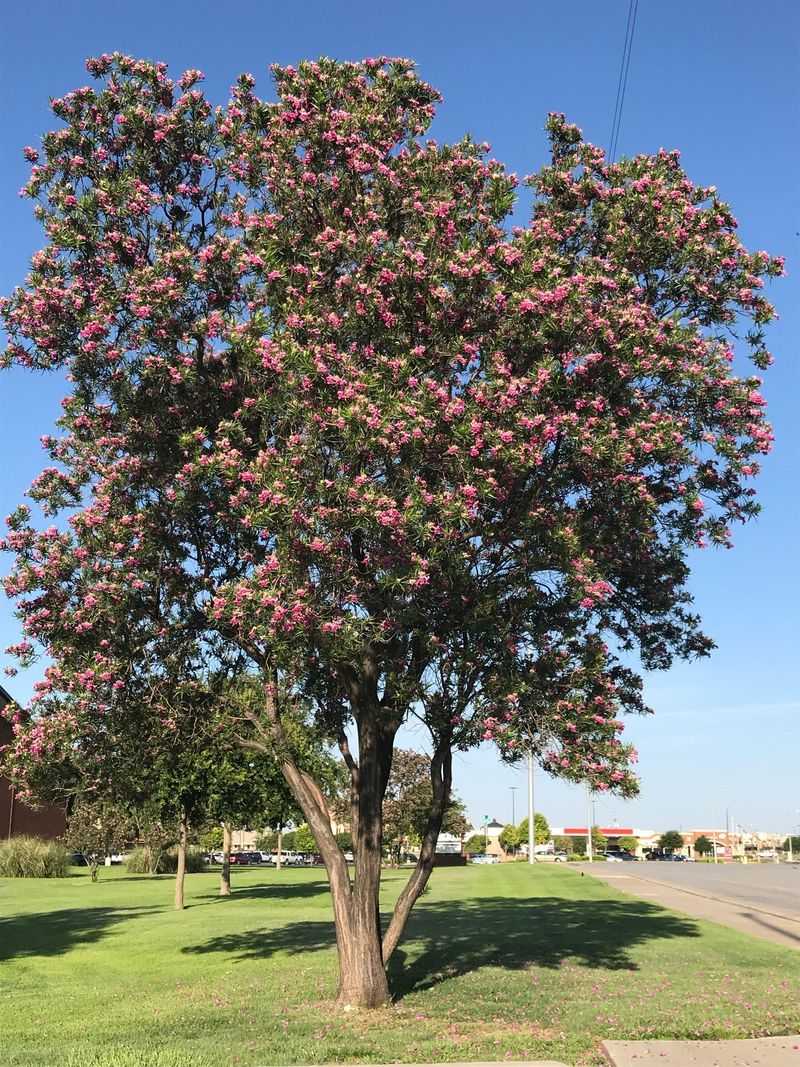
Shade blocks heat from reaching the ground, but trees do something additional that gravel and pavers simply cannot replicate. They actively cool the surrounding air through a process called transpiration.
As a tree pulls water up through its roots, it releases moisture through its leaves into the surrounding air. That moisture evaporates and pulls heat energy with it, cooling the immediate area in the process.
A single mature mesquite or palo verde can transpire a substantial amount of water on a hot summer day. The cooling effect is strongest directly beneath and around the canopy, tapering off farther from the trunk.
This is essentially a small, natural evaporative cooler running without electricity or ongoing cost. Combined with shade, transpiration explains why the air under a tree feels different from air under a shade sail or patio umbrella covering the same square footage.
Grouping several native trees together amplifies this effect. A small cluster creates a noticeable microclimate, often several degrees cooler than a single isolated tree could produce on its own.
Desert willow and mesquite both contribute meaningful transpiration alongside their shading benefit. Neither requires excessive water to sustain this cooling process, which keeps the strategy realistic for desert water budgets.
Homeowners who value both shade and active cooling should prioritize species known for efficient transpiration. The combination delivers comfort that a purely structural shade source, like a pergola or sail, cannot fully match.
A Few Well Placed Trees Reshape The Whole Yard’s Comfort
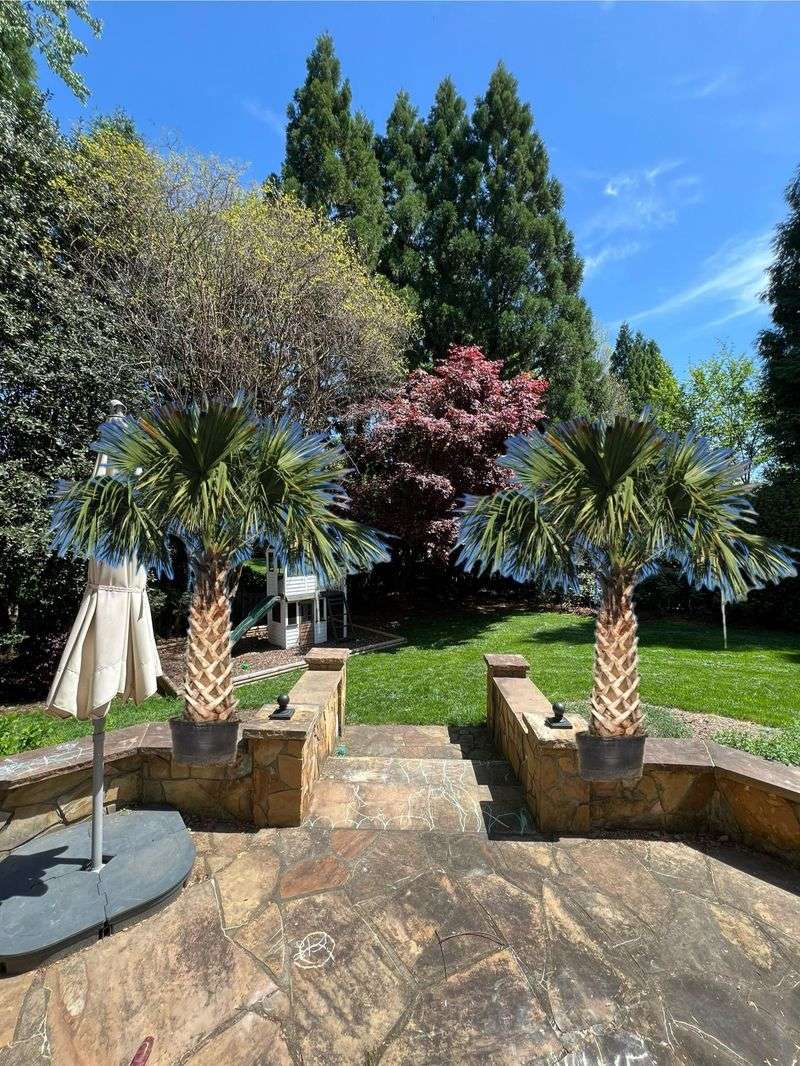
Most yard upgrades address one small area at a time. Strategic tree placement is different because it reshapes how the entire outdoor space behaves across an entire season.
A handful of well placed canopy trees can lower usable-area temperatures enough to extend outdoor time by hours each day. Mornings and evenings that were already comfortable become even more pleasant, and midday stops feeling entirely off limits.
The investment is not instant. Newly planted trees take a few years to develop canopies large enough to matter, which means this strategy rewards early planning over quick fixes.
Homeowners do not need to fill an entire yard with trees to see results. Two or three strategically placed natives, positioned to shade a patio, a west wall, and a walking path, can transform the areas people use most.
Existing landscaping does not need to be removed to make this work. Trees can be added around current gravel, pavers, or turf, gradually improving conditions as the canopy fills in over time.
Long-term, the payoff extends beyond comfort. Lower surface and air temperatures near a home can reduce strain on air conditioning systems, particularly on west-facing walls that see the most direct afternoon sun.
Anyone redesigning an Arizona yard should treat tree placement as the starting point rather than an afterthought. Everything else, from gravel color to patio material, works better once shade is already doing its part.