What It Means When Fungus Spreads On Your Pennsylvania Tomatoes After Rain
Rain can turn a healthy Pennsylvania tomato patch suspicious almost overnight.
One storm passes. Then another. By the next garden walk, lower leaves carry dark spots, pale patches, or something that looks strangely fuzzy.
The obvious suspect seems easy.
Fungus.
That answer can send you in the wrong direction.
Several tomato diseases love the wet, humid weather Pennsylvania summers deliver, but they do not all come from the same kind of pathogen.
Some move slowly from the soil upward. Others travel through the air and spread at startling speed. A few can look almost identical until you inspect the edges, undersides, or pattern on the leaf.
So what message does your tomato send after the rain stops?
Start with where the trouble appears, how quickly it changes, and how long the foliage stayed wet. Those clues can narrow the list before a spray bottle ever leaves the shed.
The rain may have started the mystery. Your leaves can help solve it before the next storm arrives later this week again.
1. Read Rain Splash As A Spore Warning
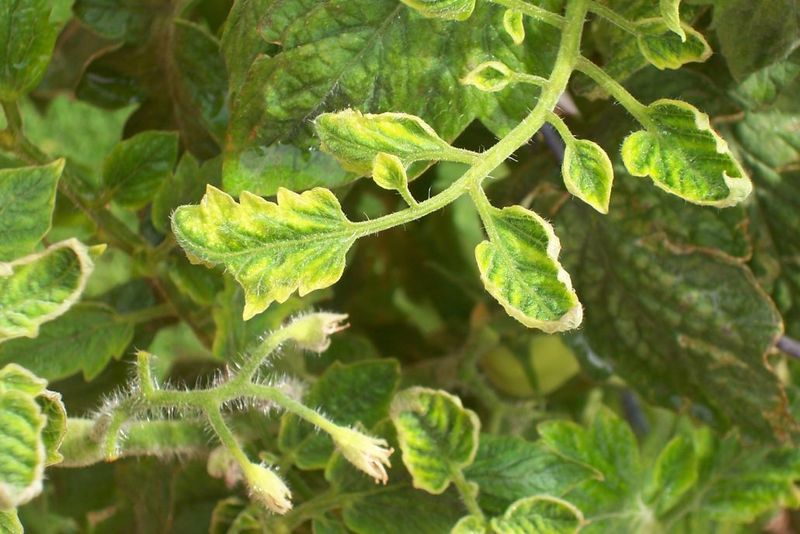
A hard Pennsylvania rain does more than soak the bed.
Drops hit bare soil, bounce upward, and carry tiny bits of debris onto the lowest tomato leaves. Fungal spores and bacterial cells can travel with that splash.
That makes the bottom of the plant your first inspection zone.
Look at leaves closest to the soil after a storm. Spots there can point toward diseases that survive on old plant material or in garden debris.
Mulch can interrupt that trip.
Spread about two inches of straw or shredded leaves around the base. The soft layer absorbs the force of rain and keeps muddy droplets from a straight trip into the canopy.
Give the stems a little clearance too.
Once plants have enough healthy foliage, remove the lowest six to eight inches of leaves that hover near the ground. Keep plenty of growth above for photosynthesis and fruit shade.
Then resist the urge to fuss with wet plants.
Hands, sleeves, ties, and garden tools can move moisture and pathogens from one tomato to another. Wait until the foliage dries before you tie vines, remove suckers, or harvest.
This is one of those garden moments where less work can protect more.
Rain already gave the spores a ride. You do not need to provide the next bus ride from plant to plant.
2. Track How Long Leaves Stay Wet
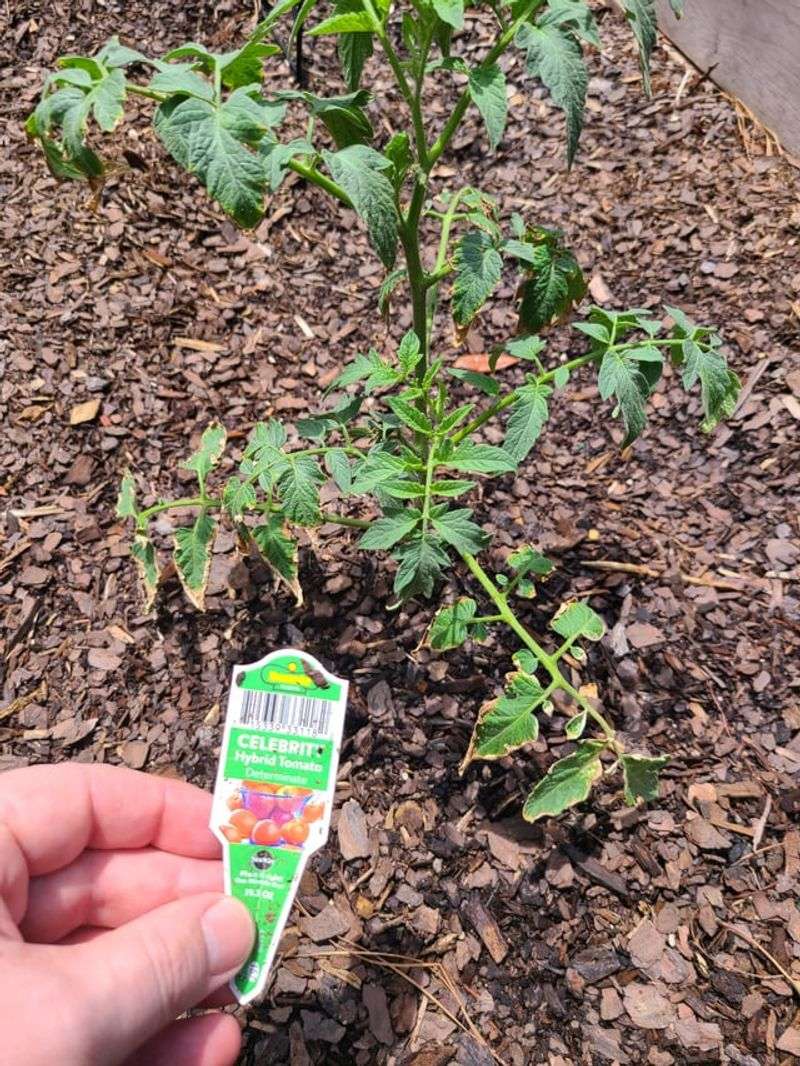
Two gardens can get the same rain total and face very different disease pressure.
A fast afternoon shower may dry within an hour. A slow overnight rain can leave leaves damp until late the next morning.
That extra time matters.
Many tomato pathogens need several continuous hours of moisture before infection becomes easier. Long cloudy stretches can repeat that damp window night after night.
Pennsylvania humidity makes crowded beds especially tricky.
Leaves pressed against each other trap moisture. Tangled vines block small breezes. Weeds fill the gaps where air should move.
Give the canopy some room.
Your Pennsylvania Garden Changes Every Week. Your Plan Should Too.
Gardening in Pennsylvania changes quickly throughout the season. Every Friday you’ll receive a simple weekly plan showing exactly what to plant, prune, fertilize, harvest, and protect so you never miss the right timing.
Use cages, stakes, or trellises to keep stems upright. Keep paths clear, and leave enough space between plants for air to pass around mature foliage.
About two feet between tomatoes can be a useful baseline, with a little more room in especially humid spots.
Check the leaf undersides after long wet spells.
Those surfaces can stay damp after the tops look dry, and early disease clues may hide there. A quick look every few days can catch trouble before the whole canopy joins the story.
You do not need a weather station beside the tomatoes.
Just notice the pattern. Leaves that dry fast usually face less risk. Damp leaves that linger through breakfast deserve more attention.
Rainfall gets the headlines, but wet leaves are often the part your tomatoes remember.
3. Check Lower Spots For Septoria
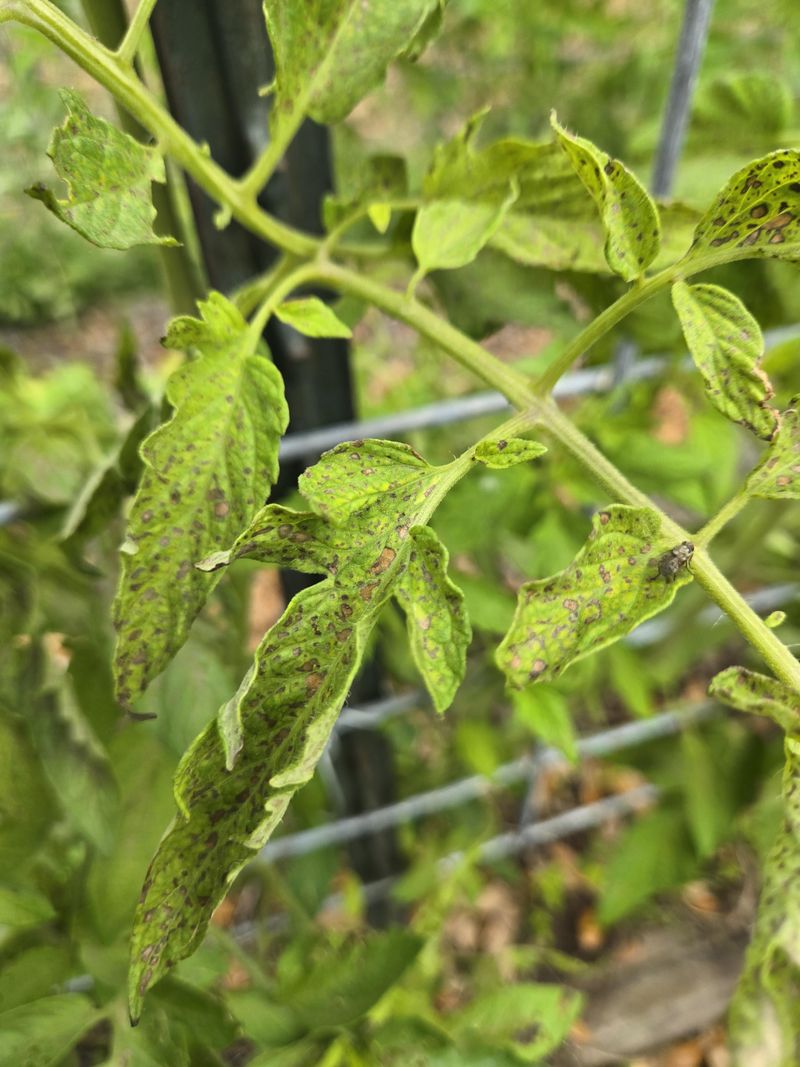
Tiny spots can create a surprisingly big mess.
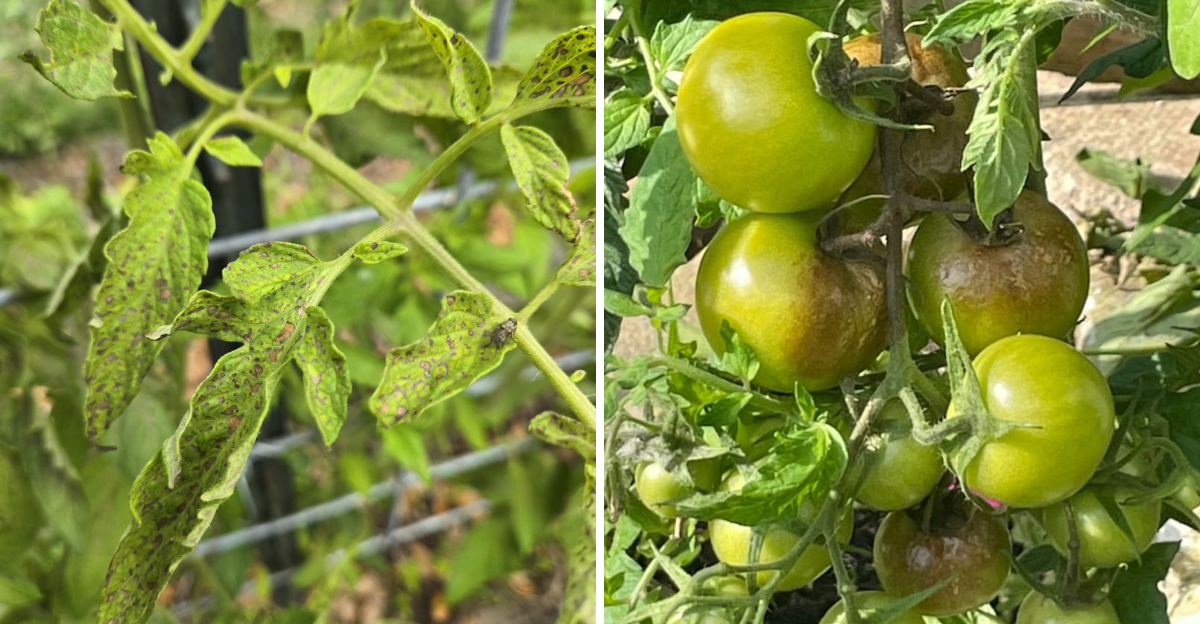
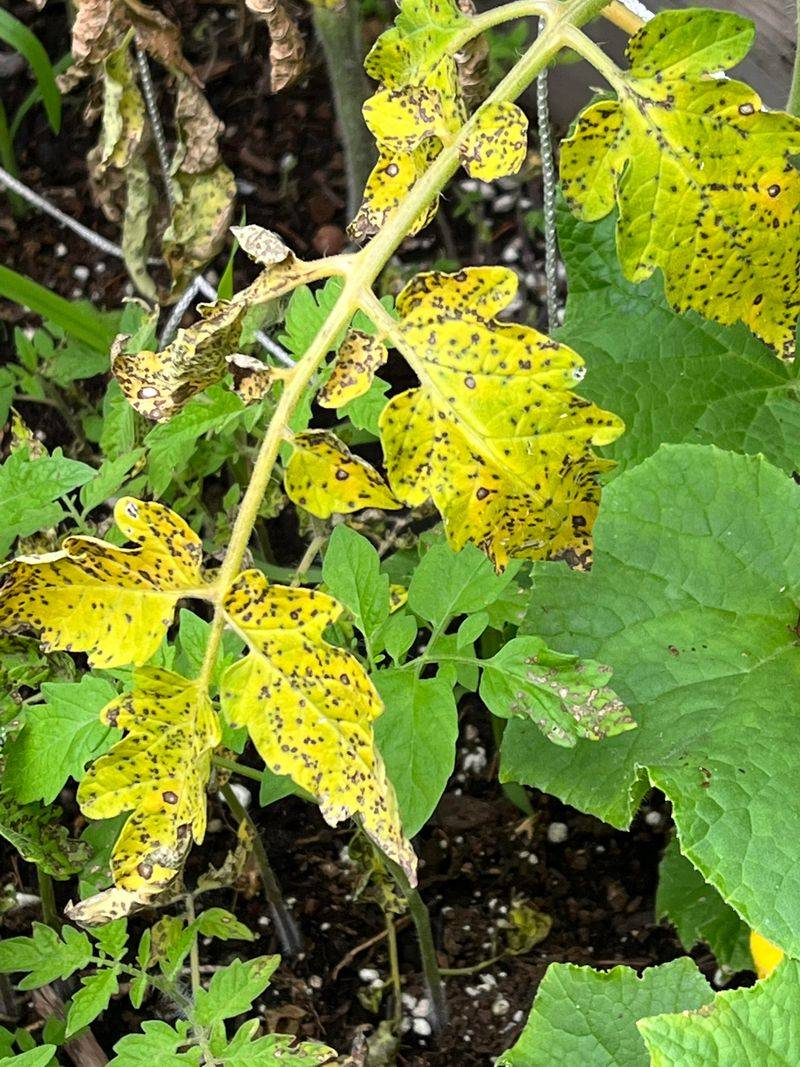
Septoria leaf spot often appears first on the oldest leaves near the bottom of the plant after a long wet stretch. The marks tend to stay small and fairly round.
Look for pale tan or gray centers with darker brown edges.
Mature spots can develop tiny black dots inside those pale centers. Those dots are pycnidia, structures that hold spores for the next round of wet weather.
A hand lens can make them easier to see.
The disease usually works upward over time. Lower leaves turn yellow, then drop. Fruit rarely carries the same marks, but heavy leaf loss can leave tomatoes exposed to strong sun.
That pattern helps separate Septoria from early blight.
Septoria usually produces many small spots. Early blight tends to create fewer, larger marks with obvious rings inside them.
Remove the worst affected leaves before the disease climbs higher.
Drop each leaf straight into a bag and take it out of the garden. Do not leave spotted foliage on the soil, where the next storm can splash spores upward again.
Rotation can also reduce carryover between seasons when garden space allows it.
The funny part is that Septoria starts with spots small enough to ignore.
Give those pencil-eraser marks a closer look. Tiny does not always mean harmless, especially after a rainy Pennsylvania week.
4. Find Target Rings From Early Blight
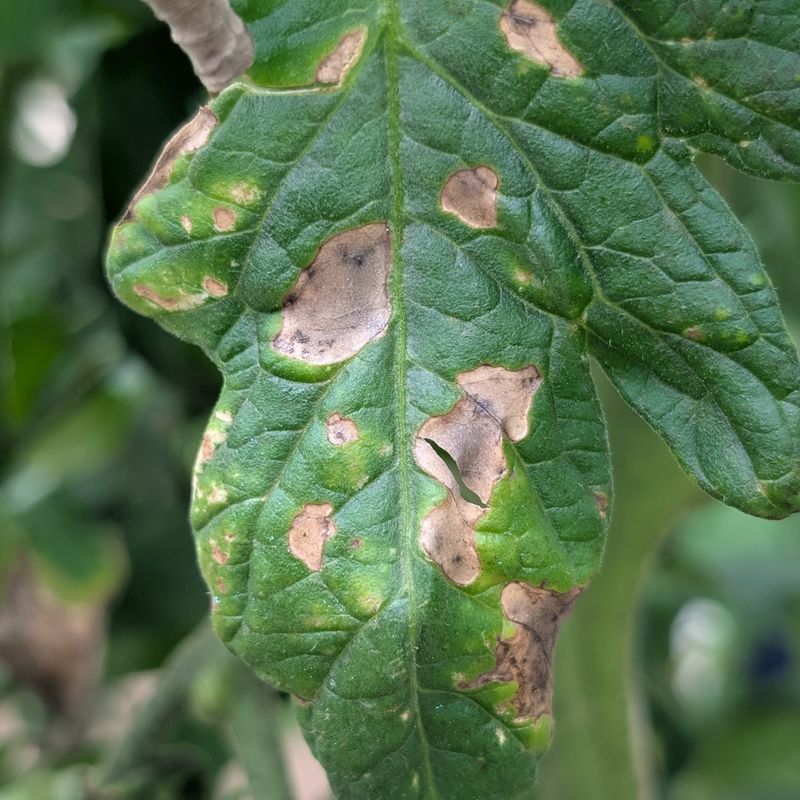
One brown spot can look ordinary until the rings appear.
Early blight, caused by Alternaria solani, often forms larger lesions with circles inside them. The pattern can resemble a tiny target stamped onto an older tomato leaf.
That bullseye look is a useful clue.
Like Septoria, early blight usually starts low. Older leaves yellow around the lesions, then may drop as the disease moves higher through the plant.
Stem symptoms can join the problem.
Dark, sunken marks may appear close to the soil line. On young plants, a lesion that wraps around the stem can become especially serious.
Fruit can show symptoms too.
Dark, leathery, sunken patches may develop near the stem end. Leaf loss can also expose fruit to more sun and add another layer of stress.
Old tomato debris can carry the fungus into a new season.
Clean the bed well after harvest. Remove old stems, leaves, and roots rather than leave them beside next year’s crop.
Crop rotation adds another layer when you have enough space.
Do not lump every lower-leaf disease together just because both start near the soil. Septoria usually gives you many small pale-centered spots. Early blight brings the larger target rings.
Your tomato basically gives you a clue with circles drawn around it.
That is considerate, by plant-disease standards.
5. Treat Fast Dark Patches As A Late Blight Alert
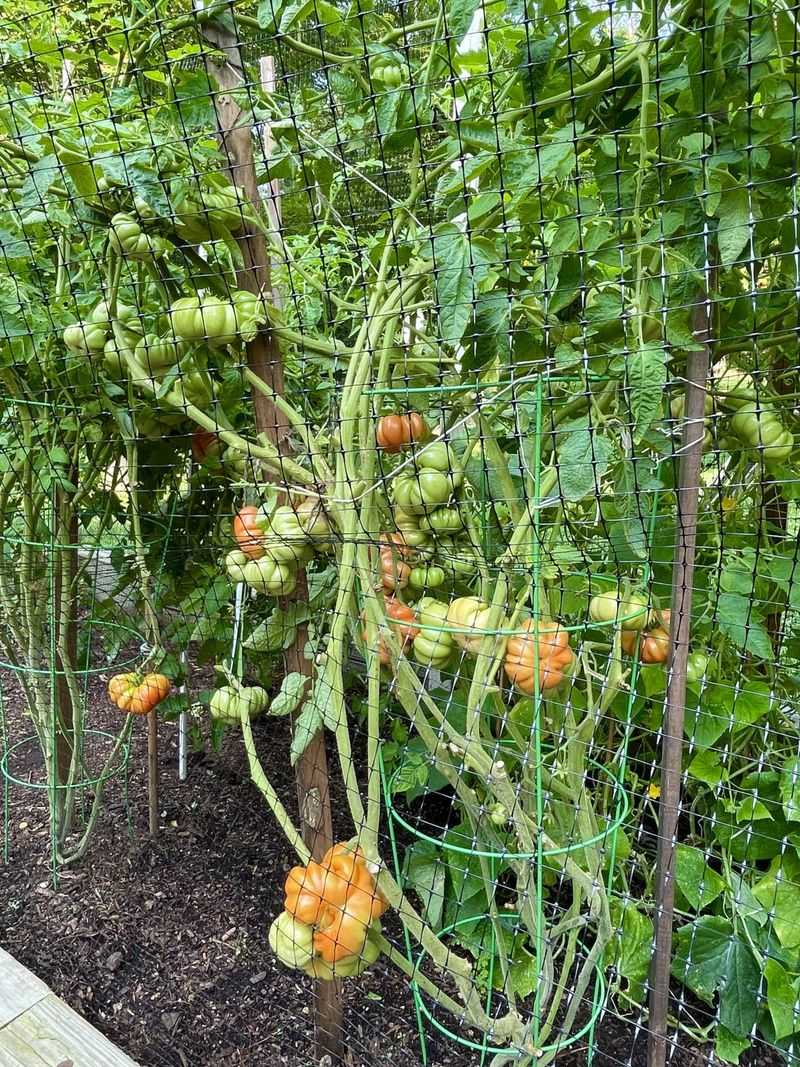
Speed changes the whole conversation.
A dark patch that expands quickly, especially across a day or two, deserves more urgency than a few slow lower-leaf spots.
Late blight can move fast during cool, wet weather.
The culprit, Phytophthora infestans, is an oomycete rather than a true fungus. That distinction matters because the disease does not always respond to the same products used for fungal problems.
Look closely at the lesion edge.
Late blight often creates dark brown to nearly black areas with a greasy or water-soaked look. Humid weather can bring pale, cottony growth on the underside of an active leaf lesion.
Stems may develop dark streaks.
Fruit can form firm brown patches with a greasy surface rather than the softer, sunken spots linked with some other rots.
This disease can travel through the air over long distances.
A clean garden can still face trouble during a regional outbreak, especially after cool, wet stretches. That is why local disease alerts matter so much here.
Check current Penn State guidance before you make a major treatment decision.
A solid diagnosis protects more than one plant. It can also help prevent unnecessary sprays across the rest of the garden.
Late blight does not usually arrive with subtle manners.
When a lesion races instead of creeps, move diagnosis to the top of the to-do list and leave guesswork near the bottom.
6. Remove The Worst Tissue Carefully
A spotted leaf on the ground is still part of the disease problem.
Damaged foliage should leave the bed once it comes off the plant. Toss it beside the stem, and the next rain can put spores right back into circulation.
Use a bag as you work.
For limited Septoria or early blight, remove the worst lower leaves first. Take them off cleanly and place them straight into the bag before you move to the next plant.
Do not strip the whole tomato bare.
Healthy foliage still feeds the plant and protects fruit from intense sun. The goal is to reduce heavily infected tissue while you preserve useful leaves.
Clean your tools between suspect plants.
Shear blades can carry disease from one stem to another with a single cut. Isopropyl alcohol or a properly diluted disinfectant can help reduce that transfer.
Late blight needs a different level of caution.
A few removed leaves may not slow a fast outbreak enough. Regional guidance and a confirmed diagnosis should shape the next step when symptoms match late blight.
Keep diseased tomato material out of the home compost pile.
Backyard piles may not reach conditions that reliably neutralize every pathogen in infected tissue.
This part of disease control is not glamorous.
Bag, clean, remove, repeat.
Still, careful cleanup can do more useful work than a frantic spray session, and your compost pile will survive the rejection.
7. Water Soil And Keep Leaves Dry
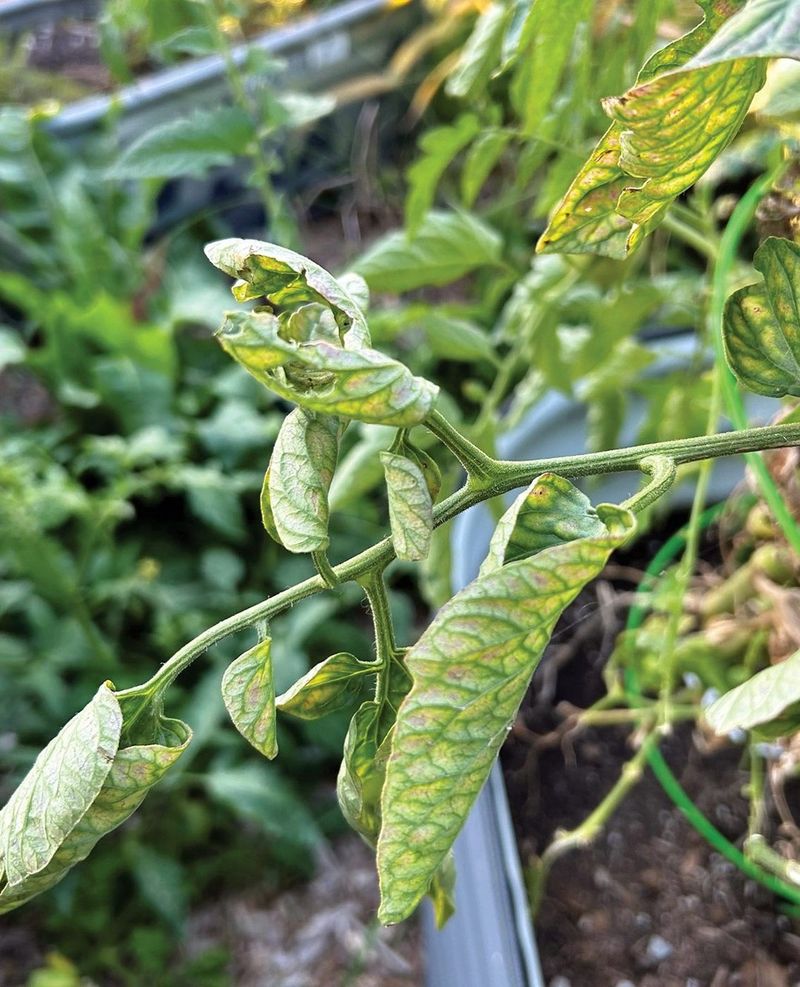
Rain already gives tomato foliage more moisture than gardeners can control.
The hose does not need to add another round.
Overhead sprinklers wet leaves, increase humidity inside the canopy, and splash material from lower parts of the plant toward higher ones.
Root-zone water takes a cleaner route.
Drip lines and soaker hoses place moisture where tomato roots can use it. Tuck a soaker hose beneath mulch, and you also reduce evaporation plus soil splash at the same time.
That gives you two useful jobs from one setup.
Morning works best when overhead water is your only practical option. Leaves have daylight and warmer air ahead, so they can dry much faster than foliage soaked near dusk.
Keep soil moisture steady too.
Long dry periods followed by a flood can stress plants and contribute to fruit problems that have nothing to do with fungus. Consistent root-zone moisture keeps the plant in better shape overall.
Plant distance and support still matter after you change the hose.
A well-caged tomato with open space around it dries faster after natural rain than a vine that sprawls into its neighbors.
Take that lesson into next spring.
Leave enough room at transplant time, add mulch early, and set up low irrigation before midsummer storms begin.
You cannot tell Pennsylvania rain where to land.
You can tell your hose exactly where to aim, and the roots will happily take it from there.
8. Get A Diagnosis Before You Spray
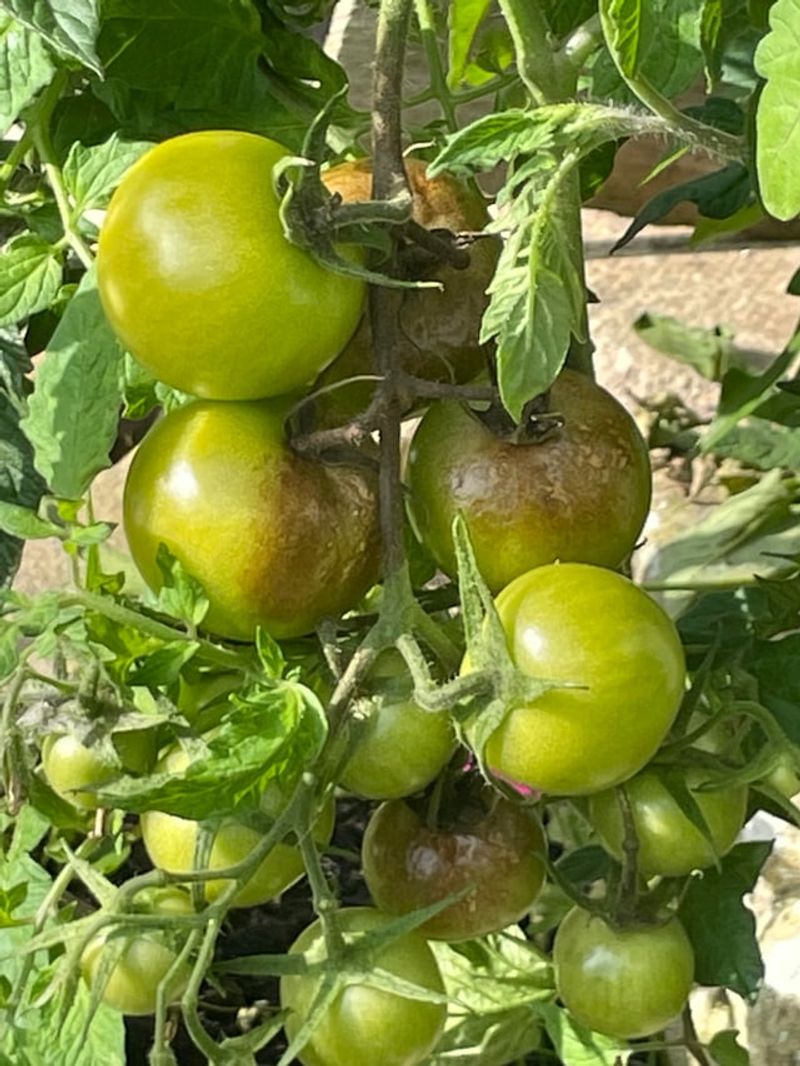
Post-rain tomato trouble gets easier to manage once every spot no longer receives the fungus label.
Rain splash can move debris upward. Long leaf wetness gives several pathogens time to establish. Septoria brings many small pale-centered spots, while early blight tends to leave larger target-like rings.
Late blight changes the pace.
Fast dark lesions, greasy edges, stem streaks, and pale growth beneath leaves deserve quicker attention, especially during cool and wet stretches.
Start with observation before treatment.
Look low. Check the undersides. Notice how fast each mark changes. Compare one plant with the next rather than trust the first dark patch you see.
Then clean up carefully.
Remove heavily affected tissue when that step fits the disease pattern. Keep suspect leaves out of the bed and compost pile. Clean tools before they reach a healthy plant.
Your irrigation routine can help too.
Keep moisture at the root zone, cover bare soil with mulch, and leave enough air around the canopy for leaves to dry after rain.
Pennsylvania weather will still throw wet weeks at the garden.
That part stays out of your hands.
The useful advantage comes from a close look at the clues before you reach for a product. Your tomatoes may look messy after a storm, but messy and mysterious are not the same thing.