Native Ohio Vines To Replace Invasive Bittersweet On Fences This Fall
Bittersweet on an Ohio fence looks intentional until it does not. The orange and red berries photograph beautifully in fall, the coverage is dense, and the plant seems to manage itself without much help.
Then the fence starts leaning, the surrounding shrubs disappear underneath it, and what seemed like a low maintenance solution reveals what it actually is. Oriental bittersweet is one of Ohio’s most damaging invasive vines.
It does not share. It does not stop.
And fall is when its berries drop seeds into every corner of the yard that birds carry further than any gardener planned for. Replacing it is the right call.
Ohio native vines make that replacement worth doing rather than just responsible. Real fall color, real wildlife value, and a growth habit that covers a fence without treating the surrounding landscape as an expansion opportunity.
Fall is the right time to make that switch.
1. American Bittersweet Brings Back The Native Berry Show
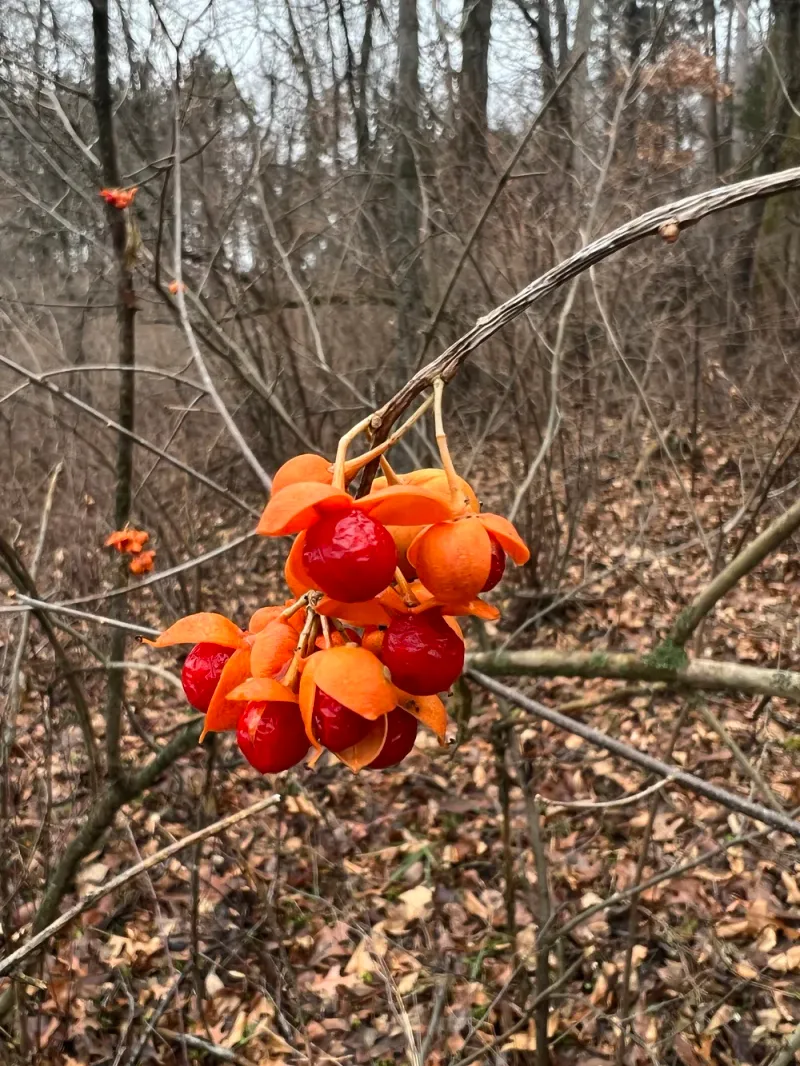
Gardeners who miss the berry display of the invasive vine will find American bittersweet, Celastrus scandens, the most direct native counterpart available. Fruit arrangement is the clearest way to tell the two apart.
On American bittersweet, berries cluster only at the tips of the stems. On Asian bittersweet, berries appear all along the length of the stem.
American bittersweet is a woody twining vine that can reach 20 to 30 feet at maturity. That is a substantial plant, and it needs a sturdy fence, solid arbor, or heavy trellis to hold it safely over time.
Do not let it climb a valuable shade tree. The vine can girdle trunks and branches as it matures.
Fruit production requires both a male and a female plant within pollinating distance. A single unidentified plant will not reliably produce berries.
Purchase plants that are clearly labeled by sex, or buy a named cultivar that includes both. Fall interest is excellent once fruiting begins, with bright orange capsules splitting to reveal red berries.
The vine grows best in full sun to partial shade and tolerates a range of soil types. It can spread by seed and root suckers, so monitor the planting area each season.
Check neighboring soil for new shoots and remove them early to keep growth within bounds.
2. Crossvine Covers Fences With Trumpet Shaped Blooms
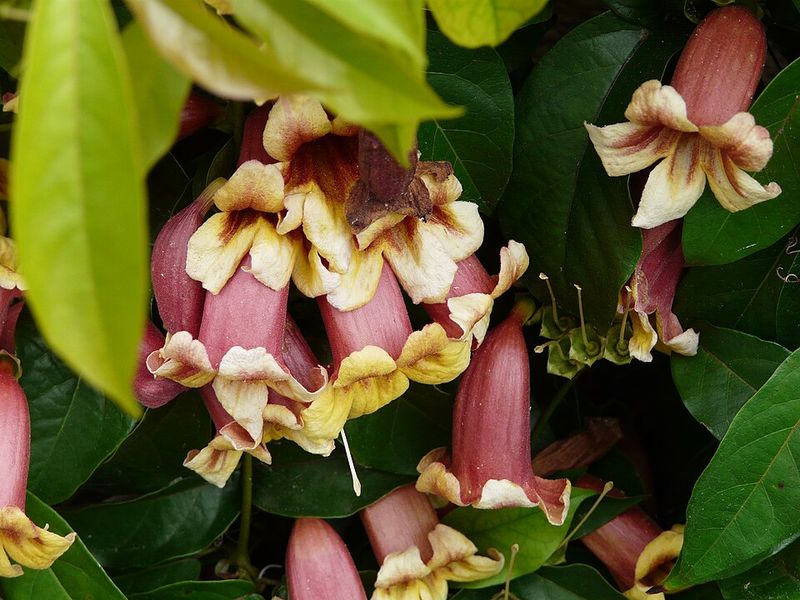
Few native climbers open spring with as much color as crossvine, Bignonia capreolata. It produces clusters of orange-red trumpet-shaped flowers that attract hummingbirds and early pollinators.
The blooms appear before many other native vines have even leafed out. That early show makes it a reliable choice for gardeners who want fence-line color starting in April or May.
Crossvine climbs using tendrils tipped with adhesive pads. It can grip wood, masonry, and wire fencing without additional ties.
Mature vines reach 30 to 50 feet in length, making this one of the larger choices on this list. A fragile decorative panel will not hold it.
Plan for a heavy-duty fence, sturdy pergola, or strong post-and-rail structure.
Your Ohio Garden Changes Every Week. Your Plan Should Too.
Gardening in Ohio changes quickly throughout the season. Every Friday you’ll receive a simple weekly plan showing exactly what to plant, prune, fertilize, harvest, and protect so you never miss the right timing.
Ohio sits near the northern edge of crossvine’s natural range. In colder northern parts of the state, foliage may drop in winter.
In milder southern areas, it can behave as semi-evergreen. Do not count on year-round leaf cover in every Ohio location.
Growth can be fast once the plant is established, and stems become woody and dense over time. Periodic pruning after flowering helps manage the spread and keeps the vine from overwhelming neighboring plants or structures.
Give it room and a strong anchor from the start.
3. Leatherflower Clematis Adds Color Without Heavy Growth
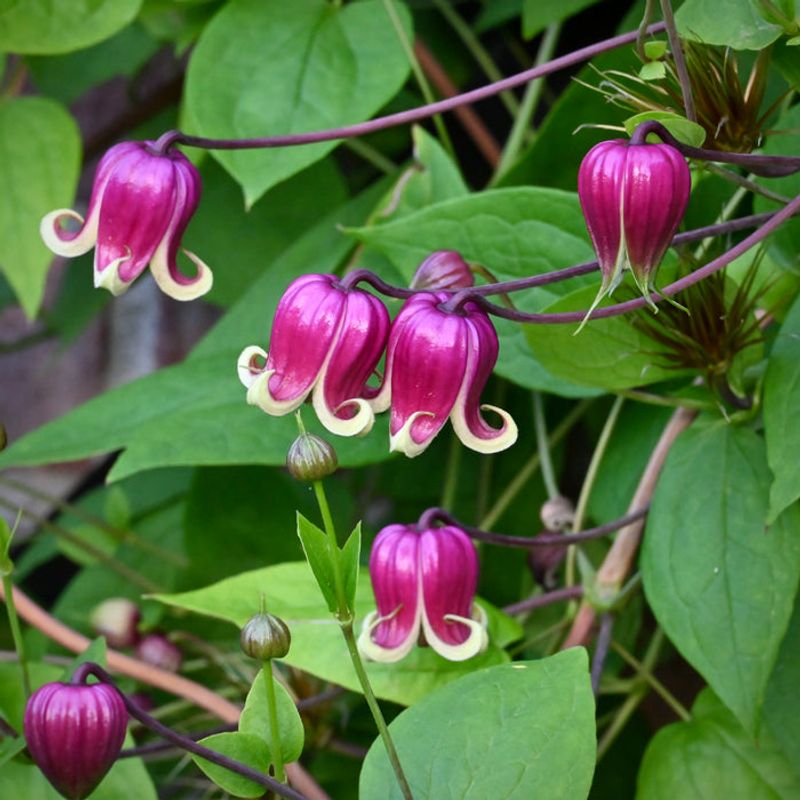
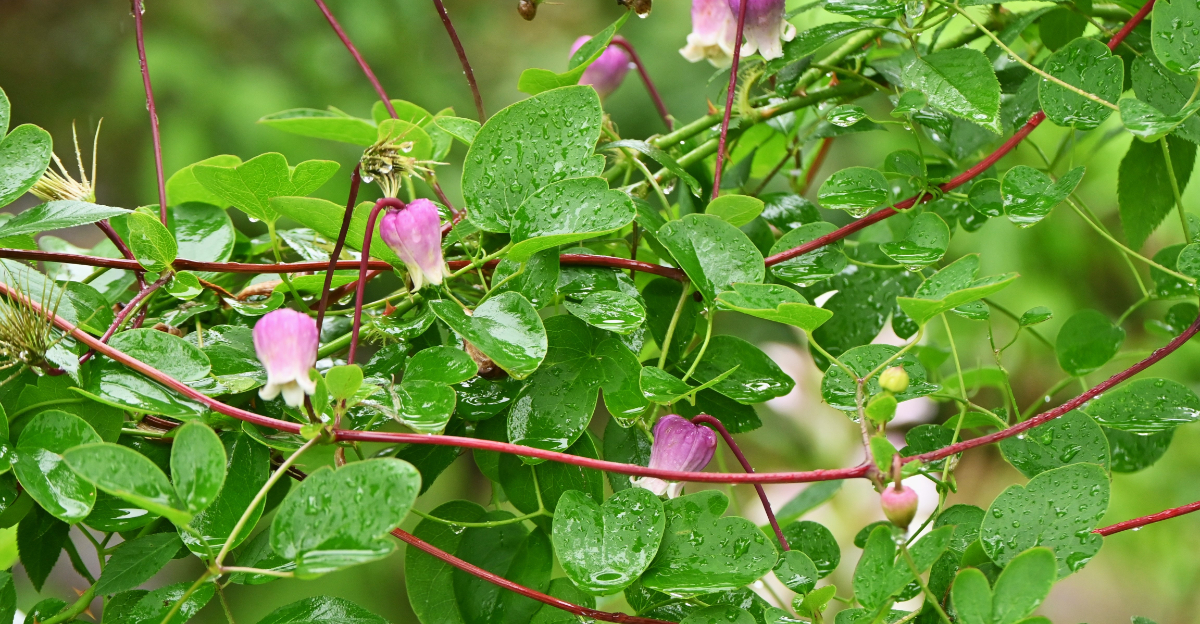
Leatherflower clematis, Clematis viorna, grows along woodland edges and stream banks across much of the state. It offers something different from the large woody vines on this list.
Its nodding, urn-shaped flowers range from pinkish-purple to reddish-purple, with slightly flared tips that give them a distinctive bell-like look. Bloom time runs from late spring through midsummer, with feathery seed heads following later in the season.
The vine climbs by wrapping leaf stalks around nearby stems, wires, or thin supports. That habit makes it a natural fit for wire fencing, lightweight trellises, or open lattice panels.
Mature plants typically reach 6 to 12 feet, which is modest compared to crossvine or American bittersweet. Smaller supports can handle that load without reinforcement.
Leatherflower clematis grows best in full sun to partial shade and prefers moist, well-drained soil with good organic content. It does not tolerate prolonged drought well, especially during its first two seasons.
Consistent moisture at the root zone helps new plants establish before winter.
Growth may look delicate, but the plant still needs room to spread its stems. Avoid crowding it against other aggressive climbers.
Cutting stems back in late winter or early spring encourages fresh, vigorous growth and helps keep the vine tidy through the growing season ahead.
4. Virgin’s Bower Softens Fences With Feathery Seed Heads
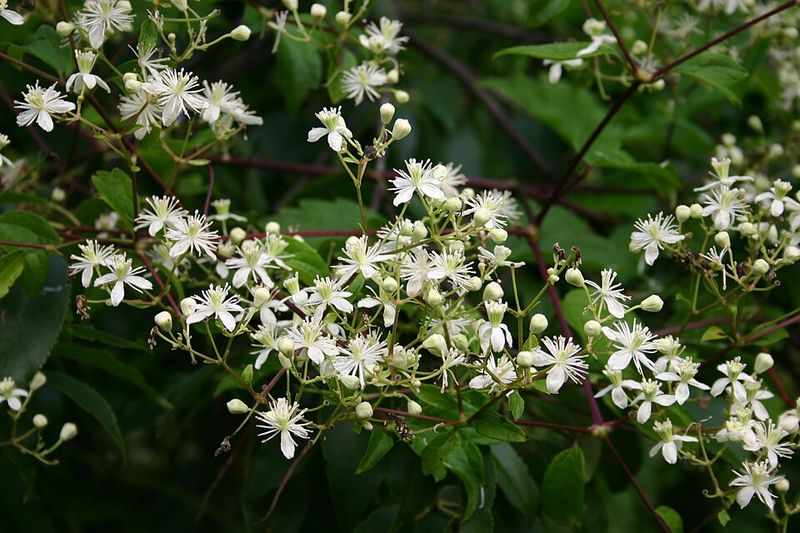
Virgin’s bower, Clematis virginiana, grows along roadsides and stream banks across Ohio. From midsummer into early fall, it drapes fences and shrubs with clouds of small white flowers.
The flowers are modest individually, but they appear in such generous clusters that the overall effect is striking. When blooming ends, silvery feathery seed heads take over and persist well into autumn.
They add a soft textural display that few other native vines can match at that time of year. The Ohio Invasive Plants Council lists native clematis as a recommended alternative to Asian bittersweet.
Virgin’s bower climbs by wrapping leaf stalks around supports, much like leatherflower clematis. A key identification note: do not confuse it with invasive sweet autumn clematis, Clematis terniflora, which also has white flowers.
Virgin’s bower has sharply toothed leaflets, while sweet autumn clematis has smooth-edged leaflets.
This vine grows vigorously in favorable spots. Rich soil, consistent moisture, and good sun can push it well beyond the space you originally planned.
Pruning or thinning in late winter helps keep it within the intended fence area. Left unchecked, it will spread into neighboring shrubs and plants.
Full sun to partial shade suits it well. It tolerates a range of soil types but performs best where moisture is reliable.
Established plants are quite resilient and rarely need supplemental care beyond seasonal trimming.
5. American Groundnut Climbs Best In Moist Garden Spots
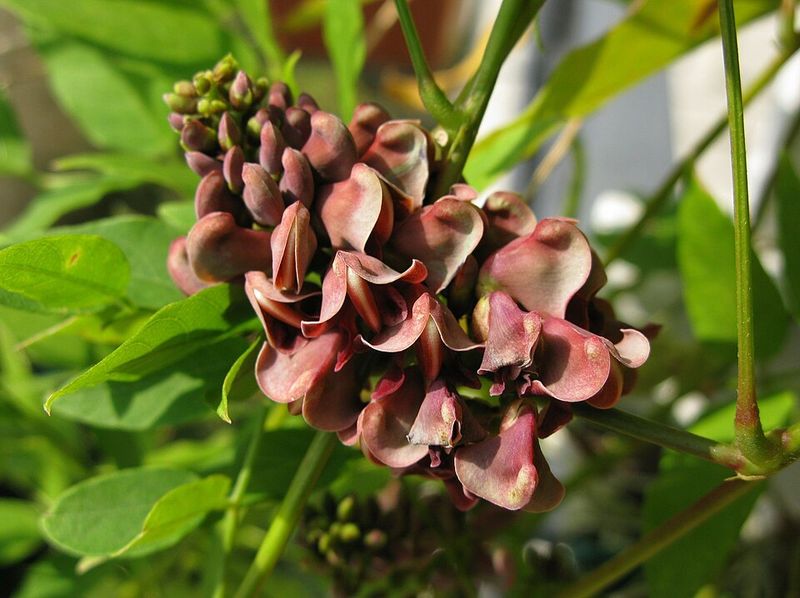
Not every fence line is dry and sunny, and American groundnut, Apios americana, is built for the wetter spots that other vines avoid.
Native to moist soils along stream banks and low-lying areas, this twining vine produces clusters of small, fragrant, pinkish-brown flowers in summer.
The compound leaves have a tidy, feathery look that adds foliage texture even when the plant is not in bloom.
Mature vines typically reach 3 to 10 feet, making them a lighter option than the large woody climbers on this list. A sturdy wire fence or modest trellis provides adequate support for most plants.
Growth slows noticeably in dry conditions, so placing this vine along a fence in a hot, exposed, well-drained spot is likely to disappoint.
American groundnut spreads through underground tubers and can travel beyond its original planting area in favorable soil. It is not a tidy clumping vine.
Gardeners who want a contained planting should monitor the surrounding soil each year and remove wandering shoots before they establish.
The plant does produce edible tubers, but this article focuses on its ornamental use in the garden rather than any foraging application.
Plant it where the soil stays consistently moist and receives partial shade to full sun. That combination brings out the best growth and the most reliable flowering through the summer months.
6. Yellow Passionflower Weaves Through Lighter Supports
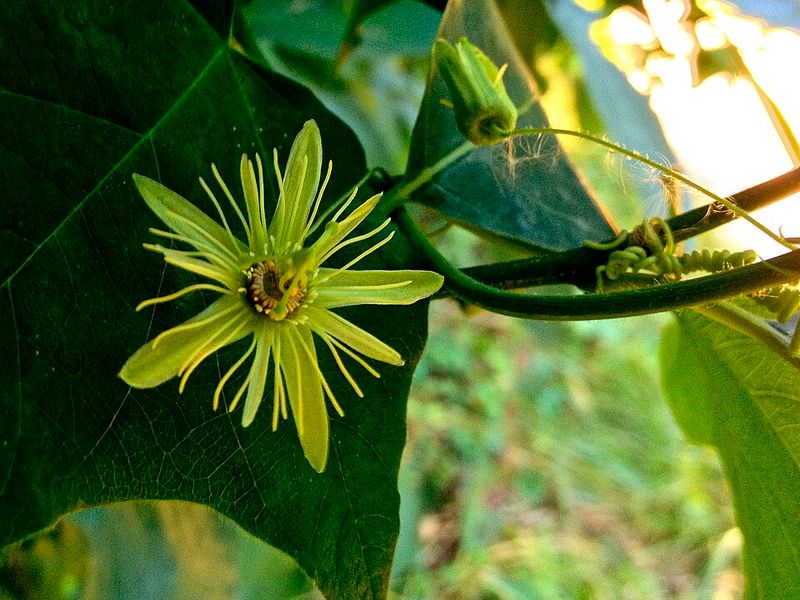
Yellow passionflower, Passiflora lutea, is smaller and quieter than its showier relatives. It suits gardeners who want a native climber that does not overwhelm a fence or trellis.
The flowers are small and pale yellow-green, nothing like the large tropical passionflowers sold at garden centers. That understated look fits naturally into a woodland-edge planting or a partially shaded fence line where bold color would feel out of place.
Yellow passionflower is native to Ohio and climbs using slender tendrils that wrap around wire, thin branches, or lightweight trellis material. Mature plants typically reach 6 to 15 feet, which is manageable on a standard garden fence.
A simple wire fence or open lattice panel provides the kind of support the vine uses most effectively.
Partial shade to full sun suits this vine, though it tends to perform well along woodland edges where light is filtered through nearby trees. Soil moisture should be moderate and consistent.
Dry, exposed fence lines may stress the plant, especially during establishment in the first season after planting.
Small dark fruits follow the flowers and provide food for wildlife, including zebra longwing butterflies that use passionflower as a host plant.
Fall color is not a primary feature of this vine, but the foliage texture and wildlife value make it a worthwhile addition to a naturalistic fence planting.
7. Maypop Passionflower Delivers A Bold Summer Display
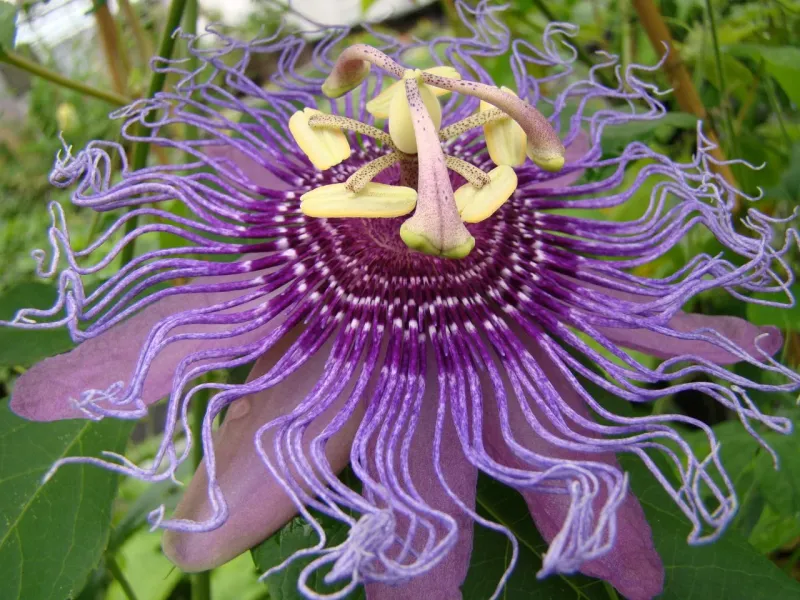
Few native vines attract as much attention in midsummer as maypop, Passiflora incarnata. Its elaborate purple and white flowers look like something from a tropical garden.
The blooms are large, intricately fringed, and appear from June through August on established plants. Pollinators, including bumblebees and several native bee species, visit the flowers regularly throughout the season.
Maypop is native to Ohio, though it grows most reliably in the southern part of the state. At the northern edge of its native range, winter hardiness can be uncertain in exposed or poorly drained sites.
Roots may survive where top growth does not, so some gardeners in northern Ohio see the vine return from the root system even after a harsh winter.
The vine climbs by tendrils and can reach 6 to 10 feet in a single season. It spreads through underground runners and may appear well beyond its original planting spot in subsequent years.
Placing it where that spread can be managed, such as along a fence with mowed grass on both sides, reduces the chance of unwanted colonization.
Maypop produces egg-shaped yellowish fruits after flowering. They are edible but the focus here is on the vine’s ornamental and wildlife value.
Plant it in full sun with well-drained soil and adequate space for its spreading growth habit.
8. Wild Yam Adds Heart Shaped Foliage To Shady Fences
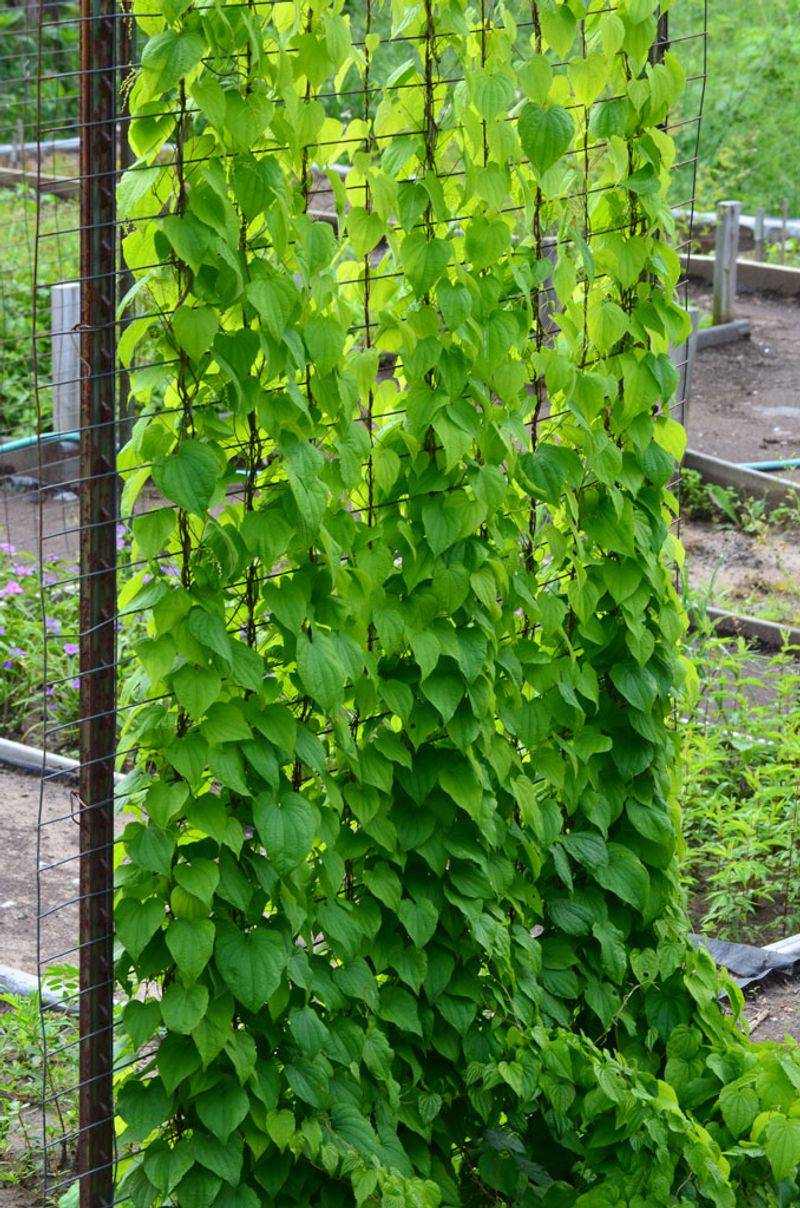
Shady fence lines often get overlooked when gardeners choose native vines, but wild yam, Dioscorea villosa, was made for exactly that kind of spot.
The vine produces broad, heart-shaped to broadly ovate leaves with prominent parallel veins that catch filtered light beautifully.
Foliage texture is the main attraction here, not flowers or berries. The small greenish-yellow flowers that appear in summer are easy to miss.
Wild yam is native to Ohio and twines naturally around wire fencing, wooden posts, and shrub stems in shaded or partly shaded sites. Mature vines typically reach 10 to 15 feet.
That length suits a standard garden fence without requiring the heavy-duty structure that crossvine or American bittersweet demands. Moist, well-drained soil in a woodland-edge setting brings out the best growth.
Do not confuse wild yam with invasive air potato, Dioscorea bulbifera, or other nonnative Dioscorea species. Wild yam does not produce the aerial tubers that make air potato so problematic.
The two plants look different up close, but confirming the correct species before planting is worth the extra step.
The plant’s edible and medicinal history is well documented, but gardeners should focus on its ornamental value and avoid harvesting roots or other plant parts.
Choose the right vine for your site’s mature size, light, moisture, and support strength, and your fence will reward you for years.