Stop Pruning Your Honeylocust Trees Like This If You See Webworms In Ohio
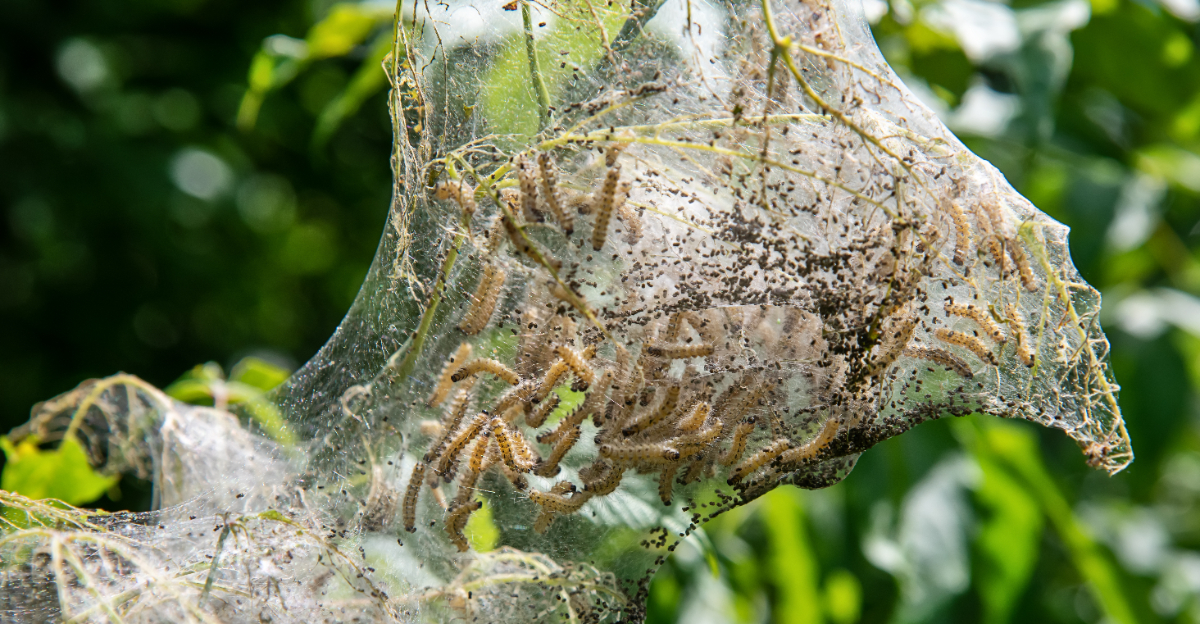
You spot them first thing in the morning: pale, silky curtains stretched across your honeylocust branches like something out of a spooky movie set. If you’re anywhere in Ohio this time of year, this scene probably looks familiar.
Your gut reaction is to march outside with pruning shears and cut the mess away.That reaction, while completely natural, can quietly backfire on your tree in ways you won’t notice right away.
Timing, technique, and a little patience matter more than speed here, especially for Ohio yards where honeylocusts are a common sight. Rush the job and you risk stressing a tree that’s already working overtime to defend itself.
Before you touch a single branch, there’s a smarter approach waiting for you below, one that protects both your honeylocust and the effort you’ve already put into it.
Cutting Into Nests Without A Plan Spreads Webworms Further
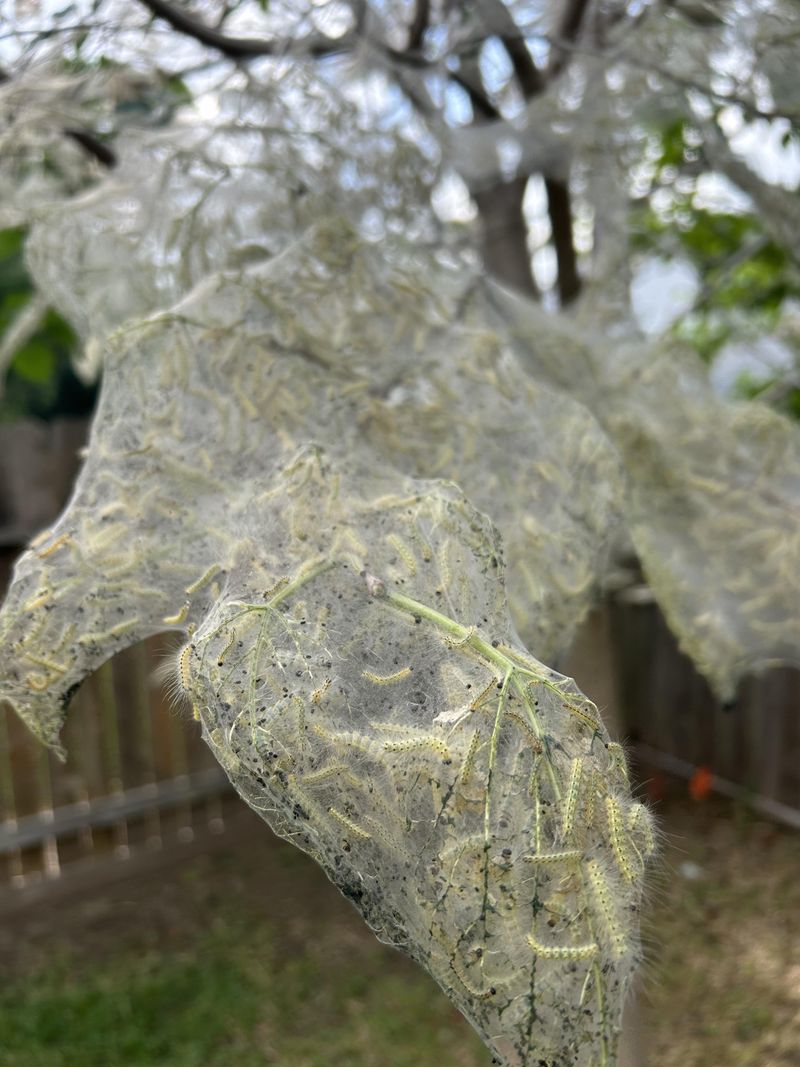
Your pruning shears feel like the obvious answer. Webworm nests look messy, and cutting them out seems like the fastest fix for your honeylocust tree.
Here is the problem: slicing through an active nest sends caterpillars flying in every direction. Those little crawlers land on nearby branches and immediately start building fresh nests.
One bad cut can send that single infestation spreading to branches all across your tree. Honeylocust webworms are surprisingly mobile when disturbed, and they waste no time setting up shop somewhere new.
Pruning without a removal strategy is basically doing the webworms a favor. You scatter them, they regroup, and your tree ends up worse than before you started.
Timing makes things even trickier if you cut at the wrong moment. Nests disturbed during the hottest part of the day tend to scatter caterpillars more than a cool, calm morning would.
There is also the matter of tools. Dull shears crush branches instead of cutting clean, which shakes nests loose and sends webworms tumbling before you even get the bag in place.
The smarter move is to bag the nest before cutting. Slide a plastic bag over the webbed branch cluster first, then snip the branch inside the bag.
This traps the caterpillars before they scatter across your tree. Seal the bag tightly and toss it in your outdoor trash, not your compost pile.
Cutting into nests without this bagging step is a mistake plenty of Ohio homeowners end up making. A little prep work turns a messy job into a genuinely effective one.
Cut Away Only The Webworm Nests You Can Reach
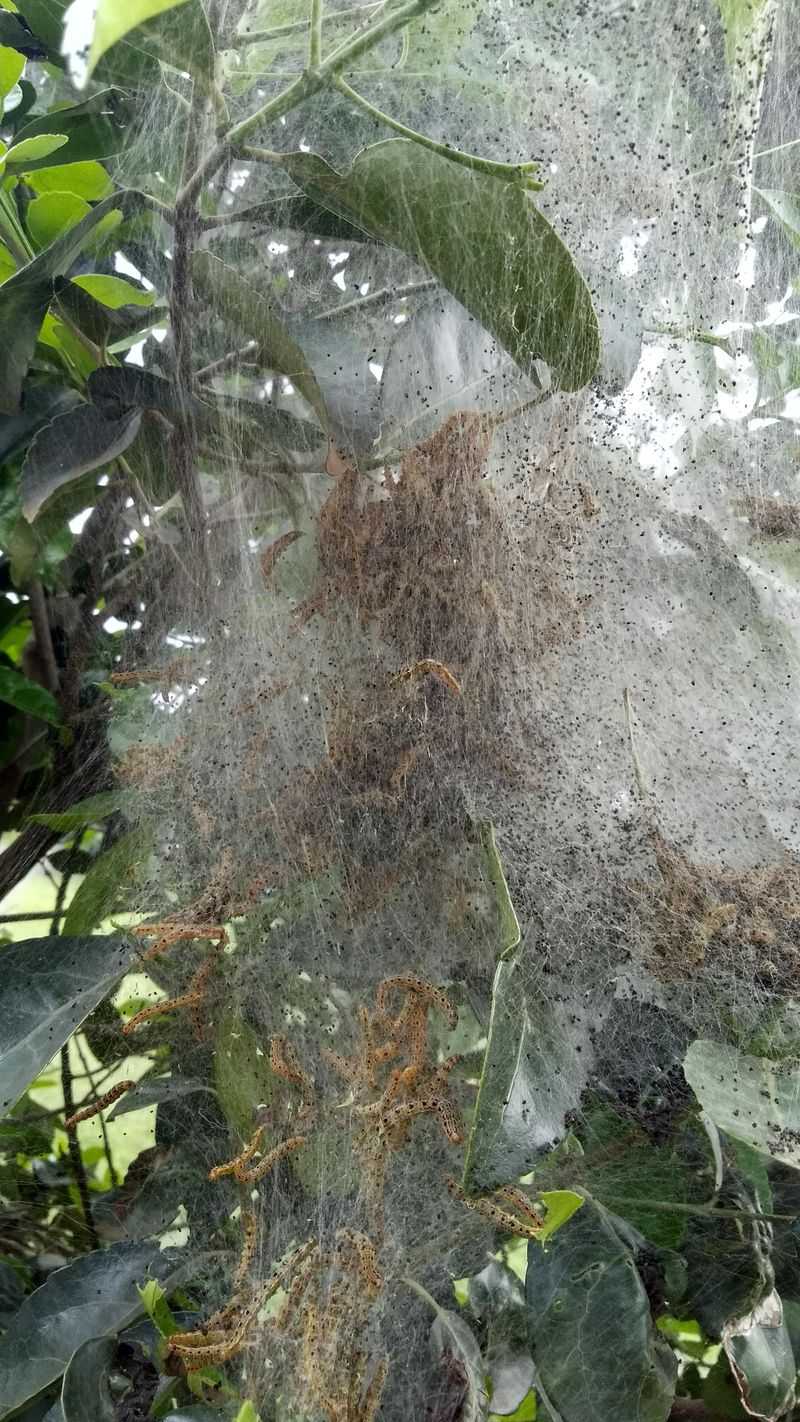
Ladder accidents are more common than most people realize when it comes to tree work. Reaching for a high nest on your honeylocust tree while balancing on a ladder is a recipe for a bad day.
Webworm nests that sit beyond safe reach should be left alone or handled differently. Climbing dangerously just to remove a few silk clusters is not worth the risk.
Pole pruners with extendable handles let you work from the ground safely, a trick plenty of Ohio homeowners rely on each summer. These tools can reach up to 12 feet without requiring you to leave solid footing.
Your Ohio Garden Changes Every Week. Your Plan Should Too.
Gardening in Ohio changes quickly throughout the season. Every Friday you’ll receive a simple weekly plan showing exactly what to plant, prune, fertilize, harvest, and protect so you never miss the right timing.
Focus your pruning efforts on nests at chest height and below first. Removing accessible nests reduces the overall population without putting you in harm’s way.
High nests are often out of reach for the same reason birds and wasps can access them easily. Natural predators do a solid job picking off webworms in elevated branches when left undisturbed.
Leaving those upper nests to nature also saves you time and effort. Why risk a fall for a job the birds are already halfway done with?
Cutting only what you can safely reach also prevents unnecessary branch loss. Hacking at upper canopy growth just to remove a nest causes more structural damage than the webworms themselves would.
Stick to ground-level and low-branch nest removal as your primary pruning strategy. Your honeylocust tree stays structurally sound, and you stay safely on the ground where you belong.
Time Your Pruning Around The Webworm Life Cycle
Timing is everything when it comes to webworm control on your honeylocust tree. Prune at the wrong moment and you either miss the window or make the infestation worse.
Honeylocust webworms typically appear in mid to late summer. Catching nests when they are small and newly formed makes removal far more effective.
Young nests are compact, tightly webbed, and contain fewer caterpillars. Older nests expand dramatically as larvae grow, making them harder to contain during pruning.
A quick daily walk-around during peak season pays off here. Spotting a new nest early beats finding it after it has already grown out of control.
The best time to prune webworm nests is as soon as possible after spotting them. Early removal stops the colony before it matures and before a second generation can form.
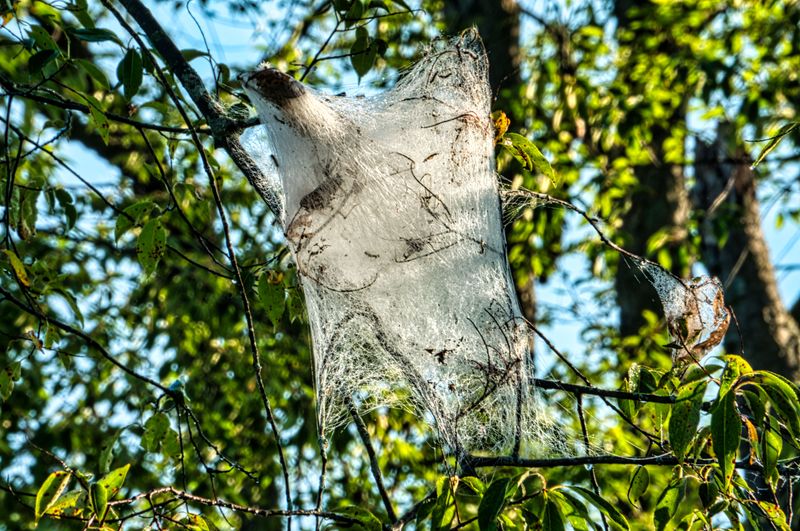
Avoid pruning nests that already show signs of emptying out. If the silk looks tattered and the caterpillars are gone, the damage is done and cutting serves no real purpose.
Late-season pruning of empty nests can actually stress your honeylocust unnecessarily. The tree is already shifting its energy toward winter prep, and extra cuts just add unneeded strain.
Mark your calendar for mid-July through August, Ohio’s prime inspection window, as your prime inspection window. Catching webworm activity early gives you the best shot at keeping your honeylocust tree healthy all season long.
Avoid Removing Healthy Branches Along With Nests
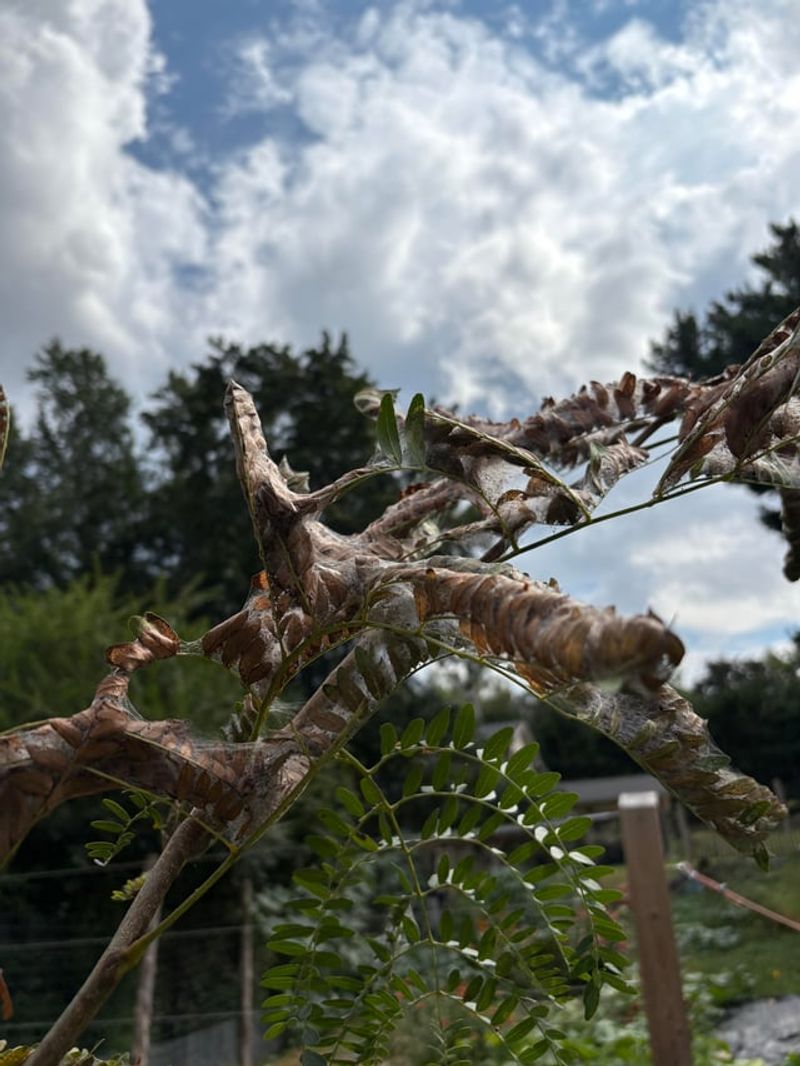
Webworm nests on Ohio honeylocusts can be sneaky about where they anchor. Sometimes a nest wraps around a perfectly healthy branch that is doing important work for your tree’s structure.
Cutting that branch just to remove the nest causes long-term harm to your honeylocust. The tree loses a limb it needs, and the webworms were only temporary visitors anyway.
Assess each nest location before reaching for your shears. Ask yourself if the branch underneath is green, living, and structurally significant to the canopy.
If the answer is yes, try removing the nest without removing the branch. Use a stick or gloved hand to pull the silk web free from the bark before cutting anything.
Webworm silk does not bond permanently to bark. With some patience, you can peel nest material away and drop it into a bag without touching the branch at all.
Save the shears for branches that are already damaged, or clearly expendable. That is where cutting actually helps your honeylocust instead of costing it something it needed.
Over-pruning a honeylocust in an attempt to eradicate webworms often leads to weak regrowth. New shoots that emerge after heavy pruning are actually more attractive to webworms the following year.
Protecting your tree’s existing framework is the smarter long-term play. Remove the pest, spare the branch, and your honeylocust keeps its strength going into next season.
Let Natural Predators Handle Light Infestations First
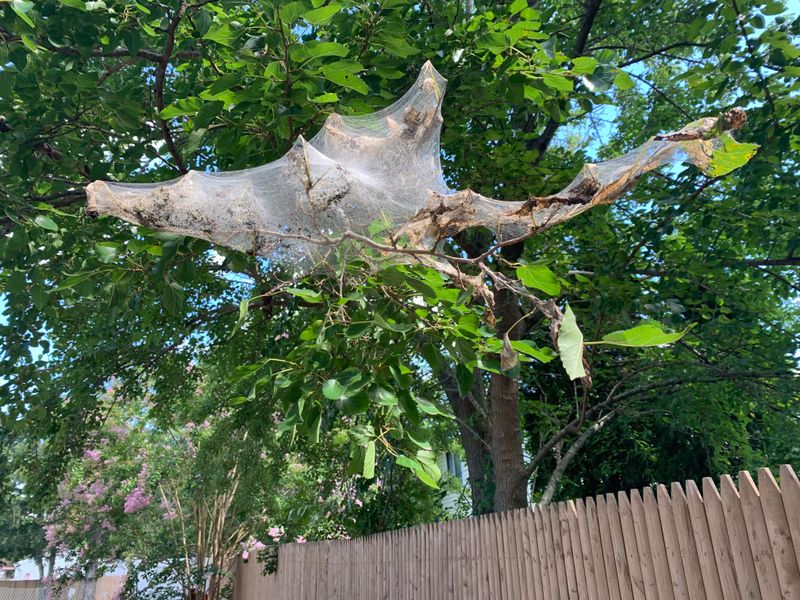
Not every webworm nest on your honeylocust tree requires immediate action. A light infestation with just one or two small nests might already have a solution in progress.
Paper wasps, common across Ohio yards, are one of the most effective natural enemies of webworms. They actively hunt caterpillars and can clear a small nest faster than you might expect.
Blue jays and similar songbirds will also pick at webworm colonies from time to time. These birds poke right through the silk to reach the caterpillars inside.
Jumping in with pruning shears too quickly can disrupt this natural cleanup crew. When you disturb a nest prematurely, predators lose their hunting target and move on elsewhere.
Give a small infestation a few days before intervening manually. Watch the nest daily to see if predator activity is already reducing the caterpillar population.
If the nest shrinks or shows signs of predator damage, hold off on pruning. Nature is doing exactly what it is supposed to do, and your honeylocust tree benefits from that process.
Step in with pruning only when the nest grows rapidly or spreads to new branches. Patience here is not laziness, it is a genuinely smart pest management strategy that protects your tree’s ecosystem.
Watch For Repeat Webworm Activity Next Season
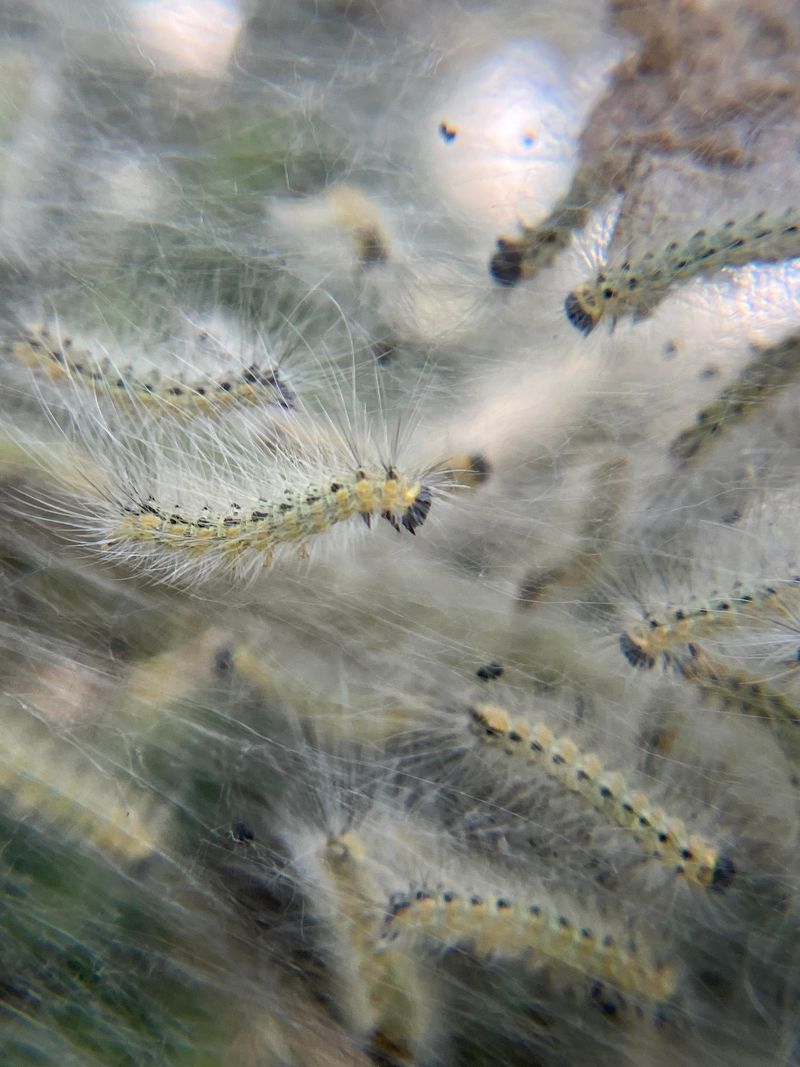
Webworms are not a one-and-done problem for most honeylocust trees. Once your tree has hosted a colony, it can easily end up on the menu again the following year.
Female webworm moths return to lay eggs on trees where previous generations thrived. Your honeylocust essentially gets added to their preferred list after the first infestation.
Start inspecting your tree in early July before nests become visible to the casual eye. Look for tiny clusters of eggs on leaf undersides and early silk threads on branch tips.
Catching the next generation early gives you a real head start on control. A small, newly formed nest is far easier to manage than one that has had weeks to grow.
Keep a simple garden journal to track where nests appeared on your honeylocust tree last season. Webworms tend to favor the same branch zones year after year.
Targeted inspections of those repeat locations save you time and reduce the chance of missing a growing nest. You stop pruning your honeylocust reactively and start managing it proactively instead.
One season of careful observation changes how you approach webworm management permanently. Staying ahead of the cycle keeps your honeylocust tree thriving and makes next summer a whole lot less stressful for Ohio gardeners.