The One Thing Ohio Gardeners Add To Clay Beds In Summer That Makes Fall Planting So Much Easier
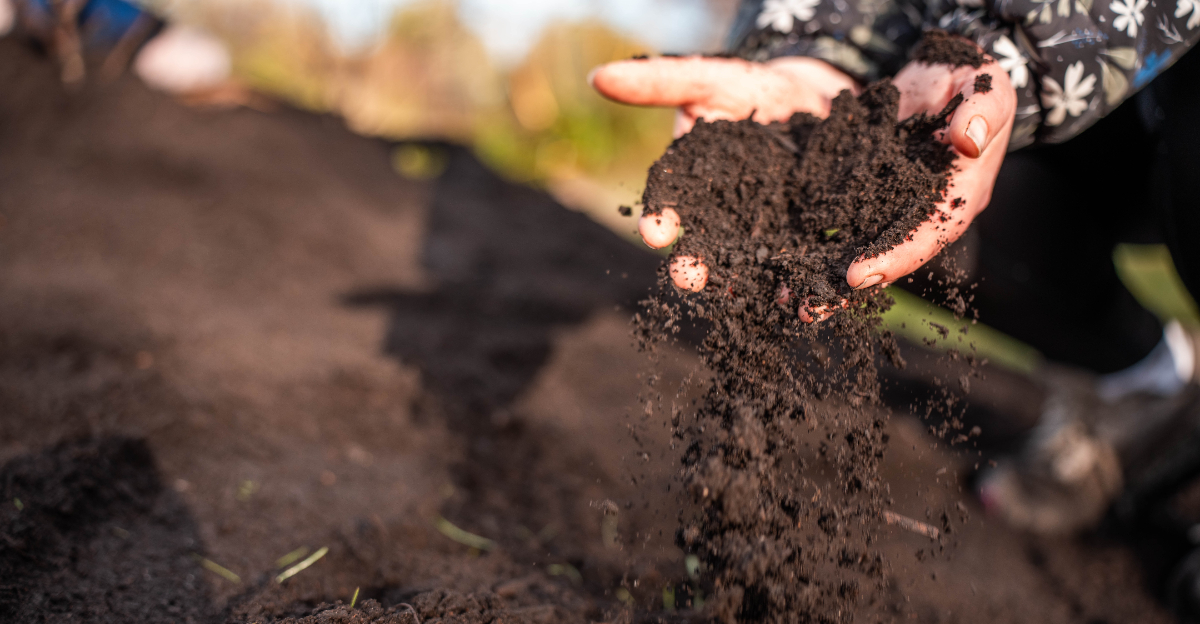
Ohio clay soil has a reputation, and it has earned every bit of it. It cracks in the heat, drowns roots in the rain, and turns into something resembling concrete by the time fall planting season rolls around.
Most gardeners just accept it as part of life here. But there is one thing you can add to those clay beds right now, in the middle of summer, that quietly transforms the soil by the time fall arrives.
It is not expensive. It is not complicated.
And it does the hard work for you while you are busy doing everything else a summer garden demands. Fall planting in Ohio clay goes from a frustrating battle to a surprisingly smooth process when you get this right.
One addition. One summer.
A completely different experience come October.
1. Add Compost Before Clay Turns Rock-Hard
Midsummer is exactly the right moment to act on clay beds. Once the heat of July and August sets in, unworked clay can harden to the point where even a sturdy garden fork barely scratches the surface.
Getting finished compost onto those beds before that happens gives the material time to begin working with the soil. It will not just sit on top of concrete-hard ground.
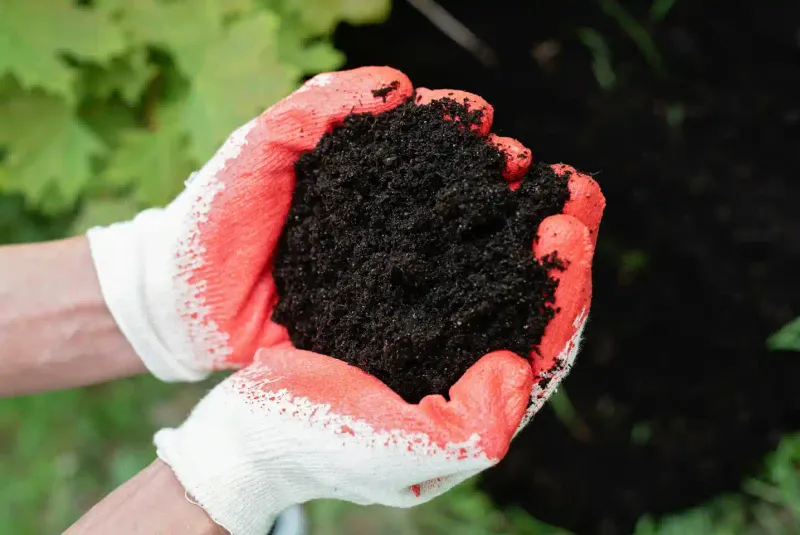
Finished compost, sometimes called well-decomposed compost, looks dark, crumbles easily, and smells earthy rather than sour or sharp. It is different from fresh manure, chunky wood chips, or a pile of half-rotted leaves.
Those materials are not ready and can tie up nitrogen or introduce weed seeds. True finished compost is stable, safe, and ready to support soil organisms immediately.
Ohio State University Extension notes that adding organic matter consistently over time is one of the most reliable ways to improve clay soil structure and workability.
Spreading a 2- to 3-inch layer across the entire bed surface in summer gives organisms, moisture, and time a chance to start blending it in.
That works better than waiting until the night before fall planting. Starting early makes a real difference when cooler planting days arrive.
2. Spread It On Top Before You Dig
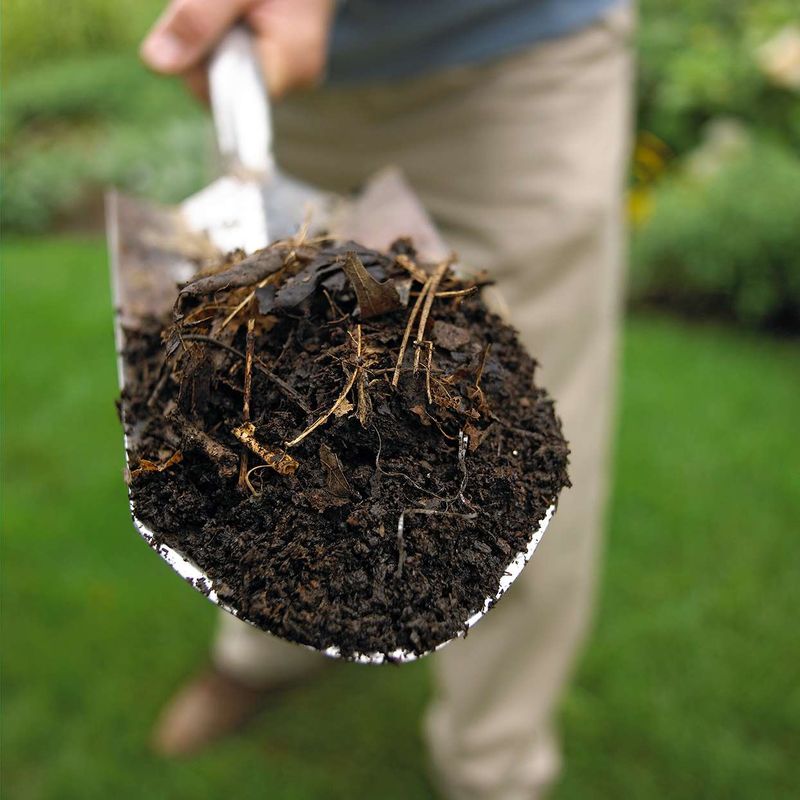
Before reaching for a shovel, try spreading compost across the whole bed first. Dumping a bag of compost into a single planting hole and calling it done is one of the most common preparation mistakes in heavy-soil gardens.
That approach creates what some extension educators call the bathtub effect. Soft material fills a hole surrounded by hard clay, and water collects rather than draining outward.
Broad, even coverage is the goal. A 2- to 3-inch layer spread across the entire bed surface gives compost a chance to work with the surrounding soil rather than creating an isolated pocket.
Soil organisms, earthworms, and natural moisture movement can then begin pulling the organic matter downward over weeks and months.
Once compost is spread, you have a few good options depending on soil moisture. If the ground is workable, meaning moist but not sticky or muddy, you can lightly scratch the compost into the top few inches using a rake or garden fork.
Your Ohio Garden Changes Every Week. Your Plan Should Too.
Gardening in Ohio changes quickly throughout the season. Every Friday you’ll receive a simple weekly plan showing exactly what to plant, prune, fertilize, harvest, and protect so you never miss the right timing.
If the soil is too dry or too wet to work safely, leave the compost on the surface. Covering it with a thin mulch layer helps hold it in place until conditions improve.
Even surface application delivers real benefits over time.
3. Let Summer Heat Help Compost Settle In
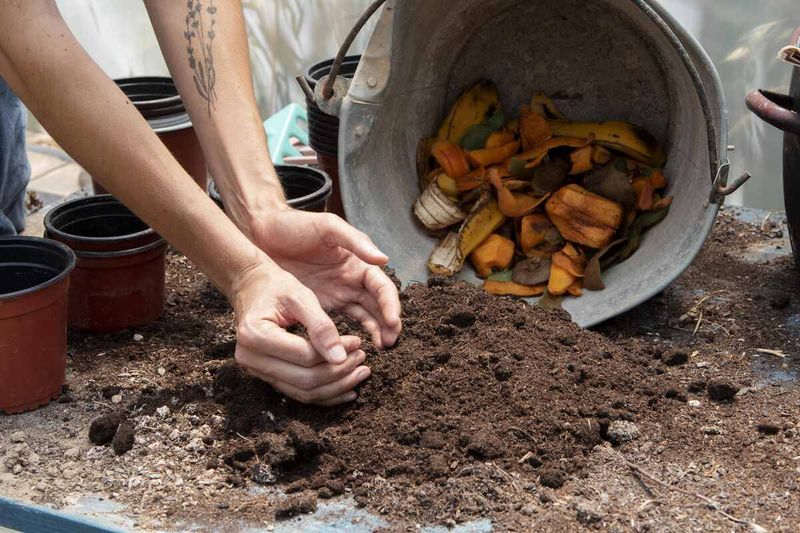
Patience is one of the most underrated tools in a clay-soil garden. Spreading compost in summer rather than scrambling to add it right before fall planting gives something valuable: time.
Heat, moisture from summer thunderstorms, and the activity of soil organisms all work together to begin blending that compost layer into the bed below.
Soil microbes are especially active during warm months. According to OSU Extension soil health resources, microbial activity increases with temperature and adequate moisture.
That means summer is actually a productive season for organic matter breakdown and incorporation. The compost does not magically transform clay overnight, but the process moves faster during warm weather than it would if you waited until October.
One practical note: during dry stretches, compost spread on the surface can dry out, crust slightly, or shift in wind. Watering the bed lightly during a dry spell keeps the surface from crusting and helps maintain moisture for soil organisms working below.
You do not need to soak the bed, just keep it from going completely dry. By the time fall arrives and planting season begins, that summer head start means the bed is in noticeably better shape.
It will be much easier to work than it would have been with no preparation at all.
4. Keep Wet Clay Out Of The Work Zone
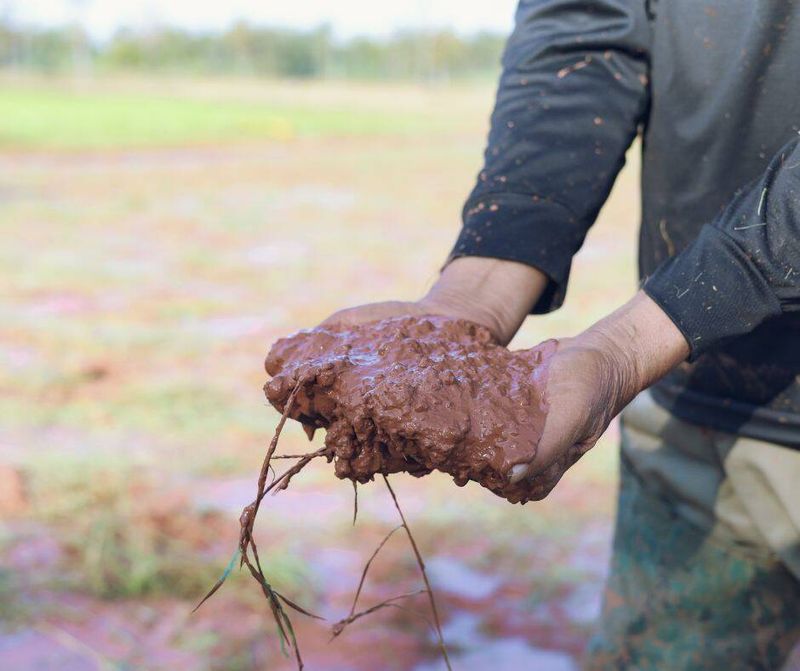
Few things damage clay soil faster than working it when it is too wet. Digging, tilling, or even walking across a saturated clay bed smears the soil particles together.
That destroys the small pore spaces that allow air and water to move through. Once clay compacts this way, it can take a long time to recover, no matter how much compost you add later.
A simple readiness check can save a lot of trouble. Grab a handful of soil from a few inches below the surface and squeeze it firmly.
If it crumbles apart when you poke it with a finger, the moisture level is probably right for light work. If it stays in a slick, sticky ball or smears like clay pottery, the bed needs more drying time before you touch it.
Using a board or a wide stepping stone to distribute your weight is a smart habit when moving around beds, especially after rain.
Even light foot traffic on wet clay can undo weeks of compost work by pressing out the pore space you have been trying to build.
Save the digging, raking, and amendment work for days when soil conditions are cooperative. The bed will reward that patience with better structure and easier planting when fall arrives.
5. Use Compost To Soften Fall Planting Holes
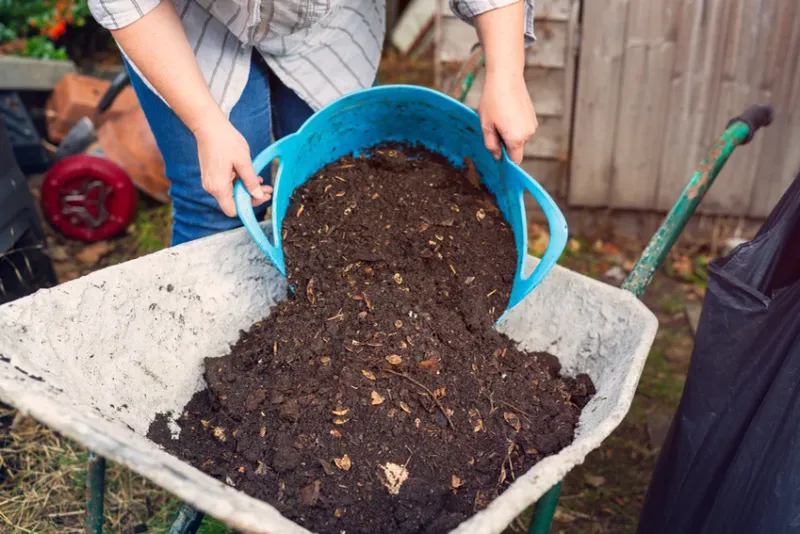
One of the most satisfying payoffs of summer compost prep is noticing how much easier fall planting holes are to dig. After months of compost sitting on and just below the surface, the top layer of a clay bed becomes noticeably more workable.
The soil clings less, breaks apart more readily, and accepts a trowel without the exhausting resistance that untreated clay puts up in October.
Still, it helps to understand what compost can and cannot do for a planting hole. If compost has only been spread on the surface, the improvement will mostly be in the top few inches.
Deeper clay layers may still be firm. Digging a hole and filling it entirely with soft compost, surrounded by hard clay walls, can actually trap water around roots.
The goal is to improve the whole bed area, not just the immediate hole.
When fall planting day arrives, mix any loosened amended soil back into the hole rather than discarding it. Backfill with the native soil and compost blend so roots have consistent material to grow into as they spread outward.
According to OSU Extension planting guidance, roots need to move beyond the planting hole into surrounding soil. That is exactly why broad bed preparation over the whole area matters more than perfecting one spot.
6. Skip Sand Before It Makes Clay Worse
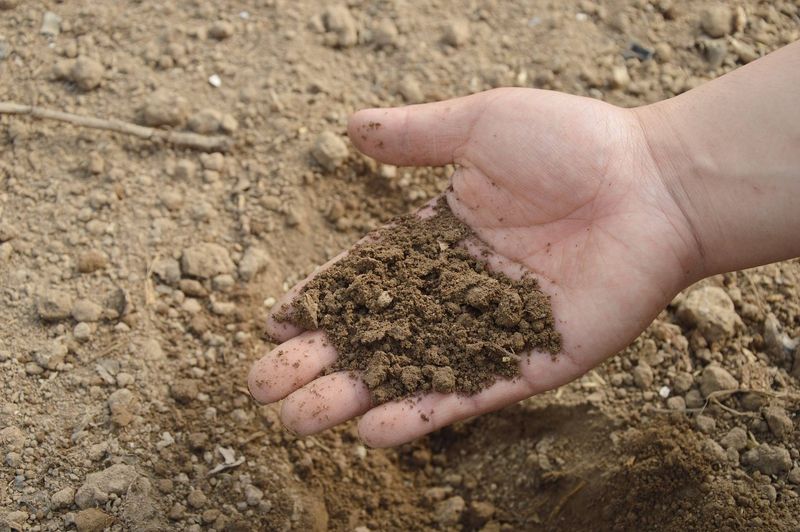
Sand seems like a logical fix for dense, heavy clay. If clay is too sticky and compact, adding something gritty should open it up, right?
Unfortunately, that logic leads many gardeners into a frustrating problem. Adding a small amount of sand to clay can actually create a denser, harder texture.
That happens when the overall soil composition is not dramatically changed, and it will not improve drainage..
Think of it this way: clay particles are extremely fine and flat. When a modest amount of sand is mixed in, those flat clay particles fill in the spaces between the sand grains.
The result can resemble a concrete-like mix rather than the loose, workable soil you were hoping for. Achieving a true sandy loam from clay would require enormous quantities of coarse sand, well beyond what most home gardeners can practically add.
Organic matter is the amendment most recommended for home clay beds. OSU Extension and USDA Natural Resources Conservation Service guidance specifically point to finished compost.
Compost works differently from sand. It feeds soil organisms, creates aggregates that open up pore space, and improves both drainage and moisture retention over time.
If you see bags of coarse sand at the garden center and feel tempted, reach for the compost instead. Your clay bed will respond far better to organic matter than to grit.
7. Cover Bare Beds So Compost Stays Put
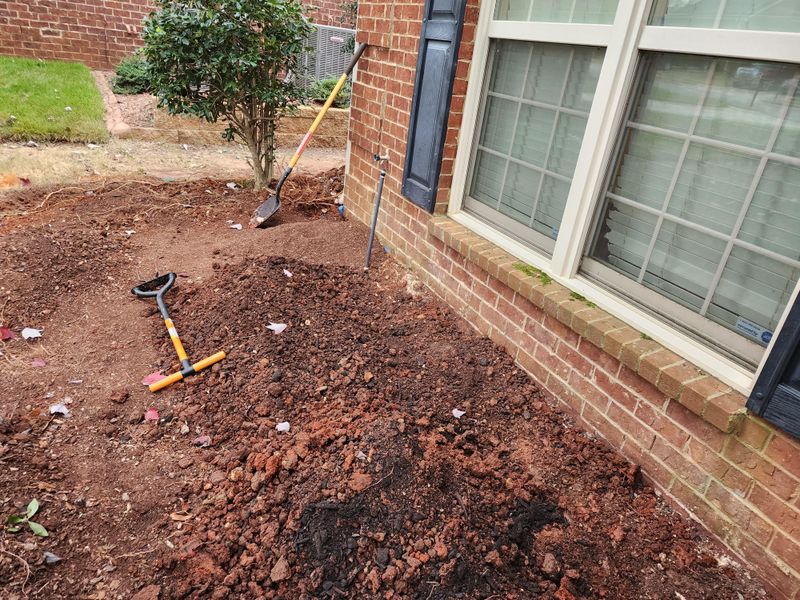
After spreading compost on a clay bed, leaving the surface completely bare is a missed opportunity. Heavy summer rains can wash surface compost away, especially on any slight slope.
Intense sun can dry and crust the material before it has a chance to settle in. A simple protective layer makes a real difference in keeping your amendment where it belongs.
A light covering of straw, shredded leaves, or wood chip mulch, about an inch or two deep, shields the compost and the soil surface from both rain impact and sun.
This matters because bare clay that loses its surface compost can crust and crack, making fall planting harder again.
Mulch also helps moderate soil temperature and keeps moisture more consistent. That supports the microbial activity doing the slow work of blending compost into the clay below.
Cover crops are another option for beds that will sit empty until fall. A quick-growing cover like buckwheat or oats can be seeded over the compost layer in midsummer and then cut down or turned in before fall planting.
Cover crops add organic matter, reduce erosion, and keep the soil surface active. Whether you choose mulch or a cover crop, the principle is the same: protect your summer prep work so it is still doing its job when autumn planting season begins.
8. Test The Soil Before Adding Anything Else
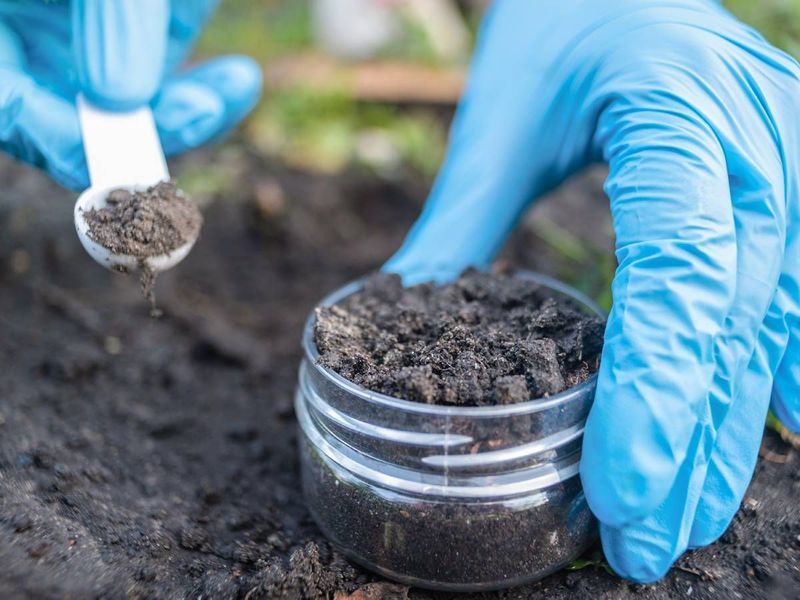
Compost is a smart, broadly safe amendment for almost any clay bed, but it should not be the end of the conversation about what your soil actually needs. Clay soil is a description of texture, not a complete diagnosis of nutrient levels or pH problems.
Before adding lime, fertilizer, sulfur, or specialty products, a soil test gives you real information rather than guesswork.
OSU Extension offers soil testing guidance and works with labs that can analyze pH, phosphorus, potassium, and other key factors. A basic test is inexpensive and can prevent the common mistake of adding nutrients that are already present in excess.
Too much phosphorus, for example, can interfere with plant uptake of other nutrients, and clay soils often hold nutrients tightly to begin with.
The approach that makes the most sense for most home gardeners is to use compost for structure improvement while letting a soil test guide specific nutrient decisions. If pH is off, the test will show it.
If potassium is low, you will know to address it. Compost alone will not fix a significant pH imbalance, but it can steadily improve the physical condition of the bed while you address chemistry separately.
Testing first means every amendment you add has a clear reason behind it, and nothing goes to waste.