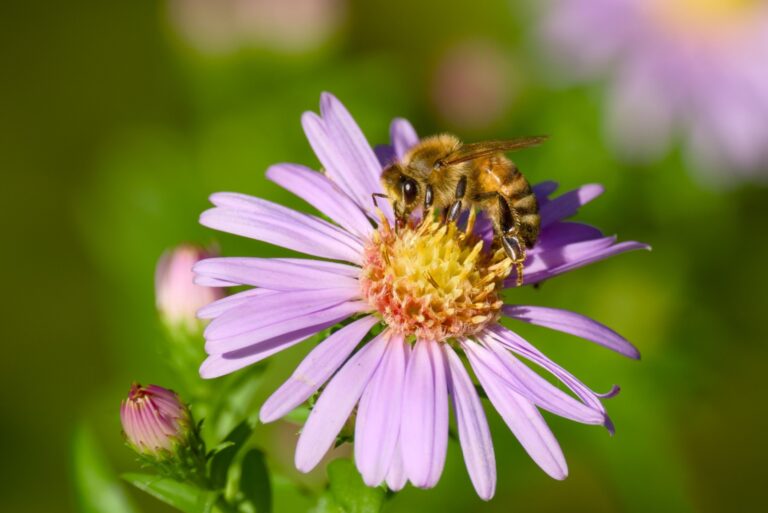
Why You Should Plant Asters In Ohio Now For Late-Season Pollinators
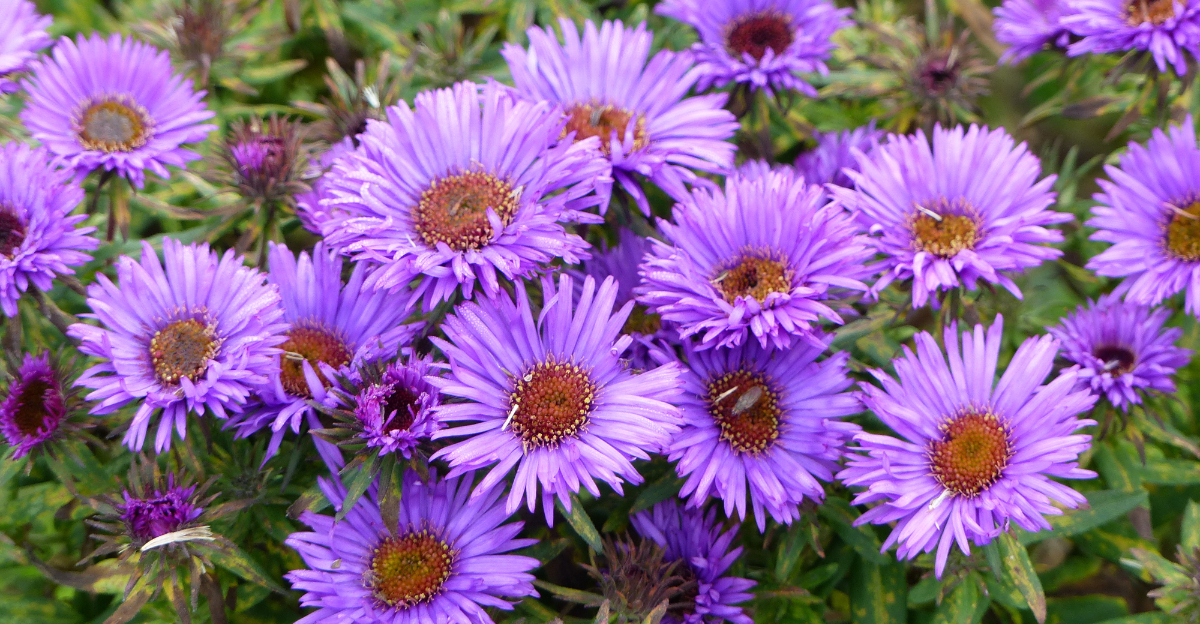
Late August can make an Ohio garden look like it is quietly closing for the season.
Coneflowers lose their petals. Bee balm fades. Summer color thins out just as bees, butterflies, and other pollinators still need reliable food.
That is where asters become especially valuable.
Native asters bloom when many earlier flowers are finished, giving late-season insects another source of nectar and pollen before cold weather slows everything down.
New England aster, Symphyotrichum novae-angliae, is especially useful because its bloom can stretch from late summer well into fall.
So why plant asters now instead of waiting until spring?
A late-summer transplant still has time to establish roots while adding immediate color and food to the garden. It can also settle in before winter and return stronger next year.
The reasons go beyond one purple flower patch.
Asters support migrating monarchs, native bees, birds, and the wider fall food web while giving Ohio borders one last burst of life before frost arrives for the year across gardens large and small alike.
1. They Bloom When Other Ohio Flowers Are Fading
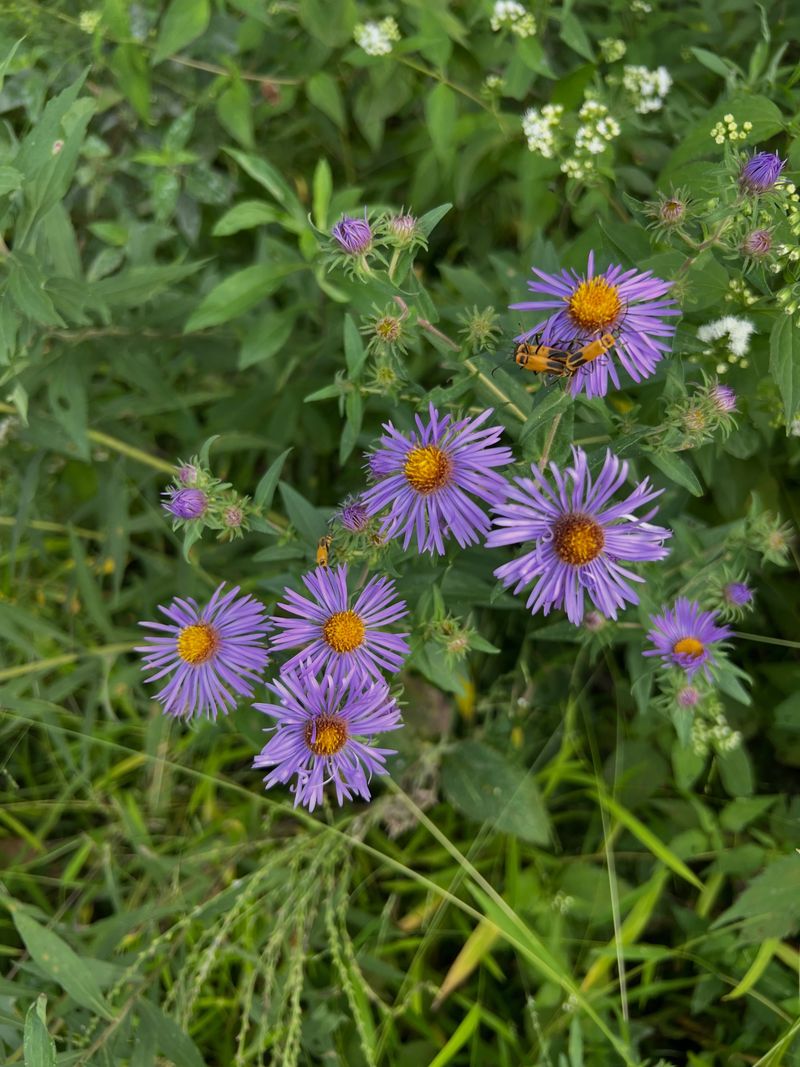
Late summer is exactly when an aster starts earning its space.
New England aster usually begins flowering as many earlier perennials are slowing down. That timing gives an Ohio garden fresh color without asking you to restart the whole border for fall.
It also gives pollinators a reason to keep visiting.
Bees, butterflies, and beneficial wasps are still active well after coneflowers and bee balm begin fading. Asters arrive during that quieter stretch with open, daisy-like flowers packed with nectar and pollen.
Planting now lets you catch part of that bloom window.
A nursery transplant with buds or a few open flowers can go straight into the garden while temperatures are still warm enough for roots to settle.
Water it thoroughly before planting, loosen crowded roots gently, and keep the crown level with the surrounding soil.
Choose a cloudy day or work later in the afternoon when heat is less intense.
A deep drink after planting helps the root ball connect with the soil around it.
The timing feels late only because summer is winding down.
For an aster, late August is closer to opening night. Get the plant settled now, and the garden gains one more strong round of color right when everything else starts packing up.
2. They Fill The Late-Summer Nectar Gap
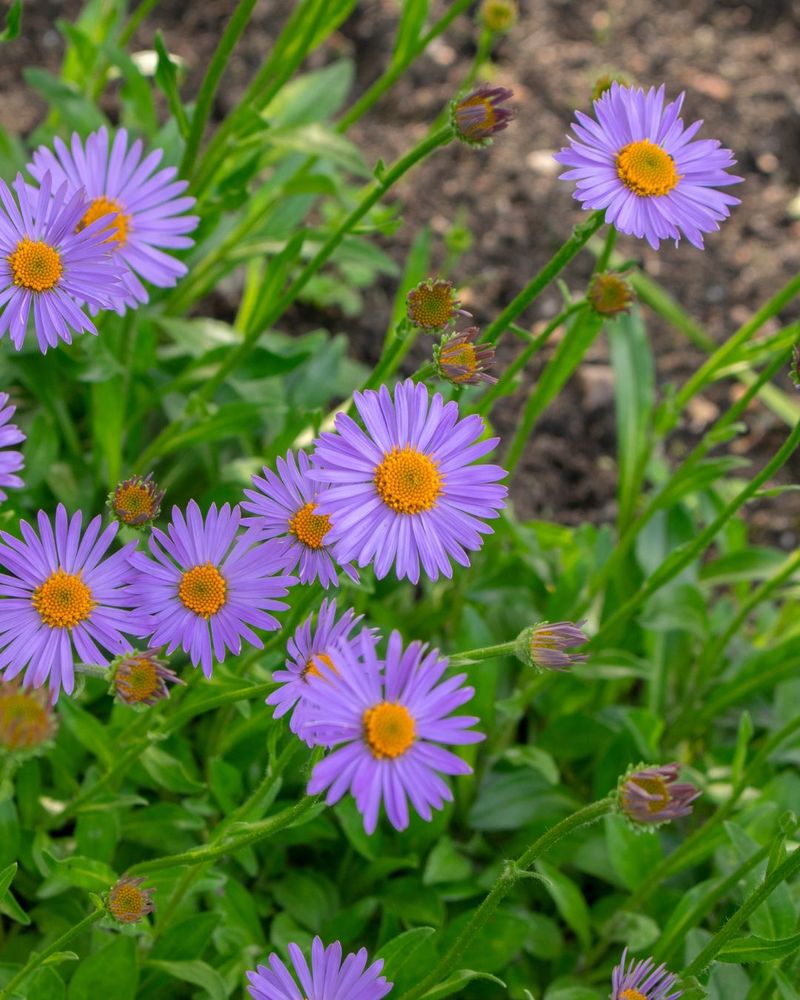
A quieter flower bed can become a serious problem for insects still searching for food.
By late summer, many Ohio favorites have already peaked. Pollinators do not follow the same schedule. Bumblebees, native bees, butterflies, and wasps can remain active into fall, and they still need dependable nectar and pollen.
Asters help bridge that gap.
Their flower centers offer pollen for bees, while nectar supports a wider mix of visitors. Several native bees are especially closely tied to aster-family plants, which makes a patch more than decorative filler.
Monarchs add another reason to plant now.
Migrating butterflies move through Ohio during late summer and fall, and blooming asters can become useful fuel stops along that route. A small cluster near a sunny fence or border can turn into a surprisingly busy feeding station.
Your Ohio Garden Changes Every Week. Your Plan Should Too.
Gardening in Ohio changes quickly throughout the season. Every Friday you’ll receive a simple weekly plan showing exactly what to plant, prune, fertilize, harvest, and protect so you never miss the right timing.
Plant three or more where space allows.
A group creates a larger target for passing pollinators and gives the planting more visual impact than one isolated stem.
Pairing asters with other late bloomers extends the menu even further.
The important part is keeping something open after the summer rush fades.
Asters do that job with excellent timing. They arrive when the buffet is getting thin, then keep the lights on for insects that are nowhere near finished with the season.
3. They Give Monarchs Valuable Fall Fuel
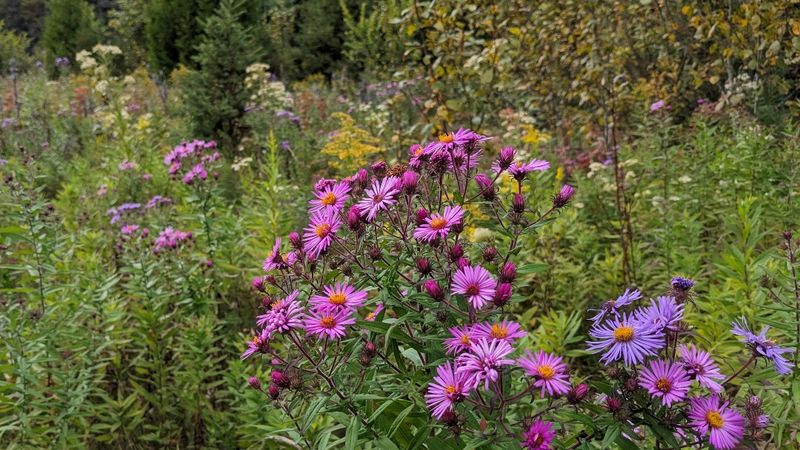
One September butterfly can explain the whole case for planting asters.
Monarchs passing through Ohio need nectar-rich flowers as they build energy for migration. Late-season gardens with very little bloom force them to keep moving in search of another food source.
Asters can make your yard one of those stops.
New England aster produces masses of flowers at a time that overlaps beautifully with fall monarch movement. The broad clusters give butterflies multiple landing spots without forcing them to search one bloom at a time.
Sun improves the display.
Give plants six or more hours of direct light for stronger stems and heavier flowering. A bright south- or west-facing bed often works well, especially where taller plants will not shade the aster later in the day.
Good light also helps control flopping.
New England aster can reach several feet tall, and shaded stems often stretch farther and lean harder. A sunny position keeps the plant sturdier while producing more flowers for passing insects.
Smaller yards still count.
One sunny border with a few asters can contribute food to a much larger network of gardens, parks, fields, and roadsides across the state.
You do not need to host every monarch in Ohio.
You only need to give a few tired travelers one more reliable place to refuel before the next leg of the trip.
4. They Still Have Time To Establish Before Winter
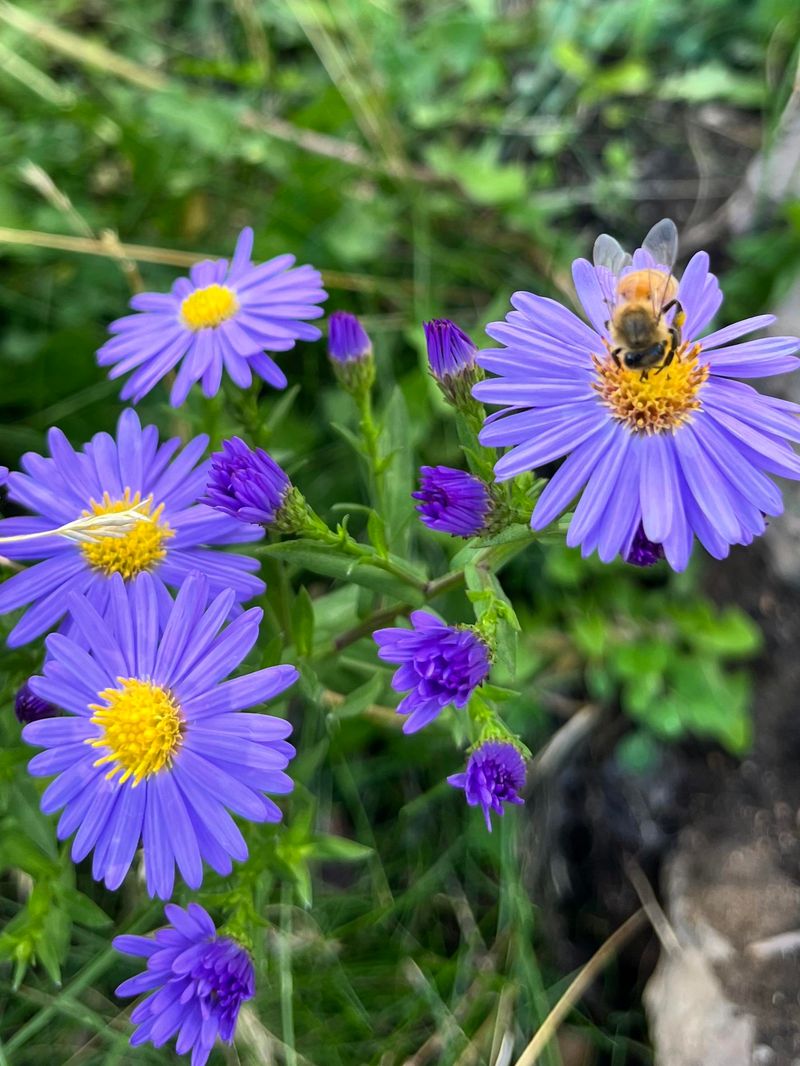
Late August looks close to winter on the calendar, but the soil tells a different story.
Warm ground can keep root growth moving for weeks after summer begins to fade. That gives a newly planted aster time to settle before colder weather becomes the main event.
The roots are the priority now.
Keep new transplants consistently moist while they establish, especially during dry stretches. Check the soil a couple of inches below the surface instead of following a rigid watering schedule.
Cool, damp soil means the plant can wait.
Dry soil at that depth calls for a slow, thorough soak that reaches the whole root ball. This approach keeps roots supplied without leaving the crown in constantly wet ground.
Mulch can make the transition easier.
Spread two to three inches of shredded leaves or wood chips around the root zone to slow evaporation and soften temperature swings. Leave a little open space around the stems so the crown stays exposed to air.
The plant may spend more energy below ground than above it.
That is exactly what you want heading into winter.
Aster planting now is not only about September flowers. You are also giving next year’s plant a head start, and roots are perfectly happy doing quiet work while the rest of the garden gets all the attention.
5. They Add Tall Color Without Needing A Huge Bed
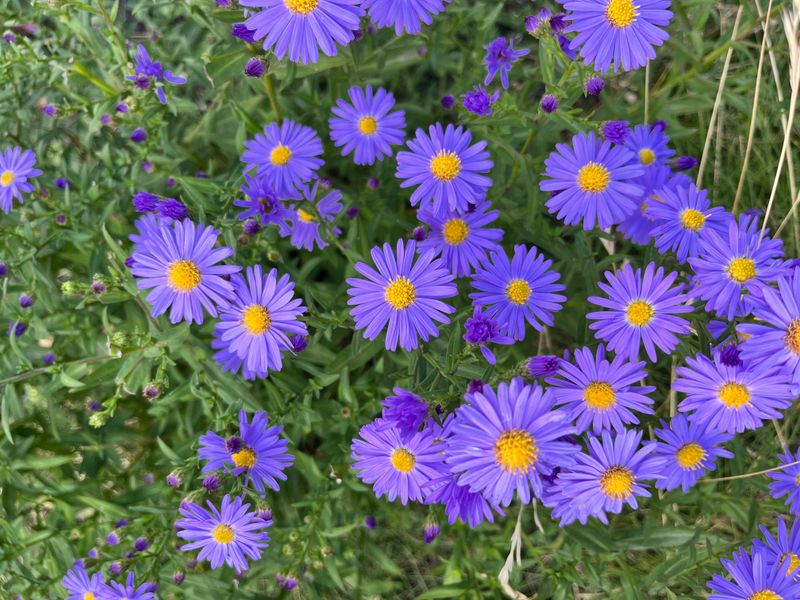
Fall color does not have to stay ankle-high.
New England aster can rise four to six feet when mature, giving Ohio borders height at a point when many summer plants are shrinking, browning, or disappearing altogether.
That vertical color changes the whole bed.
Purple, pink, and violet flowers can float above shorter perennials, making a late-season border look layered instead of tired. Asters work especially well near fences, at the back of perennial beds, or beside sturdy grasses.
Give them enough room to develop.
Spacing of roughly two to three feet helps air move between stems and keeps mature clumps from turning into one dense wall. That breathing room can also reduce the humid conditions that favor powdery mildew on lower leaves.
Strong sun helps the stems stay upright.
A late-spring pinch next year can make the plant bushier and somewhat shorter, but that job can wait. Right now, the main task is choosing a spot that can handle the mature size.
Avoid squeezing a tall selection into a narrow strip beside a walkway.
The nursery pot may look innocent today. By next September, it may have very different opinions about personal space.
Planting asters now gives the border immediate fall color and a much stronger vertical framework for seasons ahead.
6. They Pair With Goldenrod For A Bigger Pollinator Buffet
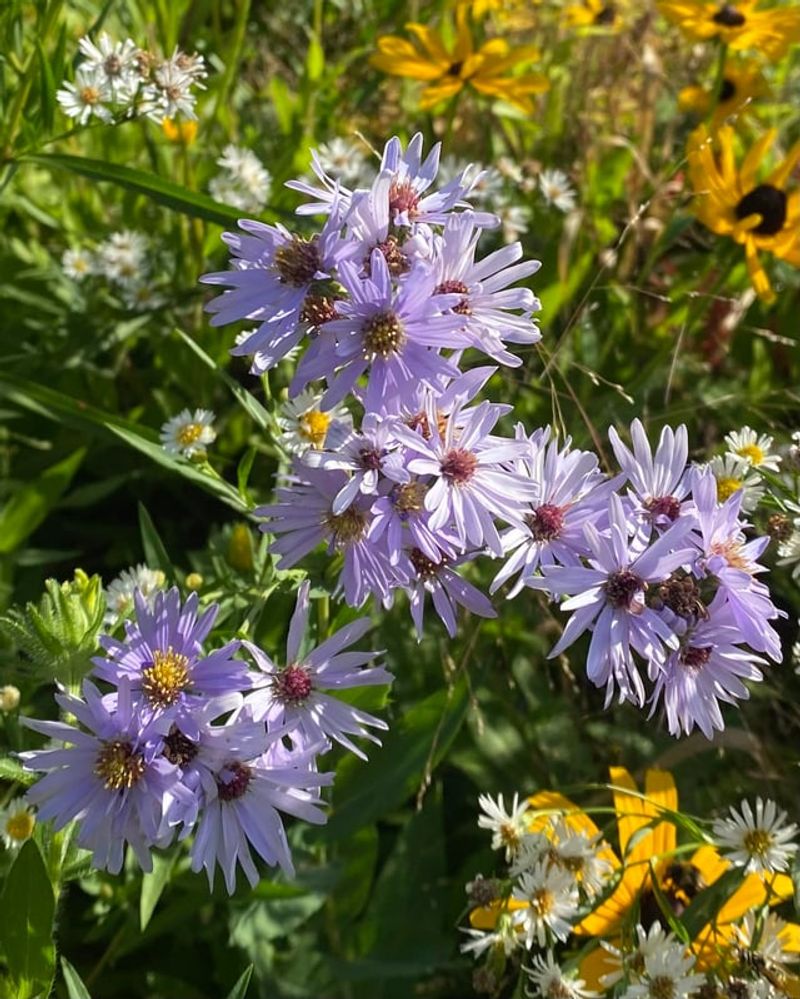
Purple and gold do more than look good together in an Ohio garden.
Asters and native goldenrods often bloom during the same late-season stretch, creating two different flower resources side by side.
That variety can support a broader mix of bees, butterflies, wasps, and other beneficial insects than one plant type alone.
Goldenrod contributes abundant pollen and nectar.
Asters add another flower shape, another nectar source, and another reason for pollinators to stay in the same part of the yard longer.
The color contrast helps the gardener too.
Golden flower plumes beside purple asters make a border look deliberate even when the planting style is loose and naturalistic.
Groups of three to five plants can create enough repetition to feel designed without turning the bed into a formal row.
Goldenrod also deserves a reputation repair.
It often gets blamed for late-summer allergies, but ragweed is the much bigger source of airborne pollen during the same period. Goldenrod depends heavily on insects to move its heavier pollen.
That leaves room for a very useful partnership.
Plant asters with goldenrod and the border gains color, texture, and a longer late-season feeding zone.
One flower patch says dinner is available.
Two overlapping native bloomers make the message harder for hungry pollinators to miss.
7. They Keep Supporting Wildlife After The Flowers Fade
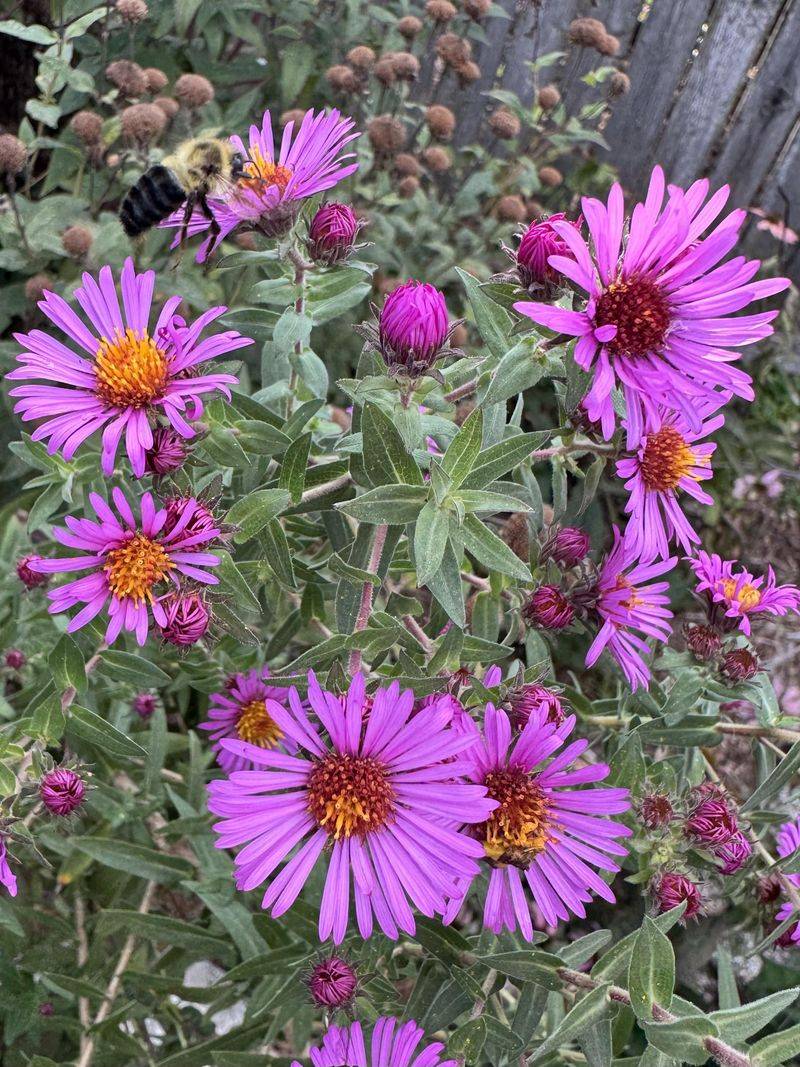
Asters do not stop being useful when the petals disappear.
Once bloom ends, dry seedheads remain above the border and can provide food for small birds through colder weather. Goldfinches and sparrows may pick through the spent flowers while the rest of the garden offers much less.
Standing stems add habitat too.
Some native insects use hollow or pithy plant stems as shelter, and leaving healthy perennial growth in place through winter keeps more of that structure available.
That makes fall cleanup easier.
There is no need to cut every aster to the ground the moment frost arrives. Leave healthy stems standing and let the garden keep some texture through snow, frost, and low winter light.
Disease changes the decision.
Plants with serious powdery mildew or other obvious problems may benefit from removal of affected material rather than leaving it in the bed. Healthy stems can stay until late winter or early spring.
Cut them back before fresh shoots rise far from the crown.
The delayed cleanup gives wildlife more time to use the old growth and saves you one chore during an already busy fall.
Asters spend September feeding pollinators, then quietly hand the garden over to birds and overwintering insects.
That is impressive value from a plant most people buy because the purple flowers looked good beside a pumpkin display.
8. They Turn A Small Yard Into A Late-Season Refuge
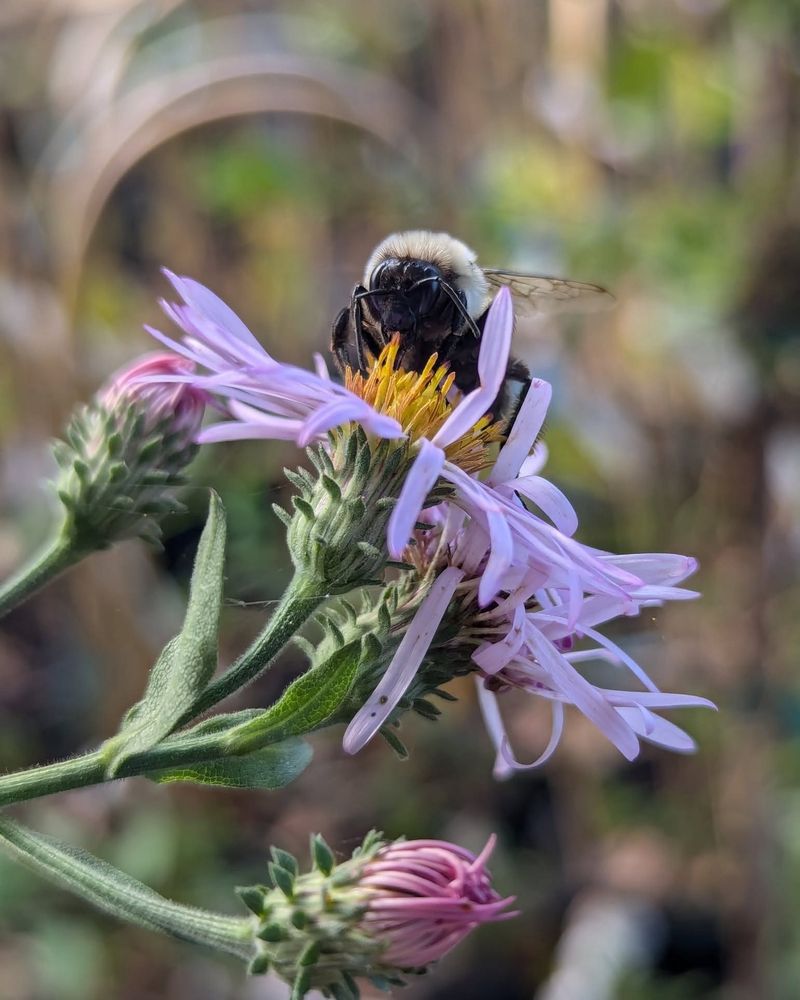
A pollinator garden does not need acreage to matter.
Three asters beside a fence can still become a busy feeding spot once September arrives. Bees do not measure property lines, and migrating butterflies care much more about available flowers than the size of the lawn around them.
That makes asters especially useful for suburban Ohio yards.
A narrow sunny border, mailbox bed, side garden, or edge of a vegetable plot can all hold a small cluster. Give the plants enough light and mature spacing, then let the flowers become part of the wider neighborhood food network.
Watch the patch on a warm fall afternoon.
Bumblebees may work one cluster while smaller bees move through another. Butterflies can arrive, feed, and leave within minutes. The activity often continues until cooler weather finally shuts the season down.
That is why planting now matters.
Every week of fall bloom adds another opportunity for an insect to find food before winter or migration changes its routine.
Keep the first season simple.
Water the new plants while roots establish, avoid crowding them, and leave healthy seedheads after bloom.
The payoff is much larger than the planting hole.
A few asters can turn an ordinary corner into one of the last open restaurants in the neighborhood, and late-season pollinators tend to notice when the sign is still glowing.