What It Means When Soldier Beetles Gather On North Carolina Flowers In Late Summer
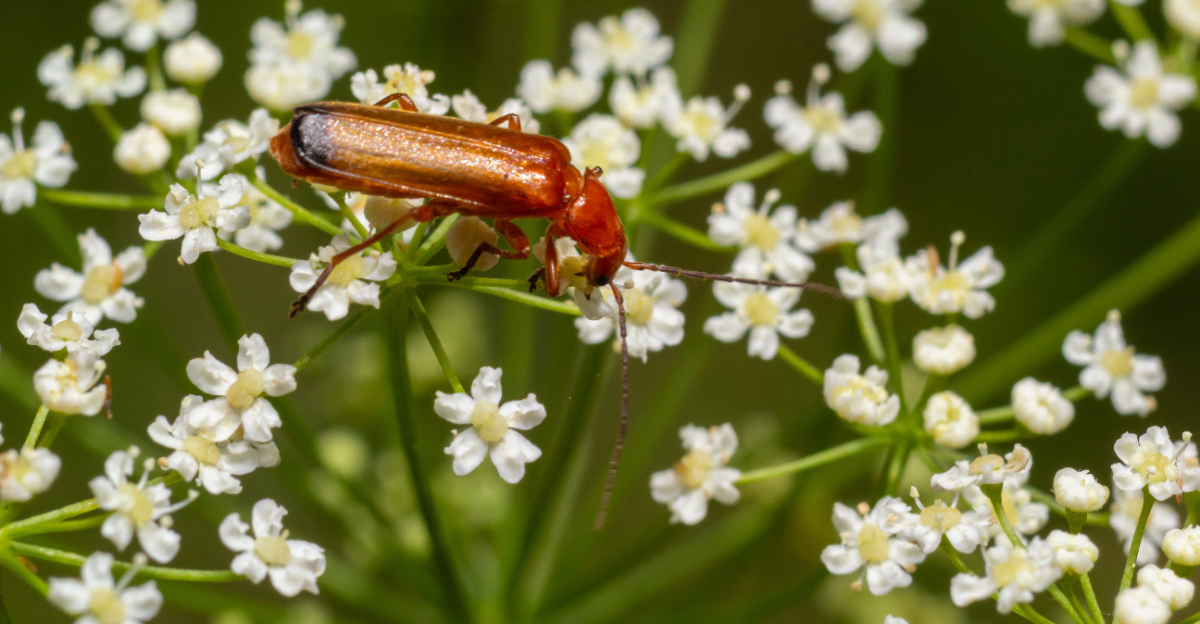
Soldier beetles clustering on flowers in late summer is actually a welcome sign for North Carolina gardeners dealing with common pest problems.
These harmless insects feed on nectar and pollen while adults are active, making them valuable pollinators during their short late summer appearance.
Their larvae spend time in soil, feeding on the eggs and larvae of other insects that might otherwise damage garden plants.
Goldenrod and other late blooming flowers tend to attract the largest gatherings, since these plants provide abundant nectar during this specific window.
Their presence signals a healthy garden ecosystem with plenty of food sources supporting beneficial insects. Avoiding pesticide use during their active period helps protect these helpful visitors from unnecessary harm.
Soldier beetles typically disappear on their own as summer transitions into fall. Seeing large gatherings is a good sign your garden is supporting pollinators exactly as intended.
1. Late Summer Is Peak Soldier Beetle Season
August rolls around and suddenly your flowers are covered with bright, elongated beetles you have never noticed before. Before you worry, know that this is completely normal.
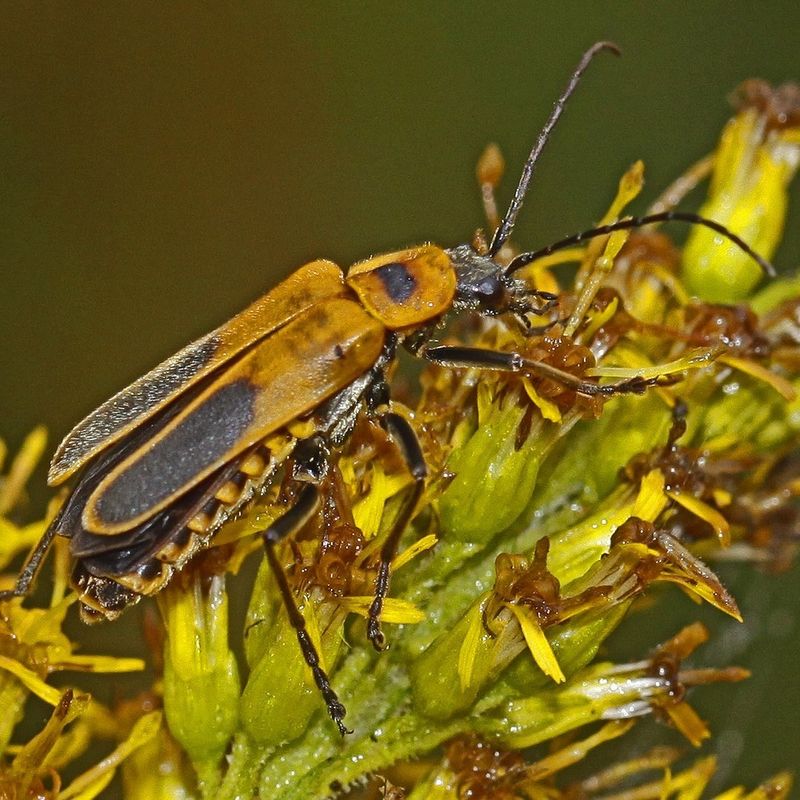
You are most likely looking at the Goldenrod Soldier Beetle, scientifically known as Chauliognathus pensylvanicus, one of the most recognizable late summer insects in North Carolina.
Adult Soldier Beetles become especially active and visible from late July through September. Their population does not suddenly spike because something went wrong in your garden.
Adults simply complete their development around this time every year, and they emerge right when late summer flowers are at their peak. The timing is no accident.
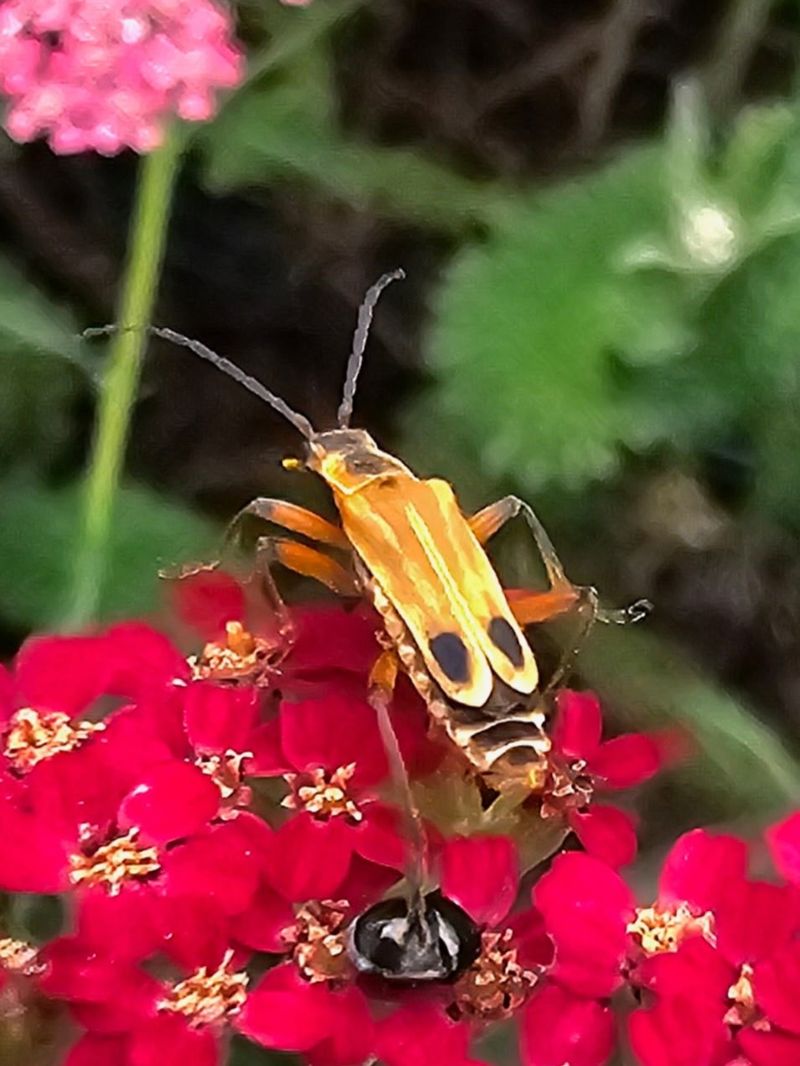
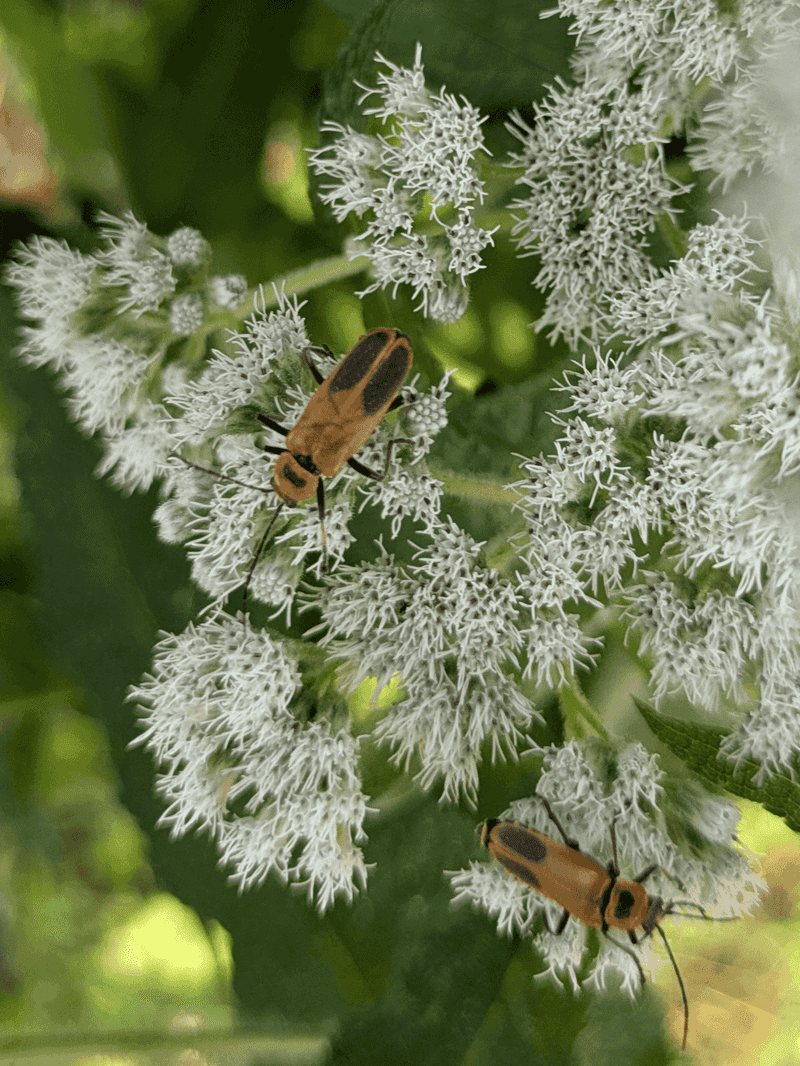
Spotting them is pretty easy once you know what to look for. Their bodies are elongated and slender compared to many other beetles, and their wing covers are soft rather than hard and shiny.
The coloring is typically yellow or orange with bold dark markings on the back, giving them a distinctive appearance that stands out against flower petals.
Some gardeners mistake them for fireflies because of their similar body shape, but Soldier Beetles are active during daylight hours.
Knowing what they look like matters because it helps you tell them apart from beetles that actually chew up foliage and cause visible plant damage.
Soldier Beetles rest on flower heads, not on leaves, and you will not find ragged holes in your plants where they have been feeding.
Seeing a cluster of them in late summer is simply a seasonal event, not a warning sign. Your garden is right on schedule, and so are they.
2. Your Flowers Are Providing An Important Food Source
Flowers are basically a free buffet for Soldier Beetles, and late summer is when that buffet is fully stocked.
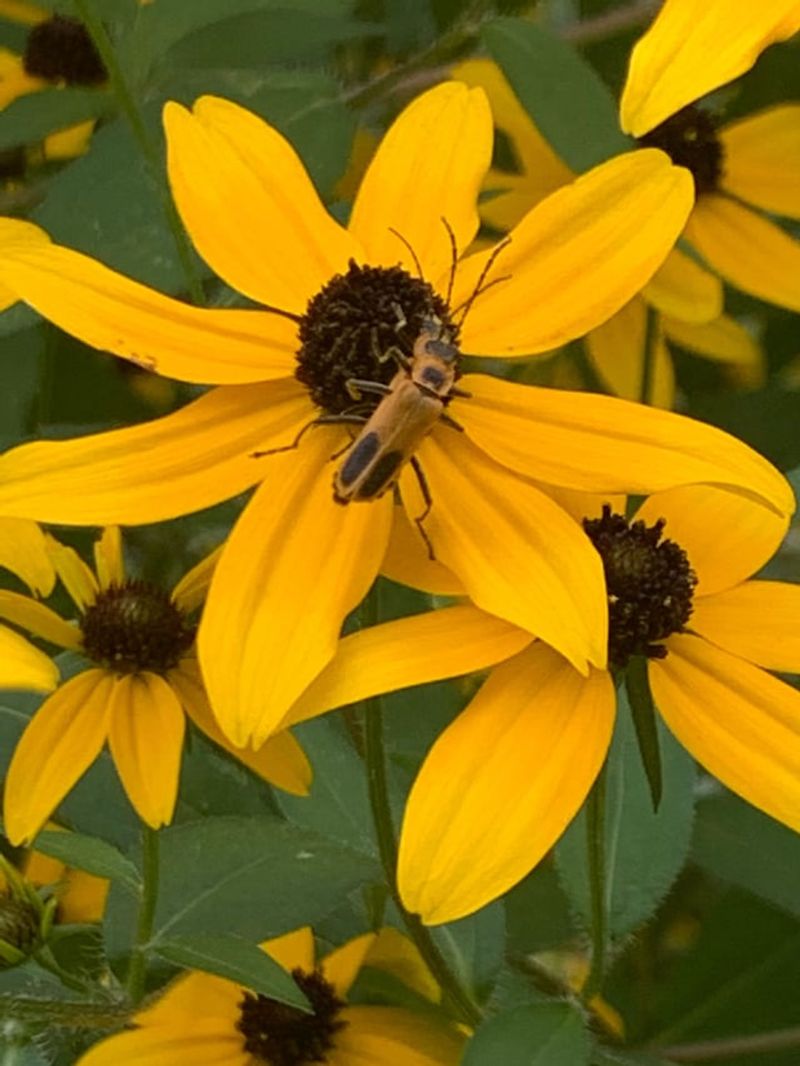
Adult Soldier Beetles feed on pollen and nectar, which makes open-faced blooms the most attractive spots in any garden during August and September. When food is plentiful and accessible, beetles naturally gather in the same place.
Goldenrod is one of the most popular gathering spots, and NC State identifies it as a common host plant for Goldenrod Soldier Beetles.
Your North Carolina Garden Changes Every Week. Your Plan Should Too.
Gardening in North Carolina changes quickly throughout the season. Every Friday you’ll receive a simple weekly plan showing exactly what to plant, prune, fertilize, harvest, and protect so you never miss the right timing.
The bright yellow flower clusters produce abundant pollen, making them hard for these insects to resist. If you grow Goldenrod in your yard or live near a meadow where it grows wild, you can almost count on seeing these beetles every year.
Beyond Goldenrod, gardeners often notice Soldier Beetles on Asters, Sunflowers, and other flowers with open, accessible centers. Plants with complex, tube-shaped blossoms are less popular because the pollen is harder to reach.
The beetles prefer flowers where they can simply crawl across the surface and collect what they need without difficulty. Flat or shallow blooms work best for them.
Seeing beetles on your flowers does not mean they are chewing through petals or damaging the plant in any way. They are feeding on pollen and nectar, which the plant produces specifically to attract visitors.
Your flowers are doing exactly what flowers are supposed to do, which is drawing in insects that can benefit the garden.
A cluster of Soldier Beetles on your blooms is really just proof that your plants are healthy, attractive, and full of good resources this season.
3. A Crowd Of Beetles Can Actually Help Pollination
Most people picture bees and butterflies when they think about pollinators, but beetles have been moving pollen between flowers for millions of years.
Soldier Beetles earn a spot on that list too, and their contribution during late summer is more significant than many gardeners realize.
NC State even identifies Soldier Beetles as important pollinators for certain Goldenrod species, which is a meaningful endorsement from researchers who study these insects closely.
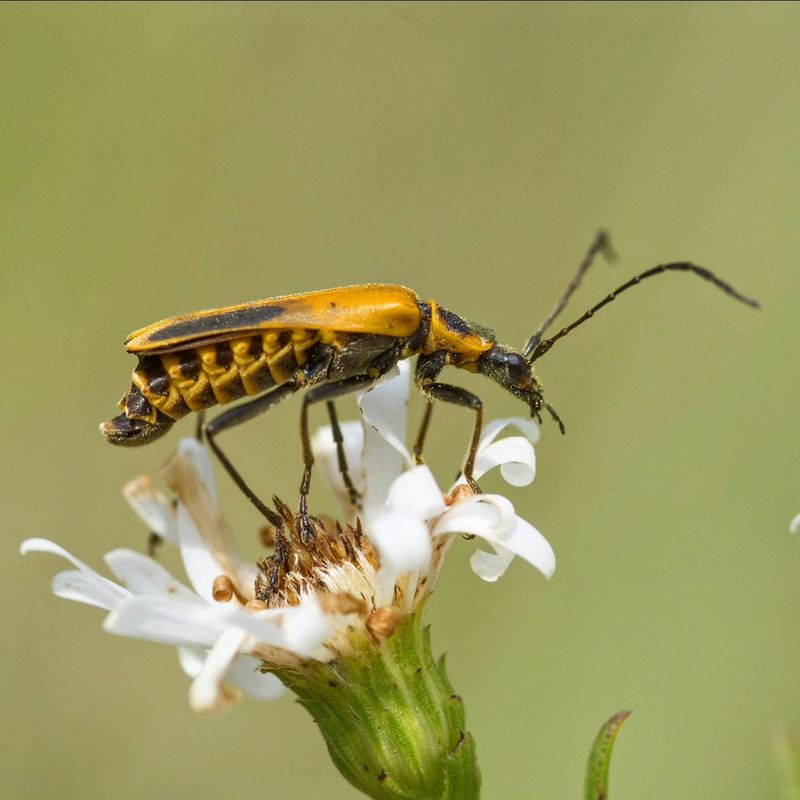
The way pollination works with beetles is straightforward. As a Soldier Beetle crawls across a flower head to feed on pollen and nectar, tiny grains of pollen stick to its body.
When it flies to the next flower and crawls across that bloom, some of those grains rub off onto the new flower’s reproductive structures.
The beetle is not trying to pollinate anything on purpose, but the transfer happens naturally as a result of its movement and feeding behavior.
A cluster of beetles visiting the same patch of flowers repeatedly throughout the day can move a surprising amount of pollen.
Because they are active during warm late summer afternoons when some bees slow down, Soldier Beetles can fill a useful role at a time when other pollinators are less active.
They are not replacing bees, but they are adding to the overall pollination effort happening in your garden.
Watching a group of Soldier Beetles work their way across a patch of Goldenrod or Asters is actually a good sign. It means your garden is offering real value to the local insect community, and those flowers are getting visited regularly.
That kind of activity supports seed production and keeps the garden cycle moving forward into fall.
4. They May Be Hunting Aphids While They Are There
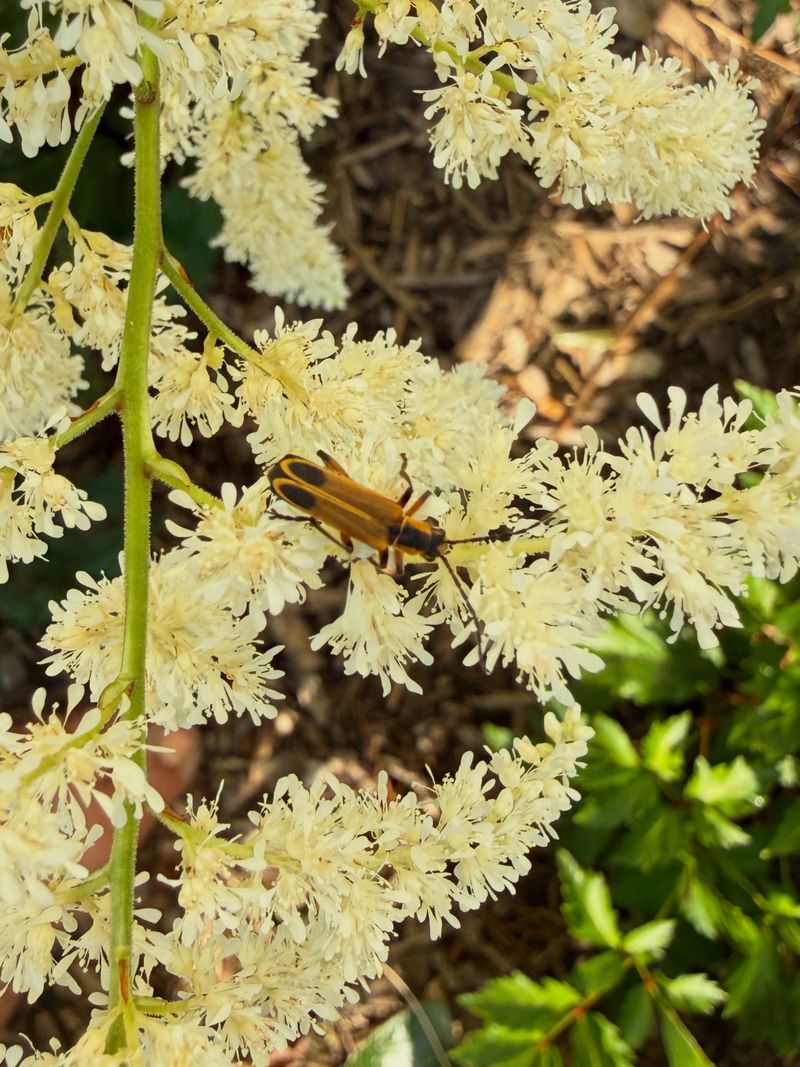
Pollen and nectar are not the only things on a Soldier Beetle’s menu. NC State identifies adult Soldier Beetles as predators of aphids and other soft-bodied insects, which adds a whole new layer of value to having them around.
When a beetle lands on your flowers, it might be snacking on pollen one moment and hunting tiny pest insects the next.
Flowers and tender new growth attract aphids because those parts of a plant are soft, full of sap, and easy to feed on. That same combination of features also draws in Soldier Beetles looking for both plant-based food and insect prey.
The result is that beneficial predators and pest insects end up in the same part of the garden at the same time, which works out well for gardeners who prefer natural solutions over spraying.
Around flowering vegetables, ornamentals, and native plants, this predatory behavior makes Soldier Beetles especially welcome.
Aphid populations can build up fast during warm weather, and having natural predators patrolling the area helps slow that process down.
A few Soldier Beetles working through a planting bed can make a noticeable difference over the course of several days.
Expecting them to wipe out a serious, established aphid infestation on their own would not be realistic, so keep that in mind.
They work best as part of a balanced garden ecosystem where multiple beneficial insects are present and conditions support natural pest control.
Still, knowing that the beetles gathering on your flowers may be actively reducing aphid numbers nearby is a pretty satisfying thing to discover about these little visitors.
5. Some Of The Gathering Is About Mating
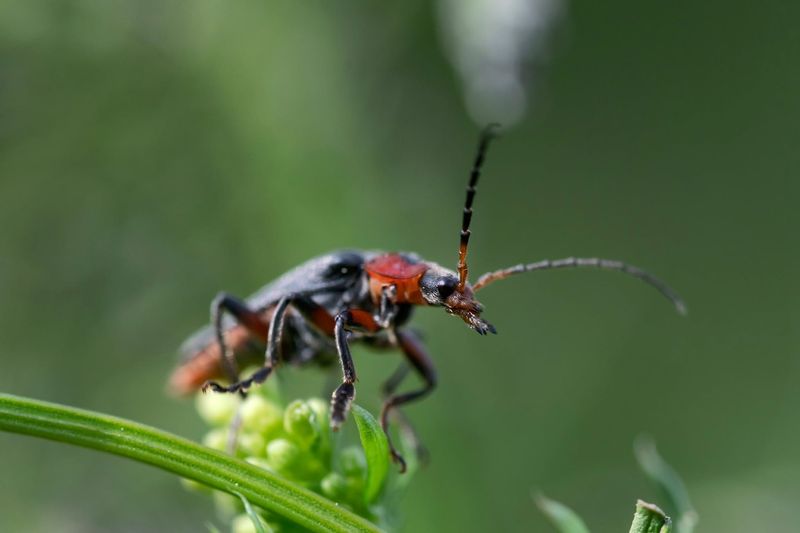
If you look closely at a cluster of Soldier Beetles on your flowers, chances are good you will notice some of them paired up together. This is not unusual at all.
Flowers serve as convenient meeting spots during the adult breeding period, and late summer is exactly when that activity peaks for this species. The beetles are not gathering because something is wrong with your plant.
Adult Soldier Beetles spend their days moving between flowers to feed, and those same flowers become natural places to encounter potential mates.
Because many beetles are drawn to the same blooms at the same time, the odds of finding a partner increase significantly.
The flower essentially acts as a social hub for the species during this short but important window of adult activity each year.
After mating, females move away from the flowers and place their eggs in or near the soil. The eggs develop through the fall and winter, and the larvae that hatch from them spend their time underground or in leaf litter rather than on plants.
This means the next generation is already getting started while the adults are still visible on your late summer blooms. The cycle is well-timed and efficient.
Seeing multiple beetles gathered on a single flower head, including pairs joined together, is simply a snapshot of normal seasonal behavior for this species. Nothing about their presence on your flowers suggests they are harming the plant.
Watching them go about their business is genuinely interesting once you understand what is actually happening. Your garden became the backdrop for a natural event that repeats itself every single year across North Carolina.
6. Their Young Are Beneficial Predators Around The Garden
The good news about Soldier Beetles does not stop with the adults.
NC State reports that Soldier Beetle larvae feed on insect eggs and the larvae of beetles, moths, and other insects, making the younger generation just as useful to the garden as the adults flying around on your flowers.
The benefits of welcoming these insects extend well beyond what you can see on the surface.
Larvae do not spend their time on plants or visible surfaces the way adults do. They live close to the soil, tucking themselves into leaf litter, plant debris, and other protected spaces where they hunt for prey.
Because they stay hidden, most gardeners never actually see them, which can make it easy to forget they are there doing useful work throughout the fall and into the following spring.
Keeping some natural garden habitat available supports this hidden population. Leaf litter left in garden beds over winter, areas with plant debris, and soil that has not been heavily treated all provide good conditions for larvae to survive and develop.
Gardeners who clear out every bit of organic material and spray broadly for insects may accidentally remove the very creatures that help keep pest populations in check season after season.
Avoiding unnecessary broad-spectrum insect treatments around your garden beds is one of the simplest things you can do to protect this natural cycle.
The larvae are not harming your plants in any way, and their presence in the soil is genuinely working in your favor.
Healthy garden soil with some natural cover tends to support a richer community of beneficial insects, and Soldier Beetle larvae are a quiet but valuable part of that community.
7. A Large Gathering Usually Does Not Need Treatment
Dozens of beetles appearing on your flowers at once can feel like something you need to fix right away. The good news is that in nearly every case, Soldier Beetles gathered on late summer flowers in North Carolina are best left completely alone.
They are not damaging your plants, and intervening can actually cause more harm than good.
Reaching for an insecticide spray when you see a large group of beetles on flowering plants puts more than just the beetles at risk.
Bees, butterflies, and other beneficial flower visitors can be seriously affected by the same products used to target unwanted insects.
Spraying a flowering plant during the height of pollinator season can disrupt the very activity that makes your garden productive and healthy. The cure would genuinely be worse than the non-problem you started with.
Before taking any action, take a moment to observe the insects carefully. Confirm that what you are seeing are Soldier Beetles by looking for their elongated shape, soft wing covers, and yellow or orange coloring with dark markings.
Check whether your plants are showing any actual signs of feeding damage like chewed leaves or wilting stems. Most of the time, the plants look completely fine because the beetles are not harming them.
The gathering will naturally slow down on its own as the flowering season shifts and adult activity winds down through September and into October. Patience pays off here.
Allowing the beetles to complete their natural cycle means your garden benefits from pollination services and natural pest control without any effort on your part. Some of the best things that happen in a garden happen when gardeners simply step back and watch.