North Carolina Zinnia Beds Stay Weed-Free When This Low-Growing Perennial Herb Goes In Around Them

What if the secret to a weed-free zinnia bed was already growing in someone’s herb garden just down the road?
North Carolina gardeners are discovering that one low-growing perennial herb can do something mulch and hand-pulling never quite manage on their own.
It creeps along the soil, forms a tight mat of tiny leaves, and practically dares weeds to try pushing through.
The herb is creeping thyme, and once you see how well it pairs with bright zinnia beds, you will wonder why you ever left that soil bare.
It thrives in the same sunny, well-drained spots that zinnias love, making it a natural fit for the hot, humid summers across the Piedmont and coastal plain.
Gardeners from Asheville to Wilmington are tucking it along bed edges and watching fewer weeds pop up each season.
Some are also discovering a bonus nobody mentioned at the nursery: when both plants are in bloom at the same time, the combination stops people on the sidewalk.
Here is what you need to know to make it work in your North Carolina garden.
1. Start With Creeping Thyme
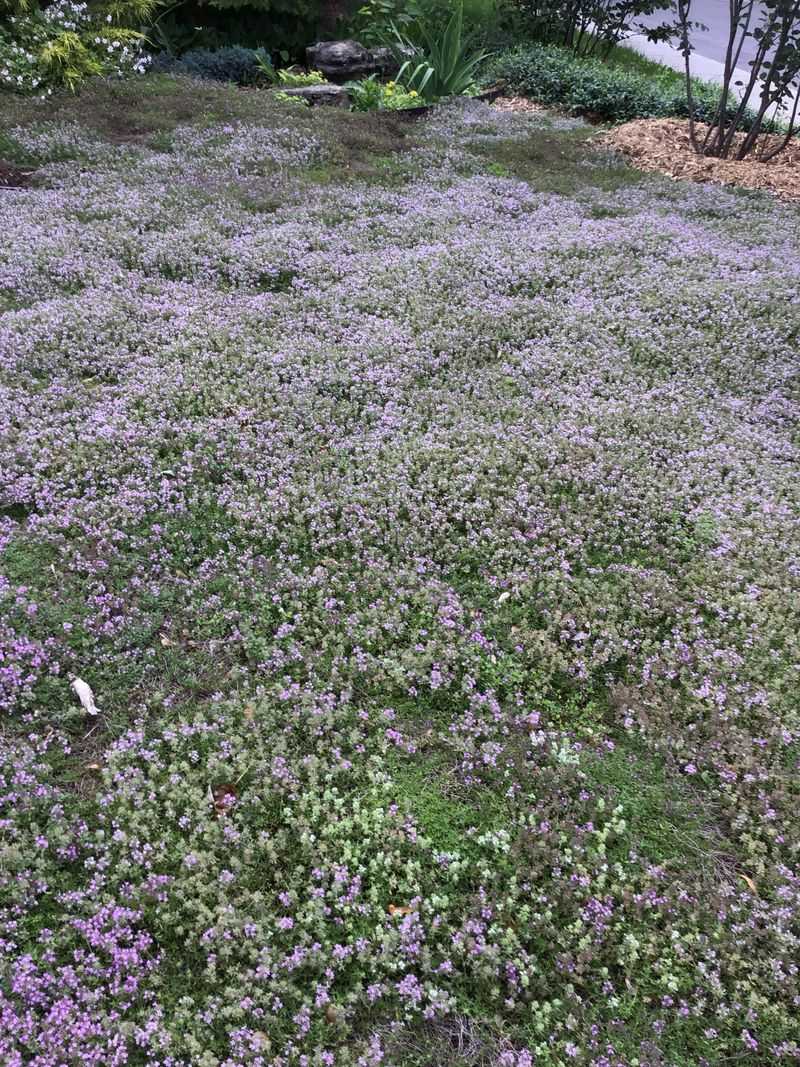
Before anything else goes into the ground around your zinnia bed, creeping thyme deserves the first spot on your planting list.
This low-growing perennial herb stays close to the soil, rarely topping three inches in height. That short stature is exactly what makes it so valuable along the edges of a flower bed.
Creeping thyme belongs to the Thymus genus and is a true perennial in USDA zones 4 through 9, which covers nearly all of North Carolina.
Unlike annual groundcovers that need replanting every year, creeping thyme comes back reliably each spring. Once established, it spreads steadily and fills in bare soil without much fuss.
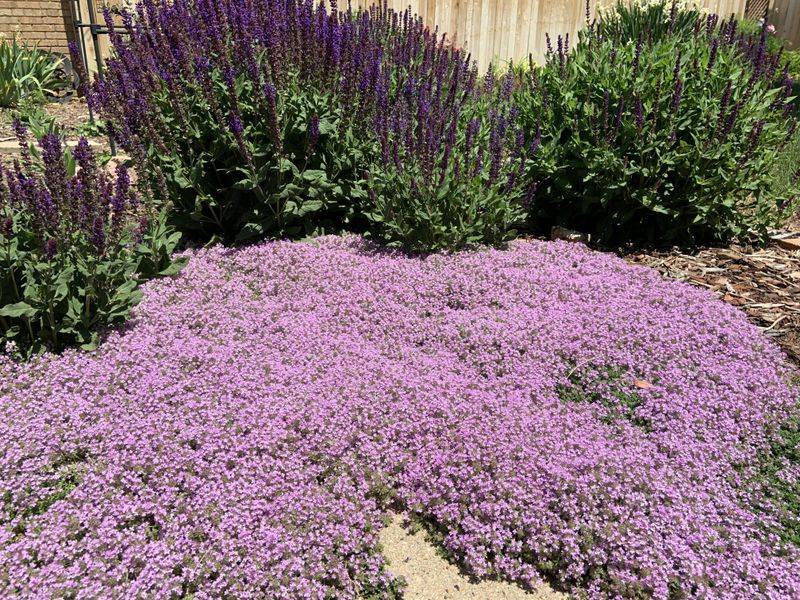
The plant produces tiny oval leaves packed tightly along woody stems.
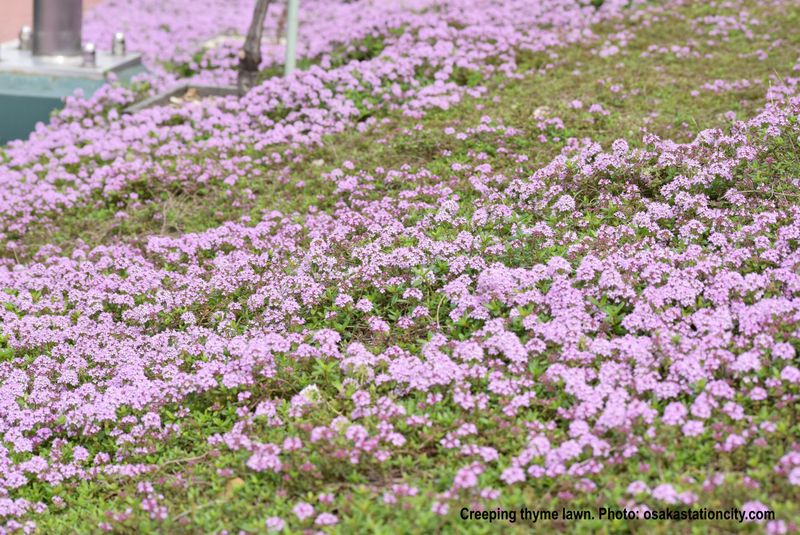
Those stems branch and spread outward, forming a dense mat that can reach 18 to 24 inches wide over a few seasons. The coverage is what helps crowd out weed seedlings before they get a foothold.
Creeping thyme also blooms in late spring and early summer, producing small pink or lavender flowers that attract pollinators.
Bees love it, and that extra pollinator activity can benefit nearby zinnia blooms too. The fragrance is a bonus.
Brush against the mat while weeding and you get a pleasant herbal scent that makes the whole chore considerably more enjoyable.
2. Place It Along Sunny Zinnia Edges

Sunny bed edges are prime real estate in any garden, and creeping thyme is one of the best plants you can put there.
It thrives in full sun, needing at least six hours of direct light each day. That requirement lines up perfectly with zinnias, which also demand full sun to bloom well.
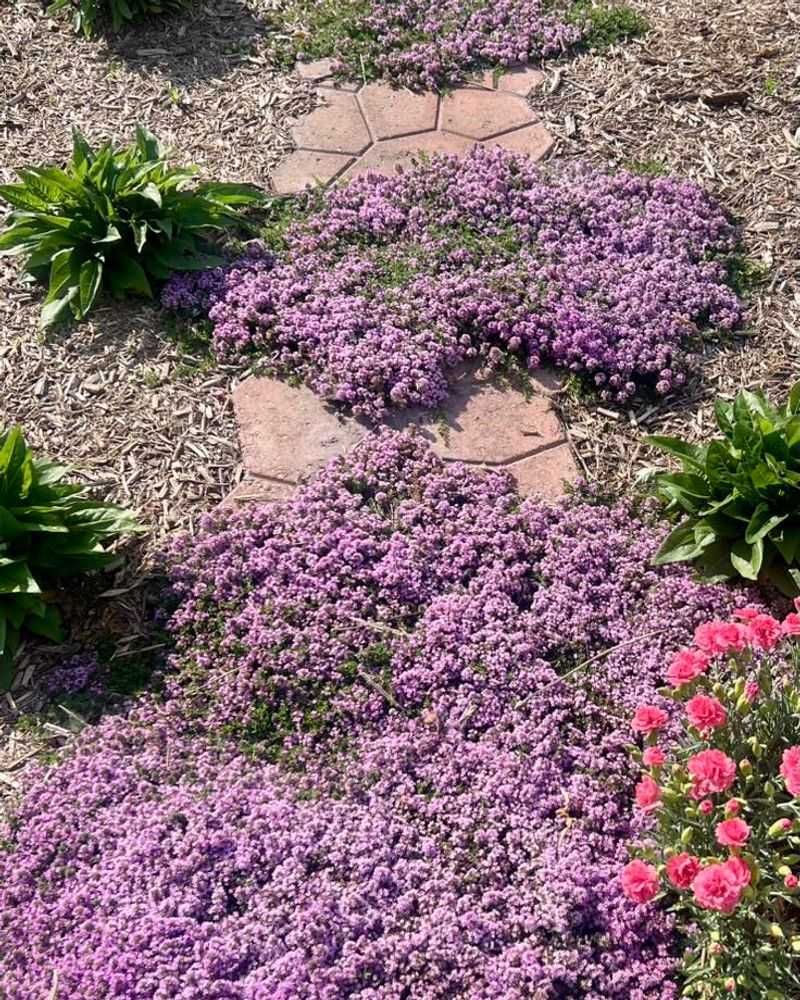
Along a path or driveway border, creeping thyme softens hard edges while filling the gap between pavement and flower bed.
It tolerates light foot traffic better than most groundcovers, so it holds up even when you step near the edge while tending your zinnias. That toughness makes it practical for real garden situations, not just picture-perfect ones.
Your North Carolina Garden Changes Every Week. Your Plan Should Too.
Gardening in North Carolina changes quickly throughout the season. Every Friday you’ll receive a simple weekly plan showing exactly what to plant, prune, fertilize, harvest, and protect so you never miss the right timing.
Planting along sunny edges also keeps creeping thyme out of shadier spots where it tends to grow thin and patchy.
Shade reduces its density, which means fewer weeds get blocked. Keeping it in bright spots helps the mat stay tight and effective all season long across North Carolina’s varied growing conditions.
Space plants about 12 inches apart along the bed edge.
Within one growing season, most plants spread enough to connect and form a continuous border. You get a neat, living edge that looks intentional and polished without requiring much upkeep.
3. Give It Fast-Draining Soil
Soggy roots are the one thing creeping thyme cannot handle.
While it tolerates drought and heat surprisingly well, it struggles in waterlogged soil. Roots sitting in wet ground for too long can deteriorate, and the mat thins out fast when that happens.
North Carolina soils vary widely.
The heavy clay common in the Piedmont region holds moisture longer than most plants prefer. If your zinnia bed sits in clay, working in coarse sand, perlite, or aged compost before planting can improve drainage significantly.
Raised beds are another smart option since they naturally drain faster than in-ground plots.
Zinnias share this preference for fast-draining soil.
Both plants struggle with wet feet, so matching their drainage needs makes the pairing even more logical. When you improve the soil for one, you improve it for both at the same time.
A layer of fine gravel or decomposed granite around the base of creeping thyme can also help.
It keeps moisture from pooling at the crown of the plant after heavy North Carolina rain. Avoid planting in low spots where water collects after storms.
Even one or two episodes of standing water during the growing season can stress the plant enough to slow its spread significantly.
4. Use Dense Growth To Shade Weed Seeds
Most weed seeds need light to sprout.
When soil stays open and exposed, sunlight reaches the surface and gives those seeds exactly the signal they need to germinate.
Covering that bare soil with something dense is one of the most effective ways to slow weed growth without chemicals. Creeping thyme works on this principle naturally.
Its tight, low mat shades the soil beneath it, limiting the light that weed seeds need to wake up.
This does not mean zero weeds ever appear, but regular North Carolina gardeners report noticeably fewer weeds in areas where creeping thyme has filled in completely.
The mat also physically blocks small seedlings from pushing through easily.
Young weeds that do manage to sprout often struggle to compete once creeping thyme has established a thick layer of stems and foliage. The competition for space and resources tips in the thyme’s favor.
Unlike traditional mulch, creeping thyme does not wash away in heavy rain, decompose into bare patches, or need annual topping off.
It renews itself each spring and actually expands its coverage over time. For this strategy to work well, the thyme needs to be dense enough to matter.
Planting at proper spacing and giving the herb a full growing season to fill in before expecting serious weed suppression sets realistic expectations.
5. Keep It Away From Zinnia Crowns

Creeping thyme is a helpful neighbor, but even good neighbors need boundaries.
Letting the thyme mat grow right up against zinnia stems can trap moisture at the base and reduce airflow around the crowns.
That kind of environment invites powdery mildew, a fungal issue that zinnias are already prone to in North Carolina’s humid summers.
Maintaining a gap of at least four to six inches between the edge of the thyme mat and the base of each zinnia plant gives the flowers the breathing room they need.
Air moving freely around the crown helps foliage dry faster after rain or irrigation, which lowers the risk of fungal problems throughout the season.
This spacing also prevents the thyme from competing directly with zinnia roots for water and nutrients in the immediate root zone.
While creeping thyme is not an aggressive feeder, keeping it slightly removed avoids any unnecessary competition right where the zinnia needs resources most.
Marking the spacing at planting time is easier than trying to pull back an established mat later.
A simple ring of mulch or a few small stones around each zinnia transplant can act as a visual reminder and physical barrier while the thyme fills in around them.
Good boundaries make for a genuinely productive garden partnership.
6. Water Young Plants Until They Spread
Fresh transplants need consistent moisture to get their roots settled into new soil.
Creeping thyme is drought-tolerant once it matures, but that toughness takes a full growing season to develop. Skipping regular watering in the first few weeks can set young plants back significantly.
Right after planting, water the thyme every two to three days if rain does not do the job.
The goal is to keep the soil lightly moist but never waterlogged. Check the top inch of soil before watering again, and hold off if it still feels damp from the last session.
As the plants root in and start spreading, you can gradually reduce watering frequency.
By midsummer of the first year, most established creeping thyme in North Carolina can get by on natural rainfall alone during normal precipitation years. During dry stretches, a deep watering once a week is usually enough.
Drip irrigation or soaker hoses work well in beds that include both zinnias and creeping thyme.
Water goes directly to the root zone, leaves stay dry, and you use less water overall. Once the thyme mat spreads fully, it also helps slow evaporation from the soil beneath it, reducing how often the whole bed needs watering.
7. Trim Lightly To Keep The Mat Tidy

A little light trimming goes a long way with creeping thyme.
Left completely untouched for too long, the stems can become woody and bare in the center, leaving gaps that weeds are happy to fill.
A quick trim once or twice a season keeps the mat full, green, and neat along the zinnia bed edge.
The best time to trim in North Carolina is right after the spring bloom fades. Shearing back the spent flower stems by about one-third encourages fresh new growth and helps the plant stay compact.
A second light trim in late summer can tidy things up before fall.
Use sharp garden scissors or a small pair of hedge shears for the job. Avoid cutting back into old woody stems with no green growth on them, since those sections do not regrow well.
Stay in the leafy, green zone and the plant bounces back quickly.
Trimming also helps the mat stay at a consistent height along the bed edge, which keeps the overall garden look polished.
Overgrown thyme can flop over onto nearby plants or spill too far into the path.
A snip here and there prevents that from becoming a problem, and the fresh-cut herbal scent that follows makes this one of the more pleasant maintenance tasks in the North Carolina summer garden.
8. Pair It With Other Low Herbs For A Fuller Border

8. Pair It With Other Low Herbs For A Fuller Border
Creeping thyme works beautifully on its own, but pairing it with a few other low-growing herbs along the zinnia bed edge takes the whole concept further.
A mixed herb border fills in faster, handles gaps more effectively, and creates a more visually interesting edge than a single-species planting.
The right companions share the same sun and drainage requirements as creeping thyme, which means they slot into the same beds without any special treatment.
Oregano is one of the most natural partners.
It spreads in a similar low, mat-forming habit, stays under six inches tall, and handles North Carolina heat and humidity without complaint.
The slightly different leaf texture creates a subtle visual contrast along the bed edge that looks deliberate rather than accidental. Like thyme, oregano releases fragrance when brushed and attracts pollinators when it blooms.
Roman chamomile is another option worth considering.
It stays more compact and mat-forming than its German cousin, produces cheerful white and yellow daisy-like flowers that complement zinnia blooms beautifully, and self-seeds gently without becoming invasive.
Winter savory fills in corners where thyme coverage is thin and handles dry conditions even better than creeping thyme once established.
The key with any mixed herb border is keeping all companions matched to the same conditions.
Full sun and fast drainage are the non-negotiables. Plant additions at the same time as the thyme or tuck them into gaps left after the first season’s spread, and let the whole border knit together naturally over the course of a North Carolina growing season.