What It Really Means When You Find Fine Webbing On Oregon Tomato Plants
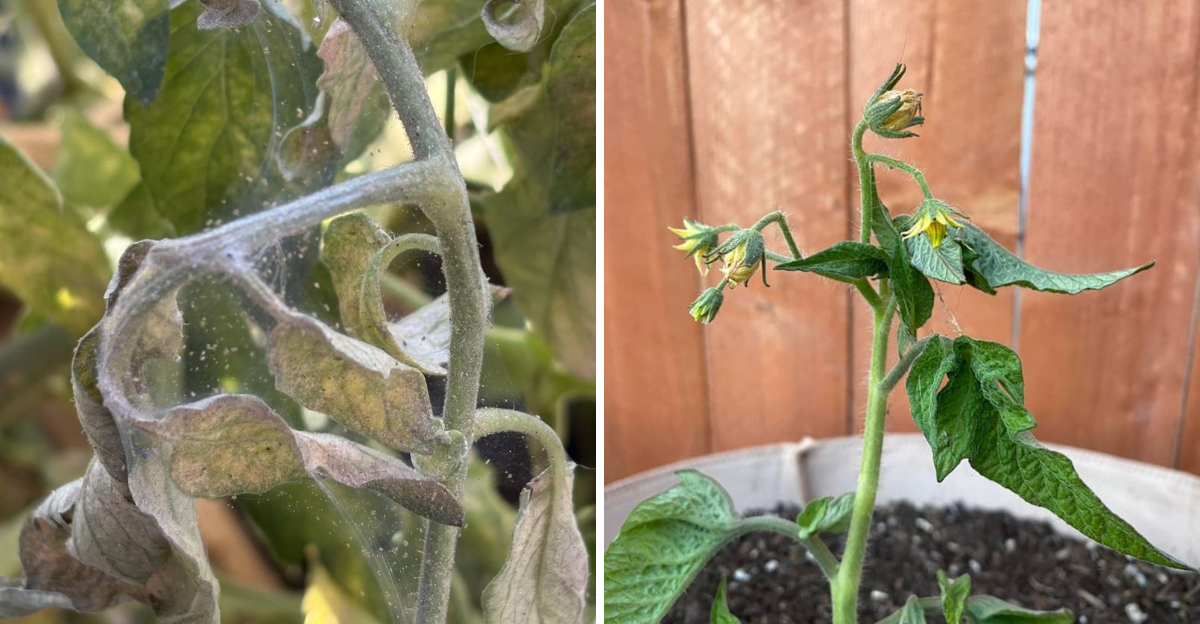
Fine webbing on an Oregon tomato plant can look harmless until the leaves beneath it start losing color.
A few pale specks appear first. Then the foliage takes on a dusty, stippled look, and delicate threads begin stretching between leaf stems or across the undersides.
That combination can point to spider mites rather than a harmless garden spider.
The timing matters.
Warm, dry stretches give mite populations an advantage, especially when tomato plants are already stressed by heat, dusty conditions, or uneven moisture.
Because the pests are tiny, gardeners often notice the plant damage before they notice the mites themselves.
So what is that webbing actually telling you?
It may mean a colony has already established and is feeding across the canopy. Check leaf undersides, follow the pattern of stippling and bronzing, and pay attention to how quickly symptoms move upward.
Early action can keep a small problem from becoming a summer takeover.
The web is not decoration. It is your cue to look closer right now before damage spreads.
1. Fine Webbing Means Spider Mites May Already Be Established
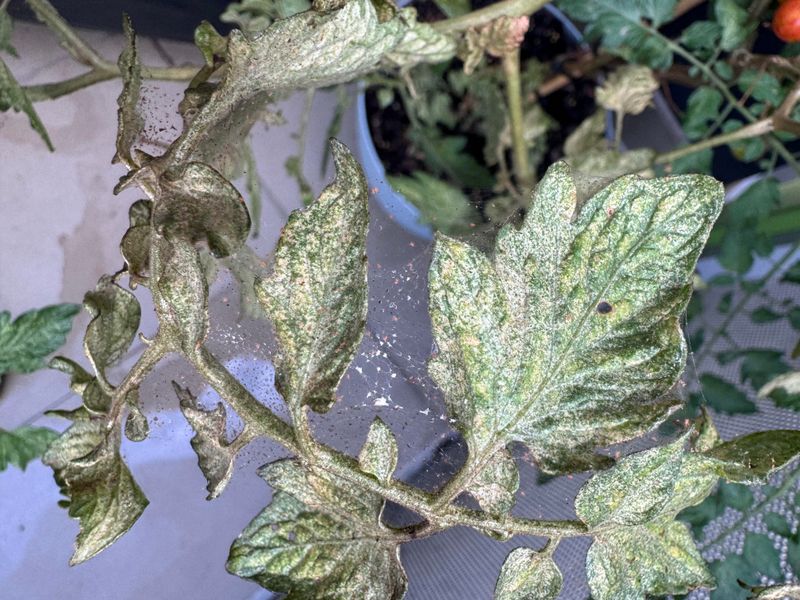
A thin, messy layer of webbing pressed close to tomato leaves is one of the strongest signs that spider mites may be active.
This web looks different from the larger, more organized web of a garden spider. Spider mite webbing tends to cling to leaf surfaces, petioles, and stem junctions. It can look dusty, wispy, or almost like fine fibers caught across the plant.
Do not judge the problem from one strand alone.
A harmless spider may leave a thread between leaves while hunting insects nearby. The stronger warning comes from webbing paired with pale speckling, yellowing, bronzing, or tiny moving dots on the underside of the foliage.
Check the plant closely before doing anything else.
Use a hand lens where possible and inspect several leaves from different parts of the canopy. Mites are extremely small, so the damage they leave behind is often easier to see than the pests themselves.
Webbing usually becomes more obvious as populations build.
That means a heavily webbed plant may already have substantial feeding pressure, even though the pests themselves remain nearly invisible.
The useful lesson is simple.
Fine webbing low against the foliage means the tomato deserves an immediate inspection. A true garden spider is usually helping with pest control. Spider mites are feeding on the plant itself, and the leaves will tell you which visitor you actually have.
2. Moving Specks Under Leaves Confirm The Problem Is Active
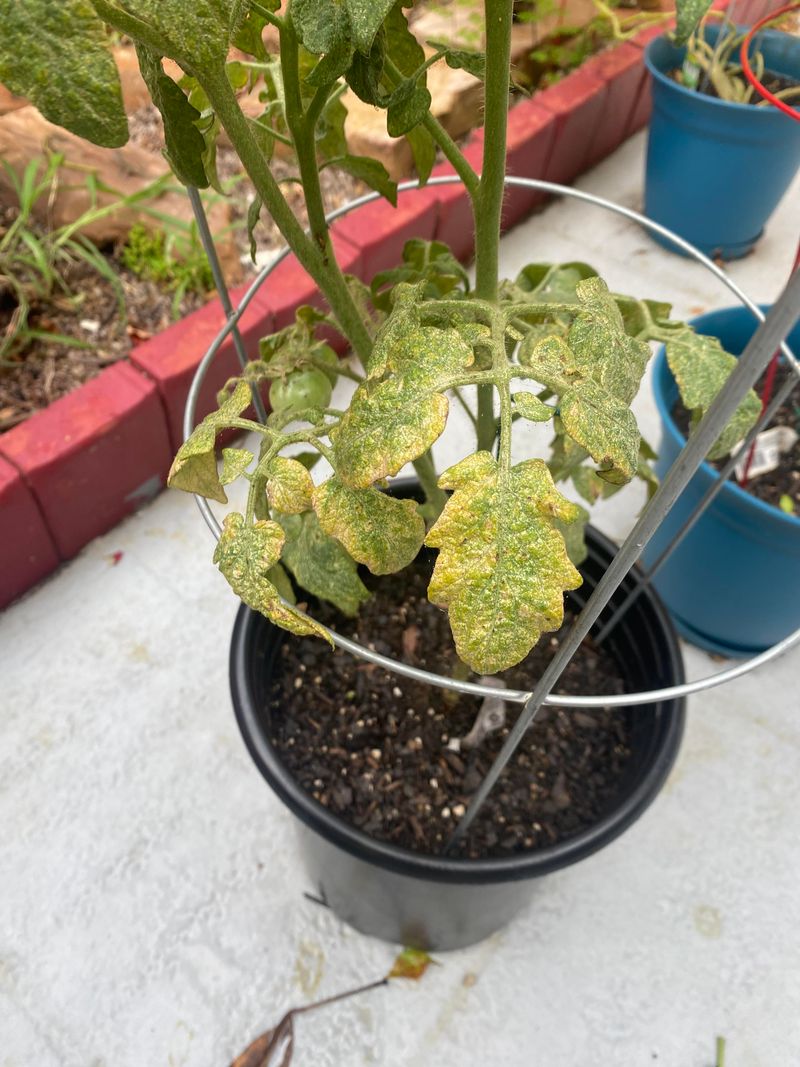
The underside of a tomato leaf can confirm what the webbing only suggests.
Spider mites tend to gather there, protected from harsh sunlight and some of the disturbance that reaches the upper surface. To the naked eye, they may look like tiny moving specks rather than recognizable insects.
A hand lens makes the job much easier.
Look for clusters of extremely small mites, pale eggs, fine silk, and areas where the leaf surface has begun losing its normal green color.
Two-spotted spider mites can appear pale green, yellowish, or darker depending on conditions and what they have been feeding on.
Your Oregon Garden Changes Every Week. Your Plan Should Too.
Gardening in Oregon changes quickly throughout the season. Every Friday you’ll receive a simple weekly plan showing exactly what to plant, prune, fertilize, harvest, and protect so you never miss the right timing.
The white-paper test is useful too.
Hold a clean sheet beneath a suspicious leaf and tap the foliage sharply. Tiny dots that fall onto the paper and begin crawling strengthen the case for mites.
Check more than one leaf.
A colony may be concentrated on the lower or middle canopy while upper growth still looks clean. Sampling several areas gives you a much better sense of how far the problem has spread.
Do not wait for the mites to become obvious from several feet away.
By that point, the population may already be large.
Fine webbing plus moving specks underneath the leaves tells you the problem is active, not leftover damage from an earlier visitor. That is the moment to start reducing mite pressure before more of the canopy loses healthy green tissue.
3. Pale Stippling Means Feeding Started Before The Webbing
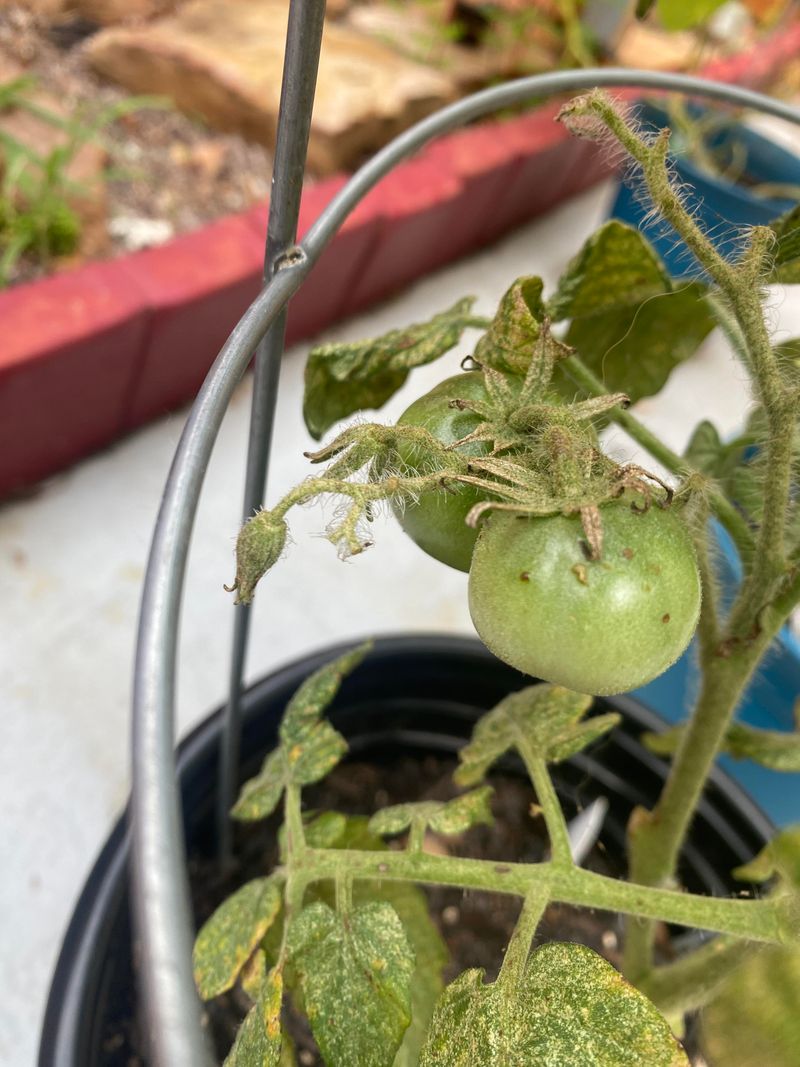
Pale stippling is often the plant’s first visible complaint.
Spider mites feed by piercing individual cells and removing their contents. Each feeding site leaves behind a tiny pale mark. Hundreds of those marks together create a speckled or dusty appearance across the leaf.
Look closely at older foliage first.
Lower and middle leaves may show the pattern before the newest growth does. Instead of turning evenly yellow, the leaf develops scattered pale dots that gradually become more numerous.
That pattern separates mite feeding from several other problems.
A simple nutrient shortage usually produces a broader color change. Overwatering may cause general yellowing or droop. Spider mite stippling looks more like countless tiny pinpricks scattered across the green surface.
Run your eyes along the veins and margins.
Fresh stippling may be easier to see where healthy green tissue sits beside newly faded areas. The leaf can also start feeling slightly dry or papery as damage builds.
Webbing may still be minimal at this stage.
That is good news because early mite populations are usually easier to manage than colonies that have already covered several stems in silk.
Treat stippling as an early scouting signal.
Flip the leaf, use the white-paper test, and inspect neighboring foliage.
Finding the pattern before heavy webbing develops gives an Oregon gardener a much better chance to protect the rest of the canopy while the plant still has plenty of healthy leaf area working for it.
4. Bronzing Means The Infestation Is Gaining Ground
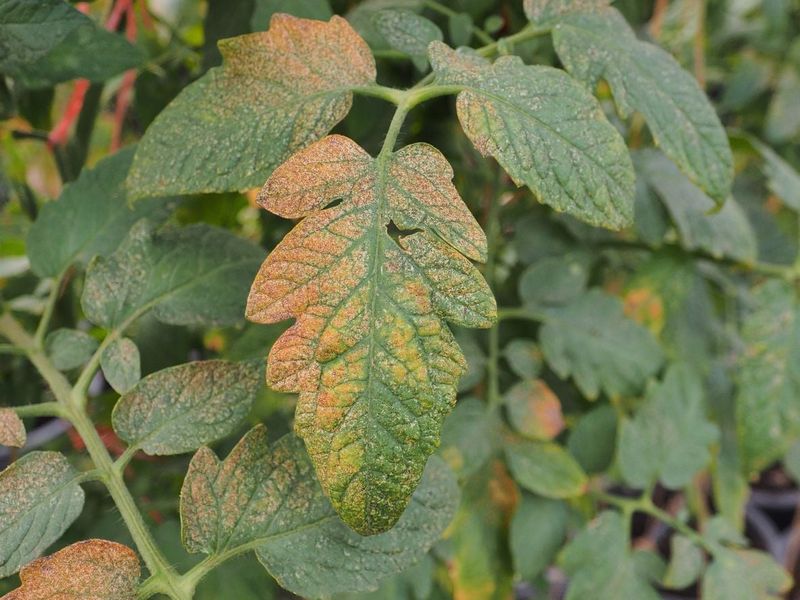
Bronze or rusty foliage means the feeding has moved beyond the earliest stage.
As more plant cells are damaged, a stippled tomato leaf can shift from pale green to bronze, gray-green, or silvery brown.
The surface may feel dry, curled, or brittle, and older leaves can begin dropping before the plant is ready to lose them.
Watch the direction of the damage.
Spider mite pressure often builds on lower foliage and then moves upward as colonies spread toward fresher leaves.
A plant with bronzing that climbs through the canopy over several days deserves faster attention than one with a single old damaged leaf.
Loss of leaf area matters for the crop.
Tomatoes rely on healthy foliage to support fruit development and provide shade around ripening fruit. Heavy mite feeding reduces that working canopy and can leave the plant less able to handle summer heat at the same time.
Compare the plant every few days.
A quick photo from the same angle can make progression easier to judge. Rapidly expanding bronzing usually means the mite population is still active and growing.
Do not remove every discolored leaf at once.
Some damaged foliage may still contribute energy, and heavy defoliation can create another layer of stress.
Bronzing is the plant telling you that the infestation has gained ground.
At that point, combine close inspection with practical control steps rather than hoping the next cool evening will solve the problem on its own.
5. Hot, Dry Weather Means Mite Pressure Can Rise Fast
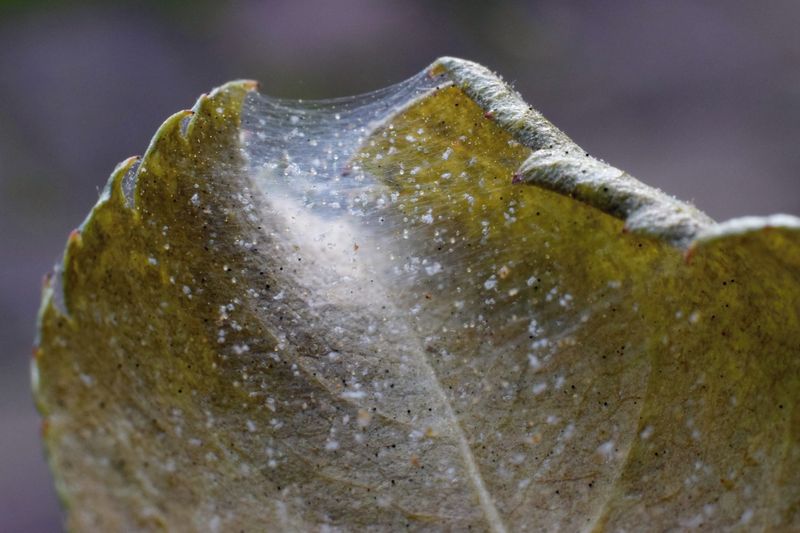
Hot, dry Oregon weather can turn a small mite colony into a much bigger problem.
Spider mites thrive during warm, dry stretches, and their development speeds up as temperatures rise. Tomatoes dealing with the same heat may already be under moisture stress, which leaves them less able to tolerate constant feeding.
That weather connection is useful for scouting.
After several dry days or during a heat wave, check the lower and middle canopy more often. Fine webbing or fresh stippling that seemed minor earlier in the week can become much more obvious once conditions stay hot.
Keep root moisture steady.
A well-watered tomato is not immune to mites, but it has more capacity to keep growing while damage is being addressed. Deep irrigation and a useful mulch layer can help the root zone stay cooler and more consistent.
Avoid letting the bed swing between very dry soil and sudden heavy watering.
Those moisture extremes add stress without reducing mite pressure.
Pay attention to containers too.
Potted tomatoes can heat and dry much faster than plants in the ground, especially on patios or beside reflective walls. A stressed container plant can become a particularly easy target during a hot spell.
The weather forecast can become part of your pest routine.
Several hot, dry days are not merely uncomfortable for the gardener. They are a reason to inspect tomato leaves more closely because the mites may be enjoying the exact conditions the plant finds exhausting.
6. Dusty Conditions Mean Natural Mite Control Is Weaker
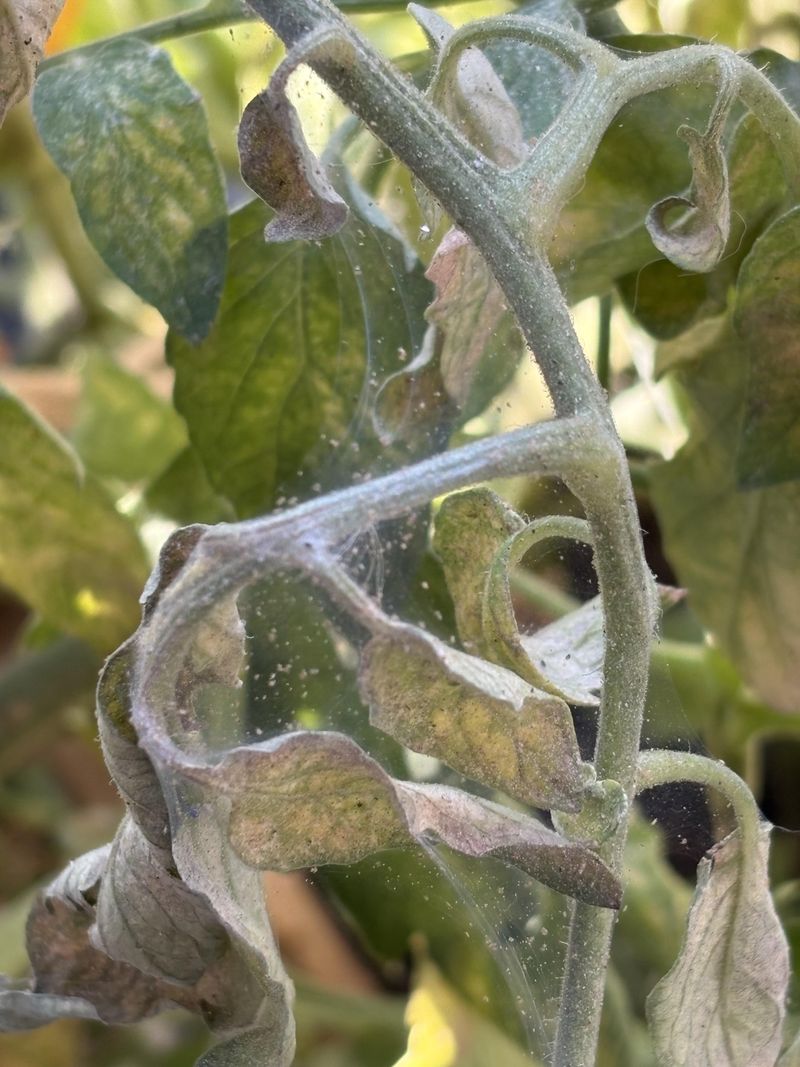
Dust around the tomato bed can quietly make mite problems easier to build.
Dry paths, bare soil, gravel edges, and repeated foot traffic can send fine particles onto leaves. That dusty coating creates a harsher environment for some of the beneficial predators that normally help keep spider mites from multiplying unchecked.
Bare soil also heats quickly.
The extra heat around the lower canopy can add to the dry conditions mites already favor. During an Oregon summer dry spell, a dusty bed can become both hotter and less friendly to natural mite enemies.
Cover exposed soil where practical.
Straw, shredded leaves, or another suitable mulch can reduce dust, slow moisture loss, and buffer soil temperature around tomato roots. Paths can also be mulched rather than left as powdery bare ground.
Keep the mulch away from the main stem.
A small open gap improves airflow around the base and prevents damp organic material from resting against plant tissue.
Avoid blasting dry soil with a strong hose stream.
That can throw more particles onto the lower foliage and create mud splash around the plant.
Dust control will not erase an established mite colony.
It does remove one environmental advantage that can help pests build faster while supporting the predators already present nearby.
A cleaner leaf surface and cooler root zone may sound like background details, but pest outbreaks often grow from several small advantages stacking together.
Take one of those advantages away, and the tomatoes get a better chance to recover.
7. Early Webbing Means A Water Spray May Still Be Enough
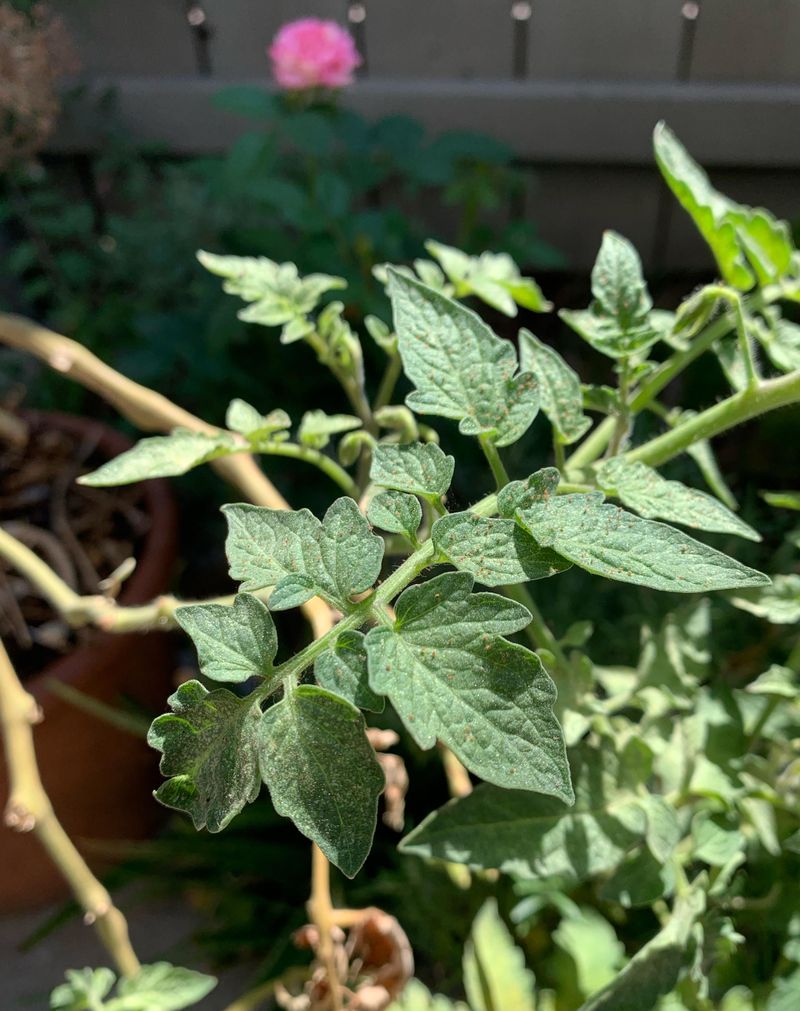
A firm spray of water can knock a surprising number of mites off tomato foliage.
Aim at the undersides of leaves, where colonies tend to gather. A focused but plant-safe stream can dislodge mites, eggs, and some webbing without using a broad insecticide.
Support tender stems with one hand when needed.
The goal is to remove pests, not snap branches or bruise foliage. Work through the canopy slowly and pay special attention to leaves showing fresh stippling.
Morning is the better time for this job.
Foliage has hours to dry afterward, which matters in an Oregon garden where cooler evenings can leave wet leaves hanging around longer than expected.
Repeat the rinse as needed.
One spray may reduce an early colony, but mites or eggs can remain on protected surfaces. Rechecking after a few days shows how well the population responded.
Do not turn the soil beneath the plant into a swamp.
The spray is aimed at foliage, while routine irrigation should still follow the moisture needs of the root zone.
Water works best before webbing becomes dense across much of the plant.
Heavy infestations may need additional management, but a targeted rinse is a practical first response that leaves beneficial predators unharmed.
Sometimes the simplest tool is already attached to the hose. Used carefully and early, it can reduce the number of mites feeding on the plant while buying you time to see what the remaining population does next.
8. Beneficial Predators Mean The Garden Is Already Fighting Back
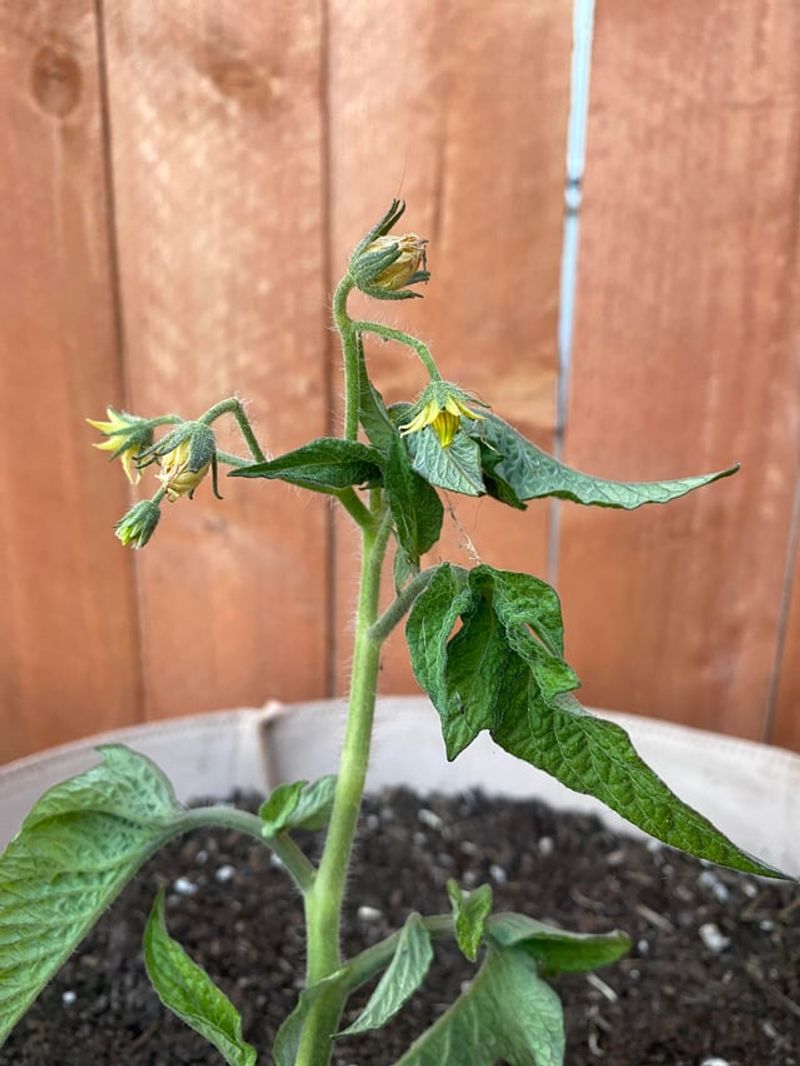
A tomato plant with spider mites may already have helpers hunting through the same leaves.
Predatory mites, lacewing larvae, minute pirate bugs, and lady beetles can all feed on mites or other small pests. Preserving those natural enemies can keep a modest outbreak from becoming much larger.
Broad-spectrum insecticides can disrupt that balance.
A spray aimed at one pest may also remove predators that were quietly reducing mite numbers. Spider mites can then rebound quickly with fewer natural enemies left around the plant.
Start with targeted approaches.
Water sprays, better plant hydration, dust reduction, and close scouting can lower pressure while leaving beneficial organisms in place.
Where a product becomes necessary, choose one labeled for mites and the crop, and favor options with less impact on useful predators.
Flowering plants nearby can support beneficial insects.
Small flowers from herbs and other garden plants offer nectar and pollen that help some predators remain in the area between pest outbreaks.
Watch before spraying.
Seeing tiny fast-moving predators on leaf undersides is a reason to consider how much help is already present. Not every small speck belongs to the pest colony.
A healthy garden rarely relies on one defender.
Your tomato plant, the hose, mulch, predators, and careful scouting can all work together.
Fine webbing tells you mites may be gaining ground. It does not mean every insect in the canopy has become the enemy. Protecting the hunters already on duty keeps one pest problem from becoming a larger ecological cleanup.