Are These Yard Habits Attracting Wasps To Your Oregon Porch This August?
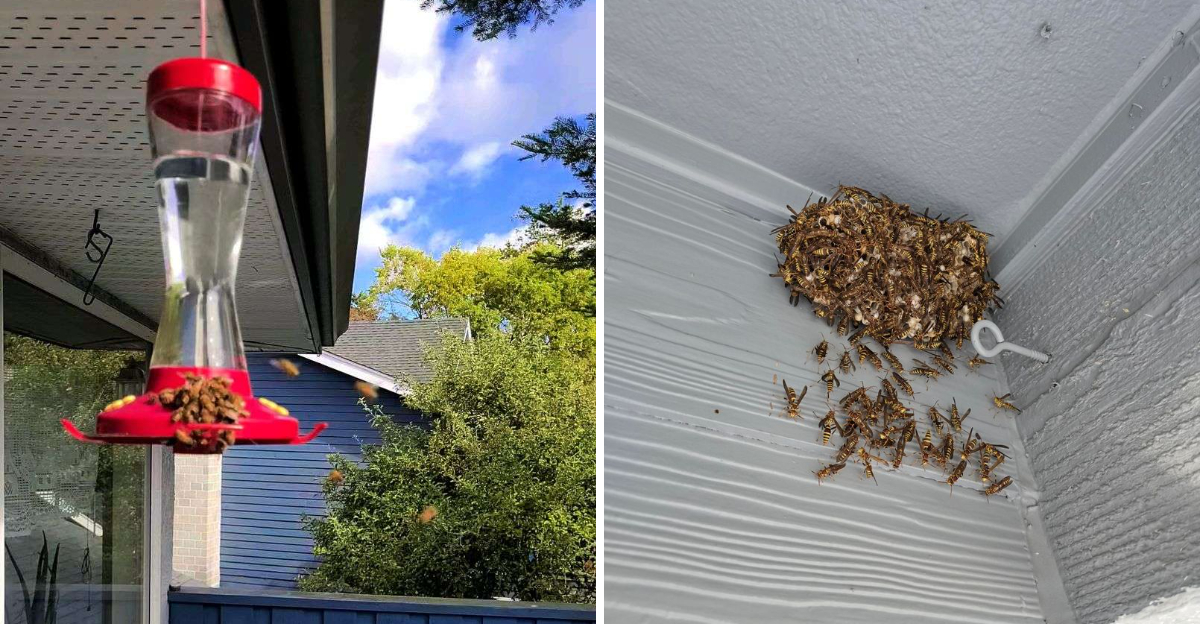
An Oregon porch can suddenly feel much busier in August, even when nothing obvious has changed around the house.
Yellowjackets start hovering near drinks. Paper wasps inspect the eaves. A quiet barbecue can turn into a steady stream of buzzing visitors that seem unusually interested in every plate, can, and trash bin nearby.
That late-summer activity has a reason.
Social wasp colonies are large by this point in the season, and workers spend more time searching for easy sources of sugar and protein.
Small yard habits that barely mattered in June can become surprisingly attractive once August arrives.
So what around your porch may be encouraging them?
Open drinks, sticky recycling, fallen fruit, leaking hummingbird feeders, pet food, exposed compost scraps, and sheltered nesting spots can all keep wasps returning to the same area.
The goal is not to make the yard insect-free.
It is to remove the easy rewards that teach foraging wasps your porch is worth another visit tomorrow too during the final warm weeks of Oregon summer.
1. Uncovered Sweet Drinks Can Keep Wasps Circling The Table
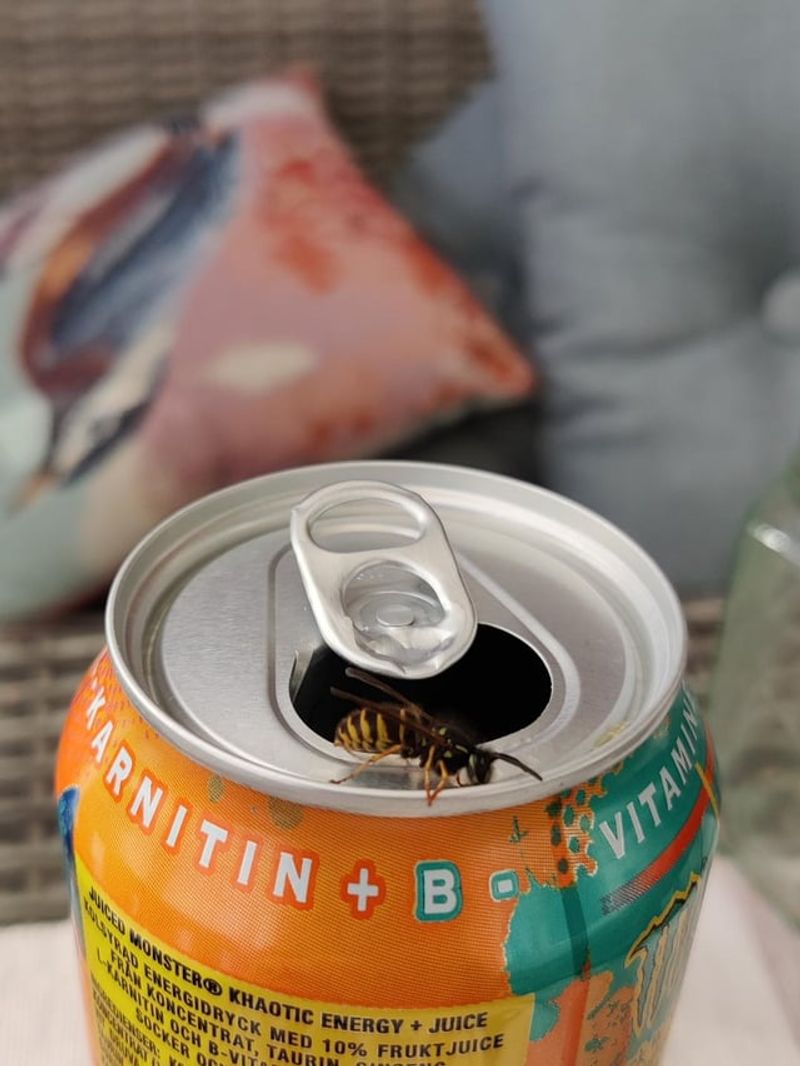
An open soda or lemonade can become the easiest sugar stop on the porch.
By August, yellowjackets spend more time searching for quick energy, and sweet drinks provide exactly that.
A can with a little residue around the rim can be enough to keep a forager circling the table. Juice, sports drinks, cocktails, and melted popsicles can do the same thing.
The attraction does not end when the glass looks empty.
Sticky rings on tabletops, cup holders, railings, and chair arms can continue giving off sweet odors after everyone has gone inside. A wasp that finds a reliable reward may return to the same area and keep checking it.
Use covered cups or bottles outdoors during peak activity.
Bring unfinished drinks inside rather than leaving them on the porch, and rinse empty cans before they sit in a recycling container. Wipe down the table after meals so sugary residue does not become the next attraction.
Watch children’s cups especially closely.
A wasp can slip into an open can or dark bottle where it becomes hard to see before the next sip.
The porch does not need a full beverage ban.
It just needs fewer open invitations. Keeping sugar covered removes one of the simplest reasons a late-summer yellowjacket would decide your table deserves another inspection.
Check the ground beneath the table too, since one spilled splash can remain attractive after the cup is gone.
2. Trash And Recycling Can Turn The Porch Into A Food Stop
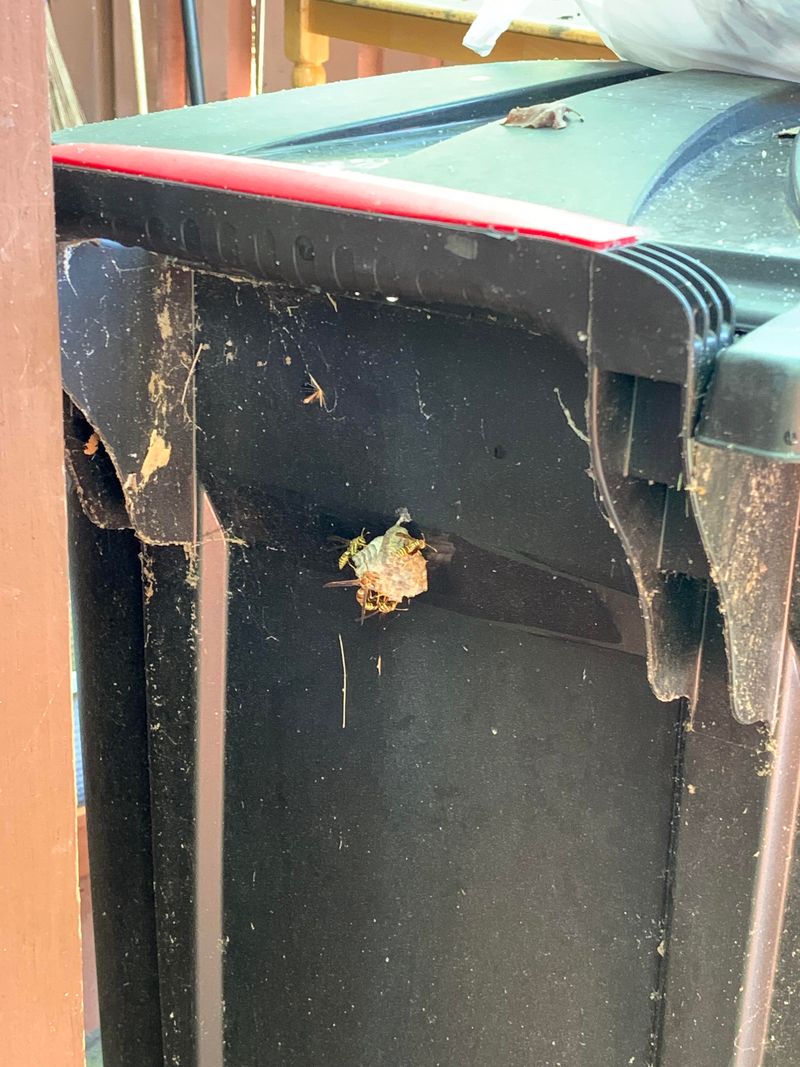
A recycling bin full of unrinsed cans can smell much more interesting to a wasp than it does to you.
Warm August weather intensifies odors from soda residue, juice, beer cans, food packaging, and trash. Yellowjackets can follow those food smells toward a porch, driveway, or side yard and then keep searching nearby once they arrive.
Loose lids make the problem easier for them.
A bin with a gap along the top gives foragers direct access to sticky containers, while an overflowing trash bag can leak enough residue to keep activity centered around the same spot.
Your Oregon Garden Changes Every Week. Your Plan Should Too.
Gardening in Oregon changes quickly throughout the season. Every Friday you’ll receive a simple weekly plan showing exactly what to plant, prune, fertilize, harvest, and protect so you never miss the right timing.
Rinse recyclable containers before tossing them in.
That quick step removes a large share of the sugar that would otherwise sit in the bin for days. Wash sticky trash cans periodically too, especially after a leaking bag or broken container leaves residue behind.
Keep lids fully closed.
Containers stored directly beside a porch door can also be moved farther from seating areas when space allows. Even a modest shift changes where foraging wasps concentrate their attention.
Do not forget bottle caps and takeout cups.
Small scraps can create surprisingly strong odors once they warm in the sun.
A clean bin is not exciting garden work, but August wasps are excellent at finding the mess nobody planned to scrub. Remove the smell, and one major porch-side food station disappears with it.
Wash the area beneath the bins after leaks, since dried residue can keep the scent trail active.
3. Fallen Fruit Can Create A Late-Summer Wasp Buffet
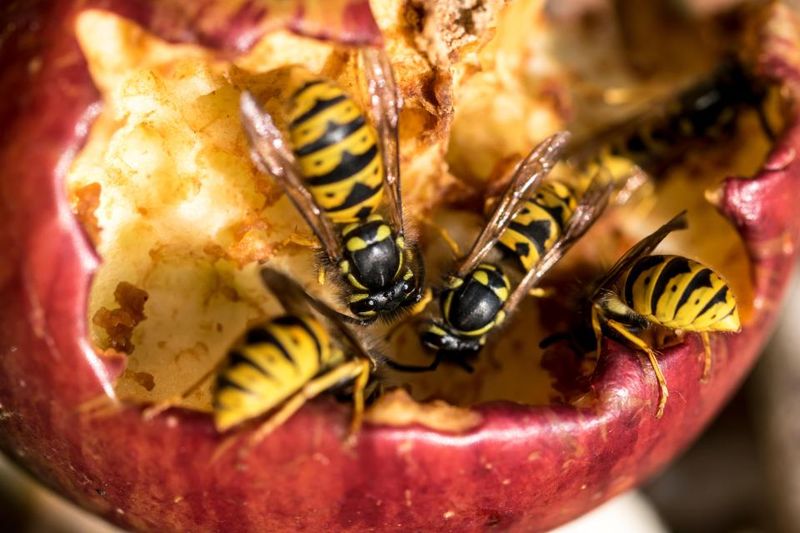
A bruised plum under a tree can become more attractive to yellowjackets every hour it sits in the summer heat.
As fallen fruit softens and ferments, sugars become easy to reach and odors grow stronger. Apples, pears, plums, peaches, grapes, and other backyard fruit can turn the ground beneath a tree into a reliable late-summer feeding area.
That matters even when the tree stands away from the porch.
Foraging wasps move through the surrounding yard once they learn food is available nearby. They may investigate drinks, trash, compost, or outdoor meals during the same trips.
Walk under fruit trees regularly in August.
Collect split, bruised, and overripe fruit before it piles up. A daily or every-other-day check works much better than waiting until the ground smells fermented.
Place the collected fruit in a closed container.
An open bucket beside the garage simply moves the attraction to a new location. Sealed compost systems or appropriate yard-waste disposal keep the scent from remaining exposed around gathering areas.
Harvest ripe fruit promptly too.
Fruit left hanging past peak ripeness can split, drop, and start the cycle all over again.
The orchard floor does not need to look spotless.
It just should not operate like a late-summer dessert bar. Regular cleanup removes concentrated sugar at the exact time yellowjackets are most motivated to look for it.
Pay extra attention after windy afternoons, when ripe fruit can drop faster than your usual cleanup routine expects.
4. A Dripping Hummingbird Feeder Can Train Wasps To Return
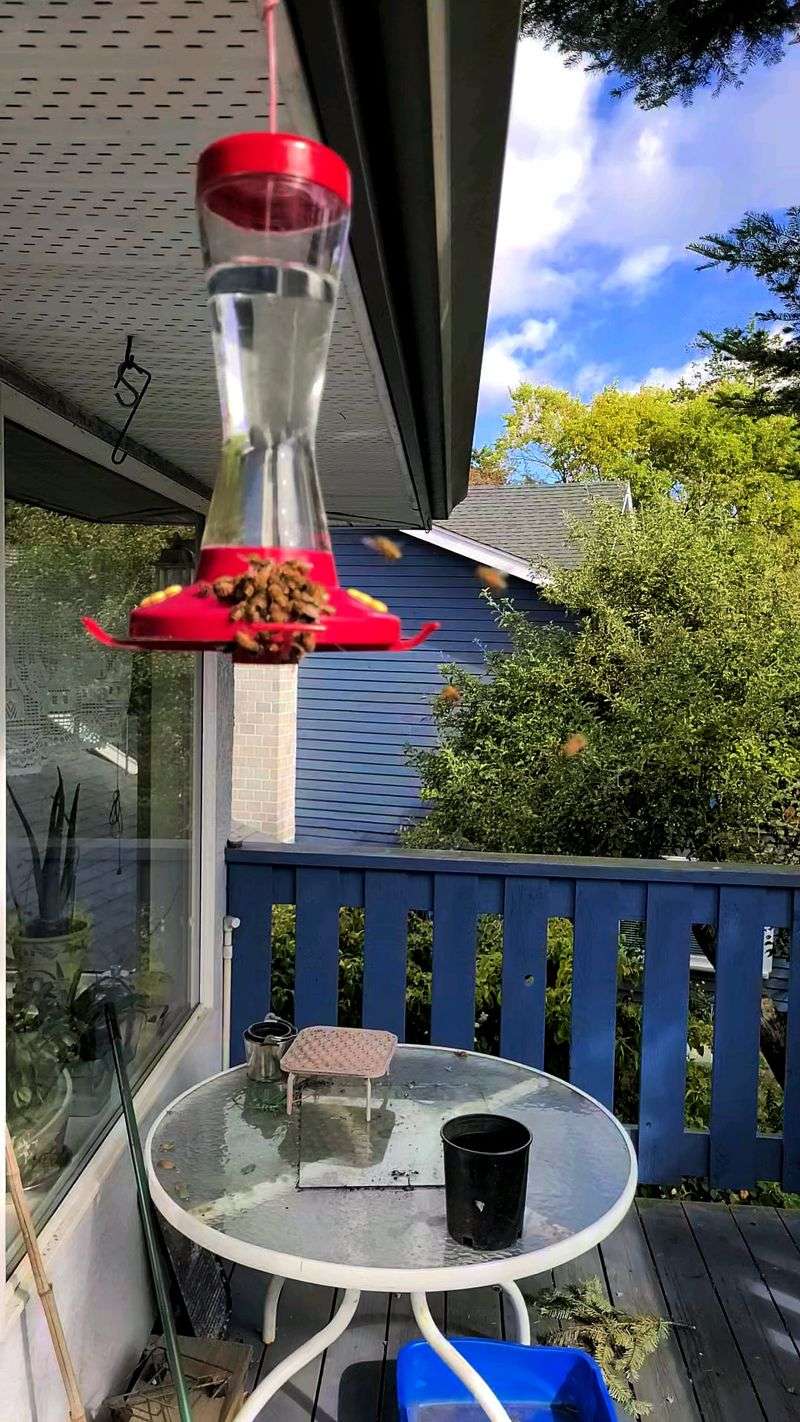
A hummingbird feeder can attract more than hummingbirds once sugar water starts leaking down the outside.
Heat expands liquid, worn feeder parts loosen, and tiny drips can leave sweet residue around ports, hooks, poles, and the surface below. Yellowjackets quickly notice that easy source of sugar and may begin checking the feeder repeatedly.
Inspect the feeder during every refill.
Look for cracked bases, loose seals, damaged ports, and sticky streaks along the body. Wipe the outside clean before hanging it back up so old nectar does not keep advertising the location.
Warm weather also makes frequent cleaning more important.
Fresh nectar and a clean feeder are better for hummingbirds, while dried sugar on the exterior gives wasps a separate reason to stay. Rinse spills from nearby railings or patio surfaces at the same time.
Move a problem feeder when wasp traffic becomes persistent.
A new position several yards away can interrupt the route of foragers that learned the old location. Temporary removal can also break the pattern during heavy activity.
Avoid smearing repellents or pesticides on a feeder.
Anything placed around feeding ports could affect the birds using it.
The feeder itself is not the problem. The leak is.
Keep the nectar inside where hummingbirds can reach it, and the porch becomes much less rewarding for yellowjackets searching the yard for easy August sugar.
Shade can also reduce nectar expansion inside some feeders, helping limit drips during the hottest part of the day.
5. Pet Food Left Outside Can Add Another Easy Meal
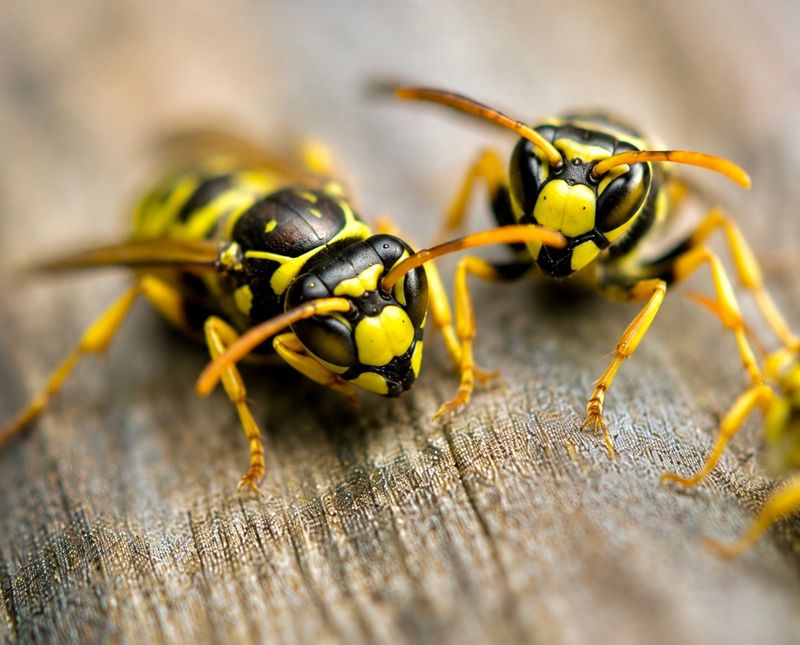
Pet food can turn a quiet back step into a protein stop for foraging wasps.
Wet cat food is especially attractive because its odor carries quickly through warm air. Meat scraps mixed into a dog bowl can do the same thing. Even dry kibble becomes more interesting after it gets wet or picks up food residue.
Late summer makes those smells harder to ignore.
Social wasps still search for protein sources while colonies remain active, so a bowl that sits outside long after the pet has finished can keep drawing attention toward the porch.
Bring bowls inside after meals.
Rinse away leftovers rather than leaving a thin layer of food to dry around the rim. Water bowls can stay outside, but keep them separate from feeding areas and clean up spilled food around them.
Timed feeding helps during heavy wasp activity.
A pet that normally grazes for hours may do better with shorter supervised meals indoors for part of August. That also reduces the chance of a curious animal snapping at a wasp around the bowl.
Sweep up dropped kibble.
One or two pieces beneath a bench may look insignificant, but repeated crumbs can keep the same foragers checking the area.
The wasps are not targeting your pet.
They are following food. Remove the food promptly, and the porch loses another reason for them to keep returning.
Porch mats deserve a quick check too, since bits of food can disappear into fibers where wasps still find them.
6. Exposed Compost Scraps Can Send Wasps Straight Across The Yard
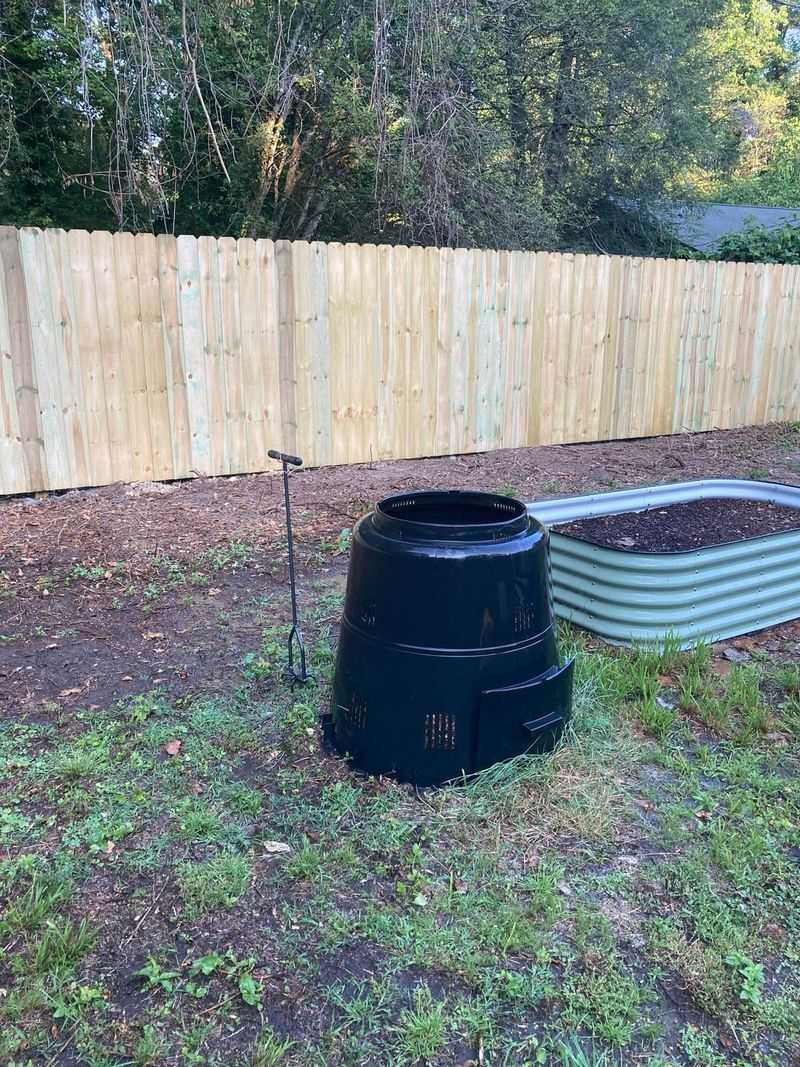
An open compost pile can send out exactly the kind of late-summer odors wasps are searching for.
Fruit peels, melon rinds, sweet vegetable scraps, bread, and other kitchen material begin changing quickly in warm weather. Exposed scraps can release sugary or fermented scents, while certain leftovers add protein-rich odors to the mix.
Cover each fresh addition.
Bury kitchen scraps several inches into the active pile or place a layer of dry leaves, shredded paper, straw, or finished compost over the top. That simple barrier reduces odor and makes direct access harder.
A lidded bin offers another advantage.
Check the lid for warping, cracks, or gaps that give wasps an easy entrance. Keep the container closed between additions and place it away from the main porch when the yard layout gives you room.
Skip meat and dairy in ordinary backyard compost systems.
Those materials create stronger odors and can attract a much broader group of unwanted visitors.
Balance matters too.
A soggy pile full of exposed food scraps tends to smell stronger than one with enough dry carbon material mixed through it.
Turning the pile can help decomposition, but avoid opening and stirring it constantly during the busiest wasp periods.
Compost should feed the garden, not become the porch restaurant’s kitchen annex. Covering scraps quickly keeps the useful decomposition going while giving foraging yellowjackets much less to investigate.
A dry cover layer also makes the pile look much less accessible to insects approaching from above.
7. Repeated Traffic At The Eaves Can Mean The Porch Is Hosting A Nest
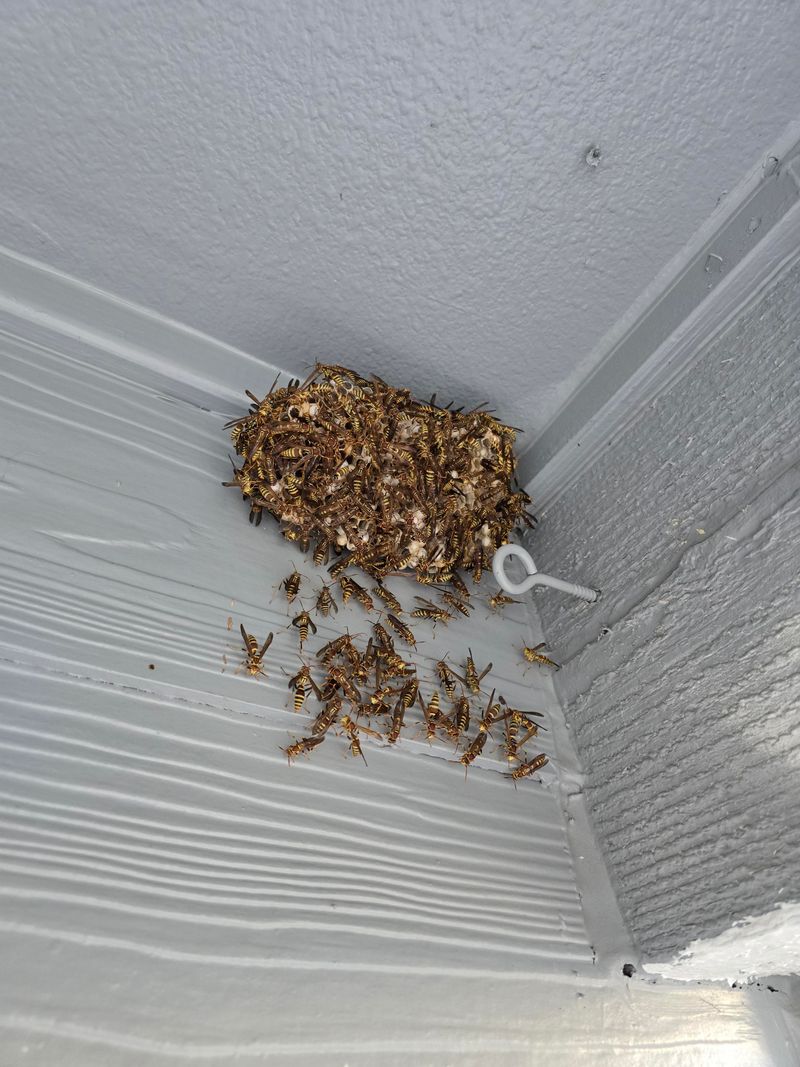
Repeated wasp traffic under the same porch eave can mean the attraction is no longer food.
It may be a nest.
Paper wasps commonly use sheltered ledges, rafters, eaves, and similar protected structures. Yellowjackets may use cavities in walls, gaps around structures, or underground spaces nearby.
By August, an established social colony can be much larger and more defensive than it was early in summer.
Watch from a safe distance.
One wasp passing the roofline means very little. A steady pattern of insects entering and leaving the same crack, fixture, or sheltered corner deserves more attention.
Do not poke the area to confirm your suspicion.
Disturbing a mature nest can trigger defensive behavior quickly, especially around a doorway, deck, or seating area where people keep moving through the colony’s space.
Keep children and pets away from the suspected entrance.
A nest far from normal activity may not create the same urgency as one directly beside a frequently used door, but placement and household risk should guide the response.
Established nests near high-traffic areas are a job for a licensed pest professional.
That avoids close contact with a defensive colony and removes the guesswork around species and access points.
Food cleanup can reduce foraging visits. It cannot persuade a colony to abandon its home.
When traffic keeps returning to one exact structural spot, the porch itself may be providing shelter rather than snacks.
Mark the location mentally and watch the traffic pattern rather than moving closer for a better look.