What The Lubber Grasshoppers Crawling Across Florida Mean For Your Plants
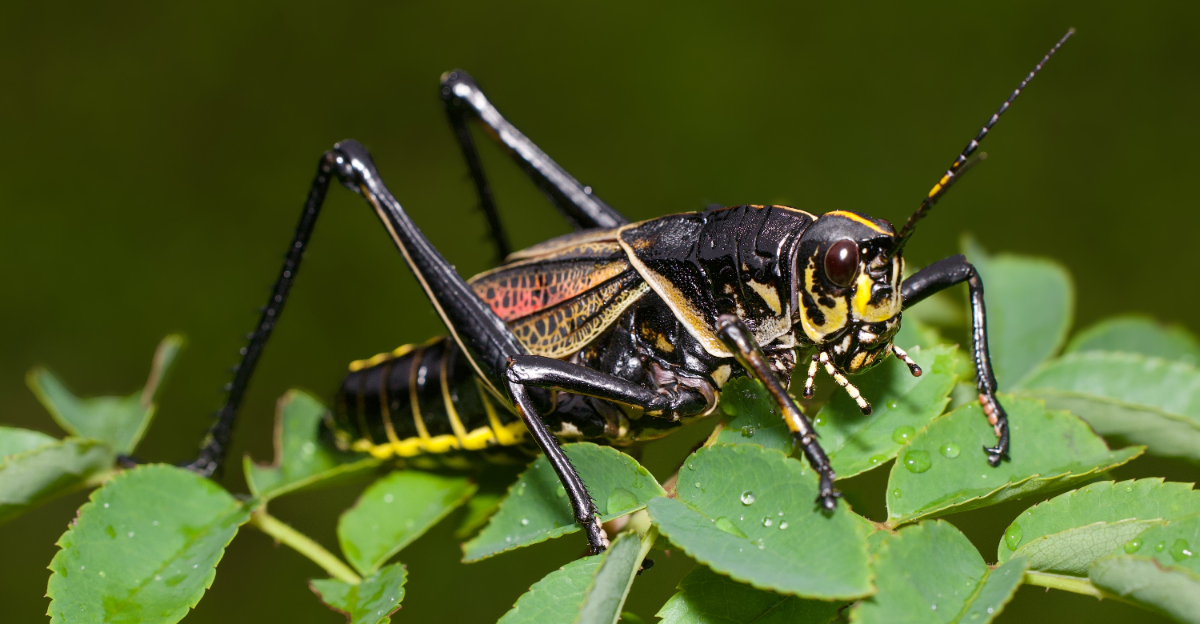
Lubber grasshoppers do not hide. They move across Florida yards in broad daylight, bright yellow and black, almost offensively visible, as if they know exactly how toxic they are and see no reason to be subtle about it.
Most Florida homeowners see one and feel something between fascination and alarm. Both reactions are reasonable.
Neither one addresses what a lubber population actually means for the plants in its path. Lubbers are not random.
The yards they move through, the plants they target, and the timing of their appearance all follow patterns worth understanding before the chewing starts in earnest. A few lubbers are a nuisance.
A population is a different conversation, and summers produce populations in gardens that gave them exactly what they needed to get there.
What the lubbers crawling across a Florida yard right now are actually signaling, and what comes next, is worth knowing before the plants make the point directly.
1. A Lubber Crossing The Yard May Be Looking For Its Next Meal
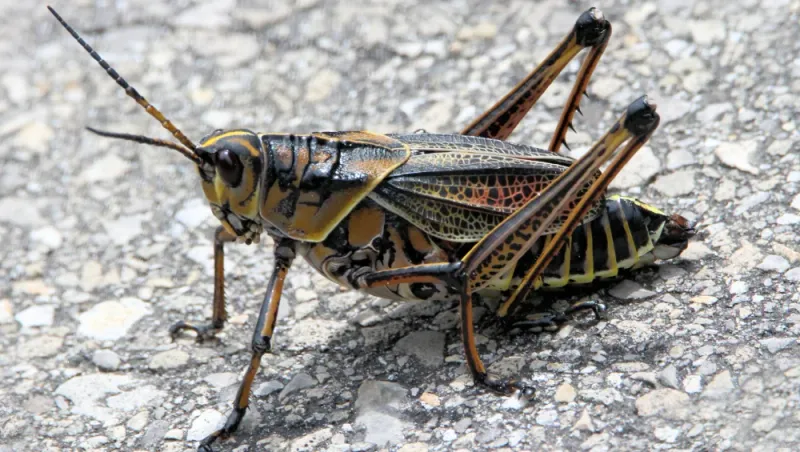
That bold, slow-moving insect crossing your driveway is not lost. Eastern lubber grasshoppers walk and climb because their short wings cannot carry them through the air the way most grasshoppers fly.
Movement on foot is simply how they get from one feeding site to the next.
Young nymphs hatch close to their food source and tend to stay nearby at first. As they grow through each life stage, they begin spreading farther into surrounding Florida landscape areas.
A lubber spotted near your front walkway may have started life in a moist, low-lying area just a short distance away.
These insects do prefer humid, low habitats like ditches, pond edges, and weedy borders. Still, they wander into lawns, mulched beds, and even container gardens when suitable plants are within reach.
One sighting near a planting bed is a prompt to check nearby foliage, not a sign of a major infestation.
Repeated sightings around the same ornamental bed deserve closer attention. Walk the area and look for chewed leaves or insects resting on stems.
Catching feeding activity early gives you more options and keeps plant damage from building up before you realize what is happening.
2. Chewed Leaf Edges Can Turn Into Serious Defoliation Fast
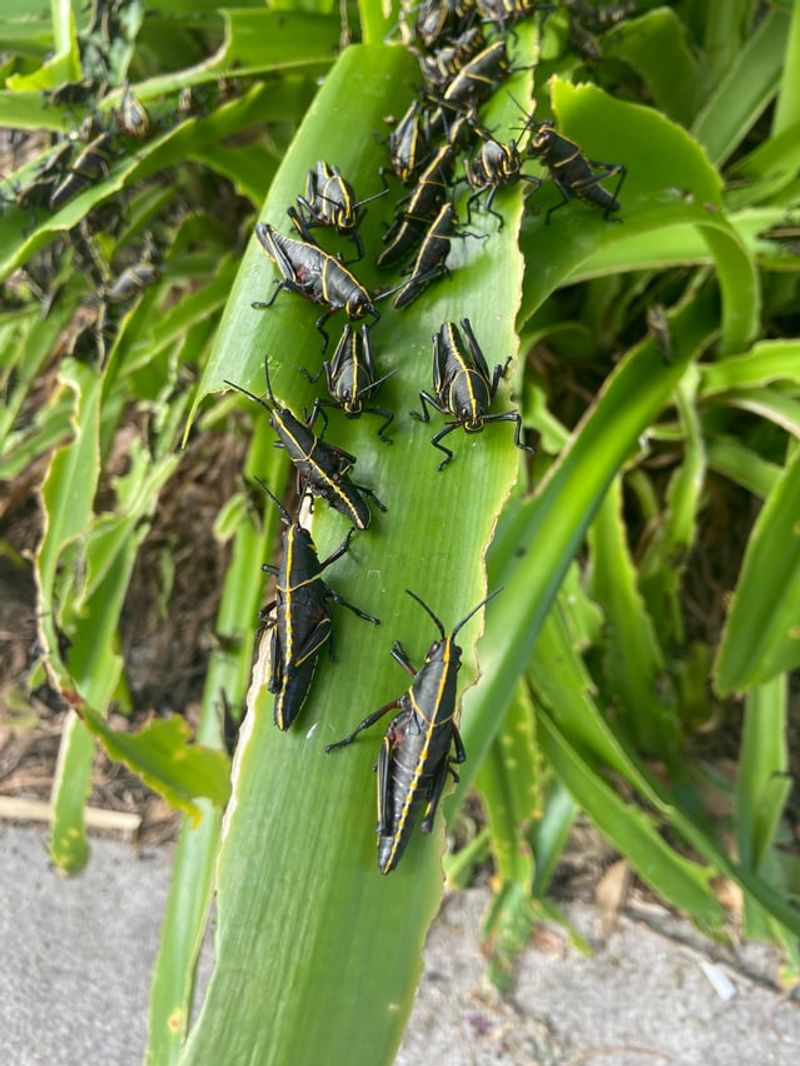
Ragged holes along leaf margins and large patches of missing tissue are the clearest signs that lubbers have been feeding nearby. They tend to take bites from one leaf and then shift to another, spreading damage across a plant rather than finishing one leaf completely.
This pattern can make a planting look worse than you might expect from just a few insects.
Dense local groups can remove a surprising amount of foliage from favored plants in a short time. A single adult on a large, established shrub may cause only cosmetic harm.
But several insects working through a small Florida ornamental or a young transplant can strip it down quickly.
Not every ragged leaf points to a lubber. Caterpillars, beetles, slugs, and even wind damage can produce similar-looking wounds.
Before drawing any conclusions, look for the insects themselves and check for fresh green edges on damaged tissue. Also consider whether the plant is one lubbers tend to prefer.
Your Florida Garden Changes Every Week. Your Plan Should Too.
Gardening in Florida changes quickly throughout the season. Every Friday you’ll receive a simple weekly plan showing exactly what to plant, prune, fertilize, harvest, and protect so you never miss the right timing.
The key distinction is between a few cosmetic holes and a plant that is losing a large share of its foliage. Minor leaf damage on a healthy, established plant is usually not an emergency.
Widespread loss across multiple stems on a smaller plant is worth acting on sooner rather than later.
3. Amaryllis And Crinum Sit Especially High On The Menu
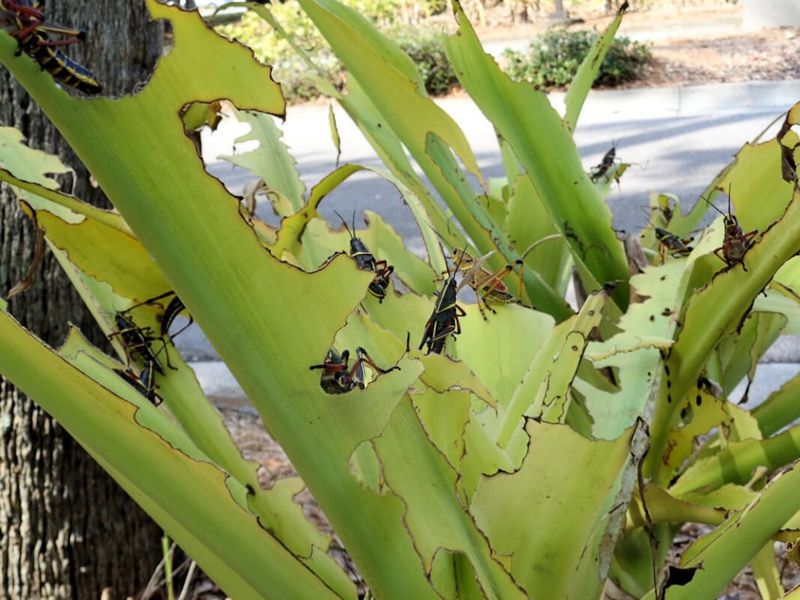
University of Florida IFAS research consistently names plants in the Amaryllidaceae family as top feeding targets for eastern lubbers. Amaryllis, crinum, Amazon lily, and narcissus are among the ornamentals most frequently damaged when lubbers move through a landscape.
Gardeners who grow these plants should be checking them regularly through spring and summer.
Concentrated feeding on these favorites can leave leaves looking tattered within just a few days. Because many Amaryllidaceae plants store energy in bulbs, repeated defoliation can stress the plant over time even if it does not appear immediately critical.
Catching the problem early protects both the foliage and the bulb below ground.
Secondary hosts like canna, lantana, cordyline, and Mexican petunia may also attract lubbers, but usually draw less consistent attention than the Amaryllidaceae group.đ
Focusing your scouting on high-risk plants first makes the most efficient use of your time.
A practical routine helps a lot here. Walk your amaryllis and crinum beds two or three times a week during the warmer months.
Look along leaf undersides and at the base of stems where insects like to rest. Catching even a small cluster before they spread gives you a real advantage in keeping these ornamentals looking their best through the season.
4. Vegetables And Citrus Can Take Hits When Numbers Build
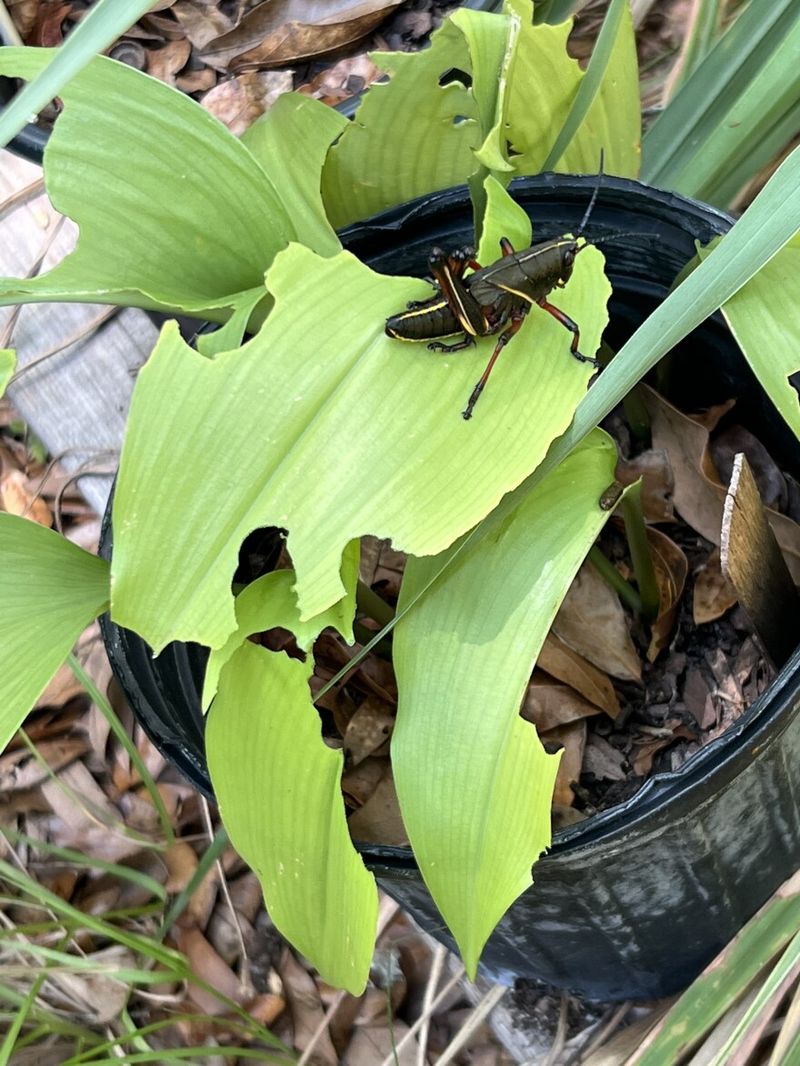
Florida home vegetable gardens are not off-limits to lubbers, especially when the garden sits near weedy edges or moist areas where these insects develop.
UF/IFAS guidance identifies peas, lettuce, kale, beans, and cabbage as among the vegetables lubbers feed on with some regularity.
Growers of these crops should keep an eye out when lubber activity is high nearby.
Other vegetables including tomatoes, peppers, okra, and sweet corn are generally less appealing to lubbers. Less preferred does not mean completely safe, though.
A hungry insect with limited options nearby will sample plants it might otherwise pass by, so any garden can see some feeding under the right conditions.
Citrus can attract lubbers, particularly when tender new growth is present. Young flush growth on citrus trees is softer and easier to feed on than mature, toughened leaves.
Monitoring new growth periods on citrus during peak lubber season is a sensible precaution.
What matters most in a vegetable garden is numbers. One wandering adult is unlikely to cause lasting harm to a well-established planting.
Several insects concentrated on a small bed of young seedlings or leafy greens is a different situation. Direct inspection before choosing any response keeps your reaction proportional to the actual level of feeding pressure present.
5. Black Nymph Clusters Signal The Best Time To Act
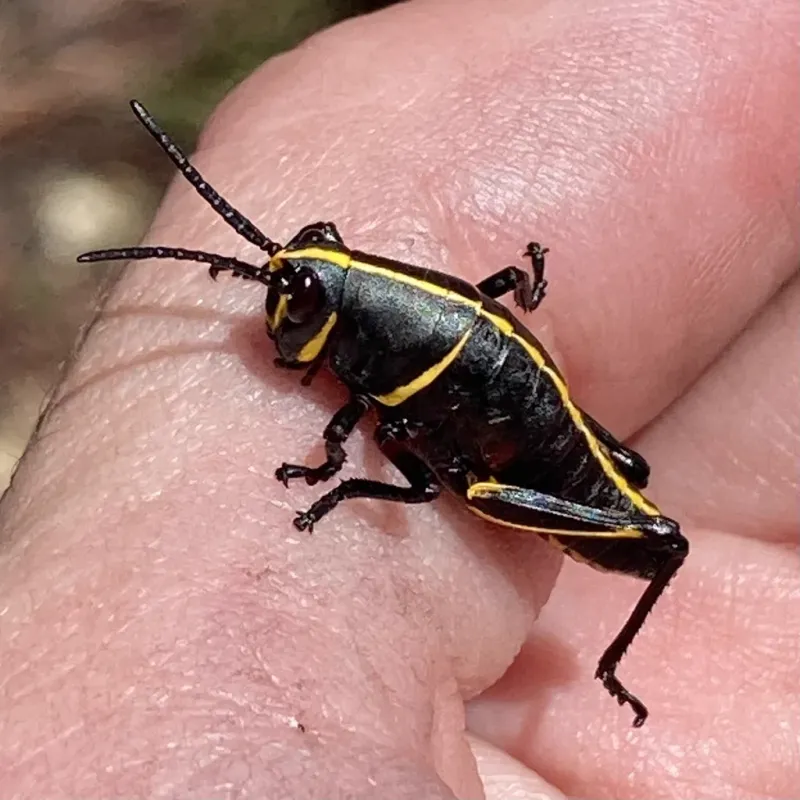
Spotting a tight group of small, black insects with vivid yellow, orange, or reddish markings on a plant stem is a useful early warning. Young lubber nymphs are strikingly different in appearance from the large, colorful adults most people recognize.
Their black coloring with bright accents makes them easier to spot against green foliage than you might expect.
After hatching, nymphs tend to cluster together for the first several weeks of their lives. This grouping behavior actually works in a gardener’s favor.
Finding ten or twenty small nymphs together in one spot is relatively manageable. Tracking down the same number of large adults scattered across a wide area is much harder.
Early spring through early summer is the window when scouting pays off most. Walk favored host plants regularly and check both leaf surfaces and stem bases.
Removing clustered nymphs by hand or dropping them into soapy water can be practical at this stage. Other UF/IFAS integrated pest management methods are also generally easier to use now than trying to manage mature adults later.
One caution worth mentioning: not every small black grasshopper is a lubber nymph. Confirm the identification by looking for the distinctive color pattern before acting.
Getting the identification right ensures your response is targeted and appropriate for what is actually present in your garden.
6. Full-Grown Lubbers Become Much Harder To Manage
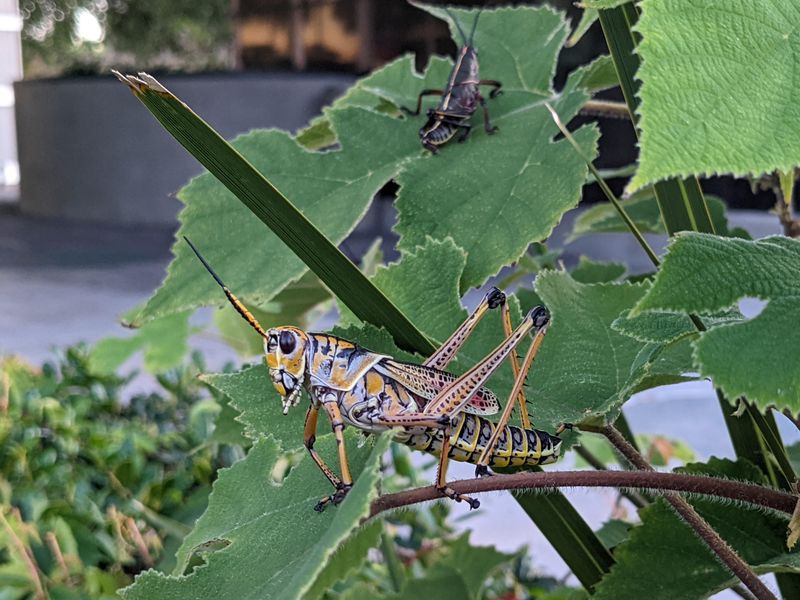
By the time lubbers reach full size, your management options have narrowed considerably. Mature adults are large, strong, and capable of moving across a yard quickly on foot.
They are also notably resistant to many common insecticide treatments, which makes chemical control far less reliable at this life stage than it is with younger nymphs.
UF/IFAS guidance consistently favors integrated pest management and early intervention over reactive spraying of large adults. Physical removal is still a practical option when adult numbers are relatively small.
Wearing gloves and dropping adults into soapy water is a straightforward approach that many gardeners find workable for light to moderate pressure.
If a pesticide product is being considered, it must be specifically labeled for use against grasshoppers on the target site. Following label directions is not optional, and applying more product than directed does not improve results with resistant adults.
Pollinators like bees and nearby water bodies deserve careful thought before any spray decision is made.
Prevention and early scouting are consistently more effective than reacting once large adults dominate the area.
Florida gardeners who monitor favored plants through spring and early summer rarely face the frustration of dealing with a yard full of resistant, fully mature insects.
Acting earlier in the season simply gives you more tools to work with and better outcomes overall.
7. Bright Colors Warn Predators To Leave These Grasshoppers Alone
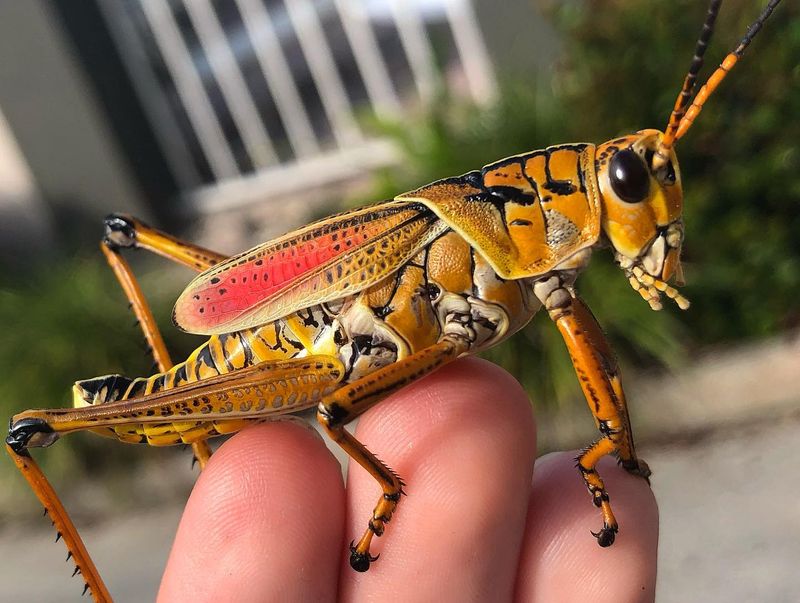
Warning coloration, known scientifically as aposematism, is a survival strategy used by animals that carry chemical defenses. Eastern lubber grasshoppers are a textbook example.
Their striking yellow, orange, red, and black patterns are not decorative; they are a signal to potential predators that eating this insect is a bad idea.
Adult lubbers produce toxic and foul-smelling compounds from glands in their bodies. Many vertebrate predators, including birds and small mammals, learn quickly to avoid them after a single unpleasant encounter.
This defense is effective enough that lubbers can sit in plain sight on a plant without much risk from most garden wildlife.
Some natural enemies and parasites do affect lubber populations despite these defenses. Certain flies and wasps can parasitize eggs or nymphs, and a few predators have learned to tolerate or work around the chemical deterrent.
These natural controls exist, but they rarely reduce a local population quickly enough to protect plants during peak feeding season.
For gardeners, this means you should not count on birds or lizards to clear a significant lubber presence from your ornamental beds on their own.
Understanding why these insects can remain visible and active without much predation pressure helps set realistic expectations.
Managing them yourself, especially at the nymph stage, remains the most reliable path to protecting your plants.
8. August Numbers Look Alarming But The Cycle Will Not Last Forever
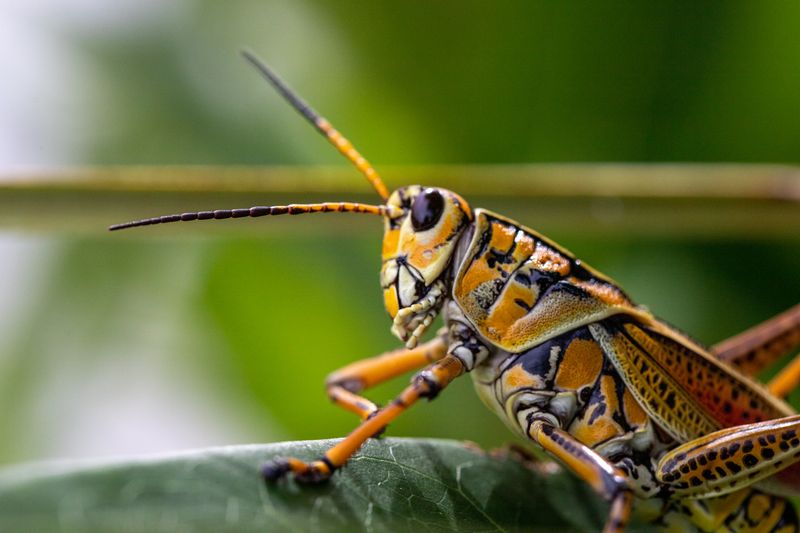
Walking outside in July or August and counting a dozen or more large lubbers near a single planting bed can feel alarming.
The good news is that eastern lubbers complete just one generation per year, so the population you are seeing right now is not building toward something larger.
What you observe in late summer represents the peak of this year’s cycle.
Seasonal timing varies somewhat across the state. In northern parts of the region, adults may peak a bit earlier or later than in southern areas.
The general pattern holds, though: nymphs emerge in spring, develop through the summer, and adults become most visible in mid to late summer before the cycle winds down.
Females lay eggs in the soil during late summer and fall. Those eggs will overwinter and produce the next round of nymphs the following spring.
Knowing this gives you a strategic advantage: the best time to reduce next year’s pressure is to scout carefully for nymph clusters early in the coming spring season.
Seeing many lubbers in August is a signal to check your highest-risk plants and protect any that show significant foliage loss. It is not a reason to panic about the entire landscape.
The cycle will move on, and gardeners who stay observant through spring have the best chance of keeping next year’s numbers manageable from the start.