Don’t Plant These Flowers In Illinois If You Want A Low-Maintenance Yard
Some plants carry traits that aren’t obvious at first, even before you bring them home. Gardeners fall for the flowers first and pay for it later.
Illinois soil feels endlessly forgiving, yet that patience has firm limits. Certain species take that kindness and turn it into expansion. Roots creep sideways while you sleep. Seeds scatter further than you think possible.
Neighbors notice the change before you ever do. Beauty fades quickly once a plant ignores every boundary.
You water it once, and it never stops advancing. Native wildflowers lose ground fast once newcomers settle in.
Local gardeners have lost entire beds to plants they once trusted. Charm hides ambition, and ambition always hides consequences.
Nobody mentions this at checkout. Prices never reflect what these plants cost Illinois weekends.
Patience runs out faster than most people expect. Choices made in April shape entire yards by midsummer. Ignore this, and the spread continues fast.
1. Purple Loosestrife
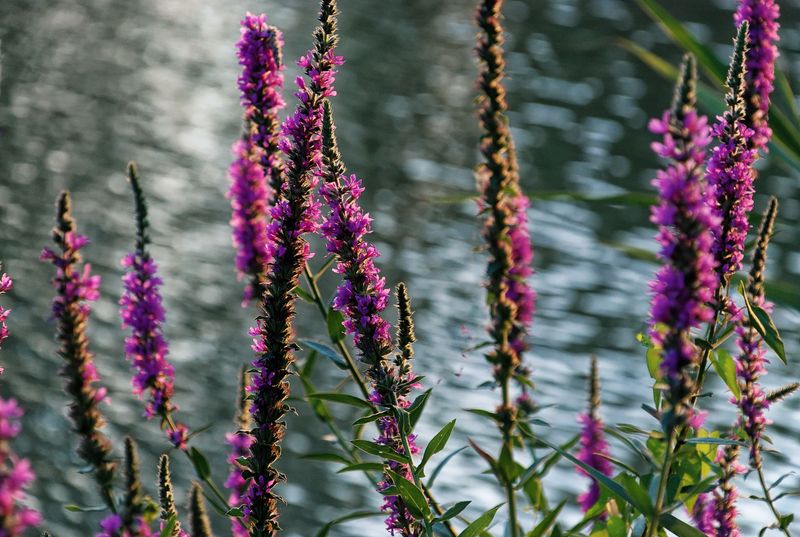
Purple loosestrife looks like it belongs on a glossy greeting card. Those tall spikes of magenta blooms are genuinely stunning in person, almost impossible to walk past without a second glance.
But this plant becomes a persistent problem once it settles into Illinois landscapes. According to university extension research, a mature plant can release well over a million seeds a year, an oddly staggering number for something so delicate looking.
Those seeds travel by wind, water, and even hitch a ride on your shoes. Before long, your backyard borders a dense stand of purple you never planted.
Wetlands and drainage areas near your yard are especially vulnerable to this gradual spread.
This plant chokes out native cattails, rushes, and grasses that local wildlife depend on. Wildlife agencies have documented waterfowl losing nesting habitat once purple loosestrife takes over a wetland.
Fish populations decline too, once their food sources disappear beneath a thick purple canopy. Illinois regulates purple loosestrife under state exotic weed law, so check current statute before buying or planting it.
That alone should tell you how seriously land managers take this threat. Removing established plants is backbreaking work requiring repeated treatments over several stubborn seasons.
Even after pulling it out, seeds buried in soil can remain viable and sprout again years later. If you want a pop of purple without the drama, try native blazing star or ironweed instead.
Both attract pollinators generously and stay politely, permanently in their own lane. Low-maintenance gardening means choosing plants that cooperate with your local ecosystem, not fight it. Purple loosestrife does not integrate well with a managed landscape.
2. Japanese Barberry
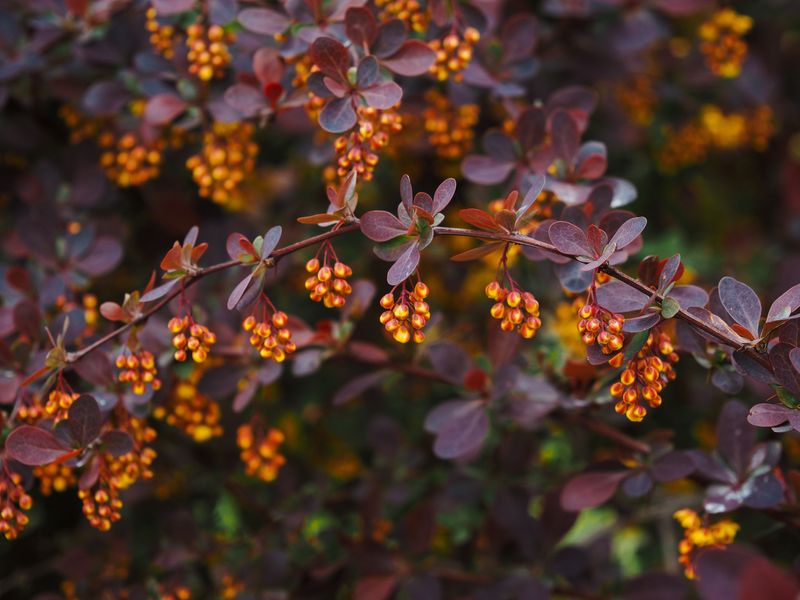
Japanese barberry’s aggressive spread isn’t obvious behind its pretty fall color and tidy little berries. Gardeners have loved it for decades as a low hedge option.
Underneath that charming exterior is one of the fastest-spreading shrubs in the Midwest. Birds eat the berries and deposit seeds everywhere they roam.
Seedlings pop up in woodlands, roadsides, and natural areas far from your original planting. Each new plant competes directly with native shrubs and wildflowers for light and nutrients.
Your Illinois Garden Changes Every Week. Your Plan Should Too.
Gardening in Illinois changes quickly throughout the season. Every Friday you’ll receive a simple weekly plan showing exactly what to plant, prune, fertilize, harvest, and protect so you never miss the right timing.
Here is a fact that might surprise you: Japanese barberry alters soil chemistry wherever it grows. It raises soil pH and nitrogen levels, creating conditions that favor its own spread.
Ticks also favor barberry thickets. Research, including studies from the Connecticut Agricultural Experiment Station, has found higher populations of deer ticks in areas dense with this shrub.
That means planting barberry near your home could increase your family’s exposure to Lyme disease. That is a serious trade-off for a pretty hedge.
Removing barberry is difficult, hands-on work. Those thorns are sharp, and the root system is difficult to fully remove.
Native alternatives like native spicebush or American beautyberry offer similar visual interest. Both support local wildlife instead of undermining it.
A low-maintenance yard should not require hazmat gloves to manage. Skip the barberry and save yourself the trouble from the start.
3. Butterfly Bush
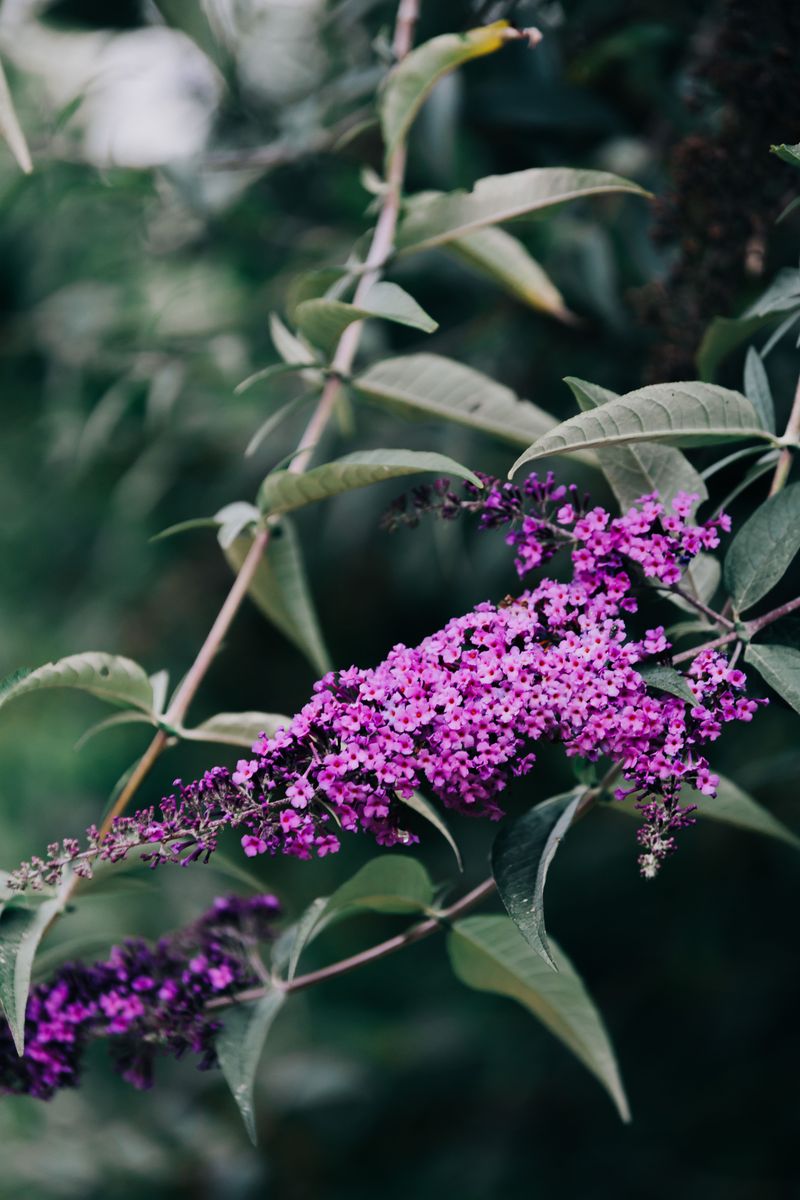
The name butterfly bush sounds like a gift to your garden. Those long, fragrant flower clusters do attract butterflies, and that part is real.
What the name does not tell you is that the plant offers little nutritional value to those butterflies. It attracts adult butterflies but supports none of their earlier life stages.
Native caterpillars cannot feed on butterfly bush leaves at all. So while adult butterflies visit briefly, the plant supports no part of their life cycle.
Butterfly bush also seeds prolifically, spreading into natural areas and roadsides across the Midwest. Seedlings establish quickly in disturbed soil and open spaces.
Once it escapes your yard, it competes with native wildflowers that insects actually need. Goldenrod, milkweed, and coneflower do so much more for your local ecosystem.
Some gardeners assume cutting off seed heads solves the problem. But even careful trimming rarely catches every seed before it disperses.
Sterile varieties exist and are sold as a safer alternative. However, trials at land-grant universities studying “sterile” cultivars have found that some still produce a small amount of viable seed, so labeling alone isn’t a guarantee.
If you genuinely want to help butterflies, plant native options like buttonbush or native joe-pye weed. Both support the full butterfly life cycle, not just the adult stage.
A yard that truly supports wildlife takes a little thought upfront. Choosing the right plants now means less replanting and more real results later.
4. Bradford Pear
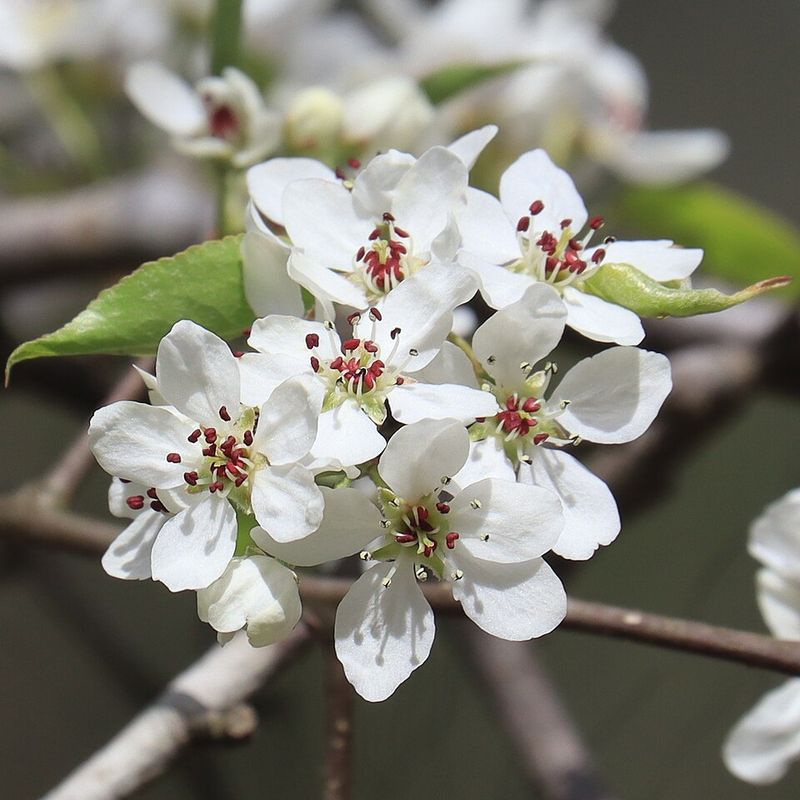
Bradford pear trees burst into white blooms every spring, and neighborhoods across the Midwest go wild for them. For about two weeks, they look absolutely magical.
Then the smell hits. Many people describe the flowers as smelling like fish or rotting material, which makes those two weeks considerably less appealing.
Beyond the odor, Bradford pear is one of the most structurally weak trees you can plant. The tight branch angles split dramatically in storms, often destroying the entire tree.
Cleanup after a storm involving a Bradford pear can take significant time and effort. Large limbs crash unpredictably, sometimes damaging roofs, fences, and parked vehicles.
The trees also cross-pollinate with related species, producing fertile offspring that spread into natural areas. Wild offspring have thorns, unlike the ornamental parent, making removal even harder.
Thickets of escaped Bradford pear relatives now compete with native trees across the region. Forest edges and open fields have lost significant native diversity because of this one popular ornamental.
States including Ohio, South Carolina, and Pennsylvania have passed laws restricting or banning Bradford pear sales in recent years.
Illinois residents should check current state and local regulations, since rules in this area continue to evolve. Some nurseries are also voluntarily phasing the tree out as awareness grows.
Native alternatives like serviceberry or redbud offer spring blooms without the chaos. Both are structurally sound, smell pleasant, and support local wildlife year-round.
Choosing a tree is a long-term decision for your yard. Make sure that decision does not cost you a roof repair down the road.
5. Oriental Bittersweet
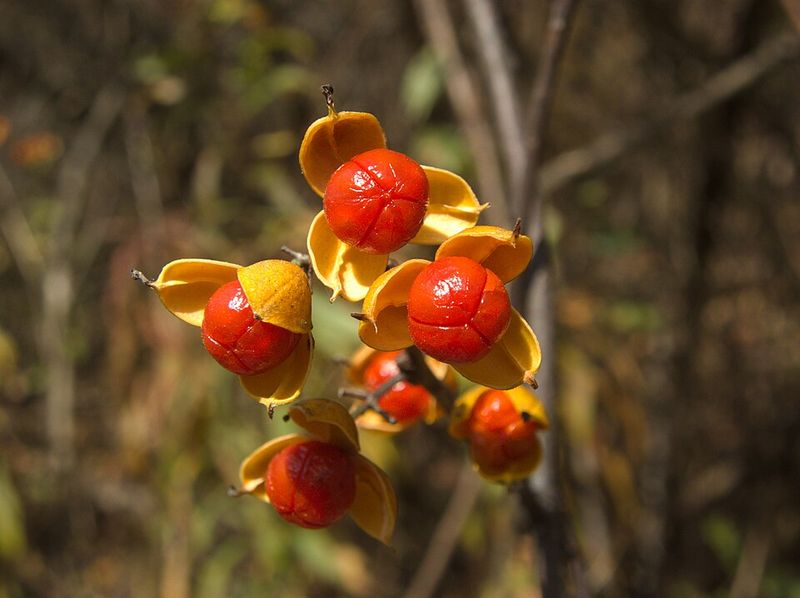
Oriental bittersweet looks stunning in fall wreaths and holiday arrangements. Those clusters of orange and red berries are genuinely hard to resist at craft fairs.
But this vine is one of the most destructive plants you can bring near your property. It wraps around trees and shrubs in a slow, tightening spiral.
As the vine thickens, it constricts branches and trunks, restricting the flow of water and nutrients. Mature trees can be toppled entirely when a heavy bittersweet vine adds wind resistance.
Birds spread the seeds widely after eating the berries. Woodlands near residential areas are especially vulnerable to bittersweet invasion.
Once established, the root system is incredibly deep and persistent. Cutting the vine above ground simply triggers more aggressive regrowth from below.
Repeated treatment over multiple seasons is usually required to make any real progress. That requires ongoing effort, not less.
American bittersweet is a native relative that behaves much more responsibly. It is harder to find at nurseries, but worth seeking out for fall color without the consequences.
Make sure you are buying the right species, since they look similar. Check the berry placement: American bittersweet has berries only at branch tips, while Oriental bittersweet has them all along the stem.
That small detail makes a big difference for your yard and your neighbors’ trees. Choose wisely before the vine makes an unwanted choice for you.
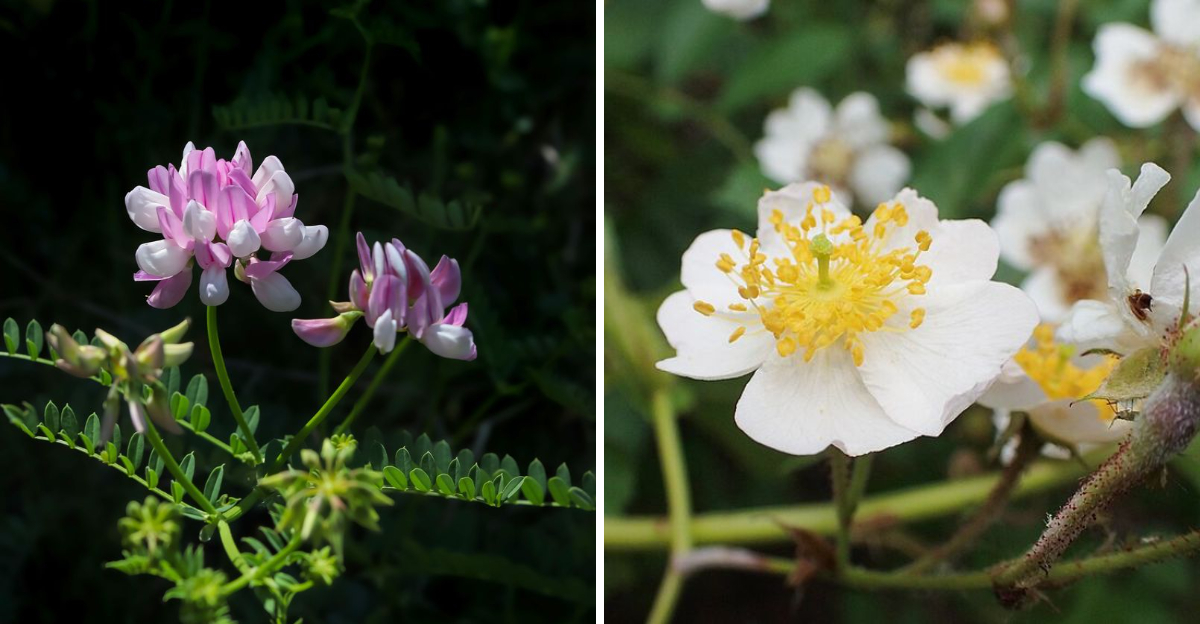
6. Crown Vetch
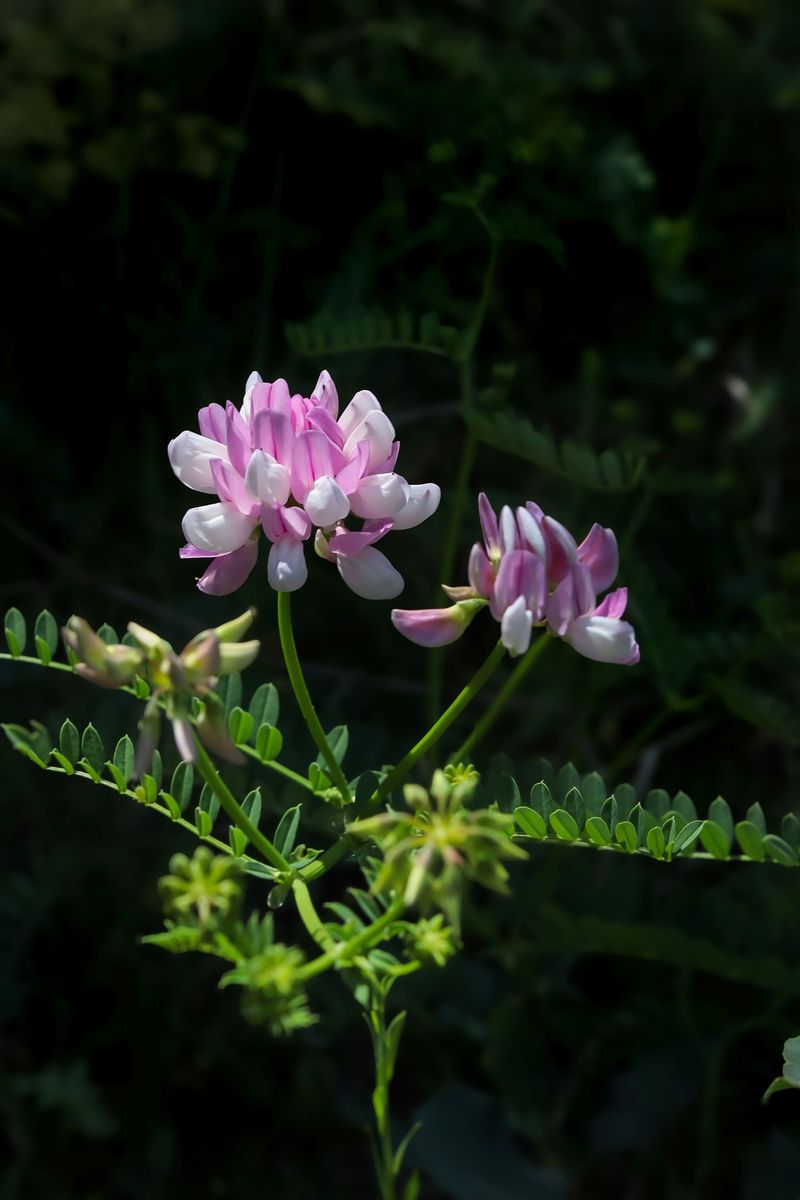
Crown vetch was once promoted as a solution for erosion control. Highway departments planted it along roadsides across the country with great enthusiasm.
Now land managers spend significant resources trying to contain it. What seemed like a practical solution turned into a widespread ecological challenge.
This plant spreads through both seeds and an extensive underground root network. Pulling it by hand rarely removes enough of the root system to stop regrowth.
Crown vetch releases chemicals into the soil that suppress the growth of neighboring plants. Native wildflowers and grasses simply cannot compete on that chemical playing field.
Once it takes hold in a yard, it spreads into adjacent natural areas without slowing down. Prairies, savannas, and woodland edges near residential areas are affected the most.
The plant fixes nitrogen in the soil, which sounds beneficial but actually favors invasive species over native ones. That ecological shift can take years to reverse after removal.
Homeowners who plant it for a quick ground cover solution often regret it within a few seasons. The spread goes far beyond any border you intended.
Native ground covers like wild ginger or Pennsylvania sedge offer real erosion control without the aggression. Both stay manageable and support local insects and soil health.
A low-maintenance yard in Illinois means working with the land, not against it. Crown vetch tends to spread beyond its intended area over time.
7. Multiflora Rose
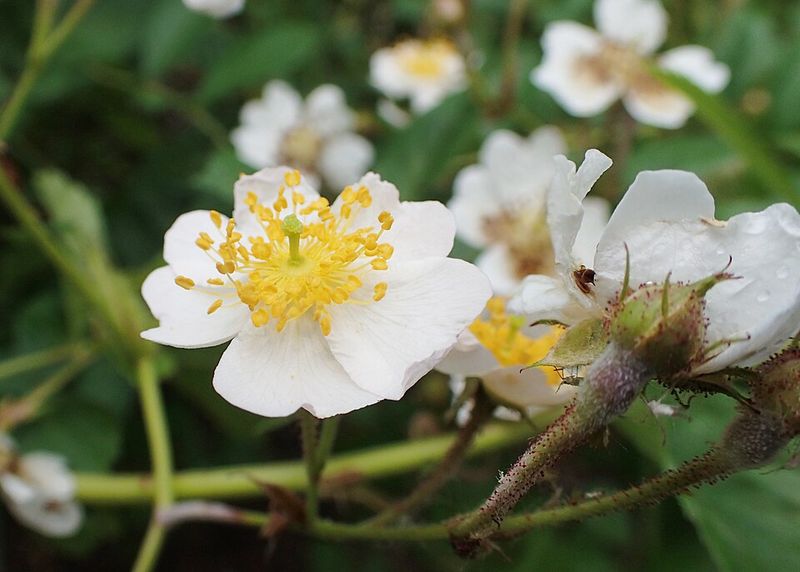
Multiflora rose was introduced to North America as a living fence for livestock. Farmers planted it in long rows, thinking they had found a natural, low-cost solution.
That plan backfired significantly. The plant spread far beyond fence lines and is now considered a serious invasive threat across most of the eastern United States.
According to USDA and extension estimates, a single mature shrub can produce several hundred thousand seeds per year. Birds distribute those seeds across vast distances, making containment nearly impossible once a population establishes.
The thorny canes arch outward, forming dense thickets in fields, woodland edges, and yards. Getting near an established clump without heavy gloves is difficult and uncomfortable.
Multiflora rose shades out native plants beneath its canopy and along its spreading perimeter. Grassland birds that nest in open areas lose critical habitat when these thickets expand.
Multiflora rose has been listed as a noxious weed in Illinois and several other states in the past, though weed lists are updated periodically, so check current state guidance before planting or spreading it.
That history reflects how seriously land managers have treated this plant. Removal requires cutting, herbicide treatment, and follow-up monitoring over several growing seasons. One round of removal rarely gets the job done completely.
If you want a flowering shrub with wildlife value, native wild plum or hawthorn are excellent choices. Both offer blooms, berries, and nesting habitat without the thorny takeover.
Your weekends are valuable, and so is your local ecosystem. Don’t spend both managing a rose that spreads beyond its boundaries.
8. Bishop’s Weed
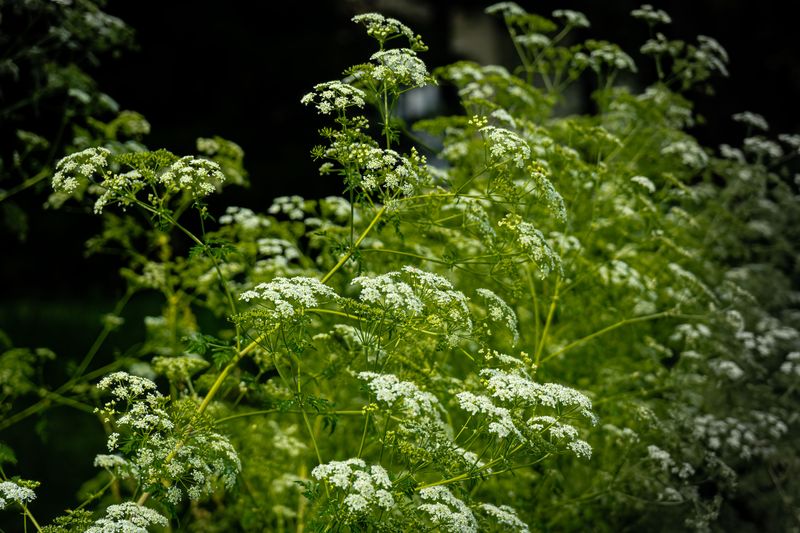
Bishop’s weed gets sold at garden centers as a charming, variegated ground cover for shady spots. The green and white leaves do look crisp and fresh in a container.
Plant it in your yard, though, and you will spend years regretting that decision. This plant spreads underground through rhizomes that break apart and regrow whenever you try to remove them.
Every small piece of root left in the soil becomes a new plant. Digging it out can actually make the problem worse if you are not meticulous about removing every fragment.
Bishop’s weed crowds out most other plants in its path. Hostas, ferns, and native wildflowers all disappear under its dense carpet of foliage.
It thrives in shade where other ground covers struggle, which is exactly why gardeners reach for it. That same adaptability is what makes it difficult to control.
Shaded garden beds near woodland edges are especially at risk of spreading beyond your property. Once it escapes into natural areas, removal becomes a community-level problem.
Smothering it with cardboard and deep mulch can slow the spread, but rarely gets rid of it. Persistent follow-up treatment over multiple seasons is usually the only effective approach.
Native alternatives like wild ginger, green-and-gold, or native pachysandra handle shade beautifully. They stay where you put them and support local insects at the same time.
A low-maintenance yard shouldn’t require years of ongoing removal work. Skip bishop’s weed and plant something that actually respects boundaries.