California Groundcovers That Stay Neat Around Pool Decks Without Making A Mess
Poolside planting has a different set of rules than the rest of the yard. A groundcover may look beautiful in a garden bed, then become a headache once leaves, flowers, or loose stems start ending up on wet concrete.
Around California pools, the best choices stay compact and tolerate reflected heat without constantly shedding debris into drains or water.
They also need to handle occasional splashes and the tougher conditions created by hardscape.
Growth habit matters just as much as appearance, especially near walkways where sprawling plants can quickly become a tripping problem. The goal is to soften the edges of a pool deck without creating another maintenance chore.
With the right plants, that space can feel cooler and more finished while staying clean enough to enjoy without sweeping every afternoon.
1. Blue Chalk Sticks Keeping Pool Borders Cool And Sculptural
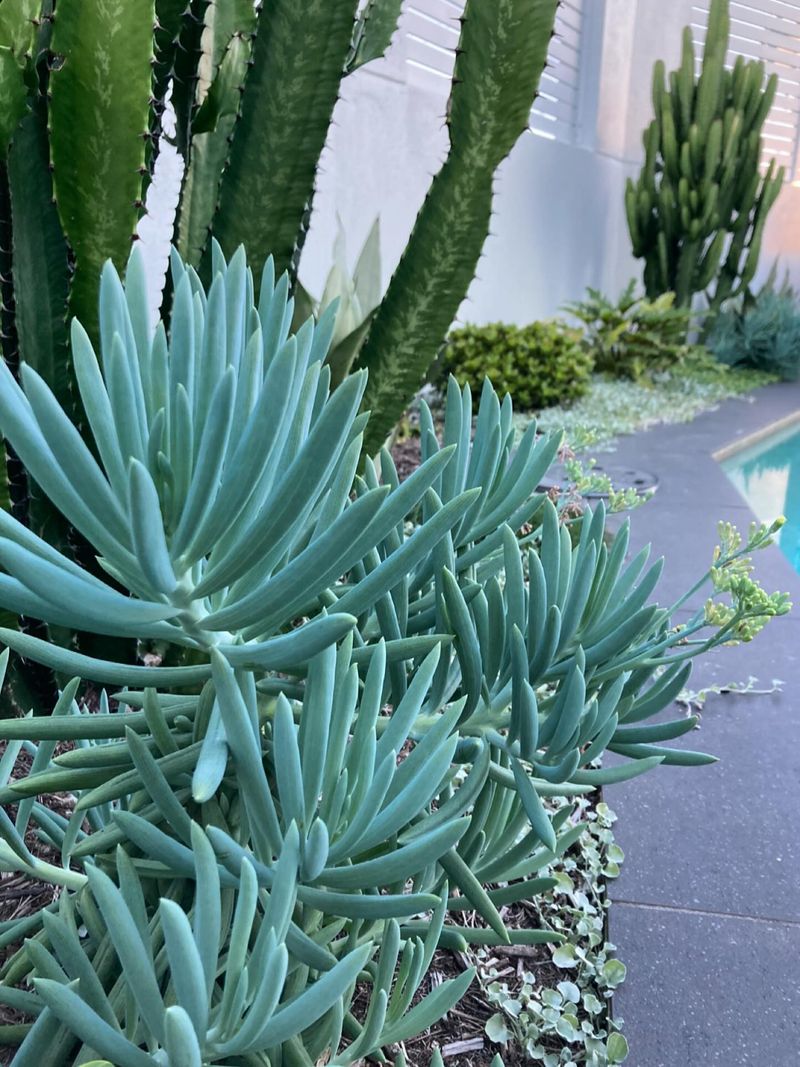
Few plants can make a pool border look like a piece of living art the way Blue Chalk Sticks can. This South African native has found a happy home in warm, sunny yards across the country.
Its powdery blue, finger-shaped leaves grow in neat rosette clusters that fan outward without flopping or spreading into the water.
It stays low, usually under a foot tall, which means it never blocks sightlines or creates a tripping hazard near the pool edge. The color is the real showstopper.
That cool, silvery-blue tone reflects light beautifully and makes the whole pool area feel more polished. It pairs especially well with white or light gray concrete decking.
Because it is a succulent, it stores water in its leaves. That means it can handle weeks without irrigation once it is established.
It does not drop messy petals or seeds near the pool. Pruning is almost never needed.
Just pull the occasional damaged leaf and it stays tidy on its own.
Plant it in well-draining soil and give it full sun for best results. It handles reflected heat from pavers without complaining.
Root rot is the only real risk, so avoid overwatering. For a clean, sculptural pool border that requires almost no effort, this plant is a top-tier pick.
2. Crassula Groundcovers Staying Compact Around Hot Pavers
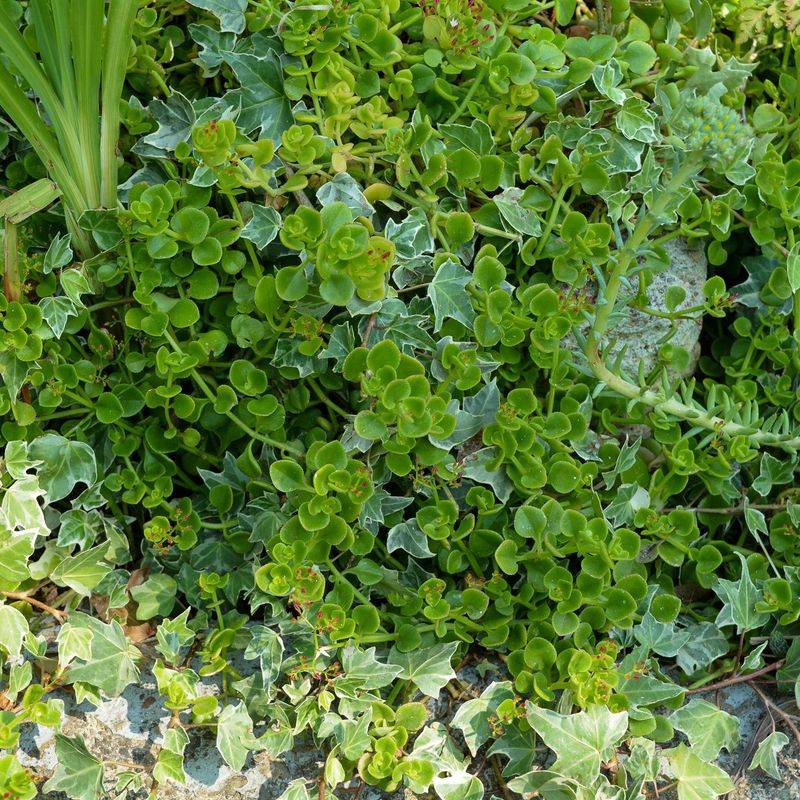
Hot pavers do not scare Crassula. This tough little succulent thrives in exactly the kind of radiant heat that most plants would struggle to survive.
Planted between or along pool pavers, it forms a tight, low carpet that stays where you put it and does not wander toward the water.
Most Crassula groundcover varieties top out at just a few inches tall. That compact size is a huge plus around California pools, where you want texture and color without bulk.
The leaves are small, fleshy, and often tipped with red or orange when stressed by sun, which adds a nice pop of warmth to the landscape.
One of the best things about Crassula near pools is what it does not do. It does not shed petals into the water.
It does not produce fluffy seeds that float across the surface. It does not send out aggressive runners that crack pavers or trip people up.
Your California Garden Changes Every Week. Your Plan Should Too.
Gardening in California changes quickly throughout the season. Every Friday you’ll receive a simple weekly plan showing exactly what to plant, prune, fertilize, harvest, and protect so you never miss the right timing.
It just sits there, looking great, doing its job. Water it deeply but infrequently once established. It handles poor, sandy soil surprisingly well.
Good drainage is the one non-negotiable. Plant it in full sun to part shade and give it a few weeks to settle in.
After that, it pretty much takes care of itself. For anyone who wants a fuss-free filler around hot pool pavers, Crassula is worth every penny.
3. String Of Bananas Softening Raised Poolside Edges
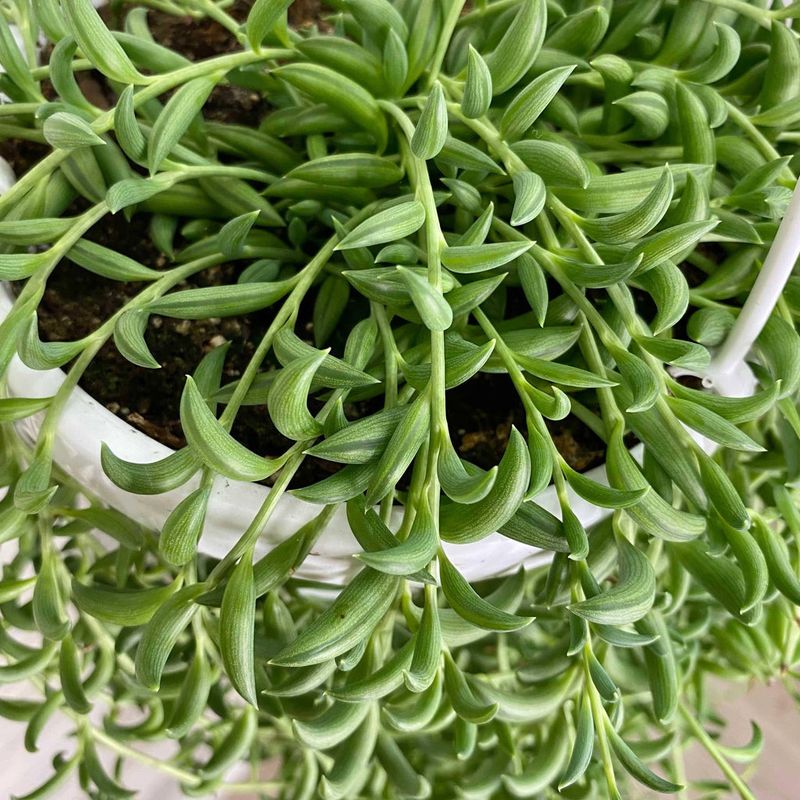
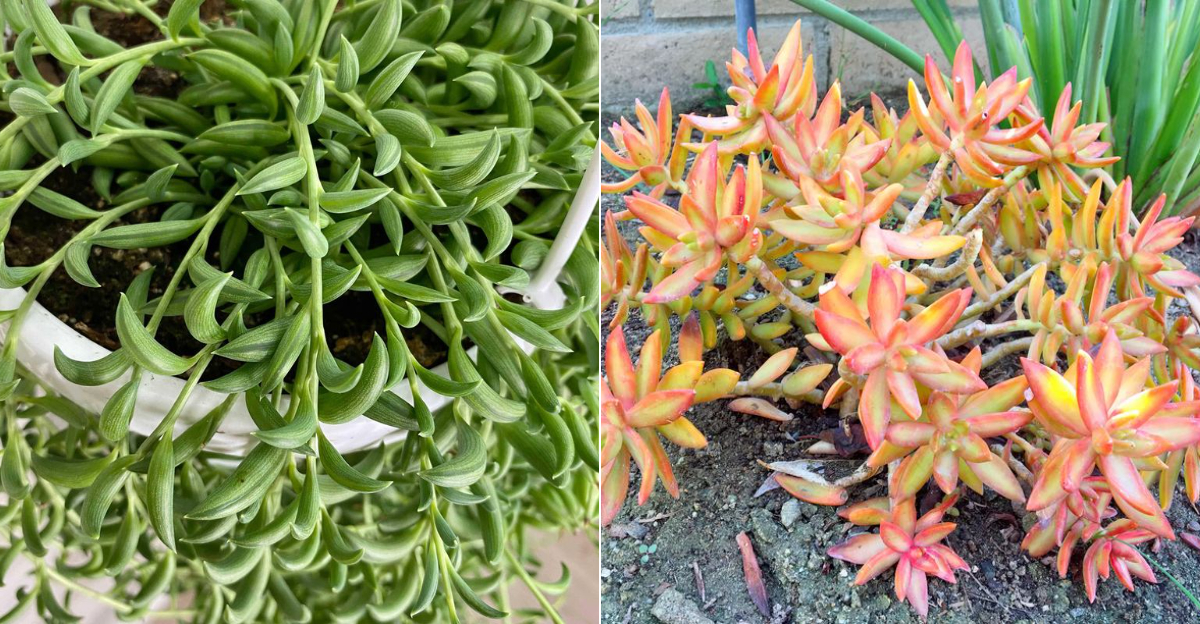
There is something almost playful about the way String of Bananas drapes over a raised pool edge. Those long, trailing stems covered in plump, banana-shaped leaves create a soft, flowing look that takes the hard edge off concrete walls and raised planters.
It is one of the most visually interesting groundcovers you can use poolside.
Because it trails downward rather than spreading outward, it stays completely out of the pool zone. You plant it at the top of a raised bed or wall, and it hangs down gracefully.
No runners creeping toward the water. No mess on the deck. Just clean, cascading greenery that moves gently in the breeze.
It is a succulent, so heat and drought are not problems. It stores moisture in those little banana-shaped leaves and keeps going even when conditions get tough.
Full sun or bright indirect light works well. Watering every week or two during summer is usually enough once it is settled in.
Occasional small white flowers may appear, but they are tiny and do not create any debris worth worrying about. Trim the stems back if they get too long.
That is about all the maintenance required. For softening the look of raised pool edges without adding any cleanup burden, String of Bananas is a creative and practical choice that never looks boring.
4. Coppertone Stonecrop Adding Color Without Constant Cleanup
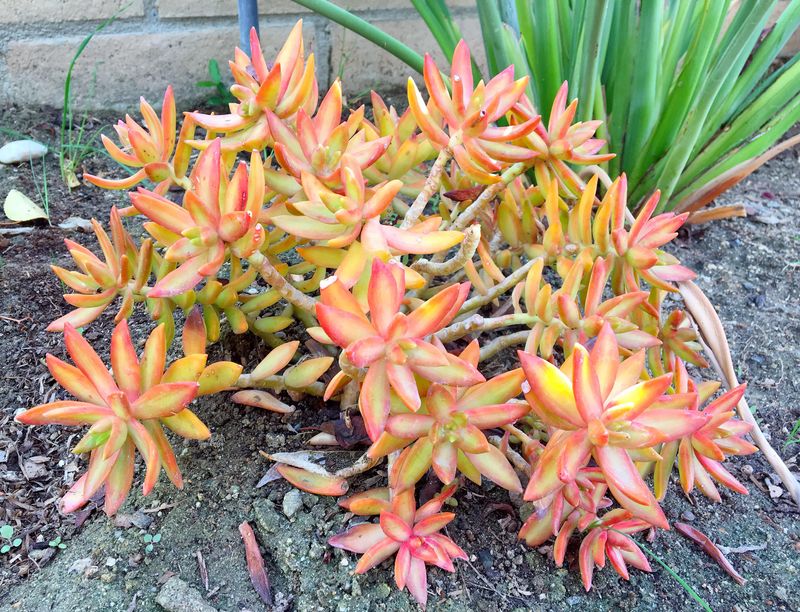
Coppertone Stonecrop earns its name. The fleshy, rounded leaves shift from soft green to a warm bronze-orange when the sun hits them just right.
Planted along a pool border, it creates a rich, layered color effect that looks intentional and professionally designed. Most people do a double take when they first see it.
It grows low and dense, spreading slowly outward without becoming invasive. That slow, controlled spread is exactly what you want near a pool.
You get good coverage over time without the plant sneaking into places it should not be. It stays under six inches tall in most conditions, which keeps sightlines open and pathways clear.
Cleanup is almost nonexistent. The plant does not shed its leaves heavily, and what little it does drop is minimal and easy to manage.
Flowers appear in summer but are small and do not create floating debris in pool water. That alone makes it a standout choice for poolside planting.
Plant it in full sun for the richest color. It handles reflected heat from concrete and pavers without skipping a beat.
Water deeply once or twice a week during the first season, then back off as it establishes. After that, it is largely self-sufficient.
For color that lasts all year without demanding anything in return, Coppertone Stonecrop is one of the smartest low-maintenance picks available.
5. Myoporum Parvifolium Spreading Low Without Constant Fuss
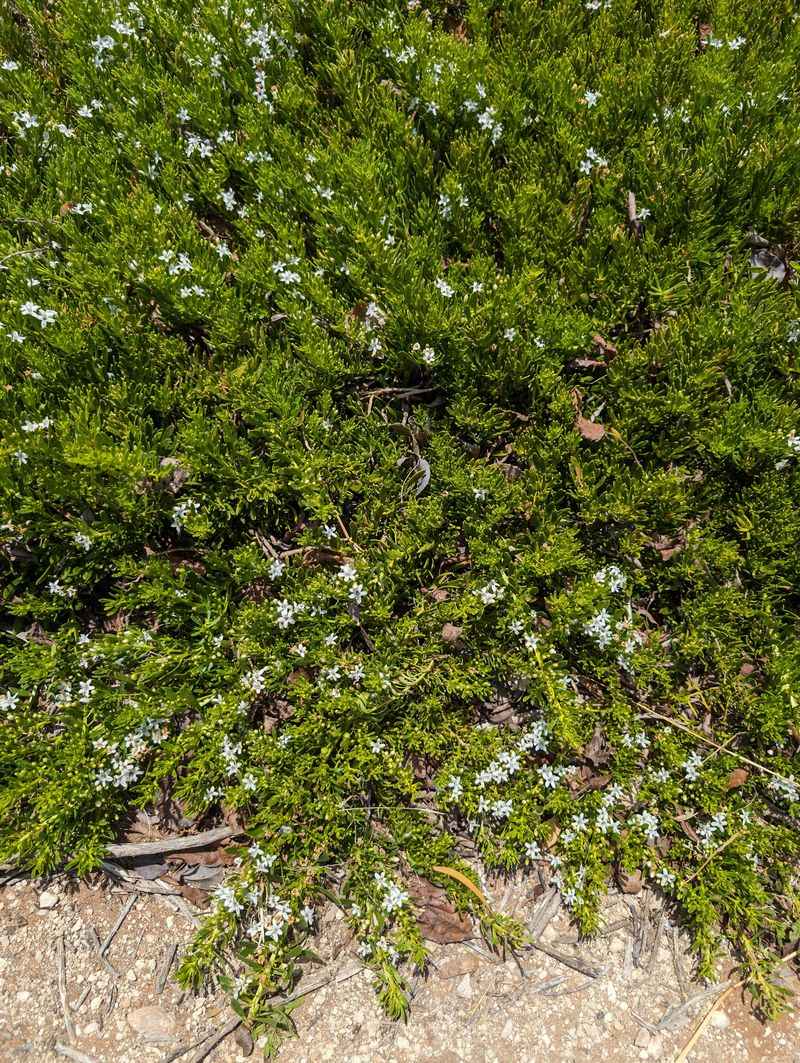
Speed and reliability are what set Myoporum parvifolium apart from most other groundcovers.
It spreads quickly to fill bare spots, creates a dense mat that chokes out weeds, and stays low enough to never become a visual problem near the pool.
Once it covers the ground, it basically takes over maintenance duties itself.
The leaves are small and narrow, staying neatly on the plant rather than dropping in large quantities. Tiny white flowers appear seasonally but are small and light enough that they rarely cause any real issue near pool water.
The overall impression is a clean, lush green carpet that looks cared for even when it has been left alone for weeks.
Heat and drought resistance are strong suits here. It handles the kind of intense reflected California heat that comes off pool decks and concrete surrounds without any visible stress.
Once established, it needs very little supplemental water. That makes it a practical choice for anyone trying to reduce their water bill while still keeping things looking sharp.
It does spread aggressively, so plan for that when deciding where to plant it. Give it room to grow, or edge it regularly to keep it in bounds.
Plant in full sun to light shade. Trim edges once or twice a year to maintain a clean border line.
For a fast-spreading, low-fuss groundcover that fills space efficiently, this one delivers consistently.
6. Kurapia Handling Heat Without Turning Into A Mess
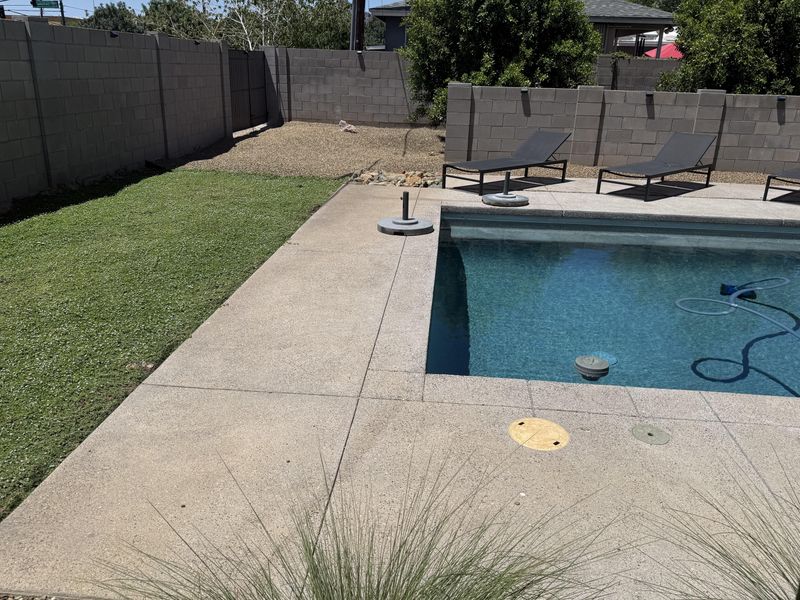
It forms a tight, dense mat that stays low to the ground, handles foot traffic, and holds up in full sun without wilting or browning out. Near a pool, that combination is almost impossible to beat.
The tiny white flowers it produces are charming rather than messy. They are so small that they do not create floating debris in pool water, which is one of the main concerns with flowering groundcovers in this setting.
Bees love those little blooms, so you get a bonus pollinator benefit with zero cleanup cost. Water needs drop significantly after the first season. Kurapia has deep roots that help it find moisture even during dry stretches.
It handles heat reflected off concrete and pavers without looking stressed or patchy. That resilience is a big reason it has become popular in water-conscious landscaping projects across warm regions.
Mowing or trimming once a month during the growing season keeps it looking polished. Without trimming, it stays fairly tidy on its own but may get a little shaggy around the edges.
Plant it in full sun for best density. It does not spread aggressively beyond its borders, which makes it easy to manage.
For a heat-tough, low-mess option that looks like a real lawn alternative, Kurapia is genuinely impressive.
7. Low-Growing Sedum Shrugging Off Heat Near Concrete
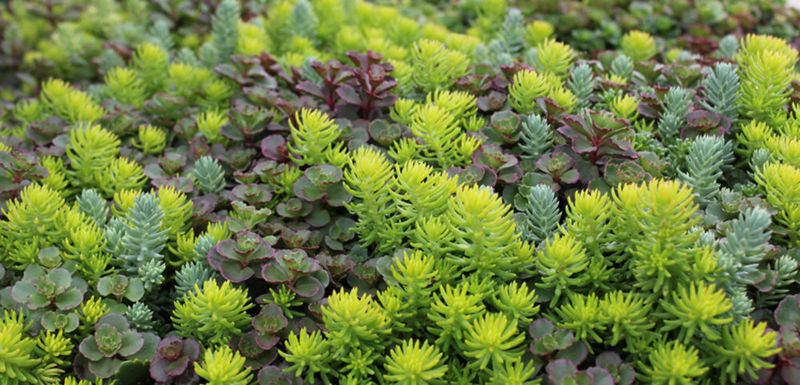
Sedum has a reputation for being nearly indestructible, and that reputation is well earned. Low-growing varieties form dense, colorful mats that hug the ground and handle reflected heat from concrete without skipping a beat.
Near a pool deck, that toughness is exactly what you need. The leaves are small and fleshy, storing water efficiently so the plant can survive dry spells with minimal irrigation.
Colors range from bright green to deep burgundy depending on the variety and sun exposure.
Mixing a few different types creates a patchwork effect that looks intentional and adds visual depth to the pool border.
One underrated quality of sedum near pools is how little it sheds. Leaves stay firmly attached unless physically disturbed.
Flowers appear in late summer and fall, but they are small and dry up neatly on the plant rather than blowing into the water. That means less skimming and less filter maintenance for you.
Planting is simple. Choose a spot with full sun and well-draining soil. Space plants about a foot apart and let them fill in over one or two seasons.
Once established, they need very little attention beyond occasional weeding between plants.
Overwatering is the main mistake people make, so resist the urge to water too often. For a heat-proof, low-shedding groundcover that brings color without chaos, low-growing sedum is a reliable year-round performer near any pool deck.
8. Ghost Plant Filling Sunny Gaps With Silvery Rosettes
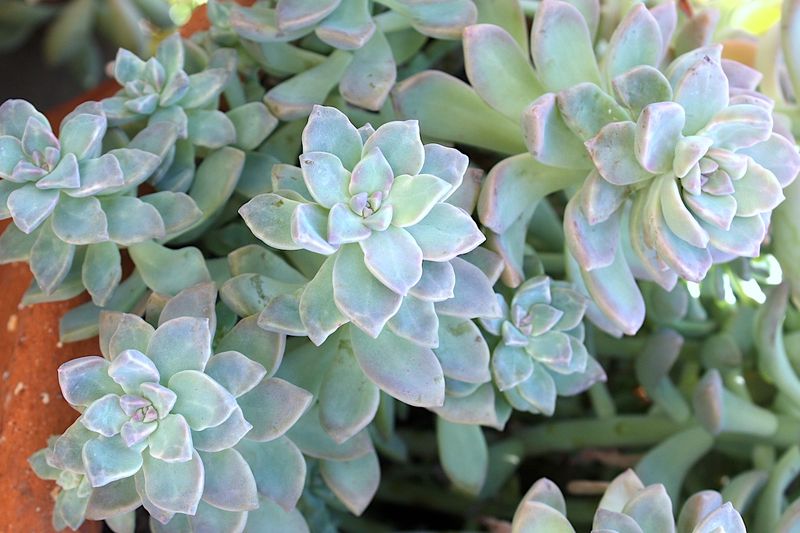
The rosettes are made up of thick, spoon-shaped leaves coated in a powdery, silvery-lavender blush that shifts to pink or peach in cooler months.
Planted in sunny gaps around a pool deck, it looks otherworldly in the best possible way.
It grows slowly and stays low, which is perfect for filling in spaces between pavers or along the edges of the pool surround. Because it does not spread aggressively, it stays exactly where you put it.
That predictability is a big plus when you are trying to keep a pool area looking clean and intentional.
The powdery coating on the leaves, called farina, serves a real purpose. It reflects intense sunlight and helps the plant regulate temperature in hot conditions.
That is why Ghost Plant thrives in full sun near concrete and tile, where reflected heat can be brutal for most other plants.
Water it sparingly. Too much moisture is its main weakness.
Plant it in gritty, well-draining soil and let the ground dry out completely between waterings. Small yellow flowers appear occasionally but drop cleanly and do not create pool debris.
Minimal pruning is needed. Just remove spent rosettes as they fade.
For filling sunny gaps with something that looks stunning and stays tidy, Ghost Plant is a standout choice that never disappoints.