Why Tarantulas Start Crossing California Yards And Driveways In Late Summer
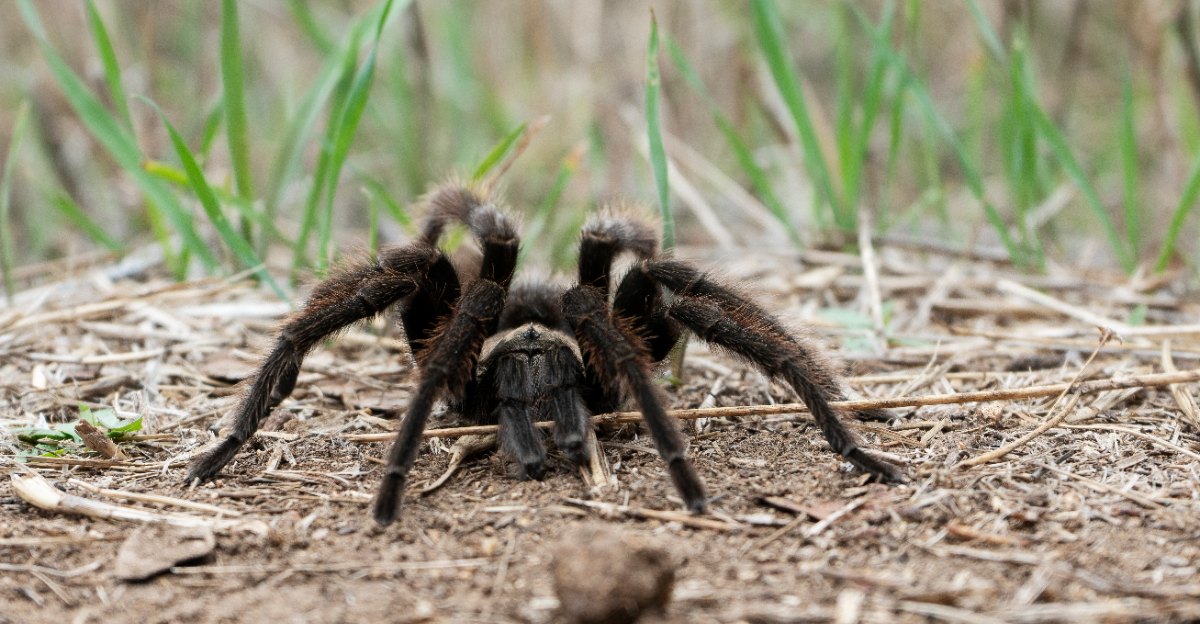
Late summer in California can suddenly put tarantulas in places homeowners are not used to seeing them.
One may appear on a driveway at dusk, another may cross a patio, and sightings can become noticeably more frequent over just a few weeks.
The behavior is tied to the season, not a sudden infestation. Warmer nights and changing reproductive activity bring these normally hidden spiders out into the open, where they may travel surprising distances across developed areas.
That can make an ordinary backyard encounter feel much more dramatic than it actually is.
Their slow, deliberate movement also makes them easy to notice compared with smaller spiders that disappear into cracks almost instantly.
If tarantulas seem to be showing up everywhere right now, there is a seasonal reason behind it, and understanding that pattern makes the sightings a lot less mysterious.
1. Late Summer Is Tarantula Dating Season
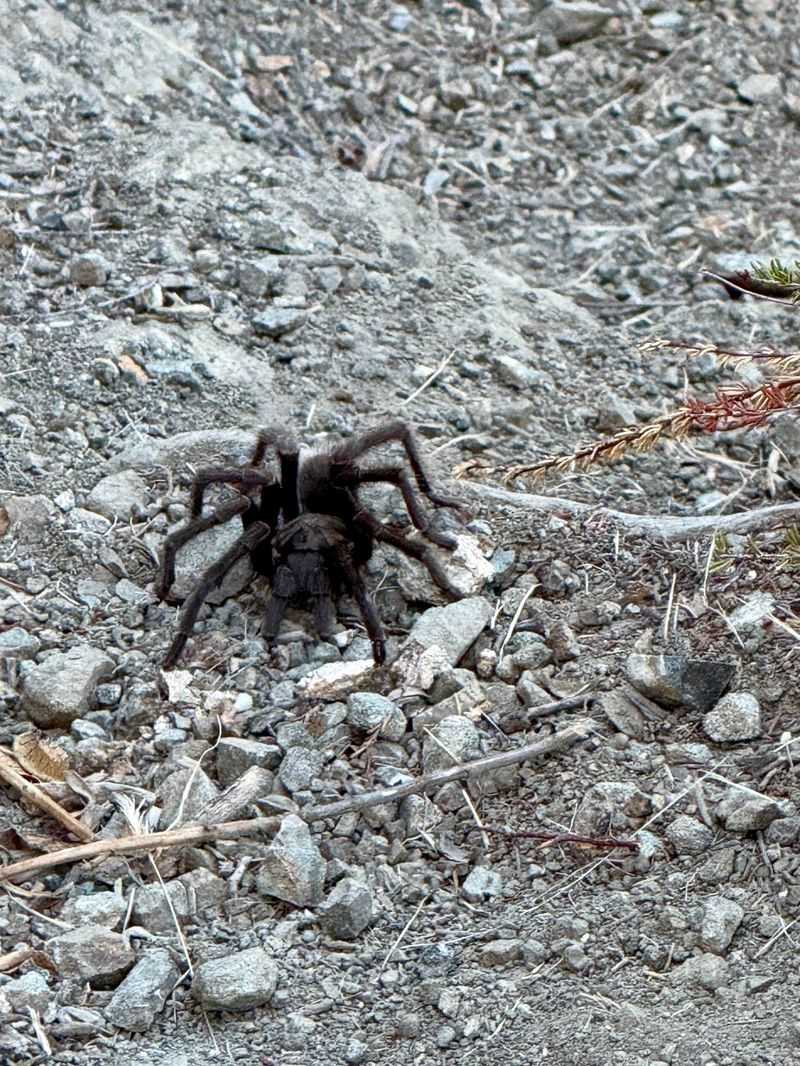
Most people think of tarantulas as solitary, mysterious creatures hiding in dark burrows. But once a year, they have a very relatable goal: finding a partner.
Late summer, usually from August through October, is peak mating season for tarantulas across the western United States, including California!
Male tarantulas spend most of their lives underground. They eat, rest, and stay hidden for years.
But when they reach maturity, usually around age 10, something changes inside them. A biological signal tells them it is time to leave the burrow and go looking for a female.
This seasonal behavior is deeply tied to temperature and daylight. As summer days grow slightly shorter and nights cool down just a little, males sense the shift and begin to move.
They stop eating and focus entirely on finding a mate. Their bodies are literally built for this one final journey.
Once a male mates, he rarely survives much longer. His body begins to slow down, and he eventually stops moving altogether.
The female, on the other hand, can live for decades. She waits in her burrow while dozens of hopeful males wander across the landscape looking for her.
What looks like a random spider crossing your yard is actually part of one of nature’s most ancient and reliable seasonal rituals.
2. Males Start Wandering Far Beyond Their Burrows
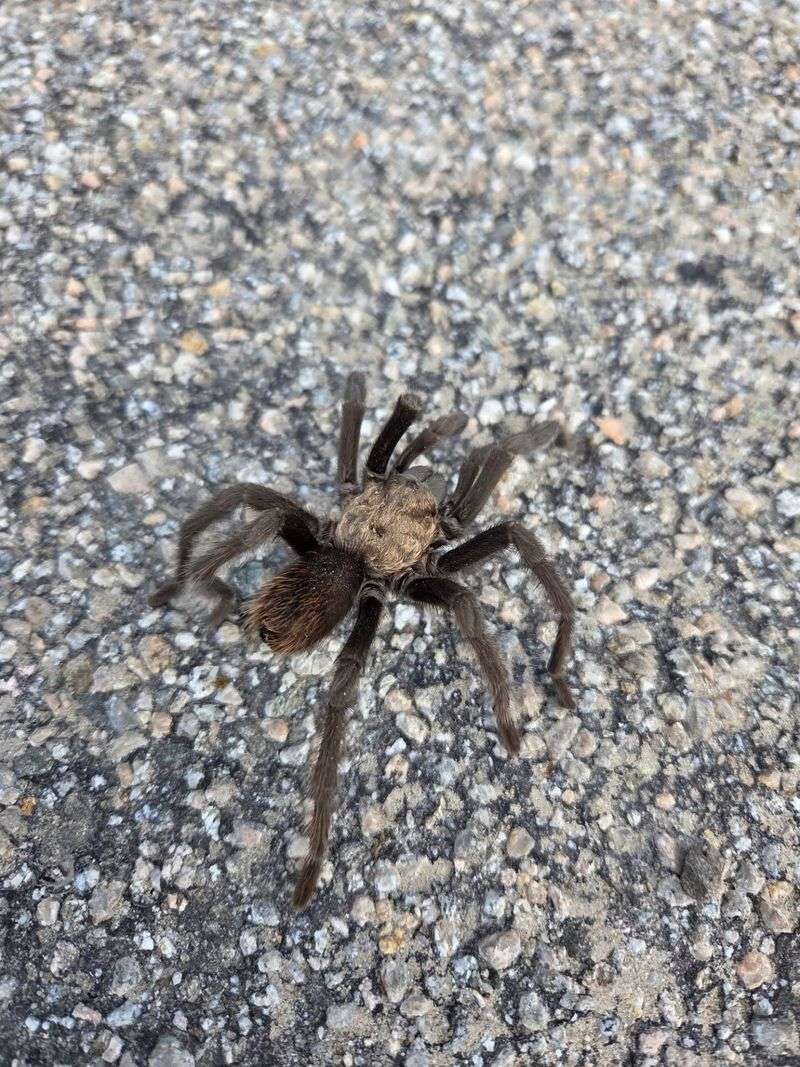
When a male tarantula leaves his burrow, he does not just take a short stroll. He goes on what can only be described as a serious road trip.
Some males travel several miles during mating season, crossing all kinds of terrain to find a receptive female.
This wandering behavior is what brings them into contact with humans. Before neighborhoods were built, these spiders moved freely through grasslands and chaparral.
Now, they cross through backyards, over driveways, and sometimes even through garages. They are not confused or lost.
They are following instincts that have guided their species for millions of years.
Male tarantulas use a combination of scent and vibration to detect females. Females release chemical signals called pheromones that males can pick up from a surprising distance.
Once a male catches that scent, he follows it with determination. He will cross rocks, roots, concrete, and mulch to get there.
Your California Garden Changes Every Week. Your Plan Should Too.
Gardening in California changes quickly throughout the season. Every Friday you’ll receive a simple weekly plan showing exactly what to plant, prune, fertilize, harvest, and protect so you never miss the right timing.
Along the way, he moves slowly and steadily, usually stopping to rest under a leaf or near a rock. If you spot one crossing your California yard, it means a female may be living nearby, possibly already in a burrow somewhere in your garden or under a nearby structure.
He is not wandering aimlessly. He has a very clear destination in mind.
3. Warm Evenings Bring More Spiders Into The Open
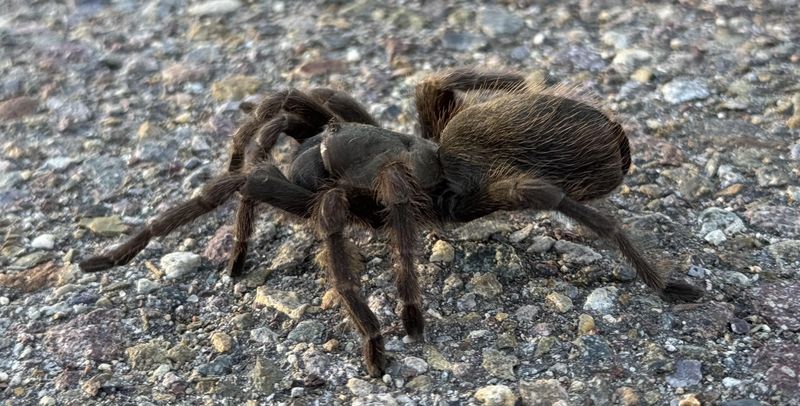
Tarantulas are most active when temperatures are just right, and late summer evenings offer exactly that. During the hottest part of the day, the ground can be scorching, especially on concrete and asphalt.
Tarantulas avoid extreme heat because it dries them out and drains their energy fast.
As the sun goes down and the air cools slightly, conditions become much more comfortable for them. This is why most tarantula sightings happen at dusk or in the early evening hours.
If you have ever spotted one crossing your driveway around sunset, you were witnessing their favorite travel time.
Tarantulas are also sensitive to moisture. They prefer to move when the air is not too dry, which is why the transition between summer and fall works so well for them.
The nights become a little more humid, and the ground retains some warmth without being dangerously hot. These conditions make it easier for them to travel longer distances without losing too much water from their bodies.
Their slow, deliberate movements are actually a way of conserving energy. They are not sluggish because they are weak.
They are built to pace themselves. Watching one cross your yard on a warm evening is a reminder that even the smallest creatures follow a rhythm tied to the seasons, the temperature, and the light.
4. Driveways Become Easy Routes Across Dry Ground
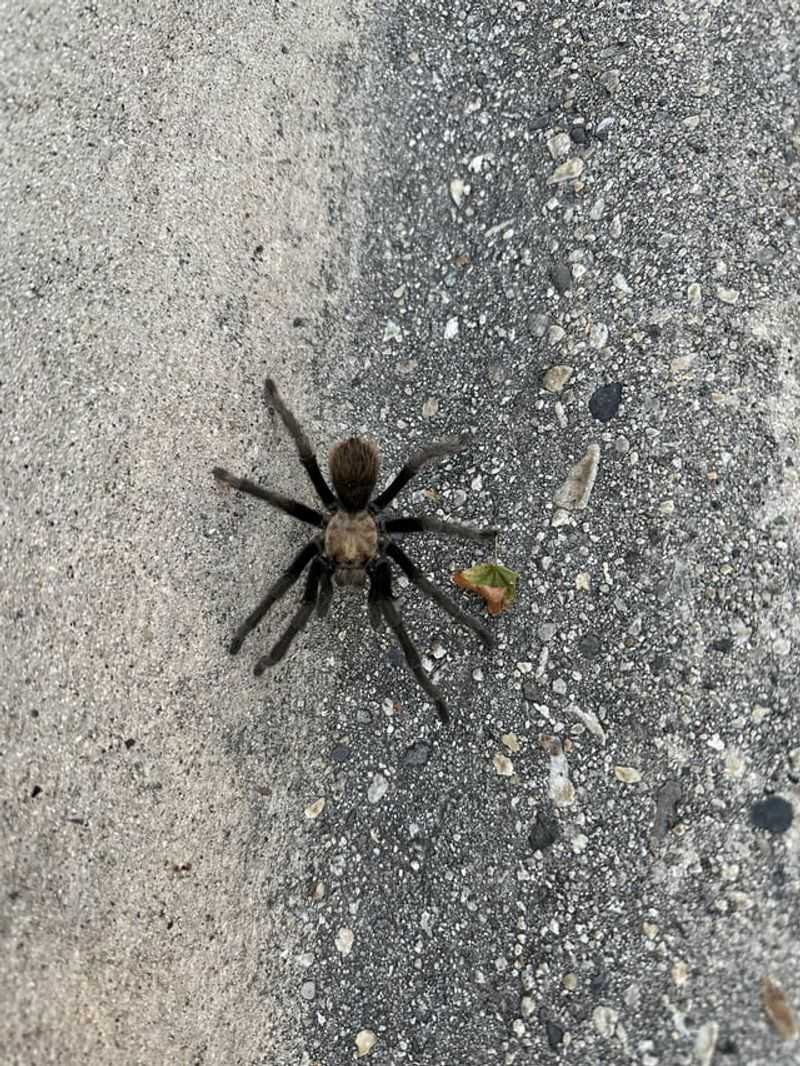
You might wonder why tarantulas seem to prefer driveways and paved surfaces instead of hiding in the grass. The answer is surprisingly practical.
Open, flat surfaces are simply easier to cross. Grass, shrubs, and garden beds are full of obstacles that slow a spider down and make it harder to navigate.
Driveways and sidewalks offer a clear, unobstructed path. For a spider on a mission, that kind of open ground is the most efficient route available.
Tarantulas tend to follow the path of least resistance, which often means heading straight across pavement.
There is also a sensory benefit to open ground. Tarantulas rely heavily on vibrations to detect danger.
On open pavement, they can feel approaching footsteps or vehicles more easily than in thick vegetation. This gives them a bit more reaction time if something threatens them.
Of course, pavement also brings risks. Cars are a major hazard, and many tarantulas do not survive road crossings in high-traffic areas.
If you see one crossing your driveway, giving it space and time to pass is the best thing you can do. Avoid driving over the area if possible.
These spiders move slowly, and a little patience on your part can make a real difference. Driveways may not seem like natural habitat, but for a wandering tarantula, they are simply the fastest road available.
5. Yards Near Open Space See The Most Visitors
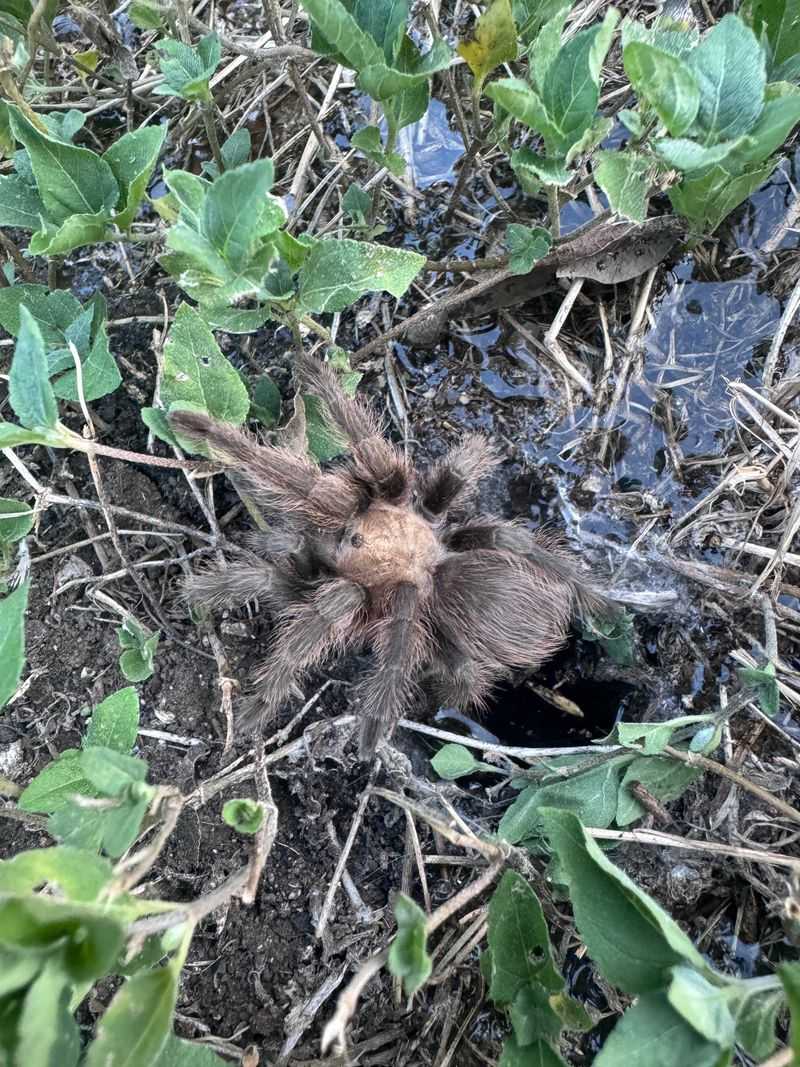
Not every yard gets tarantula visitors, but some see them every single year. Homes that back up to open space, nature preserves, hillsides, or undeveloped land are much more likely to have tarantulas passing through.
These areas provide the habitat where tarantulas actually live and breed.
Tarantulas prefer loose, dry soil where they can dig burrows. Grasslands, oak woodlands, and scrubby hillsides are classic tarantula territory.
When mating season arrives, males emerge from these wild areas and begin spreading outward in search of females. Yards that sit along the edge of that wild habitat become part of their travel zone.
If your neighborhood borders a canyon, a dry creek bed, or a nature trail, there is a good chance tarantulas have been living nearby for a long time. You just might not have noticed them until now.
Their presence is actually a sign that the surrounding ecosystem is relatively healthy. Tarantulas need stable populations of insects to eat, undisturbed soil for their burrows, and open space to roam.
Seeing one in your yard near open land is a quiet signal that nature is still doing its thing just beyond your fence.
Over time, some homeowners even start to look forward to these annual visits as a seasonal reminder of the wild world right next door.
6. They Are Looking For Mates, Not Your House
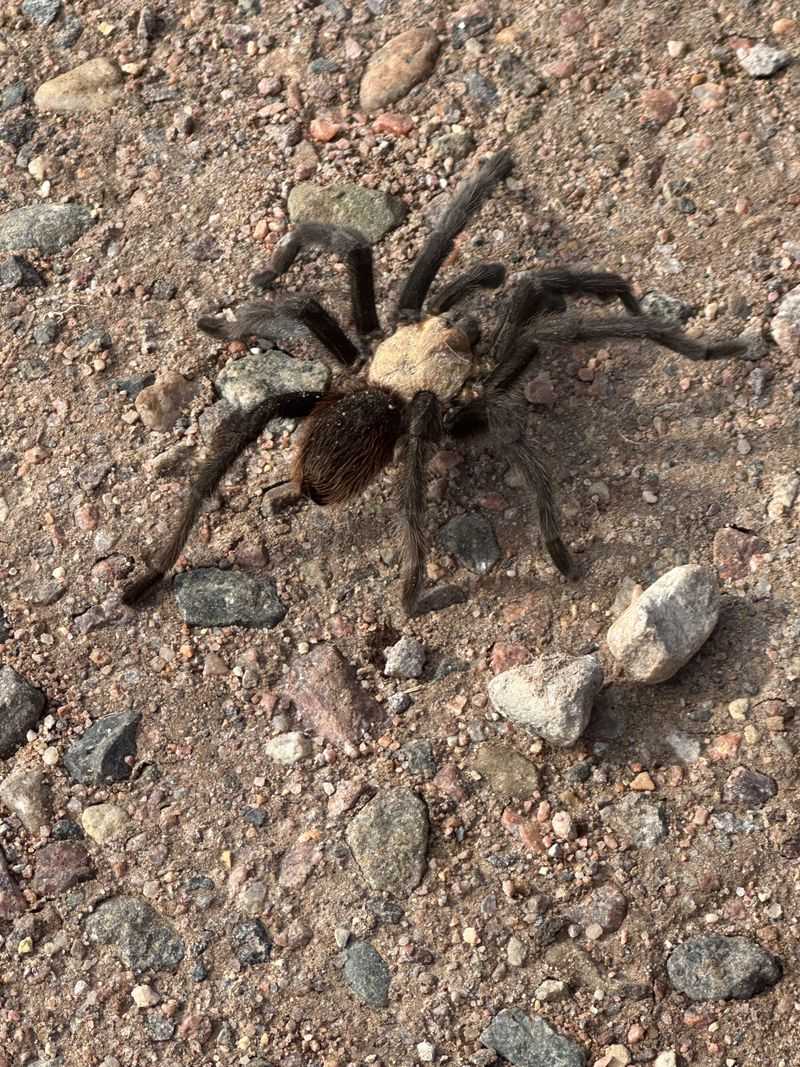
One of the biggest fears people have when they see a tarantula in the yard is that it might try to come inside. That fear is completely understandable, but also almost entirely unfounded.
Tarantulas have zero interest in your home. They are not looking for shelter, food, or warmth inside a house.
What they are looking for is a female. Their entire focus during mating season is on following chemical signals through the air and across the ground.
Your home does not produce those signals. A female tarantula in a nearby burrow does.
Tarantulas are also not well-suited to indoor environments. They prefer dry, natural soil and open ground.
The inside of a house offers none of that. If one accidentally wanders through an open door or garage, it is simply because it crossed a threshold it did not notice, not because it chose to enter.
In those rare cases, the spider can be gently guided back outside using a cup and a piece of cardboard. There is no need to panic or call anyone.
Just give the spider a chance to move on. Once it is back outside, it will continue on its original path.
These spiders have a goal, and that goal has nothing to do with you, your family, or anything inside your home.
7. Most Backyard Encounters Are Brief And Harmless
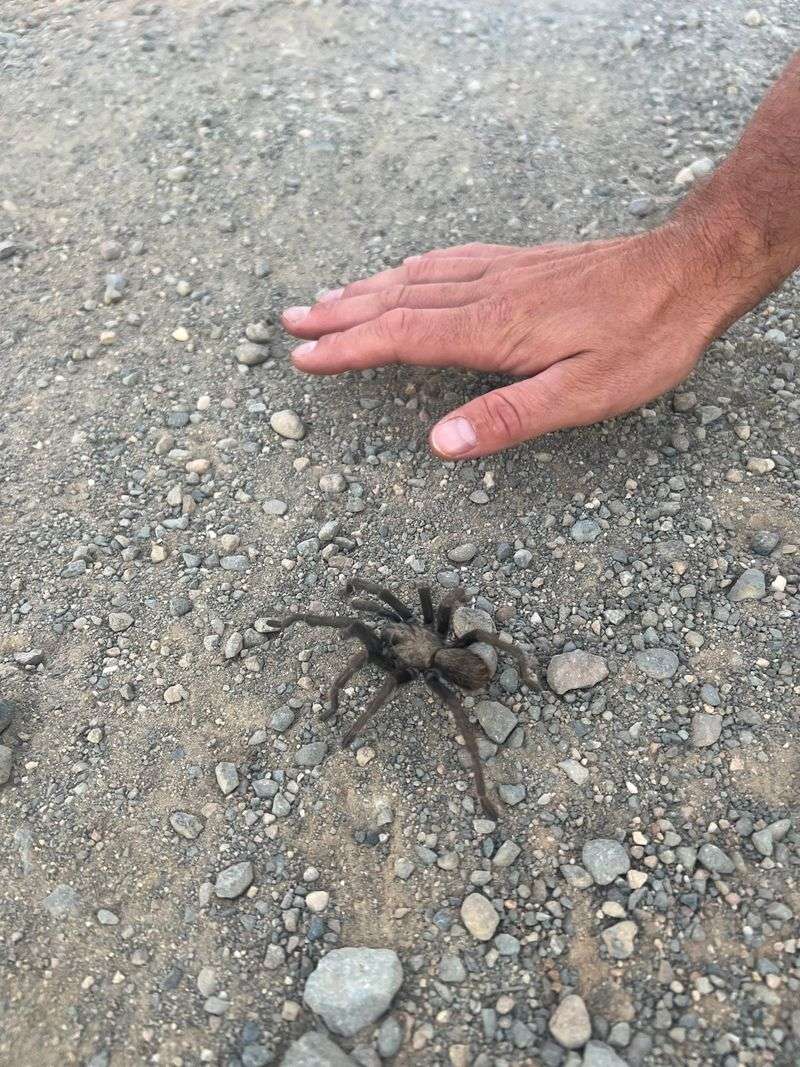
Seeing a tarantula in your yard can feel alarming at first, especially if you are not used to them. But the truth is, most encounters last only a few minutes and end without any drama at all.
The spider walks through, you watch from a safe distance, and then it disappears into the bushes or under a fence. That is usually the whole story.
Tarantulas are not aggressive by nature. They would much rather keep moving than stop and confront a human.
When threatened, they may raise their front legs as a warning, but that is mostly a bluff. They are telling you to back off, not preparing to attack.
Their venom is real, but it is not dangerous to healthy adults. A tarantula bite feels roughly like a bee sting.
It is painful and uncomfortable but not a medical emergency for most people. Bites almost never happen anyway, because tarantulas only bite when they feel directly threatened or are handled roughly.
The best approach during any backyard encounter is to stay calm and give the spider room. Watch it from a few feet away if you are curious.
Take a photo if you want. Just avoid touching it or trying to pick it up.
Most of the time, the spider will move on within minutes, leaving your yard as quietly as it arrived.
8. Dogs And Curious Kids Are More Likely To Get Too Close
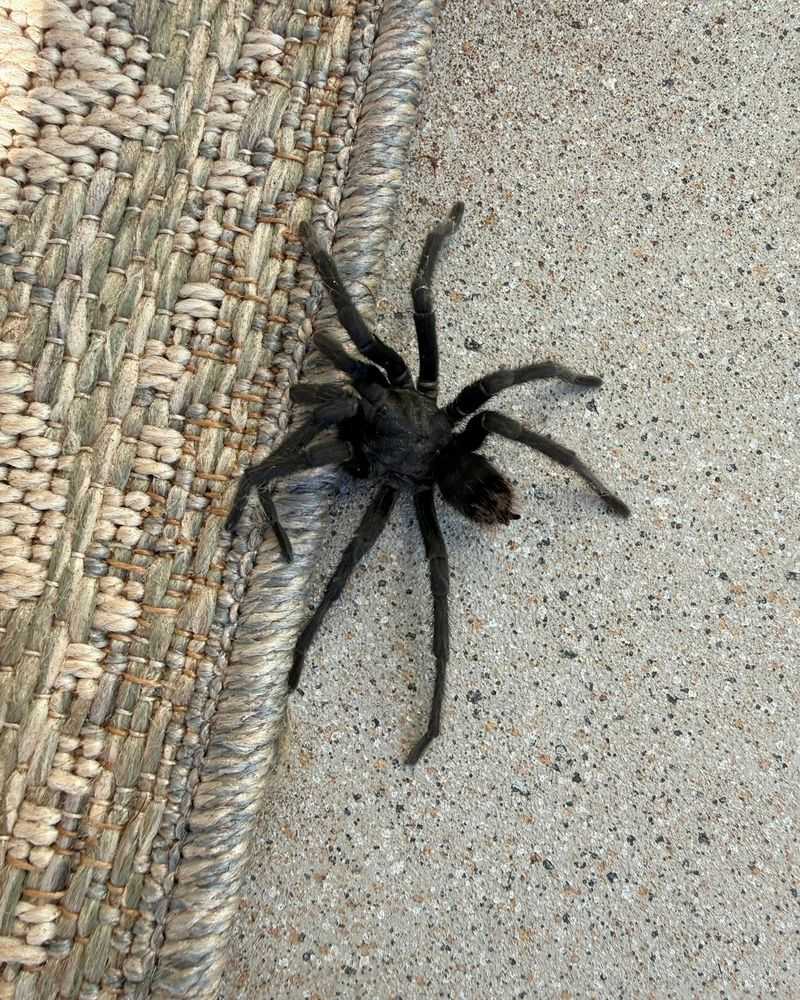
Adults tend to give tarantulas plenty of space. Kids and dogs, on the other hand, are a different story.
Children are naturally curious, and a large, fuzzy spider moving slowly across the ground is basically irresistible to a seven-year-old. Dogs are even more unpredictable, often sniffing or pawing at anything that moves.
The problem is that tarantulas respond to close contact by going into defense mode. When a dog paws at a tarantula or a child tries to pick one up, the spider may kick tiny hairs from its abdomen.
These hairs, called urticating hairs, cause itching and irritation on skin and in eyes. They are not dangerous, but they are definitely uncomfortable.
A bite is also possible if the spider feels cornered or squeezed. Again, it is not a serious medical situation for most healthy people, but it is painful and worth avoiding.
The smart move is to teach kids ahead of time that tarantulas are cool to watch but not to touch. Use the sighting as a learning moment rather than a scary one.
For dogs, keep them on a leash or call them away calmly if they notice the spider. A little supervision during tarantula season goes a long way toward keeping both your pets and the spider out of an uncomfortable situation.
9. Why You Should Let Them Keep Moving
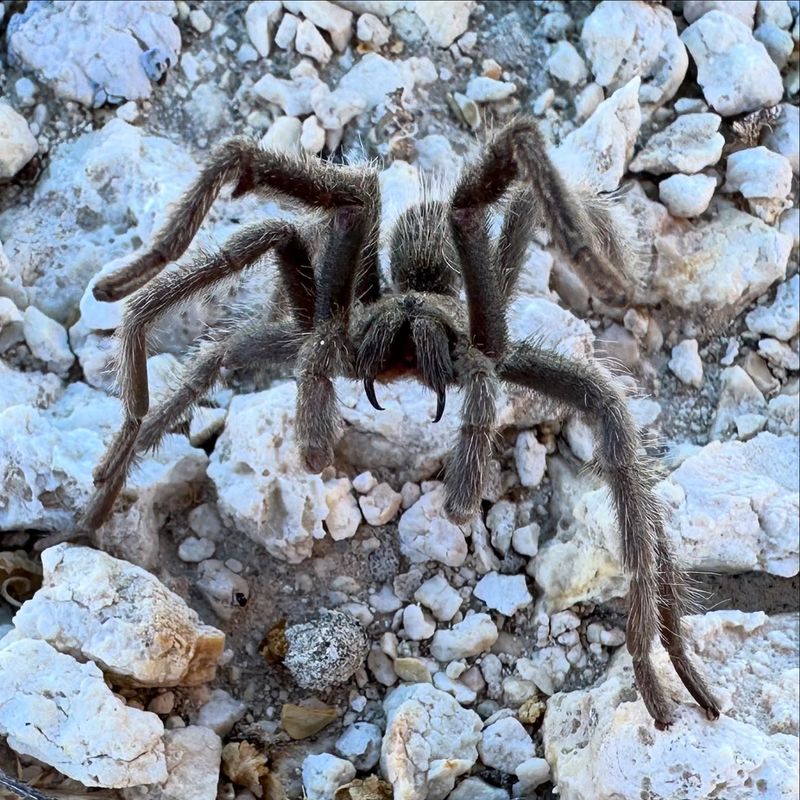
When a tarantula crosses your yard, the kindest and most practical thing you can do is simply let it pass. These spiders are not pests.
They are natural predators that feed on insects, beetles, and other small creatures. Having one move through your yard means it was probably hunting nearby and keeping local bug populations in check.
Tarantulas are also a part of the food chain that benefits many other animals. Hawks, roadrunners, coyotes, and parasitic wasps all rely on tarantulas as a food source.
Removing or harming them disrupts a web of relationships that has existed for thousands of years.
Beyond their ecological value, tarantulas are simply remarkable animals. They can live for 20 to 30 years in the wild.
They are incredibly sensitive to their environment. And they manage to survive in dry, challenging conditions that would stress most other creatures.
Spotting one in your yard is a genuinely rare and interesting experience. Many people who live in tarantula territory go years without ever seeing one up close.
Rather than feeling threatened, try to feel lucky. Watch it for a moment, maybe grab your phone for a quick video, and then step back and let it continue its journey.
That spider has somewhere to be, and with a little help from patient humans, it just might get there.