The Fragrant Georgia Patio Herb That Can Help Deter Mosquitoes All Summer
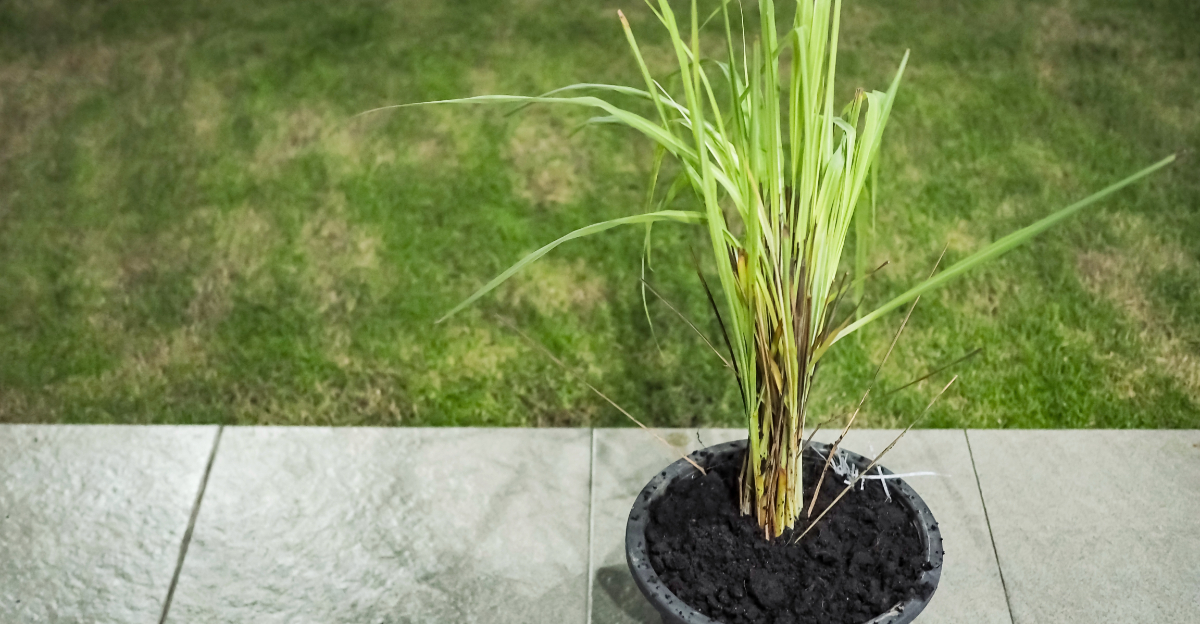
Your patio can smell fresh and feel more inviting with one warm-season herb growing nearby. Better yet, its strong citrusy fragrance has a connection to something every summer patio could use.
This fragrant plant feels right at home during hot Georgia weather. Give it a sunny container, and it can quickly become an attractive part of your outdoor space.
The real interest begins when you brush against its long leaves. That simple movement releases a noticeable scent that mosquitoes are not especially fond of.
Do not think of this plant as a replacement for proven mosquito protection. Its value comes from combining practical qualities with an easygoing appearance that works beautifully around patios.
For gardeners who enjoy useful plants with a purpose, this fragrant summer favorite deserves a closer look.
1. Lemongrass Is The Fragrant Patio Herb
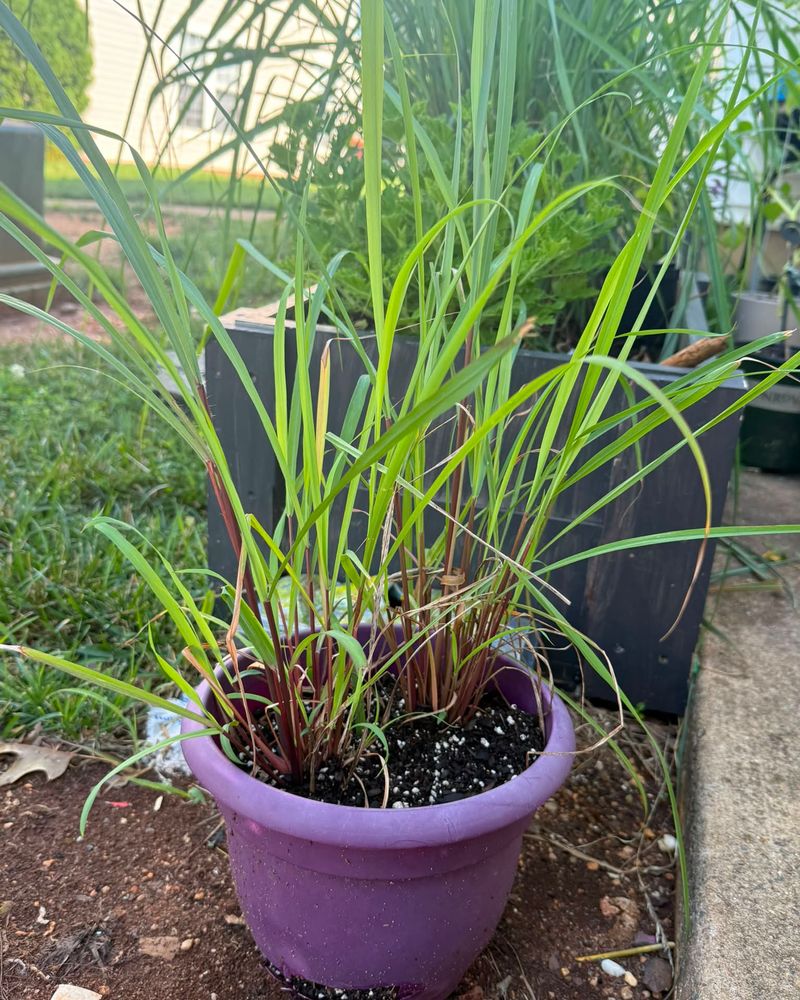
Lemongrass stops people in their tracks the moment they brush against it. That sharp, clean citrus smell hits immediately, and it lingers in the air around it for a while.
Most gardeners in Georgia grow it in large containers on patios where that scent can spread outward into the seating area.
Lemongrass is native to tropical and subtropical regions, so it genuinely loves the hot, humid summers that much of the South delivers. It is a clumping grass that can grow quite tall, sometimes reaching four to five feet by midsummer.
Its long, arching leaves give it a bold, dramatic look that stands out among typical patio plants.
Beyond looking beautiful, lemongrass has a long history of use in Southeast Asian cooking. Cooks use the lower stalks in soups, curries, and teas.
So even if the mosquito-deterring effect is modest on a given evening, you still get a stunning plant and a useful culinary ingredient out of the deal.
Lemongrass contains citronella oil, which is the same compound found in many mosquito-repellent candles and sprays. Crushing or rubbing the leaves releases more of that oil into the air.
2. Its Scent Can Help Discourage Nearby Mosquitoes
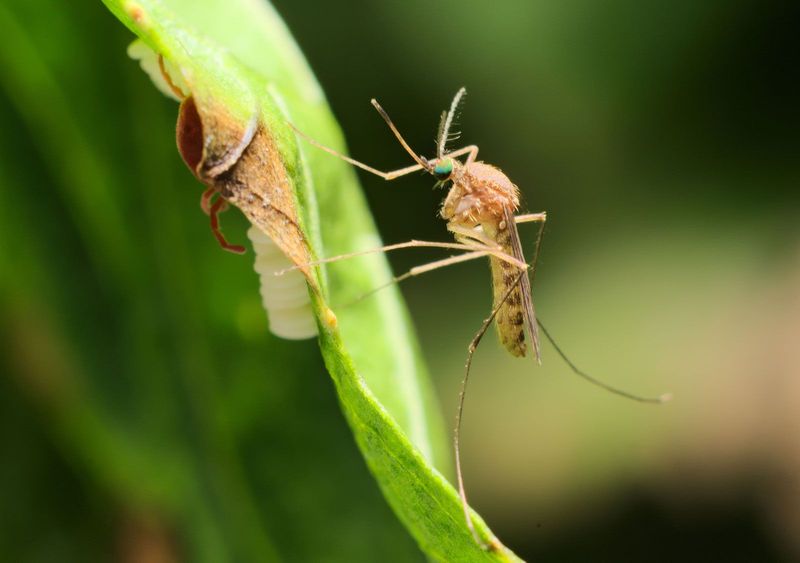
Mosquitoes rely heavily on scent to locate a target. Lemongrass produces citronella oil naturally inside its leaves and stalks.
When that scent fills the air around your patio, it can make the space less appealing to mosquitoes looking for a place to settle.
Rubbing the leaves between your fingers releases a much stronger burst of the oil. Doing this before sitting outside can give you a short window of added protection.
Some people even rub a crushed leaf lightly on their skin, though it is worth doing a small patch test first to check for any sensitivity.
Placing multiple pots of lemongrass around your seating area works better than having just one plant in a corner. Grouping them near where people actually sit concentrates the scent where it matters most.
A single pot across the yard will not do much for the people gathered around the table.
Lemongrass should be seen as one layer of protection, not a complete solution. Mosquitoes are persistent insects, and no plant alone can keep them away entirely under all conditions.
Your Georgia Garden Changes Every Week. Your Plan Should Too.
Gardening in Georgia changes quickly throughout the season. Every Friday you’ll receive a simple weekly plan showing exactly what to plant, prune, fertilize, harvest, and protect so you never miss the right timing.
3. Full Sun Keeps Plants Growing Strong
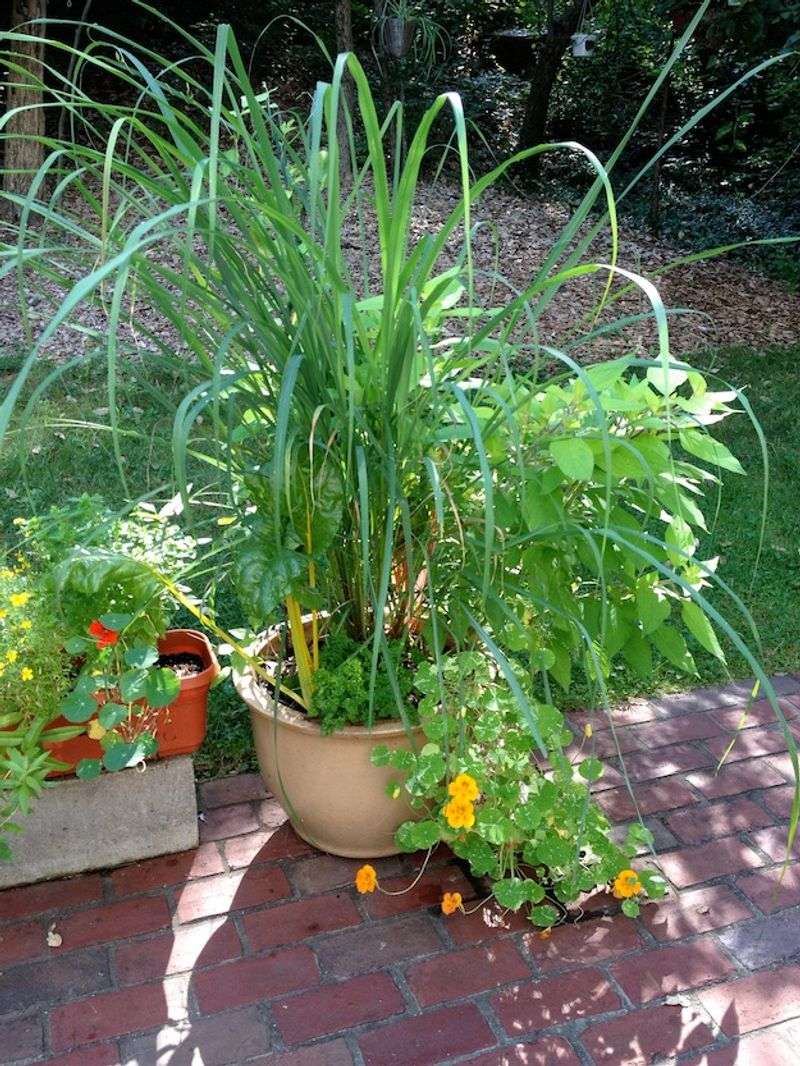
Lemongrass is not a shade-tolerant plant. It needs direct sun for most of the day to grow thick, tall, and healthy.
A spot that gets fewer than six hours of direct sunlight will likely produce a weak, sparse plant that struggles through the season.
South-facing patios or spots with open sky above tend to work best. Avoid placing pots too close to walls or fences that block afternoon sun.
Morning sun alone is usually not enough to fuel the kind of vigorous growth lemongrass is capable of during summer.
Hot afternoons that would stress many other herbs actually suit lemongrass well. It comes from tropical climates where intense heat and bright light are the norm.
Georgia summers, with their long days and consistent heat, can be ideal for this plant when it has the right spot.
If your patio has limited sun, try placing the pot on wheels so you can shift it to follow the light throughout the day. Lemongrass in a container is flexible that way.
Just make sure the pot is large enough to support root growth, because a cramped root system slows everything down regardless of how much sun the plant receives.
4. Containers Make Patio Care Much Easier
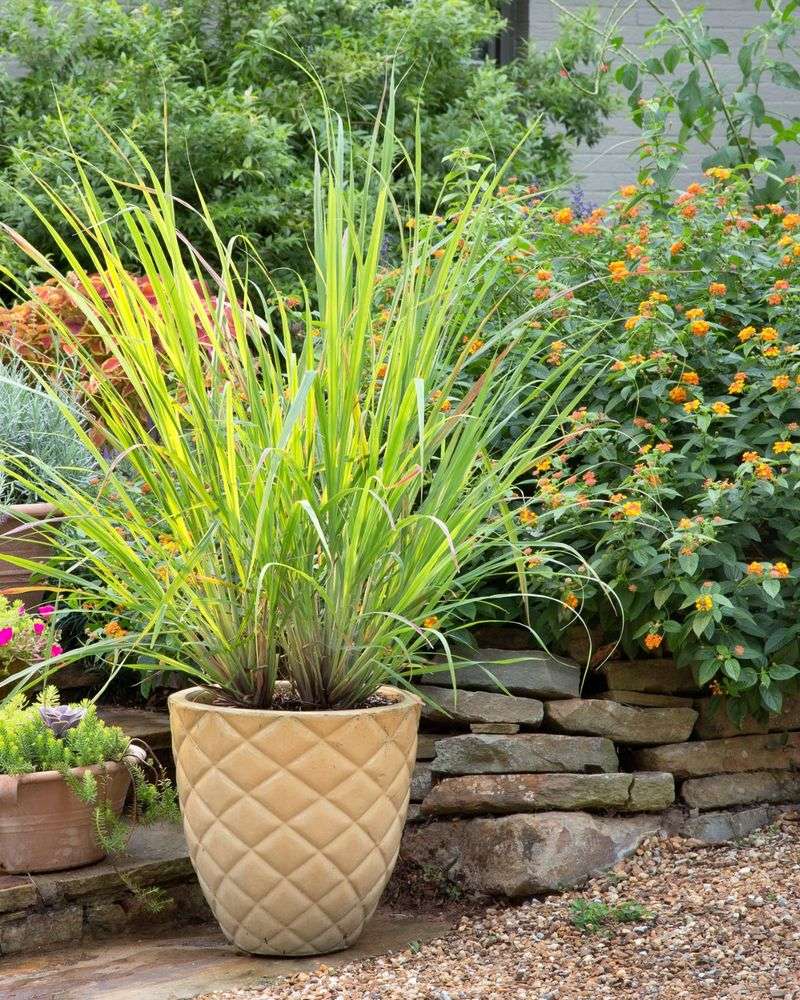
Growing lemongrass in containers is genuinely practical, especially on a patio where ground space is limited. Containers give you full control over soil quality, drainage, and plant placement.
You are not stuck with whatever soil happens to be under your patio.
Pick a pot that is at least twelve to fourteen inches wide and equally deep. Lemongrass develops a strong root system that spreads outward quickly.
A pot that is too small will restrict growth and may cause the plant to dry out faster between waterings.
Good drainage is non-negotiable. Lemongrass does not like sitting in waterlogged soil.
Use a well-draining potting mix and make sure the pot has multiple drainage holes at the bottom. Elevating the pot slightly on pot feet or a tray can also help water escape freely after heavy rain.
Plastic pots hold moisture a bit longer than terracotta, which can be helpful during the hottest stretches of summer. Terracotta breathes more and may need more frequent watering.
Either material works, but choose based on how often you are realistically able to check on the plant and water it.
One plant per large container is the right approach. Crowding two plants together in a single pot creates competition for nutrients and space.
5. Regular Water Supports Lush Summer Growth
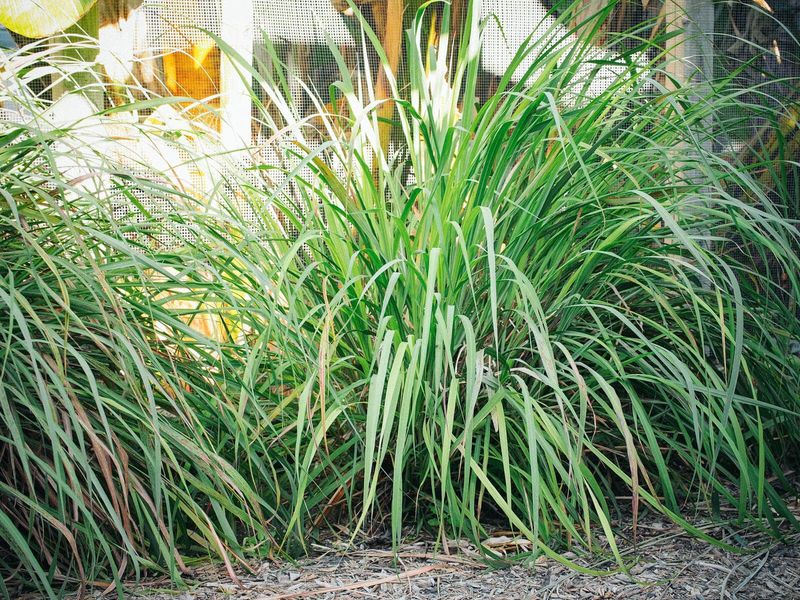
Lemongrass is thirsty during the heat of summer. Container plants dry out faster than in-ground plants, so consistent watering matters a lot.
Letting the soil go bone dry for several days in a row can stress the plant and slow its growth noticeably.
Check the top inch or two of soil every day during hot spells. If it feels dry, water thoroughly until it drains from the bottom of the pot.
Shallow watering that only wets the top layer does not reach the deeper roots where the plant actually pulls moisture from.
Morning watering tends to work well because it gives the plant hydration before the heat of the day peaks. Evening watering is also fine in most cases.
The goal is keeping moisture available without leaving the roots sitting in soggy soil for extended periods.
During rainy stretches, ease up on watering and let the rain do the work. Overwatering is a real concern, especially if drainage is poor.
Yellowing lower leaves can sometimes signal that roots are sitting in too much moisture rather than too little.
Mulching the top of the container with a thin layer of straw or wood chips can slow evaporation between waterings.
6. Harvesting Leaves Promotes Fresh New Shoots
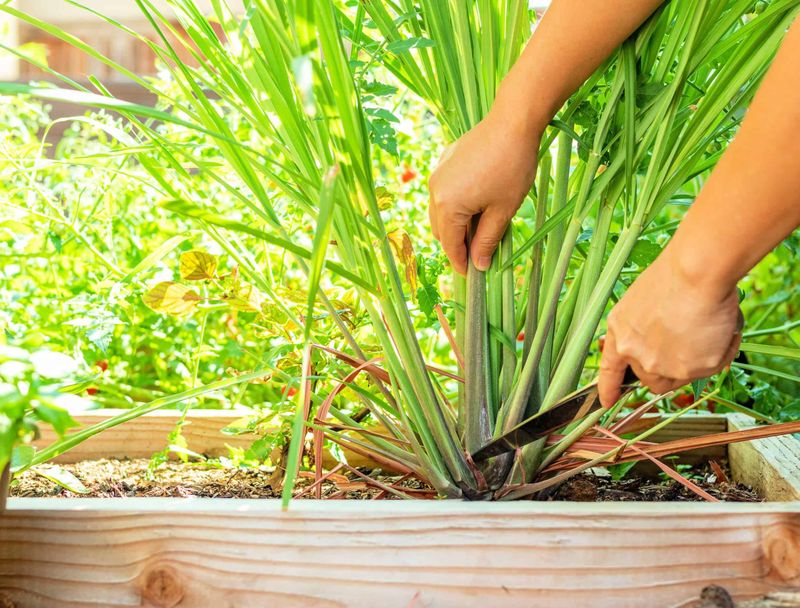
Cutting lemongrass actually encourages the plant to push out new growth. Leaving it completely untouched all season can result in a dense, overgrown clump that gets woody in the center over time.
A little harvesting keeps things fresh and productive.
Snap or cut outer stalks near the base when they are at least a half-inch thick. Thinner stalks are not yet mature enough to use in cooking and will be fibrous and tough.
The lower white portion of the stalk near the root is the most flavorful part for culinary use.
Lemongrass stalks work well in teas, soups, and marinades. Bruising the stalk before adding it to a dish releases more of its natural oils and flavor.
Remove it before eating since the stalk itself is too tough and fibrous to chew comfortably.
Harvesting from the outside of the clump and leaving the inner stalks to keep growing is the most sustainable approach. It gives the plant time to recover and continue filling out through the season.
Cutting too aggressively all at once can set the plant back, especially during a dry or stressful stretch of weather.
Regular, moderate harvesting through summer can keep the plant looking neat and growing vigorously.
7. Bring Pots Inside Before Cold Weather Arrives
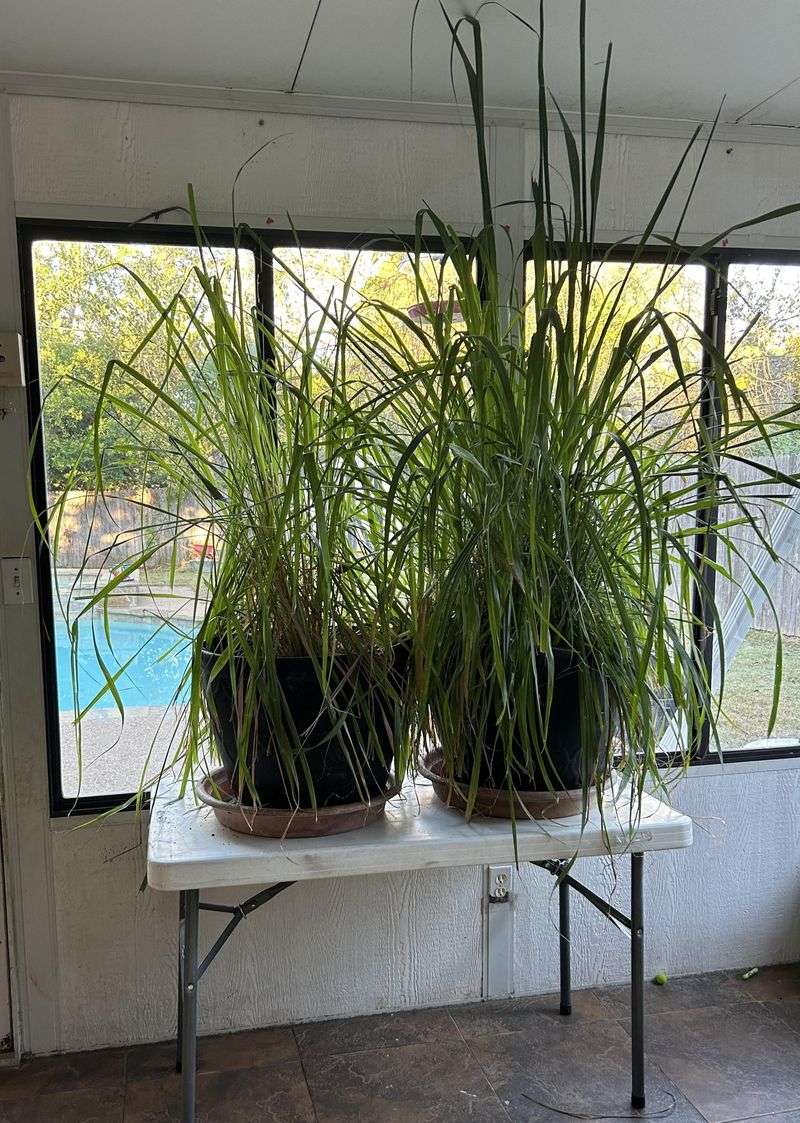
Lemongrass is frost-sensitive. Once temperatures drop below about thirty degrees Fahrenheit, the plant can sustain serious damage.
In Georgia, that kind of cold typically arrives in late fall, but timing varies from year to year depending on the region and elevation.
Watch the forecast as autumn settles in. When overnight lows start approaching forty degrees consistently, it is time to start thinking about moving the pot indoors.
Acting a little early is much better than waiting and losing a plant you spent an entire summer growing.
Before bringing the pot inside, trim the stalks back to about six to eight inches above the soil.
This makes the plant much easier to manage indoors and encourages the roots to stay dormant through winter without trying to push out a lot of new growth in low light.
A sunny window or a spot under a grow light works well for overwintering. Water sparingly during winter since the plant is essentially resting.
Too much moisture in cool indoor conditions can cause root problems that become apparent when you try to revive the plant in spring.
Come late spring, once nighttime temperatures stay reliably above fifty degrees, move the pot back outside gradually. Start with a shaded or partly shaded spot for a few days before returning it to full sun.