Ohio Roses Can Rebloom After A Hot August – Here’s What It Takes
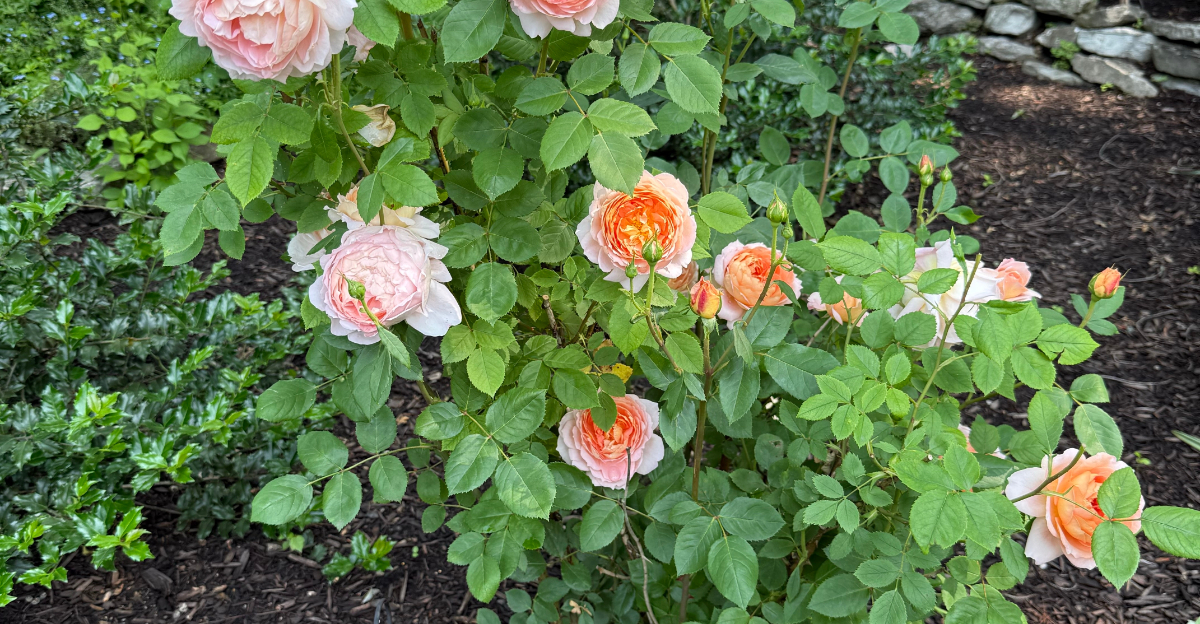
An Ohio rose that looked finished in August is not always finished. The heat took something from it.
That does not mean the season is over or that the plant has nothing left to give before frost closes everything out. Reblooming after a hot August is possible for most Ohio rose varieties.
It requires a specific response at the right moment rather than patience alone. Waiting without acting produces more waiting.
The right moves in the right order produce flowers in September that most gardeners never thought to expect. The window opens as August heat backs off.
What happens inside that window determines whether the rose finishes the season with something worth looking at or spends the rest of it recovering from what summer cost it. One set of decisions made now changes the outcome.
Ohio roses have more season left than a difficult August makes them appear to.
1. Start By Cutting Back What The Heat Left Behind
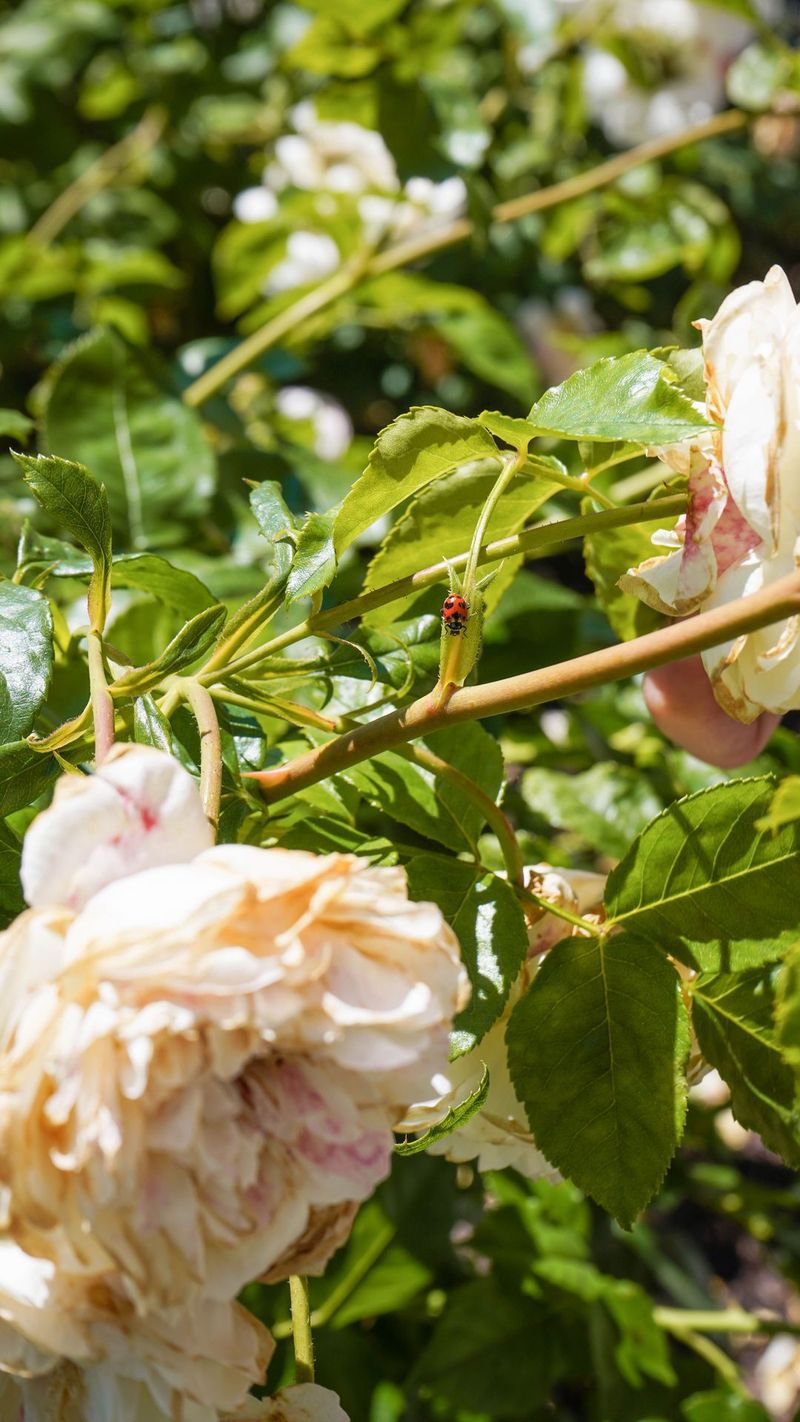
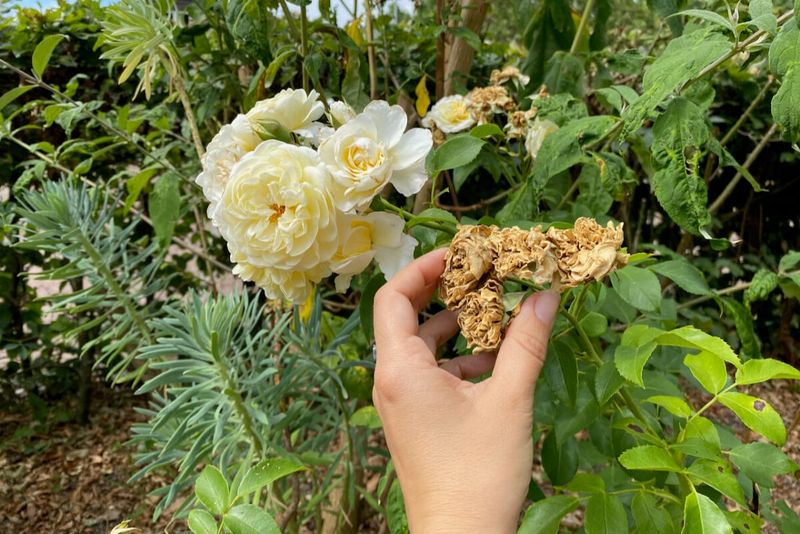
Spent blooms clinging to canes in late August in Ohio are more than an eyesore. On repeat blooming roses, they signal a point where the plant can redirect energy if you remove them cleanly.
Trimming, which means cutting away finished flowers, is one of the simplest ways to encourage a new bloom cycle in roses that have the genetic ability to rebloom.
Look for flowers that have fully faded, petals that have dropped, and any swelling hips beginning to form at the base. Those hips tell the plant that seed production is underway, which can slow or stop the push toward new buds.
Removing them redirects that energy.
Cut back to just above a leaf node with five leaflets, following the general guidance supported by university extension rose care resources. Use clean, sharp bypass pruners to avoid crushing the stem.
Do not tear or snap spent blooms off by hand.
Beyond trimming, look for stems that snapped in storms, canes that look shriveled, or growth that is clearly weak and unproductive. Remove that material too, but keep cuts conservative at this stage.
This is cleanup, not reshaping.
Once blooming roses behave very differently. Removing spent blooms on those types will not produce new flowers because they do not carry the repeat blooming trait.
Know your rose before you reach for the pruners.
2. Give Tired Roses A Deep Drink Instead Of A Daily Splash
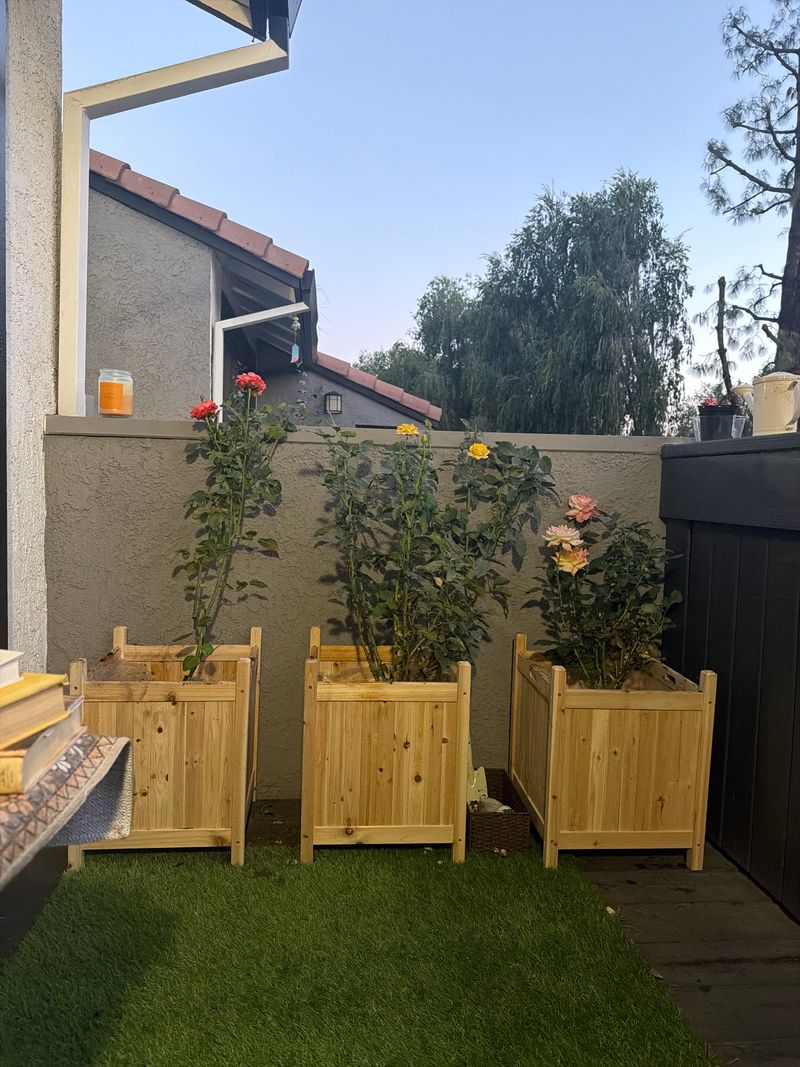
Checking soil moisture before you water is more useful than watering on a fixed daily schedule. Soil type, drainage, plant size, recent rainfall, and temperature all affect how quickly moisture disappears from the root zone.
A heavy clay soil holds water much longer than a sandy loam, and a newly planted rose needs different management than an established one.
Push a finger or a wooden dowel a few inches into the soil near the base of the plant. If it comes out dry and the soil feels hard, water is needed.
If it comes out with soil clinging to it and feels cool and slightly damp, the plant may not need water yet.
Your Ohio Garden Changes Every Week. Your Plan Should Too.
Gardening in Ohio changes quickly throughout the season. Every Friday you’ll receive a simple weekly plan showing exactly what to plant, prune, fertilize, harvest, and protect so you never miss the right timing.
OSU Extension guidance on rose care emphasizes watering at the root zone rather than overhead. Wet foliage, especially when it stays wet into the evening, can create conditions favorable to fungal disease.
Morning watering, when leaves have time to dry during the day, is a practical approach when overhead irrigation is used.
Deep, thorough watering that reaches the root zone is more useful than frequent light applications that only wet the surface. Surface watering encourages shallow roots that are more vulnerable to heat and drought.
Let the water soak in slowly so it actually reaches where the roots are growing.
3. Know When To Stop Feeding Before Fall
More fertilizer does not automatically mean more flowers, and applying it at the wrong time can cause real problems. Late season feeding can push tender new growth that has no chance of hardening off before cold weather arrives in Ohio.
That soft tissue is vulnerable, and encouraging it too late in the season works against the plant.
OSU Extension recommends stopping fertilization of roses around August 15 in the state. This timing is designed to allow new growth from any final application to mature before temperatures drop.
Feeding after that point risks stimulating growth that cannot harden properly before frost.
It is worth understanding the difference between a plant that looks tired from heat and drought stress and one that is genuinely nutrient deficient. A stressed rose that has been short on water for weeks may look pale and weak, but fertilizer is not the fix.
Restoring proper soil moisture is the first step. Fertilizer applied to a dry, heat-stressed plant is unlikely to help and may cause additional stress.
Soil testing through your local cooperative extension office can identify actual nutrient deficiencies before you add anything. Without that information, you are guessing.
If the season is already past the recommended cutoff date, hold off entirely and plan to address fertility next spring with a soil test in hand.
4. Mulch Helps Roots Recover From Late Summer Stress
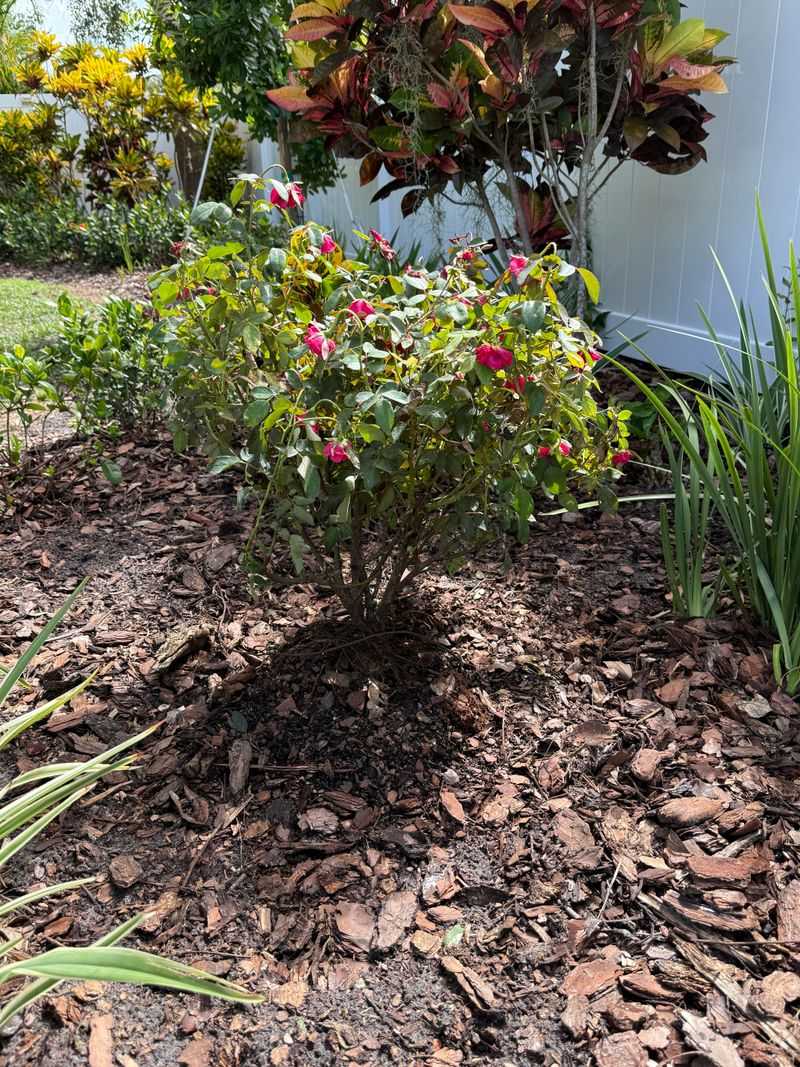
A layer of organic mulch around the base of a rose plant does something simple but valuable. It slows the rate at which moisture leaves the soil.
That matters when Ohio late summer heat pulls water from the ground faster than rainfall can replace it.
OSU Extension recommends applying two to three inches of organic mulch around roses. Suitable materials include shredded bark, wood chips, or similar organic matter.
Spread it out to the drip line of the plant, which is roughly the outer edge of the canopy, so it covers the area where feeder roots are most active.
Do not pile mulch directly against the canes or the crown of the plant. Mulch packed against the base can hold excess moisture against the stem, which may lead to rot or create a sheltered environment for pests.
Leave a small gap between the mulch and the base of the plant.
If the soil beneath the plant is already very dry, water it thoroughly before adding fresh mulch. Placing mulch over parched soil traps dryness rather than moisture.
Let water soak in first, then apply the mulch layer on top to help hold what you just added.
Mulch will not reverse heat damage that has already occurred, but it can stabilize root zone conditions and reduce the stress load going forward.
5. Healthy Leaves Matter More Than Chasing Every Spent Bloom
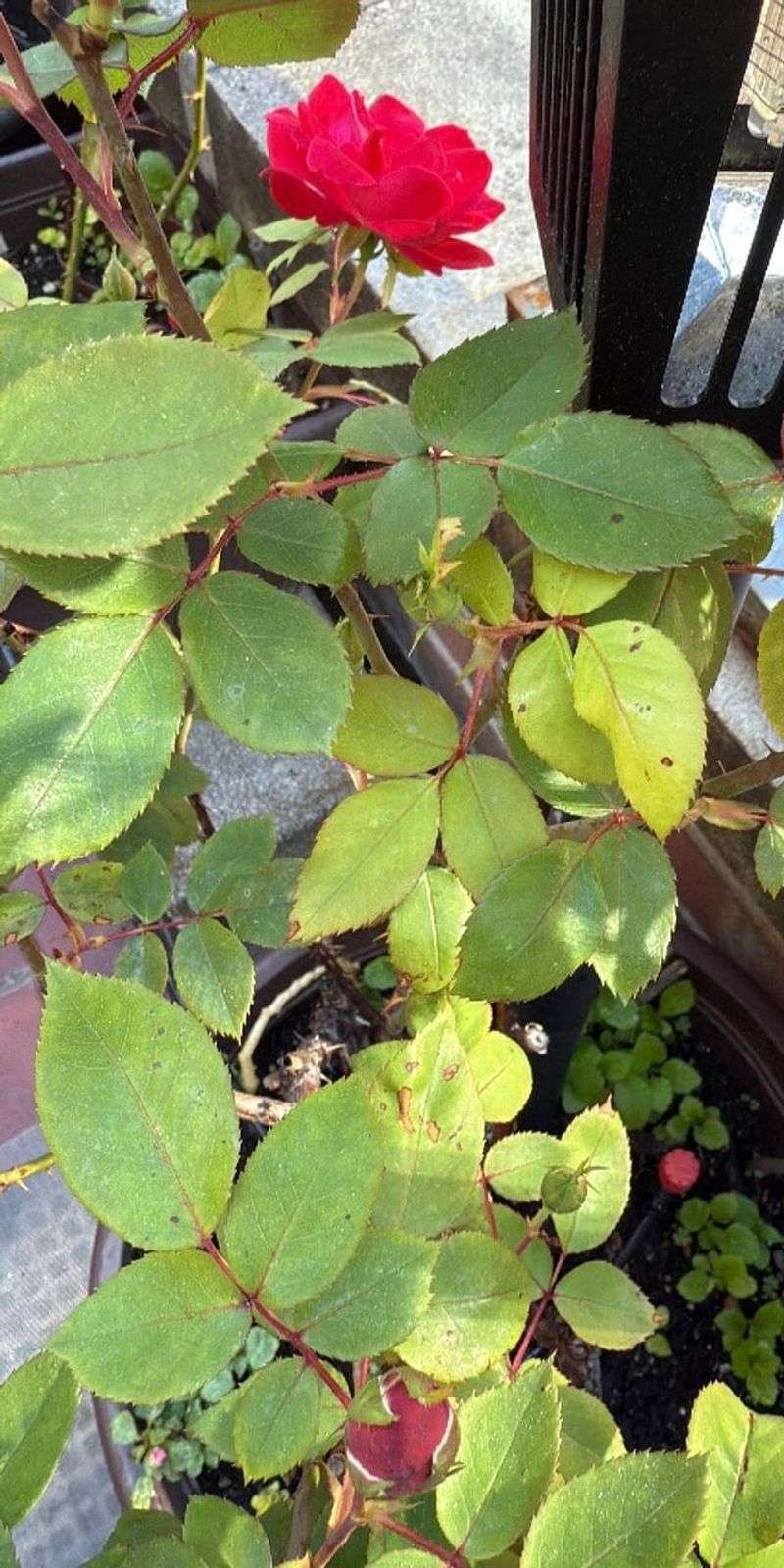
A plant without enough healthy foliage struggles to produce new flowers, no matter how much grooming or feeding it receives. Leaves are where the plant captures energy from sunlight and converts it into the compounds needed for growth.
Strip too many leaves during cleanup, and you reduce the plant’s capacity to support another bloom cycle.
Before focusing on spent flowers, spend a few minutes looking at the foliage itself. Check for unusual yellowing, dark spots with yellow halos, and leaves that are curling or scorching at the edges.
Also watch for branches that seem to be dropping leaves earlier than expected. Not every symptom points to the same problem.
Heat and drought stress can cause leaf scorch and early drop. Fungal diseases like black spot produce their own distinct patterns.
Insect feeding creates different kinds of damage. Diagnosing the cause matters because the right response is different for each situation.
Resist the urge to strip the plant of any leaf that looks less than perfect. Removing large amounts of foliage at once puts additional stress on a plant that is already working hard in late summer heat.
Focus cleanup on material that is clearly beyond functioning, such as leaves that have already fallen or tissue that is completely brown and dry.
A plant with reasonably healthy foliage is in a much better position to push out new buds than one that has been stripped bare in the name of tidiness.
6. Late Summer Pruning Should Be Gentle Not Aggressive
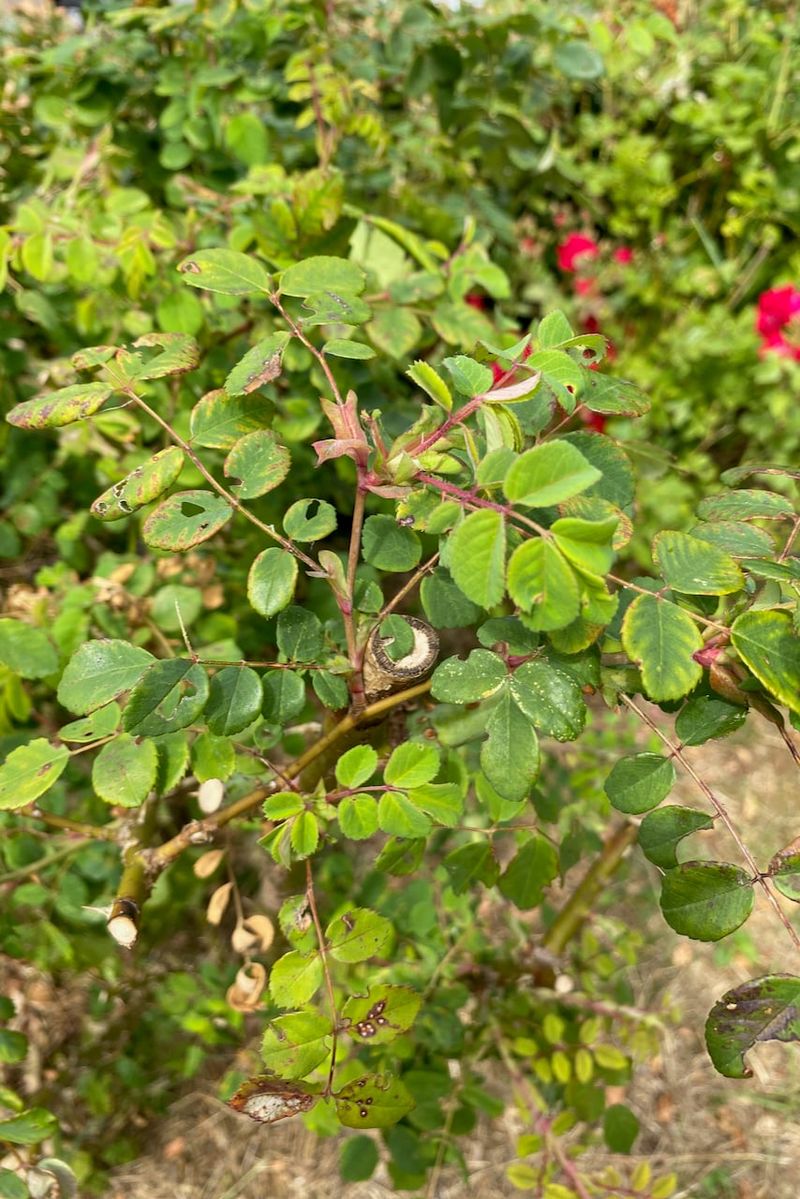
Grabbing the pruners and cutting back hard in August might feel productive, but it can create more problems than it solves. Heavy pruning stimulates vigorous new growth.
In late summer, that new growth may not have enough time to mature before cold weather arrives. Tender, actively growing tissue is the most vulnerable to frost damage.
Trimming and light cleanup are not the same as structural pruning. Removing spent blooms, trimming back a few inches of stem above a healthy leaf node, and cutting out obviously damaged material are all reasonable late season tasks.
Reshaping the plant, removing large portions of the canopy, or cutting canes back by a third or more is a different category of work.
University extension guidance for the Midwest consistently advises against major rose pruning in late summer.
The appropriate time for significant pruning of most roses in this region is early spring, after the worst cold has passed and buds are just beginning to swell.
Late summer is the wrong time to reshape a plant.
Different rose classes respond differently to pruning in general. Shrub roses, hybrid teas, and modern landscape roses each have their own growth habits and pruning needs.
One approach does not apply across all types.
If a cane is broken, clearly diseased, or rubbing against another stem, remove it. Beyond that, keep cuts light and purposeful rather than ambitious.
7. Watch For Black Spot Before New Growth Takes Off
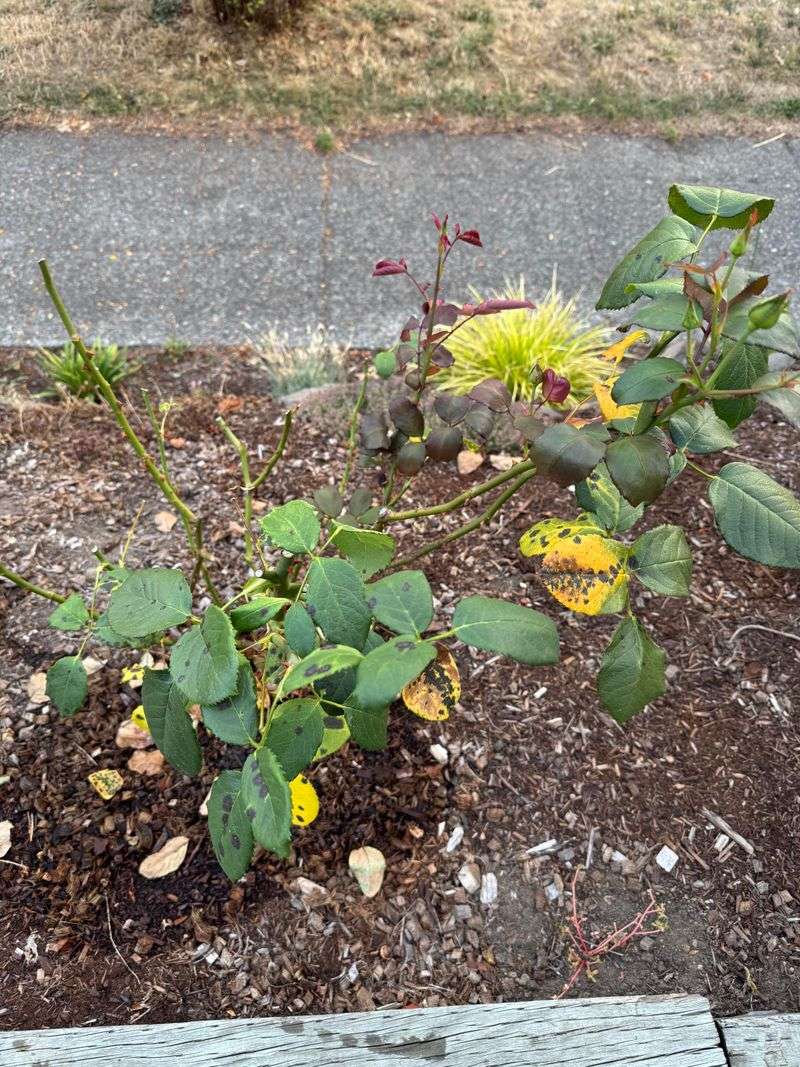
Circular dark spots, often surrounded by a yellow halo on the surrounding leaf tissue, are the most recognizable sign of black spot on roses. The disease is caused by the fungal pathogen Diplocarpon rosae, and it spreads readily in warm, wet conditions.
Spores travel by water splash, which is one reason overhead watering at the wrong time creates problems.
OSU Extension identifies black spot as one of the most common and damaging rose diseases in the region. Infected leaves typically yellow and drop prematurely.
Repeated heavy infection over a season weakens the plant by reducing its functional leaf area, which affects its ability to support new growth and flower production.
Cultural practices are the foundation of management. Remove fallen infected leaves from beneath the plant promptly, since spores can overwinter in leaf debris and reinfect the plant the following season.
Avoid wetting foliage unnecessarily, and water at the base of the plant when possible. Good air circulation around and through the plant slows the spread of the disease.
If fungicide use is being considered, OSU Extension advises following label directions precisely. Products registered for use on roses and specifically labeled for black spot should be used according to the manufacturer’s instructions.
Homemade or unverified spray recipes are not recommended by extension plant pathologists.
Not every dark spot on a rose leaf is black spot. Heat scorch, chemical spray damage, and other issues can look similar.
Comparing symptoms against reliable reference images helps narrow down the cause.
8. Cooler Nights Can Bring One More Strong Flush Of Flowers
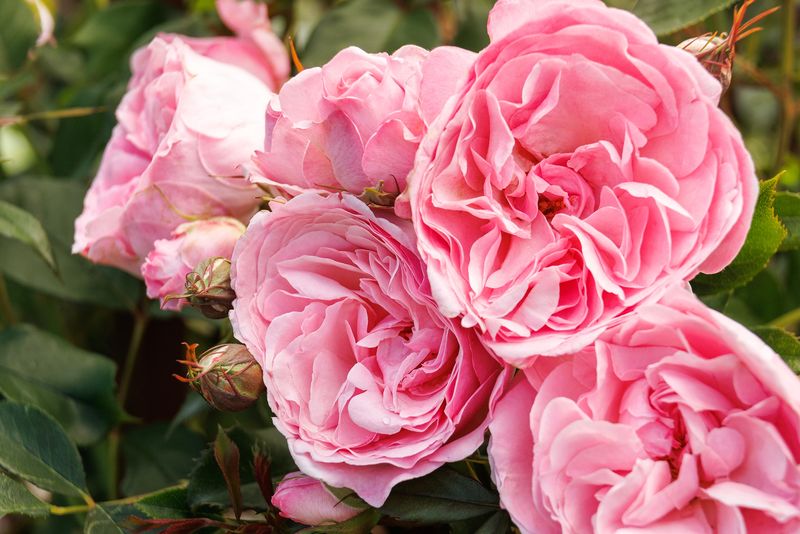
Something shifts in the Ohio garden when nighttime temperatures begin to drop after a long stretch of summer heat.
For repeat blooming roses that have been maintained through the season, that shift in conditions can support another round of bud development.
The improved growing environment, rather than any single action by the gardener, is what makes a late flush possible.
Many modern shrub roses, hybrid teas, floribundas, and certain landscape varieties are repeat bloomers. They have the genetic capacity to cycle through multiple bloom periods in a season.
Once blooming types, such as many old garden roses that flower only on previous season’s wood, will not follow the same pattern regardless of conditions.
A late season flush is rarely identical to the spring display. It may involve fewer flowers, smaller blooms, or a less uniform opening across the plant.
Some plants may produce only a handful of buds. Plant health, the length of the remaining growing season, and the specific cultivar all influence the outcome.
Avoid pushing the plant to produce tender new growth too late. Frost can arrive before that growth matures, which creates problems heading into winter.
The goal at this point in the season is to support what the plant is already capable of doing, not to force activity beyond what the calendar allows.
Watching a rose open in September or October, after a long hot summer, is one of the quieter satisfactions of growing repeat blooming types.
9. Choosing The Right Rose Type Makes All The Difference
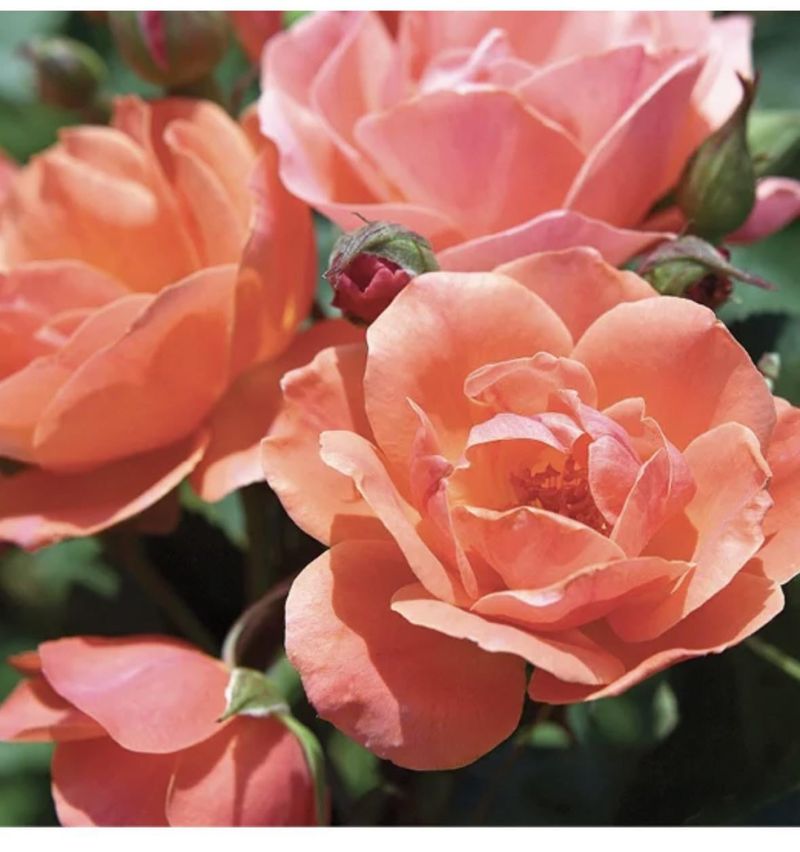
Not every rose in the garden has the same potential for a late season bloom. The single most important factor is whether the plant is a repeat bloomer.
No amount of care, grooming, or timing will produce a second flush from a once blooming rose. Understanding which type you have is the starting point for everything else.
Repeat blooming roses include many modern hybrid teas, grandifloras, floribundas, miniatures, and a wide range of shrub roses developed in recent decades. Many of the Knock Out series and other landscape-type roses also fall into this category.
These cultivars are bred to cycle through bloom periods when conditions and plant health allow.
Once blooming roses, which include many species roses and certain old garden classes, flower on wood produced during the previous growing season. By late summer, that wood has already bloomed.
There is no second cycle built into their biology, and late season care will not change that.
If you are unsure which type you have, check the plant tag if you still have it. You can also look up the variety name through a reliable source like the American Rose Society’s database.
Local cooperative extension offices can also help with identification.
Focusing attention on repeat blooming cultivars during late summer is a practical use of time and effort. Knowing the difference between rose types prevents frustration and helps you direct care where it can actually produce results.