What It Really Means When Carpenter Bees Start Showing Up Around Your Ohio Porch
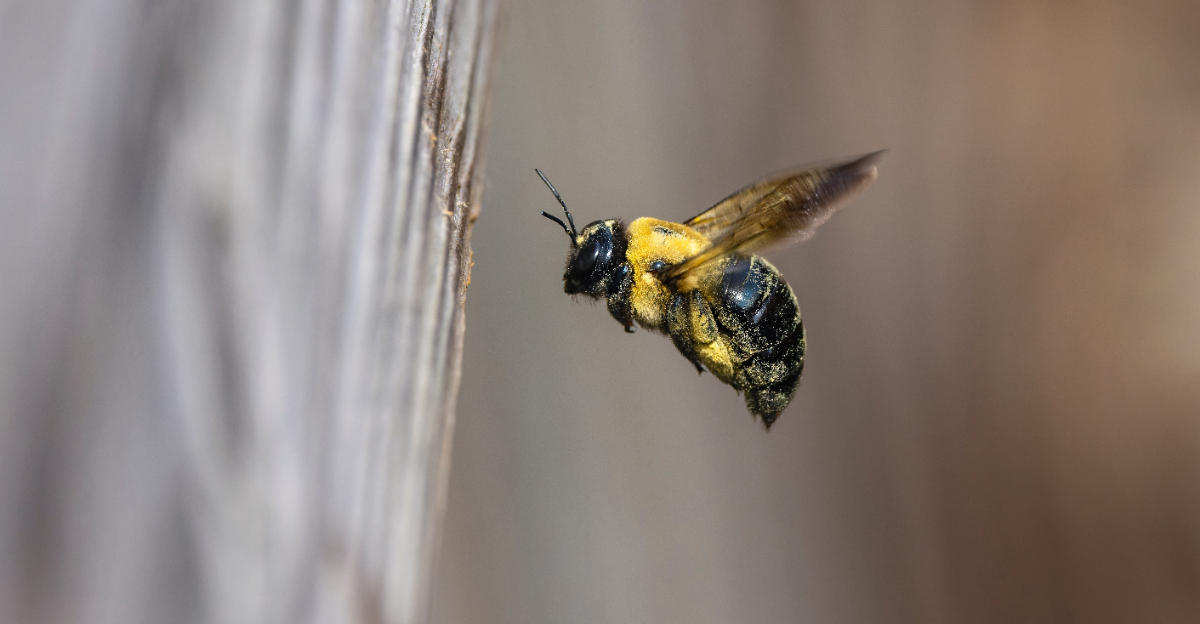
That big hovering bee outside your Ohio porch is not aggressive, not dangerous, and not randomly choosing your house. Carpenter bees have a reputation that does not match reality and most of what homeowners think they know about them is wrong.
The male bees doing all that dramatic diving and hovering near your face cannot even sting. The females can but almost never do.
What they can do is bore into unfinished wood with startling precision and set up a nesting situation that gets more involved every season they return. June is when the questions start flooding Ohio gardening groups.
What are these things, are they ruining my porch, and should I do something about them? The answers depend entirely on what is actually happening at your specific house, because carpenter bee activity means different things in different situations.
Some of it is fine. Some of it genuinely needs attention.
1. Carpenter Bees Usually Mean Bare Wood Looks Inviting
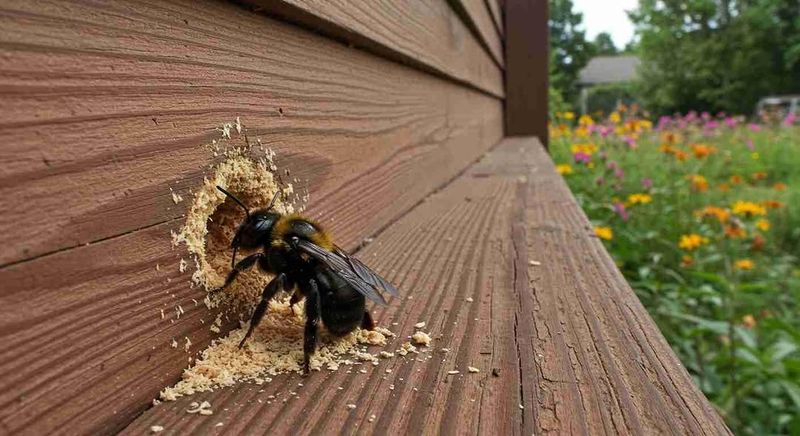
Bare wood on a porch is basically a welcome mat for carpenter bees. These bees are drawn to exposed, weathered, or unfinished surfaces where they can excavate tunnels for nesting.
Painted, stained, or sealed wood is far less interesting to them. If bees are hovering near your railings, trim, fascia boards, pergola beams, or the underside of your porch ceiling, the wood in those spots is worth a close look.
Carpenter bees do not eat wood the way termites do. They chew through it to create nesting chambers, but the wood itself is not their food source.
According to Ohio State University Extension resources on wood-boring insects, carpenter bees prefer softer, unpainted wood for excavating. That distinction matters because it changes how you respond to them.
Rather than swatting at bees or spraying randomly, walk the perimeter of your porch. Look for spots where paint has peeled, stain has faded, or wood has gone gray and rough.
Those areas are the ones that need attention. Check railings, steps, eaves, and any horizontal boards where moisture has caused weathering.
Finding the vulnerable spots early gives you a real advantage before nesting activity picks up each spring.
2. Hovering Males Are More Territorial Than Dangerous
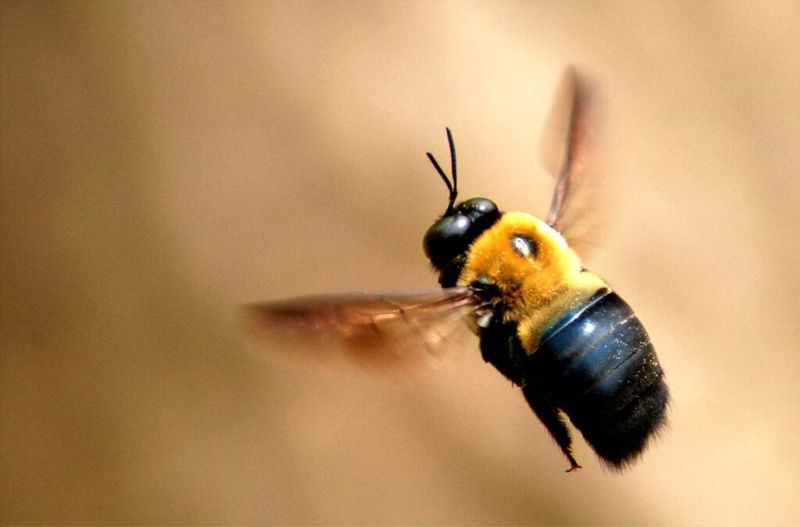
Few things startle a homeowner faster than a large bee that flies directly toward their face. Male carpenter bees are famous for this behavior, and it can feel genuinely threatening even though it is mostly bluster.
Male carpenter bees do not have a stinger. They cannot sting you, no matter how aggressively they hover or dart toward you.
Their hovering is territorial behavior. Males patrol areas near nesting sites and will fly at people, pets, or other insects that come too close.
State University Extension notes that male carpenter bees are often the most visible ones near a porch. They spend much of their time in the open guarding territory.
The females are usually the ones doing the actual tunneling work, spending more time inside wood or gathering pollen.
Female carpenter bees can sting, but they are not naturally aggressive. A sting from a female is uncommon and typically only happens if she is physically handled, trapped, or cornered.
Your Ohio Garden Changes Every Week. Your Plan Should Too.
Gardening in Ohio changes quickly throughout the season. Every Friday you’ll receive a simple weekly plan showing exactly what to plant, prune, fertilize, harvest, and protect so you never miss the right timing.
Avoid grabbing at bees, blocking holes with your hand, or swatting near active nesting areas. If you need to inspect wood closely, do it slowly and calmly.
Give the bees a little space, and they will usually ignore you right back.
3. Round Holes Signal Nesting Has Already Started
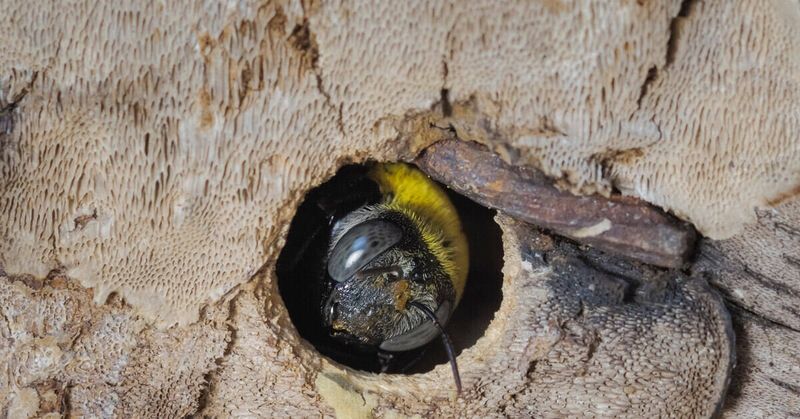
Spotting a perfectly round hole in your porch wood is one of the clearest signs that carpenter bees have moved past scouting and into actual nesting.
These entrance holes are usually about the diameter of a finger, roughly half an inch across, and they tend to appear on the underside or face of exposed wood surfaces.
A clean, smooth edge around the opening is a hallmark of carpenter bee work.
Once inside, the bee excavates a tunnel that runs with the wood grain, creating a chamber for eggs and pollen. One hole can lead to a surprisingly long tunnel, sometimes several inches deep.
State University Extension guidance points out that these tunnels can weaken wood over time. This is especially true when multiple holes are made in the same board across several seasons.
Check railings, eaves, porch ceilings, deck boards, and the underside of steps. Look from multiple angles because holes on the underside of boards are easy to miss from a standing position.
If you find a hole, take a photo and note the location before deciding on a next step. Do not assume the worst from a single hole, but do not ignore a cluster of them either.
A careful inspection now saves guesswork later.
4. Fresh Sawdust Shows Bees Are Tunneling Into Wood
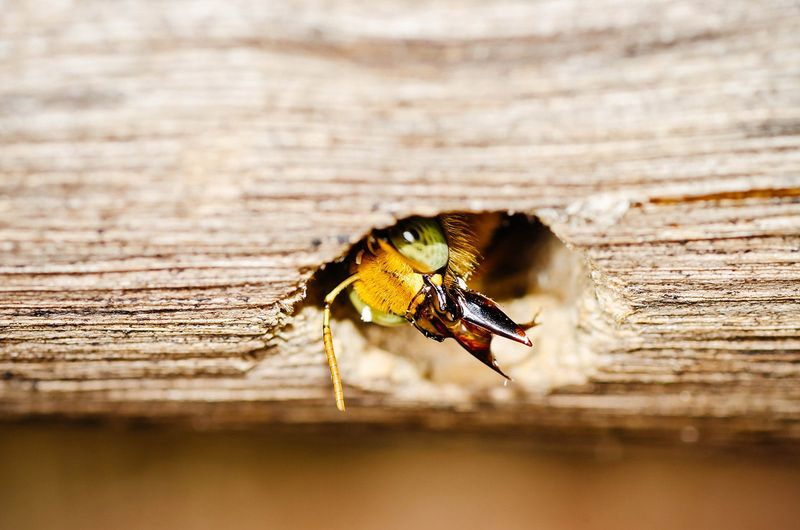
Coarse wood shavings piled up below a hole are one of the most telling clues a homeowner can find. Fresh sawdust beneath a suspicious opening usually means excavation is happening right now, or happened very recently.
This matters because it helps you tell an old, inactive hole from one that is currently being worked on by a bee.
Carpenter bees push wood debris out of the tunnel entrance as they dig. You might notice a small mound or scattered shavings on a porch floor, a step, or a window ledge directly beneath a hole.
Some Extension sources also note that yellowish staining near a hole entrance can come from bee droppings, which is another sign of active use. If you see both sawdust and staining together, the hole is almost certainly active.
Checking for fresh debris is a practical first step before spending money on treatment or repairs. Sweep or wipe away the sawdust from a suspicious spot, then check back in a day or two.
If new shavings have appeared, the hole is active. If nothing has changed, the hole may be old and empty, which is still worth sealing but is less urgent.
Timing your response based on activity level keeps you from overreacting to last season’s work.
5. Old Bee Holes Can Bring New Activity Each Spring
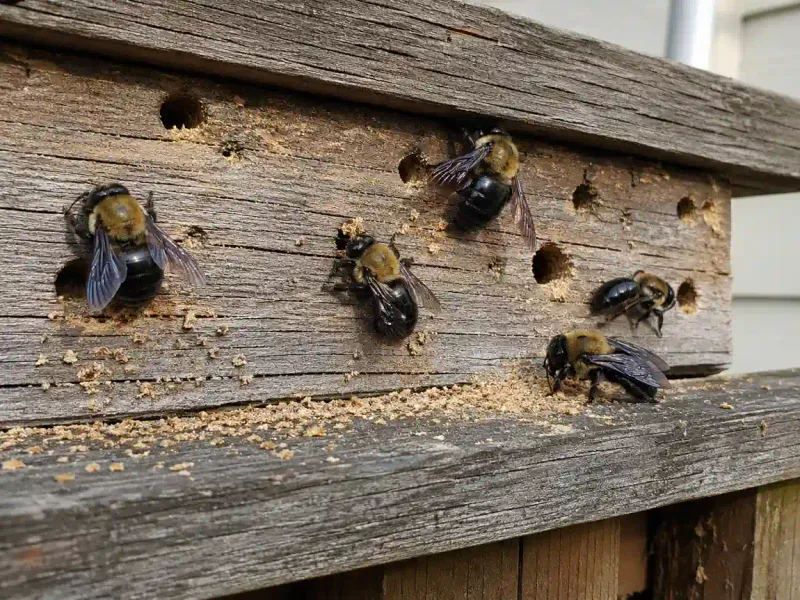
One thing many homeowners do not realize is that carpenter bees have a strong tendency to return to the same nesting sites year after year. An old hole that was never sealed can become a welcome invitation for a new bee the following spring.
Existing tunnels take less effort to reuse or expand than starting fresh, so bees are naturally drawn back to spots where previous nesting occurred.
This is why a single hole from last summer can turn into several holes by the following season if nothing is done. State University Extension guidance recommends sealing old holes to reduce the chance of reuse, but timing matters.
Sealing an active hole while a bee is inside can create problems, including the bee chewing a new exit through nearby wood. Wait until the bees are no longer active in the fall before plugging holes with wood putty or a wooden dowel and exterior caulk.
After sealing, paint or stain over the repaired area to make it less attractive going forward. If you have several old holes across a porch beam or railing, mark each one with a small piece of tape during inspection.
That way, you do not miss any when it comes time to seal. Thoroughness in the fall is what reduces the headache each spring.
6. Painted Or Sealed Wood Makes Porches Less Appealing

Prevention is a lot easier than chasing active bees around your porch every spring. One of the most reliable ways to make your porch less attractive to carpenter bees is also simple.
Keep your wood painted, stained, or well-sealed. Carpenter bees consistently prefer bare, weathered, or unfinished surfaces, and a freshly coated board is a much less appealing target.
State University Extension recommends keeping wood surfaces painted or stained as a primary prevention strategy. Pay special attention to areas that tend to get overlooked, such as the underside of railings, the back face of trim boards, and the ends of exposed beams.
These are exactly the spots where paint wears off first and bees tend to investigate. If your porch has any wood that has gone gray and rough from weather exposure, that is your highest-priority area.
Pressure-treated lumber and hardwoods are sometimes mentioned as less preferred options for carpenter bees. However, bare surfaces of any wood can still be targeted if no other options are nearby.
The practical takeaway is simple: do your painting and sealing before bee season begins in late April or May in most parts of this state. A coat of exterior paint applied on a mild March weekend can save you a lot of frustration later in the season.
7. Fast Repairs Help Stop Bigger Porch Problems Later
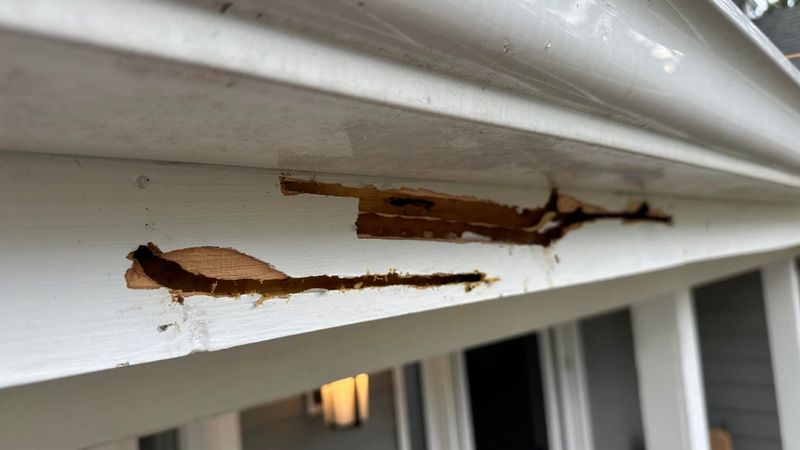
A single carpenter bee tunnel in a solid porch beam is not a crisis. Repeated tunneling in the same board, season after season, is a different story.
Over time, multiple tunnels running through the same piece of wood can reduce its structural integrity, especially in narrower boards like railings, trim, or fascia. Catching the problem early and making repairs keeps a small issue from becoming a bigger one.
Woodpeckers add another layer to the problem. Ohio State University Extension notes that woodpeckers sometimes target wood where carpenter bee larvae are present, pecking into boards to reach the grubs inside.
That kind of secondary damage can be more visually dramatic than the original bee tunneling and can cause boards to split or crack in ways that invite moisture and rot.
If you find boards with multiple holes, significant tunneling, or woodpecker damage, replace the affected sections rather than patching over them. Use exterior-grade wood and seal or paint it immediately after installation.
For damage in high or hard-to-reach areas, contact a qualified contractor rather than attempting ladder work that puts you at risk. Structural areas like load-bearing beams should be inspected by a professional if tunneling is suspected.
Those repairs go beyond typical DIY scope and deserve expert eyes.
8. Carpenter Bees Still Play A Role In Ohio Pollination
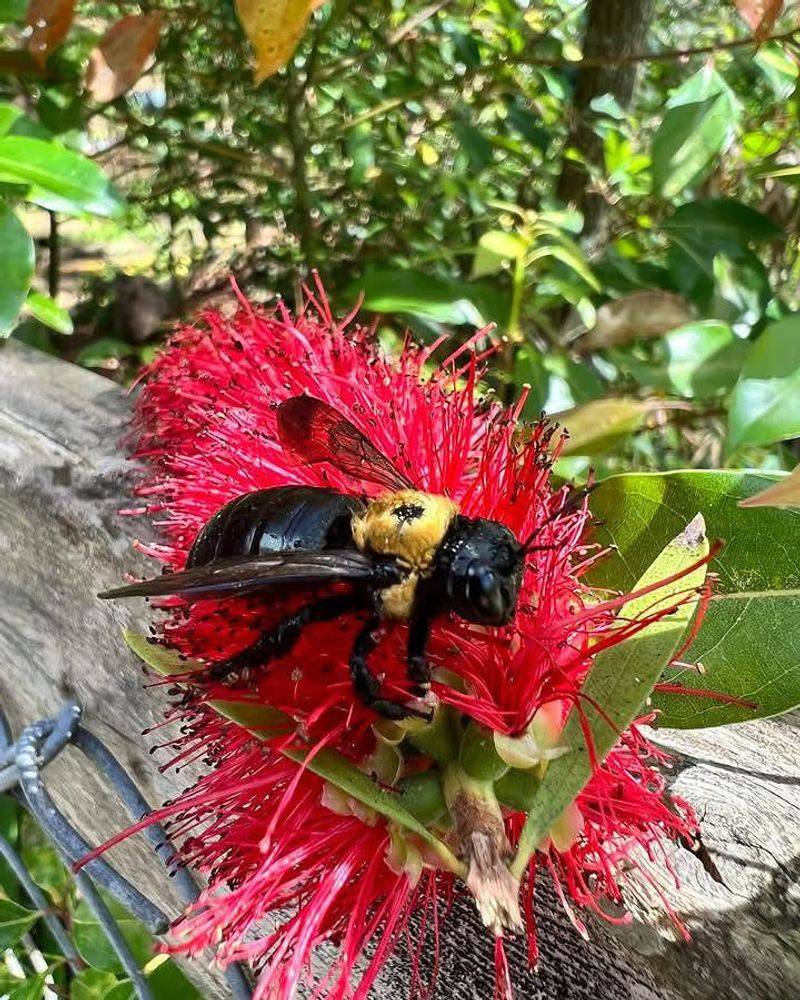
Carpenter bees are frustrating when they are tunneling into your porch, but they are also legitimate native pollinators with a real role in local ecosystems.
They are capable of a technique called buzz pollination, where they vibrate their bodies to shake pollen loose from flowers in a way that honeybees cannot replicate.
Some native plants and garden vegetables actually benefit from this behavior.
The goal for most Buckeye State homeowners is not to remove every carpenter bee from the landscape, but to steer nesting activity away from vulnerable wood structures. You can support that balance by planting native flowers in garden beds away from the porch.
This gives bees a reason to spend more time foraging and less time investigating your trim boards. Ohio State University Extension encourages reducing unnecessary pesticide use in areas with active pollinator activity.
If pesticide treatment is something you are considering for a serious infestation, follow current Extension guidance carefully. Read all label directions before applying anything.
Spot treatments applied directly into active holes, rather than broadcast spraying, are the more targeted approach. Protecting your porch and respecting local pollinators are not opposites.
With a little maintenance and thoughtful timing, you can manage the situation without creating a bigger problem for the garden ecosystem around your home.