A Baltimore Oriole Nesting In Your Ohio Yard Isn’t Just Luck
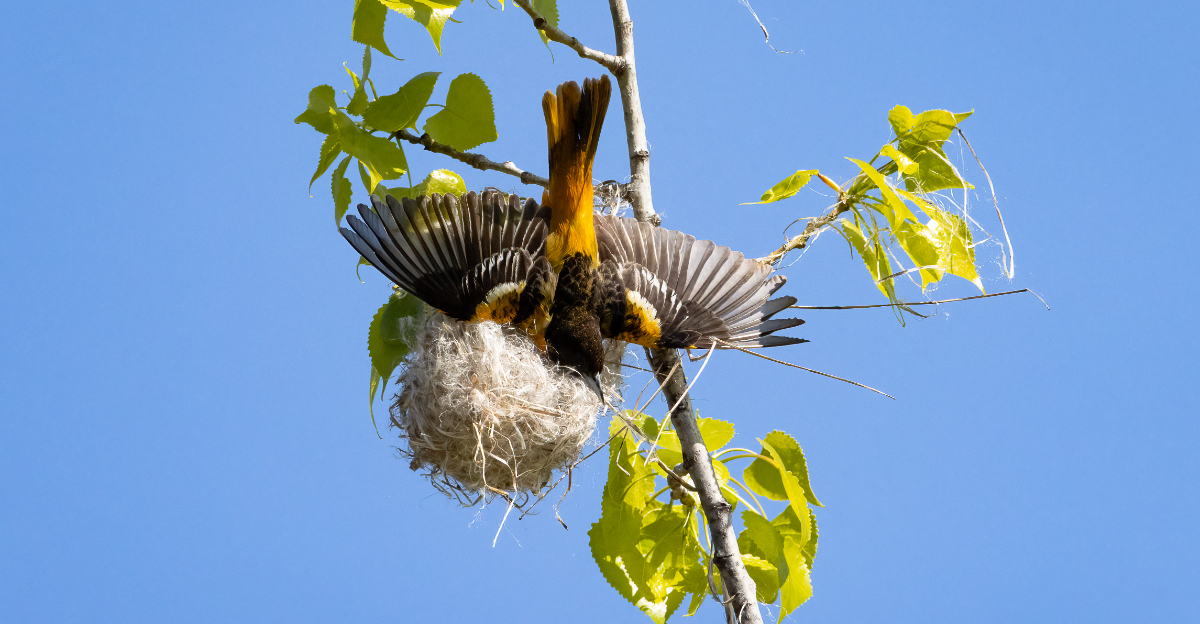
Baltimore orioles do not nest just anywhere. They nest where the yard earned it.
That woven pouch suspended from a branch tip is not random. It is the result of a bird running a checklist against every tree, every food source, every square foot of habitat in the surrounding area before making a decision it stakes everything on.
Your yard passed that checklist. Most do not.
What the oriole was actually looking for, and what your yard happened to provide, is more specific than most Ohio homeowners ever think to examine. But understanding it changes everything about how the space gets managed going forward.
A Baltimore oriole nest is one of the better pieces of feedback a yard can receive. The bird said something real about this place.
It is worth knowing exactly what.
1. Tall Leafy Trees Give Orioles The Nest Sites They Look For
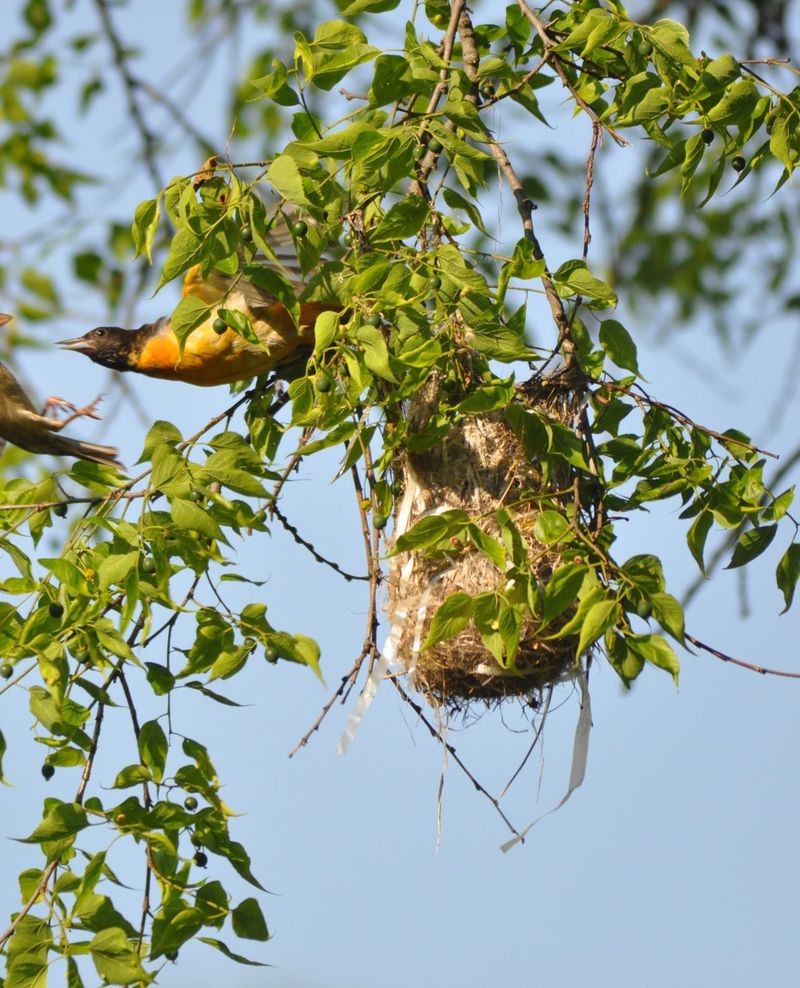
Look up into the canopy of a mature elm, cottonwood, or sycamore during late May and you may catch a glimpse of a woven pouch swaying near the branch tips.
According to the Cornell Lab of Ornithology, Baltimore Orioles typically nest in deciduous trees, often placing their nests near the ends of long, drooping branches.
That specific location within the tree matters as much as the tree species itself.
Mature trees tend to offer something younger ornamentals simply cannot: a wide variety of branch lengths, angles, and flexibility. A tree that has had decades to develop a full canopy gives a nesting pair many possible attachment points.
Young landscape trees, even Ohio native ones, often lack that structural complexity. The branch diameter, the degree of droop, and the length of the outer limbs all factor into where a pair may choose to build.
Cornell Lab notes that nest height commonly ranges from around 6 to 9 meters above the ground, though placement varies. Orioles tend to favor open woodland edges and areas near water.
In residential settings, that can mean yards bordering parks, creek corridors, or mature street trees. A single large tree surrounded by lawn may be less useful than a yard where several mature trees create a connected canopy.
The structure of the tree, not just its presence, shapes whether a nesting pair finds it suitable.
2. Open Branches Make Room For Their Hanging Woven Nests
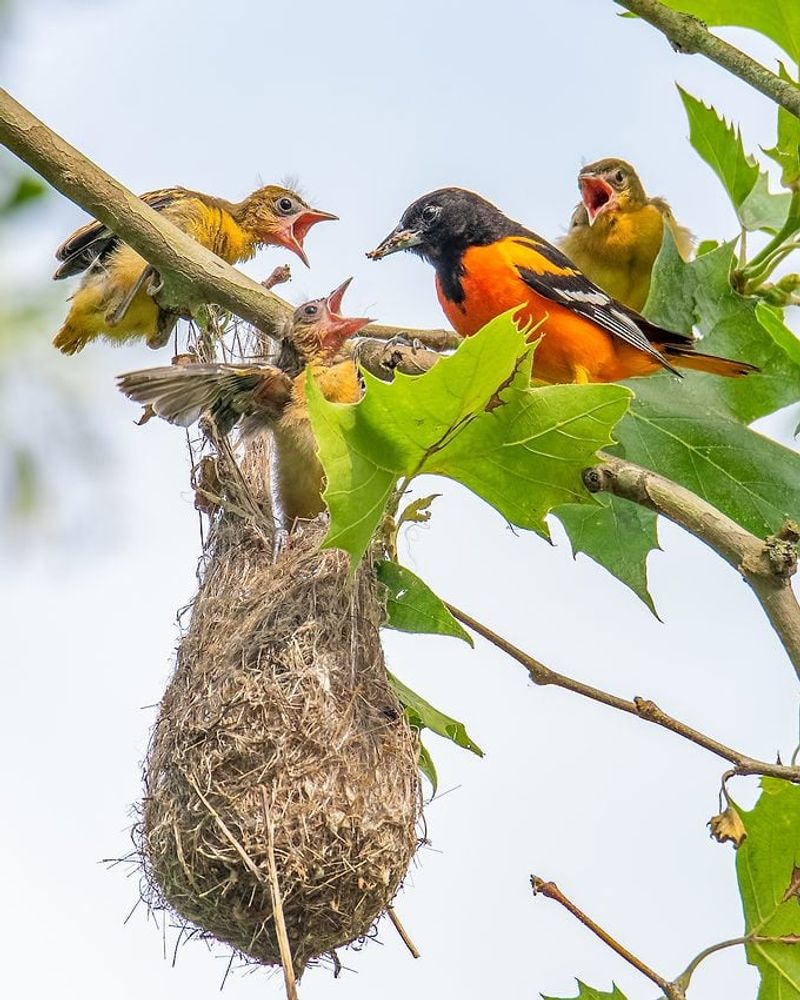
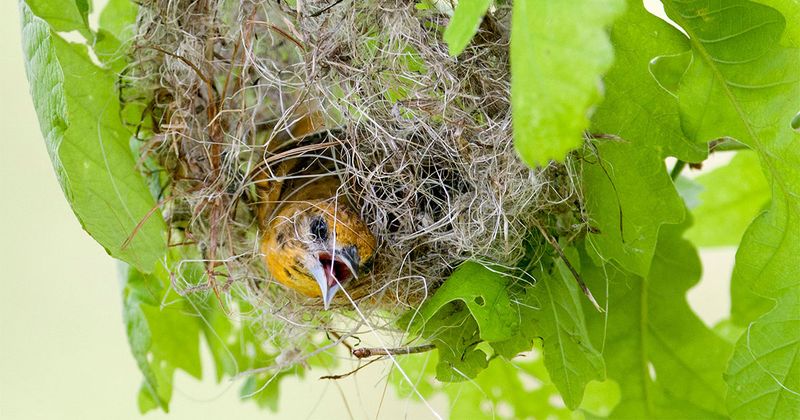
Few bird nests in North America are as structurally distinct as the one a Baltimore Oriole female constructs each spring. Rather than a cup sitting inside a branch fork, the nest is a deep hanging pouch, suspended from above and open at the top.
Cornell Lab of Ornithology describes it as a tightly woven bag that can measure around 4 inches deep, built almost entirely by the female over roughly one to two weeks.
The materials she uses are flexible by nature. Plant fibers, strips of grapevine bark, grasses, and other pliable strands are woven together.
The finished structure is strong enough to hold eggs and growing nestlings through wind and rain. The female loops and knots fibers around the branch from which the nest hangs, anchoring it securely to the outer twigs.
Your Ohio Garden Changes Every Week. Your Plan Should Too.
Gardening in Ohio changes quickly throughout the season. Every Friday you’ll receive a simple weekly plan showing exactly what to plant, prune, fertilize, harvest, and protect so you never miss the right timing.
That attachment point matters. Slender, flexible branch tips at the outer edge of the canopy allow the nest to swing rather than resist wind, which may reduce stress on the structure.
From the ground, the nest can be difficult to spot until leaves drop in fall. The pouch blends into the canopy during the breeding season, which is part of what makes it effective.
If you do notice one, observe it from a comfortable distance. Approaching an active nest repeatedly can stress the adults and disrupt normal nesting behavior.
The nest is doing its job best when left undisturbed.
3. A Yard Rich In Insects Can Help Feed A Growing Family
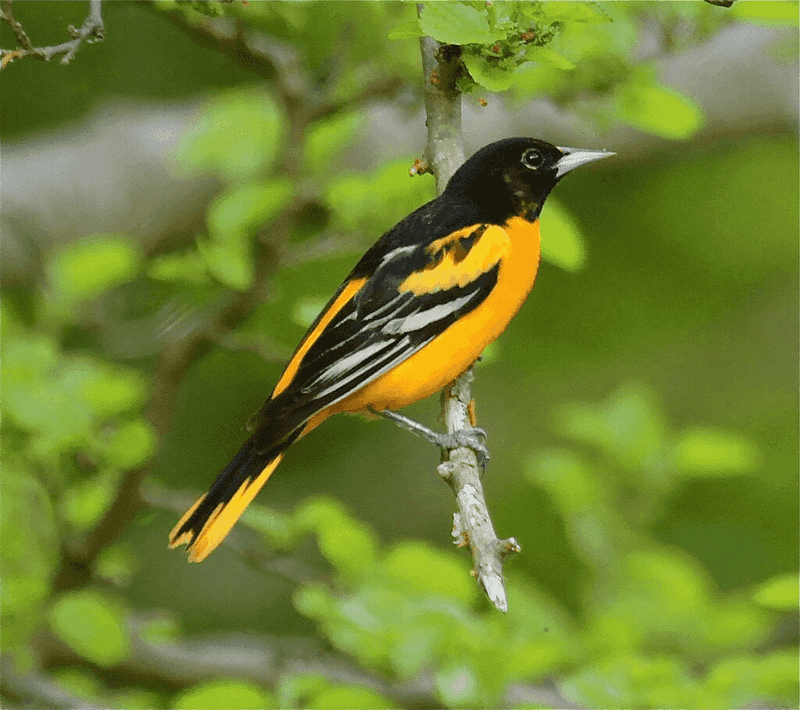
Most people think of orange halves and grape jelly when they picture feeding orioles, but during the breeding season, the diet shifts considerably.
Cornell Lab of Ornithology notes that Baltimore Orioles eat a wide range of insects, including caterpillars, beetles, grasshoppers, and similar prey.
Nestlings depend heavily on protein-rich food, and the adults need to find insects reliably and close to the nest.
An Ohio yard that supports healthy insect populations gives nesting adults a shorter foraging distance between the nest and a meal.
Research by entomologist Doug Tallamy has documented that native woody plants tend to support far greater numbers of caterpillar species than non-native ornamentals.
Oaks, for example, host hundreds of moth and butterfly caterpillar species. That makes them unusually productive foraging trees for insectivorous birds during the nesting period.
Pesticide use is worth thinking through carefully here. Broad-spectrum insecticides applied during the breeding season can reduce the insect prey available to nesting birds at a critical time.
That does not mean tolerating serious plant damage. However, targeted, minimal-use approaches tend to be more compatible with bird-friendly habitat than routine blanket spraying.
A yard with reasonable insect numbers and varied plant life is more likely to provide usable foraging habitat for a nesting pair. A yard with a heavily reduced insect community offers less.
4. Native Trees Give Orioles More Reasons To Stay Nearby
Yard trees do more than provide shade. The woody plants on your property shape how much insect life is available and how much cover exists at different heights.
They also influence which seasonal food sources are present. Native trees tend to outperform non-native ornamentals on most of those measures.
Native insects evolved alongside those plants over thousands of years, creating stronger ecological relationships.
Oaks native to the region are among the most ecologically productive trees a yard can contain. Research cited by the National Audubon Society says native oaks support over 500 caterpillar species across their range.
That makes them exceptional sources of bird food during nesting season. Serviceberry, a native understory tree found across Ohio and surrounding states, produces early fruit and supports insect life in the shrub layer.
A yard with both a large canopy tree and productive understory plants creates structural diversity that benefits multiple bird species, not just orioles.
Non-native ornamentals are not automatically useless to birds, but they tend to support fewer of the invertebrates that nesting birds depend on.
A property planted primarily with exotic species may look green and full while providing relatively little in the way of usable food.
Mixing in native woody plants where space allows adds layers of usefulness without requiring a complete landscape overhaul. Even one or two well-placed native trees can change the character of a yard’s bird habitat over time.
5. Fruit Bearing Plants Can Make The Yard Even More Useful
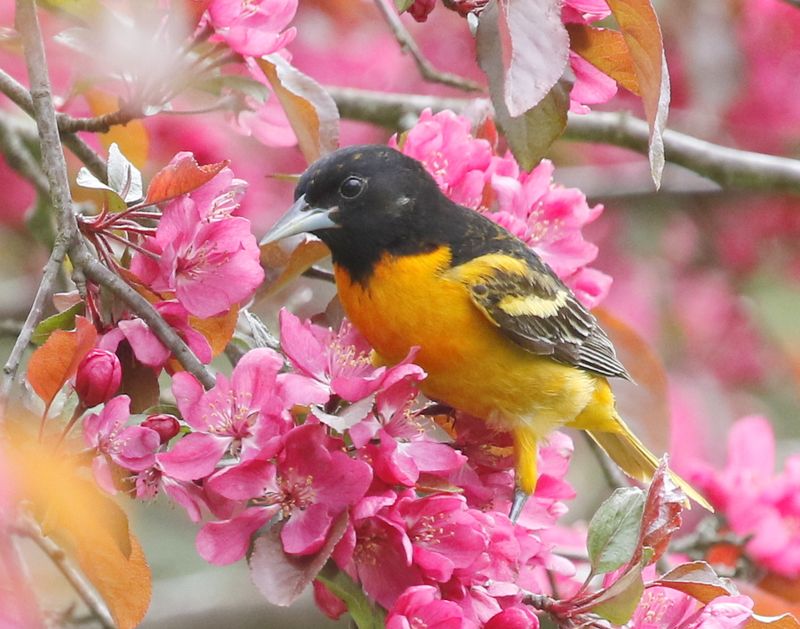
Ripe fruit is a meaningful part of the Baltimore Oriole’s diet. It is especially useful during migration and early in the breeding season before insects peak in abundance.
Cornell Lab of Ornithology confirms that the species eats wild berries, cherries, and other soft fruits in addition to insects and nectar. Landscape plants that produce fruit in early to midsummer can extend the range of food sources available to a nesting pair.
Serviceberry ripens earlier than most native fruit producers, making it especially useful when orioles are actively raising young. Native mulberry trees also produce soft fruit that many bird species feed on during summer.
Both are native to much of the eastern and central United States, meaning they support regional insect communities as well as providing direct food. That dual function makes them more productive per square foot of yard space than plants that offer only one benefit.
Choosing fruit-bearing plants does require some caution. Several popular ornamental shrubs that produce bird-attracting berries are classified as invasive in the state, including some honeysuckle and bush honeysuckle varieties.
The Ohio Invasive Plants Council lists several shrub species that can spread aggressively into natural areas even when planted in residential yards. Before adding a fruiting shrub to a bird-friendly planting plan, checking its regional status is a sensible step.
Native alternatives tend to offer the same food value without the ecological drawback.
6. Fresh Water Adds Another Resource During Nesting Season
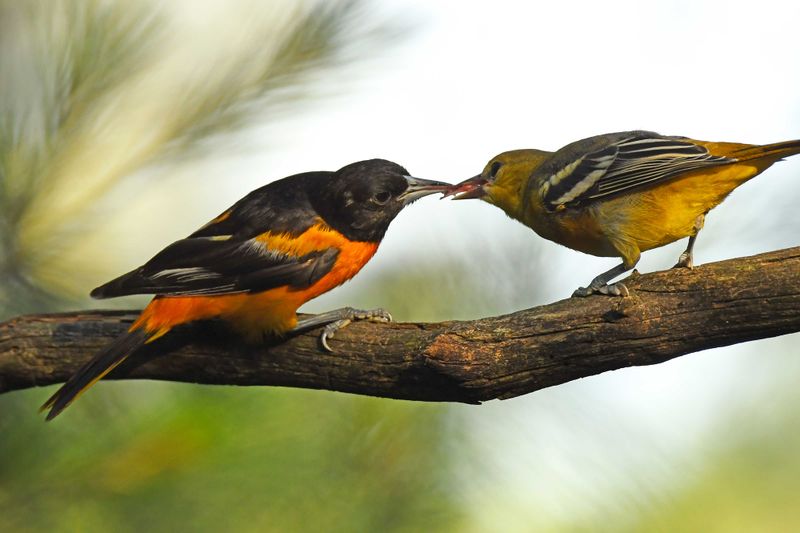
Clean, accessible water becomes more valuable to birds during the breeding season than at almost any other time of year. Adults making repeated trips to and from the nest need to drink, and bathing helps maintain feather condition that affects flight efficiency.
A yard that provides reliable water close to nesting habitat removes one more reason for birds to range farther than necessary.
Placement matters more than most people expect. A birdbath positioned in an open area with clear sightlines on all sides gives birds a chance to watch for approaching threats while they drink or bathe.
Shade can help keep the water cooler and slow the growth of algae, but too much overhead cover can make the bath feel unsafe. The National Audubon Society recommends keeping birdbath water about one to three inches deep.
Change it every few days to limit mosquito development and bacterial buildup. Moving water tends to attract more birds than still water.
A small dripper or water wiggler creates surface movement and sound that birds can detect from a distance. These do not need to be elaborate or expensive.
What matters most is consistency. A birdbath that dries out for days at a time or sits filled with stagnant water offers little real benefit.
Regular cleaning with a stiff brush, without harsh chemicals, keeps the water safe and the basin appealing through the entire nesting season.
7. A Quieter Yard Can Give Nesting Birds More Breathing Room
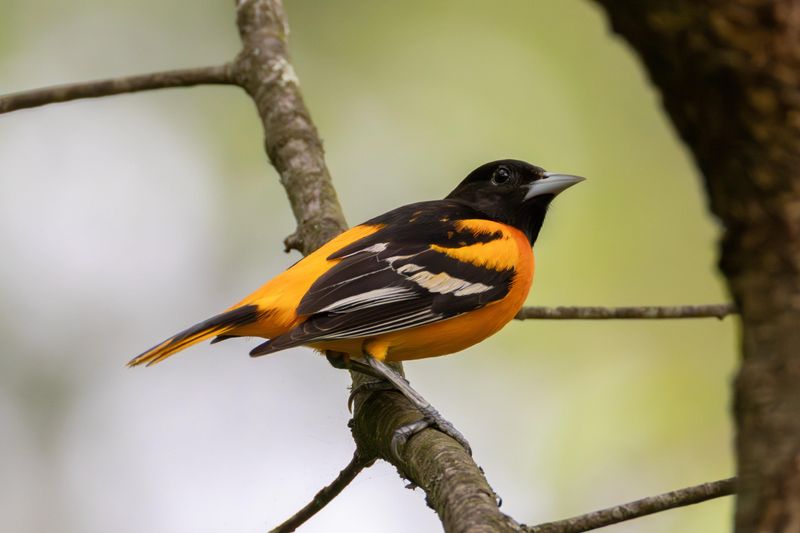
Nesting birds are not all equally sensitive to human activity, but repeated disturbance near an active nest can cause real problems. Adults may spend more time watching for threats and less time foraging or brooding.
In some cases, frequent close approaches can cause adults to temporarily leave the nest, which affects egg and nestling temperature during critical developmental periods.
Common sources of disturbance include heavy yard work beneath or near a nest tree and repeated approaches to photograph the nest. Pets moving through the area can also cause disruption.
Outdoor cats present a particular concern. The American Bird Conservancy notes that free-roaming cats are a leading source of bird mortality in the United States.
Nesting birds and recently fledged young are especially exposed. Keeping cats indoors during the breeding season, roughly May through July in most of the region, reduces that pressure significantly.
None of this means a yard must go silent from spring through summer. Normal household activity at a reasonable distance from a nest tree typically does not cause nest failure on its own.
Birds vary in how much activity they tolerate, and some pairs nest successfully in yards with regular foot traffic. The practical guideline is to avoid doing concentrated work directly under or immediately adjacent to the nest tree while young are present.
Observing from a distance with binoculars gives you a clear view without adding stress to the nesting adults.
8. What You Leave Alone May Matter As Much As What You Add
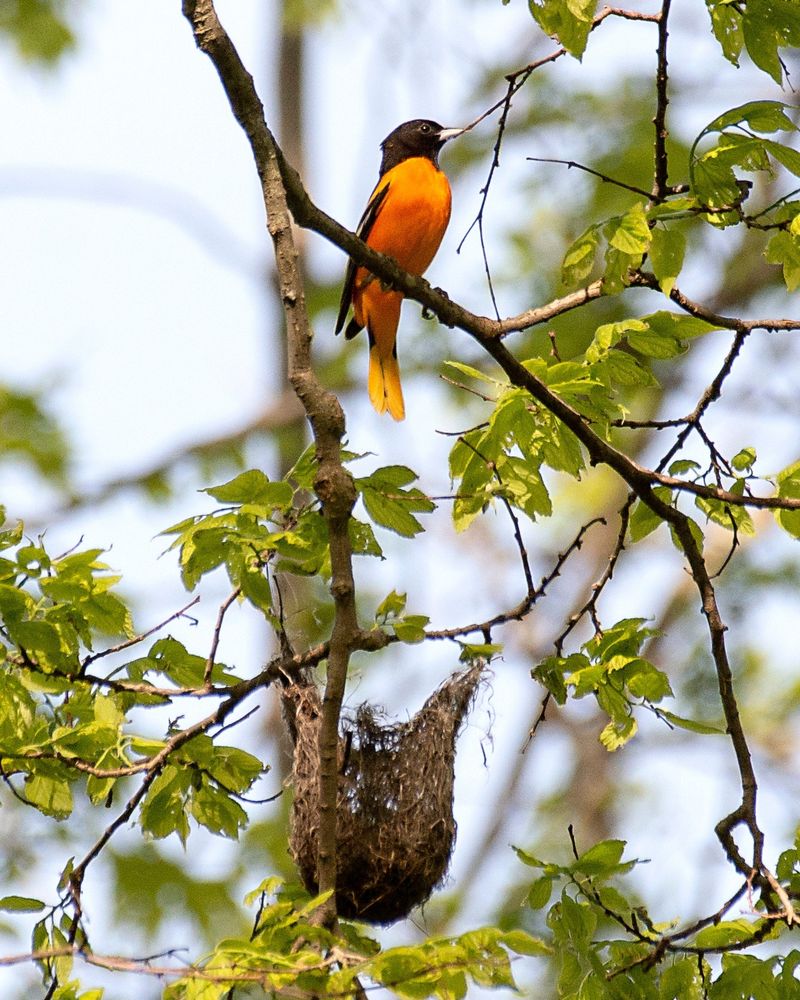
Pruning schedules, fall cleanups, and the impulse to tidy every corner of a yard can quietly reduce its value as bird habitat. Mature trees that are structurally sound and healthy are among the most difficult things to replace in an Ohio residential landscape.
A large elm or cottonwood that took 40 years to reach its current size cannot be substituted by a sapling.
Preserving established trees where they are safe to keep is one of the most effective long-term contributions a property owner can make to local bird habitat.
Timing matters for routine yard work as well. Pruning that removes branches during active nesting can disturb or destroy a nest in progress.
Active nests of native migratory birds, including Baltimore Orioles, are protected under the Migratory Bird Treaty Act, a federal law administered by the U.S. Fish and Wildlife Service.
Intentionally disturbing or destroying an active nest is prohibited. Scheduling major tree work for late fall or winter, after the nesting season has ended, avoids that problem entirely.
Leaving some natural structure in place supports the insects and other invertebrates that nesting birds depend on. This can include leaf litter under shrubs, native groundcover, or an established shrub border.
Good habitat rarely develops overnight. A yard with mature trees, layered vegetation, and undisturbed corners built up over many years tends to offer more to nesting birds.
A recently redesigned yard may not provide the same habitat value yet. Patience and restraint are legitimate habitat tools.